Archive | November 2024

Part II National Epilepsy Awareness Month-Causes, how its diagnosed, and what to know before, during,, and after the seizure!


Possible causes of Epilepsy:

Their epilepsy that is diagnosed with a IDIOPATHIC cause – meaning unknown cause and the patient could grow out of it in childhood in some cases (not all) depending on the type of seizure disorder and if the child doesn’t grow out of it the condition becomes chronic (for life).

Genetic influence (heredity). Some types of epilepsy run in families. In these instances, it’s likely that there’s a genetic influence. Researchers have linked some types of epilepsy to specific genes. But some people have genetic epilepsy that isn’t hereditary. Genetic changes can occur in a child without being passed down from a parent.For most people, genes are only part of the cause of epilepsy. Certain genes may make a person more sensitive to environmental conditions that trigger seizures.

  • A genetic tendency, passed down from one or both parents (inherited).
  • A genetic tendency that is not inherited, but is a new change in the person’s genes.

Although heredity has been known since antiquity to cause epilepsy, the progress to date in identifying the genetic basis of epilepsy has been limited primarily to the discovery of single gene mutations that cause epilepsy in relatively rare families. For the more common types of epilepsy, heredity plays a subtler role, and it is thought that a combination of mutations in multiple genes likely determine an individual’s susceptibility to seizures, as well as the responsiveness to antiepileptic medications.

Epilepsy can be caused by genetic factors (inherited) or acquired (a etiology—cause) , although in most cases it arises in part from both. The neurology and neurological sciences of Stanford Epilepsy Center Dr. Robert S. Fischer Ph D. presents in the article Genetic Causes of Epilepsy.

He also presents in this article our genes are the instruction set for building the human body. Genes reside on chromosomes.

Going to the basics is every person has 46 chromosomes, carrying a total of about 30,000 genes. We get half our chromosomes from our mother and half from our father. While genes determine the structure of our body, they also control the excitability of our brain cells. Defective genes can make hyperexcitable brain cells, which are prone to seizures.

In recent years, several epilepsy conditions have been linked to mutations in genes, but the matter is complicated by the fact that different genes may be involved in different circumstances.

In general, the most common epilepsy conditions, including partial seizures, seem to be more acquired than genetic.

Gene testing will soon be able to identify predispositions to epilepsy, allowing doctors to help a patient get treatment and to assist with family counseling. One day, doctors may simply be able to swap a patient’s cheek, test his or her genes, and predict response to various epilepsy medicines, eliminating much of the trial and error in medication choice that goes on today. Eventually, we may even be able to repair or replace defective genes that predispose a person to epilepsy, a process called gene therapy.

Lastly, Dr. Robert Fischer Ph D presented in his article, that I found very interesting, the general population has about a 1% risk of developing epilepsy.  Meanwhile, children of mothers with epilepsy have a 3 to 9% risk of inheriting this disease, while children of fathers have a 1.5 to 3% risk of inheritence. Still, the actual risk is upon the specific type of epilepsy. For example, partial seizures are less likely to run in families than are generalized seizures. In any event, with the usual forms of epilepsy, even if a parent does have the condition, there is more than a 90% chance that their child will not. So most epilepsies are acquired than inherited.

Clearly, genes determine a great deal of who we are, including our possible risk for epilepsy but slim versus a actual cause. But what happens to us in life and what we do is still the larger part of the risk for epilepsy.

A person given this diagnosis in the 1970’s, or before  and even up to the early 1990’s was quiet about ever letting people know about this since in the 1970’s and back with lack of knowledge, information to the public and definitely technology versus now.  Epilepsy is much more an accepted disease in the overall community compared to 20-25 years ago and back.  Heck in the 1970’s and back these patients when having a seizure episode were characterized as “Freaks”.  This was due to ignorance and lack of information to society/community but due to the past 20 to 25 years with the computer used more as a must in our lives with media, television and even our government they all have made it possible for society everywhere in the world to learn and understand diseases with acceptance in wanting to help those, particularly the US, but we still need a healthier America. It will take time to get there with the many multicultural lives that all live in the U.S. which practice differently on how important a healthy diet is with exercise balanced with rest.  Also including stress well controlled is not always in America on their top priority list in living.  Stress can even be a catalyst for a seizure but not the cause.

For a person diagnosed with or without a cause of epilepsy these steps in learning about the disease with higher technology and continuous research with medications over the years has allowed them to be able to live a completely healthy life doing the same things other people do without the disease but only if the patient is UNDER COMPLETE CONTROL  which includes being COMPLIANT with your Rx; this does exist in America.

Compliant meaning taking their medications everyday as ordered by their neurologist with yearly or sooner follow-up visits with blood levels of the anti-seizure medications there on.  This is the only way one with chronic epilepsy is guaranteed that living this way MAY stop the seizures from occurring (inactive epilepsy you can call it — meaning you’ll always have the disease but can put the seizure activity in a remission by medications preventing the seizure.)

Other Etiologies or Causes of Epilepsy:

Epilepsy has no identifiable cause in about half the people with the condition. In the other half, the condition may be traced to various factors, including:

  • Low oxygen during birth.
  • Head trauma. Head trauma as  a result of a car accident or other traumatic injury can cause epilepsy.
  • Factors in the brain. Brain tumors can cause epilepsy. Epilepsy also may be caused by the way blood vessels form in the brain. People with blood vessel conditions such as arteriovenous malformations and cavernous malformations can have seizures. And in adults older than age 35, stroke is a leading cause of epilepsy.
  • Infections. Meningitis, HIV, viral encephalitis and some parasitic infections can cause epilepsy.
  • Injury before birth. Before they’re born, babies are sensitive to brain damage that could be caused by several factors. They might include an infection in the mother, poor nutrition or not enough oxygen. This brain damage can result in epilepsy or cerebral palsy.

Head trauma/Degenerative Disease like Alzheimer’s or Creutfeldz-Jacob or Huntington’s Chorea or Multiple Sclerosis or Pick’s Disease. There is also tumors or genetic disease or Stroke or Infections or Febrile seizures.

Different epilepsies are due to many different underlying causes. The causes can be complex, and sometimes hard to identify. A person might start having seizures because they have one or more of the following.

  • A structural (sometimes called ‘symptomatic’) change in the brain, such as the brain not developing properly.
  • A stroke or a tumour. A brain scan, such as Magnetic Resonance Imaging (MRI), may show this.

Some researchers now believe that the chance of developing epilepsy is probably always genetic to some extent, in that any person who starts having seizures has always had some level of genetic likelihood to do so. This level can range from high to low and anywhere in between.

Even if seizures start after a brain injury or other structural change, this may be due to both the structural change and the person’s genetic tendency to seizures, combined. This makes sense if we consider that many people might have a similar brain injury, but not all of them develop epilepsy afterwards.

Metabolic and Systemic Causes of Seizures:

a.) Electrolyte Imbalance=In the blood having acidosis, heavy metal poisoning, Hypocalcemia (low Ca+) , Hypocapnea (low carbon dioxide), Hypoglycemia (low glucose), Hypoxia (low oxygen), Sodium-Potassium imbalance, and than Systemic  diseases (liver, renal failure, etc…).  Then their is also toxemia of pregnancy, and water intoxication.

b.) Infections like meningitis, encephalitis, brain abcess.  Structural changes due to genetic conditions such as tuberous sclerosis, or neurofibromatosis, which can cause growths affecting the brain.

Tuberous sclerosis  – a genetic condition that causes growths in organs including the brain. Tuberous sclerosis can cause epilepsy.

Neurofibromatosis  – a genetic condition that causes benign tumours to grow on the covering of nerves. Neurofibromatosis can cause epilepsy.

c.) Withdrawal of sedative-hypnotic drugs=Alcohol, Antiepileptic drugs, Barbiturates, Benzodiazepines.

d.) Iatrogenic drug overdose=Theopylline, Penicillin.

How Epilepsy is Diagnosed:

The purpose for intial visits is for the Neurologist to determine if the patient is having a seizure or something else and to determine what diagnotic tooling tests to start with to help the doctor to find out the problem.  Apart from the description of the seizure, there are other things that can help to explain why your seizures have happened. Your medical history and any other medical conditions will also be considered as part of your diagnosis.

If you have a seizure you may not remember what has happened. It can be helpful to have a description of what happened from someone who saw your seizure, to pass on to your GP or specialist.

Here are some questions that may help you or someone who witnessed your seizure to record useful information about what happened:

Before the seizure

  • Did anything trigger (set off) the seizure – for example, did you feel tired, hungry, or unwell?
  • Did you have any warning that the seizure was going to happen?
  • Did your mood change – for example, were you excited, anxious or quiet?
  • Did you make any sound, such as crying out or mumbling?
  • Did you notice any unusual sensations, such as an odd smell or taste, or a rising feeling in your stomach?
  • Where were you and what were you doing before the seizure?
  • TIME the seizure when it started and ended to tell the MD if not in the hospital!!

During the seizure

  • Did you appear to be ‘blank’ or stare into space?
  • Did you lose consciousness or become confused?
  • Did you do anything unusual such as mumble, wander about or fiddle with your clothing?
  • Did your colour change (become pale or flushed) and if so, where (face or lips)?
  • Did your breathing change (for example, become noisy or look difficult)?
  • Did any part of your body move, jerk or twitch?
  • Did you fall down, or go stiff or floppy?
  • Did you wet yourself?
  • Did you bite your tongue or cheek?

After the seizure

  • How did you feel after the seizure – did you feel tired, worn out or need to sleep?
  • How long was it before you were able to carry on as normal?
  • Did you notice anything else?

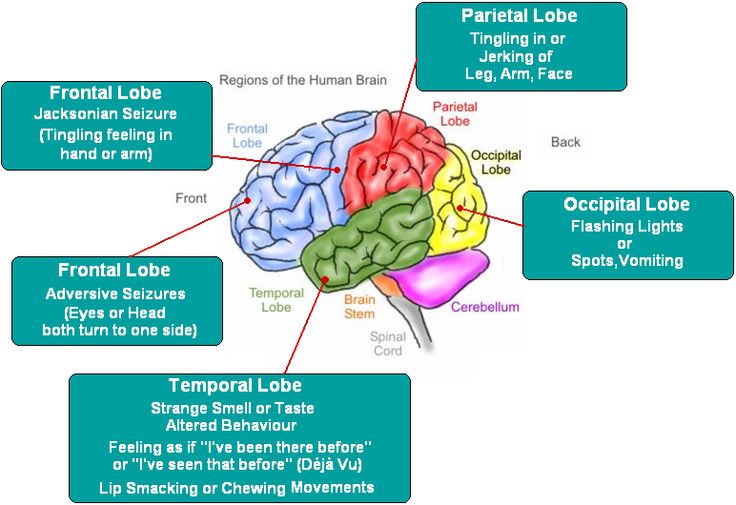
For F/U (follow up) visits is for the neurologist to see how well your seizures are under control by taking drug blood levels of the anti seizure medication your taking to make sure the medication is in a therapeutic drug level and if not he or she will make dose changes in the med(s) your on.  Possible do a EEG (electroencephalogram); the only test to decipher if you have spikes in your brain waves indicating you had a seizure determining from which lobe of the brain is having the seizures (a 26 lead to wires on the brain, which is painless).  Go to the expert for keeping you on the right track.  Its just like based on the principle why a person gets a check up on there car by seeing the mechanic (the car’s doctor) who fixes it.  The expert,  the Neurologist,  fix your seizures or get them under control.


QUOTE FOR THURSDAY:

“-New cases of epilepsy are most common among children, especially during the first year of life.
-The rate of new cases of epilepsy gradually goes down until about age 10 and then becomes stable.
-After age 55, the rate of new cases of epilepsy starts to increase, as people develop strokes, brain tumors, or Alzheimer’s disease, which all can cause epilepsy.”

PART I National Epilepsy Awareness Month-Learn what it is & know the facts!

       epilepsy2

What is epilepsy?

 Most people with epilepsy are otherwise healthy; as long as it’s well controlled like most other diseases.  A seizure is a physical manifestation of paroxysmal and abnormal electrical firing of neurons in the brain.  Think of it as numerous voltage (hyperexcitability of neurons) going throughout the brain meaning brain waves going in all directions with the brain saying its too much activity going through my organ and can’t think normally; instead the brain goes through a shock.   In simpler terms the brain is  getting too much brain wave excitability for the organ to register in what to do causing the brain to go into a type of a seizure.

When the seizure occurs there is a decrease in oxygen since the brain isn’t capable to send messages during the seizure.  The problem it too much electrical stimulation is happening in the brain causing the type of seizure to come on.  If the seizure continues to repeat one right after another the person is in status epilepticus and if the seizures do not stop the person can lead to a neuronal death;  like John Travolta’s son who died of this for example.

The term seizure disorder may refer to any number of conditions that result  in such a paroxysmal electrical discharge.  These conditions could be metabolic or structural in nature.

For example, if a metabolic condition this could be “Canavan disease” which is primarily a disease of demyelination.  Your myelin sheath that protects and insulates the nerves is being destroyed and can cause a seizure as one of the symptoms.

*Another example being metabolic is thought to be caused by brain acetate deficiency resulting from a defect of Nacetylaspartic acid (NAA) catabolism (meaning breakdown is occurring).  Accumulation of NAA, a compound thought to be responsible for maintaining cerebral fluid balance, can lead to cerebral edema and neurological injury, like a seizure as one symptoms of the disease.

*Sometimes there is a known cause and than there is just idiopathic, unknown cause for the epilepsy which if starts in childhood can resolve by the child growing out it, like in petite mal seizures but other times that is not the case and goes into motor/focal or grand mal that is permanent so the individual needs Rx for life.

Remember, not all seizures are due to epilepsy. Other conditions that can look like epilepsy include fainting, or very low blood sugar in some people being treated for diabetes.

Remember, etiology (the cause) of Epilepsy can be generally a sign of underlying pathology involving the brain–knowing the cause.  To find this out diagnostic tooling be a neurologist who specializes in epilepsy is the best resource to go to.  The epilepsy may be the first sign of a nervous system disease (ex. Brain tumor), or it may be a sign of a systemic or metabolic derangement.  Where the treatment may be able to resolve the seizure symptom completely where this wasn’t a seizure disorder or epilepsy but just a symptom due to another disorder that may be 100% cured, like a operable tumor removed surgically from the brain.

Facts and Statistics on Seizures:

  • Most seizures happen suddenly without warning, last a short time (a few seconds or minutes) and stop by themselves.
  • Seizures can be different for each person.
  • Just knowing that someone has epilepsy does not tell you what their epilepsy is like, or what seizures they have.
  • Calling seizures ‘major’ or ‘minor’ does not tell you what happens to the person during the seizure. The names of seizures used on this page describe what happens during the seizure.
  • Some people have more than one type of seizure, or their seizures may not fit clearly into the types described on this page. But even if someone’s seizures are unique, they usually follow the same pattern each time they happen.
  • Not all seizures involve convulsions (jerking or shaking movements). Some people seem vacant, wander around or are confused during a seizure.
  • Some people have seizures when they are awake, called ‘awake seizures’. Some people have seizures while they are asleep, called ‘asleep seizures’ (or ‘nocturnal seizures’). The names ‘awake’ and ‘asleep’ do not explain the type of seizures, only when they happen.
  • Injuries can happen during seizures, but many people don’t hurt themselves and don’t need to go to hospital or see a doctor.

Check out Part II tomorrow!


QUOTE FOR WEDNESDAY:

“Lung cancer diagnosis often starts with an imaging test to look at the lungs. If you have symptoms that worry you, a healthcare professional might start with an X-ray. If you smoke or used to smoke, you might have an imaging test to look for signs of lung cancer before you develop symptoms.  People with an increased risk of lung cancer may consider yearly lung cancer screening using low-dose CT scans. Lung cancer screening is generally offered to people 50 and older who smoked heavily for many years. Screening also is offered to people who have quit smoking in the past 15 years. Discuss your lung cancer risk with your healthcare professional. Together you can decide whether lung cancer screening is right for you.  Treatment for lung cancer usually begins with surgery to remove the cancer. If the cancer is very large or has spread to other parts of the body, surgery may not be possible. Treatment might start with medicine and radiation instead. Your healthcare team considers many factors when creating a treatment plan.”

MAYO CLINIC (https://www.mayoclinic.org/diseases-conditions/lung-cancer/diagnosis-treatment/drc-20374627)

QUOTE FOR MONDAY:

“There are many cancers that affect the lungs, but we usually use the term “lung cancer” for two main kinds: non-small cell lung cancer and small cell lung cancer. Non-small cell lung cancer (NSCLC) is the most common type of lung cancer. It accounts for over 80% of lung cancer cases. Common types include adenocarcinoma and squamous cell carcinoma. Adenosquamous carcinoma and sarcomatoid carcinoma are two less common types of NSCLC. Small cell lung cancer (SCLC) grows more quickly and is harder to treat than NSCLC. It’s often found as a relatively small lung tumor that’s already spread to other parts of your body. Specific types of SCLC include small cell carcinoma (also called oat cell carcinoma) and combined small cell carcinoma.  Cancer is usually staged based on the size of the initial tumor, how far or deep into the surrounding tissue it goes, and whether it’s spread to lymph nodes or other organs. Each type of cancer has its own guidelines for staging but ranges from stage 0 to stage 5.”

Cleveland Clinic (https://my.clevelandclinic.org/health/diseases/4375-lung-cancer)

QUOTE FOR THE WEEKEND:

“LUNG FORCE is uniting people across the country to stand together against lung cancer, the leading cause of cancer deaths in the U.S.  Lung cancer happens when cells in the lung change (or mutate). Most often, this is because of exposure to dangerous chemicals that we breathe. But lung cancer can also happen in people with no known exposure to toxic substances. Unlike normal cells, cancer cells grow uncontrollably and cluster together to form a tumor, destroying healthy lung tissue around them. Symptoms usually do not appear until cancer cells spread to other parts of the body and prevent other organs from functioning properly. At this point, it is harder to treat lung cancer.   Smoking poses the greatest risk, but there are others such as exposure to radon and air pollution.Screening high-risk individuals has the potential to drama-tically improve lung cancer survival rates. There are multiple types of lung cancer. Knowing this information can help inform treatment options.”

American Lung Association (https://www.lung.org/lung-health-diseases/lung-disease-lookup/lung-cancer/basics)

QUOTE FOR FRIDAY:

“November 1st is National Stress Awareness Day.

The holiday season brings joy and celebration. It can also amplify stress levels with the rush of activity and expectations associated. National Stress Awareness Day is well timed at the beginning of November to raise attention to the stress many feel at this time of year. Founded by the International Stress Management Association, National Stress Awareness Day is intended to “increase public awareness and help people recognize, manage, and reduce stress in their personal and professional lives.”

A daily mindful self check-in can help you identify when you are feeling stressed, anxious, or down.

If you are feeling stressed there are practices that can help immediately relieve everyday stressors.”

The George Washington University (https://blogs.gwu.edu/himmelfarb/2023/10/30/november-1st-is-national-stress-awareness-day/)

Do you have stress? Learn tips on how to deal with it!

stressstress image

One way of looking at life is whatever challenges comes your way know you will survive and for any losses you may experience when looking back on them take the positive aspects or memories not the negative that builds a bad effect on you (Ex. Insomnia to depression to high blood pressure to alcoholism to drugs).   A positive effect can be as simple as a smile when reflecting memories, which FYI allows less frowning that will cause less wrinkles on the forehead, as we get older. Sometimes it’s not that simply and when it gets harder take up a constructive way of dealing with it (Ex. Work out at your level, walking, singing, go to a comedy movie, get together with friends go out, and do anything that gets your mind off of the stress and even out of your body through work out at the gym to just biking or walking.).

For starters stress is a body reaction to CHANGE. How to you look at change? Easy, positive! It may not appear easy at first but try to look at this change as a sense of difficulty yet a challenge with a victory in the end, if approached right. Let us take the following challenges, for example – Having a child leave home for college or marriage, losing a home with this economy, a loss of a friend in your life: How do you look at these experiences positive?

Well for the child I would be so happy for her or him starting college life with my worries but knowing I raised her or him well and if he makes mistakes on the way he will learn to get up off the ground and fix them knowing he can come to me or dad whenever he has the need or if we sense a problem we would address it (Its part of life=growing up). Another aspect to look at regarding this stress is there is loss in the parent role so fill up that loss with a new hobby, or get active in whatever organization you are in (Ex. Church, Temple, School, to just taking up ceramics or do more traveling with your spouse and friends).   I had my falls with the stresses that I have come across but got up every time to stand again, some quicker than other times.

How do you deal with losing a home with this economy well appreciate the good memories you had when you had the home and pick up starting a new life elsewhere with making it a journey down the yellow brick road leading you to where the rainbow is at the end; don’t look at it as a loss.

Dealing with losing a friend, again, the way I look at it is I appreciate the time I had with her or him and know they haven’t left me in spirit (if deceased).   If the person is still living know there are reasons for everything; whatever the cause was for the reason for the relationship parting and when out of my control I think of how I had a good friendship as opposed to never having one with that individual. I accept that nothing lasts forever or indefinitely, with appreciating the time I may have had with the person. Ending note is I look at life this way, whatever positive entity comes in my life may be taken away from me and appreciate every moment you spend with that person or thing in your life that you love so much (including my life span that only upstairs knows how long that time factor will be but I try to live a life at its healthiest optimal level with practicing positive behavior which is knowing whatever stressors come my way there is always someone worse off and with God I can face anything.

If I don’t deal with stress like this than I can expect complications that may arise, just like for anyone else who looks at challenges coming their way in a negative sense. You commonly see stress become a negative experience when a person faces continuous challenges/stressors without relief or relaxation between the them. The ending result is the person becomes overworked and stress-related tension builds. Stress that continues without positive resolution at some level can cause a condition called distress, which is a negative stress reaction. The physical reactions that happen to your body due to negative stress:

-Elevated high blood pressure –Headaches –Chest Pain –Upset Stomach   –Insomnia –Grinding of the teeth –Jaw Tension –Teeth grinded down       –Irritability –Anger –Panic episodes –Vasoconstriction to our vessels   causing increases to the heart rate –Decreases sex drive –Depression (Research even suggests that stress also can bring on or worsen certain symptoms or diseases.)

Stress costs American industry more than $300 billion annually.

The lifetime prevalence of an emotional disorder is more than 50%, often due to chronic, untreated stress reactions.

Stress is a normal part of life. Many events that happen to you and around you — and many things that you do yourself (Ex. Work 40 to 60 hrs a week in a highly stressful job, like a policeman) – will put stress on your body. You can experience stress from your environment, your body, and your thoughts. You can also cause the stress to impact your body with first just signs and symptoms (s/s) developing, that are listed above, but without relief of the stress these s/s can lead you into a disease/illness forming or even make the diagnose (s) you already have even worse.

Many signs and symptoms pick up when exposed to continual stress or stresses that just build up on top of each other causing some people in developing unhealthy habits, poor dieting, and the lack of desire to be as active as they were which in turn develops conditions that would not have occurred if this negative behavior didn’t happen over a long period of time.

This behavior with the stress or stresses you are experiencing increases the probability of health conditions starting to take place in your body or if you’re with certain diagnoses already the stress can possibly impact your body by worsening the condition.   The conditions that can develop from any age of being under continual stress over a period of time are:

-ADD or ADHD –Panic disorders –High blood pressure –Anti-arrhythmias -Cardiac Disease -Diabetes 1 or Diabetes 2 -Stroke –Irritable Bowel Syndrome –Weight Gain/Obesity –Fibromyalgia –Complex Regional Pain Syndrome –ETOH -Depression and so much more.

How to bypass developing conditions that can be caused from the long constant stress or stresses you experience? One method is fight back (fight or flight), and when it gets really difficult don’t turn to bad heath patterns in your life to deal with the stressors turn to a healthy diet, keeping a healthy weight for your body mass index (BMI) so you can deal better with fighting the stressors in your life (if not sure what your BMI is check online to find out how to calculated it, it is for free), and practice healthy habits. You may be saying how to I even go about that or maybe it’s easy for me but not true. Let me shine some light on this topic. I was there many times before and found a resolution to help deal better with my stresses through a change in eating and I lost 22 lbs. and still I am trying with being physically challenged at this moment to get to my optimal shape. If you want to check out how to deal effectively with your stress and live a healthier life for prevention of complications that stress can cause go to healthyusa.tsfl.com/. You will learn both through Dr. Anderson and his book “Dr. A’s habits of health”. This will help you in dealing with stressors as well as boost up your health with losing weight and learning healthy habits in living. Through Dr. Anderson’s book you will learn about all 4 food groups in how to eat the foods, when to eat the foods, what portion sizes to use, with learning even about diseases and illnesses that can occur through poor habits in diet, activity, and more. If this this news spreads throughout America it would make our country much healthier which we could use for now and in the future. This is not a recruiting organization but a company that can help you and many others live a better and possibly longer life.

Hope I have helped you in someway dealing with any stress in your life. Also, I hope to hear from you both with your comments on the articles you read on my blog with visiting the website in taking the right step to reach the optimal level of your heath including learning methods that help you deal the best you can with stress.