Archive | February 2024

QUOTE FOR THURSDAY:

Over the last 30 years, the risk of dying from cancer has steadily declined, sparing some 4 million lives in the United States. This downward trend can partially be explained by big wins in smoking cessation, early cancer detection, and treatment advancements.

Cancer incidence, however, is on the rise for many common cancers. In the coming year, we’re expecting to hit a bleak milestone—the first time new cases of cancer in the US are expected to cross the 2-million mark. That’s almost 5,500  cancer diagnoses a day.

This trend is largely affected by the aging and growth of the population and by a rise in diagnoses of 6 of the 10 most common cancers—breast, prostate, endometrial, pancreatic, kidney, and melanoma. (The other 4 top 10 cancers are lung, colon and rectum, bladder, and non-Hodgkin lymphoma.)

In 2024, over 611,000 deaths from cancer are projected for the US. That’s more than 1,600 deaths from cancer each day.

Some types of cancer aren’t increasing in overall incidence but are increasing in subgroups. These include:

  • Colorectal cancer in people younger than age 55
  • Liver cancer in women
  • Oral cancers associated with HPV
  • Cervical cancer in women ages 30 through 44

The risk of developing 6 of the cancers on the rise is associated with excess body weight. Listed in order of strength of the association, those 6 cancers are endometrial, liver, kidney, pancreas, colorectal, and breast.”

The American Cancer Society (https://www.cancer.org/research/acs-research-news/facts-and-figures-2024.html)


QUOTE FOR WEDNESDAY:

“All living things depend on millions of chemical reactions that happen constantly. Chemical reactions that keep you alive happen fast! When you eat food, breathe, play, and grow, all of these are chemical reactions, and they must take place quickly.

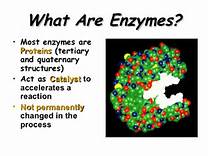
How does your body speed up these important reactions? The answer is enzymes. Enzymes in our bodies are catalysts that speed up reactions by helping to lower the activation energy needed to start a reaction. Each enzyme molecule has a special place called the active site where another molecule, called the substrate, fits. The substrate goes through a chemical reaction and changes into a new molecule called the product — sort of like when a key goes into a lock and the lock opens.

Since most reactions in your body’s cells need special enzymes, each cell contains thousands of different enzymes. Enzymes let chemical reactions in the body happen millions of times faster than without the enzyme. Because enzymes are not part of the product, they can be reused again and again.”

ACS Chemistry for Life (https://www.acs.org/education/outreach/celebrating-chemistry-editions/2021-ncw/enzymes.html)

Enzymes in the human body and why they are so important!

3X7340

What are enzymes?

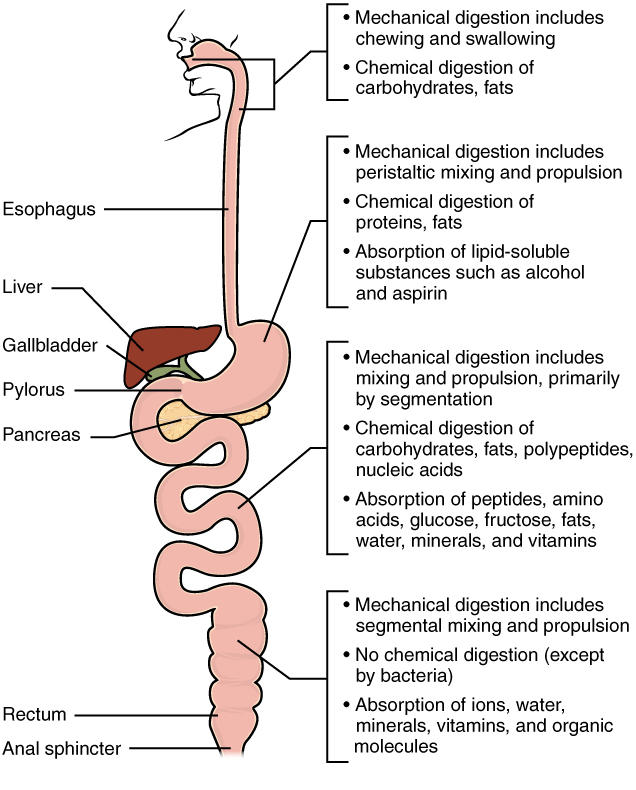
Enzymes are vital for processes to take place in our body without them they couldn’t take place.  We have many enzymes  in our body from our saliva to our pancreas.  Enzymes are specialized proteins that are produced by living cells to catalyze reactions in the body=breakdown.

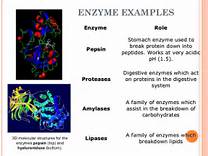
A catalyst in action brakes down something, any chemical substance affected with the speed of reaction without being permanently altered by the reaction.  For a chemical or biochemical reaction to occur, a certain amount of energy is required=the activation energy.  Energy can be transformed from one state to another.  The role of an enzyme is to decrease the amount of energy needed to start the reaction.  Exactly how enzymes lower activation energies is not completely and fully understood but it is known that an enzyme attaches itself to one of the reacting molecules, this is called a substrate complex.  Thousands of enzymes exist but each kind can attach ONLY to one kind of substrate.  The enzyme molecule must fit exactly with the substrate molecule (just like how pieces in a jigsaw puzzle have to fit in their specific space of the picture).  Well, if the substrate and enzyme don’t perfectly match or fit properly no reaction takes place.  When they do fit perfectly the substrate molecule can react with other molecules in a synthesis reaction and when completed the enzyme is free to move on elsewhere to connect with another substrate molecule.  This whole process takes place quickly.  Clearly, enzymes are essential to the body’s overall homeostasis. (In order to lead a healthy life, we need to bring a balance in the way we lead our lifestyle.  Homeostasis is nothing but a mechanism which helps the human body maintain a balance between the internal and external environment).  Enzymes quickly perform catalyze chemical reactions and they also govern the reactions that occur.   Enzymes are named by adding the suffix “ase” to the name of their substrates.  Here are some examples below.

Protein in the form of an enzyme acts as a catalyst.

The breaking down of proteins=Trypsin Proteins are large biological molecules consisting of one or more chains of amino acids.  Proteins perform a vast array of functions within living organisms, including catalyzing metabolic reactions, replicating DNA, responding to stimuli, and transporting molecules from one location to another.  Trypsin is a enzyme catalyst, which allows the catalysis of chemical reactions.   The ending product of the break down is amino acids not sugar.  Know high on a protein diet continuously for years can hurt the body also.

The breaking down of starches = the enzyme that does this function is amylase

Know this about amylase, it is present in human saliva where it begins the chemical process of digestion; that starts in our mouth. Foods that contain much starch but little sugar, such as rice and potato, taste slightly sweet as they are chewed because amylase turns some of their starch into sugar in the mouth. The pancreas also makes amylase (alpha amylase) to hydrolyse dietary starch into disaccharides and trisaccharides which are converted by other enzymes to glucose to supply the body with energy.  There is even b and y amylases. Ending product on enzymes breaking down starches or carbohydrates gives us one thing only sugar.)

The breaking down of sugars, like sucrose = the enzyme is sucrase.  The ending product of the enzyme is it breaks down complex sugars to more simple sugars in the body.

The breaking down of fats (lipids) = the enzyme is lipase. 

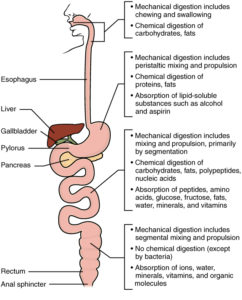
Lipase perform essential roles in the digestion, transport and processing of dietary lipids in most if not all living organisms (example (triglycerides, fats, oils).Most lipases act at a specific position on glycerol backbone of lipid substrate (A1,A2 or A3 in the small intestines).  For example, human pancreatic lipase (HPL) is the main enzyme that breaks down dietary fats in the digestive system, converts triglyceride substrates found in ingested oils to monoglycerides and two fatty acids.  Know that glycerol is a simple sugar compound.  Enzymes deal with breaking down our foods because they take a major role in what we call the process digestion in the human body but notice what the ending result is of mostly every ingredient out of 3 of our food groups, which is SUGAR.  It’s because of the food already having some sugar in it but more importantly also the chemical reaction with the enzyme to allow the food to break down into smaller compounds to be utilized in the body=simpler sugar compounds which also plays a part in the entire digestion process.

So know sugar in the body is our fuel for energy with the help of digestion process to breakdown sugars, this is how it work: 

When the body gets a meal within 1 hour digestion starts in the stomach and complete in 6 to 8 hours depending on how large the meal is, especially if 3 large meals a day.  The foods if contain starches, fat, lipids they all break down to simple sugars that transfer to the bloodstream and whatever energy the body needs at that point the tissues with cells utilize it but when enough sugar is used and we have excess in the blood we than have the body store the extra sugar that first converts the glucose (active sugar) to glycogen (inactive sugar) in our liver.  The liver is only so big and when it reaches its optimal level of storage than the sugar gets stored in our fat tissue = WEIGHT GAIN.  This is the problem with people in America not understanding this process.  Plus as most people get older from 30 than to 40 years old and every 10 years after that till heaven we put cellulite on the body for 2 major reasons not eating as healthy due to the bikini and speedo fit not being the priority in life but getting the feet up after a hard day’s work is.  The other reason is we aren’t as active as when we were 20 or 30 years old and the metabolism naturally slows down unless you’re a Jack la Lanne or body trainer.

How do we deal with this to prevent obesity?  Do what I did go on a 4-6 small meal/health snack diet.  Eat a meal every 3 hours with keeping fat, calories/sugar, carbohydrates in proper proportions to prevent excess sugar in the meals to not allow fat storage=weight gain.  Of course some exercise or activity daily or every other day helps tone the muscle and not let it flab due to cellulite.  Live healthier habits of living not just a month, 3 months or 6 months but make it your daily routine with treating yourself to foods you don’t eat daily to maintain a good weight and increase your health status to allow you to live a happier, longer and more exciting life.

Enzymes deal with breaking down our foods because they take a major role in what we call the process digestion in the human body.  but notice what the ending result is of mostly every ingredient in our 4 food groups is; SUGAR.  It because of the food has some sugar in it but also the chemical reaction with the enzyme to allow the food to break down into smaller compounds to be utilized in the body with send through the entire digestion process.

There are risks with eating just high protein diets for long periods of time.  You put yourself at risk for:  Osteoporosis:  Research shows that women who eat high protein diets based on meat have a higher rate of bone density loss than those who don’t. Women who eat meat lose an average of 35% of their bone density by age 65, while women who don’t eat meat lose an average of 18%. In the long run, bone density loss leads to osteoporosis.

Kidneys:  A high protein diet puts strain on the kidneys.  It is well known that patients with kidney problems suffer from eating a high protein diet which is due to the high amino acids levels.  A high-protein diet may worsen kidney function in people with kidney disease because your body may have trouble eliminating all the waste products of protein metabolism.

However, the risks of using a high-protein diet with carbohydrate restriction for the long term are still being studied. Several health problems may result if a high-protein diet is followed for an extended time:

Some high-protein diets restrict carbohydrate intake so much that they can result in nutritional deficiencies or insufficient fiber, which can cause health problems such as constipation and diverticulitis.

Some high-protein diets promote foods such as red meat and full-fat dairy products, which may increase your risk of heart disease.

If you want to follow a high-protein diet, do so only as a short-term weight-loss aid.  Also, choose your protein wisely. Good choices include fish, skinless chicken, lean beef, pork and low-fat dairy products. Choose carbs that are high in fiber, such as whole grains and nutrient-dense vegetables and fruit.

It’s always a good idea to talk with your doctor before starting a weight-loss diet. And that’s especially important in this case if you have kidney disease, diabetes or other chronic health condition.

So if you want to continue on high protein diets longer than 6 months know how to alkalize the body chemicals to decrease the proteins and there are supplements that can do that via the pharmacy or look up even online.

Before changing your diet always do a diet check with your doctor to make sure its cleared “OK” by the doctor since he knows your entire medical history!
QUOTE FOR TUESDAY:

“If the dizziness cannot be relieved with the conservative medical approach, surgery may be recommended to help alleviate the symptoms. There are 3 commonly accepted procedures to accomplish this:

1. Posterior semicircular canal plugging procedure
2. Singular nerve removal
3. Vestibular nerve clipping

Posterior semicircular occlusion has been adapted and utilized at the Michigan Ear Institute with great success. Only a small portion of the people with BPPV are even considered for this surgery, but because the success of this procedure at the Michigan Ear Institute has been excellent, it is an appropriate possibility for those who may require it.”

Michigan Ear Institute (https://michiganear.com/posts/bppv-fact-sheet/)

QUOTE FOR MONDAY:

“BPPV with the most common variant (crystals in the posterior SCC) can be treated successfully — with no tests, pills, surgery or special equipment — by using the Epley maneuver.  If some situations pills may be ordered (Ex. antivert)”

John Hopkins Medicine

(https://www.hopkinsmedicine.org/health/conditions-and-diseases/benign-paroxysmal-positional-vertigo-bppv)

Part 3 on BPPV=Benign Positional Paroxysmal Vertigo – Treatment, & What to expect in the MD’s office.

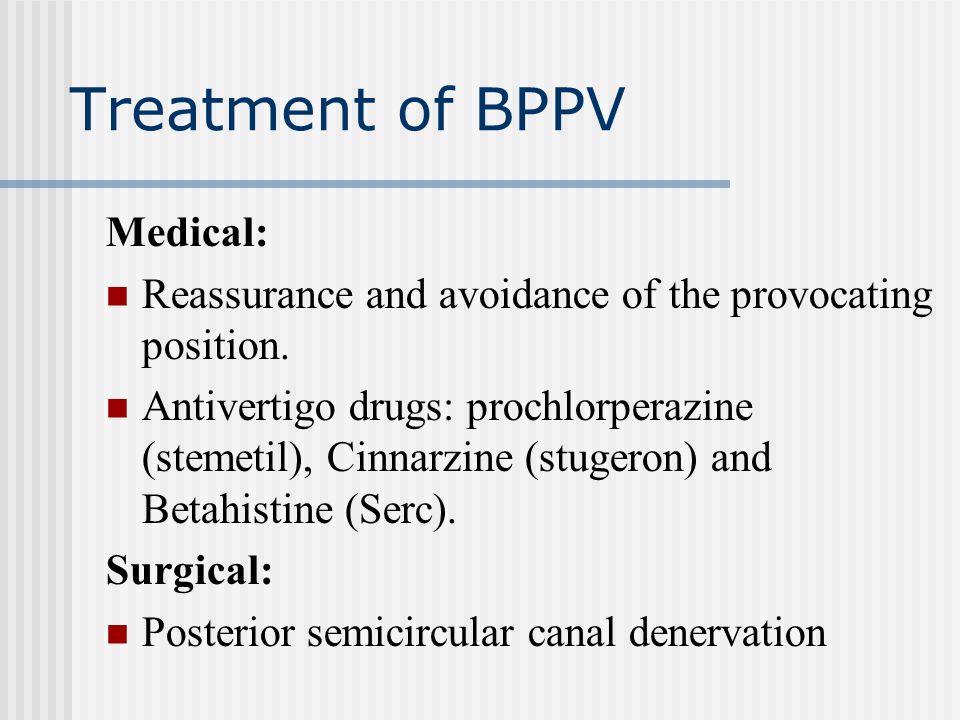
Reassurance and avoidance of the provocating position. Antivertigo drugs: prochlorperazine (stemetil), Cinnarzine (stugeron) and Betahistine (Serc). Surgical: Posterior semicircular canal denervation.

TREATMENT

In all cases the doctor first has the patient (pt.) in their office and either through them or through physical therapy ordered by the M.D. after evaluating the pt with diagnosing the pt. with BPPV in treating the pt. using exercises which help in high percentages resolving the vertigo but continuing them when the vertigo is gone will do very little help unfortunately including it commonly comes back several weeks to months later and the exercises help more than. These exercises used are:

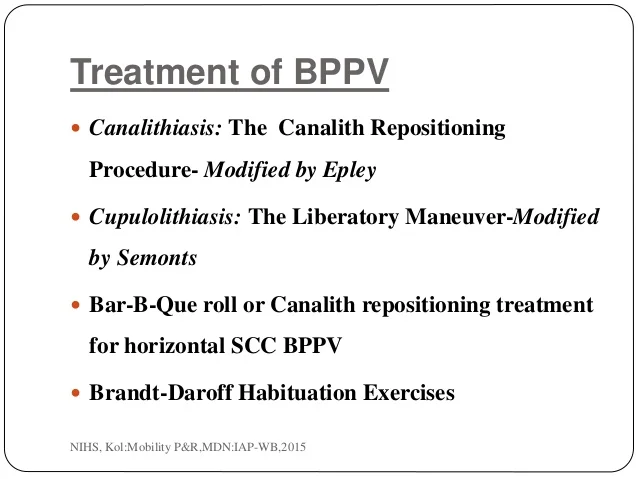
OFFICE TREATMENT OF BPPV: The Epley and Semont Maneuvers

There are two treatments of BPPV that are usually performed in the doctor’s office. Both treatments are very effective, with roughly an 80% cure rate, ( Herdman et al, 1993; Helminski et al, 2010). If your doctor is unfamiliar with these treatments, you can find a list of clinicians who have indicated that they are familiar with the maneuver from the Vestibular Disorders Association (VEDA) .

The maneuvers, named after their inventors, are both intended to move debris or “ear rocks” out of the sensitive part of the ear (posterior canal) to a less sensitive location. Each maneuver takes about 15 minutes to complete. The Semont maneuver (also called the “liberatory” maneuver) involves a procedure whereby the patient is rapidly moved from lying on one side to lying on the other (Levrat et al, 2003). It is a brisk maneuver that is not currently favored in the United States, but it is 90% effective after 4 treatment sessions. In our opinion, it is equivalent to the Epley maneuver as the head orientation with respect to gravity is very similar, omitting only ‘C’ from the figure to the right.

The Epley maneuver is also called the particle repositioning or canalith repositioning procedure. It was invented by Dr. John Epley.  It involves sequential movement of the head into four positions, staying in each position for roughly 30 seconds. The recurrence rate for BPPV after these maneuvers is about 30 percent at one year, and in some instances a second treatment may be necessary.

When performing the Epley maneuver, caution is advised should neurological symptoms (for example, weakness, numbness, visual changes other than vertigo) occur. Occasionally such symptoms are caused by compression of the vertebral arteries (Sakaguchi et al, 2003), and if one persists for a long time, a stroke could occur. If the exercises are being performed without medical supervision, we advise stopping the exercises and consulting a physician. If the exercises are being supervised, given that the diagnosis of BPPV is well established, in most cases we modify the maneuver so that the positions are attained with body movements rather than head movements.

After either of these maneuvers, you should be prepared to follow the instructions of your doctor or physical therapist who should give you written instructions on them to take home with you, which are aimed at reducing the chance that debris might fall back into the sensitive back part of the ear. Not always the case.

       What to expect from your doctor on your visit with vertigo

A doctor who sees you for symptoms common to BPPV may ask a number of questions, such as:

  • What are your symptoms, and when did you first notice them?
  • Do your symptoms come and go? How often?
  • How long do your symptoms last?
  • Is one or both of your ears affected?
  • Does anything in particular seem to trigger your symptoms, such as certain types of movement or activity?
  • Do your symptoms include vision problems?
  • Do your symptoms include nausea or vomiting?
  • Do your symptoms include headache?
  • Have you lost any hearing?
  • Have you had any weakness, numbness or tingling in your arms or your legs?
  • Have you had any difficulty talking or walking?
  • Have you had chest pain?
  • Are you being treated for any other medical conditions?
  • What medications are you currently taking, including over-the-counter and prescription drugs as well as vitamins and supplements?

Need assistance in where to go for help treatment on surgery in the hospitat for benign posterior paroxysmal vertigo?  Than tune in tomorrow to Part IV.


QUOTE FOR THE WEEKEND:

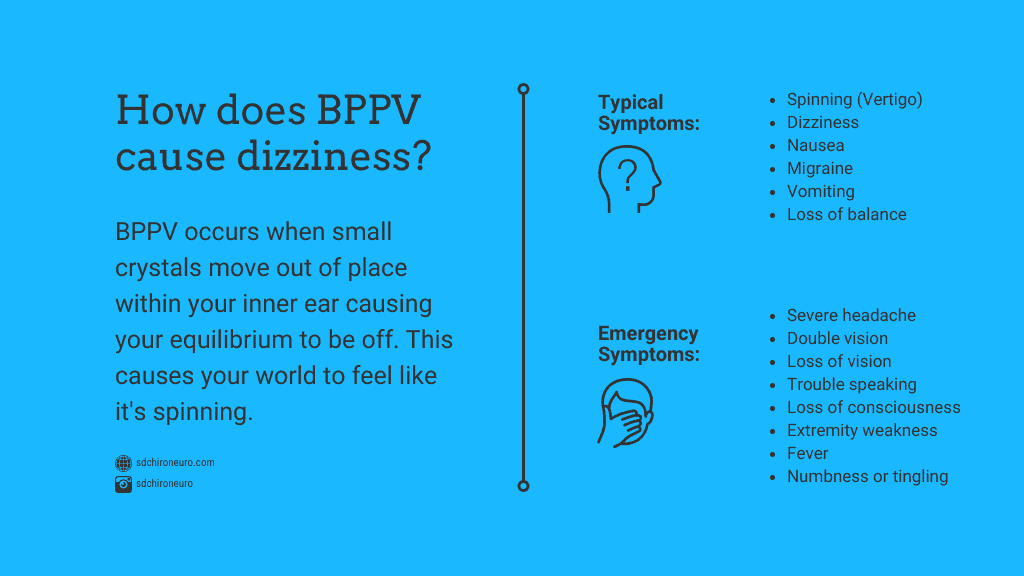
“The signs and symptoms of BPPV can come and go and commonly last less than one minute. Episodes of BPPV can disappear for some time and then recur. Symptoms varying from dizziness, unsteadiness, nausea, vomiting, and a sense of feeling everything around you is spinning. Often, there’s no known cause for BPPV. This is called idiopathic BPPV. Although BPPV is uncomfortable, it rarely causes complications. The dizziness of BPPV can make you unsteady, which may put you at greater risk of falling.”

MAYO CLINIC (https://www.mayoclinic.org/diseases-conditions/vertigo/symptoms-causes/syc-20370055)

Part 2 BPPV=Benign Paroxsymal Positional Vertigo: Causes, The Ear’s Role, and Complications.

Causes of BPPV:

Timothy C. Hain MD of dizziness and balance.com states The most common cause of BPPV in people under age 50 is head injury . The head injury need not be that direct – -even whiplash injuries have a substantial incidence of BPPV (Dispenza et al, 2011). There is also a strong association with migraine (Ishiyama et al, 2000). BPPV becomes much more common with advancing age (Froeling et al, 1991) and in older people, the most common cause is degeneration of the vestibular system of the inner ear. Viruses affecting the ear such as those causing vestibular neuritis and Meniere’s disease are significant causes(Batatsouras et al, 2012).

Occasionally BPPV follows surgery, including dental work, where the cause is felt to be a combination of a prolonged period of supine positioning, or ear trauma when the surgery is to the inner ear (Atacan et al 2001). While gentamicin toxicity is rarely encountered, BPPV is common in persons who have been treated with ototoxic medications such as gentamicin (Black et al, 2004). In half of all cases, BPPV is called “idiopathic,” which means it occurs for no known reason. Other causes of positional symptoms are discussed here.

Web MD points out tiny calcium “stones” inside your inner ear canals help you keep your balance. Normally when you move a certain way, such as when you stand up or turn your head, these stones move around. But things like infection or inflammation can stop the stones from moving as they should. This unfortunately sends a false message to your brain and causes the vertigo. About half the time, doctors can’t find a specific cause for BPPV.

When a cause can be determined, BPPV is often associated with a minor to severe blow to your head. Less common causes of BPPV include disorders that damage your inner ear or, rarely, damage that occurs during ear surgery or during prolonged positioning on your back. BPPV also has been associated with migraines. In many cases the doctors can’t figure out the cause.

Know The ear’s role

Inside your ear is a tiny organ called the vestibular labyrinth. It includes three loop-shaped structures (semicircular canals) that contain fluid and fine, hair-like sensors that monitor the rotation of your head.

Other structures (otolith organs) in your ear monitor movements of your head — up and down, right and left, back and forth — and your head’s position related to gravity. These otolith organs — the utricle and saccule — contain crystals that make you sensitive to gravity.

For a variety of reasons, these crystals can become dislodged. When they become dislodged, they can move into one of the semicircular canals — especially while you’re lying down. This causes the semicircular canal to become sensitive to head position changes it would normally not respond to. As a result, you feel dizzy. Depending what section of the semicircular canal the problem is in will be a factor with the actual result on the crystals or rocks flowing freely or become stuck together causing a blockage in one of the canals. The other factor that determines this is the etiology for it occuring (ex. Dehydration or blow to the head).

Complications of BPPV:

Benign paroxysmal positional vertigo occurs most often in people age 60 and older, but can occur at any age. Aside from aging, there are no definite factors that may increase your risk of benign paroxysmal positional vertigo. However, a head injury or any other disorder of the balance organs of your ear may make you more susceptible to BPPV.

Although benign paroxysmal positional vertigo (BPPV) is uncomfortable, it rarely causes complications. In rare cases, if severe, persistent BPPV causes you to vomit frequently, you may be at risk of dehydration. The dizziness of BPPV can put you at greater risk of falling. It is more of a headache in going through the time to resolve the vertigo possibly affecting people in doing their regular activities of living for a week to several weeks. For some it never comes back but for many it does after several months depending on what the cause is.

QUOTE FOR FRIDAY:

“In general; Benign paroxysmal positional vertigo (BPPV) is an inner ear disorder. A person with BPPV experiences a sudden spinning sensation whenever they move their head. BPPV isn’t a sign of a serious problem. If it doesn’t disappear on its own within six weeks, a simple in-office procedure can help ease your symptoms.”

Cleveland Clinic (https://my.clevelandclinic.org/health/diseases/11858-benign-paroxysmal-positional-vertigo-bppv)

QUOTE FOR THURSDAY:

“Mal de débarquement syndrome (MdDS) — which means, “sickness of disembarkation” — is a rare condition that makes you feel like you’re moving, even when you’re not. “Disembarkation” is a word to describe getting off of a boat or aircraft. This can cause a change in your stability or balance.

MdDS commonly occurs after boating or sea travel, though it can happen after air travel, extended land travel and even sleeping on water beds. In some cases, MdDS can occur after non-motion events (like surgery or childbirth), or for no known reason (spontaneous mal de débarquement syndrome).”

Cleveland Clinic (https://my.clevelandclinic.org/health/diseases/24796-mal-de-debarquement-syndrome-mdds)