Archives

PART 2 LET’S PREPARE FOR THE FALL, WINTER. HOW CONTAGIOUS ARE THESE BUGS & WHAT ARE THEIR SYMPTOMS.

the flu versus cold 2  flu cartoon     flu facts 3

“Flu” is an illness caused by a number of different influenza viruses that usually bear the name of the locality where they originated. Most college-age students are susceptible to the virus because of their proximity with others in classrooms, in dormitories, in the dining halls and elsewhere on campus. The influenza virus is very contagious and spreads easily in crowded areas by droplets of respiratory fluid that become airborne or by direct contact with recently contaminated surfaces.

People infected with an influenza or cold virus become contagious 24 hours after the virus enters the body (often before symptoms appear). Adults remain infectious (can spread the virus to others) for about 6 days, and children remain infectious for up to 10 days. Factors that may increase the risk of catching a cold are fatigue, emotional stress, smoking, mid-phase of the menstrual cycle, and nasal allergies. Factors that do not increase the risk of catching a cold include cold body temperature (Example being out in the cold or enlarged tonsils). General health status and eating habits do in that they have impact on your immunity and “fight or flight” in fighting off infection as opposed to getting sick due to a healthy body overall.

Watch for flu symptoms and in comparison here with the cold symptoms when trying to decipher what you have before going to the doctor.  Signs and symptoms (S/S):

Flu s/s=High Fever lasting 3 to 4 days, prominent headache,  general aches and pains which are often and severe, fatigue & weakness that lasts up to 2-3 wks., extreme exhaustion-early & prominent chest discomfort, cough-common & severe at times.  *Note weakness and tiredness can last up to a few weeks with the Flu.

Cold S/S-Fever-rare, headache-rare, slight aches, mild fatigue if even present, extreme exhaustion (never occurs), Chest discomfort-mild if present, cough-moderate and hacking cough with sore throat sometimes present.

Common symptom: Stuffy nose is present, a common symptom for children is diarrhea and vomiting.

Regarding cold symptoms also be aware for these specifics, which include:

-Sore throat-usually is going away in about a day or three; nasal symptoms include runny nose and congestion to follow, along with a cough by the fourth or fifth day.  Also, fever is uncommon in adults but a slight fever is possible.  For children fever they can have with their cold. *                                                                                                                                         -With the symptoms above you can also have the nose that teems with watery nasal secretions for the first few days later these become thicker and darker. Dark mucus is natural and does not mean you have developed a bacterial infection, such as a sinus infection.

**Know several hundred different viruses may cause your cold symptoms. A virus cannot be treated with an antibiotic since antibiotics can only fight off bacterial infections.**

Now let’s review what we know now, which is the common cold and the types of flu (Types A,B, and C), we know their symptoms (the cold versus the flu), we even know  The Flu statistics of how many are affected yearly with what complications can arise, based on Part 1 and part of Part 2.   The most important part of this article is letting my readers know or be aware of factors in prevention.

Let’s prepare ourselves in knowing factors for prevention of these 2 BUGS THE COLD and THE FLU (particularly) with knowing what to do when you or someone in the home has it.

The biggest factor in prevention of the COMMON COLD or THE FLU is living out your life utilizing great healthy habits and that would be washing your hands with soap and water often, especially:

  • Before, during, and after preparing food
  • Before eating
  • After using the bathroom
  • After handling animals or animal waste
  • When their hands are dirty
  • When someone in your home is sick                                                                                           
  • FOR AVOIDANCE IN GETTING THE FLU OBTAIN YOUR VACCINE YEARLY!  The flu virus enters through the eyes, nose, and mouth, so those with the flu or a simple cold should never touch their faces unless they’ve just washed their hands.
  • Avoid sharing food, drinks, and utensils.   Do not share drinking glasses-and to break off portions of food and to pour off beverages before consuming them.
  • Keep tissues handy. The flu spreads when infected people cough or sneeze. So adults use them and encourage your kids to cough and sneeze into a tissue or their upper arm if tissues aren’t available. (Coughing into a bare hand can also spread germs if kids touch something before they can washyour doctor about antiviral medications. Although not approved for use in children under 1, these drugs can be used in older children & adults to prevent influenza or even can treat the flu in the first 2 days of onset.
  • Keep your face off-limits; This means the following:
  • Live a healthy lifestyle. MOST IMPORTANT!!! A healthy lifestyle may help prevent them from getting sick in the first place.
  • Use those wipes! Flu germs can live for several hours on surfaces such as countertops and doorknobs. Wipe down contaminated objects with soap and water.
  • Let your kids, including adults stay home when they’re sick. They’ll feel better sooner and won’t pass their illness on to their classmates or for an adult passing it on to colleagues at work especially the first few days when contagious so don’t go into work those few days.
  • For a child and an adult keeping the same routine schedule.
  • For a child – keeping the same schedule for play time, bath, pajamas, bottle, story, then bed. Keeping a routine helps, that is one that is healthy of course.
  • Make sure you or your sick child who is sick gets enough sleep.      Too little sleep can cause the feeling of run-down and lower the immunity. Yet a National Sleep Foundation poll found that most children need 1 to 3 more hours of sleep than they’re getting every night usually. How much should they be getting? Experts recommend 11 to 13 hours a night for preschoolers and kindergartners and 10 to 11 hours for school-aged children. Adults 8 hours of sleep a day if not more when sick with a cold or the flu. How to make sure this can be accomplished: Establish an earlier-bedtime routine, this just takes discipline by the parent or yourself if an adult that is sick.
  • Keep your distance. Stay clear of people who are sick-or feel sick.
    • What to do when you have the cold or, worse, the flu:  Take care of yourself with rest, eating and drinking properly, going to sleep earlier, going to your doctor for treatment and changing your life style to a more healthier one with always practicing good health habits in your daily living=PREVENTION if your not already or just improving on those good habits your doing now.
    • Recommended is to check with your MD on any changes with diet or exercise or daily habits especially if diagnosed already with disease or illness AND  on other medications; for your safety!**

    • REFERENCES:

      1-Wikipedia “the free encyclopedia” 2013 website under the topic Influenza.

      2-Kimberly Clark Professional website under the influenza.

      3-Web MD under “COLD, FLU, COUGH CENTER” “Flu or cold symptoms?” Reviewed by Laura J. Martin MD November 01, 2011

      4-2013 Novartis Consumer Health Inc. Triaminic “Fend off the Flu”

      5-Scientific American “Why do we get the flu most often in the winter? Are viruses virulent in cold weather? December 15, 1997
Part I Let’s prepare for the flu this fall and winter around the corner!

THe flu b part 1  flu how it works

flu factsflu-chart

Those bugs that are common in fall and winter are 2 Viruses =The COLD and THE FLU.

HOW THEY ARE DIFFERENT:

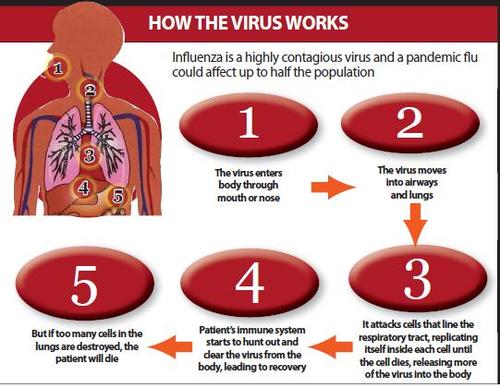
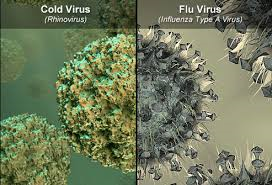
Both influenza and the common cold are viral respiratory infections (they affect the nose, throat, and lungs). Viruses are spread from person to person through airborne droplets (aerosols) that are sneezed out or coughed up by an infected person, direct contact is another form of spread with infected nasal secretions, or fomites (contaminated objects). Which of these routes is of primary importance has not been determined, however hand to hand and hand to surface to hand to contact seems of more importance than transmission. The viruses may survive for prolonged periods in the environment (over 18 hours for rhinoviruses in particular=a common virus for colds) and can be picked up by people’s hands and subsequently carried to their eyes or nose where infection occurs. In some cases, the viruses can be spread when a person touches an infected surface (e.g., doorknobs, countertops, telephones) and then touches his or her nose, mouth, or eyes. As such, these illnesses are most easily spread in crowded conditions such as schools.

The traditional folk theory that you can catch a cold in prolonged exposure to cold weather such as rain or winter settings is how the illness got its name. Some of the viruses that cause common colds are seasonal, occurring more frequently during cold or wet weather. The reason for the seasonality has not yet been fully determined. This may occur due to cold induced changes in the respiratory system, decreased immune response, and low humidity increasing viral transmission rates, perhaps due to dry air allowing small viral droplets to disperse farther, and stay in the air longer. It may be due to social factors, such as people spending more time indoors, as opposed to outdoors, exposing him or her “self” to an infected person, and specifically children at school. There is some controversy over the role of body cooling as a risk factor for the common cold; the majority of the evidence does suggest a result in greater susceptibility to infection.            

The SIMPLE COMMON COLD:

The common cold (also known as nasopharyngitis, rhinopharyngitis, acute coryza, head cold) or simply a cold is a viral infection of the upper respiratory tract which primarily effects the nose. There are over 200 different known cold viruses, but most colds (30% up to 80%) are caused by rhinovirusesThis means you can pass the cold to others, so stay home and get some much-needed rest for yourself and not passing it on to others for the contagious period at least.

If cold symptoms do not seem to be improving after a week, you may have a bacterial infection, which means you may need antibiotics, which only kill bacterial infections not viral.

Sometimes you may mistake cold symptoms for allergic rhinitis (hay fever) or a sinus infection (bacterial). If cold symptoms begin quickly and are improving after a week, then it is usually a cold, not allergy. If your cold symptoms do not seem to be getting better after a week, check with your doctor to see if you have developed an allergy or inflammation or the sinuses (sinusitis).

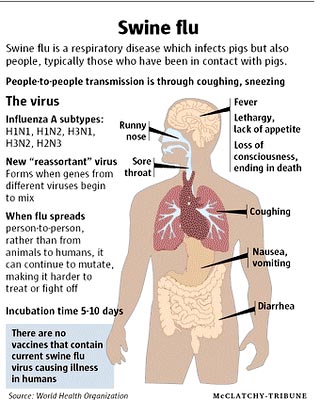
Influenza is commonly referred to as “the flu”, this is an infectious disease of birds and mammals caused by RNA viruses of the family Orthomyxoviridae, the influenza viruses. The most common sign or symptom are chills, fever, runny nose, coughing, aches and weakness to headache and sore throat. Although it is often confused with other influenza-like illnesses, especially the COMMON COLD, influenza is a more severe illness or disease caused by a different virus. Influenza nausea and vomiting, particularly in children but these symptoms are more common in the unrelated gastroenteritis, which is sometimes inaccurately referred to as “stomach flu” or “25 hour flu”. The flu can occasionally lead to pneumonia, either direct viral pneumonia or secondary bacterial pneumonia, even for persons who are usually very healthy. In particular it is a warning sign if a child or presumably an adult seems to be getting better and then relapses with a high fever as this relapse may be bacterial pneumonia. Another warning sign is if the person starts to have trouble breathing.

Each year, 10% to 20% of Canadians are stricken with influenza. Although most people recover fully, depending on the severity of the flu season, it can result in an average of 20,000 hospitalizations and approximately 4000 to 8000 deaths annually in Canada. Deaths due to the flu are found mostly among high-risk populations, such as those with other medical conditions (such as diabetes or cancer) or weakened immune systems, seniors, or very young children. There are 3 types of influenza viruses: A, B, and C. Type A influenza causes the most serious problems in humans and can be carried by humans or animals (wild birds are commonly the host carriers). It is more common for humans seem to carry the most with ailments with type A influenza. Type B Influenza is found in humans also. Type B flu may cause less severe reaction than A type flu virus but for the few for the many can still be at times extremely harmed. Influenza B viruses are not classified by subtype and do not cause pandemics at this time. Influenza type C also found in people but milder than type A or B. People don’t become very ill from this Type C Influenza and do not cause pandemics.

The common cold eventually fizzles, but the flu may be deadly. Some 200,000 people in the U.S. are hospitalized and 36,000 die each year from flu complications — and that pales in comparison to the flu pandemic of 1918 that claimed between 20 and 100 million lives.

The best defense against it:   a vaccine once a year.

References for Part 1 and 2 on the two bugs The FLU and The COLD:

1-Wikipedia “the free encyclopedia” 2013 website under the topic Influenza.

2-Kimberly Clark Professional website under the influenza.

3-Web MD under “COLD, FLU, COUGH CENTER” “Flu or cold symptoms?” Reviewed by Laura J. Martin MD November 01, 2011

4-2013 Novartis Consumer Health Inc. Triaminic “Fend off the Flu”

5-Scientific American “Why do we get the flu most often in the winter? Are viruses virulent in cold weather? December 15, 1997



QUOTE FOR WEDNESDAY:

“Photosensitivity reactions are common problem in dermatology . Among them is drug-induced photosensitivity, a cutaneous condition that is due to an increased susceptibility of the skin to exposure to UV light in subjects taking a photosensitizing drug.”
Professor Peter Wolf at UV damage.org
 

QUOTE FOR THURSDAY:

“Smoking cessation [stopping smoking] represents the single most important step that smokers can take to enhance the length and quality of their lives.”

The U.S. Surgeon General and American Cancer Society

Control your weight as you quit smoking!

risks of smoking  smoking 3   risks of smoking 2

Not everyone gains weight when they stop smoking On average, people who quit smoking gain only about 10 pounds You are more likely to gain weight when you stop smoking especially if you stop smoking when you have smoked for 10 to 20 years or smoked one or more packs of cigarettes a day. You can control life. Although you might gain a few pounds, remember you have stopped smoking and taken a big step towards a healthier life.

What causes weight gain after quitting? When nicotine, a chemical n cigarette smoke, leaves your body, you may experience: Short-term weight gain. The nicotine kept your body weight low, and when you quit smoking your body returns to the weight it would have been had you never smoked.

You might gain 3-5 pounds due to water retention during the first week after quitting.

A need for fewer calories when quitting to smoke. After you stop smoking, you may use fewer calories than when you were smoking.

Will this weight gain hurt your health?

The health risks of smoking are far greater than the risks of gaining 5 to 10 pounds. Smoking causes more than 400,000 deaths each year in the United States. You would have to gain 100 to 150 lbs after quitting to make your health as high as when you smoked. The health risks of smoking and the benefits of quitting are listed below.

The Health Risks of Smoking

**Your Heart Rate Increases

**You expose yourself to some 4000 chemicals in cigarette smoke and 40 of these chemicals cause cancer.

**You are much more likely to get lung cancer compared to a nonsmoker. Men are 22 times more likely to develop lung cancer, while women who smoke are 12 times more likely.

**You are twice as likely to have a heart attack as a nonsmoker.

**You increase your risk for heart attack as a nonsmoker.

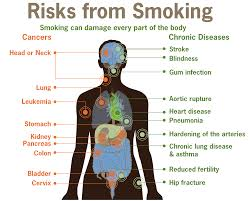
**You increase your risk for heart disease, stroke, some types of cancer (lung especially), emphysema, chronic bronchitis, and other lung diseases.

The Benefits of Quitting

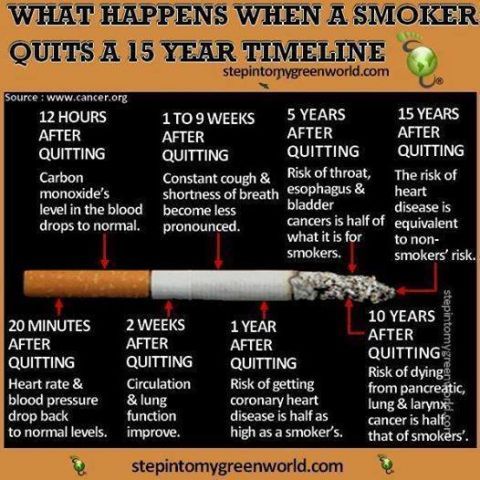
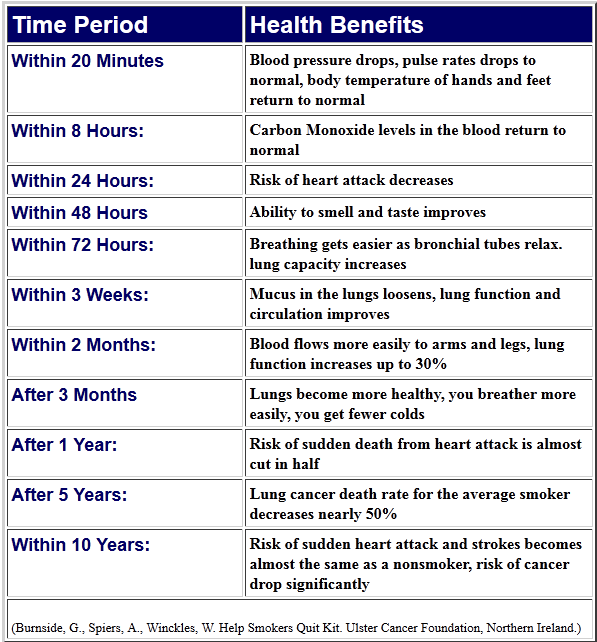
When you quit smoking your body begins to heal from the effects of the nicotine within 12 hours after your last cigarette.

Your heart and lungs start repairing the damage caused by cigarette smoke.

You breathe easier and your smoker’s cough starts to go away.

You lower your risk for illness and death from heart disease, stroke, chronic bronchitis, emphysema, lung cancer, and other types of cancer.

You contribute to cleaner air, especially for children who are at risk for illnesses because they breathe others cigarette smoke.

Adapted from the National Cancer Institute’s “Smoking:Facts and Tips for Quitting”


QUOTE FOR WEDNESDAY:

“Because even healthy people can fall victim to summer heat, take the following precautions to reduce your risk:

-Drink plenty of water or other non-alcoholic beverages

-Wear lightweight, loose-fitting clothing that is light in color                                                                        

-Reduce strenous activities or do them during the cooler parts of the day (not during 12pm-4pm the hottest time of a day).”

CDC Center for Disease Control and Prevention