Archives

QUOTE FOR MONDAY:

“Stroke is the fifth leading cause of death in the United States and is a major cause of serious disability for adults. About 795,000 people in the United States have a stroke each year.”

Centers for Disease Control and Prevention

QUOTE FOR THE WEEKEND:

“Arthritis is very common but is not well understood. Actually, “arthritis” is not a single disease; it is an informal way of referring to joint pain or joint disease. There are more than 100 types of arthritis and related conditions. People of all ages, sexes and races can and do have arthritis, and it is the leading cause of disability in America. More than 50 million adults and 300,000 children have some type of arthritis. It is most common among women and occurs more frequently as people get older.”

www.arthritis.org

QUOTE FOR FRIDAY:

A Transient Ischemic Attack (TIA) is often called a mini-stroke, but it’s really a major warning.”
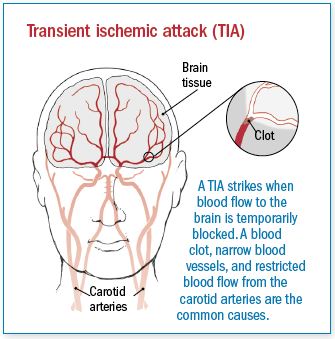
 
American Stroke Association (stroke.org)

What is a TIA=Transient Ischemic Attack?


Causes of a TIA:

1-Hemmoragic-a blood vessel that bursts in the brain causing lack of oxygen to be supplied to the area of the brain (a lobe) where the vessel ruptured.  Lack of oxygen to any area of the body tissue=starvation to the tissue; where in this case is the brain=a stroke.

2-Blockages-These blockages caused by the following: blood clots, athero-sclerosis, a common disorder, it happens due to fat, cholesterol, with even tar from smoking, or other substances that build up in the walls of the arteries forming hard structures called plaque and in time creating a blockage in the vessel interfering with blood supply providing oxygen to tissue and if blocked in the brain=high probability of a stroke occurring if not taken care of.   “Recommended related to Heart Disease” by Web MD which states that atherosclerosis is the key cause of heart attacks & strokes including it’s the number one killer in the United States.  Risk Factors for atherosclerosis include high blood pressure (b/p)=arteriosclerosis, blood level of high bad cholesterol (LDL), blood level of low good cholesterol (HDL), smoking, diabetes, and history of heart attacks in your nuclear family.  Definitely a healthy diet, having exercise in your life, and your weight within the therapeutic body mass index level will help prevent, if not treat, atherosclerosis.

The Risk Factors of a TIA, especially diet & sedentary lifestyle:

  1. High Blood Pressure (b/p)-This is also known as the diagnosis hypertension.  In understanding how hypertension works let’s use a metaphor:  Think of a blood vessel as a long thin balloon and if we stand on it the pressure will increase inside the balloon causing the diameter of the balloon to swell up.  If you continue to step on the balloon adding additional pressure this causes it to finally reach it’s total amount of pressure or when you exceed the total level of pressure this results in popping the balloon.  Similar concept with high b/p, that’s if the pressure keeps rising in our blood vessels due to blockage or vasoconstriction (which is making the vessels diameter more narrow=increased pressure in the vessels) sooner or later a vessel bursts somewhere in the body due to the b/p passing it’s total level in the amount of pressure that it can handle in the circulatory system which can result into a burst of an artery, like in the brain causing a stroke or in a vessel near the heart causing a myocardial infarction (but this is another topic some other day).  Think of food,  a human being not eating leads into starvation, well for blood cells lack of oxygen=starvation to the cells.  This causes in both situations or cases a lack of nutrition (the tissue is lacking oxygen).  With a stroke, not enough oxygen is getting to the brain resulting from either a hemorrhage (loosing too much blood=loosing to many cells=oxygen (food for tissue) or a blockage preventing 02 getting to the area.  Though many people have increased b/p due to only 2 things diet leading them to obesity, and lack of exercise due to a sedentary lifestyle, which could be changed and resolve the problem in most cases.  Increased b/p can also be due noncompliance- like continuing to smoke, or not following the healthy regimen the M.D. ordered for you as a patient.  The overall healthy regimen for a person with hypertension would be a low sodium diet (preventing further vasoconstriction), even low in cholesterol/fat/1800-2000 calories a day (preventing obesity or further weight gain), balancing rest with exercise and the b/p medications taken as prescribed, by their M.D.    So for many Americans hypertension can be controlled just by diet with balancing exercise with rest.  For others it might take a little more like doing which is what I just mentioned with following your medication regimen as ordered and going to your doctor having your b/p monitored, as your M.D. prescribes.
  2. Cholesterol is also found in some foods, such as seafood, eggs, meats and dairy products.LDL can cause plaque build-up. Plaque is a thick, hard substance that can clog arteries. Recent studies show that high levels of LDL and triglycerides (blood fats) raise the risk of ischemic stroke. Plaque can also increase risk of a transient ischemic attack (TIA) where stroke symptoms go away within 24 hours.      –The second main type of cholesterol is high-density lipoprotein (HDL), often called the “goodcholesterol. High levels of HDL may reduce stroke risk.                                                                      -Because cholesterol does not dissolve in the blood on its own, it must be carried to and from cells by particles called lipoproteins. There are two main types of lipoproteins: low-density lipoproteins (LDL)=the bad cholesterol and high-density lipoproteins=the good cholesterol (HDL).                                                                                                             -The National Stroke Association states the following about cholesterol: Cholesterol is a soft, waxy fat (lipid) that is made by the body. It is found in the bloodstream and in all of your body’s cells. The body needs cholesterol to form cell membranes, some hormones and vitamin D.
  3. Smoking-For starters, this unhealthy habit puts you at risk for high blood pressure since it causes vasoconstriction (narrowing) of the vessels in our body due to the nicotine.  The answer to this risk factor is simply quit this unhealthy habit. I have a dear friend doing great in quitting this habit now. Smoking adds to the plaque building up in the vessels.  Centers for Disease state that in 2010 the leading cause of death was heart disease followed by cancer than to chronic respiratory disease and lastly stroke.  Over time a healthy diet balanced with exercise daily or every 2 days for 30minutes would help decrease the cardiac disease and stroke.  The American Lung Association states that smoking is directly responsible for approximately 90 percent of lung cancer deaths and approximately 80-90 percent of COPD (emphysema and chronic bronchitis) deaths.    Know this:
    • Smoking harms nearly every organ in the body, and is a main cause of lung cancer and chronic obstructive pulmonary disease (COPD, including chronic bronchitis and emphysema). It is also a cause of coronary heart disease (CAD), stroke and a host of other cancers and diseases.  So think twice before becoming a smoker.
    • To understand smoking easy, over a long process, this occurs:  Let’s take a car for instance, if the transmission is bad and not repaired by a mechanic the engine will be affected and soon fail completely.  Now let’s take the lungs (this is the transmission of the body), if they are bad and you don’t go to a doctor to help treat the problem the heart will be affected at some point to failure in function. This is the same with a heart (the engine of the body), that when it is bad with no repair or Rx it will soon affect the lungs (the transmission of the body). When one of these organs works at its fullest potential without the other organ properly functioning, in time, it will affect the other organ.  If a smoker doesn’t quit it causes COPD=Emphysema (this does take over years) and it will affect the heart in time to not function as effectively with someone who has healthy lungs.  Worse, if you don’t quit smoking you increase the risk of getting CAD (coronary artery disease from tar, high cholesterol).       Add to the problem atherosclerosis if you already have the diagnosis CAD which is caused by fatty materials (lipids), fibrous tissue with tar (from the smoking) causing blockages in the vessels or even better cause arteriosclerosis (narrowing of the vessels). You also have a risk at lung cancer.  So smoke? No!

Stroke verses TIA=Nonreversible verses Reversible.

Stroke is scarring to the brain where TIA doesn’t.  TIA has reversible stroke symptoms that aren’t permanent and that is the reason its called a “mini-stroke”.

Like Heart Attack verses Angina, Heart Attack is scarring to the heart verses no scarring to the heart for Angina. Both Angina and TIA are just lack of oxygen to the organs the heart and the brain causing the symptoms due to lack of oxygen called ischemia.  Both heart attack and stroke are both a lot worse than just ischemia.  They both get to the point where there in no oxygen causing actual permanent damage to the organ since the problem never reversed=scarring to the heart and brain.  High cholesterol levels or plaque build-up in the arteries can block normal blood flow to the brain and cause a stroke or to the heart causing a MI. High cholesterol may also increase the risk of heart disease and atherosclerosis, which are both risk factors for stroke.

So without controlling your blood pressure therapeutically or without ending your smoking or without eating healthy with living no healthy habits puts you at risk for a TIA or Stroke.  The heart at first will be able to compensate with blockages starting in the brain or heart without symptoms but overtime living these unhealthy habits the heart or brain may find it so hard to function or work that the heart or brain starts to fail in doing its job effectively due to a vessel in the heart or brain that has a partial or completely blocked vessel causing that organ to have ischemia (reversible still) to attack (scarred=not reversible).

Let’s take the car, you do maintenance to the vehicle it will operate better and last longer, well the exact principle with the human body=treat it better is will last longer.  All this means=Good Diet, Good Exercise balanced with rest, no smoking with B/P well controlled. If with Bad Diet, Overweight, Smoking, Hypertension-High B/P, Bad Health Habits puts you at risk for a TIA or Stroke.  Pretty simple isn’t it.

PREVENTION MEASURES FOR A TIA OR STROKE:

So on average eat a healthy diet, keep your weight in a therapeutic range, properly exercising, not with high B/P, not smoking, not with high cholesterol than expect to be at highier odds you will be leaning towards living a longer life (not shortening your life span or not having a short life).  Just get a yearly physical and that always leaves your doctor in picking up problems much quicker and putting it to a stop or a reversing it to possibly becoming extinct in time (Ex. high b/p, high cholesterol, lowering weight if overweight).

QUOTE FOR THURSDAY:

“High blood pressure generally develops over many years, and it affects nearly everyone eventually. Fortunately, high blood pressure can be easily detected. And once you know you have high blood pressure, you can work with your doctor to control it.”

MAYO CLINIC

QUOTE FOR WEDNESDAY:

“In the United States, nearly 68 million people have high blood pressure, which is also called hypertension. Hypertension increases the risk for heart disease and stroke, the first and third leading causes of death in the United States.”

Heart.org

QUOTE FOR TUESDAY:

“Diagnosing lupus is difficult because signs and symptoms vary considerably from person to person. Signs and symptoms of lupus may vary over time and overlap with those of many other disorders.   No one test can diagnose Lupus.”

MAYO CLINIC

QUOTE FOR MONDAY:

“Lupus is a chronic (long-term) disease that can cause inflammation and pain in any part of your body. It’s an autoimmune disease, which means that your immune system — the body system that usually fights infections — attacks healthy tissue instead.  Inflammation usually happens when your immune system is fighting an infection or an injury. When lupus makes your immune system attack healthy tissue, it can cause inflammation in lots of different body parts. ”

Lupus Foundation of America

QUOTE FOR THE WEEKEND:

“The theory is that people are either left-brained or right-brained, meaning that one side of their brain is dominant. If you’re mostly analytical and methodical in your thinking, you’re said to be left-brained. If you tend to be more creative or artistic, you’re thought to be right-brained.”

healthline.com
 

Part 3 How the brain works (Right vs. Left side)

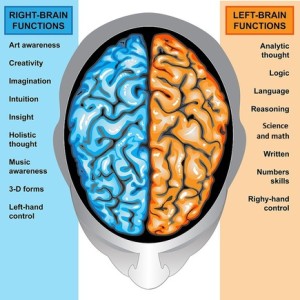
                                                                                                         Rt vs Lt side of brain picture

If you would split the brain right down the middle into two symmetrical, or equal parts, you would have a right and left hemisphere. Although equal in size, these two sides are not the same, and do not carry out the same functions.  The left side of the brain is responsible for controlling the right side of the body. It also performs tasks that have to do with logic, such as in science and mathematics. On the other hand, the right hemisphere coordinates the left side of the body, and performs tasks that have do with creativity and the arts. Both hemispheres are connected by the corpus callosum and serve the body in different ways .

Have you ever heard of the left or right brain theory?

 According to the theory of left-brain or right-brain dominance, each side of the brain controls different types of thinking. Additionally, people are said to prefer one type of thinking over the other. For example, a person who is “left-brained” is often said to be more logical, analytical, and objective, while a person who is “right-brained” is said to be more intuitive, thoughtful, and subjective.

In psychology, the theory is based on what is known as the lateralization of brain function. So does one side of the brain really control specific functions? Are people either left-brained or right-brained? Like many popular psychology myths, this one grew out of observations about the human brain that were then dramatically distorted and exaggerated.

The right brain-left brain theory originated in the work of Roger W. Sperry, who was awarded the Nobel Prize in 1981. While studying the effects of epilepsy, Sperry discovered that cutting the corpus collosum (the structure that connects the two hemispheres of the brain) could reduce or eliminate seizures.

However, these patients also experienced other symptoms after the communication pathway between the two sides of the brain was cut. For example, many split-brain patients found themselves unable to name objects that were processed by the right side of the brain, but were able to name objects that were processed by the left-side of the brain. Based on this information, Sperry suggested that language was controlled by the left-side of the brain.

Later research has shown that the brain is not nearly as dichotomous as once thought. For example, recent research has shown that abilities in subjects such as math are actually strongest when both halves of the brain work together. Today, neuroscientists know that the two sides of the brain work together to perform a wide variety of tasks and that the two hemispheres communicate through the corpus collosum.

Researchers have demonstrated that right-brain/left-brain theory is a myth, yet its popularity persists. Why? Unfortunately many people are likely unaware that the theory is outdated. Today, students might continue to learn about the theory as a point of historical interest – to understand how our ideas about how the brain works have evolved and changed over time as researchers have learned more about how the brain operates.

Remember though its true that the right and left side of the brain have different functions in our thinking process!

The brain is a very fascinating yet a complicated organ that basically is like the computer of the human body.  It is like the hard drive for our entire body, which stores information.  It is also the motherboard of our body since the brain allows messages to cross over from one system to another.  Lastly, the brain also is a processor where it controls the speed of how slow or quick our pulse beats, to our breathing,  to our running, to our voiding, etc.  Ending line it decides how quick or slow we do activities of daily living inside and outside of the body.