Archives

How the brain works! Part 2 The cerebellum & Midbrain.

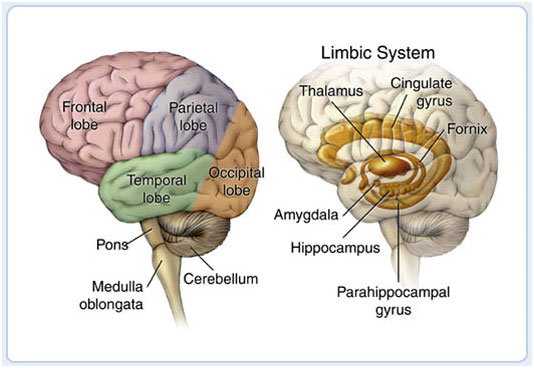
                                                                       brain Lobe Regions

The cerebellum –  The cerebellum is one of the most identifiable parts of the brain due to its unique shape and location. It is extremely important for being able to perform everyday voluntary (done with purpose and intent) tasks such as walking and writing. It is also essential to being able to stay balanced and upright. Patients who have suffered from damaged cerebellums often struggle with keeping their balance and maintaining proper muscle coordination.

THE BRAIN STEM: Often the midbrain, pons, and medulla oblongata are referred to together as the brainstem (Anatomy top & below with pons).


The brainstem is the region of the brain that connects the cerebrum with the spinal cord. It consists of 3 parts being the midbrain, medulla oblongata, and the pons.   Overall the midbrain has many functions for such a small organ part of the brain.  The motor and sensory neurons travel through the brainstem allowing for the relay of signals between the brain and the spinal cord. The brainstem coordinates motor control signals sent from the brain to the body. The brainstem also controls life supporting autonomic functions through the autonomic nervous system that is a sub-division of the peripheral nervous system.  The peripheral nervous system (PNS) is the part of the nervous system that consists of the nerves and ganglia outside of the brain and spinal cord.  The main function of the PNS is to connect the central nervous system (CNS) to the limbs and organs, essentially serving as a communication relay or sending messages going back and forth between the brain and the extremities.   The peripheral nervous system is divided into the somatic nervous system and the autonomic nervous system.  The autonomic nervous system influences the function of internal organs.  The autonomic nervous system is a control system that acts largely unconsciously in regulating bodily functions such as the heart rate, digestion, respiratory rate, pupillary response, urination, and even sexual arousal at times but to do these functions messages have to reach the brain which send messages back to areas of the body do these bodily functions and this is where the brain stem comes in sending messages to the brain and the relay back out through the peripheral nervous system=autonomic nervous system and  also through the spinal cord.  The stem has a function also with alertness.

The midbrain also called the mesencephalon is the portion of the brainstem that connects the hindbrain and the forebrain.  Its function is for controlling responses to sight.

The medulla oblongata is easily the most important part of the brain. It’s functions are involuntary, or done without thought.  This where those unconscious actions of our body comes into play that where mentioned above.  We would not be able to live without the medulla because of the myriad of crucial tasks it performs including pulse, regulating blood pressure and breathing. As a part of the brain stem, it also helps transfer neural messages from the brain to the spinal cord.

The pons serves as a message station between several areas of the brain. It helps relay messages from the cortex and the cerebellum. Without the pons, the brain would not be able to function because messages would not be able to be transmitted, or passed along. It also plays a key role in sleep and dreaming, where REM sleep, or the sleeping state where dreaming is most likely to occur, has been proven to originate here, in the pons.

Tune in Friday for the last part of how the brain works Part 3 covering the functions of the brain on the right and left side with more.


QUOTE FOR THURSDAY:

“Cerebrum: is the largest part of the brain and is composed of right and left hemispheres. It performs higher functions like interpreting touch, vision and hearing, as well as speech, reasoning, emotions, learning, and fine control of movement.”
 
Mayfield Clinic (mayfieldclinic.com)

QUOTE FOR WEDNESDAY:

“You can become infected by coming into close contact (about 6 feet or twoarm lengths) with a person who has COVID-19. COVID-19 is primarily spreadfrom person to person.• You can become infected from respiratory droplets when an infected person coughs, sneezes, or talks.• You may also be able to get it by touching a surface or object that has the virus on it, and then by touching your mouth, nose, or eyes.”

cdc.gov

” A number of environmental factors influence the spread of communicable diseases that are prone to cause epidemics. The most important of these are:

water supply
sanitation facilities
food
climate.

A lack of safe water, inadequate excreta disposal facilities, poor hygiene, poor living conditions and unsafe food can all cause diarrhoeal diseases. These diseases are a major cause of suffering and death in an emergency situation.”

WHO World Health Organization  https://www.who.int/www.who.int

QUOTE FOR WEDNESDAY:

“You can become infected by coming into close contact (about 6 feet or twoarm lengths) with a person who has COVID-19. COVID-19 is primarily spreadfrom person to person.• You can become infected from respiratory droplets when an infected person coughs, sneezes, or talks.• You may also be able to get it by touching a surface or object that has the virus on it, and then by touching your mouth, nose, or eyes.”
 
cdc.gov

“Environmental Risk Factors factors that affect certain areas in US with highier count of COVID-19!”

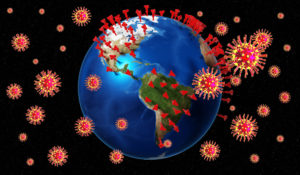
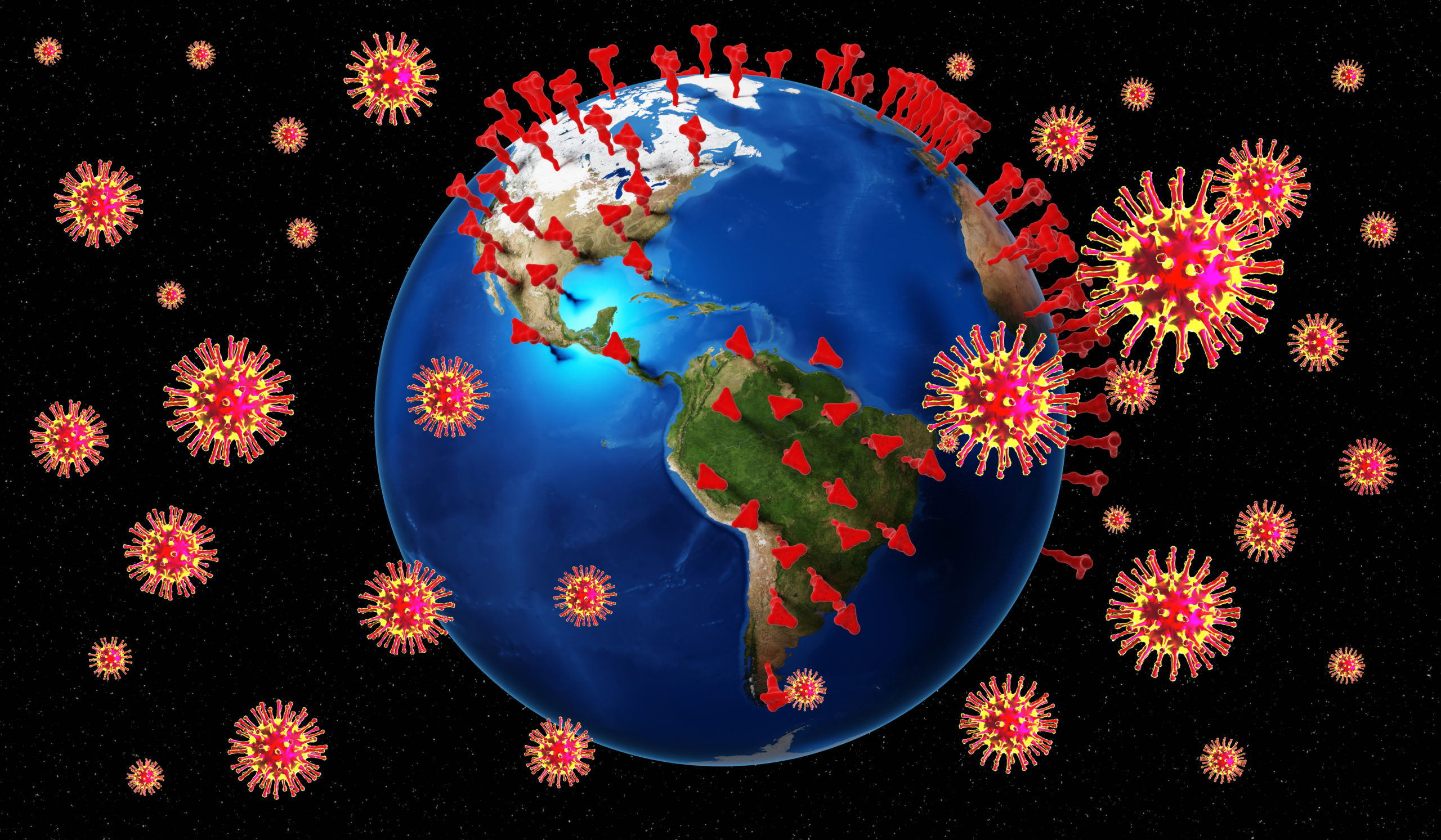
Global coronavirus epidemic outbreak concept – 3D illustration
                     

“What you get is the initial damage and rush of inflammatory cells, but the damage is so extensive that the body’s immune response is completely overwhelmed — which causes even more immune response, more immune cells and more damage,” said Matthew Frieman, a virologist at the University of Maryland School of Medicine.

PMC U.S. National Library of Medicine/National Institutes of Health states, “Inflammation is a biological response of the immune system that can be triggered by a variety of factors, including pathogens, damaged cells and toxic compounds. These factors may induce acute and/or chronic inflammatory responses in the heart, pancreas, liver, kidney, lung, brain, intestinal tract and reproductive system, potentially leading to tissue damage or disease.

With infection, the virus probably begins to multiply inside cells lining the airway, which are fringed with hairlike structures. Coronaviruses that cause common colds are excellent at infecting the upper airway, while SARS tended to go deeper in the lungs. As the coronavirus gains strength, Frieman said, dead cells are sloughed off and collect in the airway, making breathing difficult.

Inflammation is the immune system’s response to harmful stimuli, such as pathogens, damaged cells, toxic compounds, or irradiation [], and acts by removing injurious stimuli and initiating the healing process []. Inflammation is therefore a defense mechanism that is vital to health []. Usually, during acute inflammatory responses, cellular and molecular events and interactions efficiently minimize impending injury or infection. This mitigation process contributes to restoration of tissue homeostasis and resolution of the acute inflammation. However, uncontrolled acute inflammation may become chronic, contributing to a variety of chronic inflammatory diseases [].

At the tissue level, inflammation is characterized by redness, swelling, heat, pain, and loss of tissue function, which result from local immune, vascular and inflammatory cell responses to infection or injury []. Important microcirculatory events that occur during the inflammatory process include vascular permeability changes, leukocyte recruitment and accumulation, and inflammatory mediator release [, ].

Various pathogenic factors, such as infection, tissue injury, or cardiac infarction, can induce inflammation by causing tissue damage. The etiologies of inflammation can be infectious or non-infectious (Table (Table1).1). In response to tissue injury, the body initiates a chemical signaling cascade that stimulates responses aimed at healing affected tissues. These signals activate leukocyte chemotaxis from the general circulation to sites of damage. These activated leukocytes produce cytokines that induce inflammatory responses [].

The inflammatory response is the coordinate activation of signaling pathways that regulate inflammatory mediator levels in resident tissue cells and inflammatory cells recruited from the blood []. Inflammation is a common pathogenesis of many chronic diseases, including cardiovascular and bowel diseases, diabetes, arthritis, and cancer []. Although inflammatory response processes depend on the precise nature of the initial stimulus and its location in the body, they all share a common mechanism, which can be summarized as follows: 1) cell surface pattern receptors recognize detrimental stimuli; 2) inflammatory pathways are activated; 3) inflammatory markers are released; and 4) inflammatory cells are recruited.”

This is why you see constant commercials stating to stay home especially if you have lung disease, diabetes, low immunity, and heart disease/high B/P.  Including obesity.  homeless, and the older age (60 years old and up).  It’s like a car in that the longer you have the car the more wear and tear on the car well the same with the body for elderly and homeless.  The older the patient the harder it is to fight the disease.  So there are factors that involve bad turn outs for patients with Covid-19 virus that can go to lung damage to death.

Through worldometer.info as of this past Monday 976,176 cases of corona virus in the USA.  Close to one million cases and where is the worst cases NY being in NYC and NJ (there next door neighbor).  NY cases are 293,354 with total deaths 22,275

Through nyc.gov in NYC Total cases are 153,204, Hospitalized cases are  39, 635 Confirmed Deaths 11,460 Probable Deaths 5213

Through MSNBC/NBC/John’s Hopkins today at 1126 they show:

WORLDWIDE CASES OF CORONA CONFIRMED CASES:   2,989,493

Total America Confirmed Cases:  974,500

Worldwide with most confirmed cases:

United States:   974, 500   Spain:  226,629

Italy:  197, 675 France:  162, 220 Germany:  167, 770

Cases in America:

New York:  294, 491        New Jersey: 109, 038  

Massachusetts: 54, 938  Illinois:  43, 903   California: 43, 672

(source of counts is John Hopkins/NBC NEWS April 27th 2020)

New York City: cases 153, 204 as of 4/26/2020 (Source is https://projects.thecity.nyc/2020 at 1708)

New York City: cases 158, 000 (Source from 2hrs ago by wikipedia, time 4/27/ 2020 is 1130)

Why is NYC over 1/2 the cases of America as of today at 1100?

Size of NYC – of the 5 bureau cities only covers 321 square miles, over 205,000 acres.

Population The population of people in NYC are 8.399 million not including illegals .

Dirtiest City in America –  NYC

Sanctuary City –  Leaders of sanctuary cities say they want to reduce fear of deportation and possible family break-up among people who are in the city illegally, this can definitely put a city at a potential risk for disease.

Low income groups in the city.  This means that in New York City income of $68,720 for a family of four is considered to be low income.   (https://www.povertycenter.columbia.edu/poverty-disadvantage-in-new-york-city)

About 1.7 million New Yorkers lived below the poverty line in 2011-2015. This number is larger than the population of Philadelphia or Phoenix, and would be the country’s 7th largest city if ranked separately. The overall poverty rate in New York City has remained relatively steady since 1980, hovering at around 20%.

Homes – primarily apartments and small.

Subways & Buses – a major way of transportation in NYC.  Standing right next to each other.

Two international airports – J.F.K. and La Guardia.  Traveling in and out of America all over the world including China.  In Manhattan there’s China town as well.

Pollution in NYC – in 1oth place the worst pollution by Yahoo Finance (the 7 of the 9 before it where all in California).

See the pattern why NYC is highest with Covid19 virus? 

There were numerous factors putting NYC at risk for where they are in count this past year of Covid19 unfortunately and hopefully both Governor Cuomo and Mayor Deblasio will follow what Governor Cuomo stated in the past year on MSNBC that we need to look at this disaster and learn from it to allow us to be better prepared for when this type of a disaster occurs again since NYS, NYC and of course other states were not.  Governor Cuomo and facts on epidemics through historical literature points out examples of disasters Americans have gone through before from Great Chicago Fire, Depression, Spanish Flu, 2008 Flu and others which made our nation stronger.


QUOTE FOR TUESDAY:

A widowmaker heart attack occurs when the left anterior descending (LAD) artery, which supplies blood to the larger, front part of the heart, is blocked at its origin. “This artery delivers a major amount of blood to your heart,” Dr. Abdallah explains.”

Cleveland Clinic

QUOTE FOR MONDAY:

“You can become infected by coming into close contact (about 6 feet or twoarm lengths) with a person who has COVID-19. COVID-19 is primarily spreadfrom person to person.• You can become infected from respiratory droplets when an infected person coughs, sneezes, or talks.• You may also be able to get it by touching a surface or object that has the virus on it, and then by touching your mouth, nose, or eyes.”

cdc.gov

QUOTES FOR THE WEEKEND:

Coronaviruses are composed of enveloped virions that contain a positive strand RNA genome. Human coronaviruses may cause the common cold or severe respiratory illness. In 2002 the SARS coronavirus emerged in China and spread globally, infecting over 8000 individuals and killing more than 900.

“On Tuesday, January 21, the Centers for Disease Control & Prevention (CDC) confirmed the first U.S. case of a coronavirus (2019 Novel Coronavirus, or 2019-nCoV) that originated last month in the central Chinese city of Wuhan. The patient had returned to Washington State last week from a trip to Wuhan, where 300 confirmed infections and several deaths have occurred. Thailand, Japan, and South Korea have also reported a handful of cases, all connected to travel from Wuhan. [January 24 update: A second U.S. case has been confirmed in Chicago, Illinois, and three cases have been confirmed in France.].

On January 30, the World Health Organization (WHO) Director-General declared that the 2019-nCoV outbreak constitutes a Public Health Emergency of International Concern. On January 31, the U.S. Department of Health and Human Services (HHS) Secretary declared a U.S. public health emergency to respond to 2019-nCoV.§ Also on January 31, the president of the United States signed a “Proclamation on Suspension of Entry as Immigrants and Nonimmigrants of Persons who Pose a Risk of Transmitting 2019 Novel Coronavirus,” which limits entry into the United States of persons who traveled to mainland China to U.S. citizens and lawful permanent residents and their families.” USA Citizen Protection

CDC Centers for Disease Control and Prevention

Reports suggest that 2019-nCoV was initially spread from animal-to-person. Currently, there are growing indications that there is limited person-to-person spread, though it is unclear how easily this may be happening.”

Hawaii.gov


QUOTE FOR FRIDAY:

“Both diseases may be treated with chemotherapy, radiation therapy and/or stem cell transplantation.  Immunotherapy drugs may also help treat non-Hodgkin lymphoma and other hematological malignancies, such as multiple myeloma. “The early data suggests immunotherapy will play a future role in the management of lymphomas,” says Dr. Maurie Markman, President of Medicine and Science for Cancer Treatment Centers of America® (CTCA).”

Cancer Treatment Centers of America

QUOTE FOR THURSDAY:


“Lymphoma affects the body’s lymph system (also known as the lymphatic system). The lymph system is part of the immune system, which helps fight infections and some other diseases. It also helps fluids move through the body.”

American Cancer Society