
Archives

HOW TO KEEP YOUR MEMORY SHARP WITH AGE.

There’s no denying that as we age chronologically, our body ages right along with us. But research is showing that you can increase your chances of maintaining a healthy brain well into your old age if you add these “smart” foods to your daily eating regimen.

Blueberries.

“Brainberries” is what Steven Pratt, MD, author of Superfoods Rx: Fourteen Foods Proven to Change Your Life, calls these tasty fruits. Pratt, who is also on staff at Scripps Memorial Hospital in La Jolla, Calif., says that in animal studies researchers have found that blueberries help protect the brain from oxidative stress and may reduce the effects of age-related conditions such as

Alzheimer‘s disease or dementia. Studies have also shown that diets rich in blueberries significantly improved both the learning capacity and motor skills of aging rats, making them mentally equivalent to much younger rats. Ann Kulze, MD, author of Dr. Ann’s 10-Step Diet: A Simple Plan for Permanent Weight Loss & Lifelong Vitality, recommends adding at least 1 cup of blueberries a day in any form — fresh, frozen, or freeze-dried.

Wild salmon.

Deep-water fish, such as salmon, are rich in omega-3 essential fatty acids, which are essential for brain function, says Kulze. Both she and Pratt recommend wild salmon for its “cleanliness” and the fact that it is in plentiful supply. Omega-3s also contain anti-inflammatory substances. Other oily fish that provide the benefits of omega-3s are sardines and herring, says Kulze; she recommends a 4-ounce serving, two to three times a week.

Nuts and seeds.

Nuts and seeds are good sources of vitamin E, says Pratt, explaining that higher levels of vitamin E correspond with less cognitive decline as you get older. Add an ounce a day of walnuts, hazelnuts, Brazil nuts, filberts, almonds, cashews, peanuts, sunflower seeds, sesame seeds, flax seed, and unhydrogenated nut butters such as peanut butter, almond butter, and tahini. Raw or roasted doesn’t matter, although if you’re on a sodium-restricted diet, buy unsalted nuts.

Avocados.

Avocados are almost as good as blueberries in promoting brain health, says Pratt. “I don’t think the avocado gets its due,” agrees Kulze. True, the avocado is a fatty fruit, but, says Kulze, it’s a monounsaturated fat, which contributes to healthy blood flow. “And healthy blood flow means a healthy brain,” she says. Avocados also lower blood pressure, says Pratt, and as hypertension is a risk factor for the decline in cognitive abilities, a lower blood pressure should promote brain health. Avocados are high in calories, however, so Kulze suggests adding just 1/4 to 1/2 of an avocado to one daily meal as a side dish.

Whole grains.

Whole grains, such as oatmeal, whole-grain breads, and brown rice can reduce the risk for heart disease. “Every organ in the body is dependent on blood flow,” says Pratt. “If you promote cardiovascular health, you’re promoting good flow to the organ system, which includes the brain.” While wheat germ is not technically a whole grain, it also goes on Kulze’s “superfoods” list because in addition to fiber, it has vitamin E and some omega-3s. Kulze suggests 1/2 cup of whole-grain cereal, 1 slice of bread two-thee times day, or 2 tablespoons of wheat germ a day.

Beans.

Beans are “under-recognized” and “economical,” says Kulze. They also stabilize glucose (blood sugar) levels. The brain is dependent on glucose for fuel, Kulze explains, and since it can’t store the glucose, it relies on a steady stream of energy — which beans can provide. Any beans will do, says Kulze, but she is especially partial to lentils and black beans and recommends 1/2 cup every day.

Pomegranate juice.

Pomegranate juice (you can eat the fruit itself but with its many tiny seeds, it’s not nearly as convenient) offers potent antioxidant benefits, says Kulze, which protect the brain from the damage of free radicals. “Probably no part of the body is more sensitive to the damage from free radicals as the brain,” says board-certified neurologist David Perlmutter, MD, author of The Better Brain Book. Citrus fruits and colorful vegetables are also high on Perlmutter’s list of “brainy” foods because of their antioxidant properties — “the more colorful the better,” he says. Because pomegranate juice has added sugar (to counteract its natural tartness), you don’t want to go overboard, says Kulze; she recommends approximately 2 ounces a day, diluted with spring water or seltzer.

Freshly brewed tea.

Two to three cups a day of freshly brewed tea — hot or iced — contains a modest amount of caffeine which, when used “judiciously,” says Kulze — can boost brain power by enhancing memory, focus, and mood. Tea also has potent antioxidants, especially the class known as catechines, which promotes healthy blood flow. Bottled or powdered teas don’t do the trick, however, says Kulze. “It has to be freshly brewed.” Tea bags do count, however.

Dark chocolate.

Let’s end with the good stuff and my favorite desert. Dark chocolate has powerful antioxidant properties, contains several natural stimulants, including caffeine, which enhance focus and concentration, and stimulates the production of endorphins, which helps improve mood. One-half ounce to 1 ounce a day will provide all the benefits you need, says Kulze. This is one “superfood” where more is not better. “You have to do this one in moderation,” says Kulze.

Lastly the prevention of diseases that can impact all organs including our brain.  With obesity comes the risk of heart disease, diabetes II, that can lead into further problems down the road with other systems of the human body.  To get on prevention check if your body mass index is in the range it should be and if your not sure check online BMI where it is for free.


QUOTE FOR THURSDAY:

“Eat all the foods you enjoy—but the key is to do it in smaller quantities, says Elisa Zied, RDN, who has lost and kept off more than 30 pounds since her highest weight in high school.  Greens, oranges, reds, purples, yellows…you get the picture. Eating the rainbow will supply your body with a range of disease-fighting phytonutrients, and will naturally fill you up to help you cut back on unhealthy foods, says Dr. Lipman.  Remember simple exercises 10minutes a day can boost the metabolism and walking 2 miles a day will help with breakdown.”

Health.com

QUOTE FOR WEDNESDAY:

“Stress is how the brain and body respond to any demand. Any type of challenge—such as performance at work or school, a significant life change, or a traumatic event—can be stressful.  Everyone experiences stress from time to time. There are different types of stress—all of which carry physical and mental health risks. A stressor may be a one-time or short-term occurrence, or it can happen repeatedly over a long time. Some people may cope with stress more effectively and recover from stressful events more quickly than others.”

NIMH National Institute of Mental Health

QUOTE FOR TUESDAY:

Smoking can cause lung disease by damaging your airways and the small air sacs (alveoli) found in your lungs. Lung diseases caused by smoking include COPD, which includes emphysema and chronic bronchitis. Cigarette smoking causes most cases of lung cancer.

CDC

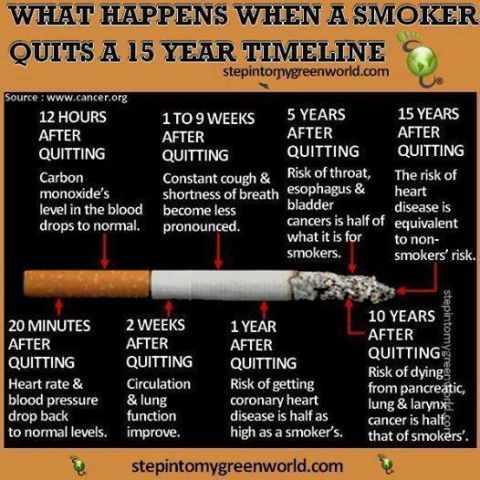
Do you smoke? If yes, well why don’t you just drink poison?

Let’s start with what smoking actually does to the body. Smoking harms nearly every organ of the body.  Smoking causes many diseases and reduces the health of smokers in general.  It primarily starts at the lungs.  How?   Well think of your lung tissue with openings all over which are air sacs called alveoli. This is an anatomical structure that has the form of a hollow cavity which does the exchange of oxygen and carbon dioxide in and out of our body, when we inhale and exhale.  The thing to know about this tissue is that before you start smoking the alveoli are expandable (think of it like a rubber band) allowing the person to get a good exchange of oxygen getting in the body to go to all our tissues and carbon dioxide getting out of the body (O2=oxygen being the fuel to our tissues and without it causes cellular starvation, carbon dioxide=CO2 being an acid / toxin to the human body and exhaled by the lungs).   After years of smoking the alveoli stretches out not allowing a good exchange of O2 and CO2.  The sad thing for a smoker is the alveoli cannot REVERSE back after damage has already occurred unless you had a lung transplant with  continuing to smoke, which no M.D. or health insurance would allow.  More realistic would be QUIT the bad habit.  The tissue doesn’t get completely better but it improves when you quit.  So the pt with Emphysema has alveoli that can’t exchange oxygen and carbon dioxide from the blood like it use to at the bottom of the lungs, prior to even starting to smoke.  Also, after smoking years and when diagnosed with COPD you have difficulty breathing (that is why smoking is a major cause of bronchitis or Emphysema=types of chronic obstructive pulmonary disease=COPD and it is not REVERSIBLE).  Emphysema is the worst type of COPD you can get.  COPD is the third leading cause of death in the U.S., and the economic burden of COPD in the U.S. in 2007 was $42.6 billion in health care costs and lost productivity.  Isn’t this reason enough to stop smoking?

Emphysema is an enlargement of the air spaces distal to the terminal bronchioles, with destruction of their walls. People with emphysema have historically been known as “Pink Puffers”, due to their pink complexion.

Chronic bronchitis is defined in clinical terms as a cough with sputum production on most days for 3 months of a year, for 2 consecutive years. People with advanced COPD that have primarily chronic bronchitis were commonly referred to as “Blue Bloaters” because of the bluish color of the skin and lips (cyanosis) along with hypoxia and fluid retention.

Know when the lungs get effected in time the heart gets effected.  One Affects the other in time.  The heart can’t live without the lungs and vice versa.

Now knowing just this you’ll understand why smoking alone can cause the following conditions, Through the Centers for Disease Control and Prevention.  They state the following:

Smoking and Increased Health Risks

Compared with nonsmokers, smoking is estimated to increase the risk of—

  • Coronary heart disease by 2 to 4 times,  (causing atherosclerosis=thickening of the vessels or due to arteriosclerosis=hardening of the arteries and remember smoking causes vasoconstriction of the vessels = increase pressure in the vessels = high B/P.
  • Stroke by 2 to 4 times(Due to causingthe above problems listed under coronary heart disease.)
  • Men developing lung cancer by 23 times,
  • Women developing lung cancer by 13 times(cancers due to constant irritation of the tissues) , and
  • Dying from chronic obstructive lung diseases (such as chronic bronchitis and emphysema) by 12 to 13 times.  ( Explained at the top)

Smoking and Cardiovascular Disease

  • Smoking causes coronary heart disease, the leading cause of death in the United States.
  • Cigarette smoking causes reduced circulation by narrowing the blood vessels (arteries) and puts smokers at risk of developing peripheral vascular disease (i.e., obstruction of the large arteries in the arms and legs that can cause a range of problems from pain to tissue loss or gangrene)  This pain to gangrene to amputation is due to lack of oxygenated blood getting to the tissue caused by the vasoconstriction the cigarette smoking caused.
  • Smoking causes abdominal aortic aneurysm (i.e., a swelling or weakening of the main artery of the body—the aorta—where it runs through the abdomen).  An aneurysm with constant vasoconstriction (increases pressure) puts the aneurysm at risk for rupture because the aneurysm area isn’t as strong as the other vessels=Rupture of the aortic aneurysm

Smoking and Respiratory Disease

  • Smoking causes lung cancer.
  • Smoking causes lung diseases (e.g., emphysema, bronchitis, chronic airway obstruction) by damaging the airways and alveoli (i.e., small air sacs) of the lungs.

Smoking and Cancer

Smoking causes the following cancers: (in alphabetical order)

  • Acute myeloid leukemia
  • Bladder cancer
  • Cancer of the cervix
  • Cancer of the esophagus
  • Kidney cancer
  • Cancer of the larynx (voice box)
  • Lung cancer
  • Cancer of the oral cavity (mouth)
  • Pancreatic cancer
  • Cancer of the pharynx (throat)
  • Stomach cancer

Smoking and Other Health Effects

Smoking has many adverse reproductive and early childhood effects, including increased risk for—

  • Infertility
  • Preterm delivery
  • Stillbirth
  • Low birth weight
  • Sudden infant death syndrome (SIDS).1,2,9


Smoking is associated with the following adverse health effects:1

  • Postmenopausal women who smoke have lower bone density than women who never smoked.
  • Women who smoke have an increased risk for hip fracture than women who never smoked.


References

  1. U.S. Department of Health and Human Services. The Health Consequences of Smoking: A Report of the Surgeon General. Atlanta: U.S. Department of Health and Human Services, Centers for Disease Control and Prevention, National Center for Chronic Disease Prevention and Health Promotion, Office on Smoking and Health, 2004 [accessed 2013 June 28].
  2. U.S. Department of Health and Human Services. How Tobacco Smoke Causes Disease: What It Means to You. Atlanta: U.S. Department of Health and Human Services, Centers for Disease Control and Prevention, National Center for Chronic Disease Prevention and Health Promotion, Office on Smoking and Health, 2010 [accessed 2013 June 28].
  3. Centers for Disease Control and Prevention. Annual Smoking-Attributable Mortality, Years of Potential Life Lost, and Productivity Losses—United States, 2000–2004. Morbidity and Mortality Weekly Report 2008;57(45):1226–8 [accessed 2013 June 28].
  4. Centers for Disease Control and Prevention. QuickStats: Number of Deaths from 10 Leading Causes–National Vital Statistics System, United States, 2010. Morbidity and Mortality Weekly Report 2013:62(08);155. [accessed 2013 June 28].
  5. Mokdad AH, Marks JS, Stroup DF, Gerberding JL. Actual Causes of Death in the United States. JAMA: Journal of the American Medical Association 2004;291(10):1238–45 [cited 2013 June 28].
  6. U.S. Department of Health and Human Services. Reducing the Health Consequences of Smoking: 25 Years of Progress. A Report of the Surgeon General.                         Rockville (MD): U.S. Department of Health and Human Services, Public Health Service, Centers for Disease Control, National Center for Chronic Disease Prevention and Health Promotion, Office on Smoking and Health, 1989 [accessed 2013 June 28].
  7. Ockene IS, Miller NH. Cigarette Smoking, Cardiovascular Disease, and Stroke: A Statement for Healthcare Professionals from the American Heart Association. Circulation 1997;96(9):3243–7 [accessed 2013 June 28].
  8. Institute of Medicine. Secondhand Smoke Exposure and Cardiovascular Effects: Making Sense of the Evidence.   [PDF–707 KB] Washington: National Academy of Sciences, Institute of Medicine, 2009 [accessed 2013 June 28].
  9. U.S. Department of Health and Human Services. Women and Smoking: A Report of the Surgeon General. Rockville (MD): U.S. Department of Health and Human Services, Public Health Service, Office of the Surgeon General, 2001 [accessed 2013 June 28].


GET IT NOw?  Please say yes.  Smoking rots for your body not just in the lungs but everywhere.  How do you make a complete turn-around?  Look at your health in regards to what your goal is out of life.  Do you want to live longer and most importantly HEALTHIER?  When healthier in mind and body you are able to do more with your life in activities of daily living and more than that, so QUIT.  If you want to sit most of your life with continuing to smoke but if not you must stop smoking now unless you have a unusual discipline in your way of living that allows you to have a about 6 cigarettes to 1 pack a YEAR, not daily.  It is recommended you stop completely but if it actually has to be a part of your life than do it in moderation or less.   If you’re able to do that your definitely not addicted to the bad habit physically, if anything addicted to it mentally.  That would still make your life healthier as to smoking frequently every day.  Know you take the risk of increasing your quantity in time so I recommend Quit.

Various lifestyle factors have been associated with increasing the risk of stroke. These include lack of exercise, alcohol, diet, obesity, smoking, drug use, and stress. Guidelines endorsed by the Centers for Disease Control and Prevention and the National Institutes of Health recommend that Americans should exercise for at least 30 minutes of moderately intense physical activity on most, and preferably all, days of the week. Recent epidemiologic studies have shown a U-shaped curve for alcohol consumption and coronary heart disease mortality, with low-to-moderate alcohol consumption associated with lower overall mortality. High daily dietary intake of fat is associated with obesity and may act as an independent risk factor or may affect other stroke risk factors such as hypertension, diabetes, hyperlipidemia, and cardiac disease. Homocysteine is another important dietary component associated with stroke risk, while other dietary stroke risk factors are thought to be mediated through the daily intake of several vitamins and antioxidants. Smoking, especially current smoking, is a crucial and extremely modifiable independent determinant of stroke. Despite the obstacles to the modification of lifestyle factors, health professionals should be encouraged to continue to identify such factors and help improve our ability to prevent stroke, decrease cancers caused by smoking, decrease coronary artery disease, and obesity.   Learn healthy habits or healthier habits, broaden your knowledge on the 4 food groups in what is lean or leaner or leanest with each group, increase your activity 30 minutes a day and learn what a healthy diet actually is through Dr. Wayne Scott Anderson’s book “Dr. A’s habits of health”.

QUOTE FOR MONDAY:

“We need oxygen to improve air quality, take trees.  Trees are called the earth’s lungs. Not only do they provide oxygen for us to breathe, but they clean the air of many pollutants harmful to humans. “.

CMAP

Part II Raising Awareness on the positives and negatives of oxygen-today regarding our environment!

oxygenenvironment3oxygenenvironment2oxide-of-nitrogen-5-728

Part II Oxygen regarding the environment view:

Take our environment, there’s a caustic substance common to our environment whose very presence turns iron into brittle rust, dramatically increases the risk of fire and explosion, and sometimes destroys the cells of the very organisms that depend on it for survival. This substance that makes up 21% of our atmosphere is Diatomic oxygen (O2), more widely know as just oxygen.
oxygenation1a

The appearance of free oxygen in Earth’s atmosphere led to the Great Oxidation Event. This was triggered by cyanobacteria producing oxygen that was used by multi-cellular forms as early as 2.3 billion years ago. As evolutionary biologists from the Universities of Zurich and Gothenburg have shown, this multiple cellularity was linked to the rise in oxygen and thus played a significant role for life on Earth as it is today.

Cyanobacteria belong to Earth’s oldest organisms. They are still present today in oceans and waters and even in hot springs. By producing oxygen and evolving into multicellular forms, they played a key role in the emergence of organisms that breathe oxygen. This has, now, been demonstrated by a team of scientists under the supervision and instruction of evolutionary biologists from the University of Zurich. According to their studies, cyanobacteria developed multicellularity around one billion years earlier than eukaryotes — cells with one true nucleus. At almost the same time as multi-cellular cyanobacteria appeared, a process of oxygenation began in the oceans and in Earth’s atmosphere.

Multi-cellularity as early as 2.3 billion years ago

The scientists analyzed the phylogenies of living cyanobacteria and combined their findings with data from fossil records for cyanobacteria. According to the results recorded by Bettina Schirrmeister and her colleagues, multi-cellular cyanobacteria emerged much earlier than previously assumed. “Multi-cellularity developed relatively early in the history of cyanobacteria, more than 2.3 billion years ago,” Schirrmeister explains in her doctoral thesis, written at the University of Zurich.

Link between multicellularity and the Great Oxidation Event

According to the scientists, multicellularity developed shortly before the rise in levels of free oxygen in the oceans and in the atmosphere. This accumulation of free oxygen is referred to as the Great Oxidation Event, and is seen as the most significant climate event in Earth’s history. Based on their data, Schirrmeister and her doctoral supervisor Homayoun Bagheri believe that there is a link between the emergence of multi-cellularity and the event. According to Bagheri, multi-cellular life forms often have a more efficient metabolism than unicellular forms. The researchers are thus proposing the theory that the newly developed multi-cellularity of the cyanobacteria played a role in triggering the Great Oxidation Event.

Cyanobacteria occupied free niches

The increased production of oxygen set Earth’s original atmosphere off balance. Because oxygen was poisonous for large numbers of anaerobic organisms, many anaerobic types of bacteria were eliminated, opening up ecological ‘niches’. The researchers have determined the existence of many new types of multi-cellular cyanobacteria subsequent to the fundamental climatic event, and are deducing that these occupied the newly developed habitats. “Morphological changes in microorganisms such as bacteria were able to impact the environment fundamentally and to an extent scarcely imaginable,” concludes Schirrmeister.

Water oxygenation:

Water aeration is often required in water bodies that suffer from anoxic conditions, usually caused by adjacent human activities such as sewage discharges, agricultural run-off, or over-baiting a fishing lake. Aeration can be achieved through the infusion of air into the bottom of the lake, lagoon or pond or by surface agitation from a fountain or spray-like device to allow for oxygen exchange at the surface and the release of noxious gasses such as carbon dioxide, methane or hydrogen sulfide.

Dissolved oxygen (DO) is a major contributor to water quality. Not only do fish and other aquatic animals need it, but oxygen breathing aerobic bacteria decompose organic matter. When oxygen concentrations become low, anoxic conditions may develop which can decrease the ability of the water body to support life.

Surface aeration-Fountains aerate by pulling water from the surface of the water (usually the first 1–2 feet) and propelling it into the air. Some fountains incorporate the use of a draft tube, which extends deeper and is able to pull water from approximately six feet below the surface, so as to achieve more water circulation. Fountains are a popular method of surface aerators because of the aesthetic appearance that they offer. However, most fountains are unable to produce a large area of oxygenated water. Also, running electricity through the water to the fountain can be a safety hazard. Fountains help circulate water in oxygenation, of course to a limited degree.

Diffused aeration systems utilize bubbles to aerate as well as mix the water. Water displacement from the expulsion of bubbles can cause a mixing action to occur, and the contact between the water and the bubble will result in an oxygen transfer.

Coarse bubble aeration is a type of subsurface aeration wherein air is pumped from an on-shore air compressor, through a hose to a unit placed at the bottom of the water body. The unit expels coarse bubbles (more than 2mm in diameter), which release oxygen when they come into contact with the water, which also contributes to a mixing of the lake’s stratified layers.

Fine bubble aeration is an efficient way to transfer oxygen to a water body. A compressor on shore pumps air through a hose, which is connected to an underwater aeration unit.

Lake destratification Is using circulators that are commonly used to mix a pond or lake and thus reduce thermal stratification. Once circulated water reaches the surface, the air-water interface facilitates the transfer of oxygen to the lake water.

Oxygenation Barges During heavy rain, London’s sewage storm pipes overflow into the River Thames, sending dissolved oxygen levels plummeting and threatening the species it supports. Two dedicated McTay Marine vessels, oxygenation barges Thames Bubbler and Thames Vitality are used to replenish oxygen levels, as part of an ongoing battle to clean up the river, which now supports 115 species of fish and hundreds more invertebrates, plants and birds.

The Smithsonian states the Earth has a surprising new player in the climate game: oxygen. Even though oxygen is not a heat-trapping greenhouse gas, its concentration in our atmosphere can affect how much sunlight reaches the ground, and new models suggest that effect has altered climate in the past. Greenhouse gases = too much of one thing. Human activity increases the amount of greenhouse gases in the atmosphere—mainly carbon dioxide from the burning of fossil fuels (coal, oil and natural gas). The extra greenhouse gas may be trapping much heat, abnormally raising Earth’s temperatures. Human activity increases the amount of greenhouse gases in the atmosphere—mainly carbon dioxide from the burning of fossil fuels (coal, oil, and natural gas). The extra greenhouse gas may be trapping too much heat, abnormally raising Earth’s temperatures. Human activity increases the amount of greenhouse gases in the atmosphere—mainly carbon dioxide from the burning of fossil fuels (coal, oil, and natural gas). The extra greenhouse gas may be trapping too much heat, abnormally raising Earth’s temperatures. Human activity increases the amount of greenhouse gases in the atmosphere—mainly carbon dioxide from the burning of fossil fuels (coal, oil, and natural gas). The extra greenhouse gas may be trapping too much heat, abnormally raising Earth’s temperatures. Human activity increases the amount of greenhouse gases in the atmosphere—mainly carbon dioxide from the burning of fossil fuels (coal, oil, and natural gas). The extra greenhouse gas may be trapping too much heat, abnormally raising Earth’s temperatures.

Oxygen currently makes up about 21 percent of the gases in the planet’s atmosphere, but that level hasn’t been steady over Earth’s history. For the first couple of billion years, there was the little oxygen in the atmosphere. Then, about 2.5 billion years ago, oxygen started getting added to the atmosphere by photosynthetic cyanobacteria. That waste product sparked the mass extinction known as the Great Oxygenation Event (explained above). But over time, new forms of life evolved that use or expel oxygen in respiration, and atmospheric oxygen levels continued to increase. “The production and burial of plant matter over long periods causes oxygen levels to rise,” explains Poulsen.

Levels can fall again when that trapped ancient organic matter becomes exposed on land, and elements such as iron react with oxygen from the atmosphere, a reaction called oxidative weathering. As a result of these processes, atmospheric oxygen levels have varied from a low of 10 percent to a high of 35 percent over the last 540 million years or so.

Poulsen and his colleagues were studying the climate and plants of the late Paleozoic, and during a meeting they started talking about whether oxygen levels might somehow have affected climate in the past. Studies have shown that atmospheric carbon dioxide has been the main climate driver through deep time, so most thought oxygen’s role has been negligible but we have to live which is breathing 02 and the ending result CO2 when we expire and surely need oil & natural gas to some extent even if we went on energy for all our electricity and cars. Remember everything has a beginning and an ending, with wear and tear done to it at the end.

LennTech.com (a water treatment and purification company) points out highly concentrated sources of oxygen promote rapid combustion and therefore are fire and explosion hazards in the presence of fuels. The fire that killed the Apollo 1 crew on a test launchpad spread so rapidly because the pure oxygen atmosphere was at normal atmospheric pressure instead of the one third pressure that would be used during an actual launch.

Oxygen regarding metals:

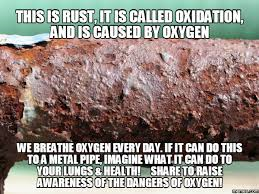
Rust is another name for iron oxide, which occurs when iron or an alloy that contains iron, like steel, is exposed to oxygen and moisture for a long period of time. Over time, the oxygen combines with the metal at an atomic level, forming a new compound called an oxide and weakening the bonds of the metal itself. Although some people refer to rust generally as “oxidation,” that term is much more general; although rust forms when iron undergoes oxidation, not all oxidation forms rust. Only iron or alloys that contain iron can rust, but other metals can corrode in similar ways.

The main catalyst for the rusting process is water. Iron or steel structures might appear to be solid, but water molecules can penetrate the microscopic pits and cracks in any exposed metal. The hydrogen atoms present in water molecules can combine with other elements to form acids, which will eventually cause more metal to be exposed.

If sodium is present, as is the case with saltwater, the corrosion is likely to occur more quickly. Meanwhile, the oxygen atoms combine with metallic atoms to form the destructive oxide compound. As the atoms combine, they weaken the metal, making the structure brittle and crumbly.

Some pieces of iron or steel are thick enough to maintain their integrity even if iron oxide forms on the surface. The thinner the metal, the better the chance that rusting will occur. Placing a steel wool pad in water and exposing it to air will cause rusting to begin almost immediately because the steel filaments are so thin. Eventually, the individual iron bonds will be destroyed, and the entire pad will disintegrate.

Rust formation cannot be stopped easily, but metals can be treated to resist the most damaging effects. Some are protected by water-resistant paints, preventative coatings or other chemical barriers, such as oil. It also is possible for one to reduce the chances of rust forming by using a dehumidifier or desiccant to help remove moisture from the air, but this usually is effective only in relatively small areas.

Steel is often galvanized to prevent iron oxide from forming; this process usually involves a very thin layer of zinc being applied to the surface. Another process, called plating, can be used to add a layer of zinc, tin or chrome to the metal. Cathodic protection involves using an electrical charge to suppress or prevent the chemical reaction that causes rust from occurring.

QUOTE FOR THE WEEKEND:

“We do not yet know enough to make adequate projections of the global trends for plant life in a world with higher levels of carbon dioxide, or CO2. It is clear, however, that there can be both positive and negative responses.

One of the first things taught in biology class is that animals breathe in oxygen and exhale CO2, while plants take in CO2 during the day and release oxygen. In a process called “photosynthesis,” plants use the energy in sunlight to convert CO2 and water to sugar and oxygen. The plants use the sugar for food—food that we use, too, when we eat plants or animals that have eaten plants — and they release the oxygen into the atmosphere. If it were not for plants, we would have no oxygen in our air!

So, if we’re putting more CO2 into the atmosphere by burning fossil fuels, you might expect plants to grow better. But the story is not quite that simple. When biologists have grown crops like wheat, soybeans, and rice inside greenhouses with extra CO2 present, the plants have indeed grown more rapidly and more abundantly. For the past several years, scientists all over the world have also been doing a series of experiments called “Free-Air Concentration Enrichment,” or FACE. Instead of using greenhouses, they grow crops in open fields to give them the most natural environment possible and pump in extra CO2 from a network of pipes.

The results of these experiments have shown that the crops do not thrive as well in this environment. Plants do need CO2, but they also need water, nitrogen, and other nutrients. Increase one of these without increasing the others and there’s a limit to how much the plants will benefit. Some do not grow much more at all. Others, like wheat, grow bigger but end up with less nitrogen. As a result, insects end up eating more to get the nitrogen they need. The nutritional value of food plants would be similarly reduced for other animals — including humans. Also, we could end up with vegetables that have too much carbon — perhaps producing spinach that would be very tough to chew!”

Climate Central

QUOTE FOR FRIDAY:

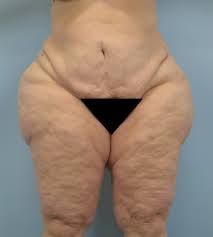
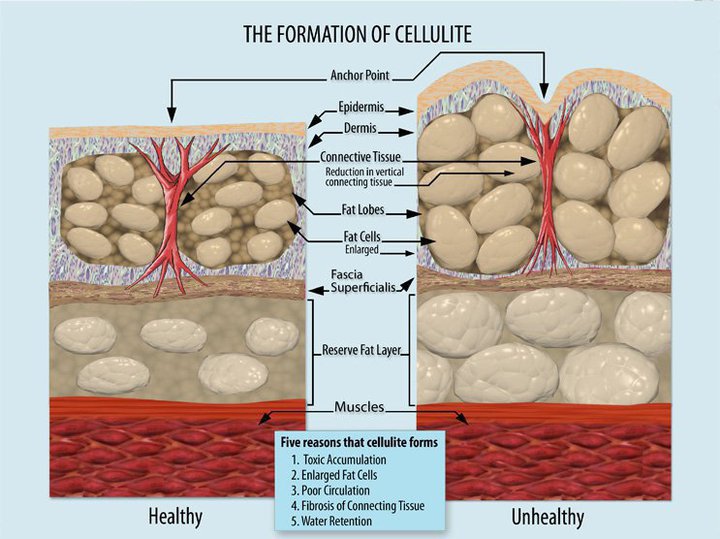
“Cellulite is a fat deposit beneath the skin.  The main symptom is the appearance of lumpy, dimpled flesh on the thighs, hips, buttocks, and belly.  Weight loss and exercise can help improve the appearance of cellulite. Other treatments are laser and radiofrequency systems and retinol cream. These may need to be repeated regularly.”.

MAYO CLINIC

WHAT ACTUALLY IS CELLULITE & WHY IS IT OUR ENEMY!


Cellulite in technical terms is noted at adiposis edematoso meaning your adipose tissue=fat that has swollen up (edematoso); or it is called gynoid lipodystrophy meaning anything pertaining to the women (gynoid) and that the lipid tissue is degenerating (ending line loosing tone).   One other medical term it is noted as is orange peel syndrome=the herniation of subcutaneous fat within fibrous connective tissue that ends up looking like skin dimpling, often on the pelvic region (Specifically the buttock) including the lower limbs (thighs) and abdomen.  Cellulite occurs in most post pubescent females and rarely in males.  Why is this?  Well, for one the tissue make up some say that men’s tissue in these areas are made up in a horizontal make up where in women it’s a honey comb make up allowing more fat to store.  That is why you see most men overweight with it in the abdomen and not in the legs or buttock compared to women.  Also with women in menopause the hormonal make up compared to men which adds to increasing the chance of putting weight on.  The factors that can prone you to cellulite forming on the body are 1-genetic (which may be the biggest factor in developing it especially if it’s in the family tree), 2-hormones (Estrogen the important hormone to initiate and aggravate cellulite.), 3-predisposing factors (Sex, race, biotype, or predisposition to lymphatic or circulatory insufficiency which contribute to cellulite), 4-Let’s not forget lifestyle also (increase in level of catecholamines, which associate with the evolution of cellulite (particularly sedentary lifestyle).  Lack of activity (not work out) but walking fast 30 to 60 minutes a day would surely show a difference in your cellulite in time with good healthy dieting.

Problems that cause cellulite to show on your body is poor health habits, poor dieting to the point you get overweight or obese.  Eat meals low in starches & carbohydrates, low in sugar, and moderate amounts of fat.  With your protein highest in count of every meal (about 14 or so in 6 meals a day is more than enough) and by the end of the day your protein count should add up to the highest number compared to the others.  Why because you keep your metabolism at a steady rate with your sugar count not spiking into high levels of glucose in your bloodstream, after a meal.  What is so important about this?  Realize that starches, carbohydrates (CHOs), sugars=calories and some fats will get broken down into complex or simple sugars (frucose and glucose for example) during the digestion process in the stomach.   Eating only 3 to 4 large or moderate or even small meals high in sugar, CHOs, starches or fat=ending product of high spikes of sugar in your blood stream.  In doing this your body naturally reacts, first sending glucose in the bloodstream to the pancreas.  The pancreas senses glucose in the blood then releases the hormone insulin (not like in diabetics since their pancreas will release nonworking insulin or too little of working insulin to no insulin at all).  The insulin will allow the glucose to transfer into tissues and cells that are utilizing the need for sugar which is our fuel/energy but only for the amount needed at that time. Usually glucose is our primary fuel to tissues and cells to allow them to do their function-like gas to a car to be able to run; but remember our human body can’t release the extra glucose out of our body left in the blood stream that came from our breakdown, in our stomach, from our meal.  When the glucose was needed in the body cells and tissues, at that time, it was used but not all was utilized we don’t utilize all that sugar especially if it is a large meal or even a moderate to small meal that had high sugar or carbohydrates or starch in it.  These kind of meals produce excess sugar in the blood stream.  Now if the body could just release extra sugar from the body as a waste product (through urine or stool or perspiration) no one would be overweight or obese in any country and we could eat anything we want (from eggs benedict every day for breakfast to burger king hamburger with fries on it for lunch to Chinese fast food with Sundaes for dinner and of course let’s not forget milk chocolate for snacks in between).  The body doesn’t work that way.  The excess sugar your body didn’t need to utilize at that time now goes to the liver where this organ converts glucose to glycogen (from active sugar to inactive sugar).  So when needed (glucose), the liver can just release glycogen into the blood stream where it gets converted back to glucose if the body needs active energy at that time (If you’re doing a 16 hr shift with you now into 12hrs of your shift and no food since 6am the body needs fuel at that point the liver will do this releasing of glycogen to the bloodstream, for example);  but if you’re eating 3 large or moderate meals a day with snacks in between the liver won’t need to do this releasing of glycogen into the bloodstream, especially if you’re not eating healthy but fast foods or not working out 3 to 5 times a week with working 40 hours a week or equating to be that active in your life.  Now remember your liver is only so big to store a certain amount of glucose and when it reaches full the sugar that couldn’t get stored in the liver than stays in the blood stream.  The glucose has to go somewhere else out of the bloodstream to prevent hyperglycemia (high blood sugar levels, like in a diabetic).  It now gets stored in our fat tissue=fat or weight gain, again especially if you’re eating too high a quantity in your meals, or too high a quantity in starches, or even calories=sugars, or carbohydrates and even fats.  All there ending product is in the blood after digestion in the stomach is sugar (simple or complex sugars).  What will result in time from this type of dieting:  you have high probability of becoming overweight to obese with cellulite developing over the body (particularly the pelvic region, abdomen, thighs and buttock).  The degree of cellulite will depend on age factor since it will increase the probability for women in menopause), type of activity in that individual’s life- -moving from active to sedentary lifestyle, unhealthy eating to unhealthy habits over years vs healthy.  The answer is not necessarily to perform a heavy workout including weights (especially if overweight or obese since the fat will turn to muscle and unless you do weight lifting till you die, like Jack Lanne,  it will turn back to fat and cellulite).  The key is living healthier habits, good dieting (6 small meals a day to balance your metabolism=sugar level), knowing the 4 food groups and how to dispense them in your meals properly (CHOs, sugars=calories,starches, and fats) and knowing what is in the liquids you drink (many with high sugar contents, as simple as soda, coke or Pepsi, and fruit juices).  I’m not saying start diet soda (since it contains phenylalanine or NutraSweet both that can cause cancer) but water (plain or flavored) or club soda or certain ice teas or lemonades (particularly homemade) depending on the ingredients.  You have to just read the ingredients to see that the sugar, CHO, calories, fat, and starch content is low with the protein higher than the rest.  If you eat 6 meals a day the protein should be over 12.

The reason why cellulite is our enemy is because for it to even show up on the body you have to become overweight to obese.  Obesity is a major enemy for any country to have in high population because of the diseases Obesity alone can cause.  It can cause diabetes 2, high blood pressure, stroke, coronary artery disease, joint problems including osteoarthritis, metabolic syndrome, in women contributes to a variety of cancers including breast/colon/gallbladder/uterus, in men contributes to having a higher risk of colon or prostate cancers, sleep apnea and respiratory problems and could go on.  Now do you see why developing cellulite is our enemy=Obesity and what it can cause alone.

Cellulite is something we can resolve by decreasing weight and having daily or at least every other day some activity from fast walking to jogging or even Pilates.  If your disabled and can’t do much activity you surely can do something through your diet.  To get started and if you need guidance on how to lose weight.  This includes 6 meals a day with learning about the 4 groups (knowing from each group what’s lean, leaner, and leanest) to learning what activity does for the body then you came to the right blog.  If you want to learn more about this than go to my website healthyusa.tsfl.com and peek at what we can offer you through Dr. Wayne Scott Anderson with his book “Dr A’s Habits of Health” and even foods to buy if you want them in the beginning of your diet loss which provides health bars to lunches and dinners to desserts of all kinds to all types of shakes/drinks and so much more foods (low in fat/calories/carbs/starches).  Learn how to become healthier for yourself, even spreading the news to
family or friends who may become interested and being a great mentor for your children in helping the next generation to be more healthy which would help our health care system to our health economy that includes insurance payments for bills at hospitals/doctor’s offices which would lessen.  Our society has become so unhealthy in diet causing so many increases in diseases/illnesses, including children, (Obesity, Diabetes II, coronary artery disease, hypertension, and more) that we have the government getting involved.  Take a look at Facebook or YouTube with pictures of people in America shopping at Walmart or Kmart.  It may be funny to some people but it is also outright scary with what’s happening to our country.  Our country has increased drastically in poor health habits that killed our economy, with let alone our health care system including what insurance costs are like for our society.  We could, as a society, turn things around for the better regarding ourselves and others in our country for everyone’s health that would impact every American citizen of all ages in a positive way.  I hope I have impacted someone in this country in wanting to learn more about knowing how to become healthier with making a good change for our country as a diversified whole.  Society has a responsibility and impact on how things run in each of their respective countries but especially in America, since we live in a democracy.  Its common sense if we get better regarding our health overall it will put an impact on our health economy if we don’t our health care system will just get WORSE.  Do mom’s and dad’s want this for their children’s future or their grandchildren or even their own lives?  Society has to take a stand, don’t leave it up to our government but leave it up to our citizens in America’s homes with our schools (Ex.proper health teaching regarding the cafeteria food), our restaurant industry (get off of living with such processed and fast foods in our states) and lastly our government to an extent.  What does any politician really care, in having as a top priority being health since their getting top quality insurance and making high incomes to live life up (President Obama upon retirement will be the first President making 450,000 dollars a year).  I know I would be a happy camper too if I was in that situation and I could go on with other politicians salaries but I started with the top.  So let’s make a move America and go for the healthier aspect of life.   Take a peek at no fee or charge, no prescription, no foods that you have to buy, no obligation, and no hacking, as well.  You make all the choices in what you want and when you want to stop.  No rip off or that you have to stay on our time frame, it’s all based on yours.  Again, you make all the choices and wouldn’t it be great if we could turn around back the way our health was, not so bad, that our insurance today you pay a price that just keeps rising; and you have to go through so many hoops to see the type of doctor you want when onetime it was just a breeze.  Join me, and go to healthyusa.tsfl.com and take just a peek in what we offer;)  Hope to hear from anyone who would like a doctor (Dr. Anderson) and free coach (myself) for guidance in making America a healthier country.