Archives

QUOTE FOR THURSDAY:

“Irritation of the sciatic nerve is caused by nerve root entrapment (also known as nerve compression, pinched nerve or entrapment neuropathy). This particular form of entrapment is called lumbar radiculopathy, since the damaged nerves roots are located in the lumbar (lower back) portion of the spine. The nerve compression itself may be caused by: 1-A herniated disc – also known as a ruptured or slipped disc. 2-Spinal stenosis-a narrowing of the canal that houses the spinal nerves. 3-Inflammation of nearby anatomical structures caused by: bone or muscle injuries, diseases such as tumors/infections, & even pregnancy.”.

Hospital of Special Surgery (NYC)

What is sciatica nerve damage & how is it treated?

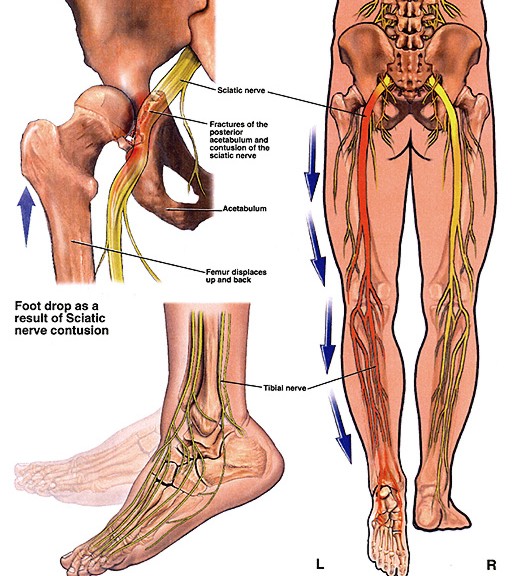
Sciatica is pain, tingling, or numbness produced by an irritation of the nerve roots that lead to the sciatica nerve. The sciatic nerve is formed by the nerve roots coming out of the spinal cord into the lower back. It goes down through the buttock, then its branches extend down the back of the leg to the ankle and foot. When something presses on the sciatica nerve, like a herniated disc, it presses on that nerve which causes the pain from the buttock that can radiate all the way down to the foot. The intensity of the pressure on the nerve and where its pressed decides if it goes to the foot or less. Other causes of sciatica nerve damage:

The most common cause -a bulging or ruptured disc in the spine pressing against the nerve roots that lead to the sciatic nerve.

-Sciatica Nerve Damage can be a symptom of other conditions that affect

*Narrowing of the spinal canal due to spinal stenosis. This spinal canal narrowing pinches on the sciatica nerve.

*Bone spurs-they are growths that are small forming along joints caused by arthritis.

*Simply injury (like a car accident or fall) causing nerve root compression=again the same result-pinching the sciatica nerve.

*Pregnancy-not as common as a cause as the others listed.

*Rarely but also tumors could cause the problem also.

What are the symptoms?

Symptoms of sciatica include pain that begins in your back or buttock and moves down your leg and may move into your foot.

*Weakness, tingling, or numbness in the leg may also occur.

*At times a inconsistent stabbing feeling or pricking feeling in the ankle or foot

*Sitting, standing for a long time, and movements that cause the spine to flex (such asexercises using the knee to chest) which may make symptoms worse.

*Walking, lying down, and movements that extend the spine (such as press-ups) may relieve symptoms.

Through the HSS (Hospital of Special Surgery) in NYC, one of the finest hospitals in NY and out of NY states treatment is the following:

Conservative nonsurgical treatment

If you suspect you have sciatica, tell your doctor about the specific duration and character of your symptoms. The doctor will perform a history and physical examination. After appropriate conservative care, X-rays and MRI scans can confirm whether there is a lumbar nerve root compression.

Conservative treatment is aimed at pain reduction and include:

  • Applied cold packs or heat
  • NSAIDs (non-steroidal anti-inflammatory medications) or other pain medications
  • Muscle relaxants
  • Alternative therapies such as acupuncture
  • Physical therapy

Your doctor or physical therapist may give you instruction about proper bending and lifting to avoid aggravating your condition. In some cases, epidural steroid injections may also help you return to full activity. Most people with sciatica get relief from their symptoms within several months.

Surgical treatment

For those patients who do not respond conservative care and experience persistent, disabling sciatica, surgery may be warranted. Your doctor will determine whether you are a candidate for surgery based on the duration and severity of symptoms. If your condition is causing cauda equina syndrome (which includes symptoms such as bladder dysfunction, incontinence or severe numbness in the buttocks) may be an indication that you should have immediate surgery.

The surgical treatment for sciatica is spinal decompression surgery. The goal is to remove any disc herniation or stenosis (narrowing of canal) that is pressing on the affected lumbar nerve to ease the leg pain and associated symptoms of numbness and weakness. There are several different decompression surgeries, dependent on which nerve roots are affected. They include:

  • Laminectomy
  • Laminoplasty
  • Laminotomy
  • Microdiscectomy

In general, more than 90% of sciatica surgery patients have successful outcomes.


QUOTE FOR WEDNESDAY:

“These are most common problems with summer health problems:  Insects, Arachnid Bites and Stings (Tics are the biggest threat in summer).  2-Heat Exhaustion 3- Food Poisioning 4-Sunburn.”

Physicians Urgent Care (physiciansurgentcare.com)

Be prepared for common problems that arise in the Summertime, starting June 20 or sooner!

Common summer health problems  Common summer health problems


1. BOATING ACCIDENTS

People’s biggest mistake by far is drinking and boating. People get out there and drink alcohol all day in the sun, and you end up with the same accidents you have with driving — with the added risks of falling out of boats, getting hit by propellers, and drowning.

It’s also easy to get lax about life jackets. Kids need to have them on all the time. Even if having them under the seat fulfills the law, in an accident, chances are anyone who doesn’t know how to swim won’t be able to get to them in time. When you are going to be out on a boat or at the beach with a child, you take on the responsibility to maintain the safety of that child and basic lifesaving skills are a must, not a luxury; especially for parents.   The courses are easy, usually just one day or half a day and you may save your child’s LIFE or the child you take the responsibility in caring for. There’s no mouth-to-mouth [resuscitation] anymore if you are not trained — just chest compressions but if you get BCLS certified (basic care in life support) your CPR certified.

You can find first aid, cardiopulmonary resuscitation (CPR), and other emergency lifesaving courses near you with the American Heart Association’s ECC (Emergency Cardiovascular Care) Class Connector tool online at americanheart.org. or near you where you live.

2. Mower Injuries

We know almost every homeowner loves the sight of a pristine, neatly mowed yard. But in their haste to get that lawn in shape, some people forget to take precautions. “In the warmer months we see lots of mower injuries to toes, hands, and fingers getting caught in blades, and things like rocks and sticks getting flung out of them. People will start tinkering with the mower and reach under it to unclog it, and forget there’s a spinning blade there or take the key out when going under to see what clogged the blade from working. Those can be preventative moves and result in hideous injuries for some permanent and with others temporary.

They’re also hard to repair, because not only can whirling blades cause complex lacerations and fractures, but they can bury contaminants like grass and dirt in the wound putting the wound at risk for infection. To be safe:

Wear closed-toed shoes — preferably with a steel toe — when you mow, along with goggles or sunglasses, gloves, and long pants that will protect you from flying debris.

Keep kids away from the push mower and off the riding mower. Riding mowers are not just another ride-on toy.

Get a professional to service your mower or learn how to do it properly. Important: Disconnect the spark plug to prevent it from accidentally starting. Turning a push mower’s blade manually can ignite the engine.

3. Dehydration Disasters

You’ve romped outdoors with the kids all day, and your water bottle ran dry long ago. Suddenly you feel dizzy and lightheaded, and your mouth tastes like cotton. You’re dehydrated — meaning you haven’t taken in enough fluids to replace those you’ve been sweating out.

People can get dehydrated any time of year, but it’s much more common in the summer months, when they are active outdoors in the warm sun. Heatstroke is the most severe form of dehydration. That’s when your internal temperature rises to dangerously high levels. Your skin gets hot, but you stop sweating. Someone with heatstroke may pass out, have hallucinations, or suffer seizures.

Preventing dehydration and heatstroke is so easy: Drink plenty of fluids, especially water, take regular breaks in the shade, and try to schedule your most vigorous outdoor activities for times when the heat isn’t so strong, such as early morning or late afternoon.

For persons suffering more serious dehydration or heatstroke, get them indoors, have them lie down, and cool them off with ice packs and cool cloths. Someone who is seriously affected by the heat may need intravenous fluids in the ER.

4. Sunburn

With all the skin cancer warnings, you’d think Americans would be getting fewer sunburns, not more. But you’d be wrong. The percentage of adults nationwide who got at least one sunburn during the preceding year rose from 31.8% in 1999 to 33.7% in 2004, according to the CDC.

Your risk for melanoma doubles if you’ve had just five sunburns in your life. A sunburn is a first-degree burn, right up there with thermal burns. Also, we even see some second-degree thermal burns, often when people are out drinking or falling asleep in the sun and don’t realize how long they’ve been out there.

In addition to practicing “safe sun” — wearing sunscreen that protects against both UVB and UVA rays, long-sleeved shirts, and wide-brimmed hats, and staying out of blistering midday rays — there are things you can do to treat a severe sunburn, Stanton says:

-Drink water or juice to replace fluids you lost while sweating in the hot sun.

-Soak the burn in cool water for a few minutes or put a cool, wet cloth on it.

-Take an over-the-counter pain reliever, such as acetaminophen.

-Treatitching with an OTC antihistamine cream or a spray like diphenhydramine (such as Benadryl), which helps block the inflammatory reaction.

-Apply an antibiotic ointment or an aloe cream with emollients that soften and soothe the skin directly to the burned area.

-You’re going to have a pretty miserable 12 to 24 hours with the initial symptoms no matter what you do.

5. Picnic Poisoning

Food poisoning puts about 300,000 people in the hospital every year, hitting its peak in the summer months. You don’t want diarrhea to be the souvenir of your family’s annual summer picnic.

Anything that has mayonnaise, dairy, or eggs in it and any meat products can develop some pretty nasty bacteria after only a couple of hours unrefrigerated. Every summer we’ll have five or six people coming in from the same reunion or family picnic with food poisoning symptoms.

To prevent food poisoning, follow the U.S. Department of Agriculture’s advice to:

  • CleanWash your hands as well as the surfaces where you’ll be preparing foods.
  • Separate — Wrap raw meat securely and keep it stored away from other food items.
  • Cook — Bring along a meat thermometer. Grilling meat browns it very fast on the outside, but that doesn’t mean it’s safe on the inside. Steaks should be cooked to a minimum internal temperature of 145 degrees, ground beef and pork to 160 degrees, and poultry to 165 degrees.
  • Chill — Keep everything refrigerated as long as possible. Store perishable picnic items in an insulated cooler packed with ice, and follow the “last in, first out” rule — whatever you’re going to eat first should go at the top of the cooler.

Mild cases of food poisoning can be cared for at home, Stanton says. Avoid solid foods, and stick with small, frequent drinks of clear liquid to stay hydrated. Once the nausea and vomiting have eased, you can try bringing food back into your diet — slowly and in small, bland portions (Grandma knew what she was talking about when she recommended tea and toast to settle an upset stomach). If symptoms persist for more than a couple days (or more than 24 hours in small kids), see a doctor.

6.  Fireworks

Independence Day arrives. Many people love fireworks, but fireworks don’t necessarily love them back. Nearly 9,000 individuals were injured by fireworks in 2009, according to the U.S. Fire Administration, and two were killed. We see pretty significant hand and eye injuries from fireworks every summer. The safest way to watch fireworks is at a professionally sponsored display. At least six states ban all consumer fireworks, and several more allow them only with limitations. But if you can buy fireworks legally and want to set off a few at home, take these precautions:

  • Keep a hose or fire extinguisher handy to put out small fires.
  • Keep children away from fireworks.      
  • Everybody loves to give sparklers to kids, but they burn very hot and can cause significant eye injuries. In fact, a sparkler can burn as hot as 2,000 degrees — hot enough to melt some types of metals.       They can go off quickly and cause burns or just explode in your hand.

To care for a fireworks burn, wrap it in a clean towel or T-shirt saturated with cool water and get to an emergency room to have the injury checked out.



QUOTE FOR TUESDAY:

“Since 80% of people with Zika don’t have symptoms, many people don’t know when they were infected and would not be eligible for this test.

Another test looks for proteins called antibodies made by the immune system to fight the virus. It can find antibodies in the blood up to 3 months after a person is infected.”

Web M.D.

QUOTE FOR MONDAY:

“Legionellosis is not contagious, meaning it is not spread from person-to-person. Disease transmission primarily occurs through inhaling Legionella-contaminated, aerosolized water. While rare, exposure is also possible from breathing in (i.e., aspirating) Legionella contaminated soil or while drinking water.”.

Occupational Safety and Health Administration (OSHA)

QUOTE FOR THE WEEKEND:

“Symptoms usually begin 2 to 10 days after being exposed to the bacteria, but it can take longer so people should watch for symptoms for about 2 weeks after exposure.

If you develop pneumonia symptoms, see a doctor right away. Be sure to mention if you may have been exposed to Legionella, have used a hot tub, spent any nights away from home, or stayed in a hospital in the last two weeks.”

Center for Disease Control and Prevention (CDC)

QUOTE FOR THURSDAY:

“Mal de debarquement means ‘sickness of disembarkement’ which refers to an illusion of movement felt as an after effect of travel. Sea travel is the most common starting point for the disorder. Symptoms can last for weeks, months or even years.”

Meniere’s Society

QUOTE FOR WEDNESDAY:

Photosensitivity is an extreme sensitivity to ultraviolet (UV) rays from the sun and other light sources. Most people are at risk of developing sunburn during long exposure to sunlight. Exposure to UV rays can also lead to skin damage and skin cancer.

Healthline.com

Photosensitivity

Sunlight exposure part III

Sunlight exposure Urticaria Part III Urticaria

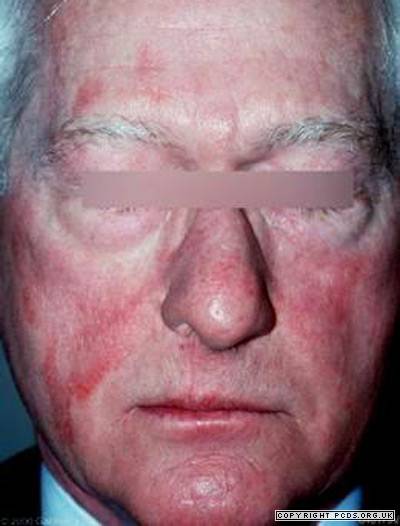
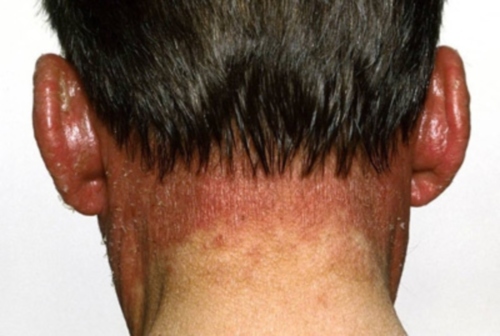
photosensitivity drug inducedchemical photsensitivity                   Both pictures above are drug chemically induced Photosensitivity Reactions.

Sunlight can trigger immune system reactions.

People develop itchy eruptions or areas of redness and inflammation on patches of sun-exposed skin.

These reactions typically resolve without treatment.

Photosensitivity, sometimes referred to as a sun allergy, is an immune system reaction that is triggered by sunlight. Photosensitivity reactions include solar urticaria, chemical photosensitization  (Ex. from drug reactions), and polymorphous light eruption and are usually characterized by an itchy eruption on patches of sun-exposed skin. People may inherit a tendency to develop these reactions. Certain diseases, such as systemic lupus erythematosus and some porphyrias, also may cause more serious skin reactions to sunlight.

Solar Urticaria

Hives (large, itchy red bumps or welts) that develop after only a few minutes of exposure to sunlight are called solar urticaria. The hives typically last for minutes or hours. This disorder can be difficult to treat, but doctors may prescribe histamine (H1) blockers, antimalarial drugs, corticosteroids, sunscreens, or ultraviolet (UV) light therapy. A person can be prone to developing solar urticaria for a very long time, sometimes indefinitely. People with large affected areas sometimes have headaches and wheezing and feel dizzy, weak, and nauseated.

Chemical Photosensitivity

Over 100 substances, swallowed or applied to the skin, are known to cause sun-induced reactions on the skin. A limited number cause most reactions ( Some Substances That Sensitize the Skin to Sunlight). To treat chemical photosensitivity reactions, corticosteroids are applied to the skin and the substance that is causing the reaction is avoided. There are two types of chemical photosensitivity: phototoxicity and photoallergy.

In phototoxicity, people have pain and develop redness, inflammation, and sometimes brown or blue-gray discoloration in areas of skin that have been exposed to sunlight for a brief period. These symptoms resemble those of sunburn, but the reaction differs from sunburn in that it occurs only after the person has swallowed certain drugs (such as tetracyclines or diuretics) or chemical compounds or has applied them to the skin (such as perfume and coal tar). Some plants (including limes, celery, and parsley) contain compounds called furocoumarins that make some people’s skin more sensitive to the effects of UV light. This reaction is called phytophotodermatitis. All phototoxic reactions appear only on areas of skin that have been exposed to the sun. They usually develop within hours after sun exposure.

In photoallergy, an allergic reaction causes redness, scaling, itching, and sometimes blisters and spots that resemble hives. This type of reaction can be caused by aftershave lotions, sunscreens, and sulfonamides. Substances that cause photoallergy are capable of doing so only after the person has been exposed to both the substance and sunlight (because sunlight is what makes the substance capable of triggering photoallergy). Photoallergic reactions can affect areas of skin that have not been exposed to the sun. They usually develop 24 to 72 hours after sun exposure.

Diagnosing this condition:

There are no specific tests for photosensitivity reactions. A doctor suspects a photosensitivity reaction when a rash appears only in areas exposed to sunlight. A close review of the person’s medical history, skin symptoms, any diseases, drugs taken by mouth, or substances applied to the skin (such as drugs or cosmetics) may help a doctor pinpoint the cause of the photosensitivity reaction. Doctors may do tests to rule out diseases that are known to make some people susceptible to such reactions (such as systemic lupus erythematosus).

When a rash occurs on an area of skin that has been exposed to the sun and the diagnosis is not clear, doctors may do skin patch tests and reaction reproduction tests that involve exposure to UV light (phototesting) when the person is not using any drugs that cause photosensitivity reactions. These tests may help clarify which type of photosensitivity reaction may be the cause.

Prevention and Treatment:

All should avoid excessive sun exposure, but people who are sensitive to sunlight due to any cause should be especially careful and wear protective clothes, avoid sunlight as much as possible, and use sunscreens regularly. If possible, any drugs or chemicals that could cause photosensitivity should be discontinued after consulting with a doctor.People with polymorphous light eruption or photosensitivity caused by systemic lupus erythematosus should be seen by a doctor and sometimes benefit from treatment with corticosteroids applied to the skin or hydroxychloroquine or corticosteroids taken by mouth. Occasionally, people with this problem can be desensitized to the effects of sunlight by gradually increasing their exposure to UV light.