Archives

QUOTE FOR MONDAY:

“Irritable bowel syndrome (IBS) is the most common functional gastrointestinal (GI) disorder with worldwide prevalence rates ranging generally in the area of 10–15%. Functional GI disorders are disorders that occur because of abnormal functioning of the GI tract, which can affect motility, sensation, and brain–gut communication.”

International Foundation for Gastrointestinal Disorders – iffgd

(https://aboutibs.org/what-is-ibs/facts-about-ibs/statistics/)

Part I Irritable Bowel Syndrome Awareness Month!


Irritable bowel syndrome (IBS) is a common disorder that affects the large intestine (colon). Irritable bowel syndrome commonly causes cramping, abdominal pain, bloating, gas, diarrhea and constipation. IBS is a chronic condition that you will need to manage long term.

Even though signs and symptoms are uncomfortable, IBS — unlike ulcerative colitis and Crohn’s disease, which are forms of inflammatory bowel disease — doesn’t cause changes in bowel tissue or increase your risk of colorectal cancer.

Only a small number of people with irritable bowel syndrome have severe signs and symptoms. Some people can control their symptoms by managing diet, lifestyle and stress. Others will need medication and counseling.

The signs and symptoms of irritable bowel syndrome can vary widely from person to person and often resemble those of other diseases. Among the most common are:

  • Abdominal pain or cramping
  • A bloated feeling
  • Gas
  • Diarrhea or constipation — sometimes alternating bouts of constipation and diarrhea
  • Mucus in the stool
  • For most people, IBS is a chronic condition, although there will likely be times when the signs and symptoms are worse and times when they improve or even disappear completely.

When to see a doctor:

Although as many as 1 in 5 American adults has signs and symptoms of irritable bowel syndrome, fewer than 1 in 5 who have symptoms seek medical help. Yet it’s important to see your doctor if you have a persistent change in bowel habits or if you have any other signs or symptoms of IBS because these may indicate a more serious condition, such as colon cancer.

Symptoms that may indicate a more serious condition or tell you see an MD even call 911:

  • Rectal bleeding
  • Abdominal pain that progresses or occurs at night
  • Weight loss

Causes of IBS:

The exact cause  of irritable bowel syndrome (IBS) has not been determined, although there are several theories. One theory is that IBS may be an immune disorder, or one in which the intestines of the affected person are highly sensitive in responding to stress and bacteria. Certain foods are thought to trigger IBS flare-ups, including dairy products and gluten, which is present in wheat, barley and rye.

The epithelial layer, or lining, of the large intestine controls the amount of fluid in the bowel. In IBS, there appears to be a disruption in the function of fluid absorption. This can result in excessive fluid in the colon, which causes diarrhea and watery stools. Or, if the lining of the colon absorbs too much fluid from the colon contents, the stool may become dry, leading to constipation.

The MAYO clinic says Triggers vary from person to person.

Stimuli that don’t bother other people can trigger symptoms in people with IBS — but not all people with the condition react to the same stimuli. Common triggers include:

  • Foods. The role of food allergy or intolerance in irritable bowel syndrome is not yet clearly understood, but many people have more severe symptoms when they eat certain things. A wide range of foods has been implicated — chocolate, spices, fats, fruits, beans, cabbage, cauliflower, broccoli, milk, carbonated beverages and alcohol to name a few.
  • Stress. Most people with IBS find that their signs and symptoms are worse or more frequent during periods of increased stress, such as finals week or the first weeks on a new job. But while stress may aggravate symptoms, it doesn’t cause them.
  • Hormones. Because women are twice as likely to have IBS, researchers believe that hormonal changes play a role in this condition. Many women find that signs and symptoms are worse during or around their menstrual periods.
  • Other illnesses. Sometimes another illness, such as an acute episode of infectious diarrhea (gastroenteritis) or too many bacteria in the intestines (bacterial overgrowth), can trigger IBS.

QUOTE FOR THE WEEKEND:

“Stress creates a natural physical response in our bodies that is part of our response to danger. When we feel stress, our blood vessels narrow while pulse and blood pressure rise. Breathing increases and the body releases hormones like adrenaline and cortisol into the blood stream. These symptoms can all lead to serious health problems when they continually occur over a long period of time. To fight these negative effects use stress management techniques to help moderate your response to stress and help you stay healthy.   Perhaps the best way to reduce stress and live a healthier life is to laugh.”

PROMEDICA – https://balance.promedicaseniorcare.org

QUOTE FOR FRIDAY:

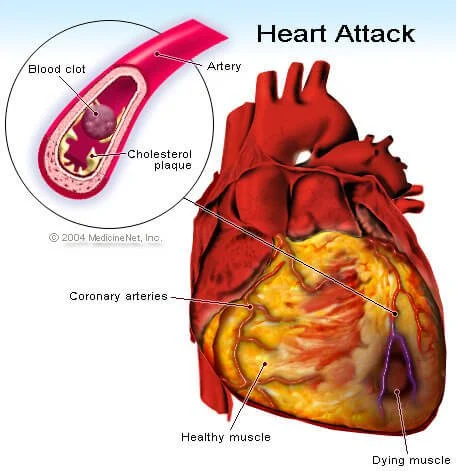
“A heart attack (myocardial infarction) happens when a part of the heart muscle doesn’t get enough blood.The more time that passes without treatment to restore blood flow, the greater the damage to the heart muscle.”

South Dakota Dept. of Health (https://doh.sd.gov)

What are the risk factors for myocardial infarction?


People who are at risk for the development of coronary artery disease and myocardial infarction include those who fall into any of the categories listed below:

-People with a history of heart disease.

-Males.

-Smokers.

-People with high cholesterol.

-People with high blood pressure.

-Obese people.

-People with diabetes.

-People who suffer stress.

-People who live a sedentary life style.

-Heredity is a powerful factor that contributes to early heart disease. Being male is a risk factor, but the incidence of heart disease in women increases dramatically after menopause.

-The risk factors to concentrate upon are those that can be modified. These include cigarette smoking, high blood pressure, cholesterol, obesity, sedentary life style and stress. Cigarette smoking causes many deaths from myocardial infarction and other heart diseases. Smoking contributes to almost half of the heart attacks of women under age 55.

-Stopping smoking can greatly reduce your chances of having a heart attack. Controlling blood pressure can reduce your risk of heart attack. Lowering cholesterol to safe levels through diet and medications can reduce your risk and may even lead to some regression of the plaques already present. Lean body weight and a regular exercise program are helpful.

-If you are diabetic, precise control of your diabetes will help reduce your risk of blood vessel damage due to diabetes. Stress is a risk factor that is common, difficult to quantify and difficult to control effectively over time. Methods of stress reduction include meditation, regular exercise, time management, and a supportive environment.

How is a heart attack diagnosed?

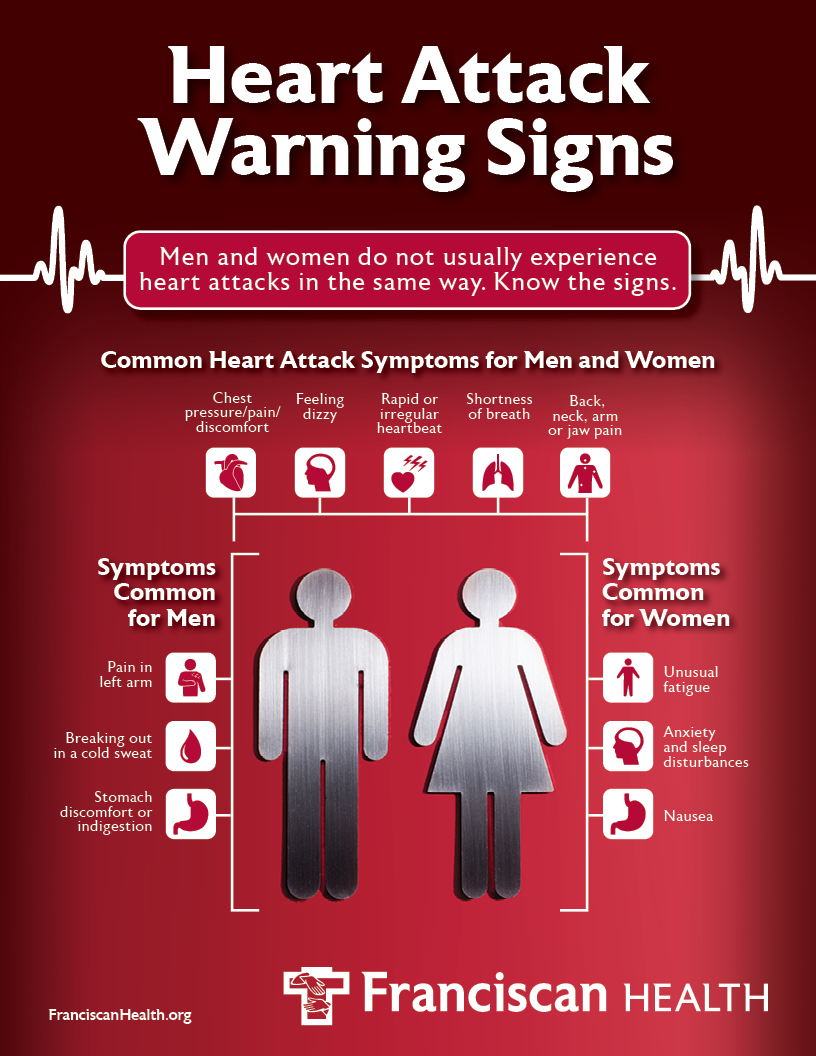
Chest pain is the most common symptom of a heart attack. The chest pain is usually a burning or pressure sensation beneath the mid or upper breast bone. The pain may radiate into the upper mid back, neck, jaw or arms. The pain may be severe but often is only moderate in severity.

There may be associated shortness of breath or sweating. If patients have had angina previously, the heart attack pain will feel the same as their usual angina only stronger and more prolonged. If you have a pain like this that lasts longer than 15 minutes, it is best to be evaluated immediately.

Calling your medic unit is the fastest and safest way to ask for help. If you have symptoms like this that wax and wane, this is often a warning sign that a heart attack is about to occur and prompt medical attention is needed.

Once you are in an emergency room or a doctor’s office an electrocardiogram (ECG or EKG) will be obtained. This is often helpful in diagnosing a heart attack. Sometimes, however, the test is normal even when the heart injury is present but usually a great diagnostic tool.

When heart cells die, certain enzymes present in heart cells are released into the bloodstream that serve as a marker of heart injury (troponin I and CPK or CK-MB). These enzymes can be measured by blood tests. The amount of enzyme released into the blood stream also helps assess how much heart damage has occurred.

TREATMENT:

The best way to limit the size of a heart attack is to restore the flow of blood to the heat muscle as fast as possible. There are two basic methods to do this.

Because most heart attacks are caused by clots forming within the coronary artery, dissolving the clot quickly will restore blood flow. Drugs called thrombolytics are quite effective OR having a angiogram to angioplasty to remove the blockage.

The sooner these drugs are given, the quicker the blood flow will be restored. An alternative method involves the use of balloon angioplasty.

Angiogram to angioplasty involves taking the heart attack victim promptly to the cardiac cath lab in the hospital.

An angiogram is performed to show the blocked blood vessel leading to the heart attack. Then a balloon catheter is placed across the blockage and flow is restored.

Sometimes a stent (a device that assists in holding the blood vessel open) is placed to create a large channel.

Smaller heart attacks, often those not producing significant abnormalities on the ECG are often treated with bedrest and blood thinners such as heparin as well as drugs to reduce the work the heart does.

These heart attacks are called non-transmural myocardial infarctions. Before discharge, x-ray studies of the heart arteries are often carried out to see if angioplasty or surgery will be necessary.

Following thrombolytic (clot reducing) therapy, angiogram are often performed to outline the coronary anatomy to help determine if additional therapy such as angioplasty or bypass surgery is indicated. This may be done during the initial hospitalization or later as an outpatient procedure.

QUOTE FOR THURSDAY:

“The current science suggests that several genetic factors may increase the risk of autism in a complex manner. Having certain specific genetic conditions such as Fragile X Syndrome and Tuberous Sclerosis has been identified as conferring a particularly increased risk for being diagnosed with autism. Certain medications, such as valproic acid and thalidomide, when taken during pregnancy, have been linked with a higher risk of autism as well.(2) Having a sibling with autism also increases the likelihood of a child being diagnosed with autism. Parents being older at the time of pregnancy is additionally linked with greater risk of autism. “

ada (https://ada.com)


QUOTE FOR WEDNESDAY:

Autism Spectrum Disorder (ASD), hereafter referred to as Autism (which includes Asperger’s Disorder and Pervasive Developmental Disorder – Not Otherwise Specified [PDD-NOS]), is a complex, lifelong developmental condition that typically appears during early childhood and can impact a person’s social skills, communication, relationships, and self-regulation. The Autism experience is different for everyone. It is defined by a certain set of behaviors and is often referred to as a “spectrum condition” that affects people differently and to varying degrees.

While there is currently no known single cause of Autism, early diagnosis helps a person receive resources that can support the choices and opportunities needed to live fully.

Autism Society (https://autismsociety.org/)

QUOTE FOR TUESDAY:

“75% of esophageal cancers are attributable to chronic excessive alcohol consumption.  Nearly 50% of cancers of the mouth, pharynx and larynx are associated with heavy drinking.  Chronic alcohol consumption is associated with 10% increase in a woman’s risk of breast cancer.  Heavy chronic drinking contributes to approximately 65% of all cases of pancreatitis.  Among emergency room patients admitted for injuries, 47% tested positive for alcohol and 35% were intoxicated; of those who were intoxicated, 75% showed signs of chronic alcoholism.  As many as 36% of the cases of primary liver cancer are linked to heavy chronic drinking.  Alcoholics are 10 times more likely to develop carcinoma than the general population.”.

Connecticut State Dept. of Mental Health and Addiction Services (https://portal.ct.gov/DMHAS/Upcoming-Events/Events/April—Alcohol-Awareness-Month).

QUOTE FOR MONDAY:

“Most adults in the United States who drink alcohol drink moderately and without complications. At the same time, alcohol-related problems are among the most significant public health issues in the country. Alcohol use disorder (AUD) affects about 15 million adults in the United States, and an estimated 88,000 people die from alcohol-related causes annually, making alcohol the third leading preventable cause of death in the nation. One way is to learn more about AUD. AUD is a medical diagnosis that ranges from moderate to severe, with the severity based on several criteria. But, briefly, alcohol becomes a problem when it impacts your life in a negative way. “

National Institute of Alcoholism Abuse and Alcoholism (https://www.niaaa.nih.gov)

QUOTE FOR THE WEEKEND:

“There are few things that stimulate the brain the way music does. If you want to keep your brain engaged throughout the aging process, listening to or playing music is a great tool. It provides a total brain workout. Music is structural, mathematical and architectural. It’s based on relationships between one note and the next. The brain has to do a lot of computing to make sense of it. The power of music isn’t limited to research. Try these methods of bringing more music—and brain benefits—into your life.”
John Hopkins Medicine (https://www.hopkinsmedicine.org)