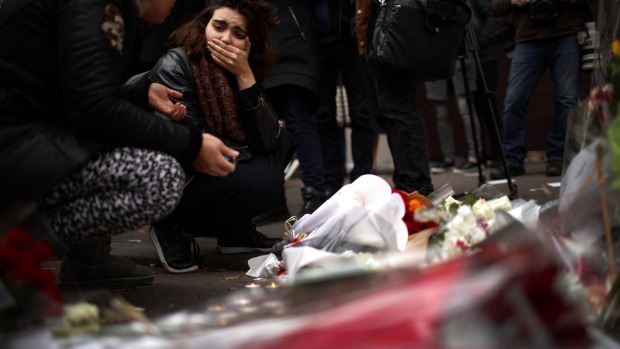
Part II Why do too many humans kill one other; especially if they have different beliefs?

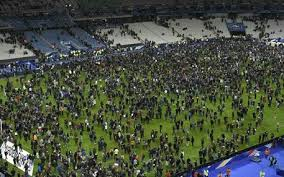
Paris Part II Part II Paris

Part II paris 3  Paris part II 5

Well from different perspectives of professionals in why the human acts like this and here is my first one of Dr. K. Sohail:

When angry human beings act violently and aggressively, other caring and compassionate human beings sometimes tell them that they are acting like animals. Given the level of violence in the contemporary world, I would not be surprised to hear of some kind animals saying to other cruel animals that they were acting like humans. Eric Fromm in his famous book The Anatomy of Human Destructiveness shares his insight that animals express benign violence—they kill only in self defense or when they are hungry. Even a lion is peaceful when he is not hungry and does not feel threatened. On the other hand, humans are worse than animals as they exhibit malignant violence—they add a series of meanings to their violence. They justify their violent crimes and rationalize their aggressive acts.


When we study the history of humanity we realize that the intensity and severity of human violence and aggression has increased over the centuries. Only in the 20th century millions of humans have been killed by other humans by pre-meditated murder, including the use of nuclear weapons. If we review human murders we can classify them into the following seven groups based on emotional, social, religious, economic or political motivation.


  1. PERSONAL REVENGE


There are many people in every community who have difficulties controlling their anger. If someone hurts them, rather than forgiving or reporting the matter to the authorities, they take the law into their own hands and kill their enemy.


  1. SERIAL KILLERS


While some people kill people that they know intimately, there are others who kill strangers. We call them serial killers and mass murderers. These serial killers, who were usually physically, emotionally and sexually abused as children, became revengeful against a particular group, be they blacks, whites or women, gays or Hispanics, whom they killed indiscriminately until they were caught by police. Many such serial killers have psychopathic and sociopathic personalities.


  1. SOCIAL VIOLENCE OF GANGS


As more and more people move from villages to cities and adopt an urban lifestyle, they face the pains of migration, social alienation and unemployment and some of them become involved in violent gangs to sell drugs to make quick money. Unfortunately, once they enter the drug and gang culture it is difficult for them to leave for too many.


  1. MENTAL ILLNESS


While the majority of murders are committed by psychopaths who do not suffer from mental illness, there are some murders committed by people who suffer from schizophrenia, manic depressive illness and paranoid psychosis.


  1. POLITICAL / NATIONAL VIOLENCE


As the concept of nationalism became popular in the West, states created national armies. Over the centuries, soldiers in the uniform of one country killed only the soldiers of the enemy army. As guerrilla war became popular, both sides have been killing innocent men, women and children. Some call it using human shields while others call it collateral damage. Innocent citizens are being killed with no twinge of conscience on either side. Can understand the few for the many who won’t stop hurting people continuously like ISIS for example.


  1. VIOLENCE OF RELIGIOUS FUNDAMENTALISTS


Over the centuries believers have killed each other in the name of God. In the last few decades there have been a large number of killings between Sunnis and Shiites, Catholics and Protestants, Hindus and Muslims, and Muslims and Jews in different parts of the world.

Really in the name of your God killing is allowed. If so not a great philosophy of your religion.


  1. INTERNATIONAL VIOLENCE


In the recent past, Western governments have been sending their armies to other countries and invading sovereign states in order to topple their governments; they have killed innocent civilians and then rationalized their murders in the name of democracy, human rights and freedom.


Dr. Bruce D. Perry, M.D., Ph.D., is an internationally recognized authority on brain development and children in crisis. Dr. Perry leads the Child Trauma Academy, a pioneering center providing service, research and training in the area of child maltreatment. See what comments from his patients have said and it may shock you.

What he says in why do we humans do it? Why didn’t anyone see this coming? Why didn’t anyone intervene and prevent them from killing? How can we prevent anything like that from happening again?

Experts in crime, mental health, education, and social sciences have all been trying to understand the pathways to school violence. A few common observations emerge. The first, and most disturbing, is that human beings, like few other species, are pervasively aggressive, violent and murderous to each other. The major predators of humans are other humans.

The second important point is that all violence is not the same. Some violence is due to impulsive behavior, some due to the disinhibition by drugs or alcohol, some due to serious mental illness, some to hate, revenge, or retribution.

Yet this should not stop us from trying to understand and prevent violence. We know that not all humans kill. And some societies are more violent than others. So what do we know about the conditions that increase violence? What observations are common across cultures and through history when violence emerges?

  1. When we become desensitized to death or killing, violence increases. When death and violence surrounds someone, the value of human life can diminish and the horror of violent death can decrease. In Europe during the Black Plague, up to half the people in a village could die in a few months. The survivors often migrated to medieval cities and, soon afterwards, the rates of violence and murder skyrocketed, exceeding the rates of killing in modern New York. Pervasive death desensitizes. Pervasive violence desensitizes. In the United States, while we have been spared the horrors of war in our land and plague, we will self-expose ourselves to remarkable violence. We will watch 200,000 graphic violent acts on TV by age 18. Too many of us have become desensitized to violent acts, not realizing the true effects of a bullet passing through a human body.

“That’s so cool. Look at his head explode.” Spoken by a nine-year-old boy watching TV. His aggressive behaviors in school were so disruptive that he was placed in a special classroom.

Being part of the solution: Don’t watch so much violence. It is everywhere, but try to watch less. Certainly if you are watching and someone younger is in the room, turn the channel, get them out and help younger children see less violence. Try to see what a bullet really does. A little research can teach you more about violence than a lifetime of TV or movies.

  1. When we become more detached from each other and from common unifying beliefs, violence increases. Without being connected to others, we care less for their welfare. When we share common bonds of belief and value with others, we are less likely to be aggressive or violent to others in our community.

Being part of the solution: Be part of something — at school or outside. Spend time with friends, in structured and non-structured activities. Talk, listen, laugh and be together. Time with friends, family, teammates, and classmates promote healthy social or emotional relationships.

  1. When we allow hateful ideologies to make groups or classes of people to be viewed as different, bad or even less than human, violence increases. All too often, violence is linked to hate. Hateful beliefs such as racism, anti-Semitism and misogyny allow whole groups to be dehumanized.

“They were just camel jockeys. They don’t belong in this country anyway. I don’t see what the big deal is. It’s not like we robbed a priest.” Comments from an interview with a fifteen-year-old boy who participated in an armed robbery at a convenience store run by a family from Lebanon.

Being part of the solution: Be intolerant of intolerance.

.4. When we are under the influence of alcohol or drugs, violence increases.

“I don’t remember why it even started. We had a lot of beers and smoked some reefer. I didn’t think he would die.” A comment from a 17-year-old-boy who was one of three who beat a classmate to death at a party after a fight broke out — apparently about a parking place.

Being part of the solution: Stay away from alcohol and drugs. And if you won’t, be moderate in your use, and be with people you know and trust in places that are safe. Stay off the roads. Don’t ever pressure someone else to drink or use. Let them make up their own choices. And be prepared to live with the consequences of your choice. Grown-up behaviors have grown-up consequences. Hundreds of youth die each year due to the influence of alcohol or other drugs.

Over the last few generations, two new observations have emerged. There are some unique properties to our recent wave of violence in the United States.

  1. We have become more efficient and practiced at killing behaviors. Five thousand years ago, a drunk, isolated, hateful person could try to kill, but would be limited by the means at hand. There were no handguns, no automatic weapons, and no explosives. They could kill one or two in an incident. Today, in a single fit of rage and hate, one person with automatic weapons can kill dozens of people. Today, one hateful person can bomb a building and kill hundreds. We have more available and efficient means to kill. And we are practicing. In the games we play — paintball, video games, and simulated war games — we are becoming practiced in the behaviors required to kill.

“It was pretty strange. I just raised up the rifle and shot. Just like I had a million times when I was a kid. It was just a little pop. And he just looked at me. And then slumped down. I was just trying to warn him. I didn’t think it would kill him.” From an interview with a 13-year-old boy who killed another youth.

Being part of the solution: Decrease the amount of time spent playing violent video games or practicing lethal behaviors. If you see younger children “playing” at killing, see if you can help them find other ways to channel their energies.

  1. We have easy access to handguns. There is ready availability of lethal weapons in our society. Handguns, rifles, automatic weapons are all easily purchased — legally and illegally. Children and youth can get guns. When someone is angry, drunk or hateful, the gun allows him or her to act in lethal ways. What may have been a fistfight becomes a murder. The availability of guns increases the probability of lethal violence.

Remember one thing more crimes of killing people are due to people with not licensed guns as opposed to stolen ones. So if taking guns away from legalized guns from individuals than it won’t change the crime rate by far.

“My dad just kept it in the drawer by his bed. I wanted to scare these guys that were messing with me at school. So I put it in my backpack and took it to school.” From an interview with a nine-year-old child who took a loaded handgun to school. The problem here is if your going to have a gun LOCK IT UP where the child has no access; including height (out of reach with locked).

Being part of the solution: Don’t play with guns. Use guns with supervision only if legal gun and a adult over 21 y/o. Never take guns to school. Never mix drinking and shooting. Don’t carry a weapon. And if your family has a gun, help your parents come up with a safe place to keep it.

Tage Rai is a post-doctoral research fellow at the Ford Center for Global Citizenship at the Kellogg School of Management at Northwestern University in Illinois. He is the co-author, with Alan Fiske, of Virtuous Violence (2014). From their point of view on this topic they say:

While we may never understand Columbine, we do know that we can help prevent more violence. We are not helpless. We know that acting in these six areas can decrease violence. Each of us plays a role. We are all part of a solution to school violence.

People seem to be able to invent all sorts of rationales for mass killing without feeling the need to cite the will of God. For example, just a few days prior to the September 11 attacks, two young men from the Sacramento area each killed half a dozen people, apparently out of personal revenge. And some of the most appalling atrocities in history have been rooted not in religion per se but rather in racial or class hatred. There may even be a genetic tendency in our species, like that of our chimpanzee relatives, to attack and kill others for no reason except that they aren’t “one of us.” (Wrangham and Peterson) But religious violence can take on a particularly intense and ruthless character, if the objects of that violence are seen as blaspheming or insulting God, as the enemies of God or God’s way narrowly conceived. The problem of indiscriminate holy war is particularly difficult for Judaism, Christianity, and Islam to eliminate from within because it’s so deeply rooted in their scriptures and traditions.

The ending good light to this article is most of us will never engage in an act of extreme brutality. We will never shoot, stab, or beat someone to death. We will never rape another human being or set them on fire. We will never strap a bomb to our chests and detonate ourselves in a crowded café. And so, when faced with these seemingly senseless acts, we find ourselves at a loss. What possible purpose could they serve? Fundamentally, why do people hurt and kill one another?

It sounds like an unanswerable question. Yet there is an answer. It is simple, powerful and very disturbing. We fail to recognize it almost everywhere it matters. But if we really want to solve the problem of violence, there is nothing for it. We have to risk a kind of understanding that threatens our own values, our own way of life. We have to gaze into an abyss.
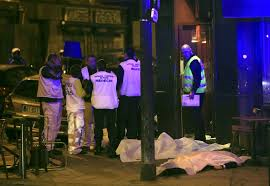
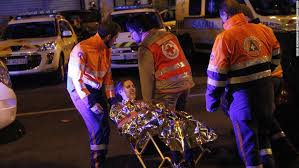


Part I Why do too many humans kill one other; especially if they have different beliefs?

Paris attack 6 Paris attack 11 13 Paris attack


People are often confronted with feelings of disappointment, frustration and anger as they interact with government officials, co-workers, family and even fellow commuters to people just in society. Most can control their actions to the extent that relatively few of these interactions end in a radical action like being racist to violence.

What help build a individuals feelings to turn out in a negative result (like bullying someone to protesting to worse rioting to violence or killing) is factors.

Factors being:

  1. YOUR CHILDHOOD UPBRINGING. Your childhood builds the foundation of how you turn out as an adult. If you have good upbringing where there are good morals, values, ethics with limitations or rules and regulations in what you can and cannot do with mommy and daddy overlooking from a distance in watching the child’s actions/interests/who they play with/what they’re doing on the computer or watching on T.V or even listening to music will help give direction for their child to be effective in society. Including, as the child shows good choices than more independence in getting older with still guidance and direction as needed. Remember your a young adult at 17 and a full fledged adult at 21 years of age to make all decisions in your life.
  2. BEING AN ADULT.   This includes accepting the turn outs of how a situation finally results; before the final result if you did everything you could legally try to reach your hope of a turn out and did reach it great, it makes you a stronger person. Now let’s say you didn’t than acceptance is necessary of what the result turned out as which also makes you a stronger person with being an asset in the community. Than your next step whether it be alone or in society overall move on without being an insult to the community where it effects the society in a negative way (like killing 2 innocent police officers just for wearing the color blue in uniform, prejudice=a radical action).   Being able to allow acceptance in your life which doesn’t always turn out the way you want it to helps you move on in life making you less out to be radical in your behavior. Take the riots (which they call protesting a radical approach from Missouri to New York) and see what their results turned out to be. Stopping people from getting to a destination point who had nothing to do with what the protestors were protesting about, to damage of property of innocent people’s business to the worse DEATH. Like this radical move did anything productive for humans in society. It obviously didn’t.

First let’s look at what turns anger into action? The answer to this is mostly cognitive control or to use a less technical term, self-control.   University of Michigan professor of social psychology, Richard Nisbett, the world’s greatest authority on intelligence, plainly said that he’d rather have his son being high in self-control than intelligence, one year ago. Self-control is the key to a well-functioning life, because our brain makes us easily [susceptible] to all sorts of influences. Watching a movie showing violent acts predisposes us to act violently. Even just listening to violent rhetoric makes us prone or more inclined to be violent. Ironically, the same mirror neurons that make us empathic make us also very vulnerable to all sorts of influences. This is why control mechanisms are so important. If you think about it, there must be control mechanisms for mirror neurons. Mirror neurons are cells that fire when you grab a cup of coffee (to give you an example) as well as when you see someone else grabbing a cup of coffee. So, how come you don’t imitate all the time? The idea is that there are systems in the brain that help us by imitating only “internally”—they dampen the activity of mirror neurons when we simply watch, so that we can still have the sort of “inner imitation” that allows us to empathize with others, without any overt imitation. The key issue is the balance of power between these control mechanisms that we call top-down—because they are all like executives that control from the top down to the employees—and bottom-up mechanisms, in the opposite direction, like mirror neurons. This is whereby perception—watching somebody making an action—influences decisions—making the same action ourselves.

Neuroscience uncovered why people behave so violently looking into the Virginia Tech Massacre in 2007 with many other like incidents also which were still a small percentage of people. What happens in these individuals is that their cognitive control mechanisms are deranged. Mind you, these individuals are not out-of-control, enraged people. They just use their cognitive control mechanisms in the service of a disturbed goal. There are probably a multitude of factors at play here. The subject is exposed to influences that lead him or her to violent acts—including, unfortunately, not only the violent political rhetoric but also the media coverage of similar acts, as we are doing here. A variety of issues, especially mental health problems that lead to social isolation, lead the subject to a mental state that alters his or her ability to exercise cognitive control in a healthy manner. Again also childhood plays a big role.   The cognitive control capacities of the subject get somewhat redirected—we don’t quite understand how—toward goals and activities that are violent in a very specific way. Not the violent outburst of somebody who has “lost it” in a bar, punching people right and left. The violence is channeled in a very specific plan, with a very specific target—generally fed by the media (like take the protesting that has gone on from Missouri to New York for a month or more with media showing every news flash each day)through some sort of rhetoric, political or otherwise—with very specific tools, in the Giffords case, a 9-millimeter Glock.

Now lets look at what are the signs of a person who is disturbed enough to take some form of action to killing.   The signs are quite visible, although difficult to interpret without a context—and unfortunately they unfold very quickly , and people can rarely witness them before the action is taken (which happened with Brinsley in New York killing officers in Brooklyn on duty just doing their job), . The action itself is a sign, a desperate form of communication from a disturbed individual (Brinsley did put on the internet a warning the day it was going to be done, Sat 12/20/14. Unfortunately, nobody was chatting with the guy when he left his final messages on Internet before getting into action. But I bet that if somebody was communicating with him before the act and saw those signs and read those messages on social network he was using, that person could have done something, could have engaged him in a sort of conversation that might have redirected his deranged plans. Indeed, by connecting with the subject, that person might have redirected some of the activity of mirror neurons toward a truly empathic behavior, rather than in the service of the deranged imitative violence leading to action.

My readers I could go on with more examples of people killing but I am sure you listen to the news or read it somehow but I tell you this information not to persecute a person, not even a race or politician but to LEARN HOW THE BRAIN WORKS.   Most importantly to PARENTS bring your children up AS A CHILD not as an adult until they reach adulthood with giving good direction and guidance as their primary mentor. You the parents make our next generation who are now children and even for future parents learn so they will have a more productive working society. For now the society in America works as a   nonproductive unit of people to all races, creeds, genders, sex preferences, & nationalities of all kinds. Especially in being compared to the 1980’s; yes they had their problems but not like today’s with people treating each other with more respect even if things didn’t go their way. Our nation went off the deep end in allowing us to have freedom of everything without limitations or better rules/regulations legally in place not followed which we are paying a good price for and will take a very long time to fix. Remember when someone or now a group of people get hurt you can forgive but healing is like a wound it takes time to heal. Example: Look at Hitler, people still haven’t forgiven him, those that did have not forgotten it and they shouldn’t. Protesting can be effective where its peaceful, quiet, and not bothering other people in the area who aren’t involved. Look at Missouri and New York City this past 6 months, MUCH DAMAGE due to not thinking first but acting out first.

QUOTE FOR THE WEEKEND:

“About 6 of every 10 (or 60%) of men and 5 of every 10 (or 50%) of women experience at least one trauma in their lives. Women are more likely to experience sexual assault and child sexual abuse. Men are more likely to experience accidents, physical assault, combat, disaster, or to witness death or injury.”

US Dept of Veteran Affairs

QUOTE FOR FRIDAY:

“PTSD was first brought to public attention in relation to war veterans, but it can result from a variety of traumatic incidents, such as mugging, rape, torture, being kidnapped or held captive, child abuse, car accidents, train wrecks, plane crashes, bombings, or natural disasters such as floods or earthquakes.”

National Institute of Mental Health (NIH)

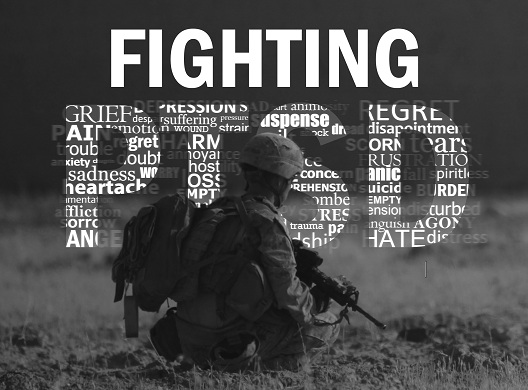
Part I PTSD-Post Traumatic Stress Disorder

In honor of all men and women who have served our country thank you!!

I have committed myself in caring for people as a RN over 28 years and for the commitment you have made in keeping the USA safe with any sacrifices you made from the bottom of my heart thank you!! I dedicate this article to all acting and retired veterans.

U.S. Navy Hospital Corpsman 3rd Class Sean Stevenson takes a knee while on a security patrol in Sangin, Afghanistan, June 6, 2011. Stevenson is a corpsman with Combined Anti-Armor Team 2, Weapons Company, 1st Battalion, 5th Marines, Regimental Combat Team 8. The U.S. Marines conduct frequent patrols through the area to show a presence and interact with the community to find ways to help the populace. (U.S. Marine Corps photo by Cpl. Nathan McCord/Released)

Post-traumatic stress disorder (PTSD) is a mental health condition that’s triggered by a terrifying event — either experiencing it or witnessing it. Symptoms may include flashbacks, nightmares and severe anxiety, as well as uncontrollable thoughts about the event.

Many people who go through traumatic events have difficulty adjusting and coping for a while, but they don’t have PTSD — with time and good self-care, they usually get better. But if the symptoms get worse or last for months or even years and interfere with your functioning, you may have PTSD.

Getting effective treatment after PTSD symptoms develop can be critical to reduce symptoms and improve function.

The Mayo clinic states you can develop post-traumatic stress disorder when you go through, see or learn about an event involving actual or threatened death, serious injury or sexual violation.

Doctors aren’t sure why some people get PTSD. As with most mental health problems, PTSD is probably caused by a complex mix of:

  • Inherited mental health risks, such as an increased risk of anxiety and depression
  • Life experiences, including the amount and severity of trauma you’ve gone through since early childhood
  • Inherited aspects of your personality — often called your temperament
  • The way your brain regulates the chemicals and hormones your body releases in response to stress.
  • Posttraumatic stress disorder, or PTSD, can occur after someone goes through, sees, or learns about a traumatic event like:                                                                                                                                                          *• Combat exposure • Child sexual or physical abuse • Terrorist attack • Sexual/physical assault • Serious accident • Natural disaster, which can occur during areas of war or not.
  • Most people have some stress-related reactions after a traumatic event. If your reactions don’t go away over time and they disrupt your life, you may have PTSD. During a traumatic event, you think that your life or others’ lives are in danger. You may feel afraid or feel that you have no control over what is happening around you. Most people have some stress-related reactions after a traumatic event; but, not everyone gets PTSD.
  • If your reactions don’t go away over time and they disrupt your life, you may have PTSD.  What factors take impact on determining if you have PTSD. *                                                                                                -How intense the trauma was or how long it lasted*                                                                                               -If you were injured, lost a body part or lost someone important to you*                                                         -How close you were to the event*                                                                                                                          -How much help and support you got after the event* *                                                                                                                                                                                     PTSD symptoms usually start soon after the traumatic event, but they may not appear until months or years later. They also may come and go over many years. If the symptoms last longer than four weeks, cause you great distress, or interfere with your work or home life, you might have PTSD.
  • There are four types:
  • What are the symptoms of PTSD?
  • Whether or not you get PTSD depends on many things:
  • Most people who go through a trauma have some symptoms at the beginning. Only some will develop PTSD over time. It isn’t clear why some people develop PTSD and others don’t.
  1. Reliving the event (also called re-experiencing symptoms)
  2. You may have bad memories or nightmares. You even may feel like you’re going through the event again. This is called a flashback.
  3. Avoiding situations that remind you of the event
  4. You may try to avoid situations or people that trigger memories of the traumatic event. You may even avoid talking or thinking about the event.
  5. Negative changes in beliefs and feelings
  6. The way you think about yourself and others may change because of the trauma. You may feel fear, guilt, or shame. Or, you may not be interested in activities you used to enjoy. This is another way to avoid memories.
  7. Feeling keyed up (also called hyperarousal) People with PTSD may also have other problems. These include:
  8. What other problems do people with PTSD experience?
  9. You may be jittery, or always alert and on the lookout for danger. Or, you may have trouble concentrating or sleeping. This is known as hyperarousal.
  • -Feelings of hopelessness, shame, or despair
  • -Depression or anxiety
  • -Drinking or drug problems
  • -Physical symptoms or chronic pain
  • -Employment problems
  • -Relationship problems, including divorceFor many Veterans, memories of their wartime experiences can still be upsetting long after they served in combat. If you are an older Veteran, you may have served many years ago, but your military experience can still affect your life today.
  • COMMON SIGNS AND SYMPTOMS OF PTSD: Anger and irritability, guilt, shame, or self-blame, substance abuse, feelings of mistrust and betrayal, depression and hopelessness, suicidal thoughts and feelings, feeling alienated and alone, & physical aches and pains.
  • Common symptom patterns:
  •                                                                                                                                                                             *Some Veterans begin to have PTSD symptoms soon after they return from war. These symptoms may last until older age. Other Veterans don’t have PTSD symptoms until later in life. *                                                                                                                                                                              *For some Veterans, PTSD symptoms can be high right after their war experience, go down over the years, and then worsen again later in life. *                                                                                                                                                                                   *Many older Veterans have functioned well since their military experience. Then later in life, they begin to think more or become more emotional about their wartime experience. As you age, it is normal to look back over your life and try to make sense of your experiences. For Veterans this process can trigger Late-Onset Stress Symptomatology (LOSS). The symptoms of LOSS are similar to symptoms of PTSD. With LOSS, though, Veterans might have fewer symptoms, less severe symptoms, or begin having symptoms later in life. *                                                                                                                                                                                       *The wars in Afghanistan and Iraq are the longest combat operations since Vietnam. Many stressors face these Operation Enduring Freedom/Operation Iraqi Freedom (OEF/OIF) troops. OEF/OIF service members are at risk for death or injury. They may see others hurt or killed. They may have to kill or wound others. They are on alert around the clock. These and other factors can increase their chances of having PTSD or other mental health problems. *                                                                                                                                                                                          For many service members, being away from home for long periods of time can cause problems at home or work. These problems can add to the stress. This may be even more so for National Guard and Reserve troops who had not expected to be away for so long. Almost half of those who have served in the current wars have been Guard and Reservists. Another cause of stress in Iraq and Afghanistan is military sexual trauma (MST). This is sexual assault or repeated, threatening sexual harassment that occurs in the military. It can happen to men and women. MST can occur during peacetime, training, or war.                                                                                                                                                                                                                            *MST-Military Sexual Trauma is the term used by the Department of Veterans Affairs (VA) to refer to experiences of sexual assault or repeated, threatening sexual harassment that a Veteran experienced during his or her military service.
  • In many cases, treatments for PTSD will also help these other problems, because they are often related. The coping skills you learn in treatment can work for PTSD and these related problems.

Stayed tune for Part II this weekend on PTSD.

QUOTE FOR THURSDAY:

Children with Williams syndrome are extremely sensitive to sound and may overreact to unusually loud or high-pitched sounds (hyperacusis). Chronic middle ear infections (otitis media) are often present.

National Organization of Rare Disorders

QUOTE FOR WEDNESDAY:

“A study just published by Clinicians on patients in the West Midlands who travelled overseas to receive Living Donor transplants has found that clinical outcomes are often poor. Over 30% of the patients in the study who travelled either died within three months (17%) or lost their new kidney within a year(14%).”

National Kidney Federation

Kidney Transplant Tourism

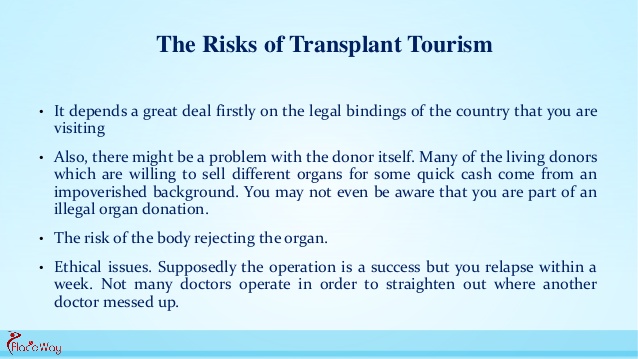
transplant-tourism-risks-and-benefits-7-638TRANPLANT TOURISM

When people languish on a wait-list for a kidney transplant, they may start to consider a desperate measure: Traveling to a country where they can buy a donor kidney on the black market.

But beyond the legal and ethical pitfalls, experts say, the health risks are not worth it.

Most countries ban the practice, sometimes called “transplant tourism,” and it has been widely condemned on ethical grounds. Now a new study highlights another issue: People who buy a donor kidney simply do not fare as well.

Researchers in Bahrain found that people who traveled abroad to buy a kidney — to countries like the Philippines, India, Pakistan, China and Iran — sometimes developed serious infections.

Those infections included the liver diseases hepatitis B and C, as well as cytomegalovirus, which can be life-threatening to transplant recipients, the investigators said.

Also, people who bought donor kidneys also faced higher rates of surgical complications and organ rejection, versus those who received a legal transplant in their home country.

Dr. Amgad El Agroudy, of Arabian Gulf University, was to present the findings Friday at the annual meeting of the American Society of Nephrology (ASN), in San Diego.

It’s not clear how common it is for U.S. patients to take a chance on traveling abroad to buy a black-market kidney, according to Dr. Gabriel Danovitch, director of kidney transplantation at the University of California, Los Angeles.

“We really have no way of knowing what the numbers are,” said Danovitch, who was not involved in the study.

“But,” he added, “my sense is that the numbers are fairly small, as the dangers of transplant tourism are becoming more and more clear.”

Why is it a risky proposition? According to Danovitch, there are a few broad reasons: The paid organ donors may not be properly screened, and the recipients may not be good candidates for a transplant, to name two.

“In a paid system, the prime focus is on making money,” Danovitch said. “Centers that are willing to do these don’t really care what happens to the donors or recipients after the transplant.”

For people with advanced chronic kidney failure, the treatment options are dialysis or a transplant. But there are not enough donor organs to meet the need. In the United States, nearly one million people have end-stage kidney disease, and there are roughly 102,000 people on the waiting list for a transplant, according to the National Kidney Foundation.

Kidney transplants can come from a living or deceased donor, but living-donor transplants are more likely to be successful, according to U.S. health officials.

It doesn’t take long to get tired of spending 12 hours a week on hemodialysis, or even more time on peritoneal dialysis (PD) —not to mention complications like line infections and access problems. But a new, healthy kidney would put an end to all that. A transplant sounds like it would be well worth the risk of surgery and the trouble of taking anti-rejection medicines, and Medicare statistics show that it actually costs less in the long run than continued dialysis. When can you check into the hospital, you ask?

Unfortunately over 80,000 people in the United States are already waiting for a new kidney and in 2008 only 16,517 got one. Maybe you don’t have a compatible donor in your family, or you’ve been told that you are “not a transplant candidate” for one of several reasons. You’re a resourceful person who knows that persistence pays off, and you start looking for ways to shorten the wait or get around the rules that say you don’t qualify for a transplant. Kidneys from living donors are almost always preferable to those from recently deceased donors. If you don’t have a friend or family member willing to donate, what about getting one where the laws against buying an organ are less strictly enforced? Medical tourism is booming these days. Maybe you know somebody who had surgery overseas, either to avoid a waiting list or just because the price is lower there. The same international pharmaceutical countries produce medicines for everybody these days, so how big a difference can there be? Nephrologists in the US say it’s a common story: a dialysis patient misses treatments or appointments for a few days or several weeks, then comes to their office asking for refills on anti-rejection medicines…with pill bottles labeled in Urdu, Chinese or Farsi as well as in English. Did they get a good deal or what?  Unfortunately this may not be the bargain people hoped for.

At UCLA Jagbir Gill, MD, and associates studied 33 patients who had received transplants overseas, and found they had much worse results than patients who received transplants in this country. Screening of paid kidney donors was less thorough, with problems like hepatitis overlooked. Early organ rejection was twice as common and infections frequent; Dr. Gill recalls patients who went “directly from the airport to the emergency room” due to severe infections or transplant failure.

In a similar study in Canada, where waiting periods for transplants are even longer, experiences were similar. Jeffrey Zaltzman, MD, reports infections common in the countries where the transplant was done were a big problem in medical tourists. One 78-year-old gentleman returned from Pakistan with a surgical wound that reopened spontaneously; he died a few weeks later of cardiovascular problems that might have disqualified him for a transplant at home. The cost to paid organ donors can be even greater. Poor people who sell a kidney, sometimes for as little as $800 according to the World Health Organization, face health problems like hypertension and worsening of their own kidney functions—provided, of course, that their surgery goes well. Since most live in countries where even blood pressure checks are rare, complications that develop after they leave the hospital may go undetected until it is too late for the patient. Donors in the United States frequently can have kidneys removed with very small incisions. Third World donors, however, generally end up with wounds up to 14 inches long that may take months to heal, making them unable to do the manual labor most depend on. Chronic pain and disability are common, points out Nancy Scheper-Hughes, who has extensively studied and reported on transplant practices from Brazil to China. And reports of organs coming from executed prisoners in China are even more worrisome. Details of where donors come from and which hospitals and doctors will do the surgery are rarely available to “clients” and their families ahead of time. While paying a donor for an organ is illegal everywhere except Iran, “international transplant coordinators” have no laws banning what they do—bringing clients together with hospitals in other countries. And as the WHO’s Dr. Luc Noel points out, “None of the brokers ever mention the costs—long-term health issues, chronic pain, inability to perform manual labor—that are borne by these poor organ vendors.”

SO THINK TWICE BEFORE FALLING FOR TRANSPLANT TOURISM. HIGH PROBABILITY YOU WON’T LIKE THE RESULTS!

QUOTE FOR TUESDAY:

“Atrial fibrillation, or AFib, is the most common type of arrhythmia.
It is a major cause of stroke, especially in the elderly. Although the causes are diverse, hypertension is common.”

AHA (American Heart Association)