Part IV Breast Cancer Awareness Month – Know the modified risk factors you can change!

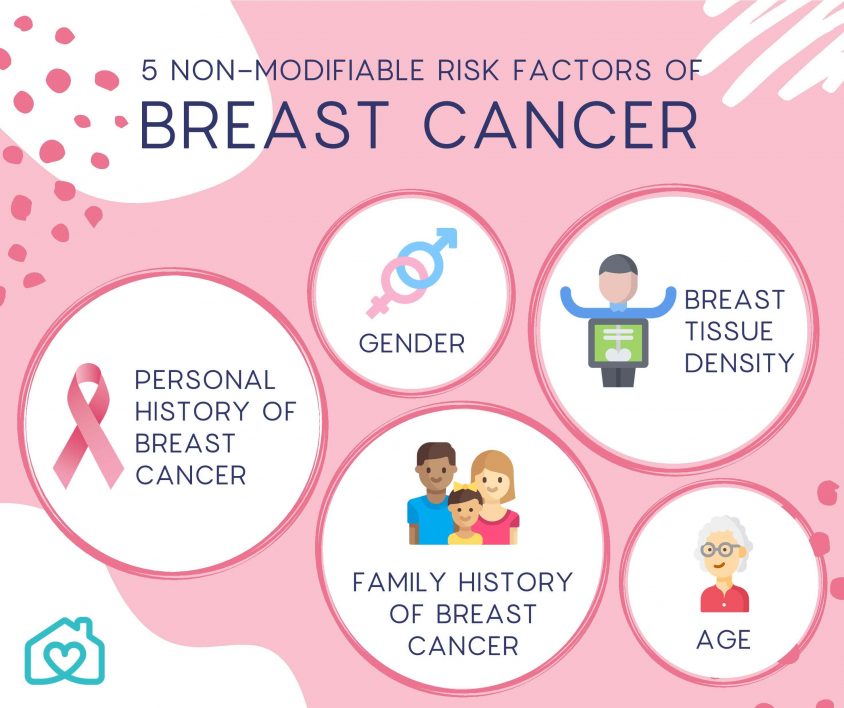
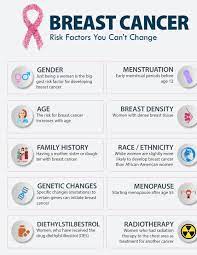
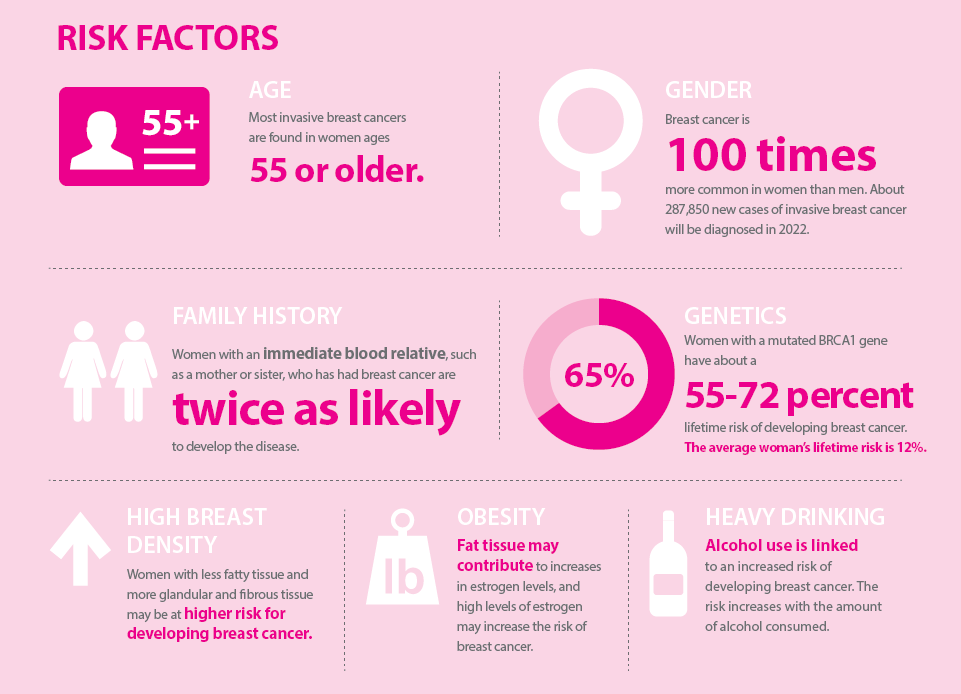
Non-modifiable risk factors to breast cancer means factors we cannot change:
 

Modifiable risks risk factors to breast cancer. This means factors we can control:
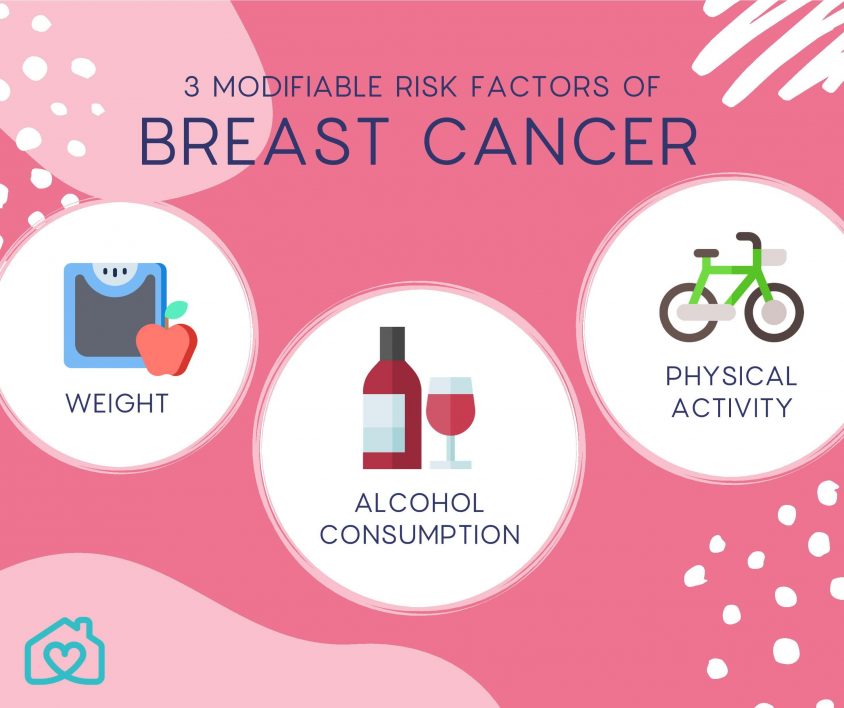
Weight. Being overweight is associated with increased risk of breast cancer, especially for women after menopause. Fat tissue is the body’s main source of estrogen after menopause, when the ovaries stop producing the hormone. Having more fat tissue means having higher estrogen levels, which can increase breast cancer risk.

Diet. Studies are looking at the relationship between diet and breast cancer risk and the risk of recurrence. The Women’s Health Initiative Trial suggested that a diet very low in fat may reduce the risk of breast cancer. More research is needed in this important area for women who are interested in eating well to reduce their risk of ever getting breast cancer.

Diet pretty much affects your weight.  Unless you have a high metabolism or are severely active eating fattening foods will put on weight.

In the meantime, here’s what dietitians suggest:

  • Keep your body weight in a healthy range for your height and frame. Body mass index, though not a perfect measurement, can help you estimate your healthy weight.
  • Eat plenty of vegetables and fruit (more than 5 cups a day).
  • Try to limit your saturated fat intake to less than 10% of your total calories per day and limit your fat intake to about 30 grams per day.
  • Eat foods high in omega-3 fatty acids.
  • Avoid trans fats, processed meats, and charred or smoked foods.

You’ll find that processed foods generally don’t fit in this type of diet as well as fresh foods do. For more information, visit our page on healthy eating to reduce risk of breast cancer in the Nutrition section.

Exercise. Evidence is growing that exercise can reduce breast cancer risk. The American Cancer Society recommends engaging in 45-60 minutes of physical exercise 5 or more days a week.

Alcohol consumption. Studies have shown that breast cancer risk increases with the amount of alcohol a woman drinks. Alcohol can limit your liver’s ability to control blood levels of the hormone estrogen, which in turn can increase risk.

Smoking. Smoking is associated with a small increase in breast cancer risk.

Exposure to estrogen. Because the female hormone estrogen stimulates breast cell growth, exposure to estrogen over long periods of time, without any breaks, can increase the risk of breast cancer. Some of these risk factors are under your control, such as:

  • taking combined hormone replacement therapy (estrogen and progesterone; HRT) for several years or more, or taking estrogen alone for more than 10 years
  • being overweight
  • regularly drinking alcohol

Recent oral contraceptive use. Using oral contraceptives (birth control pills) appears to slightly increase a woman’s risk for breast cancer, but only for a limited period of time. Women who stopped using oral contraceptives more than 10 years ago do not appear to have any increased breast cancer risk.

Stress and anxiety. There is no clear proof that stress and anxiety can increase breast cancer risk. However, anything you can do to reduce your stress and to enhance your comfort, joy, and satisfaction can have a major effect on your quality of life. So-called “mindful measures” (such as meditation, yoga, visualization exercises, and prayer) may be valuable additions to your daily or weekly routine. Some research suggests that these practices can strengthen the immune system.

The National Cancer Institute estimates an outstanding 80% of cancer in America is do to our lifestyles particularly DIET and EXERCISE. That includes Breast Cancer. I am not saying it is the only reason but a large percentage has to do with it and with changing it to a healthy one if your diet is not already including your exercise it lowers the probability for a large amount of people in America from getting cancer.  This principle also pertains to many other diseases (Ex. Obesity, High blood pressure, Diabetes, etc…)

Breast cancer is a polygenic and multifactorial disease for which estrogens have been recognized as the main risk factor, and for which lifestyle plays a key role. Previous epidemiologic cancer research performed in Uruguayan population delimited its dietary and anthropometric profiles (use for identification, use for the purposes of understanding human physical variation and in various attempts to correlate physical with racial and psychological traits). Recognizing the difficulty for universalizing a nutritional basis for prevention due to different eating patterns among regions and countries, what was summarized was the existent knowledge linking nutrition, estrogens, metabolism and Breast Cancer. As an attempt towards primary prevention of Breast Cancer, present recommendations mainly based on country-specific research findings and modifiable putative risk and protective factors, proposing to modify the intake of meats and other fatty foods – especially sources of Ω-6 and Ω-3 fatty acids – adding olive oil, selected vegetables, citrus fruits and working towards adequate body fat/muscle proportions. From a medical and ethical viewpoint, it is justified to recommend certain nutritional changes to women, because no adverse side effects are expected to occur.

There is evidence for an inverse association between physical activity and breast cancer risk. The evidence is stronger for postmenopausal breast cancer than for premenopausal breast cancer.

The National Cancer Institute states 80 percent of all cancers is due to our lifestyles. For some who are already active and eating healthy your already ahead of many in prevention of cancer but for those who don’t you dramatically alter your risks going towards higher probability of possibility getting cancer. If your one of those people I have great news this risk is controllable and you can fix it.

The modifiable risk factors are ones like your eating and exercise, which you have full control of. I am not saying become a weight lifter or workout in a gym 4 x/wk if you don’t now. What I am saying is increase your activity with some exercise like walking a mile a day or what you can tolerate and increase your exercise overtime.  If you get yourself up to 2 to 5 miles a day, great! If you become a regular at the gym or weight lifter great but you don’t have to go to that extreme of being a Sylvester Stallone or Rocky.

Non modifiable+modifiable risk factors:


QUOTE FOR TUESDAY:

“U.S. We rarely think about breathing except when we have trouble doing so and that’s why every October is Healthy Lung Month.  Tuberculosis, or TB, has been among the most prominent lung diseases in history, with traces of it even being found in ancient Egyptian mummies. It was tuberculosis that prompted the start of the American Lung Association in 1904.  

More recently anti-smoking movements have joined in the healthy lung movement. Cigarette packaging warnings were established in 1966 and years of campaigning have  successfully led to the change in perception of smoking among the American public, with Americans now realizing smoking is a major cause of cancer.

Lung disease affects a huge number of Americans. Around 10 million are diagnosed with chronic bronchitis each year, 25 million are believed to be living with asthma, and over 150,000 die from lung cancer annually. Our lungs are important and Healthy Lung Month is an opportunity to create awareness around healthy lifestyle choices. ”

National TODAY (https://nationaltoday.com/healthy-lung-month/)


QUOTE FOR MONDAY:

“Bullying is a form of aggressive behavior in which someone intentionally and repeatedly causes another person injury or discomfort. Bullying can take the form of physical contact, words, or more subtle actions.

The bullied individual typically has trouble defending him or herself and does nothing to “cause” the bullying.

Cyberbullying is verbally threatening or harassing behavior conducted through such electronic technology as cell phones, email, social media, or text messaging.”

American Psychological Association (https://www.apa.org/topics/bullying)

QUOTE FOR THE WEEKEND:

3 Principles to Keep Love Alive:

1. The act of loving is gratifying for both the lover and the loved one.

The state of being in love is passive and easily dissolves into an internal fantasy about being in love. This fantasy gradually becomes a substitute for actual love. The act of loving involves behaviors that keep a close relationship alive and vital

2. Maintain your individuality and appreciate your partner’s individuality.

When you know someone well or long, it is easy to lose sight of them as an individual person. Therefore, it is important to respect your partner by encouraging his or her unique interests and personal goals, independent of yours. This means being sensitive to your partner’s wants, desires, and feelings, and placing as much value on them as you do on your own. It means regarding your partner separate from any expectations you may have or any role he or she may be fulfilling in relation to you.

3.     Ignore your critical inner voice

To varying degrees, we all have an enemy within, a part of ourselves that operates inside our heads much like a malicious coach, criticizing us and offering up bad advice. This enemy, with its destructive point of view, is your critical inner voice. It supports your defenses, which wouldn’t be a bad thing except that, for the most part, your defenses are archaic. And lastly, when we are romantic, we can ignore our critical inner voice when it tries to influence us to defend ourselves and not be loving and vulnerable.

PsychAlive

QUOTE FOR FRIDAY:

“Cardiac arrest may be caused by irregular heart rhythms called arrhythmias. A common arrhythmia associated with cardiac arrest is ventricular fibrillation. In ventricular fibrillation, the heart’s lower chambers suddenly start beating chaotically and don’t pump blood.”

https://www.heart.org/en/health-topics/cardiac-arrest/about-cardiac-arrest

QUOTE FOR THURSDAY:

“A Holter monitor is a small, wearable device that records the heart’s rhythm. It’s used to detect or determine the risk of irregular heartbeats (arrhythmias).

A Holter monitor test may be done if a traditional electrocardiogram (ECG or EKG) doesn’t provide enough details about the heart’s condition. If the irregular heartbeats are infrequent, a longer term monitor called an event recorder may be needed.

Some personal devices, such as smartwatches, offer electrocardiogram monitoring. Ask your health care provider if this is an option for you.

If you have infrequent arrhythmias, an ECG may not detect them. A Holter monitor may be able to spot irregular heart rhythms that an ECG missed.”

MAYO CLINIC

QUOTE FOR WEDNESDAY:

“More. than 21,000 American women are diagnosed with ovarian cancer every year, and 14,000 die from it, according to the American Cancer Society (ACS). But only about 20 percent of ovarian cancers are found early, a dismaying statistic stemming from several key factors.”

Donna McNamara, M.D., chief of medical gynecologic oncology at Hackensack University Medical Center and is Co director of John Theurer Cancer Center.

Month of Aging and Health Awareness Month!

Heart disease, cancer, stroke, chronic lower respiratory diseases, Alzheimer’s disease and diabetes continue to be leading causes of death among older adults, based on the Center for Disease Control & Prevention (saving lives and protecting people…CDC). They also provide the following:Baby Boomers for the next 25 years equating to over 70 million people can live longer lives with them combining to double the population of older Americans in the next quarter of a century. Baby Boomers can take steps to live long and healthy lives as opposed to a lot of their parents who died much younger. Living healthier will play a positive impact on the health care system. Starting a step towards prevention or treatment (Rx) of a present disease that you can improve is a mission we Americans owe to ourselves, our young ones, and to our nation’s future.

Through healthy dieting and behaviors (Ex. activity, nutrition, staying in your therapeutic body mass index, controlling stress both physically and mentally, oral health and dealing with any disability reaching the optimal health level you can reach) you can reach a healthier way to living. If the majority of our nation lives healthier, shows progress in promoting prevention, improving the health and well-being of older adults with reducing behaviors that contribute to premature death and disability will increase a healthier population in the U.S.

Baby boomers should do the following with starting good diet and exercise; start young!  Include with doing the following when your general practitioner recommends its time in your life later or even now for:

Getting Screened:

Get screened including flu vaccine, pneumonia vaccine, colorectal cancer screening, and mammography for women.

Mammography is the best available method to detect breast cancer in its earliest, most treatable stage before it is big enough to feel or cause symptoms. Women aged 50 and over should get mammograms every two years.

Colorectal cancer screening tests can find precancerous polyps so that they can be removed before they turn into cancer. They can also detect colorectal cancer early, when treatment works best. Older adults should be screened for colorectal cancer by having a fecal occult blood test during the past year or a colonoscopy within 10 years.

Get Vaccinated:

Flu and pneumonia is the seventh leading cause of death among adults 65 years or older, despite the availability of effective vaccines. Older adults should get the flu vaccine every year and get the pneumonia vaccine at least once.

Be Physically Active

Regular physical activity is one of the most important things older adults can do for their health. Physical activity can prevent many of the health problems that may come with age, including the risk of falls.

How Much Activity Do Older Adults Need?

2 hours and 30 minutes (150 minutes) of moderate-intensity aerobic activity (i.e., brisk walking) every week and muscle-strengthening activities for 2 or more days a week that work all major muscle groups.

OR

1 hour and 15 minutes (75 minutes) of vigorous-intensity aerobic activity (i.e., jogging or running) every week and muscle-strengthening activities on 2 or more days a week that work all major muscle groups.

OR

An equivalent mix of moderate and vigorous-intensity aerobic activity and muscle strengthening activities on 2 or more days a week that work all major muscle groups.

Eat Fruits and Vegetables Daily

Diets rich in fruits and vegetables may reduce the risk of some cancers and chronic diseases, such as diabetes and cardiovascular disease.

Quit Smoking

Tobacco use remains the single largest preventable cause of disease, disability, and death in the United States. For help visit www.smokefree.gov.

Take Medication for High Blood Pressure and Diabetes

High blood pressure & Diabetes is a major risk factor for cardiovascular disease, it’s one of the leading causes of illness and death among older adults. More than ½ of Americans don’t have their blood pressure under control.  Compliance is so essential in treating HTN, Diabetes or any disease including what your M.D. feels you need as a medication, if needed. The only way to find out is by seeing your health care providers, such as doctors, nurses, and pharmacists, who can track their patient’s blood pressure, prescribe once-a-day medications, and give clear instructions on how to take blood pressure & diabetic medications.

Take good care of your skin from childhood throughout your elder years.  Why?  Skin is the largest organ of the body and skin cancer is the easiest to treat when detected early and not blown off seeing the doctor.  Before that take care of the skin by: Wearing Sun Screen for protection from getting skin cancer!  Keep temperatures on average at room temperature and since hot temps dry out the skin.  Limit Sugar Intake. Overeating sugar can lead to wrinkles and sagging skin.  Get your beauty sleep. Adults need between seven and nine hours of sleep each night.  Sleep also gives your body time to refresh and renew itself. 

Patients should take the initiative or responsibility to monitor their blood pressure and sugar levels (finger sticks) between medical visits and know what abnormal values to report to their MD. Including taking their medications as prescribed, tell their doctor about any side effects, and make lifestyle changes, such as eating a low-sodium/low-calorie diet, exercising, and stopping smoking.

Do you want a better body, or a healthier society making our country America better overall?  Well here are a few tips in getting started:

  1. Positive Attitude – Keep a positive attitude through life. Focus on the positive, taking hold of any problems and addressing them properly and you will find that you will be happier in your life.
  2. Don’t “Act Your Age” – Forget that “number” – it’s only a number, after all!  Live life looking forward to activities and actions that make you smile and forget about your age!
  3. Be Proactive – Take charge of your health and research the many ways you can use your Health Insurance to take proactive steps in keeping healthy. You’re entitled to a variety of healthcare screenings as you get older; and it’s important to know exactly what tests and screenings you should behaving, based on your age and gender.
  4. Try Something New – It’s never too late to make changes and become a whole new you! Take up a new hobby, learn a language, take a class, or join a book club. Making your life interesting is one of the best ways to focus on healthy aging.
  5. Embrace Your Creativity – You may be surprised that you have an artistic side to you if you check out classes on painting, sketching or drawing. If your art talents are limited try adult coloring books that you can color with pencils.
  6. Surround Yourself With Positivity – Your mental health plays a very important part in healthy aging and surrounding yourself with people who make you smile and laugh makes healthy aging even easier.


QUOTE FOR MONDAY:

“If you have a genetic predisposition to ovarian cancer, your doctor may recommend regular pelvic imaging and blood tests to screen for the disease.”

Dr. Edward Tanner (an assistant professor of gynecology and obstetrics at the Johns Hopkins University School of Medicine in Baltimore, Maryland).

QUOTE FOR THE WEEKEND:

“The new ingredient, nootkatone, repels and kill ticks, mosquitoes, and a wide variety of other biting pests. Nootkatone is responsible for the characteristic smell and taste of grapefruit and is widely used in the fragrance industry to make perfumes and colognes. It is found in minute quantities in Alaska yellow cedar trees and grapefruit skin.

Nootkatone can now be used to develop new insect repellents and insecticides for protecting people and pets. CDC’s licensed partner, Evolva, is in advanced discussions with leading pest control companies for possible commercial partnerships. Companies interested in developing brand name consumer products will be required to submit a registration package to EPA for review, and products could be commercially available as early as 2022.

“CDC is proud to have led the research and development of nootkatone,” said Jay C. Butler, MD, Deputy Director for Infectious Diseases. “Providing new alternatives to existing bite-prevention methods paves the way to solving one of biggest challenges in preventing vector-borne diseases—preventing bites.”

Center for Disease Control and Prevention CDC