Archive | June 2025

QUOTE FOR TUESDAY:

“In recognition of the achievements of people who are DeafBlind, the Helen Keller National Center for DeafBlind Youths & Adults (HKNC) celebrates the last week in June as “DeafBlind Awareness Week.”

This year marks the 41st anniversary of this national advocacy campaign which has been held each year since 1984 when then-President Ronald Reagan issued a proclamation in recognition of this special week. The purpose of DeafBlind Awareness Week is to raise public awareness about individuals who have combined hearing and vision loss.  In 2025, we will celebrate Helen Keller DeafBlind Awareness Week from June 22nd to June 28th.

This year’s campaign, “Cultivating Leadership: Together We Grow,” focuses on leadership development within the DeafBlind community across all life stages.”

Helen Keller Services – HKS  (DeafBlind Awareness Week 2025 Cultivating Leadership: Together We Grow)

Part I Helen Keller Deaf-Blind Awareness Week (June 22-28)

Today, many children who are born deaf or blind have access to amazing support to help them navigate the world. Similarly, those who suffer loss of hearing or sight later in life have numerous resources to help them overcome communication barriers introduced by their new reality. It’s unlikely that those in this situation would be cut off completely from communicating with others. In the 1880s, Helen Keller wasn’t so fortunate. Despite all of the barriers that she faced because of her deafness, her blindness and her gender, she was able to do impressive work with Anne Sullivan to move care of the deaf-blind population forward

Those unfortunately born with no sight and hearing face many challenges.

It may seem that deaf-blindness refers to a total inability to see or hear. However, in reality deaf-blindness is a condition in which the combination of hearing and visual losses in children cause “such severe communication and other developmental and educational needs that they cannot be accommodated in special education programs solely for children with deafness or children with blindness” ( 34 CFR 300.8 ( c ) ( 2 ), 2006) or multiple disabilities. Children who are called deaf-blind are singled out educationally because impairments of sight and hearing require thoughtful and unique educational approaches in order to ensure that children with this disability have the opportunity to reach their full potential.

A person who is deaf-blind has a unique experience of the world. For people who can see and hear, the world extends outward as far as his or her eyes and ears can reach. For the young child who is deaf-blind, the world is initially much narrower. If the child is profoundly deaf and totally blind, his or her experience of the world extends only as far as the fingertips can reach. Such children are effectively alone if no one is touching them. Their concepts of the world depend upon what or whom they have had the opportunity to physically contact.

If a child who is deaf-blind has some usable vision and/or hearing, as many do, her or his world will be enlarged. Many children called deaf-blind have enough vision to be able to move about in their environments, recognize familiar people, see sign language at close distances, and perhaps read large print. Others have sufficient hearing to recognize familiar sounds, understand some speech, or develop speech themselves. The range of sensory impairments included in the term “deaf-blindness” is great.

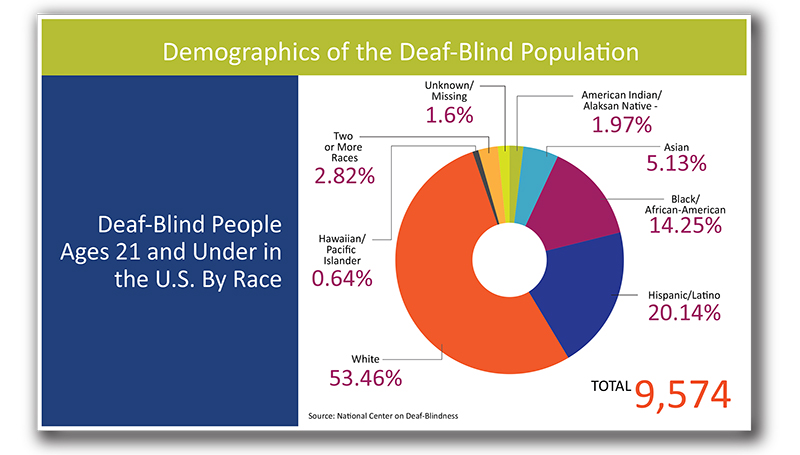
As far as it has been possible to count them, there are over 10,000 children (ages birth to 22 years) in the United States who have been classified as deaf-blind (NCDB, 2008). It has been estimated that the adult deaf-blind population numbers 35-40,000 (Watson, 1993). The causes of deaf-blindness are many. Below is a list of many of the possible etiologies of deaf-blindness.

Major Causes of Deaf-Blindness:

Syndromes-Like Down Syndrome, Trisomy13 Syndrome & Usher

Multiple Congenital Anomalies- Like CHARGE Association, Fetal alcohol syndrome, Hydrocephaly, Maternal drug abuse and Microcephaly.

Prematurity=Congenital Prenatal Dysfunction.  Like AIDS, Herpes, Rubella, Syphilis and Toxoplasmosis.

Post-natal Causes- Like Asphyxia, Encephalitis, Head injury/trauma, Meningitis and Stroke.

The one major CHALLENGE these patients face:

Communication:

The disability of deaf-blindness presents unique challenges to families, teachers, and caregivers, who must make sure that the person who is deaf-blind has access to the world beyond the limited reach of his or her eyes, ears, and fingertips. The people in the environment of children or adults who are deaf-blind must seek to include them—moment-by-moment—in the flow of life and in the physical environments that surround them. If they do not, the child will be isolated and will not have the opportunity to grow and to learn. If they do, the child will be afforded the opportunity to develop to his or her fullest potential.

The most important challenge for parents, caregivers, and teachers is to communicate meaningfully with the child who is deaf-blind. Continual good communication will help foster his or her healthy development. Communication involves much more than mere language. Good communication can best be thought of as conversation. Conversations employ body language and gestures, as well as both signed and spoken words. A conversation with a child who is deaf-blind can begin with a partner who simply notices what the child is paying attention to at the moment and finds a way to let the child know that his or her interest is shared.

This shared interest, once established, can become a topic around which a conversation can be built. Mutual conversational topics are typically established between a parent and a sighted or hearing child by making eye contact and by gestures such as pointing or nodding, or by exchanges of sounds and facial expressions. Lacking significant amounts of sight and hearing, children who are deaf-blind will often need touch in order for them to be sure that their partner shares their focus of attention. The parent or teacher may, for example, touch an interesting object along with the child in a nondirective way. Or, the mother may imitate a child’s movements, allowing the child tactual access to that imitation, if necessary. (This is the tactual equivalent of the actions of a mother who instinctively imitates her child’s babbling sounds.) Establishing a mutual interest like this will open up the possibility for conversational interaction.

Teachers, parents, siblings, and peers can continue conversations with children who are deaf-blind by learning to pause after each turn in the interaction to allow time for response. These children frequently have very slow response times. Respecting the child’s own timing is crucial to establishing successful interactions. Pausing long enough to allow the child to take another turn in the interaction, then responding to that turn, pausing again, and so on—this back-and-forth exchange becomes a conversation. Such conversations, repeated consistently, build relationships and become the eventual basis for language learning.

As the child who is deaf-blind becomes comfortable interacting nonverbally with others, she or he becomes ready to receive some form of symbolic communication as part of those interactions. Often it is helpful to accompany the introduction of words (spoken or signed) with the use of simple gestures and/or objects which serve as symbols or representations for activities. Doing so may help a child develop the understanding that one thing can stand for another, and will also enable him or her to anticipate events.

Think of the many thousands of words and sentences that most children hear before they speak their own first words. A child who is deaf-blind needs comparable language stimulation, adjusted to his or her ability to receive and make sense of it. Parents, caregivers, and teachers face the challenge of providing an environment rich in language that is meaningful and accessible to the child who is deaf-blind. Only with such a rich language environment will the child have the opportunity to acquire language herself or himself. Those around the child can create a rich language environment by continually commenting on the child’s own experience using sign language, speech, or whatever symbol system is accessible to the child. These comments are best made during conversational interactions. A teacher or a parent may, for example, use gesture or sign language to name the object that he or she and the child are both touching, or name the movement that they share. This naming of objects and actions, done many, many times, may begin to give the child who is deaf-blind a similar opportunity afforded to the hearing child—that of making meaningful connections between words and the things for which they stand.

Principal communication systems for persons who are deaf-blind are these:

  • touch cues
  • gestures
  • object symbols
  • picture symbols
  • sign language
  • fingerspelling
  • Signed English
  • Pidgin Signed English
  • braille writing and reading
  • Tadoma method of speech reading
  • American Sign Language
  • large print writing and reading
  • lip-reading speech

Along with nonverbal and verbal conversations, a child who is deaf-blind needs a reliable routine of meaningful activities, and some way or ways that this routine can be communicated to her or him. Touch cues, gestures, and use of object symbols are some typical ways in which to let a child who is deaf-blind know what is about to happen to her or him. Each time before the child is picked up, for example, the caregiver may gently lift his or her arms a bit, and then pause, giving the child time to ready herself or himself for being handled. Such consistency will help the child to feel secure and to begin to make the world predictable, thus allowing the child to develop expectations. Children and adults who are deaf-blind and are able to use symbolic communication may also be more reliant on predictable routine than people who are sighted and hearing. Predictable routine may help to ease the anxiety which is often caused by the lack of sensory information.

Stay tune for Part II tomorrow on other challenges.

 

QUOTE FOR MONDAY:

“There were estimated 31,800 new cases of HIV infections in the U.S. in 2022.  Of those 67% (21,400) who were primarily men that were either gay, bisexual, and other men who reported male to male sexual contact.  Then 22% (7000) were among people heterosexual contact and 7% (2300) were among people who inject drugs. Again, these statistics were in 2022.  Ending the HIV epidemic; it is estimated that in 2025 new HIV infections will be at 9,300 and in 2030 only 3,000 new cases.”

Center for Disease Control and Prevention-CDC (Fast Facts: HIV in the United States | HIV | CDC)


Part II National AIDS/HIV Awareness-How its transmitted (its not just sex), symptoms at acute/chronic/progression levels of AIDS/HIV & how is it prevented with what can be done to people with it.!

Acquired immunodeficiency syndrome (AIDS) is a chronic, potentially life-threatening condition caused by the human immunodeficiency virus (HIV). By damaging your immune system, HIV interferes with your body’s ability to fight infection and disease.

How HIV is transmitted:

HIV is transmitted via the exchange of body fluids—such as pre-ejaculate fluid, semen, vaginal fluid secretions, blood, or breast milk. Within these bodily fluids, HIV is present as both free virus particles and virus within infected immune cells.

The symptoms and when they develop:

Within a month or 2 of contracting HIV, about 40 to 90-percent of those afflicted suffer from flu-like symptoms including the following:

Fever, fatigue, achy muscles, swollen lymph glands, sore throat, headache, skin rash, dry cough, nausea, rapid weight loss, night sweats, frequent yeast infections (for women), cold sores, and eventually, pneumonia.

Symptoms

The symptoms of HIV and AIDS vary, depending on the phase of infection.

Primary infection (Acute HIV)

Some people infected by HIV develop a flu-like illness within two to four weeks after the virus enters the body. This illness, known as primary (acute) HIV infection, may last for a few weeks. Possible signs and symptoms include:

  • Fever
  • Headache
  • Muscle aches and joint pain
  • Rash
  • Sore throat and painful mouth sores
  • Swollen lymph glands, mainly on the neck
  • Diarrhea
  • Weight loss
  • Cough
  • Night sweats

These symptoms can be so mild that you might not even notice them. However, the amount of virus in your bloodstream (viral load) is quite high at this time. As a result, the infection spreads more easily during primary infection than during the next stage.

Clinical latent infection (Chronic HIV)

In this stage of infection, HIV is still present in the body and in white blood cells. However, many people may not have any symptoms or infections during this time.

This stage can last for many years if you’re not receiving antiretroviral therapy (ART). Some people develop more severe disease much sooner.

Symptomatic HIV infection

As the virus continues to multiply and destroy your immune cells — the cells in your body that help fight off germs — you may develop mild infections or chronic signs and symptoms such as:

  • Fever
  • Fatigue
  • Swollen lymph nodes — often one of the first signs of HIV infection
  • Diarrhea
  • Weight loss
  • Oral yeast infection (thrush)
  • Shingles (herpes zoster)
  • Pneumonia

Progression to AIDS

Thanks to better antiviral treatments, most people with HIV in the U.S. today don’t develop AIDS. Untreated, HIV typically turns into AIDS in about 8 to 10 years.

When AIDS occurs, your immune system has been severely damaged. You’ll be more likely to develop opportunistic infections or opportunistic cancers — diseases that wouldn’t usually cause illness in a person with a healthy immune system.

The signs and symptoms of some of these infections may include:

  • Sweats
  • Chills
  • Recurring fever
  • Chronic diarrhea
  • Swollen lymph glands
  • Persistent white spots or unusual lesions on your tongue or in your mouth
  • Persistent, unexplained fatigue
  • Weakness
  • Weight loss
  • Skin rashes or bumps

When to see a doctor

If you think you may have been infected with HIV or are at risk of contracting the virus, see a doctor as soon as possible.

So what is the answer to prevent this from happening by doing a few things:

-In safe sex from the front (through the vagina) or back (through the rectum-buttock); no matter what sex preference you are.

-When you use various sex partners get checked every 6 months to a year and have sex safely.

-The + HIV pt or now AIDS pt be compliant with the medications and RX the M.D. gives you if you chose not to do so previously.

Unfortunately like many who chose to do unsafe sex in getting this or worse than that those who got the disease by getting it through someone else when they didn’t have it is a shame.  Other ways of transmitting HIV/AIDS or getting it is by getting a blood transfusions (which is rare) but seen more frequently than transfusions would be sharing needle sticks, or even sex partners who didn’t tell their sex partner they had it, which it the worst someone could do to someone else. There are the those who got this disease innocently with not doing unsafe sex but for that percentage it is much lower than those who caused this disease  to spread unsafe sex or sharing needles with others who had the HIV/AIDS which caused the amount to go up higher in the USA and all over for being foolish. To all the people in the world let’s deal with this disease safely for yourselves and others around you. Let us all make a safer world for this is one small way which is greater than you may think.

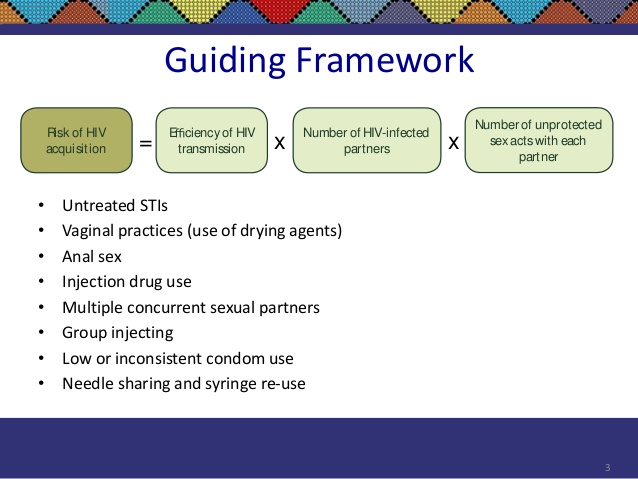
HIV is a sexually transmitted infection (STI). It can also be spread by contact with infected blood or from mother to child during pregnancy, childbirth or breast-feeding. Without medication, it may take years before HIV weakens your immune system to the point that you have AIDS.

There’s no cure for HIV/AIDS, but medications can dramatically slow the progression of the disease. These drugs have reduced AIDS deaths in many developed nations. Luckily, many individuals who are diagnosed early can live a long, productive life with HIV thanks to a combination of highly active anti-retroviral drug therapy, which prevents to progression to AIDS.

QUOTE FOR THE WEEKEND:

“Acquired immunodeficiency syndrome (AIDS), is an ongoing, also called chronic, condition. It’s caused by the human immunodeficiency virus, also called HIV. HIV damages the immune system so that the body is less able to fight infection and disease. If HIV isn’t treated, it can take years before it weakens the immune system enough to become AIDS. Thanks to treatment, most people in the U.S. don’t get AIDS.

HIV is spread through contact unprotected sex with a condom. This type of infection is called a sexually transmitted infection, also called an STI. HIV also is spread through contact with blood, such as when people share needles or syringes. It is also possible for a person with untreated HIV to spread the virus to a child during pregnancy, childbirth or breastfeeding.

There’s no cure for HIV/AIDS.”

MAYO CLINIIC (HIV/AIDS – Symptoms and causes – Mayo Clinic)

Part I National AIDS/HIV Awareness-learn the history on AIDS/HIV, how it got to the US, the actual virus it is including the subgroup, how it effects your WBC’s, the 2 types of HIV, & how CD4 helps the M.D.!

                  HIV!     HIV

Where does HIV/AIDS come from for staters?  Here is the history we have learned over the years about this virus:

Well the Aids Institute states “Scientists identified a type of chimpanzee in West Africa as the source of HIV infection in humans. They believe that the chimpanzee version of the immunodeficiency virus (called simian immunodeficiency virus or SIV) most likely was transmitted to humans and mutated into HIV when humans hunted these chimpanzees for meat and came into contact with their infected blood. Over decades, the virus slowly spread across Africa and later into other parts of the world.

The earliest known case of infection with HIV-1 in a human was detected in a blood sample collected in 1959 from a man in Kinshasa, Democratic Republic of the Congo. (How he became infected is not known.) Genetic analysis of this blood sample suggested that HIV-1 may have stemmed from a single virus in the late 1940s or early 1950s.

We know that the virus has existed in the United States since at least the mid- to late 1970s. From 1979–1981 rare types of pneumonia, cancer, and other illnesses were being reported by doctors in Los Angeles and New York among a number of male patients who had sex with other men. These were conditions not usually found in people with healthy immune systems.

In 1982 public health officials began to use the term “acquired immunodeficiency syndrome,” or AIDS, to describe the occurrences of opportunistic infections, Kaposi’s sarcoma (a kind of cancer), and Pneumocystis jirovecii pneumonia in previously healthy people. Formal tracking (surveillance) of AIDS cases began that year in the United States.

What is the actual virus causing AIDS?

In 1983, scientists discovered the virus that causes AIDS. The virus was at first named HTLV-III/LAV (human T-cell lymphotropic virus-type III/lymphadenopathy-associated virus) by an international scientific committee. This name was later changed to HIV (human immunodeficiency virus).

For many years scientists theorized as to the origins of HIV and how it appeared in the human population, most believing that HIV originated in other primates. Then in 1999, an international team of researchers reported that they had discovered the origins of HIV-1, the predominant strain of HIV in the developed world. A subspecies of chimpanzees native to west equatorial Africa had been identified as the original source of the virus. The researchers believe that HIV-1 was introduced into the human population when hunters became exposed to infected blood.”

HIV is a lenti virus which is a subgroup of the retrovirus.

For starters HIV affects the white blood cells (WBCs) in this sense:

We have types of WBC’s and one type is called CD4. That is the cell the HIV binds to when it gets in your blood stream. Another name for them is T-helper cells. CD4 cells are made in the spleen, lymph nodes, and thymus gland, which are part of the lymph or infection-fighting system. CD4 cells move throughout your body, helping to identify and destroy germs such as bacteria and viruses.  Without going into specific medical terminology there is replication of this virus in the DNA and RNA killing out the normal white blood cell type of CD4 and other things like macrophages which are reproduced into CD4 cells with the virus with the body not knowing or able to detect this error in DNA and RNA of the CD4 white blood cells which ending line allows the immunity to go down. Remember the HIV virus binds to the surface of the CD4 cells. The virus entering CD4 cells now allows them to become a part of CD4 replicated cells regarding their make up due to changes made in the DNA and RNA cause the virus has invaded the bloodstream. As CD4 cells multiply to fight infection, they also make more copies of HIV now. Continuing to replicate, leading to a gradual decline of CD4 cells in decreasing that individuals immunity to infection.

The 2 types of HIV:

There are two types of HIV that have been characterized: HIV-1 and HIV-2.

HIV-1 is the virus that was initially discovered and termed both LAV and HTLV-III. It is more virulent, more infective and is the cause of the majority of HIV infections globally. The lower infectivity of HIV-2 compared to HIV-1 implies that fewer of those exposed to HIV-2 will be infected per exposure. Because of its relatively poor capacity for transmission, HIV-2 is largely confined to West Africa.

What is CD4 and how it helps the doctor:

The CD4 count measures the number of CD4 cells in a sample of your blood drawn by a needle from a vein in your arm. Along with other tests, the CD4 count helps tell how strong your immune system is. By knowing this when the blood test is done the CD4 helps the following, for the doctor:

-it indicates the stage of your HIV disease

-it guides the treatment

– it predicts how your disease may progress.

**Keeping your CD4 count high can reduce complications of HIV disease and extend your life.**


QUOTE FOR FRIDAY:

“It’s estimated that at least 90% of patients with sarcoidosis will experience lung involvement. Chest x-rays are often used to determine the nature of the disease. However, the results of this imaging can cause confusion for sarc patients- your doctor might tell you that the images indicate a certain “stage” of sarcoidosis. What does this mean? Is it like the stages of cancer? Being told you have “stage three” or “stage four” pulmonary sarcoidosis sounds bad- but what does it really mean?

Hopefully, your doctor gives you an accurate explanation of what the stages mean. However, too often we hear from patients who are concerned about which stage they have, what it means, or how long until they progress to the next stage. The stages of sarcoidosis should not be viewed in the way that stages of cancer are- they do not indicate progression of the disease.

In cancer, staging is a way to indicate the size of the cancer tumors, if it has spread to surrounding tissue, or spread to other organs entirely. It indicates progression- in stage IV cancer, the cancerous cells have spread to other parts of the body, making it harder to recover from and requiring a more aggressive, full-body treatment.

In sarcoidosis, staging is a way to indicate the location of granulomas- the lungs, the lymph nodes, or both- and the nature of the disease. If anything, the stages are an easy way for doctors to categorize their sarcoidosis patients, and should not be seen as an indication of severity.”

Foundation for Sarcoidosis Foundation (The Stages of Pulmonary Sarcoidosis- What Do They Really Mean? — Foundation for Sarcoidosis Research)

Part III Sarcoidosis – How it is diagnosed, the staging of it, & the treatments for it!


How Sarcoidosis can be diagnosed:

  • biopsy of the lungs, liver, skin, or other affected organs to check for granulomas
  • Blood tests, including complete blood counts, to check hormone levels and to test for other conditions that may cause sarcoidosis
  • Bronchoscopy, which may include rinsing an area of the lung to get cells or using a needle to take cells from the lymph nodes in the chest
  • Chest X-ray to look for granulomas in the lungs and heart and determine the stage of the disease. Often, sarcoidosis is found because a chest X-ray is performed for another reason.
  • Neurological tests, such as electromyography, evoked potentials, spinal taps, or nerve conduction tests, to detect problems with the nervous system caused by sarcoidosis
  • Eye exam to look for eye damage, which can occur without symptoms in a person with sarcoidosis
  • Gallium scan external link , which uses a radioactive material called gallium to look for inflammation, usually in the eyes or lymph nodes.
  • High-resolution computed tomography (CT) scan to look for granulomas
  • Magnetic resonance imaging (MRI) to help find granulomas. Learn more in our Chest MRI Health Topic.
  • Positron electron tomography (PET) scan, a type of imaging that can help find granulomas
  • Pulmonary function tests to check whether you have breathing problems
  • Ultrasound to look for granulomas

There is a staging to Sarcoidosis:

Doctors use stages to describe the various imaging findings of sarcoidosis of the lung or lymph nodes of the chest. There are four stages of sarcoidosis, and they indicate where the granulomas are located. In each of the first three stages, sarcoidosis can range from mild to severe. This helps the doctor in deciding treatment for the patient.  Stage IV is the most severe and indicates permanent scarring in the lungs.

  • Stage I: Granulomas are located only in the lymph nodes.
  • Stage II: Granulomas are located in the lungs and lymph nodes.
  • Stage III: Granulomas are located in the lungs only.
  • Stage IV: Pulmonary fibrosis.

Treatment for Sarcoidosis:

Remember there is no cure.

The goal of treatment is remission, a state in which the condition is not causing problems. Not everyone who is diagnosed with sarcoidosis needs treatment. Sometimes the condition goes away on its own. Whether you need treatment—and what type you need—will depend on your signs and symptoms, which organs are affected, and whether those organs are working well; this is also where staging of the disease comes into play. Some people do not respond to treatment.


QUOTE FOR THURSDAY:

“Here are some statistics related to sarcoidosis:

  • Incidence: Sarcoidosis is most prevalent in Scandinavian and Northern European countries, with a higher risk for Black individuals compared to White individuals in the U.S.2.
  • Epidemiology: The incidence and prevalence of sarcoidosis vary significantly across populations, with studies indicating that the disease is more common in certain regions and among specific demographics3.
  • Patient Demographics: A survey of 1018 US sarcoidosis patients found that 65% were female, 63% White, 34% Black, and 87% were over 45 years old. The most common organs affected were the lungs (87%), skin (30%), heart (25%), and eyes (25%)5.

These statistics highlight the heterogeneity of sarcoidosis and its impact on different populations.

High quality and systematically collected data, with depth (detailed information per individual) and breadth (many individuals), is needed to further understand the complexity and heterogeneity of sarcoidosis.

NIH National Library of Medicine (Sarcoidosis epidemiology: recent estimates of incidence, prevalence and risk factors – PMC)


Part II Sarcoidosis – Risk Factor, Complication and Treatment!

Lung lesions – 95% Thoracic lymph nodes – 50% Skin lesions – 30%  Eyes – 30%


Inflammatory Disease- Sarcoidosis or Sarcoid is a inflammatory disease that consists of granuloma.

Wide Spread Disease- Disease is wide spread in multiple organs.

Relapse-

  • The Sarcoidosis disease tends to come and go all of a sudden.
  • Disease may progressively develop as a serious illness.
  • Patient may experience several relapse throughout the life.

Granulomas-

  • Sarcoidosis or Sarcoid is a gradual progressive disease.
  • Microscopic lumps called granulomas start to appear in the affected organs.1
  • In most of the cases, these granulomas tend to clear with or without treatments.
  • There are few instances where granuloma grows in size and continues to be a part of the organ.
  • Granuloma eventually ends up as fibrotic lump but may cause several complications.

Causes

Doctors don’t know the exact cause of sarcoidosis. Some people appear to have a genetic predisposition to develop the disease, which may be triggered by bacteria, viruses, dust or chemicals.

This triggers an overreaction of your immune system and immune cells begin to collect in a pattern of inflammation called granulomas. As granulomas build up in an organ, the function of that organ can be affected.

Risk factors

While anyone can develop sarcoidosis, factors that may increase your risk include:

  • Age and sex. Sarcoidosis often occurs between the ages of 20 and 40. Women are slightly more likely to develop the disease.
  • Race. African-Americans have a higher incidence of sarcoidosis than do white Americans. Also, sarcoidosis may be more severe and may be more likely to recur and cause lung problems in African-Americans.
  • Family history. If someone in your family has had sarcoidosis, you’re more likely to develop the disease.

Complications

For most people, sarcoidosis resolves on its own with no lasting consequences. But sometimes it causes long-term problems.

  • Lungs. Untreated pulmonary sarcoidosis can lead to permanent scarring in your lungs, making it difficult to breathe.
  • Eyes. Inflammation can affect almost any part of your eye and can eventually cause blindness. Rarely, sarcoidosis also can cause cataracts and glaucoma.
  • Kidneys. Sarcoidosis can affect how your body handles calcium, which can lead to kidney failure.
  • Heart. Granulomas in your heart can cause abnormal heart rhythms and other heart problems. In rare instances, this may lead to death.
  • Nervous system. A small number of people with sarcoidosis develop problems related to the central nervous system when granulomas form in the brain and spinal cord. Inflammation in the facial nerves, for example, can cause facial paralysis.