Have a Happy Easter Weekend!




Rabbits are clean and for the most part there are very few health risks involved with sharing our lives with them. However, some people may experience problems and it is always wise to know what signs to look out for and steps to take to try and prevent any problems occurring. It should be stressed that health problems from people contracting things from rabbits are rare, and owners should not lose sleep over them!
Firstly – there really is no need to panic! When people talk about “health hazards” from pets, everyone thinks first and foremost of diseases. From this point of view, pet rabbits are brilliant, and for the most part do not pose a significant disease hazard to humans.
However, keeping bunnies is not totally risk free. Problems do sometimes arise – usually not from diseases, but from allergies, which are the most significant “health hazard” from pet rabbits.
Companionship is not the only way rabbits can benefit humans.
Wild rabbits are an important part of the planet’s ecosystem. This is because they help to keep invasive plants (weeds) under control. In turn, this encourages other plants, insects, and birds to thrive. Also, pet rabbits are good for humans because they enhance our physical and mental health.
Although rabbits are good for the planet, some parts of the world have become overpopulated. For example, parts of Australia have become over-run with rabbits, and this has caused severe damage to crops. But, in spite of this issue, rabbits are still a species worth celebrating.
To keep your rabbit protected from pain, suffering, injury and disease, there’s a number of actions you can take. Before adopting or buying rabbits, carefully consider how they have been cared for and bred as this can affect their quality of life. It’s then important that your rabbits are neutered unless intended specifically for breeding. Day to day, your rabbits will need to be monitored to ensure that they are eating daily, and passing plenty of dry dropping. Also, check for signs of illness, injury or changes in behaviour to keep on top of your rabbit’s health.
“NewYork-Presbyterian cares for one of the world’s largest populations of patients with movement disorders, through the Center for Parkinson’s Disease and Other Movement Disorders at NewYork-Presbyterian/Columbia University Irving Medical Center and the Parkinson’s Disease and Movement Disorders Institute at NewYork-Presbyterian/Weill Cornell Medical Center.
Our neurologists are experts at diagnosing and treating all types of movement disorders, from the most common to the rarest. Our neurosurgeons are exceptionally skilled and among the most experienced in the country offering treatments such as deep brain stimulation and high-intensity focused ultrasound (HIFU) for Parkinson’s disease and other select movement disorders.
Our multidisciplinary team also includes neuropsychologists, nurses, genetic counselors, registered dietitians, and physical, occupational, and speech/swallowing therapists, along with other specialists who collaborate to ensure that each patient receives the most effective care available.”
New York Presbyterian Hospital (Movement Disorders | NewYork-Presbyterian)
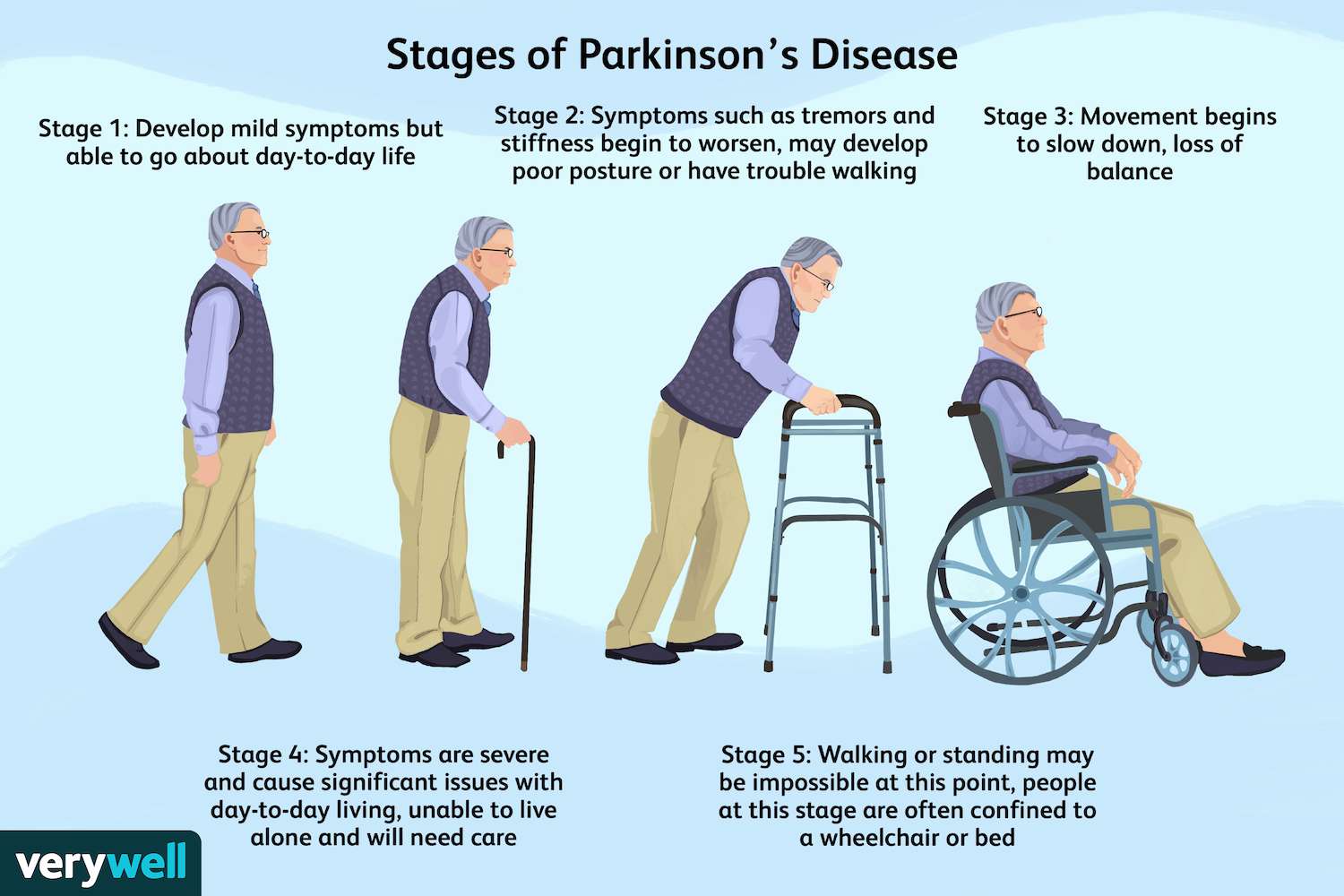
Parkinson’s disease is the second most common progressive, neurodegenerative disease after Alzheimer disease. Parkinson’s disease is named after James Parkinson, a 19th century general practitioner in London.
Parkinson’s disease is characterised by pathologic intra-neuronal α–synuclein-positive Lewy bodies and neuronal cell loss. Classically this process has been described as involving the dopaminergic cells of the substantia nigra pars compacta, later becoming more widespread in the CNS as the disease progresses. However, recently there has been a growing awareness that the disease process may involve more caudal portion of the CNS and the peripheral nervous system prior to the clinical onset of the disease.1 Parkinson’s disease affects movement, muscle control, balance, and numerous other functions.
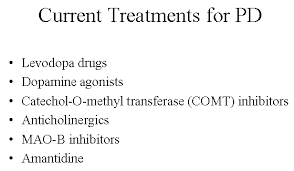
MEDS: The combination of levodopa and carbidopa (Brand names Sinemet, Parcopa, Duopa® (as a combination product containing Carbidopa, Levodopa=Rytary® (as a combination product containing Carbidopa, Levodopa).
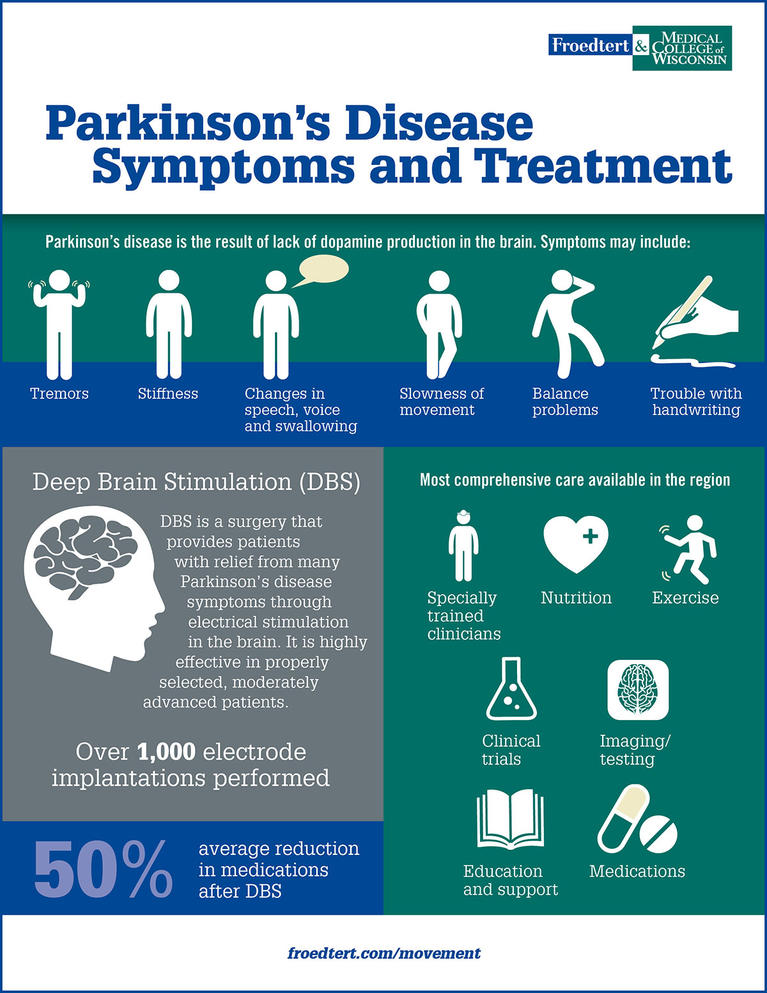
Levodopa and carbidopa are used to treat the symptoms of Parkinson’s disease and Parkinson’s-like symptoms that may develop after encephalitis (swelling of the brain) or injury to the nervous system caused by carbon monoxide poisoning or manganese poisoning. Parkinson’s symptoms, including tremors (shaking), stiffness, and slowness of movement, are caused by a lack of dopamine, a natural substance usually found in the brain. Levodopa is in a class of medications called central nervous system agents. It works by being converted to dopamine in the brain. Carbidopa is in a class of medications called decarboxylase inhibitors. It works by preventing levodopa from being broken down before it reaches the brain. This allows for a lower dose of levodopa, which causes less nausea and vomiting.
Medications are commonly used to increase the levels of dopamine in the brain of patients with Parkinson’s disease in an attempt to slow down the progression of the disease. Dopaminergic agents remain the principal treatments for patient with Parkinson’s disease, such as Levodopa and Dopaminergic agonist. In many patients, however, a combination of relatively resistant motor symptoms, motor complications such as dyskinesias or non-motor symptoms such as dysautonomia may lead to substantial disability in spite of dopaminergic therapy. In recent days, there has been an increasing interest in agents targeting non-motor symptoms, such as dementia and sleepiness.
As patients with Parkinson’s disease live longer and acquire additional comorbidities, addressing these non-motor symptoms has become increasingly important. Among anti-depressants, Amitriptiline and SSRI are commonly used, while Rivastigmine became the first FDA approved medication for the treatment of dementia associated with PD.
SURGERY: Surgery for Parkinson’s disease has come a long way since it was first developed more than 50 years ago. The newest version of this surgery, deep brain stimulation (DBS), was developed in the 1990s and is now a standard treatment. Worldwide, about 30,000 people have had deep brain stimulation.
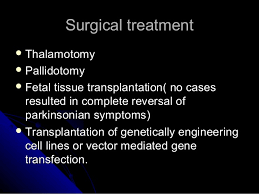
Lifestyle modifications have been shown to be effective for controlling motor symptoms in the early stages of Parkinson’s disease. The surgical treatment options available for Parkinson’s patients with severe motor symptoms are pallidotomy, thalamotomy and Deep Brain Stimulation (DBS).
The novel approaches for treatment of Parkinson’s disease that are currently under investigation include neuroprotective therapy, foetal cell transplantation, and gene therapy.
DBS was introduced two decades ago and has gained widespread popularity as a surgical treatment for medically refractory Parkinson’s disease. DBS is a reversible procedure that has advantage over surgical lesioning (pallidotomy) and unilateral brain stimulation. DBS is comparable in efficacy to unilateral surgical lesioning7 while bilateral subthalamic nucleus stimulation is superior to pallidotomy. DBS is FDA approved for the treatment of medically refractory Parkinson’s disease and ET. DBS has proven its efficacy in the treatment of cardinal motor features of Parkinson’s disease such as bradykinesia, tremor and rigidity and it is unresponsive for non-motor symptoms such as cognition, speech, gait disturbance, mood and behaviour. Long-term studies have demonstrated that many of these effects last for long as long as levodopa responsiveness in maintained
During deep brain stimulation surgery, electrodes are inserted into the targeted brain region using MRI and neurophysiological mapping to ensure that they are implanted in the right place. A device called an impulse generator or IPG (similar to a pacemaker) is implanted under the collarbone to provide an electrical impulse to a part of the brain involved in motor function. Those who undergo the surgery are given a controller, which allows them to check the battery and to turn the device on or off. An IPG battery lasts for about three to five years and is relatively easy to replace under local anesthesia.
Although DBS is certainly the most important therapeutic advancement since the development of levodopa, it is not for every person with Parkinson’s. It is most effective – sometimes, dramatically so – for individuals who experience disabling tremors, wearing-off spells and medication-induced dyskinesias.
Deep brain stimulation is not a cure for Parkinson’s, and it does not slow disease progression. Like all brain surgery, deep brain stimulation surgery carries a small risk of infection, stroke, or bleeding. A small number of people with Parkinson’s have experienced cognitive decline after this surgery. That said, for many people, it can dramatically relieve some symptoms and improve quality of life. Studies show benefits lasting at least five years.
Gamma Knife radiosurgery
Gamma Knife radiosurgery is a painless procedure that uses hundreds of highly focused radiation beams to target deep brain regions to create precise functional lesions within the brain, with no surgical incision. Gamma Knife may be a treatment option for patients with Parkinson’s tremor who are high risk for surgery due to medical conditions or advanced age.
As the nation’s leading provider of Gamma Knife procedures, UPMC has treated more than 12,000 patients with tumors, vascular malformations, pain, and other functional problems.
It is very important that a person with Parkinson’s who is thinking of treatment from meds to surgery to possiby Gamma Knife radiosurgery be well informed about the procedures and realistic in his or her expectations. This means there’s no standard treatment for the disease – the treatment for each person with Parkinson’s is based on his or her symptoms.
MRI-guided focused ultrasound (MRgFUS) is a minimally invasive treatment that has helped some people with Parkinson’s disease manage tremors. Ultrasound is guided by an MRI to the area in the brain where the tremors start. The ultrasound waves are at a very high temperature and burn areas that are contributing to the tremors.
Remember Parkinson’s disease can’t be cured, but medications can help control the symptoms, often dramatically. In some more advanced cases, surgery may be advised.
Your health care provider may also recommend lifestyle changes, especially ongoing aerobic exercise.
In some cases, physical therapy that focuses on balance and stretching is important.
A speech-language pathologist may help improve speech problems.




“Every six minutes there is a new diagnosis of PD, which means that in April alone nearly 7,200 people in this country will learn they have PD. These people need to know that they are not alone, and that APDA is here for them,” states Leslie A. Chambers, President and CEO, APDA.
The American Parkinson Disease Association (APDA) is a nationwide grassroots network dedicated to fighting Parkinson’s disease (PD) and works tirelessly to assist the more than one million people with PD in the United States live life to the fullest in the face of this chronic, neurological disorder. Founded in 1961, APDA has raised and invested more than $252 million to provide outstanding patient services and educational programs, elevate public awareness about the disease, and support research designed to unlock the mysteries of PD and end this disease.”
American Parkinson Disease Foundation
(https://www.apdaparkinson.org/article/american-parkinson-disease-association-to-celebrate-the-power-of-a-supportive-community-during-parkinsons-disease-awareness-month/)
“Parkinson’s Awareness Month is the perfect time to brush up on your Parkinson’s facts. Here are 5 fast facts about PD:
Parkinson’s Foundation (Parkinson’s Awareness Month | Parkinson’s Foundation)
“A risk factor is anything that increases your chance of getting a disease such as cancer. Different cancers have different risk factors. For example, exposing skin to strong sunlight is a risk factor for skin cancer. Smoking is a risk factor for many cancers. But having a risk factor, or even several, does not mean that you will get the disease.
Several risk factors can increase your chance of developing cervical cancer. People without any of these risk factors rarely develop cervical cancer. Although these risk factors can increase the odds of developing cervical cancer, many with these risks do not develop this disease.
When you think about risk factors, it helps to focus on those you can change or avoid (like smoking or human papillomavirus infection), rather than those you cannot (such as your age and family history). However, it is still important to know about risk factors that cannot be changed, because it’s even more important for those who have these factors to get regular screening tests to find cervical cancer early.”
American Cancer Society (Cervical Cancer Risk Factors | Risk Factors for Cervical Cancer | American Cancer Society)
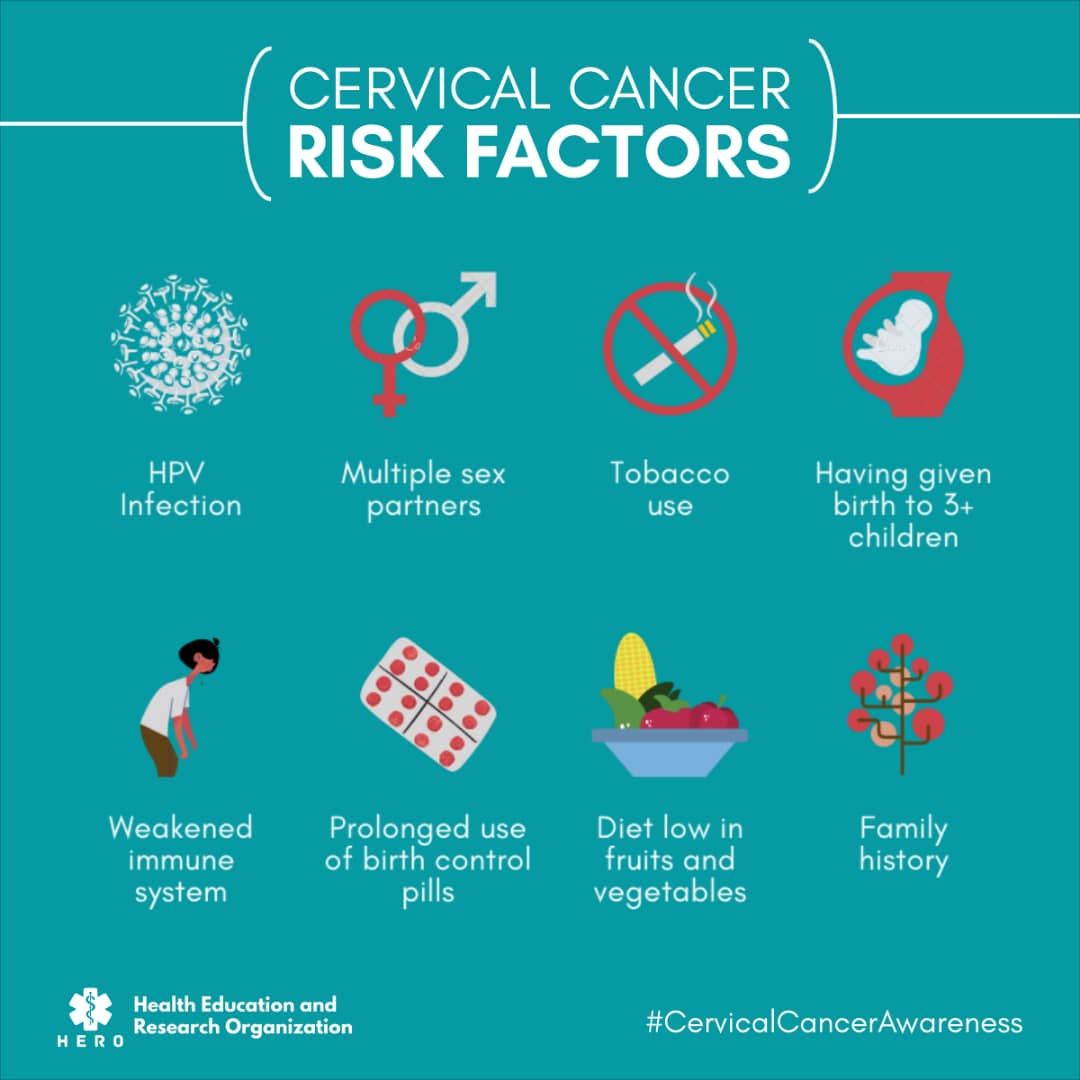
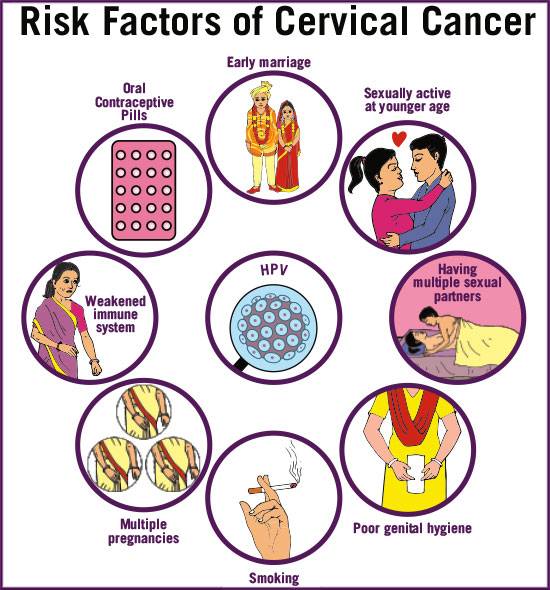
GENERAL
GENETICS
LIFESTYLE
OTHER CONDITIONS
Additional facts about HPV:
Anything that increases your risk of getting a disease is called a risk factor. Having a risk factor does not mean that you will get cancer. Not having risk factors doesn’t mean that you will not get cancer. If you think you may be at risk, you should discuss it with your doctor.
Regarding symptoms of cervical cancer:
In most cases, cervical cancer does not cause noticeable symptoms in the early stages of the disease. Routine Pap screening is important to check for abnormal cells in the cervix, so they can be monitored and treated as early as possible. Most women are advised to get a Pap test starting at age 21.
The Pap test is one of the most reliable and effective cancer screening methods available, and women should have yearly exams by an OB-GYN. However, the Pap test may not detect some cases of abnormal cells in the cervix. The HPV test screens women for the high-risk HPV strains that may lead to cervical cancer. It is approved for women over age 30.
Although screening methods are not 100 percent accurate, these tests are often an effective method for detecting cervical cancer in the early stages when it is still highly treatable. Talk with your doctor about which type of cervical cancer screening is right for you.
When present, common symptoms of cervical cancer may include:
All of these cervical cancer symptoms should be discussed with your doctor.
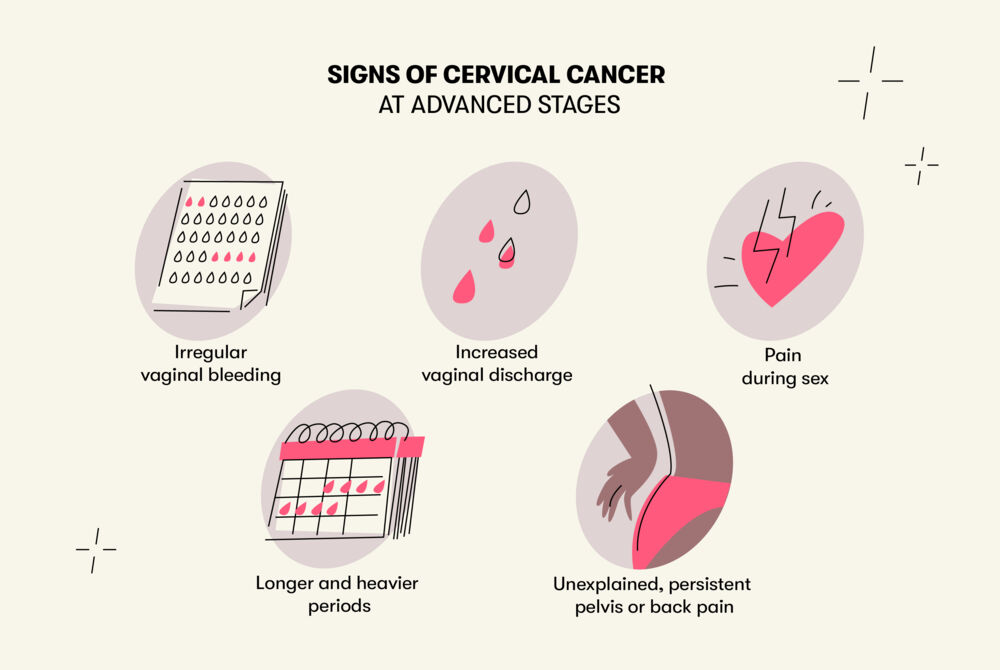
Cervical cancer may spread (metastasize) within the pelvis, to the lymph nodes or elsewhere in the body. Signs of advanced cervical cancer include:
“Stress makes it hard for us to relax and can come with a range of emotions, including anxiety and irritability. When stressed, we may find it difficult to concentrate. We may experience headaches or other body pains, an upset stomach or trouble sleeping.
Everyone reacts differently to stressful situations. Coping styles and symptoms of stress vary from person to person. Doing what matters in times of stress – aims to equip people with practical skills to cope with stress.”
WHO-World Health Organization (Stress)
“
“Stress is the natural reaction your body has when changes or challenges occur. It can result in many different physical, emotional and behavioral responses. Everyone experiences stress from time to time. You can’t avoid it.
Stress is a natural human reaction that happens to everyone. In fact, your body is designed to experience stress and react to it. When you experience changes or challenges (stressors), your body produces physical and mental responses. That’s stress.
Stress responses help your body adjust to new situations. Stress can be positive — keeping you alert, motivated and ready to avoid danger. For example, if you have an important test coming up, a stress response might help your body work harder and stay awake longer. But stress becomes a problem when stressors continue without relief or periods of relaxation.”
Cleveland Clinic (Stress: What It Is, Symptoms, Management & Prevention)