“The disease is increasingly common, affecting millions of Americans, and is the third leading cause of death in the U.S. The good news is COPD is often preventable and treatable.”
American Lung Association (www.lung.org)
“The disease is increasingly common, affecting millions of Americans, and is the third leading cause of death in the U.S. The good news is COPD is often preventable and treatable.”
American Lung Association (www.lung.org)
COPD Foundation (copdfoundation.org)
“Pneumonia is an infection that inflames the air sacs in one or both lungs. Pneumonia can range in seriousness from mild to life-threatening.”
American Lung Association
“Smoking causes about 90% (or 9 out of 10) of all lung cancer deaths. More women die from lung cancer each year than from breast cancer. Smoking causes about 80% (or 8 out of 10) of all deaths from chronic obstructive pulmonary disease (COPD)”
CDC Center for Disease Control and Prevention
“Learn ways to prevent lung cancer and get guidelines for lung cancer screenings. Start protecting yourself today is so important.”
American Cancer Society
“There are three main types of lung cancer. Knowing which type you have is important because it affects your treatment options and your outlook (prognosis). If you aren’t sure which type of lung cancer you have, ask your doctor so you can get the right information.”
American Cancer Society
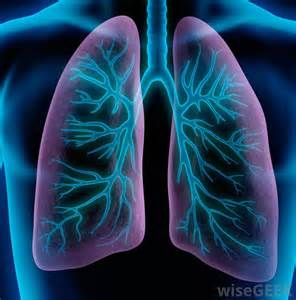
When you breathe in, air enters through your mouth and nose and goes into your lungs through the trachea (windpipe). The trachea divides into tubes called the bronchi (singular, bronchus), which enter the lungs and divide into smaller branches called the bronchioles. At the end of the bronchioles are tiny air sacs known as alveoli.
Many tiny blood vessels run through the alveoli. They absorb oxygen from the inhaled air into your bloodstream and pass carbon dioxide (a waste product from the body) into the alveoli. This is expelled from the body when you exhale. Taking in oxygen and getting rid of carbon dioxide are your lungs’ main functions.
A thin lining called the pleura surrounds the lungs. The pleura protects your lungs and helps them slide back and forth as they expand and contract during breathing. The space inside the chest that contains the lungs is called the pleural space (or pleural cavity).
Below the lungs, a thin, dome-shaped muscle called the diaphragm separates the chest from the abdomen. When you breathe, the diaphragm moves up and down, forcing air in and out of the lungs.
There are 3 types of lungs cancer. The two most common types of lung cancer that exist are 1 non-small cell lung cancer (NSCLC), which is the most common, and 2 small cell lung cancer (SCLC), an aggressive cancer that occurs in just over 10 percent of all lung cancer cases.
The third group is 3 lung carcinoid tumors (also known as lung carcinoids) are a type of lung cancer, which is a cancer that starts in the lungs. Cancer starts when cells begin to grow out of control. Cells in nearly any part of the body can become cancer, and can spread to other areas of the body.
Lung carcinoid tumors are uncommon and tend to grow slower than other types of lung cancers. They are made up of special kinds of cells called neuroendocrine cells.
Both major types of lung cancer have similar symptoms. These symptoms often include a cough that doesn’t go away and shortness of breath.
Sometimes lung cancer does not cause any signs or symptoms. It may be found during a chest X-ray done for another condition. Signs and symptoms may be caused by lung cancer or by other conditions. Check with your doctor if you have any of the following:
For both conditions, early detection through a low-dose computed topography (CT) scan is especially critical. Identifying lung cancer in its earliest stages even before you have symptoms can reduce the risk of death by 20 percent, according to recent studies.
Non-small cell lung cancer (NSCLC) is the most common type of cancer in lung tissues. Your risk of developing this disease increases if you are a longtime or former smoker, have been exposed to passive smoke, or have had environmental or occupational exposure to radon, asbestos, uranium, and other substances. The primary types of NSCLC are named for the type of cells found in the cancer:
In small cell lung cancer (SCLC), small cancerous cells arise in the airway, usually in a central location. This is an aggressive cancer that spreads quickly throughout the body through the blood and lymphatic (node) systems. Typically occurring in people who smoke or who used to smoke, SCLC accounts for just over 10 percent of all lung cancers.
“Diabetes increases your risk for many serious health problems. The good news? With the correct treatment and recommended lifestyle changes, many people with diabetes are able to prevent or delay the onset of complications.”
American Diabetes Association
“Diabetes Mellitus (DM) is a complex chronic disease involving disorders in carbohydrate, protein, and fat metabolism and the development of macro-vascular, micro-vascular, neurological complications that don’t occur over a few nights or weeks or months.”
ClevelandClinic.org
“Diabetes is becoming more common in the United States. From 1980 through 2011, the number of Americans with diagnosed diabetes has more than tripled as of 2011 (from 5.6 million to 20.9 million).”
American Diabetes Association