Archives

QUOTE FOR THURSDAY:

“The research picture has brightened considerably in the last decade for people with chromosome 5-related spinal muscular atrophy (SMA) types 0 through 4.

Since 1995, scientists have known that a deficiency of functional SMN protein (SMN stands for survival of motor neuron) is the underlying cause of chromosome 5 SMA. Two nearly identical genes carry the genetic instructions for making SMN protein: SMN1 and SMN2. Proteins made from the SMN1 gene are full-length, functional, and appear to be necessary for the survival and proper function of motor neurons. By contrast, proteins made using instructions from the SMN2 gene are shorter and tend to be less stable but can compensate for a lack of SMN protein when the SMN1 gene is not functioning.
In SMA types 0 through 4, flaws (mutations) in each of the two copies of the SMN1 genes result in insufficient production of full-length, functional SMN protein. Fortunately, a certain amount of full-length SMN protein can be made from the SMN2 gene. Many people have multiple copies of the SMN2 gene. These extra SMN2 copies can lessen the impact of a flaw in both SMN1 copies. In chromosome 5-related SMA, the more copies of SMN2 a person has, the milder the course of SMA is likely to be.
Researchers are seeking to exploit this unique redundancy through development of strategies that restore levels of full-length SMN protein.”


Awareness of Spinal Muscular Atrophy (SMA)-Treatment and Research!


Research Trials for SMA leading to actual care for SMA:

The research picture has brightened considerably in the last decade for people with chromosome 5-related spinal muscular atrophy (SMA) types 0 through 4.

Since 1995, scientists have known that a deficiency of functional SMN protein (SMN stands for survival of motor neuron) is the underlying cause of chromosome 5 SMA. Two nearly identical genes carry the genetic instructions for making SMN protein: SMN1 and SMN2. Proteins made from the SMN1 gene are full-length, functional, and appear to be necessary for the survival and proper function of motor neurons. By contrast, proteins made using instructions from the SMN2 gene are shorter and tend to be less stable but can compensate for a lack of SMN protein when the SMN1 gene is not functioning.

In SMA types 0 through  4, flaws (mutations) in each of the two copies of the SMN1 genes result in insufficient production of full-length, functional SMN protein. Fortunately, a certain amount of full-length SMN protein can be made from the SMN2 gene. Many people have multiple copies of the SMN2 gene. These extra SMN2 copies can lessen the impact of a flaw in both SMN1 copies. In chromosome 5-related SMA, the more copies of SMN2 a person has, the milder the course of SMA is likely to be.

Researchers are seeking to exploit this unique redundancy through development of strategies that restore levels of full-length SMN protein.

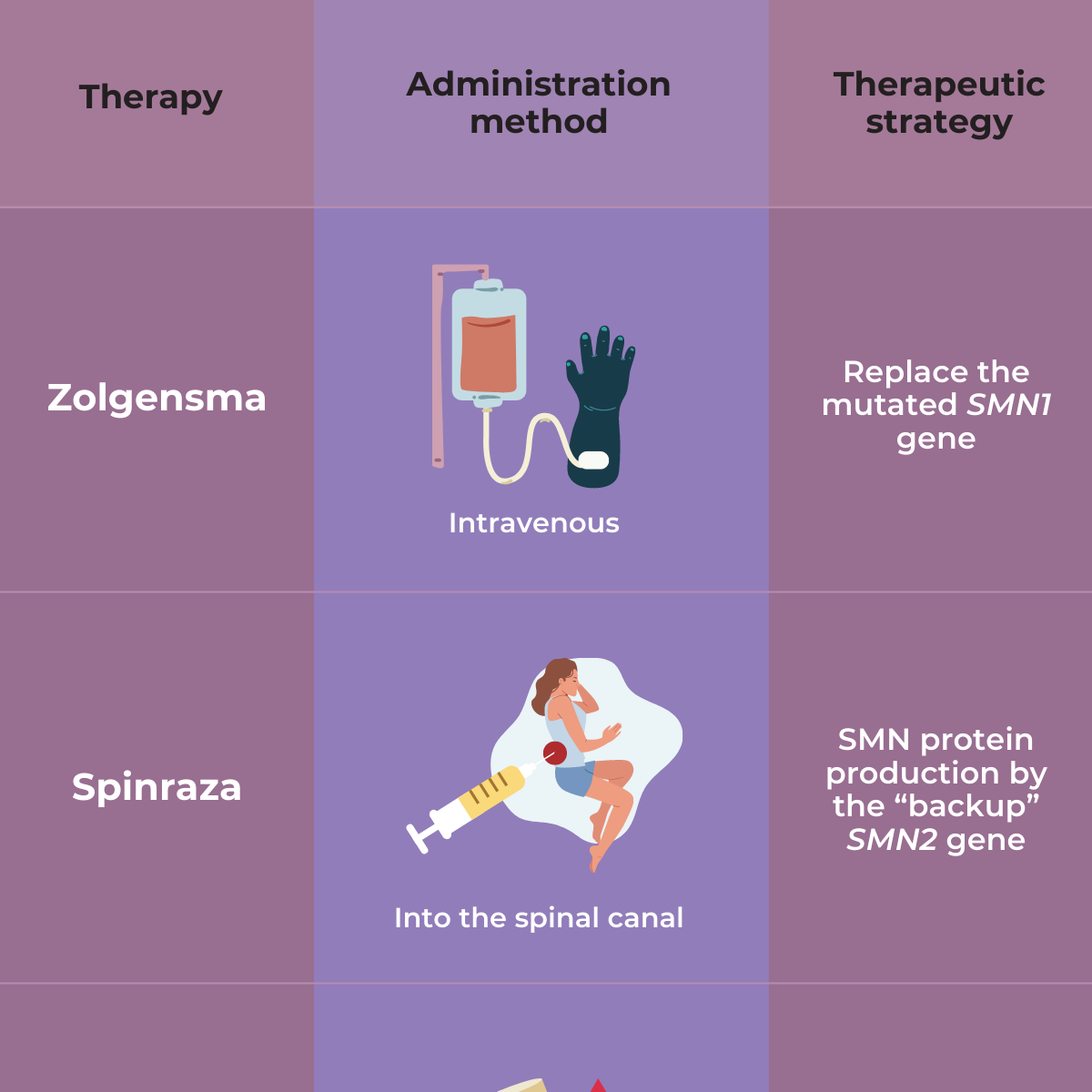
1- Nusinersen is a drug that has been shown to increase the survival of motor neurons that die off in SMA, robbing children of muscle control. The drug compensates for the effects of the SMN1 mutation by rallying a “backup” gene, known as SMN2. SMN2, like SMN1, also makes the SMN protein needed to keep motor neurons healthy, but most of it is truncated and nonfunctional. Nusinersen uses a genetically based technology called antisense oligonucleotide to shore up this backup gene. This enables people to make more of the full-length, functional SMN protein.

2-Risdiplam is an oral drug taken daily that also appears to boost the production of the SMN protein through the SMN2 gene. Our researchers are an essential part of the clinical testing of risdiplam in the FIREFISH and JEWELFISH studies, which both continue to look at the drug’s efficacy and side effects in infants through adults.

The FIREFISH study involves infants age 1 month to 7 months with infantile-onset SMA, the most severe type. The babies receive risdiplam given as an oral drug daily. The drug increases SMN protein in the infants and improves their ability to sit without support. After two years of treatment, the FIREFISH study shows that 59 percent of treated babies were able to sit without support for five seconds, 65 percent maintained upright head control, 29 percent were able to turn over, and 30 percent were able to stand with support or supporting weight.

One-year results from the JEWELFISH study of risdiplam in children with all types of SMA aged 6 months to 60 years and previously treated with other SMA therapies, showed that risdiplam increases SMN protein levels. The drug appears to double SMN levels among patients who were previously treated with nusinerson or Zolgensma, highlighting its potential as an alternative or add-on therapy to those drugs.

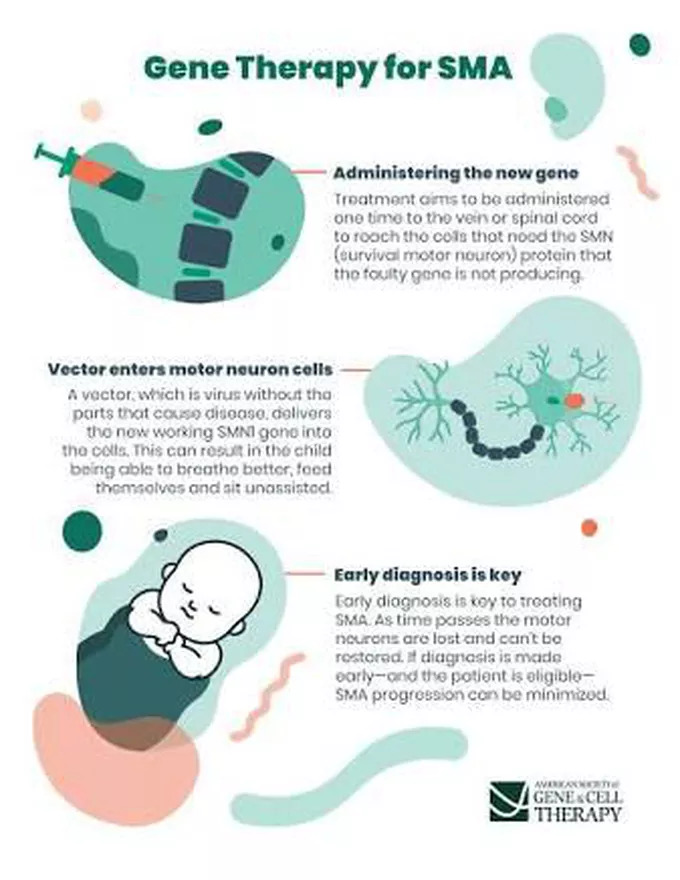
3-Gene Therapy Trials:  To learn more about the potential for gene replacement in children with SMA, we have been involved in several clinical studies. The first, the STR1VE trial, studied intravenous administration of the therapy in infants less than 7 months of age with type 1 SMA. This trial, which followed infants until they were 18 months old, provided the data used by the FDA to approve Zolgensma for the treatment of babies under 2 years.

The STRONG study involves intrathecal (inside the spinal canal) administration of the gene therapy for children between the ages of 6 months to 5 years with SMA type 2. STRONG is on an FDA-hold pending evaluation of pre-clinical information.

Treatment for SMA:

As yet, there is no complete cure for SMA. However, the discovery of the genetic cause of SMA has led to the development of several treatment options that affect the genes involved in SMA — a gene replacement therapy called Zolgensma, and two drugs, called nusinersen (Spinraza) and risdiplam (Evyrsdi).

There is no complete cure for SMA. Treatment consists of managing the symptoms and preventing complications.

Medications

  • The U.S. Food and Drug Administration (FDA) approved nusinersen (Spinraza™) as the first drug approved to treat children and adults with SMA. The drug is designed to increase production of the SMN protein, which is critical for the maintenance of motor neurons.
  • The FDA approved onasemnogene abeparovec-xioi (Zolgensma ™) gene therapy for children less than two years old who have infantile-onset SMA. A safe virus delivers a fully functional human SMN gene to the targeted motor neurons, which in turn improves muscle movement and function and survival.
  • The FDA approved the orally-administered drug risdiplam (Evrysdi) to treat patients age two months of age and older with SMA.

Physical therapy, occupational therapy, and rehabilitation may help to improve posture, prevent joint immobility, and slow muscle weakness and atrophy. Stretching and strengthening exercises may help reduce contractures, increase range of motion, and keeps circulation flowing. Some individuals require additional therapy for speech and swallowing difficulties. Assistive devices such as supports or braces, orthotics, speech synthesizers, and wheelchairs may be helpful to improve functional independence.

Proper nutrition and calories are essential to maintaining weight and strength, while avoiding prolonged fasting. People who cannot chew or swallow may require insertion of a feeding tube. Non-invasive ventilation at night can improve breathing during sleep, and some individuals also may require assisted ventilation during the day due to muscle weakness in the neck, throat, and chest.

QUOTE FOR WEDNESDAY:

“Spinal muscular atrophy (SMA) is a neurodegenerative disease characterized by loss of motor neurons in the anterior horn of the spinal cord and resultant weakness. The most common form of SMA, accounting for 95% of cases, is autosomal recessive proximal SMA associated with mutations in the survival of motor neurons (SMN1) gene.”

National Library of Medicine (https://www.ncbi.nlm.nih.gov/pmc/articles/PMC3860273/)

QUOTE FOR TUESDAY:

“Your muscular heart, the main organ in your cardiovascular system, is vital for life. Its parts work together to move blood through your body in a coordinated way. It constantly sends oxygen to your cells and takes away waste. Many conditions can affect this organ and keep it from working well. Your heart contains four muscular sections (4 chambers) that briefly hold blood before moving it. Electrical impulses make your heart beat, moving blood through these chambers. Your brain and nervous system direct your heart’s function. Your heart controls the speed of your heart rate and B/P.  The heart is the main organ of your circulatory system, your heart keeps you alive. It pumps blood throughout your body, bringing oxygen to your cells and tissues. Since your heart plays such a vital role, it’s important to take care of it. Conditions that affect your heart are very common, but you have the power to make changes for a stronger heart especially before heart problems occur.  The key is prevention.”

Cleveland Clinic (https://my.clevelandclinic.org/health/body/21704-heart)


How the heart is structured, works and what happens to the heart if not functioning properly!

How the heart is structured and functions:

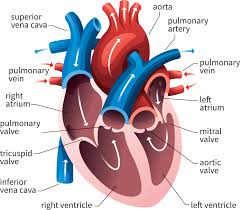
The human heart is a four-chambered muscular organ that are called atriums at the top LA and RA and the bottom ones called ventricles- right ventricle=RV and left ventricle=LV.  The heart is shaped and sized roughly like a man’s closed fist with two-thirds of the mass to the left of midline which is due to the left ventricle works the hardest pumping blood throughout the body so it makes that chamber the most muscular area.  The right side of the heart pumps blood blood returning to the heart that went throughout the body using up most of the oxygen in it that has mainly carbon dioxide in the blood going the the right side chambers.  First the right atrium and than the right ventricle to just the lungs for more oxygen to the lungs that carries mainly oxygenated blood to the left side of the heart first to the left atrium to the left ventricle that pumps that oxygenated blood through out the body to deliver to all tissues oxygen.

Think of the heart as the engine of the body.  Without a engine the car would not work and without a heart the body would die.  Without the lungs the heart and other tissues would not function and die.  A car without a transmission would not engine would not function and the car would die.

Without oxygen our tissues would go through oxygen starvation and the body would die.  A car without oil would die due to oil starvation and you need the car engine to start the car for the transmission to work with oil to be pumped.

Valves of the Heart:

Pumps need a set of valves to keep the fluid flowing in one direction and the heart is no exception. The heart has two types of valves that keep the blood flowing in the correct direction. The valves between the atria and ventricles are called atrioventricular valves (also called cuspid valves), while those at the bases of the large vessels leaving the ventricles are called semilunar valves.

The right atrioventricular valve is the tricuspid valve. The left atrioventricular valve is the bicuspid, or mitral, valve. The valve between the right ventricle and pulmonary trunk is the pulmonary semilunar valve. The valve between the left ventricle and the aorta is the aortic semilunar valve.

When the ventricles contract, atrioventricular valves close to prevent blood from flowing back into the atria. When the ventricles relax, semilunar valves close to prevent blood from flowing back into the ventricles.

What can happen to the heart if it does not function properly:


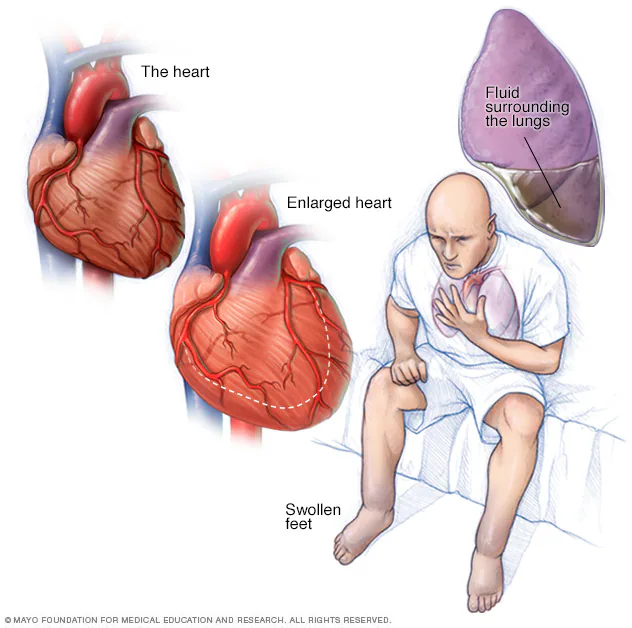
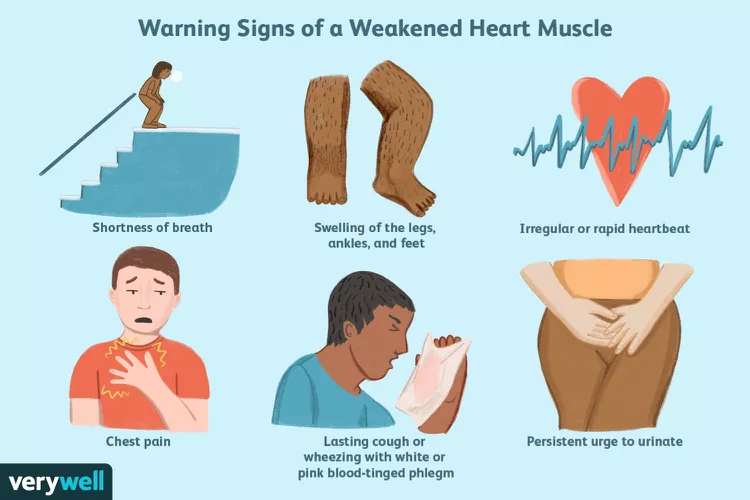
Congestive heart failure, or heart failure, is a long-term condition in which your heart can’t pump blood well enough to meet your body’s needs. Your heart is still working. But because it can’t handle the amount of blood it should, blood builds up in other parts of your body. Most of the time, it collects in your lungs, legs and feet.

Think of it like a shipping department that can’t keep up with getting all the shipments where they need to go. The shipping department is always running behind and things pile up. When things pile up, they cause issues OR think of it like plumbing if there is a problem with the water getting through the pipe lines (like our blood flow getting through the veins and arteries) you will need a plumber to fix the blockage, valve problem or broken pipe (just like the blood getting through the body due to a blockage in the vein or artery or bad heart valve or failure elsewhere in that system)

Heart Failure or Congested Heart Failure (CHF) there are types Right sided CHF or heart failure or Left sided CHF or heart failure.   Sometimes the MD may even see High output failure but rare.  More than 6 million people in the United States have congestive heart failure. It’s the leading cause of hospitalization in people older than 65.

Some of the complications from congestive heart failure include:

  • Irregular heartbeat.
  • Sudden cardiac arrest.
  • Heart valve problems.
  • A collection of fluid in your lungs.
  • Pulmonary hypertension.
  • Kidney damage.
  • Liver damage.
  • Malnutrition.

MOST IMPORTANTLY REMEMBER THIS:

There’s no cure for heart failure. As congestive heart failure gets worse, your heart muscle pumps less blood to your organs, and you move toward the next stage of heart failure(there are A,B,C,D stages). Since you can’t move backward through the heart failure stages, the goal of treatment is to keep you from moving forward through the stages at its slowest pace or to slow down the progression of your heart failure with giving you the chance to live as long as possible at your optimal level.

Regarding Heart Valves there is this to know:

Heart valve disease can affect anyone. But people over 65 are at higher risk. In fact, 2.5 million people over the age of 75 have aortic stenosis, one of the most common types of heart valve disease. While its symptoms can be subtle they shouldn’t be brushed off as “getting older.” Left untreated, it can progress to severe aortic stenosis, also known as heart valve failure.

People over 65 y/o are at highest risk for this and that is based on the my theory like a car the older you are the higher the risk your car is going to be worn down just like the heart (the engine to the body) the older it is the higher the risk that individual will have body part problems like the heart.

Symptoms are your body’s way of sending warning signs that you may be in danger. Unfortunately, diet and exercise can’t fix a failing heart valve. Take control by asking for a referral to a Heart Valve Team or Cardiologist so you can be evaluated.

Without treatment, 1 in 10 people with heart valve failure may die within 5 weeksof symptoms starting if they don’t get a recommended valve replacement!

Remember this important note the better you care for the car the longer it lasts and the better you take care of yourself the longer it lasts.

QUOTE FOR MONDAY:

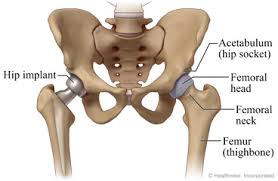
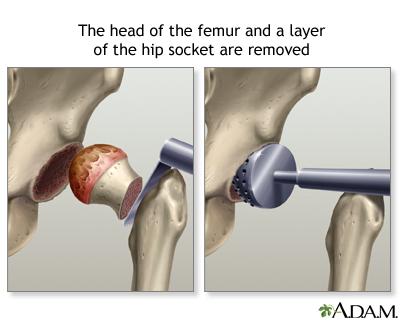
“During hip replacement, a surgeon removes the damaged sections of the hip joint and replaces them with parts usually constructed of metal, ceramic and very hard plastic. This artificial joint (prosthesis) helps reduce pain and improve function.

Also called total hip arthroplasty, hip replacement surgery might be an option if hip pain interferes with daily activities and nonsurgical treatments haven’t helped or are no longer effective. Arthritis damage is the most common reason to need.

Hip replacement may be an option if hip pain:

  • Persists, despite pain medication
  • Worsens with walking, even with a cane or walker
  • Interferes with sleep
  • Affects the ability to walk up or down stairs
  • Makes it difficult to rise from a seated position”

MAYO CLINIC (https://www.mayoclinic.org/tests-procedures/hip-replacement/about/pac-20385042)

Hip Surgery: The Pro’s/Con’s of hip Sx, know the risks & complications that can occur, things to consider before Sx and how to be prepped for it!

TOTAL HIP REPLACEMENT: PROS & CONS OF THE OPERATION:
On the whole, total hip replacement is seen as one of the most successful operations that medicine has to offer. In the right patient, it can be an effective, safe, and durable way to treat many of the problems that come with severe arthritis of the hip. Pain relief: This is the greatest benefit that the procedure has to offer and the main reason for surgery.
A hip replacement can provide a dramatic reduction in pain, with almost all patients getting complete or near complete relief from arthritic hip pain. Improved mobility and hip function: After reduction in pain, increased mobility is the next major benefit.
A hip replacement should allow you get back walking without restriction. Improved hip function should also help significantly with other common problems associated with hip arthritis, such as climbing stairs, putting on socks, getting out of chairs, etc.
Long lasting: A hip replacement is a durable way to treat the problems that come with severe hip arthritis. Current evidence shows that 80-85% of hip replacements are still working at 20 years after they were inserted.

Know the RISKS AND COMPLICATIONS, before surgery day so you know what can happen and what to keep an eye out for after surgery:

While overall it is deemed to be a safe procedure, there are associated risks that potential patients need to be made aware of.
1-Infection: A small number of people (around 1%) can get an infection around their hip replacement. This can be one of the most debilitating complications associated with total hip replacements, as it can require several further surgeries and prolonged courses of antibiotics to treat the infection.
2-Blood clots: For a period after the operation, people who have a hip replacement are at an increased risk of developing blood clots in the veins in their leg and pelvis. These can be dangerous because pieces of the clot can break off and travel to the lungs. You may be prescribed blood thinners for a period after the operation to help reduce the risk=prevention. Other measures such as compression stockings, and calf pump exercises may also be advised as a prevention of clotting in the lower extremities.
3-Bleeding/Blood loss: Significant blood loss can occur during the operation, and in the immediate period after. In the event that this happens, a blood transfusion may be required.
4-Dislocation: This occurs when the ball of the hip becomes dislodged from the socket. Dislocation occurs in less than 2% of patients. In most cases the hip can be put back into the socket while the patient is under sedation. In cases where the hip keeps dislocating, further surgery to stabilise the hip may be necessary. To reduce the risk of dislocation some patients are given instructions on certain positions to avoid. The specifics of these instructions depend on how your surgery was performed, and therefore should be discussed with your consultant.
5-Change in leg length: It can occur that after surgery one leg may feel longer or shorter than the other. While your consultant will make every effort to make leg lengths equal, slight differences may occur as a result of trying to maximize the stability of the hip. In cases where there is a significant difference in leg length, some people find that wearing a raised insole is helpful.
6-Nerve injuries  They can cause weakness and numbness, which are generally temporary, but infrequently it can be permanent.
7-Loosening and wear: Over time, a hip replacement can begin to wear or loosen. This is the most common long-term problem associated with total hip replacements, and when severe, can cause significant hip pain. In such cases a second hip replacement surgery may be required. The rate at which wear and loosening occurs varies, however it usually only occurs many years after surgery.  This can lead into:
 
Need for revision or additional hip surgery
Other complications: During the operation, injury can occur like a fracture to either the femur or the pelvis can occur. Most of these injuries can be treated during the operation but can affect rehab.
You may have other risks depending on your specific health condition.
Finally, while they are very rare, there are life threatening complications like heart attack, stroke, and kidney failure associated with getting a hip replacement and all other invasive surgeries like this. While these can happen without surgery, the stress of the surgery can put you at increased risk during the post-operative period.
The risk of these life threatening complications is very much associated with the general health of the patient PRIOR to the surgery.
**Discuss any concerns with your healthcare provider before the surgery.

Things to consider BEFORE getting hip surgery:

Thanks to the wonders of modern science and medicine, people are living longer than they used to in the past. While this is good news for most individuals, one of the flip sides of the long life coin is that individuals’ joints can’t always withstand all those extra years of use. Total hip replacements have become one of the most common surgeries for individuals over forty-five years of age. Even though these total hip replacements can offer the opportunity for many more years of pain-free active living, there are a number of things to take into consideration before undergoing a hip replacement.
The most common cause of hip joint deterioration is osteoarthritis; other possible causes include inflammatory arthritis (eg, rheumatoid or psoriatic arthritis), hip disorders of infancy and childhood, osteonecrosis (avascular necrosis), and trauma.
Before anything the patient should know their medical history including what treatments they are doing presently (including medications) for diseases or illnesses they may have.  Then finding out how they maybe effected with going under this invasive surgery.  You don’t have any idea?  That’s what a good M.D. or surgeon will provide you with before your final answer to the M.D. in having hip surgery.  If its yes than know this…
Recovering from a total hip replacement is a long and grueling process involving physical therapy, bed rest, and medications. Many individuals who undergo total hip replacement are surprised at the length of the recovery period and just how difficult it is to get back up and walking again. Hip replacements involve cutting through muscle and bone in some of the most tissue-dense areas of the body, creating possible serious wounds that take a good deal of time to heal.
Quick fixes have become more and more popular in today’s fast-paced society, but just because a solution is easy to come by doesn’t make it the most practical one. Even though hip replacements can offer long-term relief for arthritis and other hip issues, they shouldn’t be viewed as the only solution to hip issues.
Sometimes, lifestyle changes can offer the same level of relief that a total hip replacement can – and without the risky surgery. Losing weight, increasing one’s level of physical activity, and even moving to warmer climates can sometimes relieve hip pain.
Anesthesia is not easy on the body. Being put under for surgery is a little like being put into a controlled state of near-death. On top of that, hospitals have become notoriously plagued by antibiotic resistant bacteria. Going under the knife for any reason involves facing a long series of risks that include life-threatening infections, paralysis, or even death. Individuals should consult with their doctor about the many risks involved before undergoing any major surgery.
The goal of hip replacement surgery is to replace the parts of the hip joint that have been damaged. It also helps relieve hip pain that can’t be controlled by other treatments.
If other medical treatments don’t control your arthritis pain, your healthcare provider may recommend a hip replacement. Some medical treatments for degenerative joint disease may include: Anti-inflammatory medicines Glucosamine and chondroitin sulfate, pain medicines, limiting activities that are painful, assistive devices for walking such as a cane, physical therapy.
Your healthcare provider may have other reasons to recommend a hip replacement surgery.

How to be prepped for Hip Surgery long before the day of surgery:

1-Ask any questions that you might have about the procedure.
2-Sign a consent for the procedure.
3-Obtain a complete health history by your M.D. that is including medications you are on.
4-Your healthcare provider, you may have blood tests or other diagnostic tests prior to the procedure making sure the pt is a safe candidate for surgery and for the M.D.  to know what they are up against.
5-You may need to stop taking certain medicines before the surgery. (Ex. Blood thinners like Aspirin or Coumadin or Lovenox).  Usually the day before, for most.
6-You may meet with a physical therapist before your surgery to talk about rehabilitation (usually its after).
7-If your a smoker, stop before your surgery if not quit (the best choice). Smoking can delay wound healing and slow down the recovery period (overall affects your health).
8–Lose weight if you need to.
9-Also do conditioning exercises as prescribed to strengthen muscles.
10-Arrange for someone to help around the house for a week or two after you are discharged from the hospital or as long as the individual patient needs to be SAFE alone or for hours.
11-Highly likely, based on your health condition, your healthcare provider may order other specific tests or exams.
 

QUOTE FOR THE WEEKEND:

“Indeed, music is a potent tool for the future of precision medicine. As the scientific community continues to elucidate the emotional landscape of music, as well as how it differs from listener to listener, new methods for alleviating disease severity and improving overall well-being await both patients and otherwise healthy members of the general public.

The effect of music on our brains has clinical implications as well. Growing evidence suggests, for example, that listening to Mozart’s Sonata for Two Pianos in D Major can reduce the frequency of seizures in some people with epilepsy.

Identifying the exact type of music able to provoke a particular cognitive, motor, or emotional response, there could be progress toward healing, improving, or compensating for disrupted brain function in various diseases. An increased understanding of brain mechanisms can facilitate this.

David Silbersweig, the Stanley Cobb Professor of Psychiatry at HMS and chair emeritus of the Department of Psychiatry at Brigham and Women’s Hospital, is interested in uncovering answers to these questions. A leader in functional neuroimaging research in psychiatry, he investigates how brain regions and networks function when we perceive, think, feel, and act.

“We seem to be very much tuned for music”

“It’s at the systems level with brain imaging that you can directly correlate mental states and brain states — and measure them.” Silbersweig says. “Neuroimaging provides a noninvasive way of correlating brain structural and functional abnormalities with specific aspects of music processing.”

Part III How music impacts the brain and more!

Music and how it impacts the brain IVhow music impacts the brain IIIb

STRESS

Another factor in music’s ability to reduce pain likely stems from its competition for our attention. “If you’re thinking about something else, then you’re not thinking about your pain, and you feel less pain,” says psychologist David Bradshaw, who studies pain relief at the University of Utah’s Pain Research Center.  Bradshaw’s research shows that the more actively engaged a person is in music, the less pain they feel. For instance, a group of non-musicians asked to listen for errors in a musical passage reported less pain when receiving small electric shocks than those who passively listened to the music. 

Other work out of Bradshaw’s lab suggests that certain personality factors, such as a propensity toward anxiety or the ability to become easily absorbed in activities, may lead individuals to experience greater relief from engaged music listening. These findings suggest that physicians should consider patients’ personalities when recommending pain treatment programs. 

Listening to a song can have a real effect on various parts of the brain, with studies showing that areas responsible for aspects, such as memory and vision, can ‘light up’ in response to music.

“There’s a very wide range of reactions in the body and mind to music, and brain imaging studies have shown that various parts of the brain may be activated by a piece of music.”,  says Dr Victoria Williamson, lecturer in psychology at Goldsmith’s College, London.

Recommended

‘For example, a recent study in Canada showed that there’s a real causal relationship between music and the reward system, a core part of the brain that reacts to stimuli, which are good for us – food, light, sex for example – and reinforces these behaviors meaning that we do them more.’

Researchers at McGill University in Montreal showed that listening to pleasurable music of any description induced ‘musical chills’, which triggered the release of the feel-good chemical dopamine.

“We all know from our own individual experiences that listening to music can affect mood”, says Bridget O’Connell, head of information at the mental health charity Mind.

Music may even be able to help you concentrate.

A new ‘digital tonic’ called Ubrain, which can be downloaded onto smartphones, claims to be able to help people focus, energise, wake up as well as relax.

The process uses two different beats in each ear to create a third ‘perceived’ beat (a binaural beat), which can stimulate certain activity in the brain.

“By helping the brain cortex to generate specific brain waves, we can induce different states of alertness, depending on what we aim to do”, explains Paris-based clinical psychologist Brigitte Forgeot.

If we’re feeling anxious or stressed, we can encourage our cerebral cortex to produce slow alpha-frequency brain waves, while on the other end of the scale, if we help our cortex to produce faster beta waves, we will be better equipped to concentrate and focus our attention on a fairly lengthy task.

FOCUS

Music may even be able to help you concentrate.

A new ‘digital tonic’ called Ubrain, which can be downloaded onto smartphones, claims to be able to help people focus, energise, wake up as well as relax.

The process uses two different beats in each ear to create a third ‘perceived’ beat (a binaural beat), which can stimulate certain activity in the brain.

“By helping the brain cortex to generate specific brain waves, we can induce different states of alertness, depending on what we aim to do”, explains Paris-based clinical psychologist Brigitte Forgeot.

If we’re feeling anxious or stressed, we can encourage our cerebral cortex to produce slow alpha-frequency brain waves, while on the other end of the scale, if we help our cortex to produce faster beta waves, we will be better equipped to concentrate and focus our attention on a fairly lengthy task.

PREVENTION OF DISEASE by increasing the immunity through music—AMAZING!

Can listening to music actually help prevent disease? Some researchers think so.

Wilkes University researchers looked at how music affects levels of IgA — an important antibody for our immune system’s first line of defense against disease. Undergraduate students had their salivary IgA levels measured before and after 30 minutes of exposure to one of four conditions — listening to a tone click, a radio broadcast, a tape of soothing music or silence. Those students exposed to the soothing music had significantly greater increases in IgA than any of the other conditions, suggesting that exposure to music (and not other sounds) might improve innate immunity.

Another study from Massachusetts General Hospital found that listening to Mozart’s piano sonatas helped relax critically ill patients by lowering stress hormone levels, but the music also decreased blood levels of interleukin-6 — a protein that has been implicated in higher mortality rates, diabetes and heart problems.

According to a 2013 meta-analysis, authors Mona Lisa Chanda and Daniel Levitin concluded that music has the potential to augment immune response systems, but that the findings to date are preliminary. Still, as Levitin notes in one article on the study, “I think the promise of music as medicine is that it’s natural and it’s cheap and it doesn’t have the unwanted side effects that many pharmaceutical products do.”

FOR THE DISEASED PATIENTS

Music can actually have a significant positive impact on patients with long-term illnesses, such as heart disease, cancer and respiratory conditions (Home, in nursing homes, hospitals, the office, etc…)

Numerous trials have shown that music can help lower heart rate, blood pressure and help relieve pain, anxiety and improve patient quality of life.

“Music can be incredibly useful for somebody who is in a situation where they have lost a lot of control from their external environment – say they are in hospital for a long period of time with a serious illness and less able to move around,” says Dr Williamson.

‘It can give them a sense of control back, as well as creating a calm personal atmosphere and blocking out some of the disturbances around the patient.

According to sports researchers Peter Terry and Costas Karageorghis, “Music has the capacity to capture attention, lift spirits, generate emotion, change or regulate mood, evoke memories, increase work output, reduce inhibitions and encourage rhythmic movement — all of which have potential applications in sport and exercise.”

MUSIC IS AMAZING ON OUR HUMAN BODY REGARDING OUR HEALTH!! WHAT A GREAT MEDICINE!!


QUOTE FOR FRIDAY:

“If you want to firm up your body, head to the gym. If you want to exercise your brain, listen to music.

There are few things that stimulate the brain the way music does. If you want to keep your brain engaged throughout the aging process, listening to or playing music is a great tool. It provides a total brain workout.

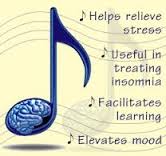
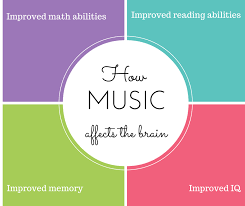
Research has shown that listening to music can reduce anxiety, blood pressure, and pain as well as improve sleep quality, mood, mental alertness, and memory.

Experts are trying to understand how our brains can hear and play music. A stereo system puts out vibrations that travel through the air and somehow get inside the ear canal. These vibrations tickle the eardrum and are transmitted into an electrical signal that travels through the auditory nerve to the brain stem, where it is reassembled into something we perceive as music.

Johns Hopkins researchers have had dozens of jazz performers and rappers improvise music while lying down inside an fMRI (functional magnetic resonance imaging) machine to watch and see which areas of their brains light up.

Music is structural, mathematical and architectural. It’s based on relationships between one note and the next. You may not be aware of it, but your brain has to do a lot of computing to make sense of it.”

John Hopkins Medicine (https://www.hopkinsmedicine.org/health/wellness-and-prevention/keep-your-brain-young-with-music)