Archives

QUOTE FOR WEDNESDAY:

“Sinus rhythms and Atrial rhythms derive from the atrium the upper chambers of the heart in particular it starts from the right side of the heart and spreads to the other upper chamber and works it’s way down the lower chambers.”

AHA American Heart Association


QUOTE FOR TUESDAY:

“In some people with nonalcoholic fatty liver disease, the fat that accumulates can cause inflammation and scarring in the liver. This more serious form of nonalcoholic fatty liver disease is sometimes called nonalcoholic steatohepatitis.”

MAYO CLINIC


QUOTE FOR MONDAY:

“Liver failure is a life-threatening condition that demands urgent medical care. Most often, liver failure occurs gradually and over many years.”

WEB MD


QUOTE FOR THE WEEKEND:

“SIRS can be incited by ischemia, inflammation, trauma, infection or a combination of several “insults”. SIRS is not always associated with infection. While not universally accepted, some have proposed the terms “severe SIRS” and “SIRS shock” to describe serious clinical syndromes that are not infectious in nature and thus cannot be labeled according to the various sepsis definitions”

Steven D. Burdette M.D. (Infectious Disease Medicine M.D.– Wright State Physicians in Dayton, Ohio – http://www.healthgrades.com/physician/dr-steven-burdette-yhfgy)

Part 3 Multi effect theory, the causes, the key to Rx. of SIRS-Systemic Inflammatory.

SIRS3 SIRS6

SIRSII3SIRS Causes 6


Part 3 talks to you about the multi-hit theory of SIRS with Inflammatory Cascade of SIRS and lastly the coagulation process in SIRS.   It also tells you an extensive amount of infectious and non-infectious causes of SIRS. Lastly the key antidote to SIRS.

Multi-hit theory

A multi hit theory behind the progression of SIRS to organ dysfunction and possibly multiple organ dysfunction syndrome (MODS). In this theory, the event that initiates the SIRS cascade primes the pump. With each additional event, an altered or exaggerated response occurs, leading to progressive illness. The key to preventing the multiple hits is adequate identification of the ETIOLOGY or CAUSE of SIRS and appropriate resuscitation and therapy.

Inflammatory cascade

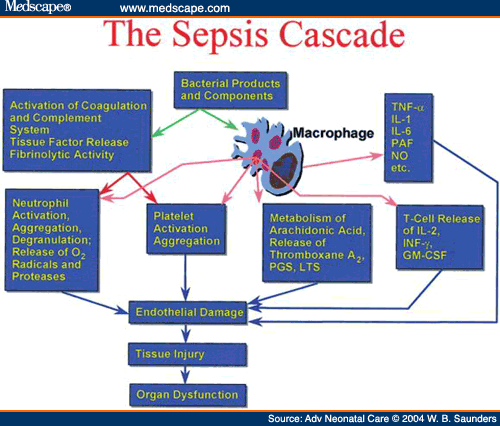
Trauma, inflammation, or infection leads to the activation of the inflammatory cascade. Initially, a pro-inflammatory activation occurs, but almost immediately thereafter a reactive suppressing anti-inflammatory response occurs. This SIRS usually manifests itself as increased systemic expression of both pro-inflammatory and anti-inflammatory species. When SIRS is mediated by an infectious insult, the inflammatory cascade is often initiated by endotoxin or exotoxin. Tissue macrophages, monocytes, mast cells, platelets, and endothelial cells are able to produce a multitude of cytokines. The cytokines tissue necrosis factor–alpha (TNF-α) and interleukin-1 (IL-1) are released first and initiate several cascades.

The release of certain factors without getting into medical specific terms they ending line induces the production of other pro-inflammatory cytokines, worsening the condition.

Some of these factors are the primary pro-inflammatory mediators. In research it suggests that glucocorticoids may function by inhibit-ing certain factors that have been shown to be released in large quantities within 1 hour of an insult and have both local and systemic effects. In studies they have shown that certain cytokines given individually produce no significant hemodynamic response but that they cause severe lung injury and hypotension. Others responsible for fever and the release of stress hormones (norepinephrine, vasopressin, activation of the renin-angiotensin-aldosterone system).

Other cytokines, stimulate the release of acute-phase reactants such as C-reactive protein (CRP) and pro-calcitonin.

The pro-inflammatory interleukins either function directly on tissue or work via secondary mediators to activate the coagulation cascade and the complement cascade and the release of nitric oxide, platelet-activating factor, prostaglandins, and leukotrienes.

High mobility group box 1 (HMGB1) is a protein present in the cytoplasm and nuclei in a majority of cell types. In response to infection or injury, as is seen with SIRS, HMGB1 is secreted by innate immune cells and/or released passively by damaged cells. Thus, elevated serum and tissue levels of HMGB1 would result from many of the causes of SIRS.

HMGB1 acts as a potent pro-inflammatory cytokine and is involved in delayed endotoxin lethality and sepsis.

Numerous pro-inflammatory polypeptides are found within the complement cascade. It is thought they are felt to contribute directly to the release of additional cytokines and to cause vasodilatation and increasing vascular permeability. Prostaglandins and leukotrienes incite endothelial damage, leading to multi-organ failure.

Polymorphonuclear cells (PMNs) from critically ill patients with SIRS have been shown to be more resistant to activation than PMNs from healthy donors, but, when stimulated, demonstrate an exaggerated micro-bicidal response (agents that kill microbes). This may represent an auto-protective mechanism in which the PMNs in the already inflamed host may avoid excessive inflammation, thus reducing the risk of further host cell injury and death.[4]

Coagulation

The correlation between inflammation and coagulation is critical to understanding the potential progression of SIRS. IL-1 and TNF-α directly affect endothelial surfaces, leading to the expression of tissue factor. Tissue factor initiates the production of thrombin, thereby promoting coagulation, and is a proinflammatory mediator itself. Fibrinolysis is impaired by IL-1 and TNF-α via production of plasminogen activator inhibitor-1. Pro-inflammatory cytokines also disrupt the naturally occurring anti-inflammatory mediators anti-thrombin and activated protein-C (APC).

If unchecked, this coagulation cascade leads to complications of micro-vascular thrombosis, including organ dysfunction. The complement system also plays a role in the coagulation cascade. Infection-related pro-coagulant activity is generally more severe than that produced by trauma.

What the causes of SIRS can be:

The etiology of systemic inflammatory response syndrome (SIRS) is broad and includes infectious and noninfectious conditions, surgical procedures, trauma, medications, and therapies.

The following is partial list of the infectious causes of SIRS:

  • Bacterial sepsis
  • Burn wound infections
  • Candidiasis
  • Cellulitis
  • Cholecystitis
  • Community-acquired pneumonia [5]
  • Diabetic foot infection
  • Erysipelas
  • Infective endocarditis
  • Influenza
  • Intra-abdominal infections (eg, diverticulitis, appendicitis)
  • Gas gangrene
  • Meningitis
  • Nosocomial pneumonia
  • Pseudomembranous colitis
  • Pyelonephritis
  • Septic arthritis
  • Toxic shock syndrome
  • Urinary tract infections (male and female)
  • The following is a partial list of the noninfectious causes of SIRS:
  • Acute mesenteric ischemia
  • Adrenal insufficiency
  • Autoimmune disorders
  • Burns
  • Chemical aspiration
  • Cirrhosis
  • Cutaneous vasculitis
  • Dehydration
  • Drug reaction
  • Electrical injuries
  • Erythema multiforme
  • Hemorrhagic shock
  • Hematologic malignancy
  • Intestinal perforation
  • Medication side effect (eg, from theophylline)
  • Myocardial infarction
  • Pancreatitis [6]
  • Seizure
  • Substance abuse – Stimulants such as cocaine and amphetamines
  • Surgical procedures
  • Toxic epidermal necrolysis
  • Transfusion reactions
  • Upper gastrointestinal bleeding
  • VasculitisThe treatment is don’t get it since it is hard to get rid of especially for people over 65 and in hospitals.  There is no one Rx for it.  If you’re unfortunate enough to be diagnosed with SIRS the sooner you get diagnosed with it including being in stage one as opposed to three the higher the odds the turn out will be for you.  Again the key is prevention; don’t get it. There is no one antidote to this SIRS.**

*PREVENTION IS THE KEY ANTIDOTE!   So stay healthy and out of  hospitals!*
 

QUOTE FOR FRIDAY:

“Systemic inflammatory response syndrome (SIRS), independent of the etiology, has the same pathophysiologic properties, with minor differences in inciting cascades.”

Dr. Lewis J. Kaplan (an MD of Yale Surgical Specialty Traumas, a medical author-http://emedicine.medscape.com/article/168943-overview#a0104)

Part 2 SIRS-Systemic Inflammatory Response Syndrome Cascade (how it spreads).

SIRSII3                 SIRS II

It is the body’s response to an infectious or noninfectious insult. Although the definition of Systemic Inflammatory Response Syndrome (SIRS) refers to it as an “inflammatory” response, it actually has pro- and anti-inflammatory components.  SIRS is a serious condition related to systemic inflammation, organ dysfunction, and organ failure. It is a subset of cytokine storm, in which there is abnormal regulation of various cytokines.   Cytokines are this, the term “cytokine” is derived from a combination of two Greek words – “cyto” meaning cell and “kinos” meaning movement. Cytokines are cell messaging or signaling molecules that aid cell to cell communication in immune responses and stimulate the movement of cells towards sites of inflammation, infection and trauma.

Cytokines exist in peptide, protein and glycoprotein (proteins with a sugar attached) forms. The cytokines are a large family of molecules that are classified in various different ways due to an absence of a unified classification system.  Protein is acidic as opposed to being alkalinic.

Examples of cytokines include the agents interleukin and the interferon which are involved in regulating the immune system’s response to inflammation and infection.

SIRS, independent of the etiology/cause, has the same pathophysiologic properties, with minor differences in inciting cascades. Many consider the syndrome a self-defense mechanism. Inflammation is the body’s response to nonspecific insults that arise from chemical, traumatic, or infectious stimuli. The inflammatory cascade is a complex process that involves humoral and cellular responses, complement, and cytokine cascades.  Best summarized in the relationship between these complex interactions and SIRS is it is in the following 3-stage process.  Here is a simple explanation in what occurs without taking pages in explaining the stages to you.

Stage I

Following an insult to the body, cytokines are produced at the site. Local cytokine production incites an inflammatory response, thereby promoting wound repair and recruitment of the reticular endothelial system. This process is essential for normal host defense homeostasis and if absent is not compatible with life. Local inflammation, such as in the skin and subcutaneous soft tissues occurs.

What occurs is rubor or redness at the site that reflects local vasodilation of vessels.  What is caused by release of local vasodilation of the vessels at the area of where the insult starts in the body is substances like nitric oxide (NO) and prostacyclin get released=Acidic.

Tumor or swelling occurs due to vascular endothelial (layer of the skin) tight junction disruption and the local extravasation of protein-rich fluid into the interstitium (layer of the skin), which also allows activated white blood cells to pass from the vascular space (blood stream) into the tissue space to help clear infection and promote repair.

Dolor is pain and represents the impact inflammatory mediators have on local somatosensory nerves. Presumably, this pain stops the host from trying to use this part of his or her body as it tries to repair itself.

The increased heat primarily due to increased blood flow occurs but also increased local metabolism as white blood cells become activated and localize to the injured tissue.

Finally, the loss of function, a hallmark of inflammation and a common clinical finding of organ dysfunction with the infection is isolated to a specific organ (ex. pneumonia—acute respiratory failure; kidney—acute kidney injury. pancreatitis–  inflammation of the pancreas).

Importantly, on a local level, this cytokine and chemokine release by attracting activated leukocytes to the region may cause local tissue destruction (ex. abscess) or cellular injury (ex. pus), which appear to be the necessary byproducts of an effective local inflammatory response.  Local infection signs & symptoms= puss, swelling. skin temperature  hot, pain and redness to the where the insult of the body is.

Ending line what happens is an insult occurs in the body, there is local cytokine production with the goal of inciting an inflammatory response thereby promoting wound repair and recruitment of the reticular endothelial system.  Your body is compensating in reacting normally to this insult.

Stage II

Small quantities of local cytokines are released into the circulation, improving the local response. This leads to growth factor stimulation and the recruitment of macrophages and platelets. This acute phase response is typically well controlled by a decrease in the pro-inflammatory mediators and by the release of endogenous antagonists; the goal is homeostasis. At this stage, some minimal malaise (general weakness)and low-grade fever may become show.

Putting it simple what occurs here is small quantities of local cytokines are released into circulation to improve the local response. This leads to growth factor stimulation and the recruitment of macrophages (cells eating up toxins to the body) and platelets (that are cells the coagulate-cause clotting). This acute phase response is typically well controlled by a decrease in the proinflammatory mediators and by the release of endogenous antagonists. The goal is homeostasis – the body still trying to compensate and react productively to this insult to the body.

Stage III

If homeostasis is not restored and if the inflammatory stimuli continue to seed into the systemic circulation, a significant systemic reaction occurs. The cytokine release (acidic) leads to destruction rather than protection. A consequence of this is the activation of numerous humoral cascades and the activation of the reticular endothelial system and subsequent loss of circulatory integrity.  The body at this stage is decompensating and not productively fighting off this insult to the body and this leads to end-organ dysfunction.

Tune in tomorrow to part 3 of SIRS the conclusion of this topic (extensive noninfectious and infectious causes with more on coagulation and multi cascading reactions in the body due to SIRS).


QUOTE FOR THURSDAY:

“Current theories about the onset and progression of sepsis and SIRS focus on dysregulation of the inflammatory response, including the possibility that a massive and uncontrolled release of proinflammatory mediators initiates a chain of events that lead to widespread tissue injury.”
Dr. Remi Neviere, MD/Professor/Author of Sepsis and the systemic inflammatory response syndrome http://www.uptodate.com.

Part1 Commonly seen in hospitals is SIRS=Systemic Inflammatory Response System

 sepsis on arm SIRS SEPSIS


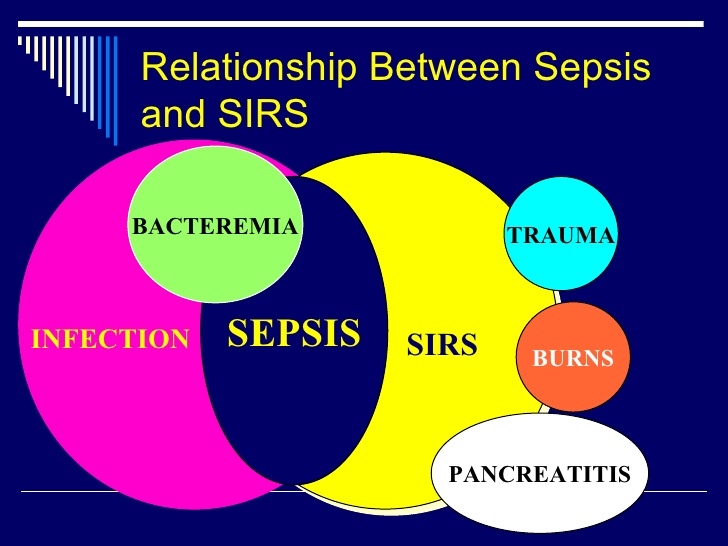
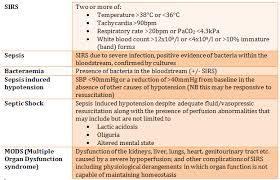
What is SIRS? SIRS was first described by Dr William R. Nelson, of the University of Toronto, in a presentation to the Nordic Micro Circulation meeting in Geilo, Norway-February 1983.  In 1992, the American College of Chest Physicians (ACCP) and the Society of Critical Care Medicine (SCCM) introduced definitions for systemic inflammatory response syndrome (SIRS), sepsis, severe sepsis, septic shock, and multiple organ dysfunction syndrome (MODS), they are interrelated with each other in SIRS.  The idea behind defining SIRS was to define a clinical response to a nonspecific insult of either infectious or noninfectious origin. SIRS is defined as 2 or more of the following variables:

  • Fever of more than 38°C (100.4°F) or less than 36°C (96.8°F)
  • Heart rate of more than 90 beats per minute
  • Respiratory rate of more than 20 breaths per minute or arterial carbon dioxide tension (PaCO 2) of less than 32 mm Hg, which is normally in our body at 35-45 mm Hg whereas the oxygen= PaO2 in our body greater than 80mm Hg for the norm.
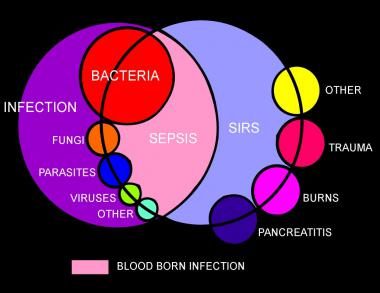
  • Abnormal white blood cell count (>12,000/µL or < 4,000/µL or >10% immature [band] forms)It is the body’s response to an infectious or noninfectious insult to it. Although the definition of SIRS refers to it as an “inflammatory” response, it actually has pro- and anti-inflammatory components.  SIRS describes the host response to a critical illness of infectious or noninfectious cause, such as burns, trauma, and pancreatitis. More specific definitions are as follows: Sepsis is SIRS resulting from a presumed or known site of infection. Severe sepsis is sepsis with an acute associated multiple organ failure.Bacterial infections are the most common cause of sepsis. Sepsis can also be caused by fungal, parasitic, or viral infections. The source of the infection can be any of a number of places throughout the body. Common sites and types of infection that can lead to sepsis include:
  • What causes sepsis?
  • SIRS is nonspecific and can be caused by ischemia, inflammation, trauma, infection, or several insults combined. Thus, SIRS is not always related to infection but can be.  SIRS is an inflammatory state affecting the whole body, frequently a response of the immune system to infection, but not necessarily so.  It is frequently related to sepsis, a condition in which individuals meet criteria for SIRS and have a known infection.
  • The abdomen—An inflammation of the appendix (appendicitis), bowel problems, infection of the abdominal cavity (peritonitis), and gallbladder or liver infections
  • The central nervous system—Inflammation or infections of the brain or the spinal cord
  • The lungs—Infections such as pneumonia
  • The skin—Bacteria can enter skin through wounds or skin inflammations, or through the openings made with intravenous (IV) catheters (tubes inserted into the body to administer or drain fluids). Conditions such as cellulitis (inflammation of the skin’s connective tissue) can cause sepsis.
  • The urinary tract (kidneys or bladder)—Urinary tract infections are especially likely if the patient has a urinary catheter to drain urineSepsis can strike anyone, but those at particular risk include:
  • Who is at risk for sepsis?
  • People with weakened immune systems
  • Patients who are in the hospital
  • People with pre-existing infections or medical conditions
  • People with severe injuries, such as large burns or bullet wounds
  • People with a genetic tendency for sepsis
  • The very old or very youngBecause of the many sites on the body from which sepsis can originate, there is a wide variety of symptoms. The most prominent are:
  • What are the symptoms of sepsis?
  • Decreased urine output
  • Fast heart rate
  • Fever
  • Or the opposite Hypothermia (very low body temperature)
  • Shaking
  • Chills
  • Warm skin or a skin rash
  • Confusion or delirium
  • Hyperventilation (rapid breathing)A person may have sepsis if he or she has:
  • How is sepsis diagnosed?
  • A high or low white blood cell count
  • A low platelet count
  • Acidosis (too much acid in the blood); in the hospital what is checked is lactic acid blood level.
  • A blood culture to confirm that there is a positive for bacteria
  • Abnormal kidney or liver functionThe most important intervention in sepsis is quick diagnosis and prompt treatment. Patients diagnosed with severe sepsis are usually placed in the intensive care unit (ICU) of the hospital for special treatment. The doctor will first try to identify the source and the type of infection, and then administer antibiotics to treat the infection. (Note: antibiotics are ineffective against infections caused by viruses; if anything what is used is antiviral medications.)

The doctor also administers IV fluids to prevent blood pressure from dropping too low. In some cases, vasopressor medications (which constrict blood vessels) are needed to achieve an adequate blood pressure. Some patients are given new drug therapies, such as activated protein C (APC). And finally, if organ failures occur, appropriate supportive care is provided (for example, dialysis for kidney failure, mechanical ventilation for respiratory failure, etc.).  Commonly what is used when initially sepsis is diagnosed is Vancomycin with other antibiotics like Imipenum, Cefepime, and others depending on what the blood culture shows as the microorganism if SIRS is caused by a bacterial infection (many times it is).

  • How is sepsis treated?

QUOTE FOR THURSDAY:

“Current theories about the onset and progression of sepsis and SIRS focus on dysregulation of the inflammatory response, including the possibility that a massive and uncontrolled release of proinflammatory mediators initiates a chain of events that lead to widespread tissue injury.”

Dr. Remi Neviere, MD/Professor/Author of Sepsis and the systemic inflammatory response syndrome:  MD Department of Physiology, Univ. Droit et Sante – Lille II

Go to striveforgoodhealth.com and learn about a vital occurrence happening in hospitals for years called SIRS=Systemic Inflammatory Response Syndrome.