Archives

Ways to keep your eyes healthy!

                 ways to keep your eyes healthy1                                           Keep your eyes healthy2

Here are nine ways to protect your eyes so you can keep gazing at the ocean for years to come.

1.) Wear Shades

2.) Consume Carotenoids

3.) Visit the doctor regularly

4.) Goggle yourself

5.) Eat your antioxidants

6.) Use your computer wisely by doing caution measures

7.) Get eye inclusive eye insurance

8.)Wear squeaky clean contacts

9.) Know the danger signs and if not ask your doctor or even better your eye doctor.

As time passes and although you are still young, when you look in the mirror and see puffiness in your eyes, the presence of dark circles and fine lines around them, these signs on your face will start to worry you.

Is it possible to keep the glow in our eyes and make them look healthier through healthy nutrition and lifestyle tips?

Nutrition plays a role in your eye health. Four special nutrients; Vitamin C, E, A and Zinc can help reduce your risk of a common eye problem prevalence by up to 35%. So make sure you get the right amount of antioxidants through a healthy balanced and varied diet.

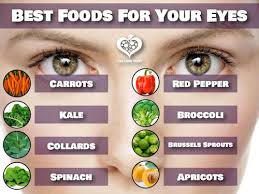
Foods that have great impact on your eye health and beauty include:

1. Fruits (especially those rich in vitamin C): Fill up on oranges, mangoes and strawberries

2. Vegetable sources of vitamin A: Eat more carrots, peaches, papaya, spinach and mangoes

3. High Zinc food sources: Include turkey, chicken, yogurt and fortified cereals in your diet

4. Nuts and seeds: Such as almonds, nuts, and sunflower seeds are rich sources of Vitamin E

For healthy eyes, try these natural beauty tips:

    • Try to rest and get at least 8 hours of sleep every night
    • Exercise regularly to improve circulation. This way you eyes will get enough oxygen
    • Drink at least 8 glasses of water daily
    • Do not rub your eyes
    • Use clean cotton balls and a cleanser to clean your eyes
    • Protect your eyes from sunrays by using sunglasses especially during the peak hour to avoid any damage
    • Apply slices of cucumber and potatoes on your eyes. This will avoid wrinkles and dark circles around the eyes
    • For more individualized approach, you can consult a dermatologist.

Good to Remember:

For healthy eyes, do not forget to eat lots of yellow orange fruits and vegetables such as carrots and apricots.


QUOTE FOR WEDNESDAY:

“More than 285 million people are visually impaired worldwide — and of these cases, about 80 percent of them could have been avoided or cured.”

World Health Organization (WHO)

EYES-In how our health is vital in keeping them working EFFECTIVELY.

eyeseyes3

Like all organs if your diet is not healthy you’ll effect their functioning, including your eyes. Take for example the ingredients you include in the foods & fluids you eat. Just like how some drink from one up to three thousand cc’s of water a day to help prevent dehydration in their tissues if they work out daily from a gym to running miles outside OR take someone who simply includes calcium in their diet for their bones. Well what is good for the eyes and what can you do to help both your eyes?                                     

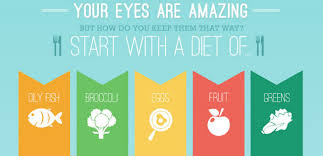
Get an annual comprehensive dilated eye exam, know your families eye history since many eye diseases are through heredity, eat an eye healthy & well-balanced diet rich in salmon, tuna, dark leafy greens, colored vegetables and fruits, wear sunglasses with UV protection and avoid smoking (which effects the body everywhere, including the eyes).

What ingredients do we need in our dieting that is so vital for the eyes to stay at their healthiest level? Well Lutein and Zeaxanthin (Pronounced loo’teen and Zee’-a-zan-thin)-Powerful antioxidants naturally present in the macula (the part of the retina that is responsible for central vision). Remember damage to the retina causes some degree of lack of vision to 100% blind. Lutein and Zeaxanthin are critical for helping to filter out harmful blue light, which can damage the macula. These vital antioxidants cannot be produced by our bodies on their own, so they must be obtained through diet and/or supplements (ex. Ocuvite Supplements in the store). Another ingredient we need in our diet is Omega 3 Fatty Acids which is a family of fatty acids that help protect our eyes by keeping them healthy. Omega 3 is an important structural lipid in the retina and helps support proper function; and is vital for the health of your eyes as you age. Lastly it helps promote healthy tear production necessary for healthy and comfortable eyes. Other Nutrients Antioxidants Vitamins C and E, Zinc and beta carotene. They help protect eyes from oxidative stress (Oxidative stress reflects an imbalance between the systemic manifestation of reactive oxygen speciesand a biological system’s ability to readily detoxify the reactive intermediates or to repair the resulting damage and oxidative stress can cause disruptions in normal mechanisms of cellular signaling. It is thought to be involved in the development of many diseases.)

What Your Diet or Daily Health Habits May Be Missing:

Many dark leafy greens and brightly colored vegetables (including orange foods) are rich in Lutein and Zeaxanthin. We all heard about carrots (to get Beta-carotene)

Oil-rich fish such as tuna and salmon along with nuts and fortified eggs are an excellent source of omega-3s. Omega-3s: A family of fatty acids that help protect the eye to keep it healthy, another important nutrient for your eyes

Unfortunately, many of us do not consume enough of these eye-healthy foods in our daily diets. What should you have in your diet to eat per day to equal the amount of Lutein and Zeaxanthin you should have daily: 5 cups of broccoli, 6 cups of corn, 1 ounce of salmon or 4 ounces of tuna. A lot of vegetables in cups but if you mix your foods in the 4 food groups that are healthy for the eye or just simply take supplements that your doctor recommends for eye health you won’t be eating cups and cups of vegetables if you don’t like the taste.

*Other foods high in omega 3 are halibut, spinach, collard and kale. VITAL NUTRIENTS FOR GETTING THE EYES HEALTHY.

Many eye diseases can’t be avoided (like born blind) but there are many diseases that could have been avoided through prevention tactics in what you eat and in what you practice as your daily habits. For example some that could be prevented if not slowed down or suppressed in the intensity of the disease can be Age-Related Macular Degeneration, Cataracts, Dry Eye Syndrome and more. Factors that also influence how our eyes turn out are:

Being overweight or obese is a factor that increases your risk of developing diabetes and other systemic conditions which can lead to vision loss, such as diabetic eye disease (macular degeneration) or even glaucoma. If you’re having trouble maintaining a healthy weight, talk to your doctor or go to my website with Dr. Anderson available to help you understand how the body works with calories/sugars, carbohydrates, starches, fats, and sugars; with understanding how portions of meals work with digestion and how it can put weight on the body.

If you do a lot of work daily on a computer or on any one thing, your eyes may forget to blink or get very fatigued, so attempt to do every 20 minutes looking away from the computer or one thing your focused on for hours (like at work) for 20 seconds. This helps your eyes in reducing eyestrain (it is an actually an exercise for the eye). Clean your hands and your contact lenses properly. This is to avoid local infection in the eye. Always wash your hands before putting in and taking out the contact lenses. Follow your doctors and contact lenses website in keeping your eyes healthy and safe with using their service for your lenses. Practice workplace eye safety as their organization policy and procedure states but also use common sense with wearing eye goggles when doing work around the house that puts you at risk for eye damage (like weed whacking, painting, using saws etc…)

How do you go about this if you need help in knowing what good foods of all the 4 food groups are, with knowing how to lose weight permanently without going on diets for 3 or 6 or 24 months than gaining it all back again including knowing how the body works with 3 meals a day as opposed to 6 small meals a day (one of them being a meat and vegetable meal that is lean in fat and green in vegetables with other colorful veggies added to it if you want) and understanding how the average American eats (especially with fast foods on a regular basis) with disease?

Our country needs to live healthier and you can get started through this site and eventually become independent or even stay with us but you make all the choices, no one else. You might be so happy with what you see you’ll even spread the good cheer and pass on the knowledge to family and friends making our country healthier. We have to start somewhere. Our health care system is in a disaster but gradually improving and lets add to improving it for us now and ten years from now and for future generations to decrease the amount of disease and illness in our country with giving our government a reason to decrease the price in our health care system (including insurances).

Let’s get healthier in America! We need to decrease disease and illness with decreasing our expenditure in the health care system (including insurance prices). One way in doing that is getting healthy, if we all took part it would decrease or lower our disease and illness percentage more in America. To do that we have to become better in our diets and health habits for us now, our children later and future generations who will have a harder economy to live in then. Let us all learn about diseases and illnesses and how to prevent them.

QUOTE FOR TUESDAY:

People with a history of heart disease, Males, Smokers, People with high cholesterol, People with high blood pressure, Obese people, People with diabetes, People who suffer stress., People who live a sedentary life style, Heredity is a powerful factor that contributes to early heart disease. Being male is a risk factor, but the incidence of heart disease in women increases dramatically after menopause.

American Heart Association


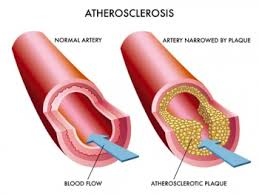
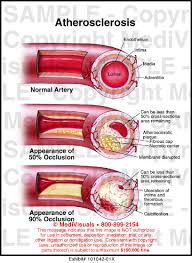
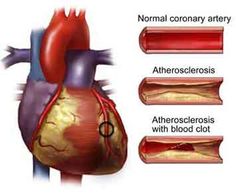
Coronary Heart Disease=Atherosclerosis/Arteriosclerosis


atherosclerosis1atherosclerosis3atherosclerosis2

This causes blockages with blood clots due to placque build up that can cause Stroke or MI=heart attack.


                                                                                                                                                                                                 arteriosclerosis2         Image result for arteriosclerosis/atherosclerosis

Can lead to Stoke/Heart Attack due to pressure build up and plaque build up inside arteries.


People who are at risk for the development of coronary artery disease and myocardial infarction include those who fall into any of the categories listed below:

*People with a history of heart disease, Males, Smokers, People with high cholesterol, People with high blood pressure, Obese people, People with diabetes, People who suffer stress., People who live a sedentary life style, Heredity is a powerful factor that contributes to early heart disease. Being male is a risk factor, but the incidence of heart disease in women increases dramatically after menopause.*

**The risk factors to concentrate upon are those that can be modified. These include cigarette smoking, high blood pressure, cholesterol, obesity, sedentary life style and stress. Cigarette smoking causes many deaths from myocardial infarction and other heart diseases. Smoking contributes to almost half of the heart attacks of women under age 55.*

***Stopping smoking can greatly reduce your chances of having a heart attack. Controlling blood pressure can reduce your risk of heart attack. Lowering cholesterol to safe levels through diet and medications can reduce your risk and may even lead to some regression of the plaques already present. Lean body weight and a regular exercise program are helpful.

****If you are diabetic, precise control of your diabetes will help reduce your risk of blood vessel damage due to diabetes. Stress is a risk factor that is common, difficult to quantify and difficult to control effectively over time. Methods of stress reduction include meditation, regular exercise, time management, and a supportive environment.

How is a heart attack diagnosed?

Chest pain is the most common symptom of a heart attack. The chest pain is usually a burning or pressure sensation beneath the mid or upper breast bone. The pain may radiate into the upper mid back, neck, jaw or arms. The pain may be severe but often is only moderate in severity.

There may be associated shortness of breath or sweating. If patients have had angina previously, the heart attack pain will feel the same as their usual angina only stronger and more prolonged. If you have a pain like this that lasts longer than 15 minutes, it is best to be evaluated immediately.

Calling your medic unit is the fastest and safest way to ask for help. If you have symptoms like this that wax and wane, this is often a warning sign that a heart attack is about to occur and prompt medical attention is needed.

Once you are in an emergency room or a doctor’s office an electrocardiogram (ECG or EKG) will be obtained. This is often helpful in diagnosing a heart attack. Sometimes, however, the test is normal even when the heart injury is present but usually a great diagnostic tool.

When heart cells die, certain enzymes present in heart cells are released into the bloodstream that serve as a marker of heart injury (troponin I and CPK or CK-MB). These enzymes can be measured by blood tests. The amount of enzyme released into the blood stream also helps assess how much heart damage has occurred.

TREATMENT:

The best way to limit the size of a heart attack is to restore the flow of blood to the heat muscle as fast as possible. There are two basic methods to do this.

Because most heart attacks are caused by clots forming within the coronary artery, dissolving the clot quickly will restore blood flow. Drugs called thrombolytics are quite effective.

The sooner these drugs are given, the quicker the blood flow will be restored. An alternative method involves the use of balloon angioplasty.

This involves taking the heart attack victim promptly to the cardiac cath lab in the hospital.

An angiogram is performed to show the blocked blood vessel leading to the heart attack. Then a balloon catheter is placed across the blockage and flow is restored.

Sometimes a stent (a device that assists in holding the blood vessel open) is placed to create a large channel.

Smaller heart attacks, often those not producing significant abnormalities on the ECG are often treated with bedrest and blood thinners such as heparin as well as drugs to reduce the work the heart does.

These heart attacks are called non-transmural myocardial infarctions. Before discharge, x-ray studies of the heart arteries are often carried out to see if angioplasty or surgery will be necessary.

Following thrombolytic (clot reducing) therapy, angiogram are often performed to outline the coronary anatomy to help determine if additional therapy such as angioplasty or bypass surgery is indicated. This may be done during the initial hospitalization or later as an outpatient procedure.

QUOTE FOR MONDAY:

We have to treat smoking as a major public health issue. We have to reduce the extent to which young people start smoking, and one of the issues is the extent to which display of cigarettes and brands does draw young people into sm1956, oking in the first place.

Andrew Lansley (born 11 December 1956, is a British Conservative politician who served as Member of Parliament (MP) for South Cambridgeshire from 1997 to 2015.


QUOTE FOR THE WEEKEND:

“There is no cure for multiple sclerosis (MS), but much progress has been made in developing new drugs to treat it. Research is ongoing to develop new and better disease-modifying therapies (DMTs) for this disease of the central nervous system.”


Part II Multiple Sclerosis Awareness Month.

Part II Multiple Sclerosis   Multiple Sclerosis Part II

(continuation of MS Awareness)

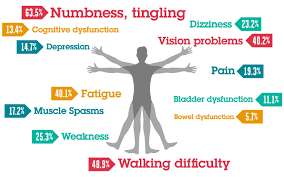
Less common symptoms:

*Speech problems-this including slurring (dysarthria) and loss of volume (dysphonia) occur in approximately 25-40% of people with MS, particularly later in the disease course and during periods of extreme fatigue. Stuttering is occasionally reported as well.

*Swallowing problems — referred to as dysphagia — result from damage to the nerves controlling the many small muscles in the mouth and throat.

*Tremor, or uncontrollable shaking, can occur in various parts of the body because of damaged areas along the complex nerve pathways that are responsible for coordination of movements.

*Seizures — which are the result of abnormal electrical discharges in an injured or scarred area of the brain — have been estimated to occur in 2-5% people with MS, compared to the estimated 3% of the general population.

*Breathing Problems-Respiration problems occur in people whose chest muscles have been severely weakened by damage to the nerves that control those muscles.

*Itching-Pruritis (itching) is one of the family of abnormal sensations — such as “pins and needles” and burning, stabbing or tearing pains — which may be experienced by people with MS.

*Headaches-Although headache is not a common symptom of MS, some reports suggest that people with MS have an increased incidence of certain types of headache.

 *Hearing Loss-About 6% of people who have MS complain of impaired hearing. In very rare cases, hearing loss has been reported as the first symptom of the disease.

Secondary and tertiary symptoms

While the primary symptoms described on this page (more and less common) are the direct result of damage to the myelin and nerve fibers in the central nervous system (CNS), the secondary symptoms are the complications that can arise as a result of these primary symptoms. For example:

  • Bladder dysfunction can cause repeated urinary tract infections.
  • Inactivity can result in loss of muscle tone and disuse weakness (not related to demyelination), poor postural alignment and trunk control, decreased bone density (and resulting increased risk of fracture), and shallow, inefficient breathing
  • Immobility can lead to pressure sores.

While secondary symptoms can be treated, the optimal goal is to avoid them by treating the primary symptoms.

Tertiary symptoms are the “trickle down” effects of the disease on your life. These symptoms include social, vocational and psychological complications. For example, if you are no longer able to drive or walk, you may not be able to hold down your usual job. The stress and strain of dealing with MS often alters social networks and sometimes fractures relationships. Problems with bladder control, tremor or swallowing may cause people to withdraw from social interactions and become isolated.

Depression is very common in people with MS. Depression may be both a primary and a tertiary symptom as it can be caused by the disease process itself and/or triggered by the challenges discussed above.

Treatments for Multiple Sclerosis:

Multiple sclerosis is a neurologic disease that affects women more often than men. Onset is most commonly in the 20s or 30s.

MS is an autoimmune disease in which there is initially focal inflammation and then permanent damage to nerves of the central nervous system. The damage is really removal of the insulating material surrounding nerves. The tissue that insulates nerves is called myelin, and the damage is referred to as demyelination.

As a nerve that controls sensation or movement of a part of the body loses some of its myelin covering, the nerve may become dysfunctional. This can manifest itself as loss of that nerves function which can be sensation, vision, movement or coordination of movement. Affected sensory nerves can also cause pain.

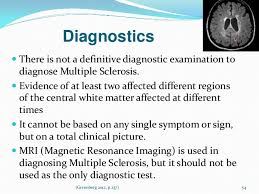
There have been tremendous advances in our ability to diagnose and assess MS with the development of magnetic resonance imaging. Unfortunately, our understanding of the cause of this disease remains limited, as does our ability to treat it. There is some limited success in stopping or decreasing the severity of an MS attack. We would also like to stimulate a regrowth of the damaged myelin over the nerve. Unfortunately, this is not possible at this time.

There are several types of MS. Some patients have disease that will have an acute exacerbation followed by a prolonged quiet period, which can last years or decades. This form of disease is referred to as relapsed remitting MS, or RRMS. Others have a disease that gets progressively worse over time. There are two types of progressive disease. In primary progressive MS, or PPMS, symptoms steadily worsen over time from the very beginning. Secondary progressive MS, known as SPMS, begins as relapsed remitting disease and becomes progressive over time.

For an acute exacerbation of multiple sclerosis that can result in neurologic symptoms and increased disability or impairments in vision, strength or coordination, the preferred initial treatment is usually a type of steroid called a glucocorticoid. Patients who do not have a good response to steroidal therapy are often treated with plasma exchange. Plasma exchange is an extreme therapy that removes antibodies to myelin from the blood.

Patients with RRMS are often treated with immune-modulating drugs such as interferon or glatiramer acetate. Glatiramer is an exciting drug. It is a series of small proteins that are similar to myelin protein. It is thought to prompt the immune system to avoid attacking myelin.

Available treatments of primary and secondary progressive MS are of limited efficacy and have significant side effects. An additional fact to consider is that most trials have not lasted longer than two or three years and give only hints about long-term results of treatment.

In brief, no clinical trial has shown convincing evidence of benefit in the treatment of primary progressive MS. All suggested treatments for PPMS are empiric. Several drugs that are more commonly used in the treatment of malignancy, cladribine and mitozantrone, appear to have some activity.

In contrast, there is definite modest benefit in some treatments for secondary progressive MS. These treatments include various regimens of steroid therapy and the use of some drugs that modulate the immune system. Many of these drugs are more commonly used in treatment of cancer and rheumatoid arthritis such as cyclophosphamide, methotrexate and interferon.

MS should be treated by a neurologist with experience in managing it.
 

QUOTE FOR FRIDAY:

“Multiple sclerosis (MS) is a potentially disabling disease of the brain and spinal cord (central nervous system).”

Multiple Sclerosis Foundation


QUOTE FOR THURSDAY:

“A study just published by Clinicians on patients in the West Midlands who travelled overseas to receive Living Donor transplants has found that clinical outcomes are often poor. Over 30% of the patients in the study who travelled either died within three months (17%) or lost their new kidney within a year(14%).”
National Kidney Federation