Archives

DIABETES and HEALTH

leading-complications-diabetes Resolute%20Integrity%20DES_Heart%20Disease%20&%20Diabetes%20Infographic

type-2-diabetesdiabetes-complications


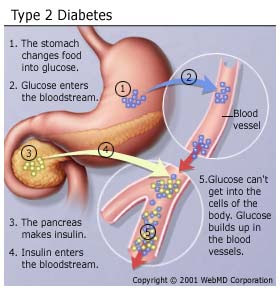
Diabetes Mellitus (DM) is a complex chronic disease involving disorders in carbohydrate, protein, and fat metabolism and the development of macro-vascular, micro-vascular, neurological complications that don’t occur over a few nights or weeks or months.  It is a metabolic disorder in where the pancreas organ ends up causing many disruptions in proper working of our body.  The pancreas is both an endocrine and exocrine gland.  The problem with diabetes is due to the endocrine part of the pancreas not working properly.  More than 1 million islet cells are located throughout the organ.  The three types of endocrine cells that the pancreas excretes into our blood stream are alpha, beta, and delta cells.  The alpha cells secrete glucagon (stored glucose), beta secrete insulin, and delta secrete gastrin and pancreatic somatostatin.   A person with DM has minimal or no beta cells secreted from the pancreas, which shows minimal or no insulin excreted in the person’s bloodstream.  Insulin is necessary for the transport of glucose, amino acids, potassium, and phosphate across the cell membrane getting these chemical elements into the cell.  When getting these elements into the cells it is like the cell eating a meal and the glucose, being one of the ingredients in the meal, is used for energy=fuel to our body; the glucose inside the cells gets carried to all our tissues in the body to allow the glucose to be utilized into all our tissues so they can do their functions (Ex. Getting glucose into the muscle tissue allows the muscles to have the energy to do the range of motion in letting us do our daily activities of living, like as simple as type or walk).  The problem with diabetes is the glucose doesn’t have the insulin being sent into the bloodstream by the pancreas to transfer the glucose across the cell membrane to be distributed as just discussed.  Instead what results is a high glucose levels in the blood stream causing hyperglycemia.  It should be apparent that when there is a deficit of insulin, as in DM, hyperglycemia with increased fat metabolism and decreased protein synthesis occur ( Our body being exposed to this type of environment over  years causes the development of many chronic conditions that would not have occurred if DM never took place in the body, all due to high glucose levels starting with not being properly displaced in the body as it should be normally.).

People with normal metabolism upon awaking and before breakfast are able to maintain blood glucose levels in the AM ranging from 60 to 110mg/dl.  After eating food the non-diabetic’s blood glucose may rise to 120-140 mg/dl after eating (postprandial), but these then rapidly return back to normal.  The reason for this happening is you eat food, it reaches the stomach, digestion takes place during digestion the stomach brakes down fats, carbohydrates, and sugars from compound sugars to simple sugars (fructose and glucose).  Than the sugars transfer from the stomach into the bloodstream causing an increase in sugar levels.  Now, your body uses the sugar it needs at that time throughout the entire body for energy and if still extra sugar left in the bloodstream that isn’t needed at that time to be utilized it now needs to go somewhere out of the bloodstream to allow the glucose blood level to get back between 60-110mg/dl.  That extra glucose first gets stored up in the liver 60-80% and then gets stored in our fat tissue=fat storage=weight increase.  Unfortunately this doesn’t take place with a diabetic since there is very little or no insulin being released by the pancreas and over time due to the high blood glucose blood levels (called hyperglycemia) problems arise in the body over years.   When diabetes occurs there is a resolution and you have the disease the rest of your life.  You need to control your glucoselevel.

2 TYPES OF DM: a.)Diabetes I  & b.) Diabetes ll. We have risk factors that can cause disease/illness; there are unmodified and modified risk factors.

With unmodified risk factors we have no control in them, which are 4 and these are:

1-Heredity 2-Sex 3-Age 4-Race.

Now modified risk factors are factors we can control, 3 of them that you can control:

They are 1.)your weight 2.)diet 3.)health habits (they play a big role for many people getting DM II). 

Look at what the Mayo Clinic (www.mayoclinic.com /health/diabetes)says about risk factors:

RISK FACTOR FOR TYPE  DIABETES ONE:

Although the exact cause of type 1 diabetes is unknown, genetic factors can play a role. Your risk of developing type 1 diabetes increases if you have a parent or sibling who has type 1 diabetes. Based on research, we also know that genes account for less than half the risk of developing type1 disease. These findings suggest that there are other factors besides genes that influence the development of diabetes. We don’t know what these factors are, but a number of different theories exist.  Environmental factors, such as exposure to a viral illness, also likely play some role in type 1 diabetes. Other factors that may increase your risk include:

The presence of damaging immune system cells that make autoantibodies. Sometimes family members of people with type 1 diabetes are tested for the presence of diabetes autoantibodies. If you have these autoantibodies, you have an increased risk of developing type 1 diabetes. But, not everyone who has these autoantibodies develops type 1.

Dietary factors. A number of dietary factors have been linked to an increased risk of type 1 diabetes, such as low vitamin D consumption; early exposure to cow’s milk or cow’s milk formula; or exposure to cereals before 4 months of age.

Race. Type 1 diabetes is more common in whites than in other races.

Geography. Certain countries, such as Finland and Sweden, have higher rates of type 1 diabetes.

RISK FACTORS FOR DIABETES TYPE 2 AND PREDIABETES Researchers don’t fully understand why some people develop prediabetes and type 2 diabetes and others don’t. It’s clear that certain factors increase the risk, however, including:

Weight. The more fatty tissue you have, the more resistant your cells become to insulin.

Inactivity. The less active you are, the greater your risk. Physical activity helps you control your weight, uses up glucose as energy and makes your cells more sensitive to insulin. Exercising less than three times a week may increase your risk of type 2 diabetes.

Family history. Your risk increases if a parent or sibling has type 2 diabetes.

Race. Although it’s unclear why, people of certain races — including blacks, Hispanics, American Indians and Asians — are at higher risk.

Age. Your risk increases as you get older. This may be because you tend to exercise less, lose muscle mass and gain weight as you age. But type 2 diabetes is also increasing dramatically among children, adolescents and younger adults.

Gestational diabetes. If you developed gestational diabetes when you were pregnant, your risk of developing prediabetes and type 2 diabetes later increases. If you gave birth to a baby weighing more than 9 pounds (4 kilograms), you’re also at risk of type 2 diabetes.

Polycystic ovary syndrome. For women, having polycystic ovary syndrome — a common condition characterized by irregular menstrual periods, excess hair growth and obesity — increases the risk of diabetes.

High blood pressure. Having blood pressure over 140/90mm Hg is linked to an increased risk of type 2 diabetes.

Abnormal cholesterol levels. If you have low levels of high-density lipoprotein (HDL), or “good,” cholesterol, your risk of type 2 diabetes is higher. Low levels of HDL are defined as below 35 mg/dL.

High levels of triglycerides. Triglycerides are a fat carried in the blood. If your triglyceride levels are above 250 mg/dL, your risk of diabetes increases.

RISK FACTORS FOR GESTATIONAL DIABETES

Any pregnant woman can develop gestational diabetes, but some women are at greater risk than are others. Risk factors for gestational diabetes include:

Age. Women older than age 25 are at increased risk.

Family or personal history. Your risk increases if you have prediabetes — a precursor to type 2 diabetes — or if a close family member, such as a parent or sibling, has type 2 diabetes. You’re also at greater risk if you had gestational diabetes during a previous pregnancy, if you delivered a very large baby or if you had an unexplained stillbirth.

Weight. Being overweight before pregnancy increases your risk.

Race. For reasons that aren’t clear, women who are black, Hispanic, American Indian or Asian are more likely to develop gestational diabetes.

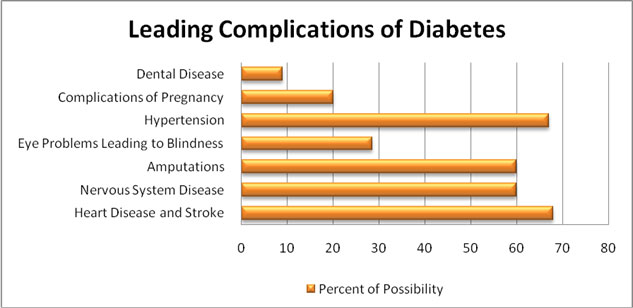
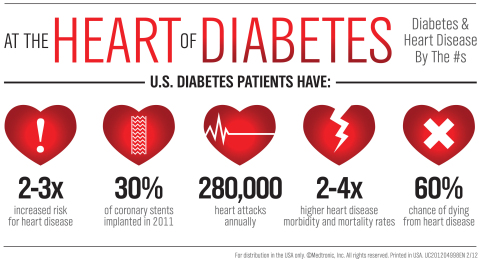
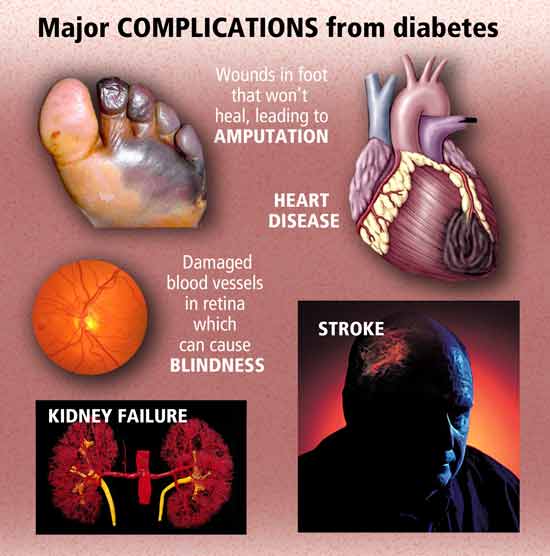
The key not to get diabetes is taking Prevention Measures (especially regarding type II) but even diagnosed with diabetes there are measures you can take in helping to control the glucose and decreasing the chances of increasing the side effects of what it can cause to the human body organs overtime especially cardiac disease, kidney disease, neuropathy, retinopathy to blind from having hyperglycemia frequently over years; in time it thickens the blood making circulation difficulty effecting tissues furthest from the heart= feet/lower extremities where skin ulcers occur for not getting enough oxygen to the tissues in the feet or lower extremities that can lead to necrosis causing amputation of toes to foot to below knee amputation to even above knee amputation.  It also increases chance of heart attack and stroke.  PREVENTION first and CONTROL second when diagnosed with DM, is so vitally important.

So help control your diabetes through diet (eating a low glucose or sugar diet=1800 to 2000 calories a day as your m.d. prescribes for you), weight (get in therapeutic weight range), and practice healthy habits.   My blog can help guide you those in wanting to prevent diabetes by helping you lose weight by eating 6 low glycemic meals a day which allows low fat, low carbohydrates, low sugar keeping your baseline glucose at a steady level and low sugar level more on a regular basis with still treating yourself to occasional high glycemic meals when you’re in ideal weight.  Follow this plan and in the first week eating like this I lost 5lbs or more and in the second week another 5lbs and since 1 to 2 lbs. per week .   If you don’t, you put your diet 3 days back. This would definitely benefit you in prevention but if not or if diagnosed with diabetes always check with your doctor regarding diet, activity, and new health habits you may start, especially through this diet and make the alterations you need to do as your m.d. recommends.  Recommended is have your m.d. give you clearance to start any new program if diagnosed with DM.  I lost 22lbs already and I’m not obese by the body mass index. When I made this a routine in my life it got so EASY since I put health before my taste buds desires.  It took time for not cheating with the food but it worked.

 

QUOTE FOR THE MONDAY:

“People have known for centuries that certain foods can be good for your eyesight, including 16th Century Spanish explorers who carried chili peppers on voyages to help with night vision. Your mom and the explorers were smart: those chili peppers contained beta-carotene, vitamins C, E and B6, and folic acid, and the carrots had carotenoids and antioxidants. A diet rich in these nutrients may reduce the risk of developing macular degeneration and slow the progression of the disease in those already diagnosed.”

NIH National Eye Institute

Aren’t dogs amazing!

DSC_0193  CSC_0144 CSC_0609

DSC_0489 (3)  Dogsmakeussmile!  DSC_0581

Dogs are more than great pets, they aid in our health!

Goldsmiths College released a study that showed more dogs will approach someone who’s crying or in distress than someone who is not. This shows that dogs are empathetic and are eager to help comfort humans in pain.

Their sense of smell can do even more than we think; dogs can also detect low blood sugar in their master. They will either alert the person that the sugar has dropped or, if a diabetic attack has already occurred, will bark and bark and bark in an attempt to alert somebody to come help, thus working to save the diabetic’s life.

Some dogs are also able to detect seizures in humans. Recent research has shown certain dogs are able to warn seizure patients that they’re going to experience an attack, sometimes hours before it happens. Nobody yet knows how they do it, or why only certain dogs can do it. They also can’t be trained to do it, so if you feel you need a seizure-sniffing dog, you need to make sure you have yourself a natural.

Due to their incredible sense of smell, dogs have shown anywhere from 70 to 99% accuracy (depending on the study) when tasked with detecting lung cancer in a nearby patient.

Fibromyalgia is a debilitating disease that can leave its victim in constant pain. Studies have shown that the Xolo dog’s body temperature can be used as a kind of therapeutic heating pad, due to it being a hairless species. Of course, unlike heating pads, a Xolo will bond with you, snuggle with you and keep you warm as long as you need, leading to both external comfort and internal happiness.

In a surprising twist, it might actually be beneficial to get a dog for your baby, even if they’re allergic. Studies have shown that children under the age of one who live with a dog are much less likely to develop the chronic, and annoying, skin condition called eczema.

Dogs can highly make humans more social. The British Medical Journal has concluded that dogs act as “social catalysts,” who help people get out more, approach others more easily, and overall reduce isolation. This is actually just as important as the basic companionship that dogs provide, as human social support is beneficial to human health and the dog.

Simply by being themselves, dogs have been shown to help reduce PTSD among soldiers. In addition to providing the usual doggie companionship, they have been shown to help sufferers come out of their shells, be less numb and angry, and improve their social life as well.

A dog kissing you obviously feels wonderful, but it might actually have physical benefits too. Studies have shown that saliva, both the human and doggie variety, can help stimulate nerves and muscles, and get oxygen moving again, which is the secret ingredient in helping wounds to heal. In short, “licking your wounds” is not just a cliché after all.

Almost certainly due to the positive vibes and good feelings that dogs bring out of their masters, even in the worst of times, studies have found that older people who own dogs average at least one less doctor appointment per year than those who do not.

Not that they are the cure but preliminary studies by the American Heart Association are revealing that dog owners have less risk of heart disease than those without dogs. The reasons given are the exercise that owners get when walking their dogs, plus the presence of the dog helps the owner deal with stress better. The evidence is mostly anecdotal right now, but dog owners know that it’s all true.

Day-to-day depression, or even more serious chronic depression, is easier to handle with the love of a dog, studies show. Simply by having them around, and knowing that even at our worst, somebody loves us unconditionally and is eager to see us happy again, we’re given a reason to get up and keep going.

Autistic children often find the world very stressful, in ways that the non-autistic can’t understand. Luckily, a dog can. Studies are showing that bringing a therapy dog into an autistic household helps to reduce the amount of cortisol (a stress hormone) in the autistic child’s body. This both calms the child down and shows him that he has a friend.

Bullying has been a huge problem for a long time, and people are finally doing something about it. Dogs, too. Experimental programs have been launched that bring dogs into schools to promote empathy, with the lesson that you shouldn’t treat people badly, because you wouldn’t do it to a dog. Thus far, kids have been able to make the connection, which will hopefully continue to be the case.

Dogs have shown that they can help keep dementia sufferers on schedule, reminding them when its time for medicine and when to see the doctor. In addition, when the owner experiences frustration over the state of their mind, the “dementia dog” is right there to support them, comfort them, and remind them that someone’s always there for them.

AREN’T DOGS AMAZING!!


QUOTE FOR FRIDAY:

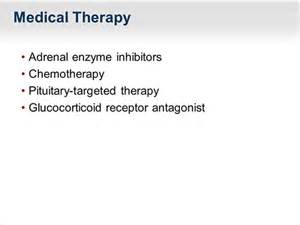
Treatment for Cushing’s syndrome depends on its cause. Surgery may be needed to remove the tumor or the pituitary or adrenal glands. Other treatment may include radiation, chemotherapy, and use of certain hormone-inhibiting drugs.

John Hopkins Medicine


Part II Cushing’s Syndrome Treatments

cushing's diagnosing  cushing's medical treatment


 Treatment of Cushings Syndrome:

 Treatment of cushings syndrome is by castigation of the under lying cause. Treatments for Cushing’s syndrome are contrived to pass your body’s cortisol production to normal. By indurate, or even distinctly lowering cortisol levels, you’ll feel evident improvements in your signs and symptoms. Left untreated, however, Cushing’s syndrome can finally induce to death. The treatment choice depend on the cause. For example:

*If a tumour in an adrenal gland is the reason, an operation to withdraw it will cure the condition.

*For adrenal hyperplasia, both adrenal glands may require to be withdraw. You will then require to take lifelong replacement therapy of several adrenal hormones.

*Other tumours in the body that produce ‘ectopic’ ACTH may be able to be removed, depending on the kind of tumour, where it is, etc.

*Medication to block the production or consequence of cortisol may be a choice.

 Ending line treatments for Cushing syndrome are designed to lower the high level of cortisol in your body. The best treatment for you depends on the cause of the syndrome. Treatment options include:

  • Reducing corticosteroid use. If the cause of Cushing syndrome is long-term use of corticosteroid medications, your doctor may be able to keep your Cushing signs and symptoms under control by reducing the dosage of the drug over a period of time, while still adequately managing your asthma, arthritis or other condition. For many of these medical problems, your doctor can prescribe noncorticosteroid drugs, which will allow him or her to reduce the dosage or eliminate the use of corticosteroids altogether.

Don’t reduce the dose of corticosteroid drugs or stop taking them on your own. Do so only under your doctor’s supervision.

Abruptly discontinuing these medications could lead to deficient cortisol levels. Slowly tapering off corticosteroid drugs allows your body to resume normal cortisol production.

  • Surgery. If the cause of Cushing syndrome is a tumor, your doctor may recommend complete surgical removal. Pituitary tumors are typically removed by a neurosurgeon, who may perform the procedure through your nose. If a tumor is present in the adrenal glands, lungs or pancreas, the surgeon can remove it through a standard operation or in some cases by using minimally invasive surgical techniques, with smaller incisions.

After the operation, you’ll need to take cortisol replacement medications to provide your body with the correct amount of cortisol. In most cases, you’ll eventually experience a return of normal adrenal hormone production, and your doctor can taper off the replacement drugs.

However, this process can take up to a year or longer. In some instances, people with Cushing syndrome never experience a resumption of normal adrenal function; they then need lifelong replacement therapy.

  • Radiation therapy. If the surgeon can’t totally remove a pituitary tumor, he or she will usually prescribe radiation therapy to be used in conjunction with the operation. Additionally, radiation may be used for people who aren’t suitable candidates for surgery.

Radiation can be given in small doses over a six-week period, or with a technique called stereotactic radiosurgery (Gamma Knife surgery). In the latter procedure, administered as a single treatment, a large dose of radiation is delivered to the tumor, and the radiation exposure to surrounding tissues is minimized.

  • Medications. Medications can be used to control cortisol production when surgery and radiation don’t work. Medications may also be used before surgery in people who have become very sick with Cushing syndrome. Doctors may recommend drug therapy before surgery to improve signs and symptoms and minimize surgical risk.

Medications to control excessive production of cortisol at the adrenal gland include ketoconazole (Nizoral), mitotane (Lysodren) and metyrapone (Metopirone).

Mifepristone (Korlym) is approved for people with Cushing syndrome who have type 2 diabetes or glucose intolerance. Mifepristone does not decrease cortisol production, but it blocks the effect of cortisol on your tissues.

Side effects from these medications may include fatigue, nausea, vomiting, headaches, muscle aches, high blood pressure, low potassium and swelling. Some have more serious side effects, such as neurological side effects and liver toxicity.

The newest medication for Cushing’s is pasireotide (Signifor), and it works by decreasing ACTH production from a pituitary tumor. This medication is given as an injection twice daily. It’s recommended if pituitary surgery is unsuccessful or cannot be done.

Side effects are fairly common, and may include diarrhea, nausea, high blood sugar, headache, abdominal pain and fatigue.

In some cases, the tumor or its treatment will cause other hormones produced by the pituitary or adrenal gland to become deficient and your doctor will recommend hormone replacement medications.

If none of these treatment options are appropriate or effective, your doctor may recommend surgical removal of your adrenal glands (bilateral adrenalectomy). This procedure will cure excess production of cortisol, but will require lifelong replacement medications.

Complications are rare but include:

Bruising on your thigh

Ear pain during the procedure

Very rarely, neurological problems

QUOTE FOR THURSDAY:

“Cushing’s syndrome is a hormonal disorder caused by prolonged exposure of the body’s tissues to high levels of the hormone cortisol.”

NIH National Institute of Diabetes and Digestive and Kidney Diseases (U.S. Department of Health and Human Services)

QUOTE FOR WEDNESDAY:

“The Centers for Disease Control and Prevention estimates that 294,000 children in the United States have been diagnosed with arthritis and other rheumatic conditions.”

CDC Centers for disease and control

QUOTE FOR TUESDAY:

“Hepatitis types B and C lead to chronic disease in hundreds of millions of people and, together, are the most common cause of liver cirrhosis and cancer.”

WHO World Health Organization


QUOTE FOR MONDAY:

“Scientists have identified 5 unique hepatitis viruses, identified by the letters A, B, C, D, and E. While all cause liver disease, they vary in important ways.”

World Health Organization