
Archives

QUOTE FOR TUESDAY:

Researchers from the University of Dundee and University College London in the UK found that some common medications made to dissolve in water contain such high levels of sodium that taking the maximum dose each day would cause you to exceed the recommended daily limits, and put you at risk of heart attack and stroke.

University of Dundee and College of London in the UK


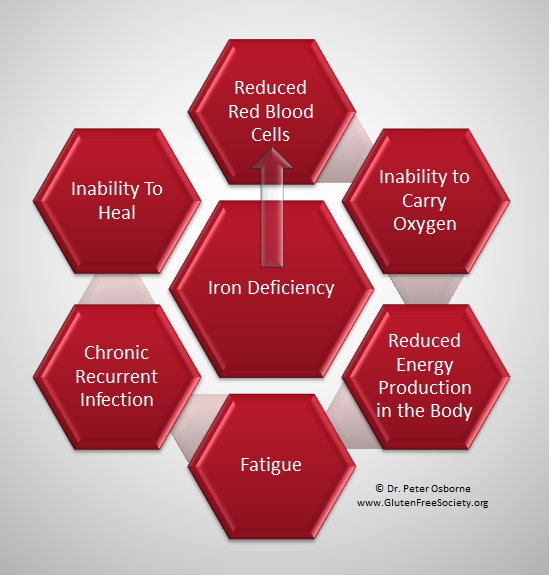
Part 2 Iron Deficiency Anemia

anemia2   Anemia Part 2

Anemia Part II

This form of iron deficiency anemia is treated with changes in your diet and iron supplements.

If the underlying cause of iron deficiency is loss of blood — other than from menstruation — the source of the bleeding must be located and stopped. This may involve surgery.

    • Rapid growth cycles (infancy, adolescence)
    • Heavy menstrual bleeding or chronic blood loss from the GI tract
    • Pregnancy
    • Diets that contain insufficient iron (rare in the United States)
    • Breastfed infants who have not started on solid food after six months of age
    • Babies who are given cow’s milk prior to age 12 months
  • Alcoholism-Most often healthy red blood cells last between 90 and 120 days. Parts of your body then remove old blood cells. A hormone called erythropoietin (epo) made in your kidneys signals your bone marrow to make more red blood cells.To first diagnose the person with any anemia the following needs to be done to help the doctor in diagnostic tooling , which is tests to rule out and rule in what the actual problem isn’t or is. With the MD knowing the results of these tests it will guide the doctor knowing the correct diagnosis to use the best treatment to either cure or get the problem under control (Ex. What is curable is iron deficiency anemia but sickle cell anemia is not).


  • Hemoglobin is the oxygen-carrying protein inside red blood cells. It gives red blood cells their red color. People with anemia do not have enough hemoglobin.                                                                                                                                                                                                  
  • Although many parts of the body help make red blood cells, most of the work is done in the bone marrow. Bone marrow is the soft tissue in the center of bones that helps form all blood cells.

The diagnosis tests that are usually done by a doctor are the following:

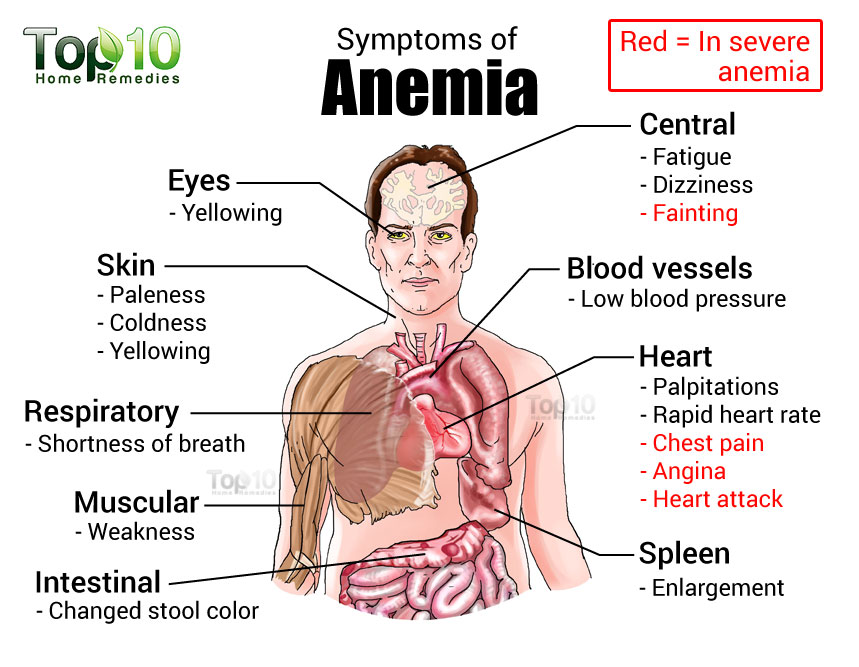
Physical exam. During a physical exam, your doctor may listen to your heart and your breathing. Your doctor may also place his or her hands on your abdomen to feel the size of your liver and spleen. He would look at the color of the skin and the eyes to look for paleness.

Blood Tests. Your doctor would do the basis blood tests being a CBC which is used to count the number of blood cells in a sample of your blood. For anemia, your doctor will be interested in the levels of the red blood cells contained in the blood particularly your hematocrit (the solids of the blood) and the hemoglobin (the liguid of your blood) in your bloodstream. If anemic both of these will be low and hematocrit below 7.0 down to 6.0 is critical.

Normal adult hematocrit values vary from one medical practice to another but are generally between 40 and 52 percent for men and 35 and 47 percent for women. Normal adult hemoglobin values are generally 14 to 18 grams per deciliter for men and 12 to 16 grams per deciliter for women.

Additional testing maybe ordered as well; like the following to help determine what the person has with the what treatment to tell the MD is needed to help the individual get better.

This could be: . A test to determine the size and shape of your red blood cells. Some of your red blood cells may also be examined for unusual size, shape and color. Doing so can help pinpoint a diagnosis. For example, in iron deficiency anemia, red blood cells are smaller and paler in color than normal. In vitamin deficiency anemias, red blood cells are enlarged and fewer in number.

If you receive a diagnosis of anemia, your doctor may order additional tests to determine the underlying cause. For example, iron deficiency anemia can result from chronic bleeding of ulcers, benign polyps in the colon, colon cancer, tumors or kidney problems.

Occasionally, it may be necessary to study a sample of your bone marrow to diagnose anemia.

 ***Treatment for iron-deficiency anemia will depend on its cause and severity. Treatments may include dietary changes and supplements, medicines, and surgery.

Severe iron-deficiency anemia may require a blood transfusion, iron injections, or intravenous (IV) iron therapy. Treatment may need to be done in a hospital.

The goals of treating iron-deficiency anemia are to treat its underlying cause and restore normal levels of red blood cells, hemoglobin, and iron.*****

Watching your sodium is not just in your diet but checking sodium in your meds also!

sodium      what sodium doessodium4

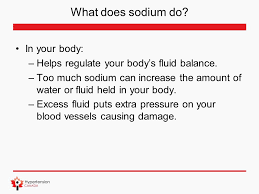
The researchers, led by Jacob George, MD, senior clinical lecturer and honorary consultant in clinical pharmacology at the University of Dundee, tracked more than 1.2 million patients in the United Kingdom for more than seven years, and compared the patients taking the soluble forms of drugs, such as acetaminophen, ibuprofen, aspirin and others, to patients taking the traditional pill form. They found that the patients taking the soluble forms were at a 16 percent higher risk of heart attack or stroke, and at a 28 percent higher risk of developing high blood pressure, which researchers attributed to the high levels of sodium in these medications.

“These tablets all fizz when you put them in water,” Dr. George said. “The manufacturers use the salt to create that fizz, but it does much more harm than good.”

The dissolvable form of acetaminophen, better known as Tylenol, contained the most sodium, at 427 milligrams per dose, according to the study. If you took the maximum amount daily, you’d be getting more than 3,400mg of sodium, far more than the USDA recommended daily allowance of 2,000mg before you factor in your diet.

Soluble ibuprofen and aspirin contained far less sodium, with 202mg and 149mg per pill respectively, according to the study, but George said the levels are still far from acceptable.

“There’s no legal regulation anywhere in the U.S. or the UK to limit the amount of sodium per tablet,” he said. “The sodium levels in these medications should be clearly labeled on the packages.”

Diets high in sodium are linked to high blood pressure, heart attack and stroke, but many people are unaware just how much salt they get in their diet, let alone from their medication, according to the study.

Soluble acetaminophen and ibuprofen are often given by prescription and are much more common in the UK than in America, but soluble aspirin is frequently sold in U.S. drug stores under the brand Alka Seltzer, said Patrick Fratellone, MD, a New York City-based cardiologist.

“The U.S. should start looking at its soluble medications and determine whether the amount of salt in them should be allowed,” Dr. Fratellone said. “There’s no restrictions on the amount manufacturers can add.”

Merle Myerson, MD, director of the cardiovascular disease prevention and pre-exercise heart screening program at St. Luke’s and Roosevelt Hospital in New York City agreed, saying that even though salt is sometimes necessary in these medications, it’s not necessary for people to take them.

“We often tell patients that salt is hidden in foods,” Dr. Myerson said. “Processed foods and fast foods have a lot of hidden salt. Here again, we’re seeing another source of hidden salt that may contribute to a person’s risk for hypertension.”

“Salt helps make the medication more digestible and dissolve better,” she added. “But if it contains too much salt, it could add up to amounts that could be dangerous.”

These medications are typically used by people who have trouble swallowing pills, George said, but anyone who does should speak to their doctor.

“There are groups of people who legitimately need these medications, but anyone who takes them should realize the cardiovascular risk of these in the long term,” he said. “They need to speak to their physician to come to an informed decision of whether they should actually be taking them.”

Fratellone said that he recommends that patients avoid soluble medications, and added that he refuses to prescribe them.

“Patients need to avoid them,” he said. “There needs to be information on the front of the packaging telling patients how much salt in is their medicine.”

“We’re trying to get patients to reduce the amount of salt in their diet,” Fratellone added, “and manufacturers are putting it in our medication without giving us fair warning.”

Decongestants may raise your blood pressure.

People with high blood pressure should be aware that the use of decongestants may raise blood pressure or interfere with the effectiveness of some prescribed blood pressure medications. Many over-the-counter cold and flu preparations contain decongestants such as:

  • Ephedrine
  • Levmetamfetamine
  • Naphazoline
  • Oxymetazoline
  • Phenylephrine
  • Phenylpropanolamine
  • Propylhexedrine
  • Pseudoephedrine
  • Synephrine
  • Tetrahydrozoline
  • Check the sodium content.

Some OTCs are high in sodium, which can also raise blood pressure. Look at the active and inactive ingredients lists for words like “sodium” or “soda.” Note the amount of

sodium in the medication. People with high blood pressure should consume less than 1,500 mg of sodium per day from all sources; one dose of some OTCs can contain more than a whole day’s allowance.

Those who prescribe medications may be unaware that they may contain substantial amounts of sodium. References such as package inserts, the Physicians’ Desk Reference, and Drug Information 1 do not always provide information about sodium, and the sodium content, when it does appear, may be given in various units of measurement or may need to be calculated.

Certain medications containing one or more drugs are high in sodium content regardless of the formulation used, whereas others vary according to the formulation (Sodium Content of Various Drug Products and Formulations.). High-sodium and low-sodium formulations of the same drug products should not be used interchangeably in patients who are following sodium-restricted diets.

The Food and Drug Administration (FDA) has proposed a rule for the labeling of the sodium content of over-the-counter drugs,4 and it will be working with pharmaceutical organizations to develop voluntary sodium labeling for prescription drugs. The FDA will recommend that makers of prescription drugs declare the sodium content if it exceeds 5 mg (0.22 mmol) per single recommended dose and that they issue a warning if the sodium content exceeds 140 mg (6.09 mmol) per maximal daily dose. Sodium contained in active ingredients, excipients, and any recommended diluent will be included. These measures will simplify the calculation of the total sodium content of any product prescribed for patients whose sodium intake is restricted. Until these initiatives have been implemented, this information should be obtained from the manufacturer.

References:

1.) American Heart Association

2.) The New England Journal of Medicine

3.) EverydayHealth.com
 

QUOTE FOR FRIDAY:

“I’m not a big drinking person and hardly ever have alcohol. Perhaps it’s not sweet enough for my sweet tooth.”

Dawn French  (born 11 October 1957 – is an English actress, writer, and comedian)

Alcoholism!

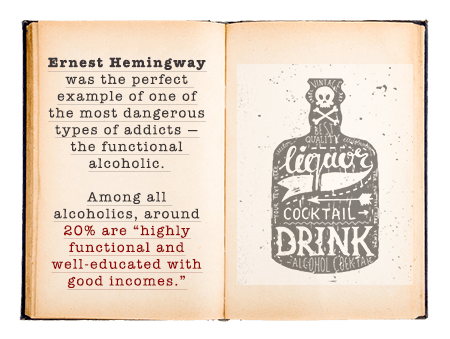
ALCOHOLISM2                       But than we are stuck with the 80% Nonfunctional hurting society, not worth it!

alcoholism3   alcoholism4

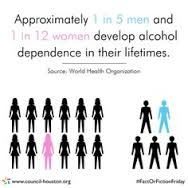
Alcoholism, or alcohol dependence, is a disease that causes

  • Craving – a strong need to drink
  • Loss of control – not being able to stop drinking once you’ve started
  • Physical dependence – withdrawal symptoms
  • Tolerance – the need to drink more alcohol to feel the same effect

With alcohol abuse, you are not physically dependent, but you still have a serious problem. The drinking may cause problems at home, work, or school. It may cause you to put yourself in dangerous situations, or lead to legal or social problems.

Alcohol use disorder (which includes a level that’s sometimes called alcoholism) is a pattern of alcohol use that involves problems controlling your drinking, being preoccupied with alcohol, continuing to use alcohol even when it causes problems, having to drink more to get the same effect, or having withdrawal symptoms when you rapidly decrease or stop drinking.Unhealthy alcohol use includes any alcohol use that puts your health or safety at risk or causes other alcohol-related problems. It also includes binge drinking — a pattern of drinking where a male consumes five or more drinks within two hours or a female downs at least four drinks within two hours. Binge drinking causes significant health and safety risks.  If your pattern of drinking results in repeated significant distress and problems functioning in your daily life, you likely have alcohol use disorder. It can range from mild to severe. However, even a mild disorder can escalate and lead to serious problems, so early treatment is important.

Another common problem is binge drinking. It is drinking about five or more drinks in two hours for men. For women, it is about four or more drinks in two hours.

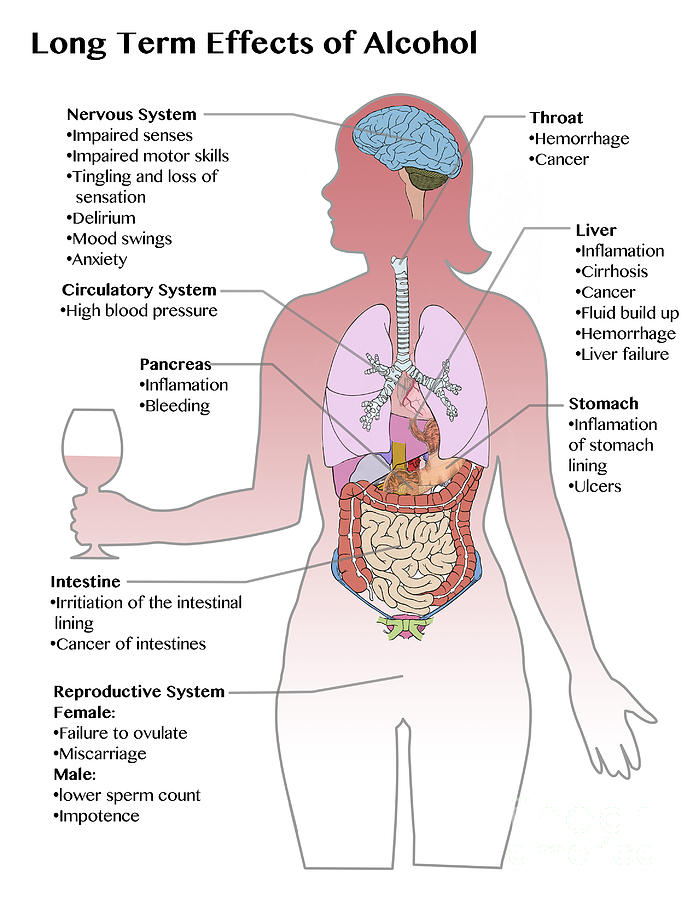
Too much alcohol is dangerous. Heavy drinking can increase the risk of certain cancers. It can cause damage to the liver, brain, and other organs. Drinking during pregnancy can harm your baby. Alcohol also increases the risk of death from car crashes, injuries, homicide, and suicide.

**Genetic, psychological, social and environmental factors can impact how drinking alcohol affects your body and behavior. Theories suggest that for certain people drinking has a different and stronger impact that can lead to alcohol use disorder.

Over time, drinking too much alcohol may change the normal function of the areas of your brain associated with the experience of pleasure, judgment and the ability to exercise control over your behavior. This may result in craving alcohol to try to restore good feelings or reduce negative ones.**

Alcohol use disorder can include periods of alcohol intoxication and symptoms of withdrawal.

Alcohol use disorder can be mild, moderate or severe, based on the number of symptoms you experience. Signs and symptoms may include:

  • Being unable to limit the amount of alcohol you drink
  • Wanting to cut down on how much you drink or making unsuccessful attempts to do so
  • Spending a lot of time drinking, getting alcohol or recovering from alcohol use
  • Feeling a strong craving or urge to drink alcohol
  • Failing to fulfill major obligations at work, school or home due to repeated alcohol use
  • Continuing to drink alcohol even though you know it’s causing physical, social or interpersonal problems
  • Giving up or reducing social and work activities and hobbies
  • Using alcohol in situations where it’s not safe, such as when driving or swimming
  • Developing a tolerance to alcohol so you need more to feel its effect or you have a reduced effect from the same amount
  • Experiencing withdrawal symptoms — such as nausea, sweating and shaking — when you don’t drink, or drinking to avoid these symptoms.* *
  • Risk factors for alcohol use disorder include:
  • Steady drinking over time. Drinking too much on a regular basis for an extended period or binge drinking on a regular basis can lead to alcohol-related problems or alcohol use disorder.
  • Age. People who begin drinking at an early age, and especially in a binge fashion, are at a higher risk of alcohol use disorder. Alcohol use may begin in the teens, but alcohol use disorder occurs more frequently in the 20s and 30s. However, it can begin at any age.
  • Family history. The risk of alcohol use disorder is higher for people who have a parent or other close relative who has problems with alcohol. This may be influenced by genetic factors.
  • Depression and other mental health problems. It’s common for people with a mental health disorder such as anxiety, depression, schizophrenia or bipolar disorder to have problems with alcohol or other substances.
  • Social and cultural factors. Having friends or a close partner who drinks regularly could increase your risk of alcohol use disorder. The glamorous way that drinking is sometimes portrayed in the media also may send the message that it’s OK to drink too much. For young people, the influence of parents, peers and other role models can impact risk. @Alcohol withdrawal can occur when alcohol use has been heavy and prolonged and is then stopped or greatly reduced. It can occur within several hours to four or five days later. Symptoms include sweating, rapid heartbeat, hand tremors, problems sleeping, nausea and vomiting, hallucinations, restlessness and agitation, anxiety, and occasionally seizures. Symptoms can be severe enough to impair your ability to function at work or in social situations.PART IIAlcohol depresses your central nervous system. In some people, the initial reaction may be stimulation. But as you continue to drink, you become sedated.Impact on your safety
  • Excessive drinking can reduce your judgment skills and lower inhibitions, leading to poor choices and dangerous situations or behaviors, including:
  • Too much alcohol affects your speech, muscle coordination and vital centers of your brain. A heavy drinking binge may even cause a life-threatening coma or death. This is of particular concern when you’re taking certain medications that also depress the brain’s function.
  • Complications
  • Alcohol intoxication results as the amount of alcohol in your blood stream increases. The higher the blood alcohol concentration is, the more impaired you become. Alcohol intoxication causes behavior problems and mental changes. These may include inappropriate behavior, unstable moods, impaired judgment, slurred speech, impaired attention or memory, and poor coordination. You can also have periods called “blackouts,” where you don’t remember events. Very high blood alcohol levels can lead to coma or even death.
  • Motor vehicle accidents and other types of accidental injury, such as drowning
  • Relationship problems
  • Poor performance at work or school
  • Increased likelihood of committing violent crimes or being the victim of a crime
  • Legal problems or problems with employment or finances
  • Problems with other substance use
  • Engaging in risky, unprotected sex, or becoming the victim of sexual abuse or date rape
  • Increased risk of attempted or completed suicide  You may want to think twice before cutting your time of quality  life!

QUOTE FOR THURSDAY:

“Epilepsy is a relatively common condition – a group of disorders that involve seizures. A seizure is many brain waves going through the organ causing the brain to seize.”
WEB M.D.

What is epilepsy?

epilepsywhat is epilepsy

                              causes of epilepsy

Epilepsy

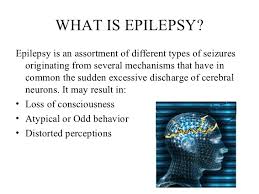
Most people with epilepsy are otherwise healthy; as long as it is controlled like most other diseases. A seizure is a physical manifestation of paroxysmal and abnormal electrical firing of neurons in the brain. Think of it as numerous voltage (hyperexcitability of neurons) going throughout the brain meaning brain waves going in all directions with the brain saying its too much activity causing the brain to go into a seizure.

When the seizure occurs there is a decrease in oxygen since the brain isn’t capable to send messages during the seizure. If the seizure continues to repeat one right after another the person is in status epilepticus and if the seizures doesn’t stop the person can lead to a neuronal death; like John Travolta’s son who died of this.

The term seizure disorder may refer to any number of conditions that result in such a paroxysmal electrical discharge. These conditons could be metabolic or structural in nature.   Epilepsy is the term for those who have a second seizure that occurs spontaneously and without preceding metabolic or structural cause for the occurrence. Epilepsy is a chronic disorder that requires antiepileptic drug therapy; usually thorough out life.

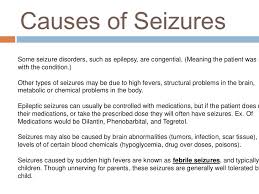
Etiology of Epilepsy is generally a sign of underlying pathology involving the brain. It may be the first sign of nervous system disease (ex. Brain tumor), or it may be a sign of a systemic or metabolic derangement.

Metabolic and Systemic Causes of Seizures:

a.) Electrolyte Imbalance=Acidosis, heavy metal poisoning, Hypocalcemia, Hypocapnea, Hypoglycemia, Hypoxia, Sodium-Potassium imbalance, Systemic diseases (liver, renal failure, etc…) Toxemia of pregnancy, and water intoxication.

b.) Infections like meningitis, encephalitis, brain abcess.

c.) Withdrawal of sedative-hypnotic drugs=Alcohol, Antiepileptic drugs, Barbiturates, Benzodiazepines.

d.) Iatrogenic drug overdose=Theopylline, Penicillin.

Other causes of epilepsy can be Trauma, Heredity.

Structural causes of epilepsy:

Head trauma/Degenerative Disease like Alzheimer’s or Creutfeldz-Jacob or Huntington’s Chorea or Multiple Sclerosis or Pick’s Disease. There is also tumors or genetic disease or Stroke or Infections or Febrile seizures.

Types of seizures

I-Partial seizures (seizures beginning local)

1-simple partial seizures-(the person is conscious and not impaired). With motor symptoms, autonomic symptoms and even psychic symptoms.

2.)-Complex partial seizures-(the person is with impairment of consciousness)

II-Generalized seizures-(bilaterally symmetrical and without local onset).

3.) Tonic clonic seizures – Grand Mal

Diagnosis

The history of the person is the most valuable component of the workup of that individual with possible epilepsy.

The routine diagnostic tooling to see if someone has this disease is a EEG which is the major diagnostic test. EEG takes short samples of brain wave activity with 26 wires to the scalp recording amplified brain waves from the superficial regions of the brain by means of scalp electrodes.

Laboratory studies are done to rule out various causes for seizures. Routine blood and urine studies are often done for baseline information. Electrolytes and blood chemistries will be evaluated to identify possible metabolic causes for seizures.

Neuropsychological testing may be done in the evaluation of persons presenting with seizures. The purpose of neuropsychological testing is to determine if there is brain dysfunction and to determine if the pattern of change in brain function is indicative of a destructive lesion. Neuropsychological testing involves evaluation of cognitive functions and personality and emotional traits.

Medical Management

The major medical treatment for epilepsy is antiepileptic medications. Epileptic seizures can be controlled in 50 to 95% of cases with this form of treatment depending on seizure type and compliance of the individual taking their medications.

Those taking medications for epilepsy know if a single first line drug is not effective a second first lin drug is added but the noneffective drug is tapered off while the second first line drug is given. Know during this time frame there is a risk for seizure activity so practice safety (ex. do not drive).

In some cases there is surgery: those with intractable seizures is the epileptic focus may be possible. In some cases partial complex seizures are the common seizure treated by surgery. The focus of this seizure type has often been found in the anterior temporal and inferior frontal regions of the brain cortex.

There are other treatments as well.

Care during a Seizure what do we do and what is the major concerns for the individual seizing:

The care of a person in a seizure should focus primarily on maintaining a safe environment. The seizure that has greatest risk for causing injury and even fatality is the generalized tonic/clonic (grand mal), although there is a potential for injury with any seizure that involves alteration of consciousness.

The 2 major goals for care during a seizure are protection from injury and prevention of aspiration. The person’s head should be cradled if on the floor to prevent banging of the head. At no time should the person be restraint when having a seizure. The person should be turned to their side to allow the tongue to fall away from the airway and allow drainage of the excessive saliva that accumulates to drain out of the mouth during the seizure. You should stay with the person till the seizure stops and note the behavior mentally and physically the person exhibits while having the seizure and how long it lasts. Immediately call 911 (especially if this is the first seizure the person ever had) or call the neurologist of the individual to have the him or her be evaluated ASAP.

QUOTE FOR WEDNESDAY:

The body cannot produce enzymes in perfect combinations to metabolize your foods as completely as the food enzymes created by nature do. This results in partially digested fats, proteins, and starches that can clog your body’s intestinal tract and arteries.”

Charlie Trotter  (September 8, 1959 – November 5, 2013) was an American chef and restaurateur.


QUOTE FOR TUESDAY:

“When I work, a lot of times I have to lose weight, and I do that, but in my regular life I was not eating right, and I was not getting enough exercise. But by the nature of my diet and that lifestyle – boom! The end result was high blood sugars that reach the levels where it becomes Type 2 diabetes. I share that with a gajillion other people.”

Tom Hanks (actor)