“Millions of people in the United States are injured from venoms produced by insects and other arthropods each year. About 25,000 severe injuries result from these bites, and about 32 are fatal.”
University of Florida IFAS Extension
“Millions of people in the United States are injured from venoms produced by insects and other arthropods each year. About 25,000 severe injuries result from these bites, and about 32 are fatal.”
University of Florida IFAS Extension
“The problem was that the disease has five basic areas that needed to be addressed. The symptoms that are most prevalent are pain and inflammation, energy, mental clarity, sleep disorders and general biological functions of the body.”
Cindy Sparling Fibromyalagia Treatment Group (http://fibromyalgiatreatmentgroup.com)

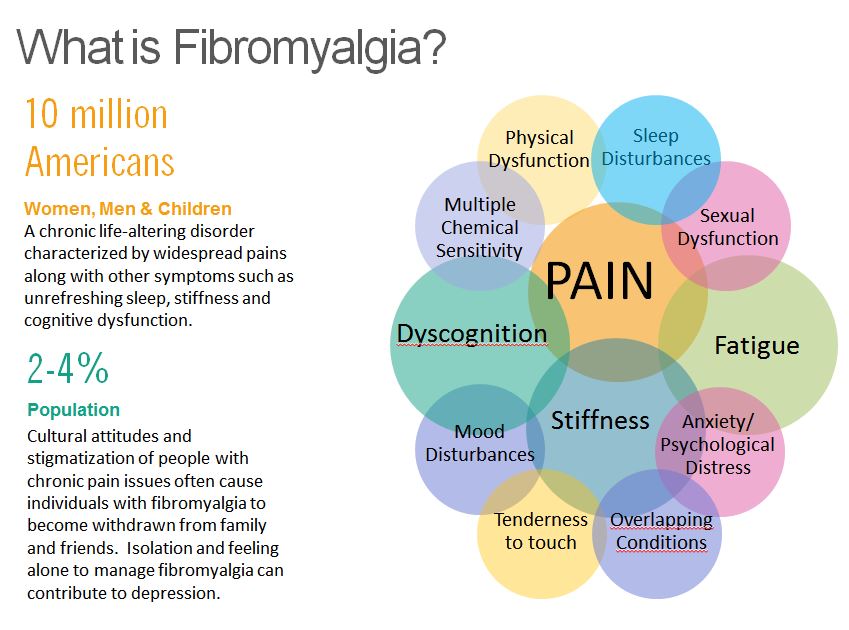
Fibromyalgia is a common neurologic health problem that causes widespread pain and tenderness (sensitivity to touch). This invisible, life-altering condition causes 2-4% of women, men and children of all backgrounds worldwide to suffer. (That’s 10 million Americans alone.) The disorder can strike suddenly or occur as a gradual increase in symptoms, indicating changes in the central nervous system (neuroplasticity). Sensory information (such as light, sound, and touch) becomes amplified by the CNS, causing the brain to respond with increasing pain and symptoms. FM severity often increases over time and may become disabling.
The pain and tenderness tend to come and go, and move about the body. Most often, people with this chronic (long-term) illness are fatigued (very tired) and have sleep problems. The diagnosis can be made with a careful examination.
Fibromyalgia is most common in women, though it can occur in men. It most often starts in middle adulthood, but can occur in the teen years and in old age. You are at higher risk for fibromyalgia if you have a rheumatic disease (health problem that affects the joints, muscles and bones). These include osteoarthritis, lupus, rheumatoid arthritis, or ankylosing spondylitis.
Fibromyalgia is a disorder characterized by widespread musculoskeletal pain accompanied by fatigue, sleep, memory and mood issues. Researchers believe that fibromyalgia amplifies painful sensations by affecting the way your brain processes pain signals.
The causes of fibromyalgia are unclear. They may be different in different people. Current research suggests involvement of the nervous system, particularly the central nervous system (brain and spinal cord). Fibromyalgia is not from an autoimmune, inflammation, joint, or muscle disorder. Fibromyalgia may run in families. There likely are certain genes that can make people more prone to getting fibromyalgia and the other health problems that can occur with it. Genes alone, though, do not cause fibromyalgia.
There is most often some triggering factor that sets off fibromyalgia. It may be spine problems, arthritis, injury, or other type of physical stress. Emotional stress also may trigger this illness. The result is a change in the way the body “talks” with the spinal cord and brain. Levels of brain chemicals and proteins may change. More recently, Fibromyalgia has been described as Central Pain Amplification disorder, meaning the volume of pain sensation in the brain is turned up too high.
Although Fibromyalgia can affect quality of life, it is still considered medically benign. It does not cause any heart attacks, stroke, cancer, physical deformities, or loss of life.
Stay tune for Part II Monday on Signs, Symptoms and more!
“Arthritis is very common but is not well understood. Actually, “arthritis” is not a single disease; it is an informal way of referring to joint pain or joint disease.”
The Arthritis F0undation
“Osteoporosis is a bone disease that occurs when the body loses too much bone, makes too little bone, or both. As a result, bones become weak and may break from a fall or, in serious cases, from sneezing or minor bumps.”
National Osteoporosis Foundation
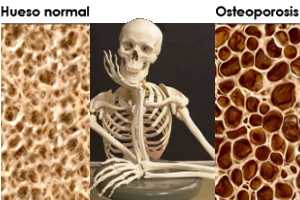
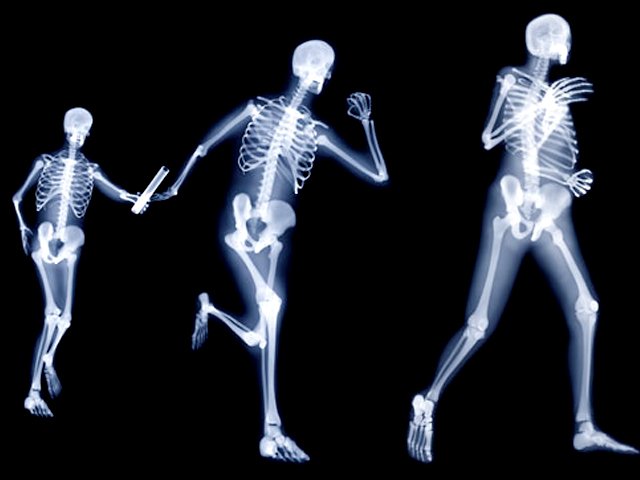
Osteoporosis causes bones to become weak and brittle —- so brittle that a fall or even mild stresses like bending over or coughing can cause a fracture. Osteoporosis-related fractures most commonly occur in the hip, wrist or spine. Bone is living tissue, which is constantly being absorbed and replaced. Osteoporosis occurs when the creation of new bone doesn’t keep up with the removal of old bone. Osteoporosis affects men and women of all races; but white and Asian women–especially after menopause–are at highest risk. Medications, healthy diet and weight bearing exercise can help prevent bone loss or strengthen already weak bones.
A weight bearing exercise is any exercise that has your legs and feet holding all of your weight. An example of this would be walking, yoga or even dancing.
The form of osteoporosis most common in women after menopause is referred to as primary type 1 or postmenopausal osteoporosis. Primary type 2 osteoporosis or senile osteoporosis occurs after age 75 and is seen in both females and males at a ratio of 2:1. Secondary osteoporosis may arise at any age and affect men and women equally. This form results from chronic predisposing medical problems or disease, or prolonged use of medications such as glucocorticoids, when the disease is called steroid- or glucocorticoid-induced osteoporosis.
The risk of osteoporosis fractures can be reduced with lifestyle changes and in those with previous osteoporosis related fractures medications. Lifestyle change includes diet, exercise, and preventing falls. The utility of calcium and vitamin D is questionable in most. Bisphosphonates are useful in those with previous fractures from osteoporosis but are of minimal benefit in those who have osteoporosis but no previous fractures. Osteoporosis is a component of the frailty syndrome.
Take the problem of Astronauts with osteoporosis:
Space travel has made it widely known that a stay outside the atmosphere – and thus outside the earth’s gravitational influence – disturbs the metabolism irreparably: the human body does not need any hard bones in zero-gravity, which leads to decalcification. A four year study of the ‘International Space Station’ showed that the bones of astronauts did not regenerate after even one year past their return to earth.
Anti-gravitational training is the key to osteoporosis if you can handle it (like jumping on a trampeline) Actual studies show that physical anti-gravitational activity helps the effected patients to regain their mobility and lessen the risk of bone fractures .
Osteoporosis in the U.S.A.
The National Osteoporosis Foundation (NOF) today released updated prevalence data estimating that a total of 54 million U.S. adults age 50 and older are affected by osteoporosis and low bone mass. Recently published online by the Journal of Bone and Mineral Research, the study, “The Recent Prevalence of Osteoporosis and Low Bone Mass in the United States Based on Bone Mineral Density at the Femoral Neck or Lumbar Spine,” includes the number of adults age 50 and over from the institutionalized and non-institutionalized population affected by osteoporosis and low bone mass and is an update to the prevalence data NOF released in 2013. Revealing that 10.2 million adults have osteoporosis and another 43.4 million have low bone mass, more than one-half of the total U.S. adult population is currently affected.
Assuming osteoporosis and low bone mass prevalence remain unchanged, the study projects that by 2020, the number of adults over age 50 with osteoporosis or low bone mass will grow from approximately 54 million to 64.4 million and by 2030, the number will increase to 71.2 million (a 29% increase from 2010); and it is anticipated that the number of fractures will grow proportionally.
“This disease causes an estimated two million broken bones each year and often results in immobility, pain, placement in a nursing home, isolation and other health problems, said Amy Porter, executive director and CEO of NOF. “Medicare (our tax dollars) pays for the cost for repair of 80 percent of broken bones that occur because of osteoporosis; these costs make osteoporosis the 10th ranked major illness among the top 5% highest cost Medicare beneficiaries (12% of all beneficiaries and 18% of high costs beneficiaries). We have to continue our efforts to eradicate this disease.”
The data is one of the first to look at the burden of osteoporosis using NOF’s criteria for diagnosing osteoporosis based on bone mineral density (BMD) at the hip or spine. Prior to 2005, the National Health and Nutrition Examination Survey (NHANES) only measured BMD at the hip. Spine BMD was added in 2005, providing the opportunity to estimate the burden of osteoporosis using BMD at either the hip or spine. The study estimates that among adults age 50 years and older, 10.2 million have osteoporosis at the femoral neck or lumbar spine and an additional 43.4 million have low bone mass at either skeletal site, placing them at increased risk for osteoporosis and broken bones.
Benefits of exercise
Women who have been physically active throughout their lives generally have stronger bones than do women who have led more sedentary lives. But it’s never too late to start exercising. For postmenopausal women, regular physical activity can:
In the meantime, think about what kind of activities you enjoy most. If you choose an exercise you like your more likely to stick to it.
“WM is a cancer that starts in B cells. The cancer cells in people with WM are similar to those of 2 other types of cancer: multiple myeloma and non-Hodgkin lymphoma. Multiple myeloma is considered a cancer of plasma cells, and non-Hodgkin lymphoma is a cancer of lymphocytes. WM cells have features of both plasma cells and lymphocytes and are called lymphoplasmacytoid. The buildup of this M protein in the body can lead to many of the symptoms of WM, including excess bleeding, problems with vision, and nervous system problems.”
American Cancer Society
“Waldenstrom’s macroglobulinemia (WM) is a lymphoma, or cancer of the lymphatic system. It is sometimes referred to as a lymphoplasmacytic lymphoma (LPL) with an associated monoclonal IgM paraprotein. The disease occurs in a type of white blood cell called a B-lymphocyte or B-cell, which normally matures into a plasma cell whose job is to manufacture immunoglobulins (antibodies) to help the body fight infection.”
IWMF International Waldenstrom’s Macroglobulemia Foundation (https://www.iwmf.com/about-wm/newly-diagnosed)
“Overall, the most common risk factors for stroke are:high blood pressure, high cholesterol, smoking, diabetes, and increasing age.”
American Stroke Association
“Think FAST for symptoms for a stroke; F-Facial Droop/A-Arm Weakness/S=Slurred Speech/T-Time to call 911.”
American Stroke Association