Archives
QUOTE FOR TUESDAY:
“According to the National Cancer Institute, more than 268,600 women in the United States will be diagnosed with breast cancer and nearly 42,000 will die of the disease in 2019. Breast cancer is the most common type of non-skin cancer in women in the United States.”
Part II Types of Risk Factors for breast cancer. Today we look at factors we can’t change!
First Part of risk factors:
Those that we cannot change:
Gender
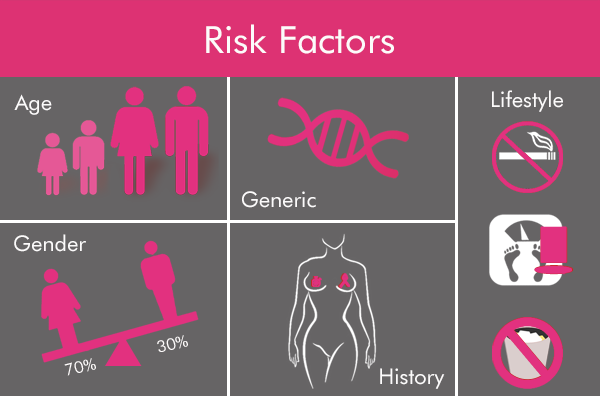
Women account for more than 99 percent of all breast cancer cases.
Age
After gender, age is the most influential risk factor for developing breast cancer. Women younger than age 40 account for only 4.7 percent of invasive breast cancer diagnoses and only 3.6 percent of in situ breast cancer diagnoses. Over 70 percent of all breast cancer diagnoses are made in women who are 50 or older.
You may have heard the statistic that one in eight women in the United States will develop breast cancer. This does not mean that a woman of any age has a one-in-eight chance of developing breast cancer. This statistic conveys a woman’s lifetime risk. This means that if a woman lives until age 85, she has a risk of one in eight of developing breast cancer sometime during her lifetime.
Race
After age 40, Caucasian women are more likely to be diagnosed with breast cancer than African-American women. However, African-American women are more likely than white women to die of breast cancer. Women of Asian, Hispanic or American Indian descent are at lower risk than Caucasian or African-American women for developing breast cancer.
Personal History
If a woman has had cancer in one breast, she is at increased risk of developing cancer in the other breast.
Family History
Women with a relative who has had breast cancer are at higher risk of developing breast cancer themselves, particularly if it is a first-degree relative, such as a mother, sister or daughter.
That risk is further increased if a woman has multiple first-degree relatives who have had breast cancer, or if she has a first-degree relative who developed breast cancer at a young age or in both breasts.
Patients with family members who have had breast and/or ovarian cancer may choose to see a qualified genetic counselor from the UCSF Cancer Genetics and Prevention Program at Mount Zion. These counselors are available to evaluate a person’s likelihood of carrying a gene mutation and to discuss the possibility of genetic testing.
Genetic Risk Factors
Women who have certain inherited gene mutations (including BRCA1 and BRCA2) have a significantly increased risk of breast cancer and account for about 5 percent to 10 percent of breast cancer cases. In most women, the normally functioning BRCA1 and BRCA2 genes help to prevent breast cancer by controlling cell growth. However, these genes are no longer able to control cell growth properly unmutated.
Since these genes are passed down from your parents, it is possible to carry a gene mutation from the mother or father’s side of the family. A female who carries either the BRCA1 or BRCA2 gene mutation has up to an 85 percent chance of developing breast cancer by the age of 70. However, in men the BRCA2 gene mutation is reported to increase risk of breast cancer more than the BRCA1 gene mutation. Males who carry the BRCA2 gene mutation have a suggested 6 percent chance of developing breast cancer during a lifetime.
A prevalence of the BRCA1 and BRCA2 gene mutations has been observed in the Ashkenazi Jewish (Jews with European or Central European ancestry) population. Having one or more relatives with breast or ovarian cancer, and being of Ashkenazi Jewish descent, puts a person at greater risk for carrying a BRCA gene mutation.
Radiation
Exposure to high doses of chest radiation, such as for medical therapy for Hodgkin’s lymphoma, particularly during childhood, can greatly increase a woman’s risk of developing breast cancer.
Researchers have found that the age at which radiation was received is inversely related to the acquired risk. Thus, women who received radiation after their menopausal years incurred very little risk.
QUOTE FOR MONDAY:
“1 out of 8 women will develope breast cancer in their lifetime.”
National Breast Cancer Foundation, Inc.
QUOTE FOR THE WEEKEND:
QUOTE FOR FRIDAY:
QUOTES FOR THURSDAY:
“In the United States, for equine encephalitides for which vaccines are available include eastern equine encephalomyelitis (EEE), western equine encephalomyelitis (WEE), Venezuelan equine encephalomyelitis (VEE) and West Nile Virus encephalomyelitis. The availability of licensed vaccine products combined with an inability to completely eliminate risk of exposure justifies immunization against EEE and WEE as core prophylaxis for all horses residing in or traveling to North America and any other geographic areas where EEE and/or WEE is endemic. Adult horses previously vaccinated against EEE/WEE: Annual revaccination must be completed prior to vector season in the spring. In animals of high risk or with limited immunity, more frequent vaccination or appropriately timed vaccination is recommended in order to induce protective immunity during periods of likely exposure.”
American Association of Equine Practioners
“Know there’s no cure for Eastern equine encephalitis, or EEE, but there is a vaccine for the mosquito-borne illness. It’s just not commercially available for humans.The United States military developed it in the 1980s as part of a vaccine program to protect military personnel from dangerous pathogens, says Sam Telford, an epidemiologist at Tufts University.”
Common Health
”
Part II What is Eastern Equine Encephalitis?
A Global View of Eastern Equine Encephalitis
EEE affects areas throughout North and South America, with outbreaks occurring mainly in the eastern coastal areas of the United States and Canada, the Caribbean, and Argentina.
Know Your Mosquitoes
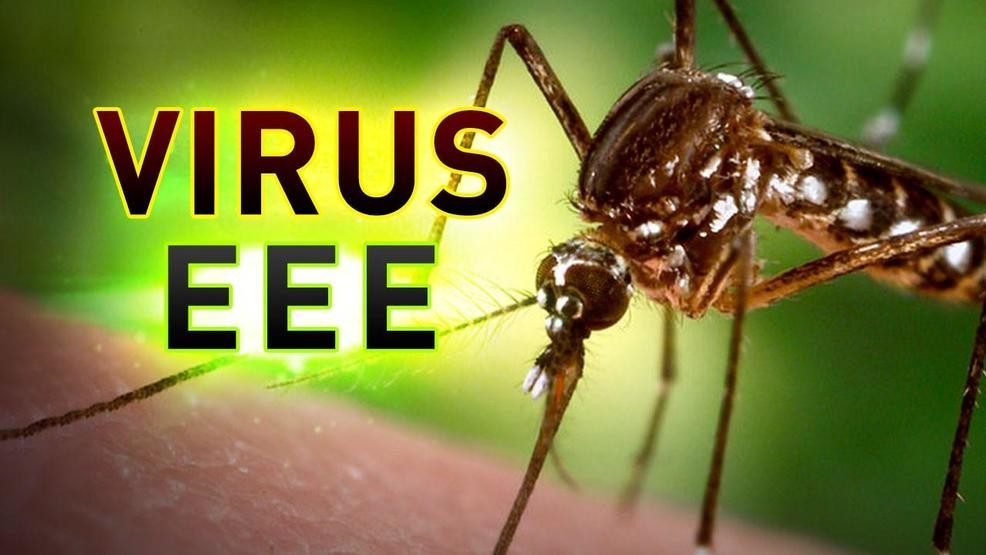
In the U.S., Culiseta melanura is the mosquito responsible for the spread of EEEV in the mosquito-bird-mosquito cycle. Known as the black-tailed mosquito, Cs. melanura can be found in swamps from the Great Lakes and Maine to southern Florida and southeastern Texas. It is distinguished by its unusually long, curved dark-scaled proboscis. This mosquito is also unique because it overwinters as larvae, as opposed to most mosquito species that overwinter as adults or eggs.
EEEV is mainly transmitted to humans by bridge vectors that contract the virus by feeding on infected birds. Bridge vectors may include Aedes, Coquillettidia, and Culex species.
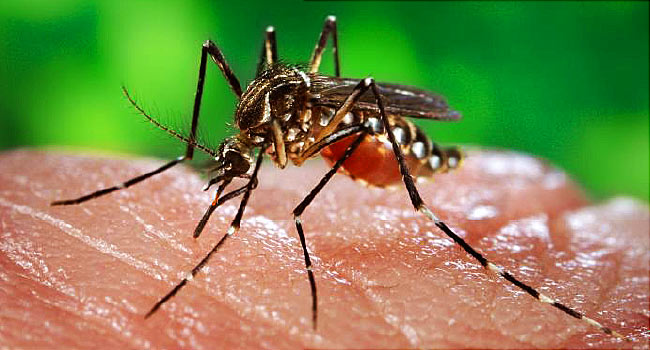
Aedes mosquitoes have distinct black and white markings on their body and legs. They bite during the daytime only, with the highest levels of activity occur in the early morning and evening hours. Members of the Aedes genus are known vectors of EEE, Zika virus, dengue, yellow fever, West Nile virus, and chikungunya.
Coquillettidia mosquitoes have slender bodies and long legs. They are commonly found in humid, low-lying areas that have warm summer and lots of vegetation. In addition to acting as vectors for EEE, Coquillettidia mosquitoes are also known to transmit West Nile virus to humans.
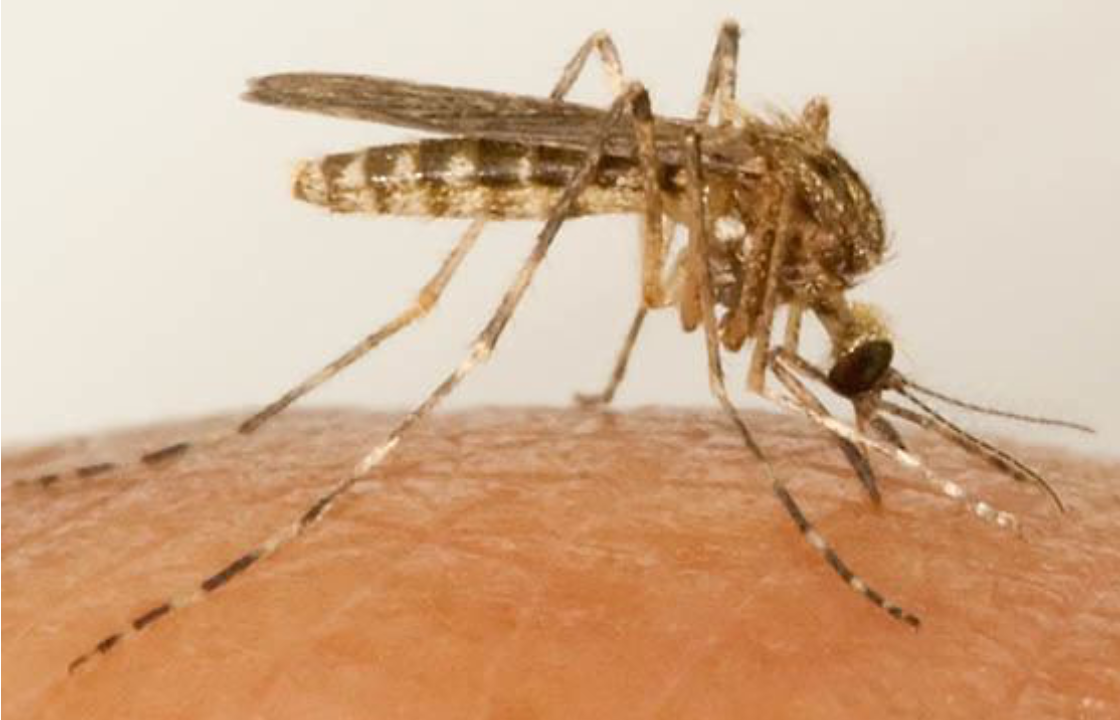
Culex mosquitoes are brown with whitish markings on the abdomen. They typically bite at dusk and at night, and are known to vector several diseases including EEE, West Nile virus, Japanese encephalitis, St. Louis encephalitis, and avian malaria.
QUOTE FOR WEDNESDAY:
“We don’t know some of the basic details about these [mosquito-transmitted] diseases, unfortunately. The ideal is to anticipate outbreaks, which is very, very difficult. But we need to be prepared for an outbreak when it comes.”
Stephen Higgs (a pathobiologist and director of the Biosecurity Research Institute at Kansas State University in Manhattan)
Part I What is Eastern Equine Encephalitis?
What is eastern equine encephalitis (EEE)?
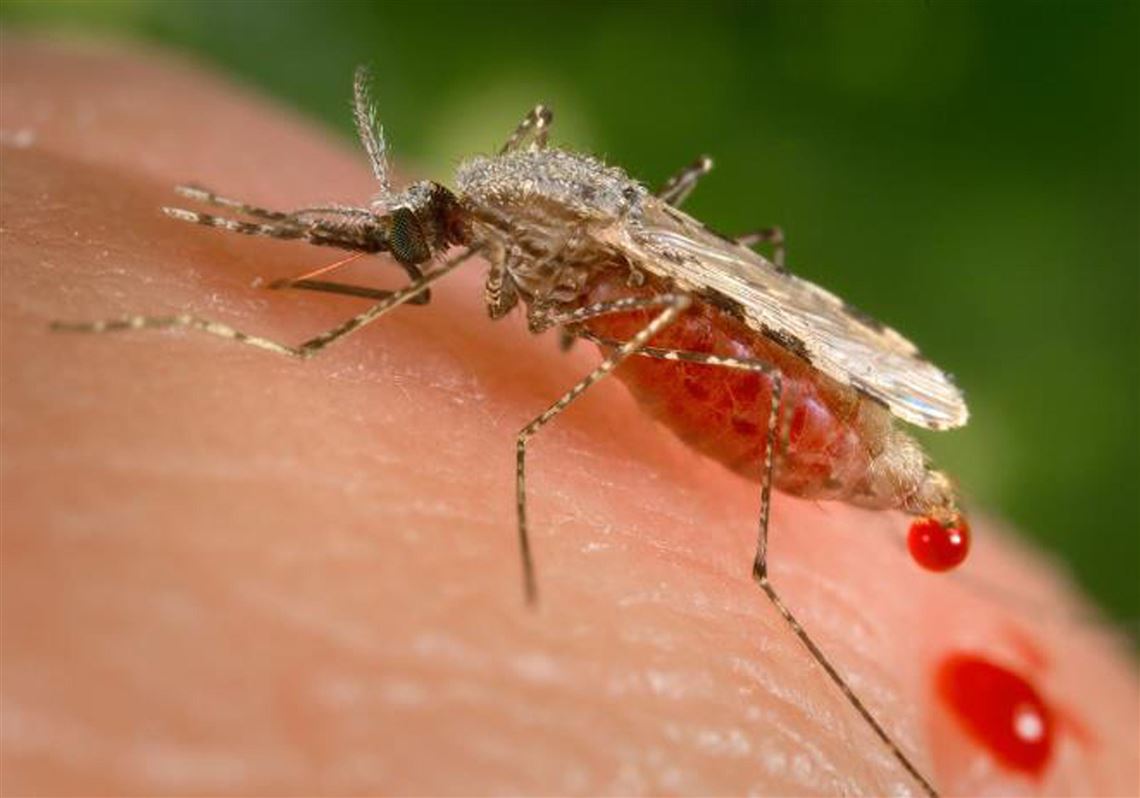
Eastern equine encephalitis (EEE) belongs to a category of viruses known as arboviruses, or arthropod-borne viruses. Arboviruses are spread by the bites of blood-sucking insects, such as mosquitos and ticks. EEE is spread by the bite of certain kinds of mosquitoes.
What are the risk factors of EEE?
The overall risk of becoming infected with EEE depends on:
- Exposure to mosquitoes: People who spend a lot of time outdoors or live in wooded areas have a greater chance of being bitten by mosquito.
- Time of year and day: In the United States, cases of EEE tend to occur from late spring to early fall.. Many kinds of mosquitoes are most active during dusk and dawn and during the early evening hours.
- Geographic region: Most cases of EEE have been reported in Atlantic and Gulf coast states. Southeastern Massachusetts, particularly Plymouth and Bristol counties, have historically been “hot spots” for EEE. The Massachusetts Dept of Public Health monitors mosquito populations, tests mosquitoes for virus and calculates risks for each town.
Some people with EEE may develop a severe infection that causes brain tissue to become inflamed (encephalitis).The factors that increase one’s risk of getting a severe EEE infection include:
- Age: Although people of any age can develop a serious infection, the risk is higher for adults older than 50 and children younger than 15.
- Immune system: People who have a weakened immune system due to cancer treatments, or organ transplantation are more at risk of developing a severe infection.
What are the symptoms of EEE?
Symptoms of EEE generally occur four to 10 days after a person has been infected and include:
- high fever
- headache
- tiredness
- nausea/vomiting
- neck stiffness
The symptoms of encephalitis depend on the part of the brain that is inflamed, the amount of inflammation and the person’s age and overall health.
Some of the most common symptoms of encephalitis include:
- seizures
- confusion (disorientation)
- coma
In one-third of cases, encephalitis can be fatal or lead to permanent brain damage.
Because the initial symptoms of EEE resemble those caused by many illnesses, it may be difficult to determine if a child’s symptoms are related to encephalitis. In general, you should take your child to see a doctor if your child has a bad headache, nausea and vomiting, fever or any worrisome changes in behavior (confusion, extreme sleepiness, acting very different, listlessness, lethargy, seizures).
The worst outbreak of eastern equine encephalitis since U.S. health officials began monitoring the mosquito-borne disease 15 years ago is prompting aerial bug spraying and dire warnings to avoid the biting insects well into fall. As of October 1, 31 cases — including nine deaths — have been reported by the U.S. Centers for Disease Control and Prevention.
Known as EEE or Triple-E for short, the incurable brain infection is still relatively rare — there have been only 103 reported infections in the United States in the past decade. Only five percent of people bitten by an infected mosquito will develop the disease. But about a third of EEE patients die, and many who survive experience permanent neurological problems.
Science News spoke with several researchers about how the virus spreads, and possible factors that might be contributing to the recent surge in cases.
“We don’t know some of the basic details about these [mosquito-transmitted] diseases, unfortunately,” says pathobiologist Stephen Higgs, director of the Biosecurity Research Institute at Kansas State University in Manhattan. “The ideal is to anticipate outbreaks, which is very, very difficult. But we need to be prepared for an outbreak when it comes.”