
Archives

QUOTE FOR MONDAY:

“There are an estimated 1 million people in the U.S. living with Parkinson’s disease and more than 10 million people worldwide. Most people who develop the symptoms of Parkinson’s disease do so sometime after the age of 50.”

American Parkinson Disease Association (www.apdaparkinson.org)

QUOTE FOR WEEKEND:

“Insulin Resistance leads to many deadly ailments such as Heart Attack, Alzheimer’s Dementia, Cancer, Kidney Disease, Stroke, Gout, Obesity, and Diabetes to name the most serious illnesses. Obesity and Diabetes alone will continue progressing and cause lower back pain, joint pain, amputation, blindness, and slow healing wounds.”

Dr. Greenwald of Specialty Health in Reno NV 


KNOW THE FACTS OF HEALTH TOP ISSUES IN THE U.S.A.

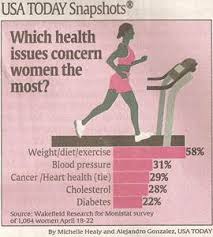
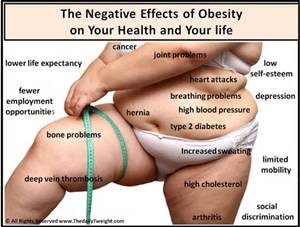
women problems in US      th3YVKK6L3Health C

Americans include two health-related issues among the 10 most important problems facing the U.S., according to a recent Gallup survey. Healthcare in general ranked fourth on the list, with Ebola coming in at no. 8. But is Ebola really among the biggest health problems for Americans? Not when we look at the chances of actually being infected.  Now Legionnaires disease but look at the main health issues we face that need to get under control and with some worse than an epidemic but a common health problem daily in the MD office or in the hospital.

So, what are the actual biggest health problems that Americans face? One way to answer this question is to look at what drugs are prescribed the most. Here are the seven top health problems based on the most-prescribed drugs in the U.S., according to Medscape’s analysis of data provided by IMS Health.

1. Hypothyroidism

AbbVie’s (ABBV) Synthroid ranks at the top of the list of most-prescribed drugs. Synthroid is used to treat hypothyroidism, a condition caused by an underactive thyroid gland.

The American Thyroid Association estimates that 2%-3% of Americans have pronounced hypothyroidism, while 10%-15% have a mild version of the disease. Hypothyroidism occurs more frequently in women, especially women over age 60. Around half of Americans with the condition don’t realize that they have hypothyroidism.

2. High cholesterol and high triglycerides

Coming in at a close second on the list is AstraZeneca’s (AZN ) Crestor. The drug is used to help control high cholesterol and high triglyceride levels.

According to the American Heart Association, nearly 99 million Americans age 20 and over have high cholesterol. Elevated cholesterol levels are one of the major risk factors for heart attacks and strokes. The problem is that you won’t know if you have high cholesterol unless you get tested — and around one in three Americans haven’t had their cholesterol levels checked in the last five years.

3. Heartburn and gastroesophageal reflux disease

AstraZeneca also claims the third most prescribed drug in the nation — Nexium. The “purple pill” helps treat hearburn and gastroesophageal reflux disease, or GERD, also commonly referred to as acid reflux.

Around 20% of Americans have GERD, according to the American Society for Gastrointestinal Endoscopy. A lot of people take over-the-counter medications, but that’s not enough for many others. Medscape reported that over 18.6 million prescriptions of Nexium were filled between July 2013 and June 2014.

4. Breathing disorders

The next two highly prescribed drugs treat breathing disorders. GlaxoSmithKline’s (GSK ) Ventolin HFA is used by asthma patients, while the company’s Advair Diskus treats asthma and chronic obstructive pulmonary disease, or COPD.

More than 25 million Americans have asthma. Around 7 million of these patients are children. Meanwhile, COPD, which includes chronic bronchitis and emphysema, ranks as the third-leading cause of death in the U.S.

5. High blood pressure

Novartis (NVS) claims the next top-prescribed drug with Diovan. The drug treats high blood pressure by relaxing and widening blood vessels, thereby allowing blood to flow more readily.

Around one-third of American adults have high blood pressure. Many don’t know that they are affected, because the condition doesn’t usually manifest symptoms for a long time. However, high blood pressure can eventually lead to other serious health issues, including heart and kidney problems.

6. Diabetes

Several highly prescribed drugs combat diabetes, with Sanofi’s (SNY) Lantus Solostar taking the top spot for the condition. Lantus Solostar is a long-acting basal insulin that is used for type 1 and type 2 diabetes mellitus.

According to the National Diabetes Statistics Report released in June 2014, 29.1 million Americans had diabetes in 2012. That’s a big jump from just two years earlier, when 25.8 million Americans had the disease. Diabetes ranks as the seventh leading cause of death in the U.S.

7. Depression and anxiety

Eli Lilly’s Cymbalta is the leading treatment for depression and generalized anxiety disorder.

The Anxiety and Depression Association of America estimates that 14.8 million Americans ages 18 and older suffer from a major depressive disorder each year. Around 3.3 million have persistent depressive disorder, a form of depression that lasts for two or more years. Generalized anxiety disorder affects around 6.8 million adults in the U.S.

If you want to panic of a real large amount of what we have regarding disease or illnesses in our country look at problems one through seven.
QUOTE FOR FRIDAY:

“January, National Winter Sports TBI Awareness Month, calls attention to the fact that although sports injuries contribute to fatalities infrequently, the leading cause of death from sports-related injuries is traumatic brain injury. Sports and recreational activities contribute to about 21 percent of all traumatic brain injuries among American children and adolescents.”

AMHC (www.amhc.org)

QUOTE FOR THURSDAY:

“Conditions causing liver impairment are: 1.) Cirrhosis of the liver is a degenerative disease of the liver resulting in scarring and liver failure. 2.) Fatty Liver is excessive build-up of fat in the liver. 3.) Liver Failure is a  condition in which the liver is unable to perform its normal metabolic functions.  4.) Hepatitis A a highly contagious liver infection caused by hepatitis A virus. 5.) Hepatic Encephalopathy a loss of brain function as a result of failure in the removal of toxins from the blood due to liver damage.  6.) Hepatitis B is a infectious disease caused by the hepatitis B, viral (HBV), that affects the liver.  7.) Hepatitis C Another viral infection that causes inflammation of liver. 8.) Alcoholic Hepatitis  Inflammation of the liver caused by chronic heavy drinking of alcohol. 9) Non-alcoholic fatty liver disease (NAFLD)  is also known as metabolic (dysfunction) associated fatty liver disease (MAFLD), is excessive fat build-up in the liver without another clear cause such as alcohol use.    10) Amyloidosis  is a disease in which abnormal proteins, known as amyloid fibrils, build up in tissue.”

MAYO CLINIC

QUOTE FOR TUESDAY:

“More than 2.7 million Americans over 40 have glaucoma, but only half are aware of it, according to the American Academy of Ophthalmology. The disease is one of the world’s leading cause of blindness. Particularly at risk: People over the age of 40. The Glaucoma Research Foundation reports that you’re six times more likely to get glaucoma if you’re over 60. Also more vulnerable than average are those with a family history of the disease, African Americans, Hispanics, people with diabetes and smokers.”

AARP (www.aarp.org)

QUOTE FOR MONDAY:

“To diagnose for glaucoma your MD will do a comprehensive exam that includes measuring intraocular pressure (tonometry), testing for optic nerve damage with a dilated eye examination and imaging tests, checking for areas of vision loss (visual field test), measuring corneal thickness (pachymetry),  & inspecting the drainage angle (gonioscopy).  The damage caused by glaucoma can’t be reversed. But treatment and regular checkups can help slow or prevent vision loss, especially if you catch the disease in its early stages.”.

MAYO CLINIC

QUOTE FOR WEEKEND:

“There are several types of glaucoma. The two main types are open-angle and angle-closure. These are marked by an increase of intraocular pressure (IOP), or pressure inside the eye.  The most common type in the United States is called open-angle glaucoma — that’s what most people mean when they talk about glaucoma. ”

Glaucoma Research Foundation (www.glaucoma.org)

QUOTE FOR THURSDAY:

A heart defect that features four problems.  They are:     1-a hole between the lower chambers of the heart. 2- an obstruction from the heart to the lungs,  3-The aorta (blood vessel) lies over the hole in the lower chambers.  4-The muscle surrounding the lower right chamber becomes overly thickened.”

www.heart.org

QUOTE FOR WEDNESDAY:

Truncus arteriosus is a rare heart defect that’s present at birth (congenital).   It means that one large blood vessel leads out of the heart. Normally, there are two separate vessels coming out of the heart.  Patent ductus arteriosus (PDA) is a persistent opening between the two major blood vessels leading from the heart. The opening, called the ductus arteriosus, is a normal part of a baby’s circulatory system before birth that usually closes shortly after birth. If it remains open, however, it’s called a patent ductus arteriosus.  Patent ductus arteriosus (PDA) is a persistent opening between the two major blood vessels leading from the heart. The opening, called the ductus arteriosus, is a normal part of a baby’s circulatory system before birth that usually closes shortly after birth. If it remains open, however, it’s called a patent ductus arteriosus.”

MAYO CLINIC