
Archives

National Cardiac Rehabilitation Week 2023

Cardiac rehabilitation, also called cardiac rehab, is a customized outpatient program of exercise and education. Cardiac rehabilitation is designed to help you improve your health and help you recover from a heart attack, other forms of heart disease or surgery to treat heart disease.

Cardiac rehabilitation week this year 2021 is February 14th through the 20th.

Cardiac rehabilitation often involves exercise training, emotional support and education about lifestyle changes to reduce your heart disease risk, such as eating a heart-healthy diet, keeping a healthy weight and quitting smoking.

The goals of cardiac rehabilitation include establishing an individualized plan to help you regain strength, preventing your condition from worsening, reducing your risk of future heart problems,C and improving your health and quality of life.

Research has found that cardiac rehabilitation programs can reduce your risk of death from heart disease and reduce your risk of future heart problems. The American Heart Association and American College of Cardiology recommend cardiac rehabilitation programs.

Why is this rehab. done?

Cardiac rehabilitation is an option for people with many forms of heart disease. In particular, you may benefit from cardiac rehabilitation if your medical history includes:

Heart attack/Coronary artery disease/Heart failure/Peripheral artery disease/Chest pain (angina)/Cardiomyopathy/Certain congenital heart diseases/Coronary artery bypass surgery/Angioplasty and stents/Heart or lung transplant/Heart valve repair or replacement/Pulmonary hypertension.

Don’t let your age hold you back from joining a cardiac rehabilitation program. People of all ages can benefit from cardiac rehabilitation.

Cardiac rehabilitation isn’t appropriate for everyone who has had heart disease. Your health care team will evaluate your health, including reviewing your medical history, conducting a physical examination and performing tests, to make sure you’re ready to start a cardiac rehabilitation program.

Rarely, some people suffer injuries, such as strained muscles or sprains, while exercising as a part of cardiac rehabilitation. Your health care team will carefully monitor you while you exercise to lower this risk and will teach you how to avoid injuries when you exercise on your own. There is also a small risk of cardiovascular complications.

During cardiac rehabilitation

The first stages of most cardiac rehabilitation programs generally last about three months, but some people may be in programs for a longer period. In special situations, people may be able to do an intensive program that may last one or two weeks, several hours a day. During cardiac rehabilitation, you’ll likely work with a team of health care professionals, which may include cardiologists, nurse educators, nutrition specialists, exercise specialists, mental health specialists, and physical and occupational therapists.

Cardiac rehabilitation includes:

  • Medical evaluation. Your health care team will generally perform an initial evaluation to check your physical abilities, medical limitations and other conditions you may have. Ongoing evaluations can help your health care team keep track of your progress over time.During your evaluation, your health care team may look at your risk factors for heart complications, particularly during exercise. This can help your team tailor a cardiac rehabilitation program to meet your individual needs, and the team can make sure it’s safe and effective for you.
  • Physical activity. Cardiac rehabilitation can improve your cardiovascular fitness through physical activity. Your health care team will likely suggest low impact activities that have a lower risk of injury, such as walking, cycling, rowing, jogging and other activities. You’ll usually exercise at least three times a week. Your health care team will likely teach you proper exercise techniques, such as warming up and cooling down.You may also do muscle-strengthening exercises, such as lifting weights or other resistance training exercises, two or three times a week to increase your muscular fitness.Don’t worry if you’ve never exercised before. Your health care team can make sure the program moves at a comfortable pace and is safe for you.
  • Lifestyle education. You’ll usually receive support and education on making healthy lifestyle changes, such as eating a heart-healthy diet, exercising regularly, maintaining a healthy weight and quitting smoking.Your health care team may give you guidance about managing conditions such as high blood pressure, diabetes and high cholesterol.You’ll likely have opportunities to ask questions about such issues as sexual activity. You’ll also need to continue taking any medications you’ve been prescribed by your doctor.
  • Support. Adjusting to a serious health problem often takes time. You may feel depressed or anxious, lose touch with your social support system, or have to stop working for several weeks.If you get depressed, don’t ignore it. Depression can make your cardiac rehab program more difficult, and it can impact your relationships and other areas of your life and health.Counseling can help you learn healthy ways to cope with depression and other feelings. Your doctor may also suggest medications such as antidepressants. Vocational or occupational therapy can teach you new skills to help you return to work.

Although it may be difficult to start a cardiac rehabilitation program when you’re not feeling well, you can benefit in the long run. Cardiac rehabilitation can guide you through fear and anxiety as you return to an active lifestyle with more motivation and energy to do the things you enjoy.

Cardiac rehabilitation can help you rebuild your life, both physically and emotionally. As you get stronger and learn how to manage your condition, you’ll likely return to a normal routine, along with your new diet and exercise habits.

It’s important to know that your chances of having a successful cardiac rehabilitation program rest largely with you. The more dedicated you are to following your program’s recommendations, the better you’ll do.

After cardiac rehabilitation

After your cardiac rehabilitation program ends, you’ll generally need to continue the diet, exercise and other healthy lifestyle habits you learned for the rest of your life to maintain heart-health benefits. The goal is that at the end of the program you’re confident to exercise on your own and you’re empowered to maintain a healthier lifestyle.

Results

Cardiac rehabilitation is a long-term maintenance program, and you’ll generally need to continue the habits and follow the skills you learned in the program for the rest of your life. After about three months, you likely will have developed your own exercise routine at home or at a local gym.

You may also continue to exercise at a cardiac rehab center, a fitness center or a club. You may also exercise with friends or family. You may remain under medical supervision during this time, particularly if you have special health concerns.

Education about nutrition, lifestyle and healthy weight may continue, as well as counseling. To get the most benefits from cardiac rehabilitation, make sure your exercise and lifestyle practices become lifelong habits.

Over the long term, you may:

  • Gain strength
  • Learn heart-healthy behaviors, such as regular exercise and a heart-healthy diet
  • Cut bad habits, such as smoking
  • Manage your weight
  • Find ways to manage stress
  • Learn how to cope with heart disease
  • Decrease your risk of coronary artery disease and other heart conditions

One of the most valuable benefits of cardiac rehabilitation is often an improvement in your overall quality of life. If you stick with your cardiac rehab program, you may come out of the program feeling even better than before you had a heart condition or had heart surgery.

QUOTE FOR FRIDAY:

“Muscular dystrophy occurs in both sexes and in all ages and races. However, the most common variety, Duchenne, usually occurs in young boys. People with a family history of muscular dystrophy are at higher risk of developing the disease or passing it on to their children.”

MAYO CLINIC

Part II Muscular Dystrophy

Causes

Muscular dystrophy can run in families, or you can be the first one in your family to have it. The condition is caused by problems in your genes.

Genes contain the information your cells need to make proteins that control all of the different functions in the body. When a gene has a problem, your cells can make the wrong protein, the wrong amount of it, or a damaged protein.

You can get muscular dystrophy even if neither of your parents had the disease. This happens when one of your genes gets a defect on its own. But it’s rare for someone to get it this way.

In people with muscular dystrophy, the broken genes are the ones that make the proteins that keep muscles healthy and strong. For example, those with Duchenne or Becker muscular dystrophies make too little of a protein called dystrophin, which strengthens muscles and protects them from injury.

Symptoms

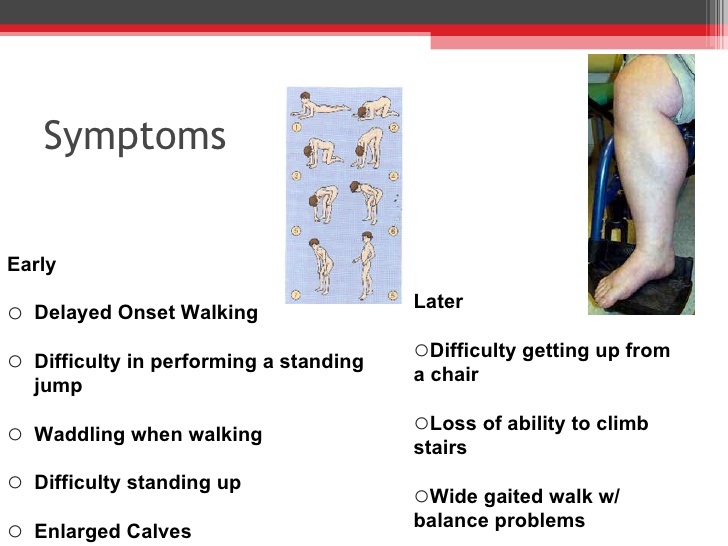
For most types of muscular dystrophy, symptoms start to show up in childhood or in the teen years. In general, children with the condition:

You can get muscular dystrophy even if neither of your parents had the disease. This happens when one of your genes gets a defect on its own. But it’s rare for someone to get it this way.

In people with muscular dystrophy, the broken genes are the ones that make the proteins that keep muscles healthy and strong. For example, those with Duchenne or Becker muscular dystrophies make too little of a protein called dystrophin, which strengthens muscles and protects them from injury.  Symptoms include:


  • Falling down often
  • Have weak muscles
  • Have muscle cramps
  • Have trouble getting up, climbing stairs, running, or jumping
  • Walk on their toes or waddle

Some will also have symptoms like:

  • A curved spine (called scoliosis)
  • Droopy eyelids
  • Heart problems
  • Trouble breathing or swallowing
  • Vision problems
  • Weakness in the muscles of the face

How its diagnosed:

Physical Exam including checking your muscle strengths tested, blood tests, MRI, EMG-electromyography, and even a muscle biopsy.

Treatment:  Unfortunately there is no cure but was is used to help deal with the disease is:

  • Physical therapy uses different exercises and stretches to keep muscles strong and flexible.
  • Occupational therapy teaches your child how to make the most of what his muscles can do. Therapists can also show him how to use wheelchairs, braces, and other devices that can help him with daily life.
  • Speech therapy will teach him easier ways to talk if his throat or face muscles are weak.
  • Respiratory therapy can help if your child is having trouble breathing. He’ll learn ways to make it easier to breathe, or get machines to help.
  • Medicines can help ease symptoms.
    • Eteplirsen (Exondys 51) has been approved to treat DMD. It is an injection medication that helps treat individuals with a specific mutation of the gene that leads to DMD. The most common side effects are balance problems and vomiting. Although the drug increases dystrophin production, which would predict improvement in muscle function, this has not yet been shown.
    • Anti-seizure drugs reduce muscle spasms.
    • Blood pressure medicines help with heart problems.
    • Drugs that turn down the body’s immune system, called immunosuppressants, may slow damage to muscle cells.
    • Steroids like prednisone slow down muscle damage and can help your child breathe better. They can cause serious side effects, such as weak bones and a higher risk of infections.
    • Creatine, a chemical normally found in the body, can help supply energy to muscles and improve strength for some people. Ask your child’s doctor if these supplements are a good idea for him.
  • Surgery can help with different complications of muscular dystrophy, like heart problems or trouble swallowing.

Try to include with your Rx from your doctor:


QUOTE FOR THURSDAY:

“Muscular dystrophies are a group of muscle diseases caused by mutations in a person’s genes. Over time, muscle weakness decreases mobility, making everyday tasks difficult. There are many kinds of muscular dystrophy, each affecting specific muscle groups, with signs and symptoms appearing at different ages, and varying in severity. Muscular dystrophy can run in families, or a person can be the first in their family to have a muscular dystrophy.”

Center for Disease Control and Prevention CDC

QUOTE FOR WEDNESDAY:

“Nearly 500,000 people are treated for burns each year. The primary causes of injury include fire/flame, scalds, electrical, and chemical burns. Children are more than twice as likely to experience burn injuries.”

American Burn Association

QUOTE FOR TUESDAY:

“Lung cancer is the leading cancer killer in both men and women in the U.S. In 1987, it surpassed breast cancer to become the leading cause of cancer deaths in women.”.

American Lung Association

QUOTE FOR MONDAY:

“Both confirmed that lockdowns do reduce transmission of the SARS-Cov-2 and highlighted that a more “targeted” or “proportional” approach of restrictions can mitigate the risk of infection, while balancing other concerns about the economy and mental health.”

Dr. Elizabeth Stuart, Associate Dean for Education at the Johns Hopkins Bloomberg School of Public Health  and Dr. Stuart Ray, infectious disease expert with the Johns Hopkins University School of Medicine .

Why the lock down has been for so long in controlling Corona 19 Virus.


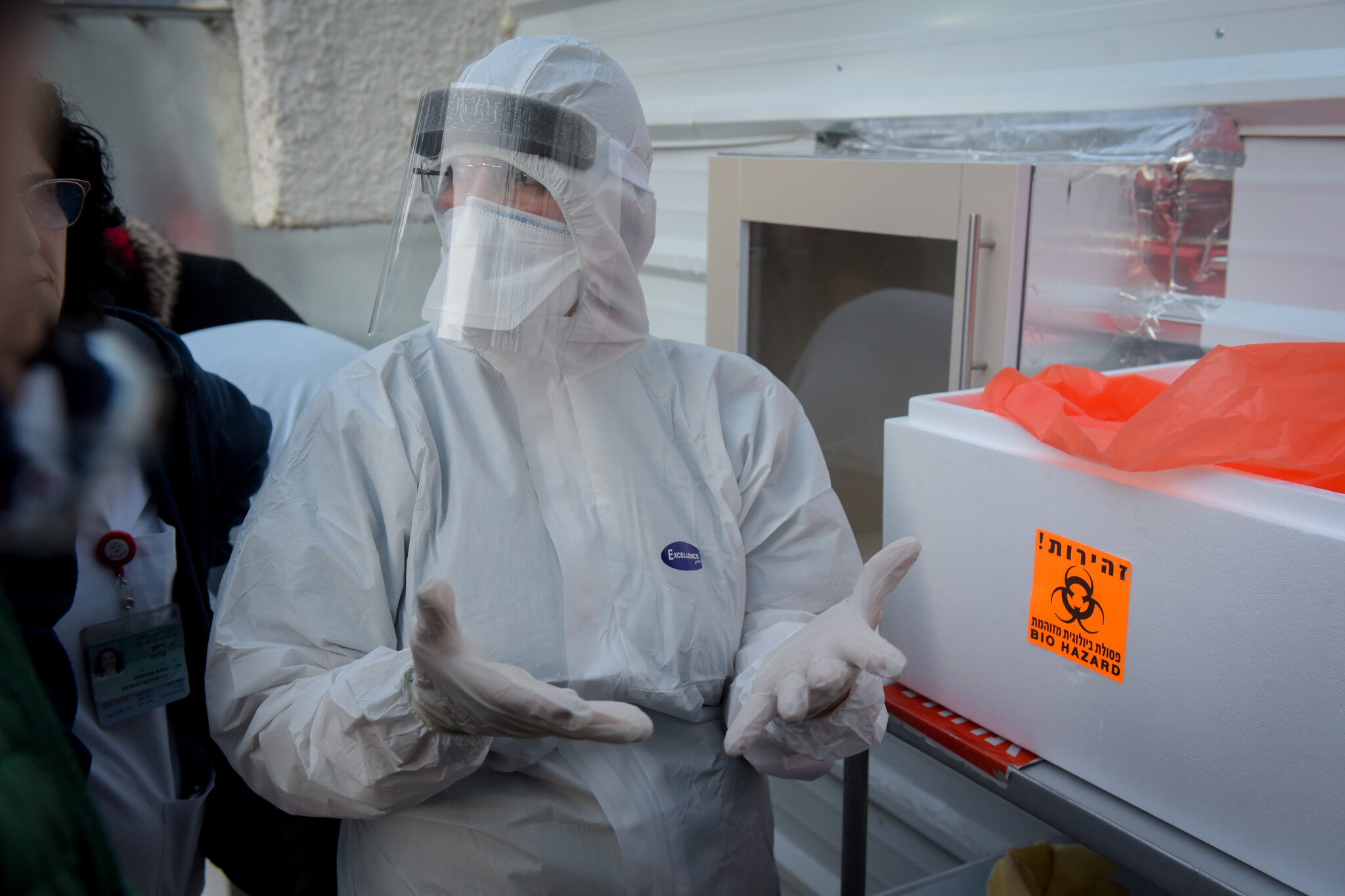
Workers inside a building at Tel HaShomer Hospital which was converted to receive the Israelis who were under quarantine on the cruise ship Diamond Princess in Japan due to the spread of the coronavirus, and arriving in Israel tonight, February 20, 2020. Photo by Avshalom Sassoni/Flash90 *** Local Caption

Harvard Health Publishing. Harvard Health Publishing is the media and publishing division of the Harvard Medical School of Harvard University, under the direction of Dr. David H. Roberts, Dean for External Education.

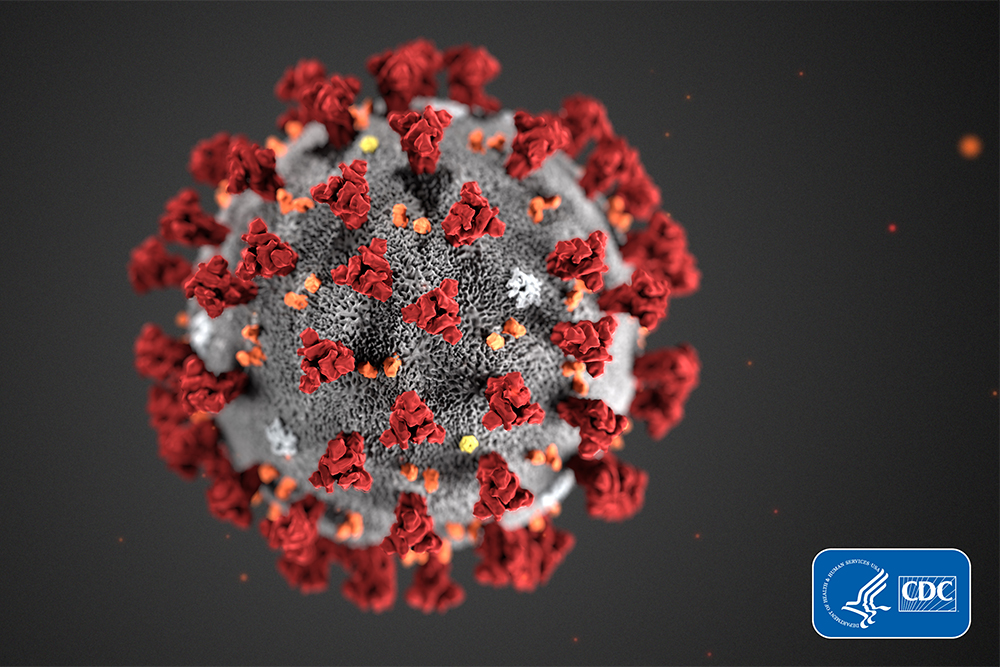
Through Harvard Health Publishing as of April 24 2020 they state, ” The rapid spread of the virus that causes COVID-19 has sparked alarm worldwide. The World Health Organization (WHO) has declared this rapidly spreading coronavirus outbreak a pandemic, and countries around the world are grappling with a surge in confirmed cases. In the US, social distancing to slow the spread of coronavirus has created a new normal. Meanwhile, scientists are exploring potential treatments and are beginning clinical trials to test new therapies and vaccines. And hospitals are ramping up their capabilities to care for increasing numbers of infected patients.

By now, many of us are taking steps to protect ourselves from infection. This likely includes frequent handwashing, regularly cleaning frequently touched surfaces, and social distancing. How do each of these measures help slow the spread of this virus, and is there anything else you can do?

It helps prevent the spread of COVID-19, as well as other coronaviruses and influenza.  Despite your best efforts, you may be exposed to coronavirus and become ill with COVID-19. Or you may be in a position where you are caring for a loved one with the disease. It’s important to know what to do if you find yourself in any of these situations. Stock up with medications and health supplies now, and learn the steps you can take to avoid infecting others in your household and to avoid getting sick yourself if you are caring for someone who is ill.  ”

Most importantly if you end up having symptoms like the flu get tested to see if you even have the virus and if you do.  Quarantine yourself at home 14 days or however long the doctor tells you.  Stay in a private room or area closed off to prevent the spread of Covid 19 virus to others.

How its spread?

Contact Spread

“The coronavirus is thought to spread mainly from person to person. This can happen between people who are in close contact with one another. Droplets that are produced when an infected person coughs or sneezes may land in the mouths or noses of people who are nearby, or possibly be inhaled into their lungs.” by Harvard University Publishing.

Airborne Spread

The National Center for Biotechnology Information (NCBI) is part of the United States National Library of Medicine (NLM).  They state:

“Airborne spread happens when a germ floats through the air after a person talks, coughs, or sneezes. Germs may land in the eyes, mouth, or nose of another person. If a germ is airborne, direct contact with the infected person is NOT needed for someone else to get sick. Airborne spread diseases include: chickenpox, tuberculosis, and COVID-19 or corona virus for examples.

NCBI states, “An airborne disorder is any disease that is caused by a microorganism that is transmitted through the air. There are many airborne diseases that are of clinical importance and include bacteria, viruses, and fungi. These organisms may be spread through sneezing, coughing spraying of liquids, the spread of dust or any activity that results in the generation of aerosolized particles.”

Droplet spread

NCBI states “, This happens when germs traveling inside droplets that are coughed or sneezed from a sick person enter the eyes, nose, or mouth of another person. Droplets travel short distances, less than 3 feet (1 meter) from one person to another. A person might also get infected by touching a surface or object that has germs on it and then touching their mouth or nose. Droplet spread diseases include: plague, EVD – ebola, tuberculosis and COVID 19 – Corona Virus #19, for examples.”.

That is why we are told to stay away 6 feet from each other outside of home; due to spread can occur within droplet spread and respiratory spread. including contact spread of the disease would be touching someone with the virus or objects with the virus on it.

Than there is simple contact to another person via touch or touching objects like a counter top, phone, etc… that spreads the disease.

Overall of all 3 ways to contact it this is why medical personal or those in close enough contact of CVD corona 19 positive people are to do airborne, droplet, and contact isolation measures.  This would be wearing the protective equipment supplied or not supplied from hospitals that is mask, gown or body suit, shoe covers, head covers and simply gloves.

This is understanding for the lockdown to control the this corona virus by limiting contact or respiratory or droplet contact from people except our people who live in our immediate home.

QUOTE FOR THE WEEKEND:

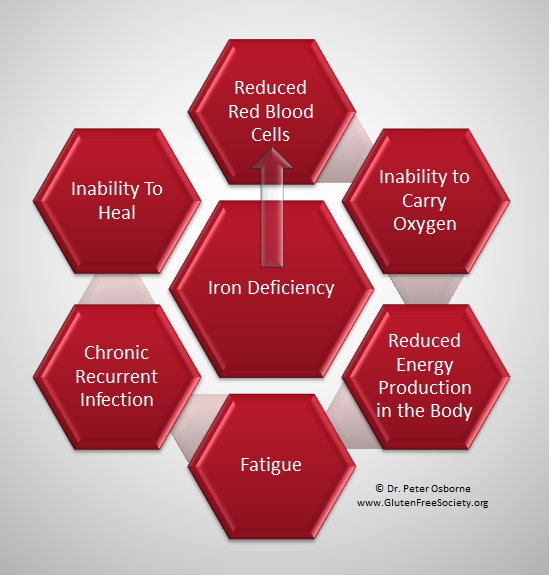
“Iron deficiency anemia is a common type of anemia — a condition in which blood lacks adequate healthy red blood cells. Red blood cells carry oxygen to the body’s tissues.As the name implies, iron deficiency anemia is due to insufficient iron. Without enough iron, your body can’t produce enough of a substance in red blood cells that enables them to carry oxygen (hemoglobin). ”

MAYO CLINIC

Iron Deficiency Anemia

anemia2   Anemia Part 2

Anemia Part II

This form of iron deficiency anemia is treated with changes in your diet and iron supplements.

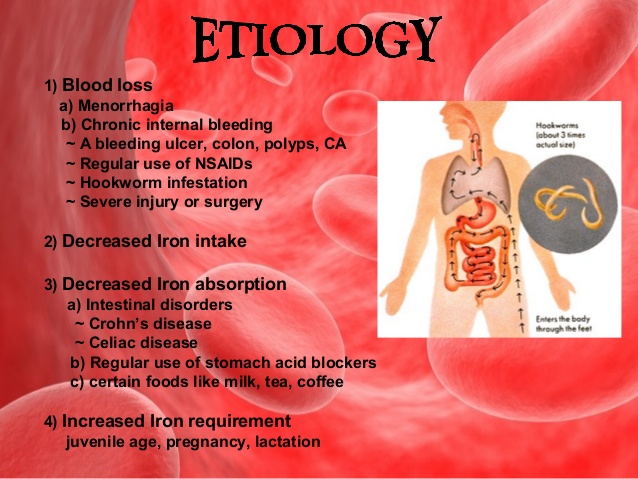
If the underlying cause of iron deficiency is loss of blood — other than from menstruation — the source of the bleeding must be located and stopped. This may involve surgery.

    • Rapid growth cycles (infancy, adolescence)
    • Heavy menstrual bleeding or chronic blood loss from the GI tract
    • Pregnancy
    • Diets that contain insufficient iron (rare in the United States)
    • Breastfed infants who have not started on solid food after six months of age
    • Babies who are given cow’s milk prior to age 12 months
  • Alcoholism-Most often healthy red blood cells last between 90 and 120 days. Parts of your body then remove old blood cells. A hormone called erythropoietin (epo) made in your kidneys signals your bone marrow to make more red blood cells.To first diagnose the person with any anemia the following needs to be done to help the doctor in diagnostic tooling , which is tests to rule out and rule in what the actual problem isn’t or is. With the MD knowing the results of these tests it will guide the doctor knowing the correct diagnosis to use the best treatment to either cure or get the problem under control (Ex. What is curable is iron deficiency anemia but sickle cell anemia is not).
  • Hemoglobin is the oxygen-carrying protein inside red blood cells. It gives red blood cells their red color. People with anemia do not have enough hemoglobin.     
  • Although many parts of the body help make red blood cells, most of the work is done in the bone marrow. Bone marrow is the soft tissue in the center of bones that helps form all blood cells.

The diagnosis tests that are usually done by a doctor are the following:

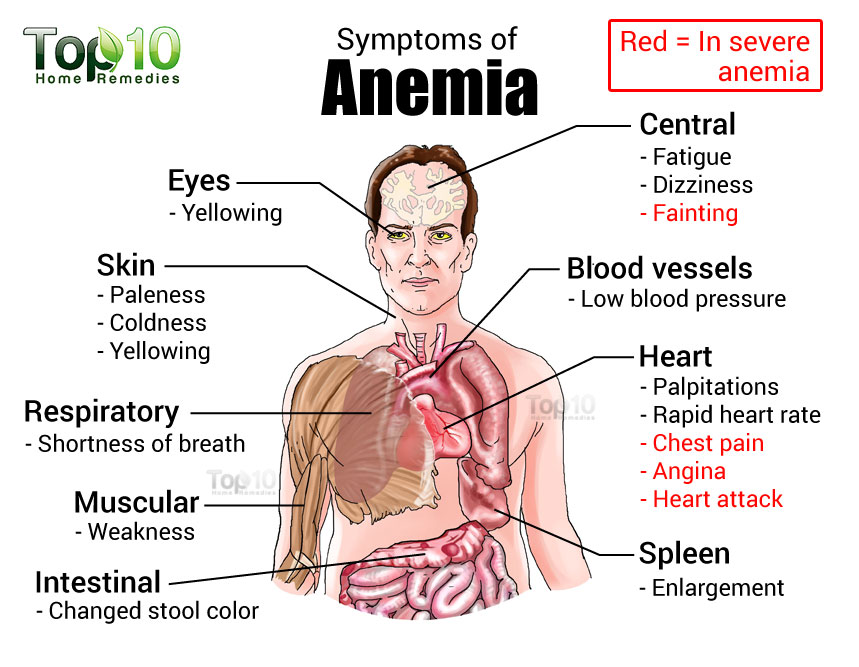
Physical exam. During a physical exam, your doctor may listen to your heart and your breathing. Your doctor may also place his or her hands on your abdomen to feel the size of your liver and spleen. He would look at the color of the skin and the eyes to look for paleness.

Blood Tests. Your doctor would do the basis blood tests being a CBC which is used to count the number of blood cells in a sample of your blood. For anemia, your doctor will be interested in the levels of the red blood cells contained in the blood particularly your hematocrit (the solids of the blood) and the hemoglobin (the liguid of your blood) in your bloodstream. If anemic both of these will be low and hematocrit below 7.0 down to 6.0 is critical.

Normal adult hematocrit values vary from one medical practice to another but are generally between 40 and 52 percent for men and 35 and 47 percent for women. Normal adult hemoglobin values are generally 14 to 18 grams per deciliter for men and 12 to 16 grams per deciliter for women.

Additional testing maybe ordered as well; like the following to help determine what the person has with the what treatment to tell the MD is needed to help the individual get better.

This could be: . A test to determine the size and shape of your red blood cells. Some of your red blood cells may also be examined for unusual size, shape and color. Doing so can help pinpoint a diagnosis. For example, in iron deficiency anemia, red blood cells are smaller and paler in color than normal. In vitamin deficiency anemias, red blood cells are enlarged and fewer in number.

If you receive a diagnosis of anemia, your doctor may order additional tests to determine the underlying cause. For example, iron deficiency anemia can result from chronic bleeding of ulcers, benign polyps in the colon, colon cancer, tumors or kidney problems.

Occasionally, it may be necessary to study a sample of your bone marrow to diagnose anemia.

Treatments for iron deficiency:

 Treatment for iron-deficiency anemia will depend on its cause and severity. Treatments may include dietary changes and supplements, medicines, and surgery.

Severe iron-deficiency anemia may require a blood transfusion, iron injections, or intravenous (IV) iron therapy. Treatment may need to be done in a hospital.

The goals of treating iron-deficiency anemia are to treat its underlying cause and restore normal levels of red blood cells, hemoglobin, and iron.