
Archives

QUOTE FOR THE WEEKEND:

“You’ve got something rare to share! You are a rare blood donor. Your blood type is present in less than 1/1000 people. That’s a big deal and we want to be sure you to know it.

    • Having rare blood means that your blood is either missing one very common antigen that is present in most of the general population or it’s missing a combination of antigens. An antigen is a substance on your red cells like a protein.
    • Every 2 seconds someone needs blood. And people with rare blood depend on one another to be sure there’s an abundant supply of blood available when needed.
    • Rare blood may run in your family. If you have biological siblings, tell them about your rare blood. They have a chance of having rare blood too. You can make donation a family event!”

American Red Cross (Rare Blood Types Donor | Red Cross Blood)

Rh Null “The Golden Blood Type!”

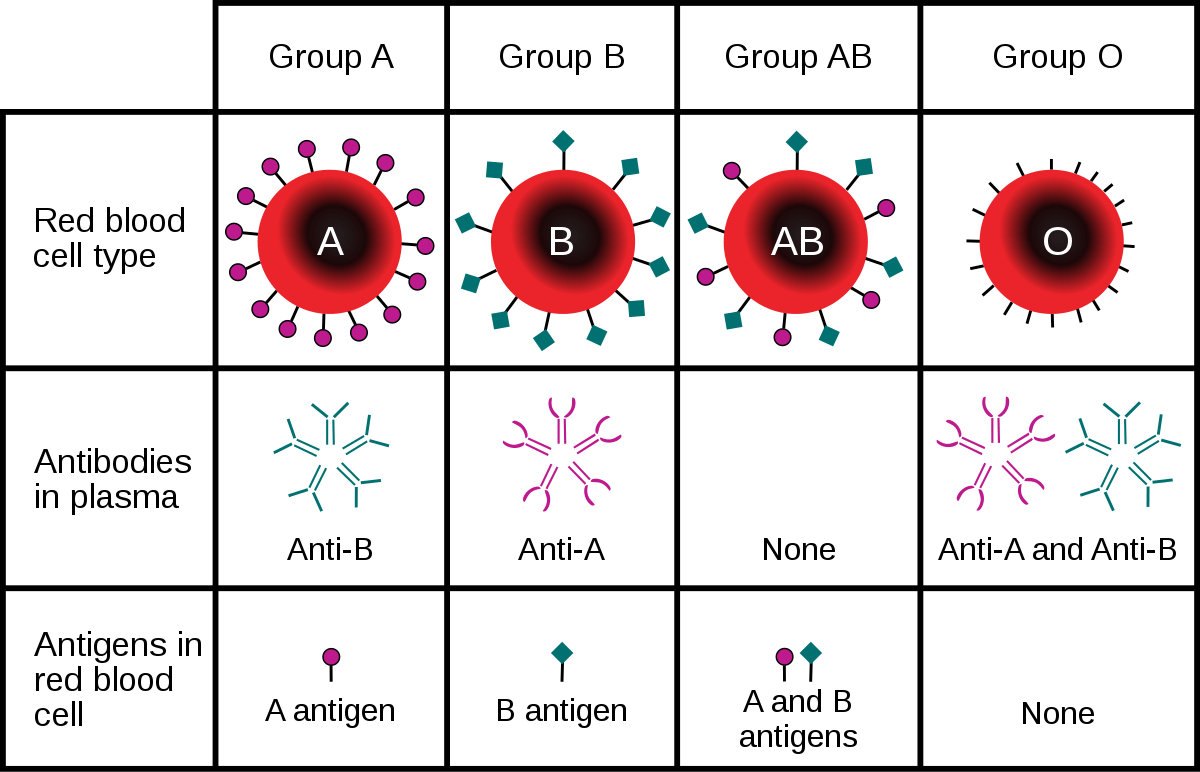
Blood type (also called blood group) is genetically determined. Blood is primarily categorised based on the presence and/or absence of antigens on the surface of our red blood cells (RBCs). Antigens are distinct molecules or substances capable of coaxing an immune response. Our immune system sends out mini soldiers called antibodies (also known as immunoglobulins), which are special proteins that recognise and bind to these antigens.

If our antibodies recognise these antigens as allies or naturally part of our body, our immune system happily leaves it alone.  But if they detect enemy or foreign antigens, our immune system will go on an all-out war to destroy them. This is the reason you need give the blood type and Rh factor (positive or negative) that a patient is if they need blood transfusions to prevent this destructive action to take place unless your the universal donor type O with no antibodies.  Unfortunately, our immune system isn’t perfect. In rare cases, it does attack ‘self’ antigens, as seen in some cases of autoimmune blood disorders.

You might be familiar with the ABO blood group system. When you ask someone what blood type they are, they might respond with “AB”. They are referring to this most important blood group system in human-blood transfusion. It comprises of only two antigens (antigen A and antigen B), but it can produce these four ABO blood types: A, B, AB or O.  At present, the International Society of Blood Transfusion recognises 36 human blood group systems and more than 300 different antigens.  The most common are type ABO and AB blood types.

Why does Rh positive or negative matter in knowing for your blood type?

The Rh blood group system has a colourful history. It consists of 61 blood group antigens (Rh antigens), which are expressed as part of a protein complex found only in RBC membranes. Rh antigens are believed to be essential for maintaining the integrity of RBCs.

Briefly going back to ABO blood group system, some people might tell you that they’re “O negative” or “A positive”. The negative/positive part refers to the absence or presence of one Rh antigen: the Rh(D) antigen. It’s the main Rh antigen considered for human-blood transfusion.

So what is Rh Null?

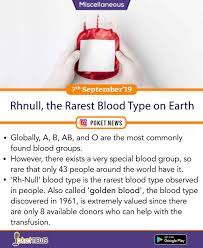
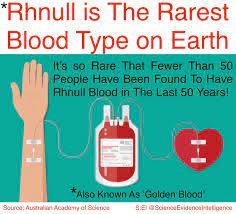
People who have the ‘golden blood’ type lack these Rh antigens. Their DNA lacks the genes responsible for building those RBC protein complexes. These people don’t just lack one, two or three of these 61 Rh antigens, they actually lack all of them. Yes, you read that right: all of them. As you might have guessed, people with Rh Null blood type have abnormal RBCs. They have deformed shapes, leaky membranes and shorter lifespans, which sometimes result in mild anaemia for the individual. Still, the absence of all Rh antigens makes Rh null the ‘golden blood’, which is highly admired for its rarity and medical purposes.

Rare blood types within the Rh blood type system can make it difficult or even impossible to get a blood transfusion. This makes Rh Null blood as the ‘universal’ life-saving blood for the Rh blood type system (especially if the donor has an ABO blood type O too).

But rarity comes at a price. If people with Rh Null blood type requires a blood transfusion, they can only receive Rhnull blood themselves. Even if they receive an O-negative blood, the presence of other Rh antigens on the RBCs may trigger a severe immune response. Therefore, these ‘golden blood’ carriers are solely dependent on other Rh Null donors, but only a few of them regularly donate and they are all spread out across the world.

This is why Rh Null blood is considered as the ‘golden blood’, but it’s not all sunshine and rainbows for those people who carry it. Still, we can’t deny the life-saving properties of this rare blood type and we can deeply appreciate the generosity of those selfless donors.

QUOTE FOR FRIDAY:

“The Cleveland Clinic’s Dr. Michael Roizen Says Age 90 May Become the New 40 Dr. Michael Roizen, the Chief Wellness Officer at the Cleveland Clinic, believes there is an 80% probability of aging interventions making 90-year-olds 40 again within the next decade.
Key Points:
-Dr. Roizen gives a rundown of techniques for eliminating dysfunctional cells that accumulate as we age — senescent cells — which may reverse age-related conditions like Alzheimer’s disease.
-He also says drugs are in the works that reduce inflammation and enhance memory, which utilize a protein secreted from stressed muscles called irisin.
-Dr. Roizen speaks about undergoing pure oxygen therapy in a pressurized environment — hyperbaric oxygen therapy — to rejuvenate tissues via stem cell restoration.
-Dr. Michael Roizen, the Chief Wellness Officer at the Cleveland Clinic, says in a 2024 Aviv Longevity Summit presentation that he believes we have an 80% probability of making 90-year-olds 40 again within the next 10 years. To accomplish this, aged people may undergo therapies that restore the physical vigor they had during their middle-aged years.
He also says that new medical developments coming in the next decade may prolong human lifespan by about 30 years. Average life expectancy increased about 2.5 years with each passing decade between 1850 to 2020, so the predicted 30 years added to human lifespan between 2020 and 2030 constitutes an exponential leap.”

Ever heard the phrase 60 is the new 40?


Ever heard the phrase 60 is the new 40? While that maybe an exaggeration, it’s meant to highlight the very real phenomenon of our ever increasing health and longer lifespans.

For the average person who turned 60 in 1970, they could expect to retire at age 64 and live to age 70.8. For someone who turned 60 in 2010, they can very easily work throughout their entire 60’s and expect to live to at least 78.7 years old.

With the advances in modern medicine, lower rates of smoking and generally healthier lifestyles, our active and productive years can expand well into our 70’s and beyond.

How we choose to use this “extra” time will be determined by our current situation and our priorities for the future.

For some, their 60’s are a time to kick back and relax. They have worked for 30+ years, lived below their means and diligently saved money for retirement. They may also have sold a successful business, or been able to retire from a (increasing scarce) job that had a good pension.

For others, the prospect of retirement isn’t even a thought. Whether it’s a case of financial reality or just the psychological need to be productive, a continuing presence in the workforce is a reality for more and more of the 60+ crowd.

So how to change your life at 60 years old and feel proud of yourself?

  • Is It Possible To Start Over in Your Life At 60?
  • Finding Meaning in Life at 60 Years Old
  • Is 60 Too Late To Change Your Life?
  • How to Change Your Life at 60 Years Old and Feel Proud of Yourself
    • 1. Changing Priorities
    • 2. Understanding the Psychological Challenges
    • 3. Dealing With the Financial Challenges
    • 4. Make New Friends
    • 5. Give Back To the Community
    • 6. Set Achievable Goals

So start over in your life at 60!

Starting over at 60 should not come as a surprise. Now that you have come to understand the psychological and financial challenges associated with reaching that age, let’s take a look at how to regain control over your life. In popular opinion, by the time you reach 60 you have achieved all you had to in life. This isn’t true, just because we are comfortable doesn’t mean to stop ourselves from growing.

It is important to shift attention away from things that took the most part of your life like work and children and move towards yourself and how you impact the world and not put your life on stagnation till you pass on.  You are starting a new life or just adding to what you have depending on the individual.  Their are many factors that determine that:

Are you healthy?  If so, take advantage of it than, its your life!

Are you with less family and or friends in your life?  If so can involved in groups, the community, but don’t introvert yourself home and especially by yourself!

YOU CAN START LIFE OVER AT 60 IF YOU WANT; IT IS ALL UP TO WHAT YOU CHOOSE DO WITH YOUR LIFE!

Most people would think their life’s meaning and purpose is one thing and remains the same forever. However, that is far from the truth. In fact, the meaning in life changes with every stage of life because we as human beings change so many times in our lives.

By the time one reaches 60 they have experienced all sorts of things in life, especially long-lasting impacts of loss, bereavement, retirement and so much more. Sometimes the meaning of our lives is lost along with loved ones and things. However, this is also a period of transformation where in one way or another we have to re-evaluate our life and priorities.

Your own goals can change, from wanting to live longer, to lose weight, and be healthy to spending time with family and friends or like-minded people. Everyone has something or the other that they need to do at this age, and each of their goals is equally as important. Therefore, finding meaning in life at 60 years old is something most people do.

Is 60 Too Late To Change Your Life?

No time in life is too late to change. As previously discussed, the 60s and 70s are key years in an individual’s life. Everything around a person at that age is changing and there is no one stopping them from changing as well.

Some people work hard their entire lives and retire in their 60s. They want a chance to enjoy life and relax. Others see it as a time to plan out their family’s future and look into life insurances. Some are given unexpected medical advice diagnosis or treatment and they need to make changes to live a healthy life.

Turning 60 gives you a chance to start over, and it’s up to you whether you want to take it or not. Psychologically, after living an entire life you are presented with various options. Being 60 means you have a lifetime of knowledge and skill to impart to others around you, the ability to turn your hobbies into happiness, and do the things you have always wanted to do.
QUOTE FOR WEDNESDAY:

“AAA estimates that during this Christmas and New Year’s season, nearly 95 million Americans will hit the road, traveling long distances to visit friends and family. Unfortunately, during the end-of-year holiday travel period, nearly 27,900 Americans will be seriously injured in auto accidents, and more than 250 will die.

The National Safety Council (NSC) has released reports estimating the number of traffic accidents and fatalities that occur on major holidays, including Christmas, New Year’s, Thanksgiving, Memorial Day, Labor Day, and Independence Day. According to the NSC, the deadliest holiday this year will likely be the Fourth of July, which saw an estimated 540 motorists die during the travel period, which spans roughly four days. 24/7 Wall St. reviewed the NSC’s most recent estimates of motor vehicle accidents and casualties for the six big holidays.”

USA Today (24/7 Wall St.: The most dangerous holidays)

How to prepare safely New Years Eve in regards to drinking!


New Year’s season is one of the most fun and joyous holidays of the year. However, did you know that it is also one of the most dangerous holidays of the year?

It is estimated that during Christmas and New Year’s season, almost 95 million Americans will be on the road traveling to visit family and friends. People are much more likely to drink and drive around Jan. 1 than during any other major holiday of the year. Almost half of all car accidents on New Year’s Eve and New Year’s Day are due to drinking and driving.

When planning New Year’s Eve, the majority of people aim to celebrate as best they can and create one of the most memorable nights of the year. This often involves lots of alcohol. While it is hoped that most make responsible plans, many often do not. By not ensuring the safety of yourself and others around you during this night, you put yourself at a higher risk of the biggest dangers surrounding this holiday. Make sure you take the proper precautions to ensure your own safety as well as the safety of those around you. Here’s what you should know to avoid some of the biggest dangers and to stay safe and healthy during the New Year’s season:

Don’t drink and drive. Jan. 1 is the No. 1 day of the year with the highest percent of deaths related to alcohol, according to Insurance Institute for Highway Safety data. Between 2007 and 2011, alcohol accounted for 42 percent of all traffic deaths during the holiday. The more alcohol we consume, the slower the activity of the brain, heart and lungs. Before you celebrate, plan ahead. Aim to have a designated driver, or at least to take a cab or an Uber. Beware of other drunk drivers as they are probably more of a worry than yourself. And as always, wear your seatbelt!

If you will be drinking, pace yourself. What many people don’t realize when drinking is that our bodies absorb alcohol faster than we metabolize it. Therefore, the faster we drink, the more time the toxins from the alcohol spend in our bodies. As a result, we have harsher hangovers. Aim to drink no more than one drink per hour. Our livers metabolize about one alcoholic drink per hour. Know the difference in the amounts of the types of alcoholic drinks you are consuming, and that one beer does not equal six shots (12 oz. beer = 4-5 oz. of wine = 1.5 oz. of hard liquor). When drinking, sip slowly. Melted ice will dilute drink, so order drinks on-the-rocks. Add more club soda or tonic water to your drinks than alcohol.

Know what to mix, and what not to mix. Make sure to stick with the same drink all night. While it is a myth that mixing drinks causes greater intoxication, is remains true that it can often makes people sick and experience worse hangovers. To avoid this, choose light liquors such as vodka. Dark liquors have a higher concentration of toxins which make hangovers more severe. Instead of mixing with soda, use non-carbonated fruit juice or water instead. Carbonated mixers speed up the rate of absorption in the blood. Avoid diet mixers such as Diet Coke. With less sugar and calories, the alcohol goes directly into your bloodstream.

Alternate alcoholic drinks with water. Alcohol is a diuretic. This means that the more you drink, the more you have to urinate. More frequent urination leads to dehydration. Dehydration causes hangover symptoms such as headaches and dizziness. Aim to drink at least one large glass of water before and in between drinking alcoholic beverages. You should drink one glass of water for every alcoholic drink you consume. This will also keep you from getting too drunk.

Eat before you drink, and snack while you drink. Never drink on an empty stomach. Make sure to eat a full meal before drinking, and continue snacking while drinking. Eating while drinking will slow down the absorption of alcohol in the digestive track. This gives the alcohol more time to metabolize in the body. Aim to eat foods high in protein such as cheese, meat, and nuts. Fatty carbs work well too, however these are not as healthy.

Myth: Coffee sobers you up. Many people believe that coffee sobers you up in that the caffeine will speed up alcohol’s metabolism. As a result, many think it is helpful to drink a quick cup of coffee before hitting the road. However, this is a MYTH. Coffee may help you wake up a bit, but will not sober you up. The only cure for being drunk is time. If you need to get home and don’t have time to wait, get a ride from a sober driver or call a cab. You don’t want to risk getting into an accident and hurting yourself, or someone else.

QUOTE FOR TUESDAY:

“New Year’s Eve is the perfect time to celebrate, reflect, and have fun!

Whether you’re planning a big bash, a cozy night at home, or something totally unique, there are so many ways to make the night unforgettable.

From thrilling adventures to creative at-home ideas, this list has something for everyone.

Let’s dive into some exciting and unique ways to ring in the New Year and start the next chapter with a bang!”

TheFab20’s (35+ Incredibly Unique Things To Do On New Years Eve – TheFab20s)

What to do on New Years Eve if you need ideas!


Ideas to do on New Years Eve if not going out the safest route to go!

1. Do a 1,000 piece puzzle.

2. Start binging a new TV show.

3. Host or go to a game night with less than 10 or better Zume it.

4. Make and then listen to a playlist of all of your favorite songs.

5. Or just do that thing where you play a song just before midnight, so that the best part plays right at 12 a.m. on Jan. 1.

6. Get Chinese or whatever takeout you want and watch Planet Earth 2 or another documentary or whatever you want to watch.

7. Take a nice, long bath with some salts or bubbles by yourself or with your significant other.

8. Although, if you want to start or read a book, now’s also a good time to do it.  Don’t forget your favorite snack and drink as well.

9. Write letters to your friends and or family.

10. Treat it like you would the the last day of any other month, and do…whatever  but be safe for you and others.

If you choose to take the safest route and celebrate solo or only with your own household, Good Housekeeping has loads of fun alternatives, such as making a New Year’s Brunch, decorating your space, scrapbooking your favorite memories from 2020, or getting dressed up as if you’re going to a party. Oprah Magazine suggests experimenting with fun cocktails, hosting a dinner party via Zoom, making a thoughtful resolutions list, or having a solo photoshoot with a DIY festive backdrop.

If all else fails, pour yourself a glass of champagne and watch a livestream of the ball dropping. We’re starting a brand new year here, and we want to ring it in with pride and positivity — not regrets. 

In the end, we’d much rather have you nurse a hangover than a pandemic-level virus restarting (this is the flu and corona virus time again) or simply get sick before going back to work or not with bringing in the new year.


QUOTE FOR MONDAY:

“1-Prevent Falls: Ensure your home is clear of ice and obstacles, and check that furniture is stable to avoid tripping hazards.

2-Fire Safety: Keep fireworks away from your home and ensure they are used in an open area. Have a bucket of water nearby for immediate disposal.

3-Driving Safety: Plan your travel options in advance, consider hiring a driver, or use public transportation to ensure safe travel home.

4-Alcohol Responsibility: Drink responsibly and designate a sober driver if you plan to celebrate outside your home.

5-Pet Safety: If you have pets, ensure they are safe indoors during celebrations to prevent anxiety and accidents.

These tips can help ensure a safe and enjoyable New Year’s Eve celebration!”