Archives

QUOTE FOR FRIDAY:

“Researchers don’t know the primary causes of ASD, but studies suggest that a person’s genes can act together with aspects of their environment to affect development in ways that lead to ASD. Some factors that are associated with an increased likelihood of developing ASD include:

  • Having a sibling with ASD
  • Having older parents
  • Having certain genetic conditions (such as Down syndrome or Fragile X syndrome)
  • Having a very low birth weight

Caregivers and teachers are often the first to recognize ASD symptoms in older children and adolescents who attend school. The school’s special education team may perform an initial evaluation and then recommend that a child undergo additional evaluation with their primary health care provider or a health care provider who specialize in ASD.

A child’s caregivers may talk with these health care providers about their child’s social difficulties, including problems with subtle communication. For example, some children may have problems understanding tone of voice, facial expressions, or body language. Older children and adolescents may have trouble understanding figures of speech, humor, or sarcasm. They also may have trouble forming friendships with peers.”

NIH National Institute or Mental Health (https://www.nimh.nih.gov/health/topics/autism-spectrum-disorders-asd)

QUOTE FOR THURSDAY:

“Autism spectrum disorder (ASD) is a developmental disorder. Someone with ASD may have difficulty with social interaction, communication, and behavior. For example, the earliest signs of ASD are that children may not make eye contact with their parents and may not be aware when someone is talking to them. About 30% of people (about 1 in 3) with ASD have an intellectual disability.”

Centers for Disease Control and Prevention – CDC (https://www.cdc.gov/genomics/disease/autism.htm)

“Statistics by CDC:

  • About 1 in 36 children has been identified with autism spectrum disorder (ASD) according to estimates from CDC’s Autism and Developmental Disabilities Monitoring (ADDM) Network.
  • ASD is reported to occur in all racial, ethnic, and socioeconomic groups.
  • ASD is nearly 4 times more common among boys than among girls.”

Centers for Disease Control and Prevention – CDC (https://www.cdc.gov/ncbddd/autism/data.html)


Part I Month of Autism Awareness


What is autism spectrum disorder?

Autism spectrum disorder (ASD) refers to a group of complex neurodevelopment disorders characterized by repetitive and characteristic patterns of behavior and difficulties with social communication and interaction. The symptoms are present from early childhood and affect daily functioning.

The term “spectrum” refers to the wide range of symptoms, skills, and levels of disability in functioning that can occur in people with ASD. Some children and adults with ASD are fully able to perform all activities of daily living while others require substantial support to perform basic activities. The Diagnostic and Statistical Manual of Mental Disorders (DSM-5, published in 2013) includes Asperger syndrome, childhood disintegrative disorder, and pervasive developmental disorders not otherwise specified (PDD-NOS) as part of ASD rather than as separate disorders. A diagnosis of ASD includes an assessment of intellectual disability and language impairment.

ASD occurs in every racial and ethnic group, and across all socioeconomic levels. However, boys are significantly more likely to develop ASD than girls. The latest analysis from the Centers for Disease Control and Prevention estimates that 1 in 68 children has ASD.

What are some common signs of ASD?

Even as infants, children with ASD may seem different, especially when compared to other children their own age. They may become overly focused on certain objects, rarely make eye contact, and fail to engage in typical babbling with their parents. In other cases, children may develop normally until the second or even third year of life, but then start to withdraw and become indifferent to social engagement.

The severity of ASD can vary greatly and is based on the degree to which social communication, insistence of sameness of activities and surroundings, and repetitive patterns of behavior affect the daily functioning of the individual.

Social impairment and communication difficulties
Many people with ASD find social interactions difficult. The mutual give-and-take nature of typical communication and interaction is often particularly challenging. Children with ASD may fail to respond to their names, avoid eye contact with other people, and only interact with others to achieve specific goals. Often children with ASD do not understand how to play or engage with other children and may prefer to be alone. People with ASD may find it difficult to understand other people’s feelings or talk about their own feelings.

People with ASD may have very different verbal abilities ranging from no speech at all to speech that is fluent, but awkward and inappropriate. Some children with ASD may have delayed speech and language skills, may repeat phrases, and give unrelated answers to questions. In addition, people with ASD can have a hard time using and understanding non-verbal cues such as gestures, body language, or tone of voice. For example, young children with ASD might not understand what it means to wave goodbye. People with ASD may also speak in flat, robot-like or a sing-song voice about a narrow range of favorite topics, with little regard for the interests of the person to whom they are speaking.

Repetitive and characteristic behaviors
Many children with ASD engage in repetitive movements or unusual behaviors such as flapping their arms, rocking from side to side, or twirling. They may become preoccupied with parts of objects like the wheels on a toy truck. Children may also become obsessively interested in a particular topic such as airplanes or memorizing train schedules. Many people with ASD seem to thrive so much on routine that changes to the daily patterns of life — like an unexpected stop on the way home from school — can be very challenging. Some children may even get angry or have emotional outbursts, especially when placed in a new or overly stimulating environment.
QUOTE FOR WEDNESDAY:

“Stress makes it hard for us to relax and can come with a range of emotions, including anxiety and irritability. When stressed, we may find it difficult to concentrate. We may experience headaches or other body pains, an upset stomach or trouble sleeping. We may find we lose our appetite or eat more than usual. Chronic stress can worsen pre-existing health problems and may increase our use of alcohol, tobacco and other substances.

Stressful situations can also cause or exacerbate mental health conditions, most commonly anxiety and depression, which require access to health care.

Stress affects both the mind and the body. A little bit of stress is good and can help us perform daily activities. Too much stress can cause physical and mental health problems. Learning how to cope with stress can help us feel less overwhelmed and support our mental and physical well-being. Stress affects both the mind and the body. A little bit of stress is good and can help us perform daily activities. Too much stress can cause physical and mental health problems. Learning how to cope with stress can help us feel less overwhelmed and support our mental and physical well-being.”

World Health Organization -WHO (https://www.who.int/news-room/questions-and-answers/item/stress)

QUOTE FOR TUESDAY:

“Seventy percent of adults reported they do not think people in the government care about them and 64% said they feel their rights are under attack. Further, nearly half of adults (45%) said they do not feel protected by the laws in the United States.
Nearly two in five adults (38%) said the state of the nation has made them consider moving to a different country, and a similar proportion of adults (40%) agreed that the political environment in their state has made them consider moving to a different state.
Inflation was reported as a source of stress for the vast majority of adults (83%), and the majority of all adults also said the economy (69%) and money (66%) are a significant source of stress. Of those who said money is a source of stress, most said that stress is about having enough money to pay for basic needs. Slightly more than half of adults who reported money is a significant source of stress (55%) said money is a cause of fights or tension in their family compared with 41% of the general population who said the same. This may be partially due to having to make different choices due to lack of money.
Nearly three in five adults (57%) who indicated money was a source of stress said that having enough money to pay for things in the present—like food or rent/mortgage—is their main source of stress regarding money, while more than two in five adults (43%) reported feeling that saving enough money for things in the future is their main source of stress.”
American Psychological Association (https://www.apa.org/…/2022/concerned-future-inflation)

QUOTE FOR MONDAY:

“GOUT DIET GOALS:

Achieve a healthy weight and good eating habits

Avoid some, but not all, foods with purines

Include some foods that can control uric acid level

A good rule of thumb is to eat moderate portions of healthy foods.

DIET DETAILS:

uric acid levels and reduce the number of gout attacks is your goal!

The general gout-diet recommendations:

  • Weight loss. Being overweight increases the risk of developing gout, and losing weight lowers the risk of gout. Research suggests that reducing the number of calories and losing weight — even without a purine-restricted diet — lower the uric levels and lessens the overall stress on joints.
  • Complex carbs. Eat more fruits, vegetables and whole grains, which provide complex carbohydrates. Avoid foods and beverages with high-fructose corn syrup, and limit consumption of naturally sweet fruit juices.
  • Water. Stay well-hydrated by drinking water.
  • Fats. Cut back on saturated fats from red meat, fatty poultry and high-fat dairy products.
  • Proteins. Focus on lean meat and poultry, low-fat dairy and lentils as sources of protein.
Recommendations for specific foods or supplements include:
  • Organ and glandular meats. Avoid meats such as liver, kidney and sweetbreads, which have high purine levels and contribute to high blood levels of uric acid.
  • Red meat. Limit serving sizes of beef, lamb and pork.
  • Seafood. Some types of seafood — such as anchovies, shellfish, sardines and tuna — are higher in purines than are other types. But the overall health benefits of eating fish may outweigh the risks for people with gout. Moderate portions of fish can be part of a gout diet.
  • High-purine vegetables. Studies have shown that vegetables high in purines, such as asparagus and spinach, don’t increase the risk of gout or recurring gout attacks.
  • Alcohol. Beer and distilled liquors are associated with an increased risk of gout and recurring attacks. Moderate consumption of wine doesn’t appear to increase the risk of gout attacks. Avoid alcohol during gout attacks, and limit alcohol, especially beer, between attacks.
  • Sugary foods and beverages. Limit or avoid sugar-sweetened foods such as sweetened cereals, bakery goods and candies. Limit consumption of naturally sweet fruit juices.”

MAYO CLINIC (https://www.mayoclinic.org/healthy-lifestyle/nutrition-and-healthy-eating/in-depth/gout-diet/art-20048524)

QUOTE FOR THE WEEKEND:

“”Gout is a common type of inflammatory arthritis. It causes pain, swelling, and redness in one or more joints. It usually happens as a flare, which can last for a week or two and then gets better. The flares often begin in your big toe or a lower limbGout happens when too much uric acid (urate) builds up in your body over a long time. Uric acid is a waste product your body makes when it breaks down purines. Purines are substances that are in your body’s tissues and in many foods.

When your body breaks down old cells or digests foods that contain purine, most of the uric acid that’s made dissolves in your blood. Your kidneys filter the uric acid out of your blood, and it leaves your body in your urine.

However, sometimes your body can make too much uric acid or does not remove enough of it. Then the uric acid levels build up in your body, including in your blood. Having too much uric acid in the blood is called hyperuricemia where the uric acid has to placed elsewhere in the body (joints, toe, etc…) This is what causes the pain in those areas.”.

MedlineLine (https://medlineplus.gov/gout.html)

QUOTE FOR FRIDAY:

“Ordinarily, this very painful stage of bursitis begins to recede in four or five days, although it may take longer. When the pain is no longer acute, therapy must be radically changed. At this point, it becomes essential to return full, normal movement to the joint. Naturally, this should be done slowly and cautiously.”

NATURAL PEDIA Nature of the world.  Naturally. (naturalpedia.com)


Part II BURSITIS – How it is diagnosed by an MD, Treatment of bursitis, ways to alleviate or decrease pain and ways to prevent flare ups!

How a MD diagnoses Bursitis:

1 – Doctors can often diagnose bursitis based on a medical history and physical exam but if further testing needed the M.D. will do the following:

2 – Imaging tests. X-ray images can’t positively establish the diagnosis of bursitis, but they can help to exclude other causes of your discomfort. Ultrasound or MRI may be used if your bursitis can’t easily be diagnosed by a physical exam alone.

3 – Lab tests. Your doctor may perform blood tests or an analysis of fluid from the inflamed bursa to pinpoint the cause of your joint inflammation and pain.

Treatment for Bursitis:

Bursitis treatment usually involves conservative measures, such as rest, ice and taking a pain reliever. If conservative measures don’t work, treatment may include:

  • Medication. If the inflammation in your bursa is caused by an infection, your doctor might prescribe an antibiotic.
  • Therapy. Your doctor may recommend physical therapy or exercises to strengthen the muscles in the affected area to ease pain and prevent recurrence.  When cleared by PT or OT it is up to you to continue those exercises the rest of your life unless your MD tells you otherwise.
  • Injections. Your doctor may inject a corticosteroid drug into the bursa to relieve inflammation in your shoulder or hip. This treatment generally brings rapid pain relief and, in many cases, one injection is all you need.  It cause anti inflammatory effects to the area.
  • Assistive device. Temporary use of a walking cane or other device will help relieve pressure on the affected area.
  • Surgery. Sometimes an inflamed bursa must be surgically drained, but only rarely is surgical removal of the affected bursa ever needed and if told necessary by the MD a second opinion never hurts even though it is time consuming and that is up to you.

Measures you can take to alleviate the pain of bursitis:

  • Rest and immobilize the affected area
  • Apply ice to reduce swelling
  • Take an over-the-counter medication, such as ibuprofen (Advil, Motrin IB, others) or naproxen sodium (Aleve, others), to relieve pain and reduce inflammation
  • Cushion your knees if you sleep on your side by placing a small pillow between your legs
  • Avoid elbow pressure by not leaning or placing your weight on your elbows to rise from a lying position or if taking long drives and leaning on the Right elbow or Left elbow on the door or console.

Measures you can do to prevent Bursitis:

While not all types of bursitis can be prevented, you can reduce your risk and the severity of flare-ups by changing cushioning your areas of where bursitis can take place:

  • Using kneeling pads. Use some type of padding to reduce the pressure on your knees if your job or hobby requires a lot of kneeling.
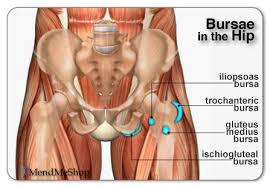
  • Lifting properly. Bend your knees when you lift. Failing to do so puts extra stress on the bursae in your hips.
  • Wheeling heavy loads. Carrying heavy loads puts stress on the bursae in your shoulders. Use a dolly or a wheeled cart instead.
  • Taking frequent breaks. Alternate repetitive tasks with rest or other activities.
  • Walking around. Try not to sit in one position too long, especially on hard surfaces, because that puts pressure on the bursae in your hips and buttocks.
  • Maintaining a healthy weight. Being overweight places more stress on your joints.
  • Exercising. Strengthening your muscles can help protect your affected joint.
  • Warming up and stretching before strenuous activities to protect your joints from injury.


Revised 4/02/24 by Elizabeth Lynch RN BSN


QUOTE FOR THURSDAY:

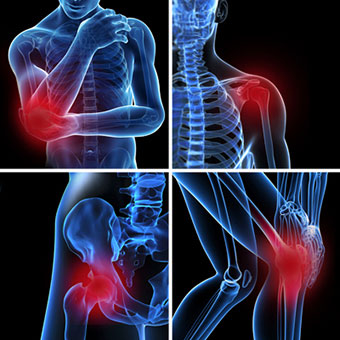
“Bursitis is inflammation or irritation of a bursa sac. You have these sacs all over your body. They’re filled with fluid that helps ease rubbing and friction between tissues like bone, muscle, tendons, and skin. Bursitis is common around major joints like your shoulder, elbow, hip, or knee.”

WebMD