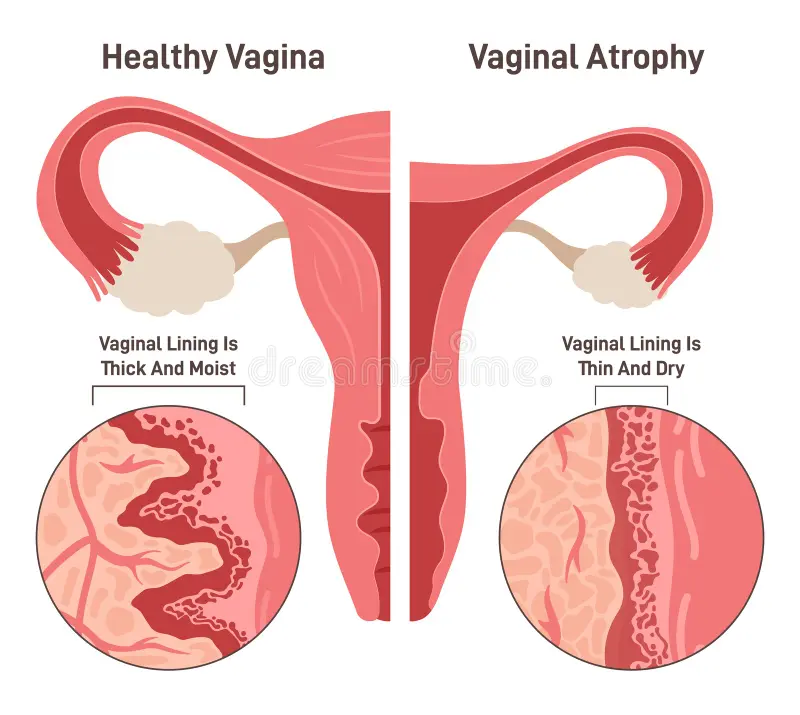
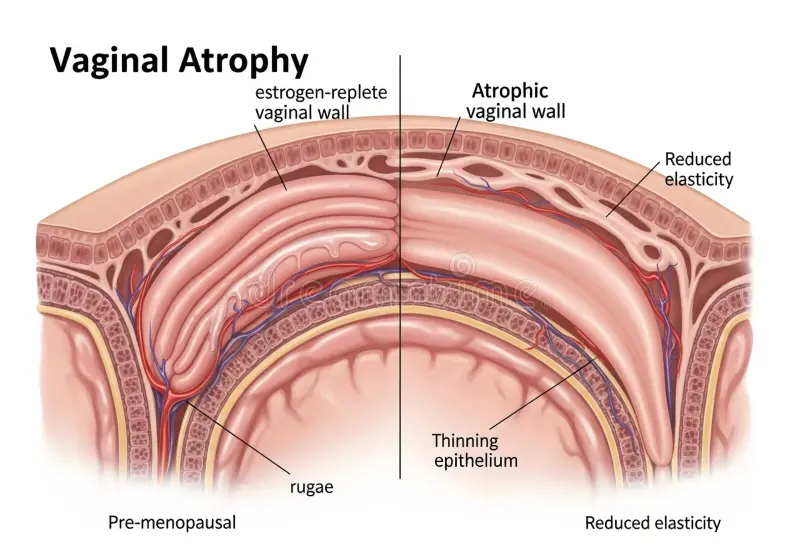
Vaginal atrophy is a condition where the lining of your vagina gets drier and thinner. This results in itching, burning and pain during sex, among other symptoms. The condition also includes urinary tract problems such as urinary tract infections (UTIs) and urinary incontinence.
Vaginal atrophy most often occurs during perimenopause and menopause when your ovaries produce less estrogen. It can occur when your estrogen levels decrease due to cancer treatment or having your ovaries removed. You may experience many uncomfortable symptoms when hormone levels decrease. These symptoms can disrupt your quality of life.
Recently, the term vaginal atrophy has been replaced with the newer term, genitourinary syndrome of menopause (GSM). This new term helps describe not just the vaginal, but also the urinary symptoms that may occur as a result of low estrogen.
How common is vaginal atrophy (GSM)?
At least half of women who enter menopause show signs and symptoms of genitourinary syndrome of menopause. Vaginal dryness is typically the first indication that you’re developing vaginal atrophy.
Symptoms and Causes
What are the symptoms of vaginal atrophy (GSM)?
The tissue that lines the wall of your vagina becomes thin, dry and inflamed when you have vaginal atrophy. Often, the first sign is less lubrication (dryness), which you may notice during sex. Other symptoms of genitourinary syndrome of menopause include:
- Burning and/or itching in your vagina.
- Dyspareunia (pain during sex).
- Unusual vaginal discharge (usually a yellow color).
- Spotting or bleeding, especially during sex.
- Vulvar itching (itching around your external genitals).
It can also affect your urinary system and cause symptoms like:
- Frequent urinary tract infections (UTIs).
- Being unable to hold your pee (incontinence).
- Peeing more than usual.
- Painful urination (dysuria).
- Blood in your pee (hematuria).
- Burning feeling when you pee.
What causes vaginal atrophy (GSM)?
During menopause, your body makes less estrogen. Without estrogen, the lining of your vagina can become thinner and less stretchy. Your vaginal canal can also narrow and shorten. Less estrogen also lowers the amount of normal vaginal fluids and changes the acid balance in your vagina. All of these factors make your vaginal tissue more delicate and more likely to become irritated.
Your body can also produce less estrogen during events other than menopause. If you’re breastfeeding, receiving treatment for cancer or have had your ovaries removed, you can experience vaginal atrophy due to lack of estrogen.
Who is at risk for getting vaginal atrophy (GSM)?
Women in menopause are the most likely to experience vaginal atrophy because their body naturally produces less estrogen. However, other factors can decrease estrogen levels and lead to vaginal atrophy. These include:
- Decreased ovarian functioning due to chemotherapy or radiation therapy.
- Medications that contain antiestrogen properties including tamoxifen, medroxyprogesterone and nafarelin.
- Oophorectomy (removal of your ovaries).
- Some birth control pills.
- Immune disorders.
- Breastfeeding.
- Smoking cigarettes.