 What are the complications of vaginal atrophy (GSM)?
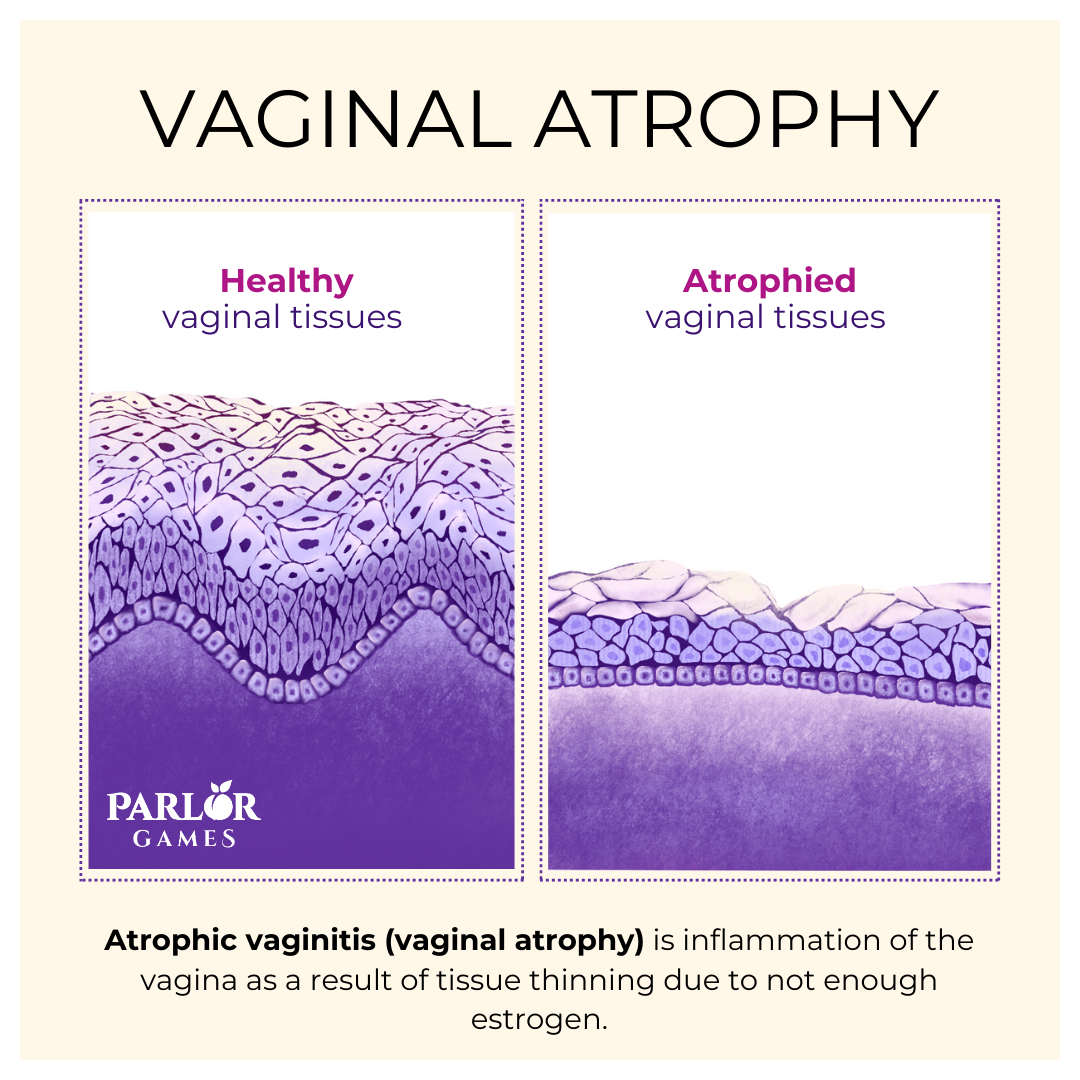
Vaginal atrophy can affect your quality of life and your relationship with your partner(s). There are physical and emotional side effects of GSM. Physical symptoms like pain, burning, itching and leaking pee can disrupt all areas of your life. Emotional side effects are just as complicated as the physical side effects. If you’re experiencing symptoms of vaginal atrophy, you may lose interest in sex and intimacy or lose confidence in yourself. Please know that all of these feelings are normal and that your healthcare provider is there to help you.
Diagnosis and Tests
How is vaginal atrophy (GSM) diagnosed?
A healthcare provider can diagnose vaginal atrophy based on your symptoms and a pelvic exam to look at your vagina and cervix. Classic signs of atrophy during a pelvic exam include:
- A shortened or narrowed vagina.
- Dryness, redness and swelling.
- Loss of stretchiness.
- Whitish discoloration to your vagina.
- Vulvar skin conditions, vulvar lesions and/or vulvar patch redness.
- Minor cuts (lacerations) near your vaginal opening.
- Decrease in size of the labia.
What tests are done to diagnose vaginal atrophy (GSM)?
While healthcare providers typically rely on examinations to diagnose atrophic changes or GSM, they may do the following tests to rule out other conditions:
- Pap test.
- Urine sample.
- Ultrasound.
- Vaginal pH (acid test).
- Vaginal infection testing.
What questions might my healthcare provider ask to diagnose vaginal atrophy (GSM)?
- Are you in menopause?
- What medications are you taking?
- Did you recently have a baby?
- Is vaginal intercourse painful?
- Have you tried over-the-counter (OTC) lubricants or moisturizers?
- Have you noticed any vaginal discharge?
- Have you been bleeding or spotting?
- How long have you noticed these symptoms?
It’s common to feel uncomfortable discussing symptoms of vaginal atrophy. Don’t feel ashamed to mention it to your healthcare provider if you think you have symptoms. There are several different treatment options available and most are successful in treating your symptoms.
Management and Treatment
What are the hormonal treatment options for vaginal atrophy (GSM)?
Estrogen therapy and dehydroepiandrosterone (DHEA) are the only hormone therapies for vaginal atrophy.
Topical estrogen
Topical vaginal estrogen treats symptoms of vaginal atrophy without increasing levels of estrogen levels in your bloodstream. It’s available in a cream, a vaginal pill or a ring. Your healthcare provider can discuss each option with you and which may work best for you.
- Vaginal estrogen cream: You put this cream into your vagina using an applicator. Most people need the cream daily for several weeks, but then 2-3 times per week.
- Vaginal ring: A vaginal ring is a thin, flexible ring your healthcare provider places into your vagina. The ring releases a low dose of estrogen over the course of three months. Then, your provider removes and replaces the ring.
- Vaginal tablet: You place a small tablet into your vagina using an applicator. Like other estrogen treatments, you start out using it daily before tapering off to 2-3 times per week.
-
Hormone replacement therapy
Also called systemic estrogen therapy, this type of hormone therapy may be helpful if you have other symptoms of menopause such as severe hot flashes. This is taken in higher doses that go to other cells of your body, not just to your vagina. If you’re more than 10 years past menopause or only have vaginal dryness, you’ll probably use local therapy. If you do need systemic hormone therapy, there are benefits, such as improved vaginal health, better sleep, fewer hot flashes and improved mood. You and your healthcare provider can discuss if systemic hormone therapy is right for you.
What are nonhormonal treatments for vaginal atrophy (GSM)?
You and your healthcare provider will work closely together to come up with a treatment plan for vaginal atrophy. They’ll help you decide which plan is most effective based on your symptoms and the severity of them. Estrogen and DHEA therapy are considered to be the most effective. However, these therapies aren’t for everyone. There are several treatment options available that don’t involve hormones.
Lubricants and moisturizers
Lubricants and moisturizers treat vaginal dryness. This improves comfort during sex. Multiple brand names are available over the counter at your local grocery store.
Vaginal lubricants should be used during intercourse to reduce friction and pain with sex. They’re water, silicone or oil based. These products are very short-acting.
based on your health history and your situation. They’ll work with you to determine the most successful treatment plan. Keep in mind that many people find success combining treatments.
Outlook / Prognosis
What can I expect if I’ve been diagnosed with vaginal atrophy (GSM)?
You don’t have to just “live with” vaginal atrophy. Even if you’re in menopause or postmenopausal, that doesn’t mean you should have to deal with UTIs, vaginal itching or painful sex. Treatment for GSM can be very successful. Don’t be afraid to try different treatments and work with your provider on a method that works best for you.
Can vaginal atrophy (GSM) be reversed?
Vaginal atrophy can’t be cured, but you don’t have to live with the discomfort. With proper diagnosis and treatment, the symptoms can be managed.
Can vaginal atrophy (GSM) get worse?
Yes, it can. That’s why prompt treatment is important. The sooner you get treatment, the less likely it is that your vaginal atrophy will worsen. For example, the longer you go without estrogen, the dryer your vagina will become. Without treatment, your vaginal atrophy may get worse. Occasionally, atrophy can become so severe that it can significantly narrow your vaginal opening. This may make it harder to treat the atrophy if treatment is started too late.
Prevention
Can vaginal atrophy (GSM) be prevented?
Losing estrogen is part of your body’s natural aging process.
However, there are ways to keep vaginal atrophy from getting worse. Avoid vaginal irritants such as perfumes, dye, shampoo, detergents and douching.
Remember, regular sexual activity is good for vaginal atrophy because it increases blood flow to your vaginal tissue.
Living With
What is it like living with vaginal atrophy (GSM)?
Vaginal atrophy can seriously affect your quality of life in general, not just your sex life. The pain, dryness, burning/itching, spotting, bleeding, urinary problems, UTIs and discharge can make you very uncomfortable and interfere with your daily living. One in 4 women report that vaginal atrophy has had a negative impact on other areas of their lives including their sleep, sexual health and general happiness.
How do I take care of myself?
Prioritize your sexual health as much as any other aspect of your health. Look to your healthcare provider for answers to any questions and concerns.
When should I see my healthcare provider for vaginal atrophy (GSM)?
Even if you’re not in menopause, be sure to report any symptoms of dryness, pain, burning/itching, urinary problems, unusual spotting or bleeding or discharge to your healthcare provider.
If weeks go by and the over-the-counter moisturizers you’re using for dryness don’t work, you should see your healthcare provider.
Also, always see your healthcare provider for any symptoms that negatively impact your daily life.
What questions should I ask my healthcare provider?
- What over-the-counter options do you recommend for me?
- What prescriptions do you recommend for me?
- Is my condition temporary?
- Are there other ways to treat my condition?
- Are there any risks of treatment?
- How long will it be before the treatments work?
- Do I have another condition on top of vaginal atrophy?
- What else can I do to stop vaginal atrophy from worsening?
- What can my partner(s) do to help?
Additional Common Questions
What’s the difference between vaginal atrophy and a yeast infection?
Both vaginal atrophy and yeast infections can have symptoms of dryness, itching, redness and pain. However, lack of estrogen causes vaginal atrophy while a fungal infection causes a vaginal yeast infection. Consult with your healthcare provider regarding symptoms so that, together, you can determine what condition you have.
Just Remember:
Vaginal atrophy is serious. It affects your quality of life with discomfort, frequent bathroom trips, frequent UTIs, burning, pain with sex and more. Fortunately, there are many treatments and your healthcare provider can help you find the best option for your symptoms.
Seek treatment. Don’t be afraid to have the conversation with your healthcare provider and with your partner(s). Always follow your healthcare provider’s instructions and do what you can to manage vaginal atrophy.