QUOTE FOR TUESDAY:
“Top leading causes of death for most people can be prevented but choose not to change their life styles or eating habits or activity/exercising way of living but if they did their life would probably last longer being healthier.”
CDC Center for Disease Control
QUOTE FOR MONDAY:
“Heart disease is the leading cause of death for both men and women in the US and also the leading cause of death worldwide. More than half of the deaths that occur as a result of heart disease are in men.”
American Heart Association
QUOTE FOR THE WEEKEND:
“Ever heard of drinking water to lose weight? The diet tactic actually works, along with eating foods that contain a lot of water, like fruits and veggies.”
Health.com
QUOTE FOR FRIDAY:
“A multi hit theory behind the progression of SIRS to organ dysfunction and possibly multiple organ dysfunction syndrome (MODS). In this theory, the event that initiates the SIRS cascade primes the pump. With each additional event, an altered or exaggerated response occurs, leading to progressive illness.”
U.S. National Library of Medicine
National Institutes of Health
QUOTE FOR THURSDAY:
“Sepsis is the life threatening response to infection which can lead to tissue damage, organ failure, and even death.”
Sepsis Alliance (www.sepsis.org)
QUOTE FOR WEDNESDAY:
Part II Photosensitivity skin problems due to exposure to exposure of sun ultraviolet rays.

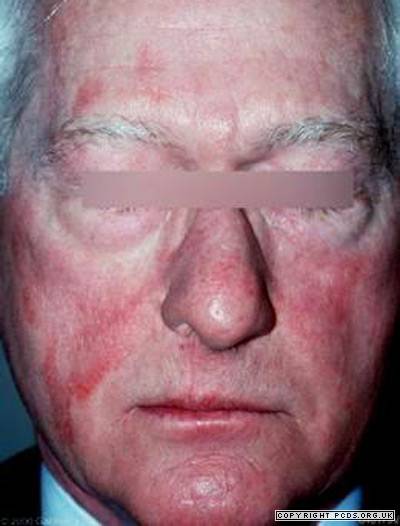
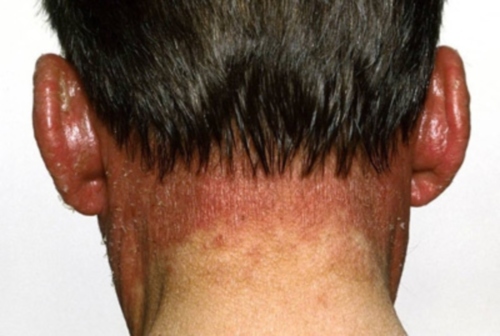
Both pictures above are drug chemically induced Photosensitivity Reactions.
Sunlight can trigger immune system reactions.
People develop itchy eruptions or areas of redness and inflammation on patches of sun-exposed skin.
These reactions typically resolve without treatment.
Photosensitivity, sometimes referred to as a sun allergy, is an immune system reaction that is triggered by sunlight. Photosensitivity reactions include solar urticaria, chemical photosensitization (Ex. from drug reactions), and polymorphous light eruption and are usually characterized by an itchy eruption on patches of sun-exposed skin. People may inherit a tendency to develop these reactions. Certain diseases, such as systemic lupus erythematosus and some porphyrias, also may cause more serious skin reactions to sunlight.
Solar urticaria
Hives (large, itchy red bumps or welts) that develop after only a few minutes of exposure to sunlight are called solar urticaria. The hives typically last for minutes or hours. This disorder can be difficult to treat, but doctors may prescribe histamine (H1) blockers, antimalarial drugs, corticosteroids, sunscreens, or ultraviolet (UV) light therapy. A person can be prone to developing solar urticaria for a very long time, sometimes indefinitely. People with large affected areas sometimes have headaches and wheezing and feel dizzy, weak, and nauseated.
Chemical photosensitivity
Over 100 substances, swallowed or applied to the skin, are known to cause sun-induced reactions on the skin. A limited number cause most reactions ( Some Substances That Sensitize the Skin to Sunlight). To treat chemical photosensitivity reactions, corticosteroids are applied to the skin and the substance that is causing the reaction is avoided. There are two types of chemical photosensitivity: phototoxicity and photoallergy.
In phototoxicity, people have pain and develop redness, inflammation, and sometimes brown or blue-gray discoloration in areas of skin that have been exposed to sunlight for a brief period. These symptoms resemble those of sunburn, but the reaction differs from sunburn in that it occurs only after the person has swallowed certain drugs (such as tetracyclines or diuretics) or chemical compounds or has applied them to the skin (such as perfume and coal tar). Some plants (including limes, celery, and parsley) contain compounds called furocoumarins that make some people’s skin more sensitive to the effects of UV light. This reaction is called phytophotodermatitis. All phototoxic reactions appear only on areas of skin that have been exposed to the sun. They usually develop within hours after sun exposure.
In photoallergy, an allergic reaction causes redness, scaling, itching, and sometimes blisters and spots that resemble hives. This type of reaction can be caused by aftershave lotions, sunscreens, and sulfonamides. Substances that cause photoallergy are capable of doing so only after the person has been exposed to both the substance and sunlight (because sunlight is what makes the substance capable of triggering photoallergy). Photoallergic reactions can affect areas of skin that have not been exposed to the sun. They usually develop 24 to 72 hours after sun exposure.
Diagnosis
There are no specific tests for photosensitivity reactions. A doctor suspects a photosensitivity reaction when a rash appears only in areas exposed to sunlight. A close review of the person’s medical history, skin symptoms, any diseases, drugs taken by mouth, or substances applied to the skin (such as drugs or cosmetics) may help a doctor pinpoint the cause of the photosensitivity reaction. Doctors may do tests to rule out diseases that are known to make some people susceptible to such reactions (such as systemic lupus erythematosus).
When a rash occurs on an area of skin that has been exposed to the sun and the diagnosis is not clear, doctors may do skin patch tests and reaction reproduction tests that involve exposure to UV light (phototesting) when the person is not using any drugs that cause photosensitivity reactions. These tests may help clarify which type of photosensitivity reaction may be the cause.
Prevention and Treatment
QUOTE FOR TUESDAY:
Ultraviolet radiation: Invisible rays that are part of the energy that comes from the sun. Ultraviolet radiation can burn the skin and cause skin cancer.
earthobservatory.nasagov
QUOTE FOR MONDAY:
The main difference between osteoarthritis and rheumatoid arthritis is the cause behind the joint symptoms. Osteoarthritis is caused by mechanical wear and tear on joints. Rheumatoid arthritis is an autoimmune disease in which the body’s own immune system attacks the body’s joints.
WEB MD