Diabetic Eye Disease

According to the American Academy of Ophthalmology, approximately 29 million Americans age 20 or older have diabetes, but almost one-third don’t know they have the disease and are at risk for vision loss and other health problems.

Early symptoms are often unnoticed, therefore vision may not be affected until the disease is severe and less easily treated.

Diabetic eye disease, a group of eye problems that affects those with diabetes, includes diabetic retinopathy, cataracts and glaucoma. The most common of these is diabetic retinopathy especially those with Type I Diabetes Mellitus (DM), which affects 5.3 million Americans age 18 and older.  When diagnosed with DM Type I as opposed to Type II the higher the odds you will develop eye problems especially if you are non-compliant in taking care of the diabetes.  Why?  Because in Type I Diabetes you develop this diabetes in childhood not adulthood like in Type II Diabetes and that patient with DM from childhood will be with high glucose longer than one who develops it later in life, regarding Type II (For example take Mary Tyler Moore who had Type I DM and did have severe vision loss to blindness almost with her vision later in life but with the disease from childhood.  The longer you have the disease the higher you risk of having vision loss since your exposed to high blood glucose in your body versus another person with no diabetes or a patient who got DM later in life).

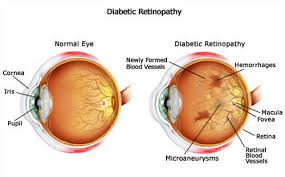
Diabetic retinopathy is a potentially blinding condition in which the blood vessels inside the retina become damaged from the high blood sugar levels associated with diabetes. This leads to fluids leaking into the retina and obstructing blood flow. Both may cause severe vision loss.

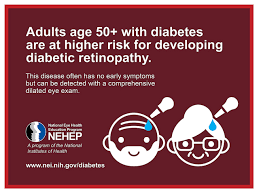
Once you are diagnosed with diabetes, schedule a complete dilated eye examination with your Eye M.D. (ophthalmologist) at least once a year. Make an appointment promptly if you experience blurred vision and/or floaters that:

    • Affect only one eye;
    • Last more than a few days;
    • Are not associated with a change in blood sugar.

Diabetes can also affect your vision by causing cataracts and glaucoma. If you have diabetes, you may get cataracts at a younger age, and your chances of developing glaucoma are doubled.

Prevention of this vision loss is:

Early diagnosis of diabetes and, most importantly, maintaining STRICT CONTROL of blood sugar and hypertension through diet, exercise and medication, all these steps can help reduce your risk of developing eye disease associated with diabetes.


 

QUOTE FOR MONDAY:

“In cancer care, different types of doctors often work together to create a patient’s overall treatment plan that combines different types of treatments. This is called a multidisciplinary team. Cancer care teams include a variety of other health care professionals.”

Cancer.Net


QUOTE FOR FRIDAY:

“The stage of a cancer describes how far it has spread. Your treatment and prognosis (outlook) depend, to a large extent, on the cancer’s stage.”

American Cancer Society


QUOTE FOR THURSDAY:

“There are three main types of lung cancer. Knowing which type you have is important because it affects your treatment options and your outlook (prognosis). If you aren’t sure which type of lung cancer you have, ask your doctor so you can get the right information.”

American Cancer Society

QUOTE FOR WEDNESDAY:

“This out of control growth causes problems such as the creation of a mass (tumor). Lung cancer can affect the tissue surrounding the mass and interfere with the organ function. It can also break away from the original mass and spread to other parts of the body (metastasis).”

American Cancer Society


QUOTE FOR MONDAY:

happy-halloween2 happy-halloween happyhalloween4

“By keeping Halloween a fun, safe and happy holiday for you and your kids, you’ll look forward to many happy years of Halloween fun!”

HalloweenSafety.com

QUOTE FOR THE WEEKEND:

Here’s one tip for halloween,  some of us have dogs that go with us trick or treating but don’t forget:

1.If you dress up your pet, make sure the costume lets them breathe and move. Speaking of eating, chocolate may be a favorite in your goodie bag, but it can be deadly to dogs and cats.

The darker the chocolate, the deadlier it is to your pet, according to Dr. Ron DeHaven with the American Veterinary Association.

2.Avoid costumes with small parts they might swallow.”
CNN

QUOTE FOR FRIDAY:

“Don’t fill up on junk this Halloween. Treat yourself to yummy fruits and vegetables too. They make a great healthy snack to serve for Halloween parties with some sweets. It’s Halloween and the flu season is here! Keeping hands clean by washing them with soap and water is one of the best ways to prevent the spread of germs.”

CDC Center for Disease Control and Prevention

QUOTE FOR WEDNESDAY:

“Breathing out requires no effort from your body unless you have a lung disease or are doing physical activity.  As your lungs expand, air is sucked in through your nose or mouth. The air travels down your windpipe and into your lungs. After passing through your bronchial tubes, the air finally reaches and enters the alveoli (air sacs) but with COPD this is not the case.”

NIH National Heart, Lung, and Blood Institute.