
Part II Alice in Wonderland-prognosis, causes, how its diagnosed and treatment!

Genetic and environmental influences

While there currently is no identified genetic locus/loci associated with Alice in Wonderland Syndrome, observations suggest that a genetic component does exist. AiWS does appear to be passed on from parent to child, with one case study showcasing a grandmother, mother, son, and daughter all with Alice in Wonderland Syndrome. In addition, there is an established hereditary trait of migraines. Examples of environmental influences on the incidence of AiWS include the use of the drug topiramate and potentially the dietary intake of tyramine. Further research is required to establish the genetic and environmental influences on Alice in Wonderland Syndrome.

Alice in Wonderland

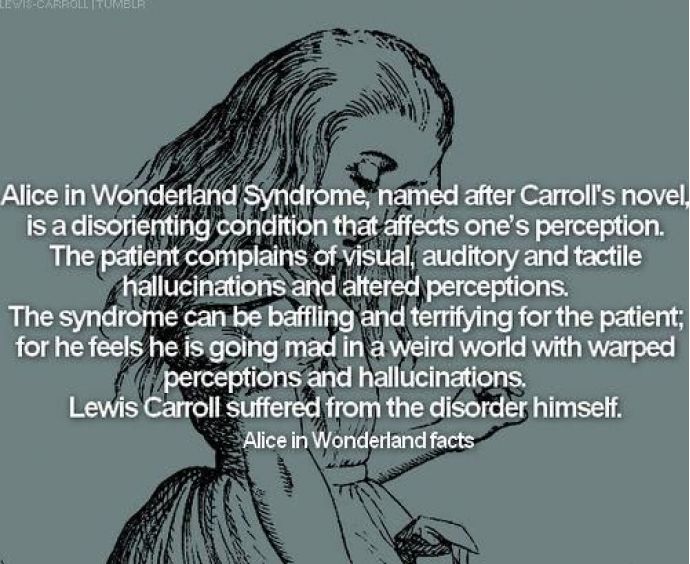
Alice in Wonderland Syndrome was named after Lewis Carroll’s famous 19th-century novel Alice’s Adventures in Wonderland. In the story, Alice, the title character, experiences numerous situations similar to those of micropsia and macropsia. The thorough descriptions of metamorphosis clearly described in the novel were the first of their kind to depict the bodily distortions associated with the condition. Speculation has arisen that Carroll may have written the story using his own direct experience with episodes of micropsia resulting from the numerous migraines he was known to suffer from. It has also been suggested that Carroll may have suffered from temporal lobe epilepsy.

Gulliver’s Travels

Alice in Wonderland Syndrome’s symptom of micropsia has also been related to Jonathan Swift’s novel Gulliver’s Travels. It has been referred to as “Lilliput sight” and “Lilliputian hallucination”, a term coined by British physician Raoul Leroy in 1909, based on the small people that inhabited the island of Lilliput in the novel.

Etiology

Complete and partial forms of the Alice in Wonderland syndrome exist in a range of disorders, including epilepsy, intoxicants, infectious states, fevers, and brain lesions. Furthermore, the syndrome is commonly associated with migraines, as well as the use of psychoactive drugs. It can also be the initial symptom of the Epstein–Barr virus (see mononucleosis), and a relationship between the syndrome and mononucleosis has been suggested. Epstein-Barr Virus appears to be the most common cause in children, while for adults it is more commonly associated with migraines.

Cerebral hypotheses

AiWS can be caused by abnormal amounts of electrical activity causing abnormal blood flow in the parts of the brain that process visual perception and texture. Nuclear medical techniques using technetium, performed on patients during episodes of Alice in Wonderland syndrome, have demonstrated that AiWS is associated with reduced cerebral perfusion in various cortical regions (frontal, parietal, temporal and occipital), both in combination and in isolation. It has been hypothesized that any condition resulting in a decrease in perfusion of the visual pathways or visual control centers of the brain may be responsible for the syndrome. For example, one study used single photon emission computed tomography to demonstrate reduced cerebral perfusion in the temporal lobe in patients with AiWS. Other theories exist that suggest the syndrome is a result of unspecific cortical dysfunction (e.g. from encephalitis, epilepsy, decreased cerebral perfusion), or reduced blood flow to other areas of the brain.  Other theories suggest that disordered body image perceptions stem from within the parietal lobe. This has been demonstrated by the production of disturbances of body image through electrical stimulation of the posterior parietal cortex. Other researchers suggest that metamorphopsias may be a result of reduced perfusion of the non-dominant posterior parietal lobe during migraine episodes.

Throughout all the neuroimaging studies, several cortical regions (including the temporoparietal junction within the parietal lobe, and the visual pathway, specifically the occipital lobe) are associated with the development of Alice in Wonderland syndrome symptoms.

Migraines

The role of migraines in Alice in Wonderland syndrome is still not understood, but both vascular and electrical theories have been suggested. For example, visual distortions may be a result of transient, localized ischaemia (an inadequate blood supply to an organ or part of the body) in areas of the visual pathway during migraine attacks. In addition, a spreading wave of depolarization of cells (particularly glial cells) in the cerebral cortex during migraine attacks can eventually activate the trigeminal nerve’s regulation of the vascular system. The intense cranial pain during migraines is due to the connection of the trigeminal nerve with the thalamus and thalamic projections onto the sensory cortex. Alice in Wonderland syndrome symptoms can precede, accompany, or replace the typical migraine symptoms.

Diagnosis

Alice in Wonderland syndrome is a disturbance of perception rather than a specific physiological change to the body’s systems. The diagnosis can be presumed when other causes have been ruled out and if the patient presents symptoms along with migraines and complains of onset during the day (although it can also occur at night). As there are no established diagnostic criteria for Alice in Wonderland syndrome, there is likely to be a large degree of variability in the diagnostic process and thus it is likely to be poorly diagnosed.

Prognosis

Whatever the cause, the bodily related distortions can recur several times a day and may take some time to abate. Understandably, the person can become alarmed, frightened, and panic-stricken throughout the course of the hallucinations—maybe even hurt themselves or others around them. The symptoms of the syndrome themselves are not harmful and are likely to disappear with time. The outcome is typically not harmful, especially in children, and most patients outgrow these episodes. The long-term prognosis typically depends on the root cause of the syndrome, and it is the underlying condition which must be evaluated and treated. Often, the difficulty lies within the patient’s reluctance to describe their symptoms out of fear of being labeled with a psychiatric disorder.

Treatment

At present, Alice in Wonderland syndrome has no standardized treatment plan. Often, treatment methods revolve around migraine prophylaxis, as well as the promotion of a low tyramine diet. Drugs that may be used to prevent migraines include: anticonvulsants, antidepressants, calcium channel blockers, and beta blockers. Other treatments that have been explored include repetitive transcranial magnetic stimulation (rTMS). Further research is required to establish an effective treatment regime.

Epidemiology

The lack of established diagnostic criteria or large-scale epidemiological studies on Alice in Wonderland syndrome means that the exact prevalence of the syndrome is currently unknown. One study on 3,224 adolescents in Japan demonstrated the occurrence of macropsia and micropsia to be 6.5% in boys and 7.3% in girls, suggesting that the symptoms of AiWS may not be so rare.

It appears that the male/female ratio is dependent on the age range being observed. Studies showed that younger males (age range of 5 to 14 years) were 2.69 times more likely to experience AiWS than girls of the same age, while there were no significant differences between students of 13 to 15 years of age. Conversely, female students (16- to 18-year-olds) showed a significantly greater prevalence.

The average age of the start of Alice in Wonderland syndrome is six but it is very normal for some to experience the syndrome from childhood to their late 20’s. It is also thought that this syndrome is hereditary because many parents who have AiWS report their children having it as well.


QUOTE FOR THE WEEKEND:

“Alice in Wonderland syndrome is a brain-related condition that disrupts how you perceive your own body, the world around you or both. Named for a famous children’s storybook, this rare condition makes things look or feel larger or smaller than they actually are. It can happen for several reasons, many temporary or treatable.

Alice in Wonderland syndrome (AIWS) disrupts your brain’s ability to process sensory input. The disruption affects how you perceive the size of things you see around you, the feel or look of your own body, or both. It can also distort your sense of reality.”

Cleveland Clinic (Alice in Wonderland Syndrome (AIWS): Symptoms & Treatment)

Part I Alice in Wonderland-Learn what this diagnosis is and the signs and symptoms!

Alice in Wonderland Syndrome (AiWS), also known as Todd’s syndrome or dysmetropsia, is a disorienting neuropsychological condition that affects perception. People may experience distortions in visual perception such as micropsia (objects appearing small), macropsia (objects appearing large), pelopsia (objects appearing to be closer than they are), or teleopsia (objects appearing to be further away than they are). Size distortion may occur in other sensory modalities as well.

The syndrome is sometimes called Todd’s syndrome, in reference to an influential description of the condition in 1955 by Dr. John Todd (1914-1987), a British Consultant Psychiatrist at High Royds Hospital at Menston in West Yorkshire. Todd discovered that several of his patients experienced severe headaches causing them to see and perceive objects as greatly out of proportion. They have altered sense of time and touch, as well as distorted perceptions of their own body. Although having migraine headaches, none of these patients had brain tumors, damaged eyesight, or mental illness that could have caused similar symptoms. They were also all able to think lucidly and could distinguish hallucinations from reality, however, their perceptions were skewed.

Since Lewis Carroll had been a well-known migraine sufferer with similar symptoms, Todd speculated that Carroll had used his own migraine experiences as a source of inspiration for his famous 1865 novel Alice’s Adventures in Wonderland. Carroll’s diary reveals that in 1856 he consulted William Bowman, an eminent ophthalmologist, about the visual manifestations of the migraines he regularly experienced. Since Carroll had these migraine symptoms for years before writing Alice’s Adventures, it seemed reasonable that Carroll had used his experiences as inspiration.

AiWS is often associated with migraines, brain tumors, and psychoactive drug use. It can also be the initial symptom of the Epstein–Barr Virus (see mononucleosis). AiWS can be caused by abnormal amounts of electrical activity resulting in abnormal blood flow in the parts of the brain that process visual perception and texture.

Anecdotal reports suggest that the symptoms are common in childhood, with many people growing out of it in their teen years. It appears that AiWS is also a common experience at sleep onset and has been known to commonly arise due to a lack of sleep.

Signs and symptoms

AiWS is often associated with migraines. AiWS affects the sense of vision, sensation, touch, and hearing, as well as one’s own body image. Nausea, dizziness, and agitation are also commonly associated symptoms with Alice in Wonderland Syndrome.

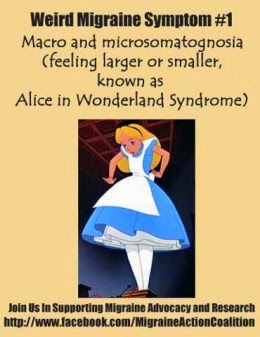
Individuals with AiWS can experience hallucinations or illusions of expansion, reduction or distortion of their own body image, such as microsomatognosia (feeling that their own body or body parts are shrinking), or macrosomatognosia (feeling that their body or body parts are growing taller or larger). These changes in perception are collectively known as metamorphosias, or Lilliputian hallucinations.

People with certain neurological diseases have experienced similar visual hallucinations. These hallucinations are called “Lilliputian”, which means that objects appear either smaller or larger than reality.

Patients may experience either micropsia or macropsia. Micropsia is an abnormal visual condition, usually occurring in the context of visual hallucination, in which the affected person sees objects as being smaller than they are in reality. Macropsia is a condition where the individual sees everything larger than it actually is.

One 17-year-old man described his odd symptoms by the following: “Quite suddenly objects appear small and distant or large and close. I feel as [if] I am getting shorter and smaller ‘shrinking’ and also the size of persons are not longer than my index finger (a lilliputian proportion). Sometimes I see the blind in the window or the television getting up and down, or my leg or arm is swinging. I may hear the voices of people quite loud and close or faint and far. Occasionally, I experience attacks of migrainous headache associated with eye redness, flashes of lights and a feeling of giddiness. I am always conscious to the intangible changes in myself and my environment”.

Although a person’s eyes are normal, they will often ‘see’ objects as the incorrect size, shape or perspective angle. Therefore, people, cars, buildings, houses, animals, trees, environments, etc., look smaller or larger than they should be. Further, depth perception can be altered whereby perceived distances are incorrect. For example, a corridor may appear to be very long, or the ground may appear too close.

Zoopsias is an additional hallucination that is sometimes associated with Alice in Wonderland Syndrome. Zoopsias involves hallucinations of either swarms of small animals (e.g. ants and mice etc.), or isolated groups of larger animals (e.g. dogs and elephants etc.). This experience of zoopsias is shared in a variety of conditions, such as delirium tremens.

The person affected by Alice in Wonderland syndrome may also lose a sense of time, a problem similar to the lack of spatial perspective. Time seems to pass very slowly, akin to an LSD experience. The lack of time and space perspective also leads to a distorted sense of velocity. For example, one could be inching along ever so slowly in reality, yet it would seem as if one were sprinting uncontrollably along a moving walkway, leading to severe, overwhelming disorientation.

Sufferers of Alice in Wonderland Syndrome can often experience paranoia as a result of disturbances in sound perception. This can include amplification of soft sounds or misinterpretation of common sounds.

In addition, some people may, in conjunction with a high fever, experience more intense and overt hallucinations, seeing things that are not there and misinterpreting events and situations. Less frequent symptoms sometimes described in Alice in Wonderland Syndrome patients include loss of limb control and dis-coordination, memory loss, lingering touch and sound sensations, and emotional instability.

It has been noted that patients are often reluctant to describe their symptoms due to fear of being labeled with a psychiatric disorder. It is usually easy to rule out psychosis as those with Alice in Wonderland Syndrome are typically aware that their hallucinations and distorted perceptions are not ‘real’, and they have not lost touch with reality. Furthermore, younger patients who frequently experience Alice in Wonderland syndrome may struggle to describe their unusual symptoms, and thus, it is recommended to encourage children to draw their visual illusions during episodes. It appears that the symptoms of AiWS do not change in severity over the course of the syndrome, and though the symptoms may acutely impact the patient’s life, Alice in Wonderland syndrome typically resolves itself within weeks or months. Furthermore, AiWS symptoms occur transiently during the day for short periods of time, with most patients describing their symptoms as lasting anywhere between 10 seconds to 10 minutes. This, combined with the typically short duration of the syndrome, suggests that Alice in Wonderland Syndrome typically causes a relatively short-term disruption of normal functioning. However, symptoms can be debilitating when experienced, and the individual should exercise caution, for example when driving, as the symptoms can appear rapidly. Symptom severity influences whether or not the individual will be able to hold a job during these periods of misperception.

Come back tomorrow for Part II on Alice in Wonderland!


QUOTE FOR FRIDAY:

“Post-traumatic stress disorder (PTSD) is a mental health condition that’s caused by an extremely stressful or terrifying event — either being part of it or witnessing it by a women or male. Symptoms may include flashbacks, nightmares, severe anxiety and uncontrollable thoughts about the event.

Most people who go through traumatic events may have a hard time adjusting and coping for a short time. But with time and by taking good care of themselves, they usually get better. If the symptoms get worse, last for months or years, and affect their ability to function daily, they may have PTSD.

Getting treatment after PTSD symptoms arise can be very important to ease symptoms and help people function better.”

MAYO CLINIC (https://www.mayoclinic.org/diseases-conditions/post-traumatic-stress-disorder/symptoms-causes/syc-203)

Part III PTSD=Post Traumatic Stress Disorder Awareness Month, including MST/Military Sexual Trauma with PTDS-Factors women come across + MST. What can be done for women and men with PTSD of all types!


Many risk factors revolve around the nature of the traumatic event itself.

Traumatic events are more likely to cause PTSD when they involve a severe threat to your life or personal safety: the more extreme and prolonged the threat, the greater the risk of developing PTSD in response. Intentional, human-inflicted harm—such as rape, assault, and torture— also tends to be more traumatic than “acts of God” or more impersonal accidents and disasters. The extent to which the traumatic event was unexpected, uncontrollable, and inescapable also plays a role.

Women’s changing role in our military

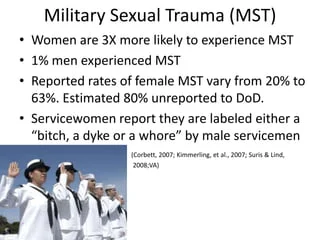
A growing number of women are serving in the US military. In 2008, 11 of every 100 Veterans (or 11%) from the Afghanistan and Iraq military operations were women. These numbers are expected to keep rising. In fact, women are the fastest growing group of Veterans.

What stressers do women face in the military?

Here are some stressful things that women might have gone through while deployed:

-Combat Missions.

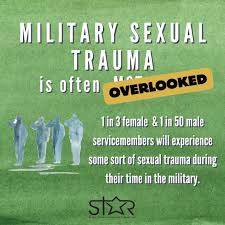
Military Sexual Trauma (MST). A number of women (and men) who have served in the military experience MST. MST includes any sexual activity where you are involved against your will, such as insulting sexual comments, unwanted sexual advances, or even sexual assault.  Know this as well, how common it is?  An estimated 1 in 3 female veterans and 1 in 100 male veterans in the VA healthcare system report experiencing MST. It is important to note that by percentage women are at greater risk, but nearly 40% of veterans who disclose MST to VA are men.  A good question is how many just don’t report it period?

-Feeling Alone. In tough military missions, feeling that you are part of a group is important.

-Worrying About Family. It can be very hard for women with young children or elderly parents to be deployed for long periods of time. Service members are often given little notice. They may have to be away from home for a year or longer. Some women feel like they are “putting their lives on hold.”

Because of these stressors, many women who return from deployment have trouble moving back into civilian life. While in time most will adjust, a small number will go on to have more serious problems like PTSD.

How many women Veterans have PTSD?

Among women Veterans of the conflicts in Iraq and Afghanistan, almost 20 of every 100 (or 20%) have been diagnosed with PTSD. We also know the rates of PTSD in women Vietnam Veterans. An important study found that about 27 of every 100 female Vietnam Veterans (or 27%) suffered from PTSD sometime during their postwar lives. To compare, in men who served in Vietnam, about 31 of every 100 (or 31%) developed PTSD in their lifetime.

What helps? Research shows that high levels of social support after the war were important for those women Veterans.

What can you do to find help for women or men with PTSD?

If you are having a hard time dealing with your wartime memories, there are a number of things that you can do to help yourself. There are also ways you can seek help from others.

  • Do things to feel strong and safe in other parts of your life, like exercising, eating well, and volunteering.
  • Talk to a friend who has been through the war or other hard times. A good friend who understands and cares is often the best medicine.
  • Join a support group. It can help to be a part of a group. Some groups focus on war memories. Others focus on the here and now. Still others focus on learning ways to relax.
  • Talk to a professional. It may be helpful to talk to someone who is trained and experienced in dealing with aging and PTSD. There are proven, effective treatments for PTSD. Your doctor can refer you to a therapist. You can also find information on PTSD treatment within VA at: VA PTSD Treatment Programs.
  • Tell your family and friends about LOSS and PTSD. It can be very helpful to talk to others as you try to place your long-ago wartime experiences into perspective. It may also be helpful for others to know what may be the source of your anger, nerves, sleep, or memory problems. Then they can provide more support.

Don’t be afraid to ask for help. Most of all, try not to feel bad or embarrassed to ask for help. Asking for help when you need it is a sign of wisdom and strength.

Don’t let PTSD get in the way of your life, hurt your relationships, or cause problems at work or school.

TYPES OF TREATMENT FOR BOTH MST including sexually harassed or assaulted and all other types of PTSD:

MST or PTSD treatment can help.  Learn what treatment is likely to help you make choices about what’s best for you.

If you suspect that you or a loved one has post-traumatic stress disorder (PTSD), it’s important to seek help right away. The sooner PTSD is confronted, the easier it is to overcome. If you’re reluctant to seek help, keep in mind that PTSD is not a sign of weakness, and the only way to overcome it is to confront what happened to you and learn to accept it as a part of your past.

  • Family therapy. Since PTSD affects both you and those close to you, family therapy can be especially productive. Family therapy can help your loved ones understand what you’re going through. It can also help everyone in the family communicate better and work through relationship problems caused by PTSD symptoms.
  • Medication is sometimes prescribed to people with PTSD to relieve secondary symptoms of depression or anxiety. Antidepressants such as Prozac and Zoloft are the medications most commonly used for PTSD. While antidepressants may help you feel less sad, worried, or on edge, they do not treat the causes of PTSD.
  • EMDR (Eye Movement Desensitization and Reprocessing) incorporates elements of cognitive-behavioral therapy with eye movements or other forms of rhythmic, left-right stimulation, such as hand taps or sounds. Eye movements and other bilateral forms of stimulation are thought to work by “unfreezing” the brain’s information processing system, which is interrupted in times of extreme stress.
  • Treatments for Veterans based on U.S. Dept of Veteran Affairs states the following;  “Evidence-based therapies are among the most effective treatments for PTSD. They can include the following — which are in many cases available at a local VA medical center.

    • Cognitive Processing Therapy (CPT) helps Veterans to identify how traumatic experiences have affected their thinking, to evaluate those thoughts, and to change them. Through CPT, Veterans may develop more healthy and balanced beliefs about themselves others, and the world.
    • Trauma-focused cognitive-behavioral therapy. Cognitive-behavioral therapy for PTSD and trauma involves carefully and gradually “exposing” yourself to thoughts, feelings, and situations that remind you of the trauma. Therapy also involves identifying upsetting thoughts about the traumatic event–particularly thoughts that are distorted and irrational—and replacing them with more balanced picture.
    • Prolonged Exposure (PE) helps Veterans to gradually approach and address traumatic memories, feelings, and situations. By confronting these challenges directly, Veterans may see PTSD symptoms begin to decrease.
    • Cognitive Behavioral Conjoint Therapy (CBCT) helps couples understand the effect of PTSD on relationships and can improve interpersonal communications. Veterans may also experience a change in thoughts and beliefs related to their PTSD and relationship challenges.
    • Eye Movement Desensitization and Reprocessing (EMDR) helps you process and make sense of your trauma. It involves calling the trauma to mind while paying attention to a back-and-forth movement or sound (like a finger waving side to side, a light, or a tone).”.

When looking for a therapist for post-traumatic stress disorder (PTSD), seek out mental health professionals who specialize in the treatment of trauma and PTSD. You can start by asking your doctor if he or she can provide a referral to therapists with experience treating trauma. You may also want to ask other trauma survivors for recommendations, or call a local mental health clinic, psychiatric hospital, or counseling center.

QUOTE FOR THURSDAY:

“Here are the best estimates for how common PTSD is in the U.S. adult population:

  • Most people who go through a traumatic event will not develop PTSD.
  • About 6 out of every 100 people (or 6% of the U.S. population) will have PTSD at some point in their lives. Many people who have PTSD will recover and no longer meet diagnostic criteria for PTSD after treatment. So, this number counts people who have PTSD at any point in their life, even if their symptoms go away.
  • About 5 out of every 100 adults (or 5%) in the U.S. has PTSD in any given year. In 2020, about 13 million Americans had PTSD.
  • Women are more likely to develop PTSD than men. About 8 of every 100 women (or 8%) and 4 of every 100 men (or 4%) will have PTSD at some point in their life. This is in part due to the types of traumatic events that women are more likely to experience—such as sexual assault—compared to men.
  • Veterans are more likely to have PTSD than civilians. Veterans who deployed to a war zone are also more likely to have PTSD than those who did not deploy.”

VA US Dept of Veteran Affairs (How Common is PTSD in Adults? – PTSD: National Center for PTSD)

Part II PTSD=Post Traumatic Stress Disorder Awareness Month-Preschool & older-What problems might occur in this person,What can you do to find help,&Treatments!


Can children have PTSD?

Children can have PTSD too. They may have symptoms described above or other symptoms depending on how old they are. As children get older, their symptoms are more like those of adults. Here are some examples of PTSD symptoms in children:

  • Children under 6 may get upset if their parents are not close by, have trouble sleeping, or act out the trauma through play.
  • Children age 7 to 11 may also act out the trauma through play, drawings, or stories. Some have nightmares or become more irritable or aggressive. They may also want to avoid school or have trouble with schoolwork or friends.
  • Children age 12 to 18 have symptoms more similar to adults: depression, anxiety, withdrawal, or reckless behavior like substance abuse or running away.

People in general with PTSD may also have other problems,   These may include:

  • Feelings of hopelessness, shame, or despair
  • Depression or anxiety
  • Drinking or drug problems
  • Physical symptoms or chronic pain
  • Employment problems
  • Relationship problems, including divorce

What helps? Research shows that high levels of social support after the war or event the person has gone through were important for those women  and men Veterans including those not veterans.

Will people with PTSD get better?

“Getting better” means different things for different people. There are many different treatment options for PTSD. For many people, these treatments can get rid of symptoms altogether. Others find they have fewer symptoms or feel that their symptoms are less intense. Your symptoms don’t have to interfere with your everyday activities, work, and relationships.

What can you do to find help?

If you are having a hard time dealing with your wartime memories, there are a number of things that you can do to help yourself. There are also ways you can seek help from others.

  • Do things to feel strong and safe in other parts of your life, like exercising, eating well, and volunteering.
  • Talk to a friend who has been through the war or other hard times. A good friend who understands and cares is often the best medicine.
  • Join a support group. It can help to be a part of a group. Some groups focus on war memories. Others focus on the here and now. Still others focus on learning ways to relax.
  • Talk to a professional. It may be helpful to talk to someone who is trained and experienced in dealing with aging and PTSD. There are proven, effective treatments for PTSD. Your doctor can refer you to a therapist. You can also find information on PTSD treatment within VA at: VA PTSD Treatment Programs.
  • Tell your family and friends about LOSS and PTSD. It can be very helpful to talk to others as you try to place your long-ago wartime experiences into perspective. It may also be helpful for others to know what may be the source of your anger, nerves, sleep, or memory problems. Then they can provide more support.

Don’t be afraid to ask for help. Most of all, try not to feel bad or embarrassed to ask for help. Asking for help when you need it is a sign of wisdom and strength.

Don’t let PTSD get in the way of your life, hurt your relationships, or cause problems at work or school.

PTSD treatment can help.

Learn what treatment is like to help you make choices about what’s best for you.

If you suspect that you or a loved one has post-traumatic stress disorder (PTSD), it’s important to seek help right away. The sooner PTSD is confronted, the easier it is to overcome. If you’re reluctant to seek help, keep in mind that PTSD is not a sign of weakness, and the only way to overcome it is to confront what happened to you and learn to accept it as a part of your past.

TYPES OF TREATMENT:

  • Trauma-focused cognitive-behavioral therapy. Cognitive-behavioral therapy for PTSD and trauma involves carefully and gradually “exposing” yourself to thoughts, feelings, and situations that remind you of the trauma. Therapy also involves identifying upsetting thoughts about the traumatic event–particularly thoughts that are distorted and irrational—and replacing them with more balanced picture.
  • Family therapy. Since PTSD affects both you and those close to you, family therapy can be especially productive. Family therapy can help your loved ones understand what you’re going through. It can also help everyone in the family communicate better and work through relationship problems caused by PTSD symptoms.
  • Medication is sometimes prescribed to people with PTSD to relieve secondary symptoms of depression or anxiety. Antidepressants such as Prozac and Zoloft are the medications most commonly used for PTSD. While antidepressants may help you feel less sad, worried, or on edge, they do not treat the causes of PTSD.
  • EMDR (Eye Movement Desensitization and Reprocessing) incorporates elements of cognitive-behavioral therapy with eye movements or other forms of rhythmic, left-right stimulation, such as hand taps or sounds. Eye movements and other bilateral forms of stimulation are thought to work by “unfreezing” the brain’s information processing system, which is interrupted in times of extreme stress.

When looking for a therapist for post-traumatic stress disorder (PTSD), seek out mental health professionals who specialize in the treatment of trauma and PTSD. You can start by asking your doctor if he or she can provide a referral to therapists with experience treating trauma. You may also want to ask other trauma survivors for recommendations, or call a local mental health clinic, psychiatric hospital, or counseling center.

QUOTE FOR WEDNESDAY:

“Post-traumatic stress disorder (PTSD) is a mental health condition that’s caused by an extremely stressful or terrifying event — either being part of it or witnessing it. Symptoms may include flashbacks, nightmares, severe anxiety and uncontrollable thoughts about the event.

Most people who go through traumatic events may have a hard time adjusting and coping for a short time. But with time and by taking good care of themselves, they usually get better. If the symptoms get worse, last for months or years, and affect their ability to function daily, they may have PTSD.

Getting treatment after PTSD symptoms arise can be very important to ease symptoms and help people function better.”

MAYO CLINIC (Post-traumatic stress disorder (PTSD) – Symptoms and causes – Mayo Clinic)

Part I PTSD=Post Traumatic Stress Disorder Awareness Month-Factors for Veterans-both sexes, S/S of PTSD and best evidenced based treatments for Veterans, by The VA!


Many risk factors revolve around the nature of the traumatic event itself!

Traumatic events are more likely to cause PTSD when they involve a severe threat to your life or personal safety: the more extreme and prolonged the threat, the greater the risk of developing PTSD in response. Intentional, human-inflicted harm—such as rape, assault, and torture— also tends to be more traumatic than “acts of God” or more impersonal accidents and disasters. The extent to which the traumatic event was unexpected, uncontrollable, and inescapable also plays a role.

PTSD can happen to anyone. It is not a sign of weakness. A number of factors can increase the chance that someone will have PTSD, many of which are not under that person’s control. For example, having a very intense or long-lasting traumatic event or getting injured during the event can make it more likely that a person will develop PTSD. PTSD is also more common after certain types of trauma, like combat and sexual assault.

Personal factors, like previous traumatic exposure, age, and gender, can affect whether or not a person will develop PTSD. What happens after the traumatic event is also important. Stress can make PTSD more likely, while social support can make it less likely.

What factors affect Veterans who develops PTSD?

– PTSD can happen to anyone. It is not a sign of weakness. A number of factors can increase the chance that someone will have PTSD, many of which are not under that person’s control. For example, having a very intense or long-lasting traumatic event or getting injured during the event can make it more likely that a person will develop PTSD.

PTSD is also more common after certain types of trauma, like combat and sexual assault.

– Personal factors, like previous traumatic exposure, age, and gender, can affect whether or not a person will develop PTSD. What happens after the traumatic event is also important. Stress can make PTSD more likely, while social support can make it less likely.

– Women changing roles in our military

A growing number of women are serving in the US military. In 2008, 11 of every 100 Veterans (or 11%) from the Afghanistan and Iraq military operations were women. These numbers are expected to keep rising. In fact, women are the fastest growing group of Veterans.

– Know this, MALES experience more traumatic events on average than do females, yet females are more likely to meet diagnostic criteria for Post Traumatic Stress Disorder (PTSD), according to a review of 25 years of research reported in the November issue of Psychological Bulletin, published by the American Psychological .

The lifetime prevalence of PTSD is 10% to 12% in women and 6% to 8% in men. Traumatic events happen to both sexes and can result in the same symptoms.  The differences depend on when the trauma happens, what type of trauma it is, and biological factors unique to women versus men. These things determine whether someone who goes through trauma develops PTSD.

High-impact trauma is a severe type of trauma likely to lead to PTSD symptoms.

Women are generally exposed to more high-impact trauma than men are based on reports. One of the traumas most likely to lead to PTSD is sexual assault. Know one in four women are raped by age 44; 8% of men are.

Women are also more likely to experience sexual abuse at an earlier stage of life. The earlier a person experiences trauma, the more it impacts personality and brain development.

Women are also more likely to experience other high-impact traumas, like domestic violence.

One of the reasons these types of trauma are more likely to lead to PTSD is because feelings of shame and self-blame often accompany sexual and interpersonal violence. While men also experience traumas like sexual assault, abuse, and domestic violence, they do so at a lower rate.

Combat trauma, which PTSD is most associated with, affects men much more often than it does women. It also generally produces less shame and other negative feelings about oneself. The same is true for car accidents and natural disasters.

What stressors do women face in the military?

Here are some stressful things that women have experienced when in the military or might have gone through while deployed:

-Combat Missions even though more men have experienced combat PSTD in research some women have as well.

-Military Sexual Trauma (MST). A number of women and men who have served in the military experience MST. MST includes any sexual activity where you are involved against your will, such as insulting sexual comments, unwanted sexual advances, or even sexual assault.

-Feeling Alone. In tough military missions, feeling that you are part of a group is important.

-Worrying About Family. It can be very hard for women with young children or elderly parents to be deployed for long periods of time. Service members are often given little notice. They may have to be away from home for a year or longer. Some women feel like they are “putting their lives on hold.”

Because of these stressors, many women who return from deployment have trouble moving back into civilian life. While in time most will adjust, a small number will go on to have more serious problems like PTSD.

How many women Veterans have PTSD?

Among women Veterans of the conflicts in Iraq and Afghanistan, almost 20 of every 100 (or 20%) have been diagnosed with PTSD. We also know the rates of PTSD in women Vietnam Veterans. An important study found that about 27 of every 100 female Vietnam Veterans (or 27%) suffered from PTSD sometime during their postwar lives.

To compare, in men who served in Vietnam, about 31 of every 100 (or 31%) developed PTSD in their lifetime.

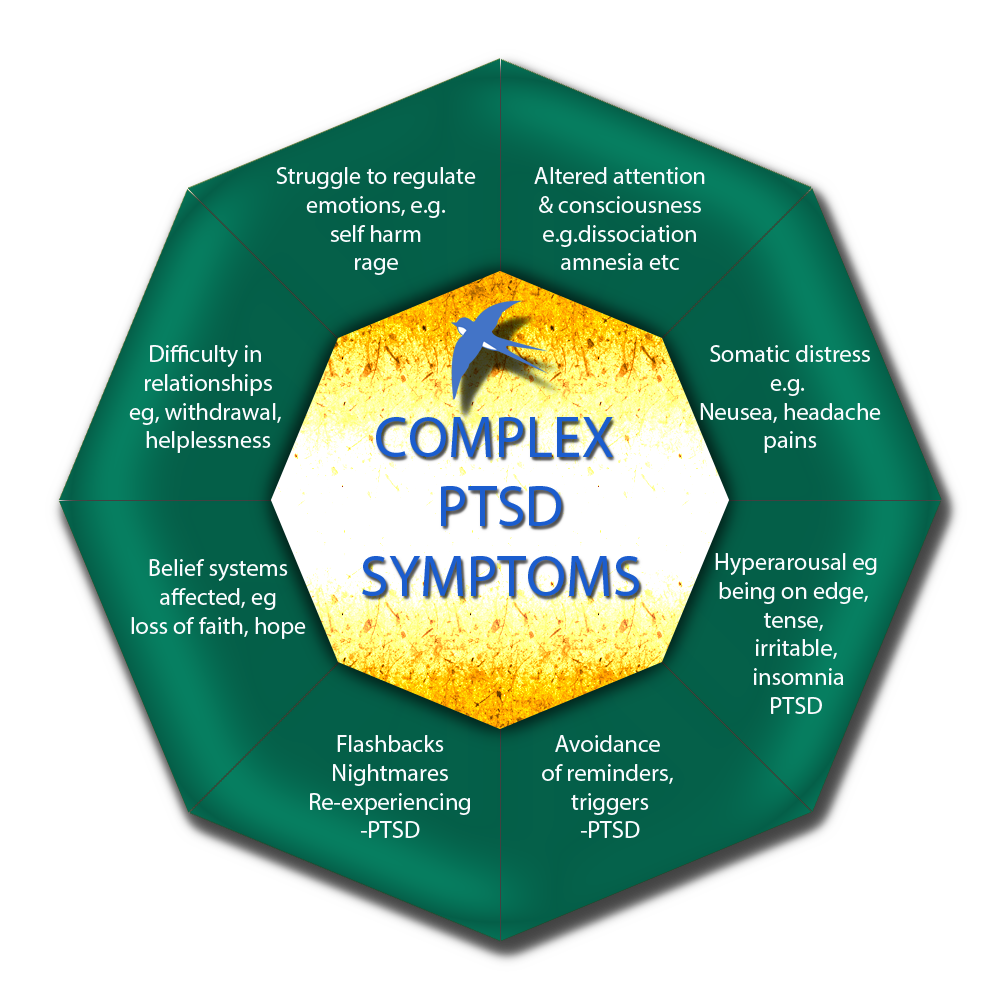
Signs and Symptoms of PTSD for anyone experiencing this disorder:

PTSD symptoms usually start soon after the traumatic event, but they may not appear until months or years later. They also may come and go over many years. If the symptoms last longer than four weeks, cause you great distress, or interfere with your work or home life, you might have PTSD.

There are four types of symptoms of PTSD, but they may not be exactly the same for everyone. Each person experiences symptoms in their own way.

  1. Reliving the event (also called re-experiencing symptoms). You may have bad memories or nightmares. You even may feel like you’re going through the event again. This is called a flashback.
  2. Avoiding situations that remind you of the event. You may try to avoid situations or people that trigger memories of the traumatic event. You may even avoid talking or thinking about the event.
  3. Having more negative beliefs and feelings. The way you think about yourself and others may change because of the trauma. You may feel guilt or shame. Or, you may not be interested in activities you used to enjoy. You may feel that the world is dangerous and you can’t trust anyone. You might be numb, or find it hard to feel happy.
  4. Feeling keyed up (also called hyperarousal). You may be jittery, or always alert and on the lookout for danger. Or, you may have trouble concentrating or sleeping. You might suddenly get angry or irritable, startle easily, or act in unhealthy ways (like smoking, using drugs and alcohol, or driving recklessly.


QUOTE FOR FRIDAY:

“The statistics surrounding Veterans and PTSD are alarming. The National Center for PTSD found:

  • At some point in their life, 7% of all Veterans will have PTSD. (That’s 1.26 million Veterans with PTSD.)
  • PTSD is more common among female Veterans (13 out of 100, or 13%) versus male Veterans (6 out of 100, or 6%).

According to the U.S. Department of Veterans Affairs, 29% of Veterans who served in Operations Iraqi Freedom and Enduring Freedom will suffer from PTSD at some point in their life. That’s 551,000 service members from those conflicts alone. ”