Ways to keep your brain sharp as a tack despite the brain shrinking as we grow older!
– Stay active physically and mentally!
Get plenty of aerobic exercise, at least 20 minutes every other day,” said Professor Klemm who is the author the book Memory Power 101.
People who stay physically fit tend to stay mentally sharp and hold their cognitive abilities well into their seventies and eighties. A 2012 study of 691 seniors in the journal Neurology found that seniors who reported high levels of physical activity at age 70 had less brain shrinkage at age 73 than seniors who reported less physical activity. Exercise may decrease memory loss by improving blood flow to the brain.
– Brain Exercise
Train your attentiveness and focus. The most common mental problem with aging is distractibility, which inevitably interferes with memory. An example is when you open the refrigerator door and suddenly realize you forgot what you went to the fridge for,” said Klemm. He recommends challenging your brain with games like chess or Sudoku. Dr. Gandy recommends puzzles and memory training.
– Learn a New Skill
Some research shows that learning a new language or learning to play a musical instrument may help prevent memory loss and improve cognitive abilities. A 2011 study published in the journal Neuropsychology found that people who had instrumental musical training retained their memory and had less cognitive decline with age. The study included 70 seniors between age 60 and 83. The study found that the more years of musical training a person had, the better their cognitive performance was with age.
– Be More Sociable
Klemm and Gandy agree that social engagement is important in preventing memory loss. “Social engagement, along with physical and mental stimulation, all release substances in the brain that strengthen nerve connections called synapses,” said Gandy. A 2012 study published in the journal Neuropsychology followed 952 seniors for 12 years to see if social engagement protected seniors from memory loss and decline in communication skills. They concluded that being socially active reduced these declines and that seniors who showed declines tended to become less socially engaged.
– Get Your Antioxidants
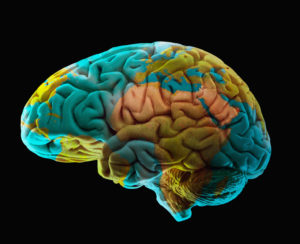
Composition of human brain model and world map
Antioxidant vitamins may benefit memory by blocking free radicals that contribute to cell aging. Over the years, some large studies have found that antioxidant vitamins C and E may protect against cognitive decline. Gandy said that vitamins could help but cautions that they only help in cases of vitamin deficiency. You can also get plenty of antioxidants naturally in your diet. “They’re in any dark-colored fruit, berry, or vegetable. Also, take vitamin D3 and resveratrol pills,” advised Klemm.
– Learn to Meditate
Stress and anxiety may decrease memory and cognitive ability, so take steps to reduce these negatives. “Take up meditation, yoga, or another type of mind-body exercise that reduces stress,” said Klemm. A 2010 study in the journal Consciousness and Cognition found that just four days of meditation training could significantly reduce anxiety and improve memory and cognition. In the study, 24 volunteers took meditation training and 25 listened to a recorded book. Both groups had improved mood, but the meditation group also had better memory, less stress, and clearer thinking.