“As the liver plays such a critical part in ridding the body of toxins, and extracting and storing nutrients for the body to use, children born with a congenital liver disease usually become ill as young infants.”
Health24.com
“As the liver plays such a critical part in ridding the body of toxins, and extracting and storing nutrients for the body to use, children born with a congenital liver disease usually become ill as young infants.”
Health24.com
“The liver is a large, meaty organ that sits on the right side of the belly. Weighing about 3 pounds, the liver is reddish-brown in color and feels rubbery to the touch. Normally you can’t feel the liver, because it’s protected by the rib cage.”
WEB M.D.
“Domestic abuse is a pattern of coercive, controlling behavior that is a pervasive life-threatening crime affecting people in all our communities regardless of gender, age, sexual orientation, race, ethnicity, religion, social standing and immigration status.”
The Center for Family Justice
“Evidence is growing that regular physical activity reduces breast cancer risk, especially in women past menopause. The main question is how much activity is needed. Adults get at least 150 minutes of moderate intensity or 75 minutes of vigorous intensity activity each week (or a combination of these), preferably spread throughout the week.”
American Cancer Society

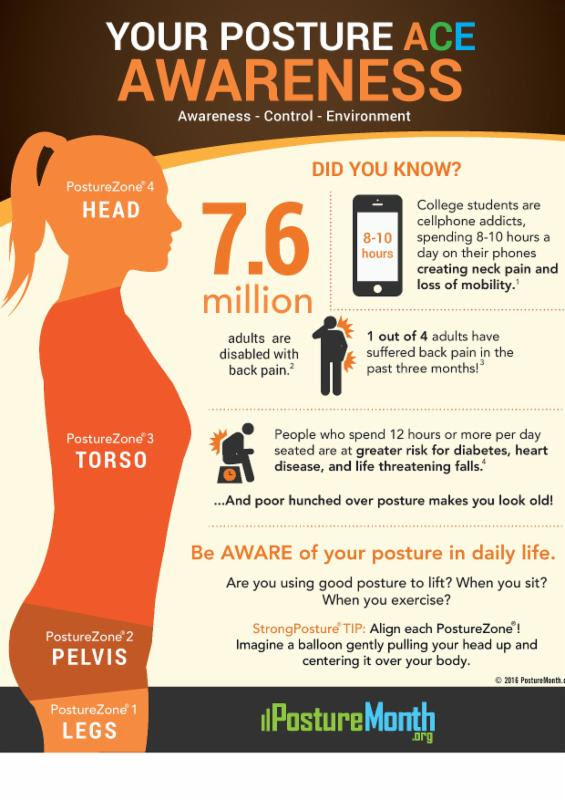

Research shows that movement is vitally important, especially as we get older. Physical activity not only helps reduce the risk of cardiovascular disease, Type 2 diabetes and even some cancers, it also strengthens our bones and muscles. As we age, the health of our bones and muscles — known as our musculoskeletal system — is key to reducing the frequency and severity of common conditions such as back pain as well as preventing falls and other injuries that can lead to disability. For these reasons, it’s essential to move now, to move later…to move for life…to stay healthy and strong, active and engaged.
There are well over 100 types of adjustment techniques used by chiropractors throughout the world. Typically, chiropractors will focus on and utilize 8 to 10 different approaches in their practice.
The common goal of most chiropractic techniques is to restore or to enhance joint function, with the general goals of resolving joint inflammation and reducing pain. Some approaches use some force (spinal manipulation), while others are more gentle (spinal mobilization).
There are well over 100 types of adjustment techniques used by chiropractors throughout the world. Typically, chiropractors will focus on and utilize 8 to 10 different approaches in their practice.
The common goal of most chiropractic techniques is to restore or to enhance joint function, with the general goals of resolving joint inflammation and reducing pain. Some approaches use some force (spinal manipulation), while others are more gentle (spinal mobilization).
The original chiropractic adjustment approach is generally referred to as spinal manipulation, and may also be called the diversified technique or the high-velocity, low-amplitude (HVLA) thrust. New chiropractic adjustment approaches typically evolve as a variation from an existing technique and are often named after the chiropractor who developed it.
This article reviews a number of the most commonly used spinal manipulation and spinal mobilization techniques currently used by chiropractors.
Spinal Manipulation (High-Velocity Low-Amplitude Thrust)
The most frequently used chiropractic technique, spinal manipulation, is the traditional high-velocity low-amplitude (HVLA) thrust. The manipulation often results in an audible “pop,” as chiropractors use their hands to apply a controlled sudden force to a joint while the body is positioned in a specific way.
Spinal Mobilization (Low-Force or Gentle Chiropractic Techniques)
Some conditions (such as osteoporosis), pathology, the patient’s size, patient comfort, or patient preference, may require a gentler approach generally referred to as spinal mobilization. In addition, some patients and/or clinicians prefer mild spinal mobilization techniques that do not involve twisting of the body or a forceful thrust.
n addition to manipulation, many chiropractors will employ adjunctive therapy, such as ice or heat or physical therapy modalities (such as electric stimulation, ultrasound, etc.), as part of an overall treatment plan. Patients should discuss their symptoms and preferences with their chiropractor, whose role it is to perform a thorough examination to determine the best course of treatment.
Chiropractors are not the only health care providers who utilize spinal manipulation for back pain treatment. Many osteopathic physicians will provide a variety of types of spinal adjustments, such as the spinal manipulation and mobilization described in this article. Occasionally, other types of health care professionals, such as physical therapists or physiatrists, will be trained in providing spinal manipulation as well.
The goal of spinal mobilization is the same as HVLA spinal manipulation – to restore or to enhance joint function. However, unlike HVLA spinal manipulation, slow movement, usually to a firm endpoint of joint movement, is used to mobilize the joint.
Chiropractors may choose spinal mobilization for certain patients for a variety of reasons, such as:
There is a wide range of spinal mobilization approaches and techniques. Several of the more common gentle spinal mobilization methods include:
“Our bodies have the capacity to do a little more than we normally do, but our bodies do not adapt very well to doing a lot more than we normally do. Since the added demands of this season can stress the capacity of our bodies, we need to do everything we can to help ourselves. Eat right, drink plenty of water, stretch, exercise, and take a few minutes to slow down and reflect on what the season is all about.”
According to Dr. Bautch, who was featured in CapeCod.com,


“It is estimated an outstanding 80% of cancer in America is do to our lifestyles particularly DIET and EXERCISE.”
The National Cancer Institute
“Worldwide, breast cancer is the most common disease in women and constitutes the second leading cause of cancer death in this population. The factors that contribute to the risk of occurrence are divided into nonmodifiable and modifiable factors.”
NCBI US National Library of Medicine National Institutes of Health
“There are many types of breast cancer. The most common types are ductal carcinoma in situ, invasive ductal carcinoma, and invasive lobular carcinoma. The type of breast cancer is determined by the specific cells in the breast that are affected. Most breast cancers are carcinomas. Carcinomas are tumors that start in the epithelial cells that line organs and tissues throughout the body.”
American Cancer Society