Part II National AIDS/HIV Awareness-How its transmitted (its not just sex), symptoms at acute/chronic/progression levels of AIDS/HIV & how is it prevented with what can be done to people with it.!

Acquired immunodeficiency syndrome (AIDS) is a chronic, potentially life-threatening condition caused by the human immunodeficiency virus (HIV). By damaging your immune system, HIV interferes with your body’s ability to fight infection and disease.

How HIV is transmitted:

HIV is transmitted via the exchange of body fluids—such as pre-ejaculate fluid, semen, vaginal fluid secretions, blood, or breast milk. Within these bodily fluids, HIV is present as both free virus particles and virus within infected immune cells.

The symptoms and when they develop:

Within a month or 2 of contracting HIV, about 40 to 90-percent of those afflicted suffer from flu-like symptoms including the following:

Fever, fatigue, achy muscles, swollen lymph glands, sore throat, headache, skin rash, dry cough, nausea, rapid weight loss, night sweats, frequent yeast infections (for women), cold sores, and eventually, pneumonia.

Symptoms

The symptoms of HIV and AIDS vary, depending on the phase of infection.

Primary infection (Acute HIV)

Some people infected by HIV develop a flu-like illness within two to four weeks after the virus enters the body. This illness, known as primary (acute) HIV infection, may last for a few weeks. Possible signs and symptoms include:

  • Fever
  • Headache
  • Muscle aches and joint pain
  • Rash
  • Sore throat and painful mouth sores
  • Swollen lymph glands, mainly on the neck
  • Diarrhea
  • Weight loss
  • Cough
  • Night sweats

These symptoms can be so mild that you might not even notice them. However, the amount of virus in your bloodstream (viral load) is quite high at this time. As a result, the infection spreads more easily during primary infection than during the next stage.

Clinical latent infection (Chronic HIV)

In this stage of infection, HIV is still present in the body and in white blood cells. However, many people may not have any symptoms or infections during this time.

This stage can last for many years if you’re not receiving antiretroviral therapy (ART). Some people develop more severe disease much sooner.

Symptomatic HIV infection

As the virus continues to multiply and destroy your immune cells — the cells in your body that help fight off germs — you may develop mild infections or chronic signs and symptoms such as:

  • Fever
  • Fatigue
  • Swollen lymph nodes — often one of the first signs of HIV infection
  • Diarrhea
  • Weight loss
  • Oral yeast infection (thrush)
  • Shingles (herpes zoster)
  • Pneumonia

Progression to AIDS

Thanks to better antiviral treatments, most people with HIV in the U.S. today don’t develop AIDS. Untreated, HIV typically turns into AIDS in about 8 to 10 years.

When AIDS occurs, your immune system has been severely damaged. You’ll be more likely to develop opportunistic infections or opportunistic cancers — diseases that wouldn’t usually cause illness in a person with a healthy immune system.

The signs and symptoms of some of these infections may include:

  • Sweats
  • Chills
  • Recurring fever
  • Chronic diarrhea
  • Swollen lymph glands
  • Persistent white spots or unusual lesions on your tongue or in your mouth
  • Persistent, unexplained fatigue
  • Weakness
  • Weight loss
  • Skin rashes or bumps

When to see a doctor

If you think you may have been infected with HIV or are at risk of contracting the virus, see a doctor as soon as possible.

So what is the answer to prevent this from happening by doing a few things:

-In safe sex from the front (through the vagina) or back (through the rectum-buttock); no matter what sex preference you are.

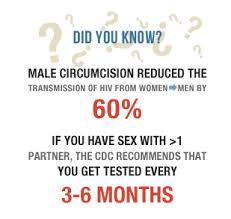
-When you use various sex partners get checked every 6 months to a year and have sex safely.

-The + HIV pt or now AIDS pt be compliant with the medications and RX the M.D. gives you if you chose not to do so previously.

Unfortunately like many who chose to do unsafe sex in getting this or worse than that those who got the disease by getting it through someone else when they didn’t have it is a shame.  Other ways of transmitting HIV/AIDS or getting it is by getting a blood transfusions (which is rare) but seen more frequently than transfusions would be sharing needle sticks, or even sex partners who didn’t tell their sex partner they had it, which it the worst someone could do to someone else. There are the those who got this disease innocently with not doing unsafe sex but for that percentage it is much lower than those who caused this disease  to spread unsafe sex or sharing needles with others who had the HIV/AIDS which caused the amount to go up higher in the USA and all over for being foolish. To all the people in the world let’s deal with this disease safely for yourselves and others around you. Let us all make a safer world for this is one small way which is greater than you may think.

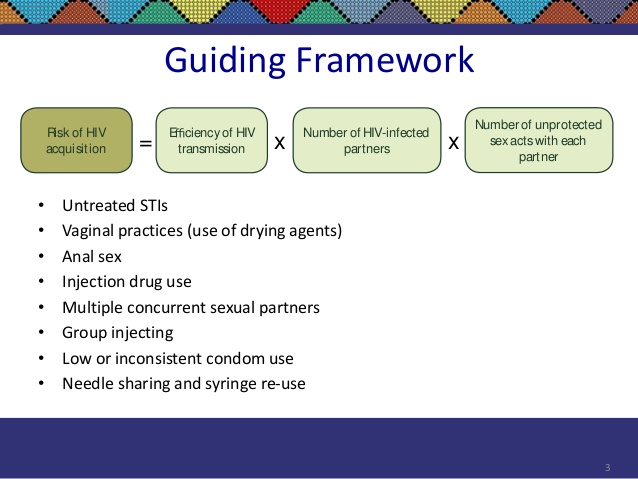
HIV is a sexually transmitted infection (STI). It can also be spread by contact with infected blood or from mother to child during pregnancy, childbirth or breast-feeding. Without medication, it may take years before HIV weakens your immune system to the point that you have AIDS.
There’s no cure for HIV/AIDS, but medications can dramatically slow the progression of the disease. These drugs have reduced AIDS deaths in many developed nations. Luckily, many individuals who are diagnosed early can live a long, productive life with HIV thanks to a combination of highly active anti-retroviral drug therapy, which prevents to progression to AIDS.

QUOTE FOR THE WEEKEND:

“Acquired immunodeficiency syndrome (AIDS), is an ongoing, also called chronic, condition. It’s caused by the human immunodeficiency virus, also called HIV. HIV damages the immune system so that the body is less able to fight infection and disease. If HIV isn’t treated, it can take years before it weakens the immune system enough to become AIDS. Thanks to treatment, most people in the U.S. don’t get AIDS.

HIV is spread through contact unprotected sex with a condom. This type of infection is called a sexually transmitted infection, also called an STI. HIV also is spread through contact with blood, such as when people share needles or syringes. It is also possible for a person with untreated HIV to spread the virus to a child during pregnancy, childbirth or breastfeeding.

There’s no cure for HIV/AIDS.”

MAYO CLINIIC (HIV/AIDS – Symptoms and causes – Mayo Clinic)

Part I National AIDS/HIV Awareness-learn the history on AIDS/HIV, how it got to the US, the actual virus it is including the subgroup, how it effects your WBC’s, the 2 types of HIV, & how CD4 helps the M.D.!

                  HIV!     HIV

Where does HIV/AIDS come from for staters?  Here is the history we have learned over the years about this virus:

Well the Aids Institute states “Scientists identified a type of chimpanzee in West Africa as the source of HIV infection in humans. They believe that the chimpanzee version of the immunodeficiency virus (called simian immunodeficiency virus or SIV) most likely was transmitted to humans and mutated into HIV when humans hunted these chimpanzees for meat and came into contact with their infected blood. Over decades, the virus slowly spread across Africa and later into other parts of the world.

The earliest known case of infection with HIV-1 in a human was detected in a blood sample collected in 1959 from a man in Kinshasa, Democratic Republic of the Congo. (How he became infected is not known.) Genetic analysis of this blood sample suggested that HIV-1 may have stemmed from a single virus in the late 1940s or early 1950s.

We know that the virus has existed in the United States since at least the mid- to late 1970s. From 1979–1981 rare types of pneumonia, cancer, and other illnesses were being reported by doctors in Los Angeles and New York among a number of male patients who had sex with other men. These were conditions not usually found in people with healthy immune systems.

In 1982 public health officials began to use the term “acquired immunodeficiency syndrome,” or AIDS, to describe the occurrences of opportunistic infections, Kaposi’s sarcoma (a kind of cancer), and Pneumocystis jirovecii pneumonia in previously healthy people. Formal tracking (surveillance) of AIDS cases began that year in the United States.

What is the actual virus causing AIDS?

In 1983, scientists discovered the virus that causes AIDS. The virus was at first named HTLV-III/LAV (human T-cell lymphotropic virus-type III/lymphadenopathy-associated virus) by an international scientific committee. This name was later changed to HIV (human immunodeficiency virus).

For many years scientists theorized as to the origins of HIV and how it appeared in the human population, most believing that HIV originated in other primates. Then in 1999, an international team of researchers reported that they had discovered the origins of HIV-1, the predominant strain of HIV in the developed world. A subspecies of chimpanzees native to west equatorial Africa had been identified as the original source of the virus. The researchers believe that HIV-1 was introduced into the human population when hunters became exposed to infected blood.”

HIV is a lenti virus which is a subgroup of the retrovirus.

For starters HIV affects the white blood cells (WBCs) in this sense:

We have types of WBC’s and one type is called CD4. That is the cell the HIV binds to when it gets in your blood stream. Another name for them is T-helper cells. CD4 cells are made in the spleen, lymph nodes, and thymus gland, which are part of the lymph or infection-fighting system. CD4 cells move throughout your body, helping to identify and destroy germs such as bacteria and viruses.  Without going into specific medical terminology there is replication of this virus in the DNA and RNA killing out the normal white blood cell type of CD4 and other things like macrophages which are reproduced into CD4 cells with the virus with the body not knowing or able to detect this error in DNA and RNA of the CD4 white blood cells which ending line allows the immunity to go down. Remember the HIV virus binds to the surface of the CD4 cells. The virus entering CD4 cells now allows them to become a part of CD4 replicated cells regarding their make up due to changes made in the DNA and RNA cause the virus has invaded the bloodstream. As CD4 cells multiply to fight infection, they also make more copies of HIV now. Continuing to replicate, leading to a gradual decline of CD4 cells in decreasing that individuals immunity to infection.

The 2 types of HIV:

There are two types of HIV that have been characterized: HIV-1 and HIV-2.

HIV-1 is the virus that was initially discovered and termed both LAV and HTLV-III. It is more virulent, more infective and is the cause of the majority of HIV infections globally. The lower infectivity of HIV-2 compared to HIV-1 implies that fewer of those exposed to HIV-2 will be infected per exposure. Because of its relatively poor capacity for transmission, HIV-2 is largely confined to West Africa.

What is CD4 and how it helps the doctor:

The CD4 count measures the number of CD4 cells in a sample of your blood drawn by a needle from a vein in your arm. Along with other tests, the CD4 count helps tell how strong your immune system is. By knowing this when the blood test is done the CD4 helps the following, for the doctor:

-it indicates the stage of your HIV disease

-it guides the treatment

– it predicts how your disease may progress.

**Keeping your CD4 count high can reduce complications of HIV disease and extend your life.**


QUOTE FOR FRIDAY:

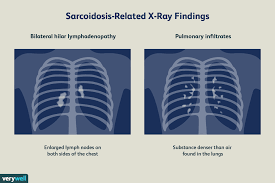
“It’s estimated that at least 90% of patients with sarcoidosis will experience lung involvement. Chest x-rays are often used to determine the nature of the disease. However, the results of this imaging can cause confusion for sarc patients- your doctor might tell you that the images indicate a certain “stage” of sarcoidosis. What does this mean? Is it like the stages of cancer? Being told you have “stage three” or “stage four” pulmonary sarcoidosis sounds bad- but what does it really mean?

Hopefully, your doctor gives you an accurate explanation of what the stages mean. However, too often we hear from patients who are concerned about which stage they have, what it means, or how long until they progress to the next stage. The stages of sarcoidosis should not be viewed in the way that stages of cancer are- they do not indicate progression of the disease.

In cancer, staging is a way to indicate the size of the cancer tumors, if it has spread to surrounding tissue, or spread to other organs entirely. It indicates progression- in stage IV cancer, the cancerous cells have spread to other parts of the body, making it harder to recover from and requiring a more aggressive, full-body treatment.

In sarcoidosis, staging is a way to indicate the location of granulomas- the lungs, the lymph nodes, or both- and the nature of the disease. If anything, the stages are an easy way for doctors to categorize their sarcoidosis patients, and should not be seen as an indication of severity.”

Foundation for Sarcoidosis Foundation (The Stages of Pulmonary Sarcoidosis- What Do They Really Mean? — Foundation for Sarcoidosis Research)

Part III Sarcoidosis – How it is diagnosed, the staging of it, & the treatments for it!


How Sarcoidosis can be diagnosed:

  • biopsy of the lungs, liver, skin, or other affected organs to check for granulomas
  • Blood tests, including complete blood counts, to check hormone levels and to test for other conditions that may cause sarcoidosis
  • Bronchoscopy, which may include rinsing an area of the lung to get cells or using a needle to take cells from the lymph nodes in the chest
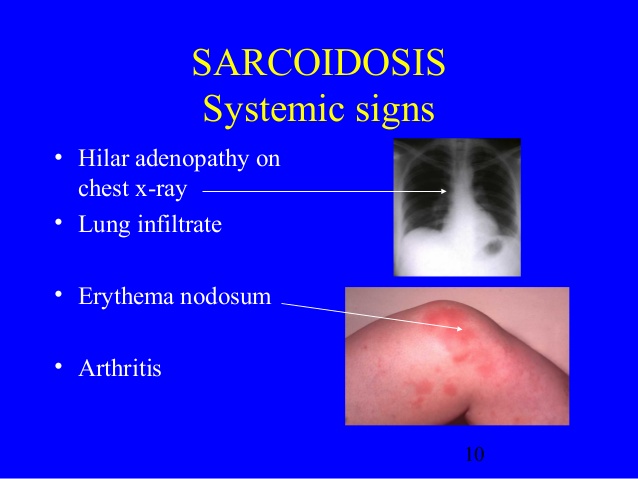
  • Chest X-ray to look for granulomas in the lungs and heart and determine the stage of the disease. Often, sarcoidosis is found because a chest X-ray is performed for another reason.
  • Neurological tests, such as electromyography, evoked potentials, spinal taps, or nerve conduction tests, to detect problems with the nervous system caused by sarcoidosis
  • Eye exam to look for eye damage, which can occur without symptoms in a person with sarcoidosis
  • Gallium scan external link , which uses a radioactive material called gallium to look for inflammation, usually in the eyes or lymph nodes.
  • High-resolution computed tomography (CT) scan to look for granulomas
  • Magnetic resonance imaging (MRI) to help find granulomas. Learn more in our Chest MRI Health Topic.
  • Positron electron tomography (PET) scan, a type of imaging that can help find granulomas
  • Pulmonary function tests to check whether you have breathing problems
  • Ultrasound to look for granulomas

There is a staging to Sarcoidosis:

Doctors use stages to describe the various imaging findings of sarcoidosis of the lung or lymph nodes of the chest. There are four stages of sarcoidosis, and they indicate where the granulomas are located. In each of the first three stages, sarcoidosis can range from mild to severe. This helps the doctor in deciding treatment for the patient.  Stage IV is the most severe and indicates permanent scarring in the lungs.

  • Stage I: Granulomas are located only in the lymph nodes.
  • Stage II: Granulomas are located in the lungs and lymph nodes.
  • Stage III: Granulomas are located in the lungs only.
  • Stage IV: Pulmonary fibrosis.

Treatment for Sarcoidosis:

Remember there is no cure.

The goal of treatment is remission, a state in which the condition is not causing problems. Not everyone who is diagnosed with sarcoidosis needs treatment. Sometimes the condition goes away on its own. Whether you need treatment—and what type you need—will depend on your signs and symptoms, which organs are affected, and whether those organs are working well; this is also where staging of the disease comes into play. Some people do not respond to treatment.


QUOTE FOR THURSDAY:

“Here are some statistics related to sarcoidosis:

  • Incidence: Sarcoidosis is most prevalent in Scandinavian and Northern European countries, with a higher risk for Black individuals compared to White individuals in the U.S.2.
  • Epidemiology: The incidence and prevalence of sarcoidosis vary significantly across populations, with studies indicating that the disease is more common in certain regions and among specific demographics3.
  • Patient Demographics: A survey of 1018 US sarcoidosis patients found that 65% were female, 63% White, 34% Black, and 87% were over 45 years old. The most common organs affected were the lungs (87%), skin (30%), heart (25%), and eyes (25%)5.

These statistics highlight the heterogeneity of sarcoidosis and its impact on different populations.

High quality and systematically collected data, with depth (detailed information per individual) and breadth (many individuals), is needed to further understand the complexity and heterogeneity of sarcoidosis.

NIH National Library of Medicine (Sarcoidosis epidemiology: recent estimates of incidence, prevalence and risk factors – PMC)


Part II Sarcoidosis – Risk Factor, Complication and Treatment!

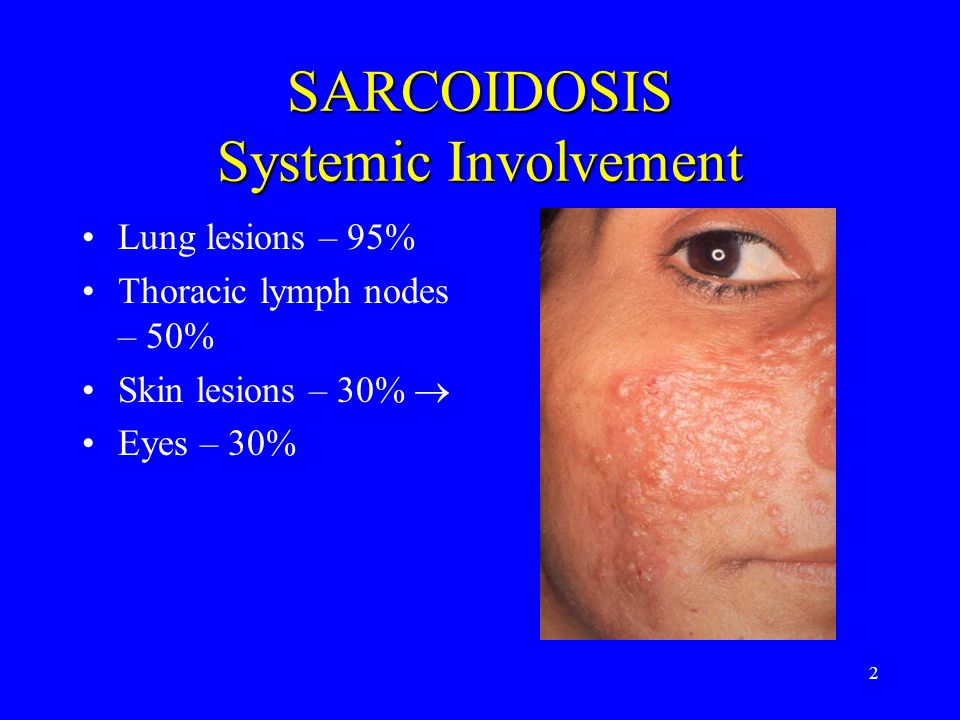
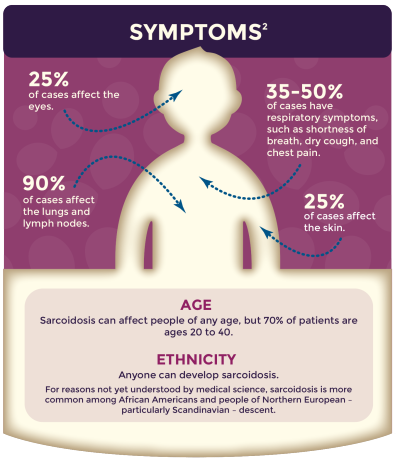
Lung lesions – 95% Thoracic lymph nodes – 50% Skin lesions – 30%  Eyes – 30%


Inflammatory Disease- Sarcoidosis or Sarcoid is a inflammatory disease that consists of granuloma.

Wide Spread Disease- Disease is wide spread in multiple organs.

Relapse-

  • The Sarcoidosis disease tends to come and go all of a sudden.
  • Disease may progressively develop as a serious illness.
  • Patient may experience several relapse throughout the life.

Granulomas-

  • Sarcoidosis or Sarcoid is a gradual progressive disease.
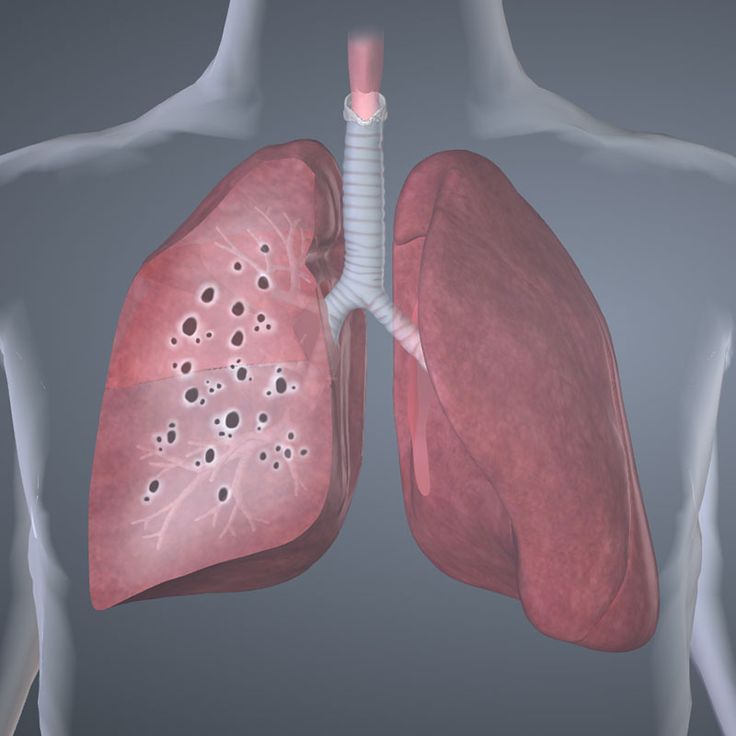
  • Microscopic lumps called granulomas start to appear in the affected organs.1
  • In most of the cases, these granulomas tend to clear with or without treatments.
  • There are few instances where granuloma grows in size and continues to be a part of the organ.
  • Granuloma eventually ends up as fibrotic lump but may cause several complications.

Causes

Doctors don’t know the exact cause of sarcoidosis. Some people appear to have a genetic predisposition to develop the disease, which may be triggered by bacteria, viruses, dust or chemicals.

This triggers an overreaction of your immune system and immune cells begin to collect in a pattern of inflammation called granulomas. As granulomas build up in an organ, the function of that organ can be affected.

Risk factors

While anyone can develop sarcoidosis, factors that may increase your risk include:

  • Age and sex. Sarcoidosis often occurs between the ages of 20 and 40. Women are slightly more likely to develop the disease.
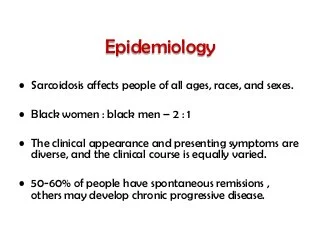
  • Race. African-Americans have a higher incidence of sarcoidosis than do white Americans. Also, sarcoidosis may be more severe and may be more likely to recur and cause lung problems in African-Americans.
  • Family history. If someone in your family has had sarcoidosis, you’re more likely to develop the disease.

Complications

For most people, sarcoidosis resolves on its own with no lasting consequences. But sometimes it causes long-term problems.

  • Lungs. Untreated pulmonary sarcoidosis can lead to permanent scarring in your lungs, making it difficult to breathe.
  • Eyes. Inflammation can affect almost any part of your eye and can eventually cause blindness. Rarely, sarcoidosis also can cause cataracts and glaucoma.
  • Kidneys. Sarcoidosis can affect how your body handles calcium, which can lead to kidney failure.
  • Heart. Granulomas in your heart can cause abnormal heart rhythms and other heart problems. In rare instances, this may lead to death.
  • Nervous system. A small number of people with sarcoidosis develop problems related to the central nervous system when granulomas form in the brain and spinal cord. Inflammation in the facial nerves, for example, can cause facial paralysis.

QUOTE FOR WEDNESDAY:

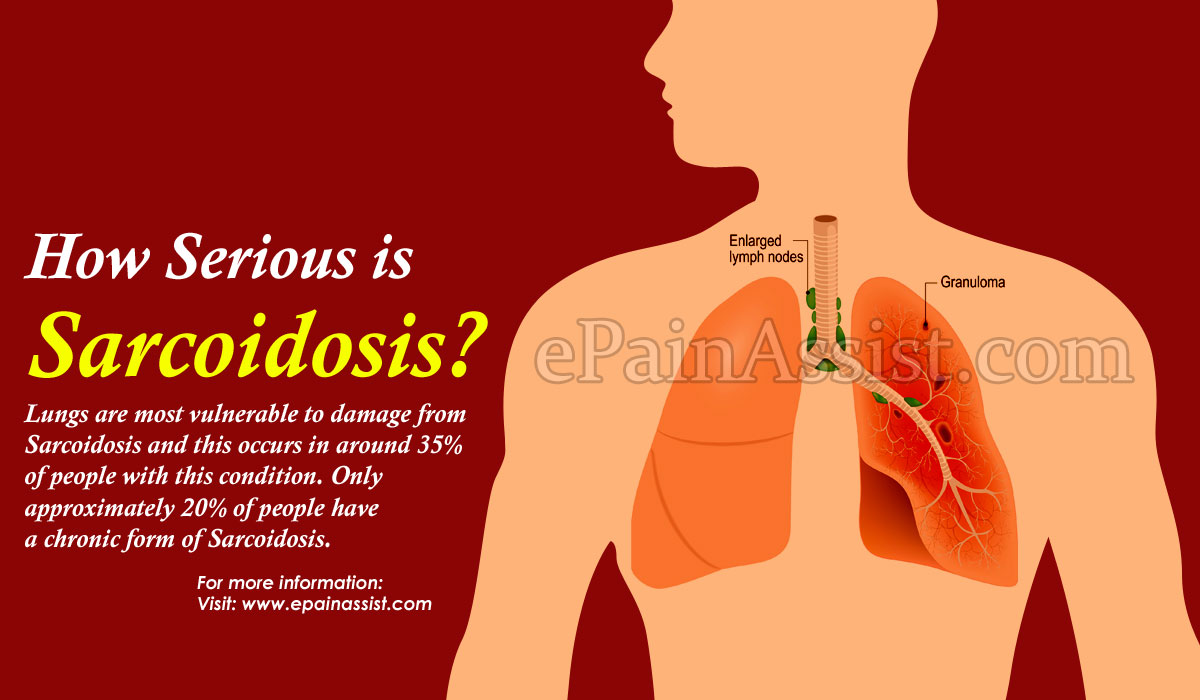
“Sarcoidosis is a condition that causes tiny collections of immune system cells in any part of the body. These tiny collections form red, swollen lumps called granulomas. Granulomas most commonly occur in the lungs and the lymph nodes of the chest. They also can occur in the eyes, skin, heart and other organs.

Experts don’t know the exact cause of sarcoidosis, but it’s likely a mix of genetic and environmental factors. Some people appear to have gene changes that make them more likely to develop sarcoidosis. The condition may then be triggered by bacteria, viruses, dust or chemicals.”

MAYO CLINIC (Sarcoidosis – Symptoms and causes – Mayo Clinic)

Part I Sarcoidosis – what it is, the areas of the body it can affect & symptoms!


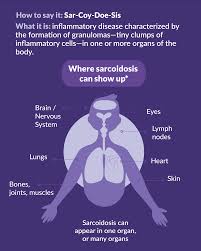
Sarcoidosis (pronounced SAR-COY-DOE-SIS) is an inflammatory disease characterized by the formation of granulomas, tiny clumps of inflammatory cells, in one or more organs of the body. When the immune system goes into overdrive and too many of these clumps form, they can interfere with an organ’s structure and function. When left unchecked, chronic inflammation can lead to fibrosis, which is permanent thickening or scarring of organ tissue.

This disorder can affect almost any organ in the body, including the heart, skin, liver, kidneys, brain, sinuses, eyes, muscles, bones, and other areas. Sarcoidosis most commonly targets the lungs and the lymph nodes, which are an important part of the immune system. When it affects the lungs, it is called pulmonary sarcoidosis. Ninety percent or more of people diagnosed with the disease have lung involvement.

Doctors believe sarcoidosis results from the body’s immune system responding to an unknown substance, most likely something inhaled from the air.

There is no cure for sarcoidosis, but most people do very well with little or only modest treatment. In half of cases, sarcoidosis goes away on its own. In a few cases, however, sarcoidosis may last for years and may cause organ damage.

Symptoms in general to people affected by this disease sarcoidosis:

For many people, sarcoidosis begins with these symptoms in general:

  • Fatigue
  • Fever
  • Swollen lymph nodes

Symptoms caused by sarcoidosis at affected organ sites:

Lung symptoms

Many patients with sarcoidosis experience lung problems, which may include:

  • Persistent dry cough
  • Shortness of breath
  • Wheezing
  • Chest pain

Skin symptoms

Some people who have sarcoidosis develop skin problems, which may include:

  • A rash of red or reddish-purple bumps, usually located on the shins or ankles, which may be warm and tender to the touch
  • Disfiguring sores (lesions) on the nose, cheeks and ears
  • Areas of skin that are darker or lighter in color
  • Growths under the skin (nodules), particularly around scars or tattoos

Eye symptoms

Sarcoidosis can affect the eyes without causing any symptoms, so it’s important to have your eyes checked. When eye symptoms do occur, they may include:

  • Blurred vision
  • Eye pain
  • Severe redness
  • Sensitivity to light

Heart symptoms

Cardiac sarcoidosis: A heart under attack

Signs and symptoms related to cardiac sarcoidosis may include:

  • Chest pain
  • Shortness of breath (dyspnea)
  • Fainting (syncope)
  • Fatigue
  • Irregular heartbeats (arrhythmias)
  • Rapid or fluttering heart beat (palpitations)
  • Swelling caused by excess fluid (edema)


Stay tune and learn more about this illness in Part II tomorrow with Part III  on Sarcoidosis Wednesday!

QUOTE FOR TUESDAY:

“More than half of all Americans age 80 or older either have cataracts or have had surgery to remove cataracts, according to the National Eye Institute (NEI).

The Centers for Disease Control and Prevention (CDC) states that cataract is the leading cause of vision loss in the United States, and the leading cause of blindness worldwide. Prevent Blindness has declared June as Cataract Awareness Month to educate the public on risk factors, symptoms, types of cataract, and cataract surgery.

A cataract is a clouding of the eye’s lens which blocks or changes the passage of light into the eye. The lens of the eye is located behind the pupil and the colored iris and is normally transparent. The lens helps to focus images onto the retina – which transmits the images to the brain.”

Prevent Blindness (https://preventblindness.org/cataract-awareness-june-2022/)