QUOTE FOR THURSDAY:

“In leukemia, the cancerous cells are discovered circulating in the blood and bone marrow, while in lymphoma, the cells tend to aggregate and form masses, or tumors, in lymphatic tissues. Myeloma is a tumor of the bone marrow, and involves a specific subset of white blood cells that produce a distinctive protein.”.

www.cancer.gov


QUOTE FOR WEDNESDAY:

September has been designated “blood cancer awareness month” by the Leukemia and Lymphoma Society. Blood cancers rarely produce signs or symptoms until they are very advanced. They are typically discovered by doctors performing routine blood work for other reasons or because of swelling of the lymph nodes.”

Cancer Connect (cancerconnect.com)

QUOTE FOR TUESDAY:

“The Foundation for Women’s Cancer (FWC) understands the importance of bringing awareness to all gynecologic cancers—cervical, ovarian, uterine/endometrial, vaginal and vulvar cancer—and declared September as Gynecologic Cancer Awareness Month (GCAM) with a goal of reaching more and more people each year.  According to the American Cancer Society, there were an estimated 110,070 new cases diagnosed and approximately 32,120 deaths from gynecologic cancers in the U.S. in 2018.”

Foundation for Women’s Cancer

QUOTE FOR MONDAY:

“Of the more than 72,000 preventable drug overdoses in the country in 2017, more than 47,000 involved opioids. International Overdose Awareness Day (IOAD) is a global event held Aug. 31 each year to remember those gone too soon from overdose deaths.”

The National Safety Council (https://www.nsc.org)

QUOTE FOR THE WEEKEND:

“Too much alcohol affects your speech, muscle coordination and vital centers of your brain. A heavy drinking binge may even cause a life-threatening coma or death. This is of particular concern when you’re taking certain medications that also depress the brain’s function.”
 
MAYO CLINIC

QUOTE FOR THURSDAY:

“Sexually transmitted infections (STIs) are infections that are spread by sexual contact. STIs can cause severe damage to your body—even death. Except for colds and flu, STIs are the most common contagious (easily spread) infections in the United States, with millions of new cases each year. Although some STIs can be treated and cured, others cannot.”

ACOG – American College of Obstetricians and Gynecologists

STDs stop the fun; so play it safe with protection! from day one!

Sexually transmitted diseases (STDs) have been known to mankind for centuries. Before the advent of modern medicine, people’s lack of awareness and understanding of STDs contributed to the widespread transmission of the infections while few or no treatments were available to treat the conditions.

In medieval times, syphilis and gonorrhoea were two of the most prevalent STDs in Europe.

Some STDs can have severe, life-changing consequences; syphilis, for example, can eventually cause progressive destruction of the brain and spinal cord, leading to mental dysfunction and hallucinations, speech problems and general paresis.

It’s kind of puzzling that sexually transmitted diseases are so prevalent—particularly when you consider that you have to get pretty up close and personal to contract one. An STD is characterized by any disease that is spread by one partner to another via sexual contact, and that can be orally, vaginally, anally, or via hand to genital contact. Regardless, they are spread when one partner passes the disease-causing organism on to the other. Obviously, preventing STD transmission is first and foremost by practicing safe sex (PREVENTION) and not enough do it in America for some crazy reason hurting themselves and other people. However, if you think you might have contracted one of the most common STDs, recognizing the disease is imperative for swift treatment and preventing further spreading.

Top venereal diseases in the USA:

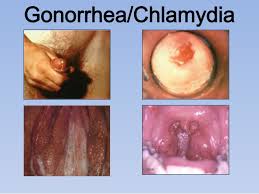
1-Gonorrhea

The Centers for Disease Control estimate that 700,000 new cases of Gonorrhea, or the “clap”, crop up every year. This long-term STD that is spread bacterially, affecting a female’s cervix, a male’s urethra, or the throat in both sexes, which means that it’s transmitted by vaginal, oral, and anal sex. The symptoms of gonorrhea are pretty subtle; the most noticeable being burning when urinating or a yellowish penile discharge in men.

2-Hepatitis

Sexually transmitted hepatitis is hepatitis B (or HBV), which afflicts more than 1.25 million individuals in the U.S. even though there is a vaccine. If left untreated, a Hep B infection will scar and damage the liver, causing cirrhosis and liver cancer. Unfortunately, over half of those affected show no symptoms, but those who do suffer muscle pain and fatigue, yellowing of the eyes (or jaundice), nausea, and a distended stomach.

3-Syphilis

Syphilis is a particularly sneaky STD that caused by a type bacterial infection of the genital tract, known as Treponema Pallidum. Syphilis is transmitted when direct contact is made between the small, painless sores on the mouth, rectum, vagina, or around the genitals in areas not protected by latex condoms. It can also be transmitted via infected mother to her baby during pregnancy. When there are no sores, the disease is still present. Syphilis symptoms are rare , however, the most telling are sores or lesions on and around the genitals, as well as hair loss, sore throat, fever; headache; and a white patchy skin rash.

4- Chlamydia

Like Gonorrhea, Chlamydia affects a man’s penile urethra and a woman’s cervix. However, oftentimes those who’ve contracted Chlamydia don’t show symptoms for months or even years, which explains why it’s the most common and rampant STD. If you do show symptoms, you’ll feel pain during intercourse and have a discolored, thick discharge from the vagina or penis. Transmitted via sexual penetration with an affected partner, using latex condoms can prevent transmission of this curable STD.

 5. Crabs

If you feel a creepy-crawly, itchy sensation in your genitals, you may have crabs (or public lice). They show themselves as visible eggs or lice in the coarse hair of the genital region (even if you shave it off), and they can spread to the armpits and eyebrows if left untreated. Typically transmitted via sexual contact, crabs can also be passed via contact with infested linens or clothing .

6. Human Papilloma Virus

Human Papilloma Virus (or HPV) is currently the most wide spread STD. It affects roughly three-quarters of the sexually active population and a staggering one-quarter of sexually active women, which is why there is a North American vaccine to protect young women from certain types of HPV that are linked to genital warts and cervical cancer. HPV is transmitted through genital contact—via vaginal and anal sex, and also oral sex and genital-to-genital contact. Most times HPV doesn’t show any symptoms until it’s far advanced, but genital warts as well as RRP, a condition where warts grow in the throat and eventually cause breathing difficulties are common.

7. Bacterial Vaginosis

Bacterial Vaginosis, or BV, is not always considered an STD even though it typically afflicts those of child-bearing age with multiple or new sex partners. BV occurs when healthy bacteria in the vagina overgrow and become imbalanced, causing burning and itching around the vagina and a thick, grey discharge with a strong fishy odor. Antibiotics will quickly clear up bouts of BV, but it can reoccur, leaving the victim prone to pelvic inflammatory disease, other STDs, and premature births (if pregnant).

 8. Herpes

Painful sores or lesions on your mouth or genitals may indicate herpes, a viral STD that comes in two forms HSV1 (herpes of the mouth) and HSV2 (herpes of the genitals). Herpes is transmitted skin-to-skin—for instance, from genital to genital, mouth to genital, or mouth to mouth contact with an infected individual, even when they don’t have visible sores. Even though herpes symptoms be treated with antibiotics, the virus never goes away and reoccurs typically 2 to 4 times per year.

9. Trichomoniasis

Trichomoniasis, or “trich”, often masks itself as a yeast infection or bacterial vaginosis (BV) in women with similar symptoms—including a thick, grey discharge, offensive vaginal odor, pain or burning intercourse, and itchiness. A parasitic trichomonas vaginalis infection affects the urethra and the vagina in women. It can be transmitted back and forth between sex partners (man to woman and woman to woman) via vaginal intercourse and contact. However, most men typically don’t have any symptoms.

10. HIV

HIV is transmitted via the exchange of body fluids—such as semen, vaginal secretions, blood, or breast milk. Within a month or 2 of contracting HIV, about 40 to 90-percent of those afflicted suffer from flu-like symptoms including fever, fatigue, achy muscles, swollen lymph glands, sore throat, headache, skin rash, dry cough, nausea, rapid weight loss, night sweats, frequent yeast infections (for women), cold sores, and eventually, pneumonia. Luckily, many individuals who are diagnosed early can live a long, productive life with HIV thanks to a combination of highly active anti-retroviral drug therapy, which prevents to progression to AIDS.

How you can prevent all these STDs are the following and its easy!

1.) Practice Abstinence 2.) Condoms 3.) The pill for women 4.) Fewer partners or one partner only and be checked prior to having sex through the doctor or clinic to make it safe for BOTH.  5.) Get Vaccinated.

QUOTE FOR TUESDAY:

Presently the Top 3 Hospitals in America by U.S. News for glioblastoma are:

#1 – John Hopkins Hospital in Baltimore, MA
#2 – UCSF Medical Center SanFrancisco, CA
#3 – Columbia Presbyterian Hospital Manhattan, NY.”
 
usnews.com

Glioblastoma

Glioblastoma is an aggressive type of cancer that can occur in the brain or spinal cord. Glioblastoma forms from cells called astrocytes that support nerve cells.  The tumor only grows in brain tissue this means the cancer only spreads in the brain and spinal cord since the spinal cord is made out of brain tissue.

Glioblastoma can occur at any age, but tends to occur more often in older adults. It can cause worsening headaches, nausea, vomiting and seizures.

Glioblastoma, also known as glioblastoma multiforme, can be very difficult to treat and a cure is often not possible. Treatments may slow progression of the cancer and reduce signs and symptoms.

Survival rate is one to five years but some live longer; it varies from person to person.

Diagnosis

Tests and procedures used to diagnose glioblastoma include:

  • Neurological exam. During a neurological exam, your doctor will ask you about your signs and symptoms. He or she may check your vision, hearing, balance, coordination, strength and reflexes. Problems in one or more of these areas may provide clues about the part of your brain that could be affected by a brain tumor.
  • Imaging tests. Imaging tests can help your doctor determine the location and size of your brain tumor. MRI is often used to diagnose brain tumors, and it may be used along with specialized MRI imaging, such as functional MRI and magnetic resonance spectroscopy.Other imaging tests may include CT and positron emission tomography (PET).
  • Removing a sample of tissue for testing (biopsy). A biopsy can be done with a needle before surgery or during surgery to remove your glioblastoma, depending on your particular situation and the location of your tumor. The sample of suspicious tissue is analyzed in a laboratory to determine the types of cells and their level of aggressiveness.Specialized tests of the tumor cells can tell your doctor the types of mutations the cells have acquired. This gives your doctor clues about your prognosis and may guide your treatment options.

Treatment

Glioblastoma treatment options include:

  • Surgery to remove the glioblastoma. Your brain surgeon (neurosurgeon) will work to remove the glioblastoma. The goal is to remove as much of the tumor as possible. But because glioblastoma grows into the normal brain tissue, complete removal isn’t possible. For this reason, most people receive additional treatments after surgery to target the remaining cells.
  • Radiation therapy. Radiation therapy uses high-energy beams, such as X-rays or protons, to kill cancer cells. During radiation therapy, you lie on a table while a machine moves around you, directing beams to precise points in your brain.Radiation therapy is usually recommended after surgery and may be combined with chemotherapy. For people who can’t undergo surgery, radiation therapy and chemotherapy may be used as a primary treatment.
  • Chemotherapy. Chemotherapy uses drugs to kill cancer cells. In some cases, thin, circular wafers containing chemotherapy medicine may be placed in your brain during surgery. The wafers dissolve slowly, releasing the medicine and killing cancer cells.After surgery, the chemotherapy drug temozolomide (Temodar) — taken as a pill — is often used during and after radiation therapy.Other types of chemotherapy may be recommended if your glioblastoma recurs. These other types of chemotherapy are often administered through a vein in your arm.
  • Tumor treating fields (TTF) therapy. TTF uses an electrical field to disrupt the tumor cells’ ability to multiply. TTF involves applying adhesive pads to your scalp. The pads are connected to a portable device that generates the electrical field.TTF is combined with chemotherapy and may be recommended after radiation therapy.
  • Targeted drug therapy. Targeted drugs focus on specific abnormalities in cancer cells that allow them to grow and thrive. The drugs attack those abnormalities, causing the cancer cells to die.Bevacizumab (Avastin) targets the signals that glioblastoma cells send to the body that cause new blood vessels to form and deliver blood and nutrients to cancer cells. Bevacizumab may be an option if your glioblastoma recurs or doesn’t respond to other treatments.
  • Clinical trials. Clinical trials are studies of new treatments. These studies give you a chance to try the latest treatment options, but the risk of side effects may not be known. Ask your doctor whether you might be eligible to participate in a clinical trial.
  • Supportive (palliative) care. Palliative care is specialized medical care that focuses on providing relief from pain and other symptoms of a serious illness. Palliative care specialists work with you, your family and your other doctors to provide an extra layer of support that complements your ongoing care. Palliative care can be used while undergoing other aggressive treatments, such as surgery, chemotherapy or radiation therapy.

QUOTE FOR MONDAY:

“Hip replacement surgery is one of the most successful operations in all of medicine. Since the early 1960s, improvements in joint replacement surgical techniques and technology have greatly increased the effectiveness of total hip replacement. According to the Agency for Healthcare Research and Quality, more than 450,000 total hip replacements are performed each year in the United States.”

Ortho Info (https://orthoinfo.aaos.org/)