QUOTE FOR WEDNESDAY:

“Wasps, hornets and bees present an all-together different challenge for homeowners. While many of these insects offer similar benefits, they also pose a threat to people – they aggressively defend themselves by stinging other creatures they view as a threats.”.

SaferBrand.com (https://www.saferbrand.com/articles/guide-to-stinging-insects)


Part I Be alert to the spring and summer insect stinger visitors including know why they sting=Wasps!

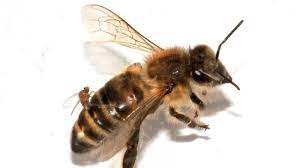
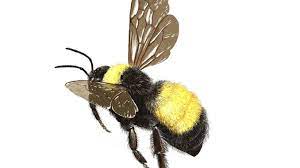
BEES


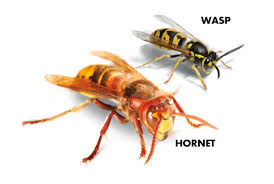
yellowjacket and hornetyellow jackets WASPS

Spring with summer around the corner have certain insects coming out of hibernation which are little insects with STINGERS and know how to deal with them.

Yes it’s that time of the year again better weather and getting warmer with certain individual insects waking up and popping into our site again that go BUZZZZZZZZZZZZZZ. Enjoy the weather but know these insect stingers and what to do.

At least 40 deaths occur each year in the U.S. as a result of serious anaphylactic sting reactions.

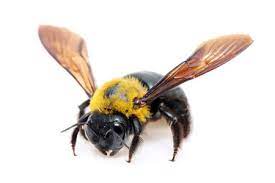
In general there are over 20,000 known bee species in the world, and 4,000 of them are native to the United States. They range from the tiny (2 mm) and solitary Perdita minima, known as the world’s smallest bee, to kumquat-sized species of carpenter bees. Our bees come in as many sizes, shapes, and colors as the flowers they pollinate. There is still much that we don’t know about native bees—many are smaller than a grain of rice and about 10% of bees in the United States have yet to be named or described—but all of these bees have jobs as pollinators.

A bee sting is strictly a sting from a bee (honey bee, bumblebee, sweat bee, etc.).

In the vernacular it can mean a sting of a bee,  or even a wasp, or a hornet, or or a yellow jacket. Some people may even call the bite of a horse-fly a bee sting. The stings of most of these species can be quite painful, and are therefore keenly avoided by many people.

Honey bee stings release pheromones that prompt other nearby bees to attack.

Bee stings differ from insect bites, and the venom or toxin of stinging insects is quite different. Therefore, the body’s reaction to a bee sting may differ significantly from one species to another.

In people with insect sting allergy, a bee sting may trigger a local reaction meaning its at the site where you were stung which is redness, swelling, pain, and oozing possibly but a systemic reaction which can be dangerous meaning a anaphylactic reaction that is potentially deadly.

In general there are over 25,000 species of wasps found throughout the world. Some of the most common wasps include:

The yellow jacket and hornet, both of which live in groups, or colonies, in temperate climates.

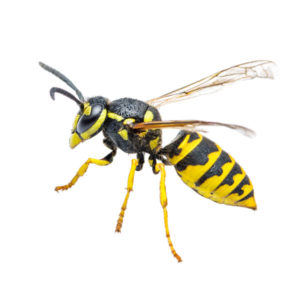
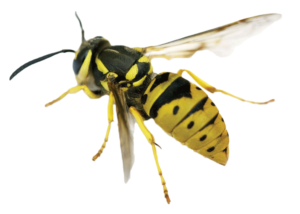
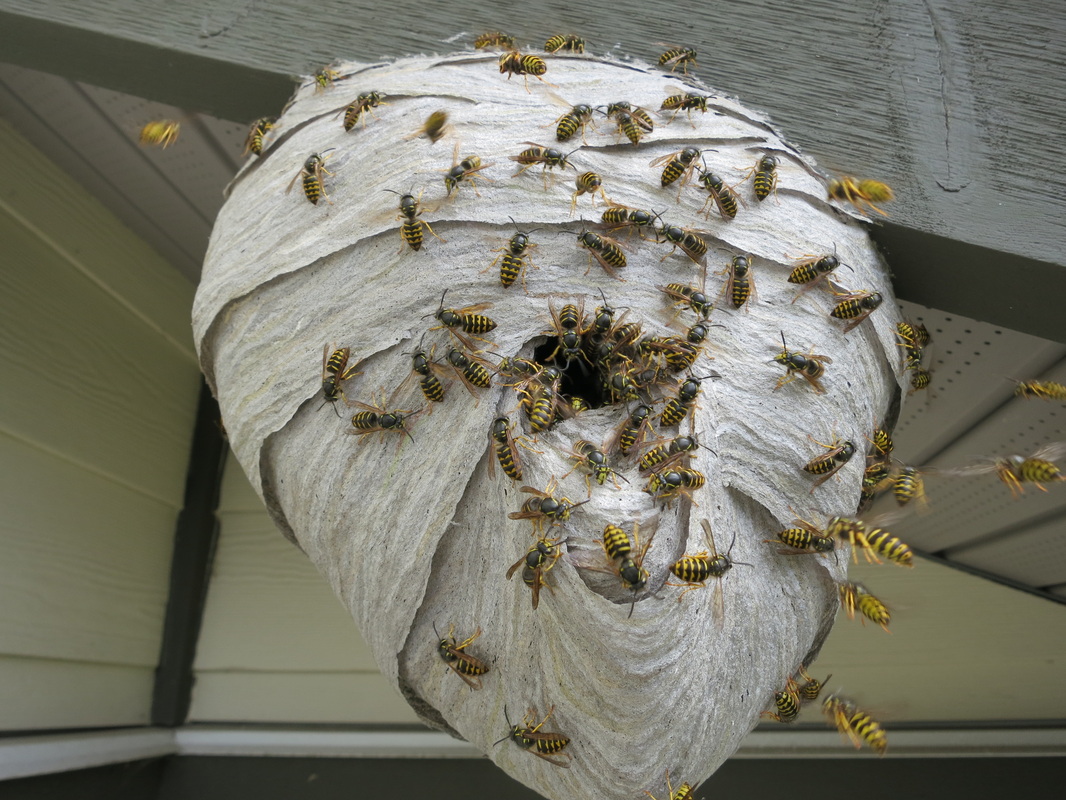
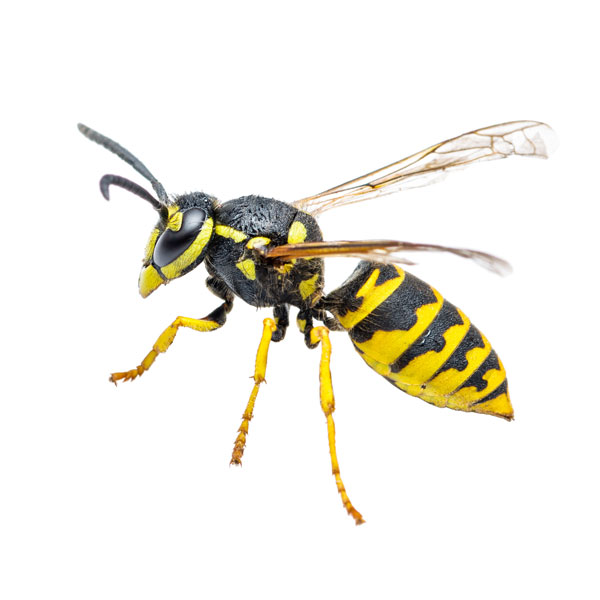
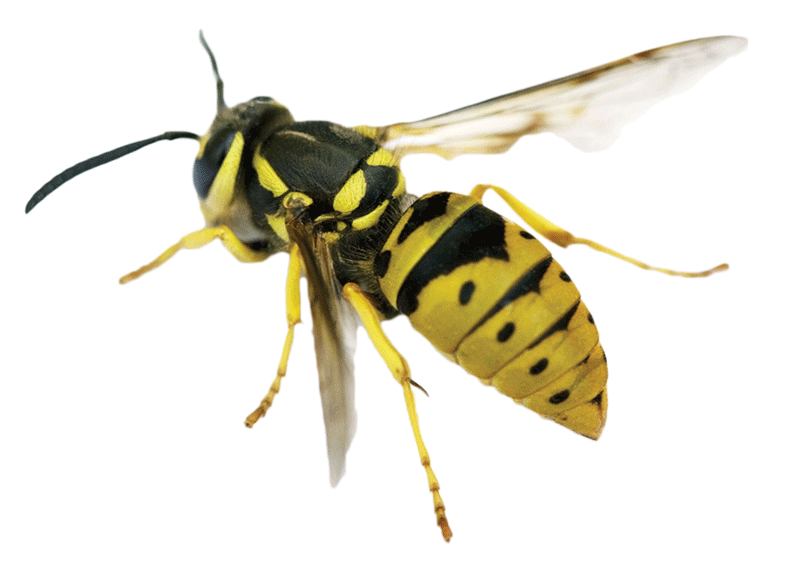
Yellow jackets, which have black and yellow stripes on the abdomen, form underground nests.

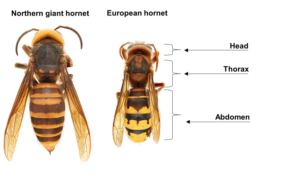
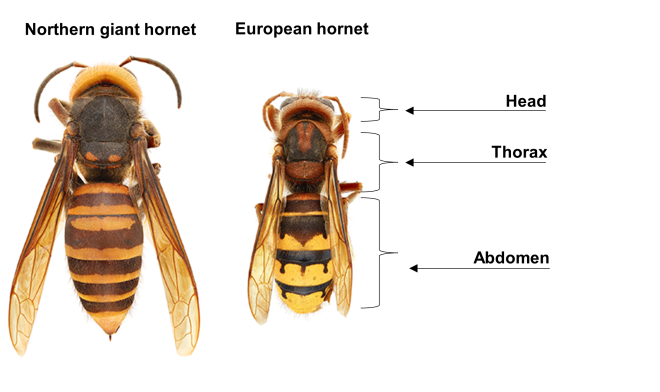
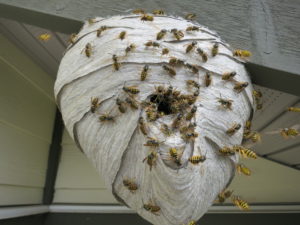
Hornets are predominantly black with some yellow markings on the head and thorax. Hornets form paper-like nests that are attached to trees, bushes, or buildings.

Certain animals have developed stinging as a form of defense or hunting. Venomous stings can have a local reaction, meaning pain, swelling, redness, itching, and possible oozing around the sting site, or a systemic reaction, meaning with local symptoms plus hives or airway and circulatory problems across the whole body. Local symptoms meaning the reaction to the sting is in one local area and systemic meaning the reaction is generalized throughout the body.

Types of Wasps:

A-Hornets
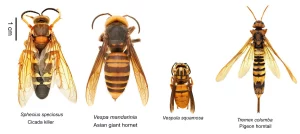
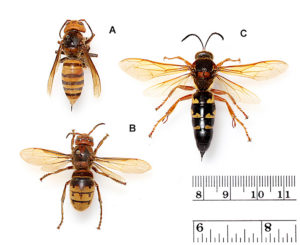
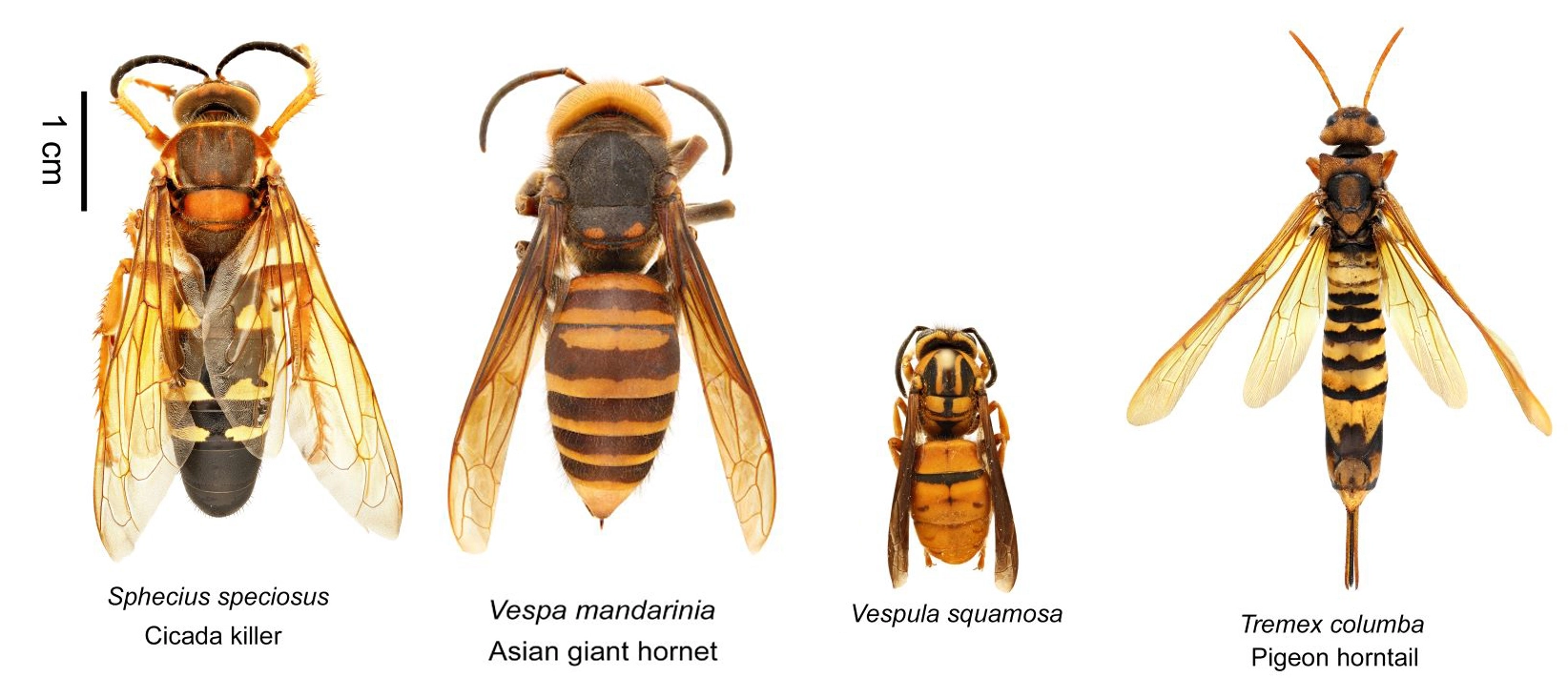
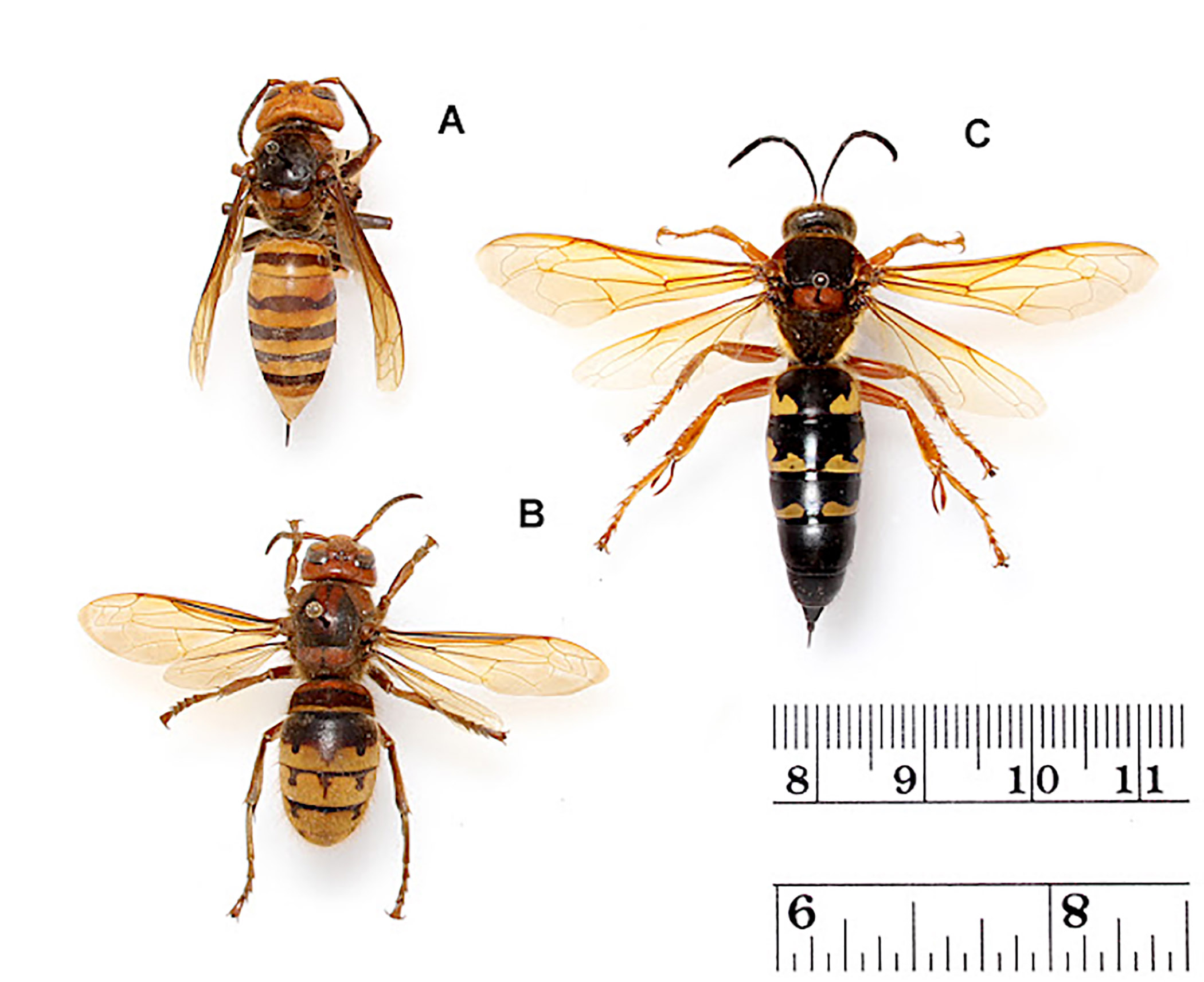
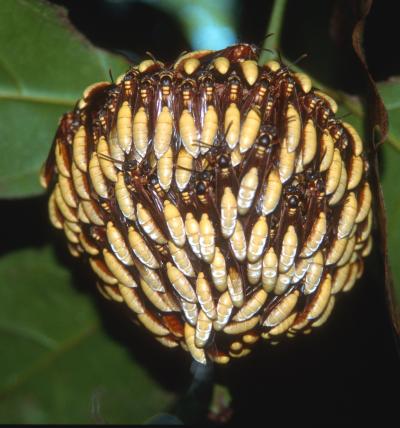
Hornets are a type of wasp closely related to and resembling yellow jackets, according to National Geographic. While the majority of the approximately 20 species of hornets are found in tropical parts of Asia, these stinging insects can also be found throughout Europe, Africa and North America. Hornets are social insects that live in community hives dominated by queens.They are considered pests and potentially dangerous by many because they aggressively defend their hives by using their stingers. Reacting quickly after disturbing a hornets’ nest will help you prevent excessive stings and potential allergic reactions.

Hornets are a large species of wasp, growing up to 2 1/2-inches in length. Hornets become aggressive when they feel threatened or must defend their nest. Unlike a bee, hornets can sting multiple times, as their stingers are not barbed. A hornet sting delivers venom beneath the skin that causes a painful reaction for up to three days following. You can treat a hornet sting to relieve some of the pain and swelling, making the healing process tolerable. Hornets are very, very painful. As soon as you are stung by a Hornet a red welt will develop and the throbbing pain will begin. Before trying to treat a Hornet sting be sure you are safely away from the Hornet and nest. A Hornet will sting many times and if you kill a Hornet their Hornet friends back at the nest will come after you too. When a Hornet is killed it releases a scent and other Hornets will come to investigate. If you are allergic to Hornet stings seek emergency medical attention 911 for anaphylactic reactions.

 B.) Yellow Jackets  
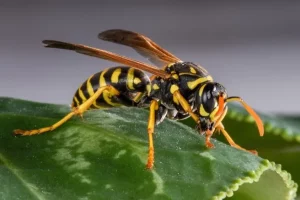
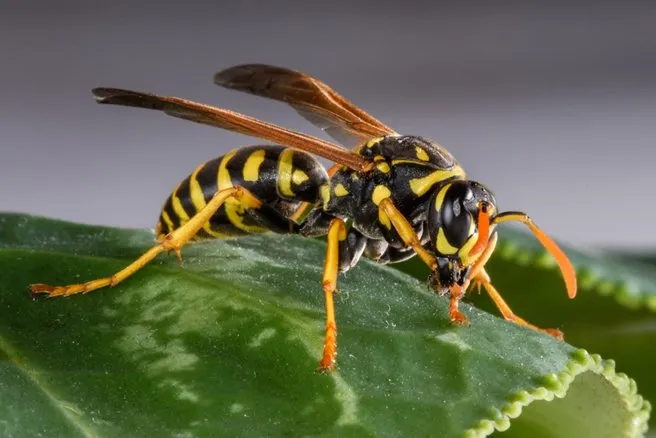
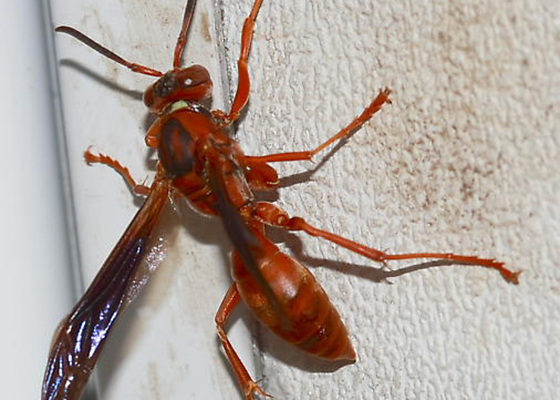
Overall, stinging wasps have warning colors, either yellow, brown, to even blue or red. Wasps have pointed abdomens attached to the thorax by a thin waist called a petiole. They build papery nests from wood fibers, very common in the northeast. The colonies that live in these nests are led by one egg-laying queen. The female nest-building workers are the only ones with stingers, which are modified egg laying apparatuses. If threatened, they will gather into a stinging swarm to protect the nest.

C.) Solitary Wasps

There are two main types of wasps, the solitary ones and the social ones, which nest together. Here’s a quick look at each of these.

D.) Social Wasps
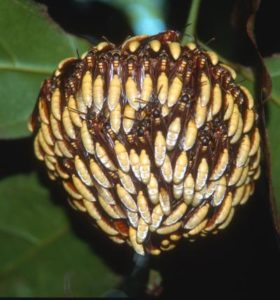
For wasps, being social does not mean that they live in large colonies–far from it. A typical wasp nest can contain only a dozen individuals. The larger wasp nests can contain as many as 10,000 individuals, way below the 50,000 workers in a bee colony.

The social wasps belong to the Vespidae family, which includes the hornets and the yellow jackets, one of the most aggressive types of wasps.

E.) Solitary Wasps

MALE   FEMALE
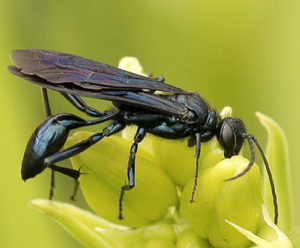
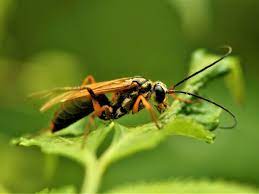
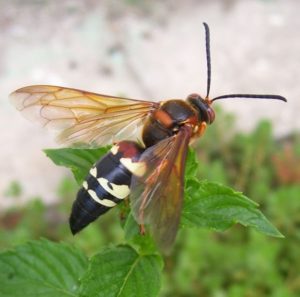
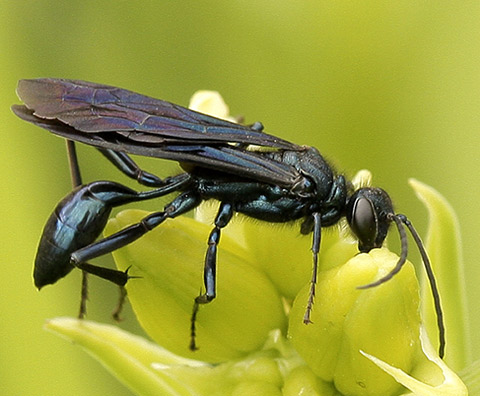
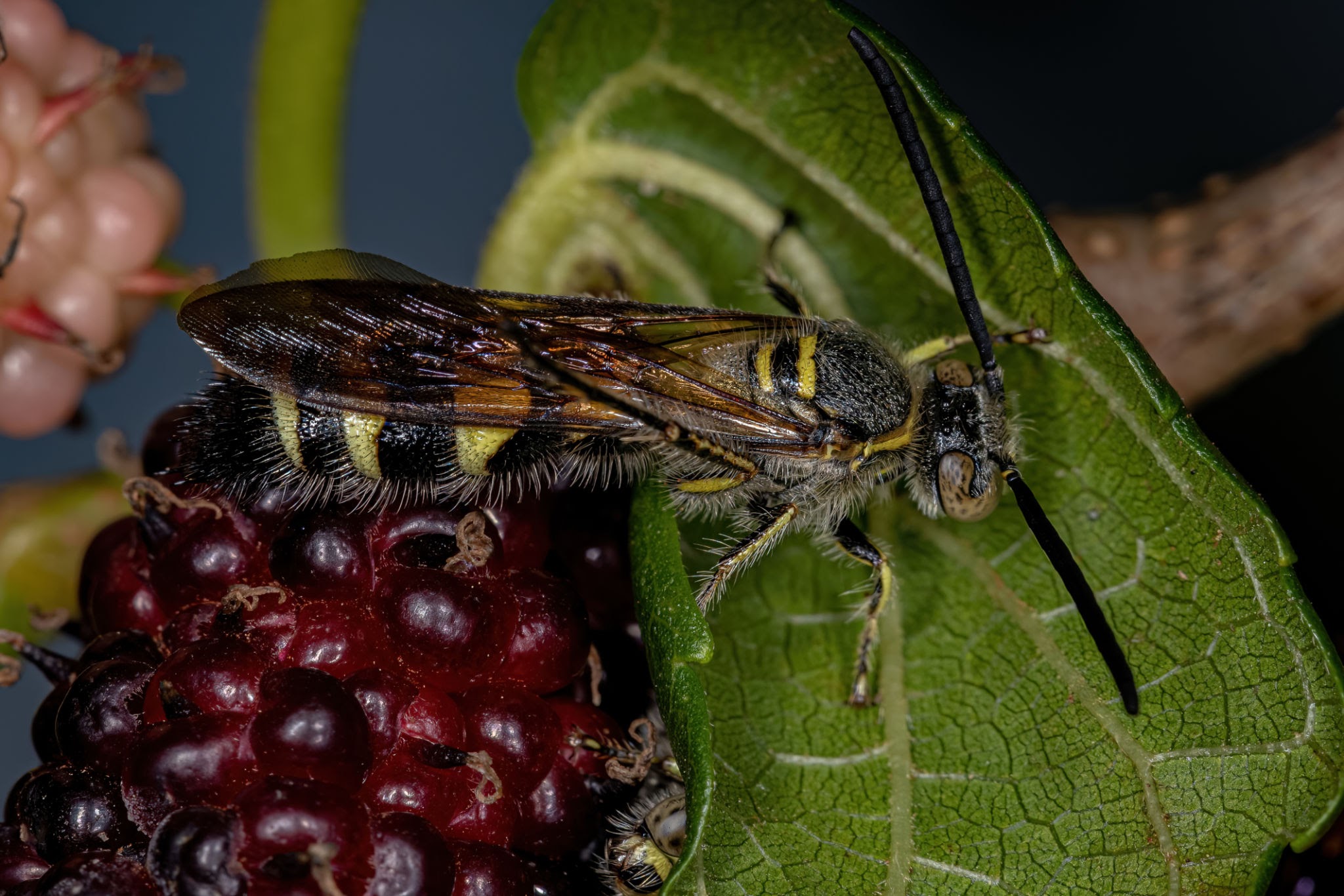
In mid to late summer in the northeastern US, several species of large solitary wasp (belonging to the families Sphecidae and Crabronidae) frequent gardens, parks, and other open spaces. Despite their threatening appearance, solitary wasps are totally harmless. They are more interested in hunting other invertebrates–like spiders, flies, and bees–than they are in you. Solitary wasps are carnivores that capture and paralyze insects or spiders to feed their young, with many species specializing on particular types of prey. Unlike hornets, yellowjackets, and other social wasps, solitary wasp females build and provision nests independently of one another. Nesting locations differ among species and may include a variety of cavities both above and below ground.

The vast majority of wasps belong to the solitary type and they are mostly predators. Here are the main groups of solitary wasps:

Types of solitary wasps:
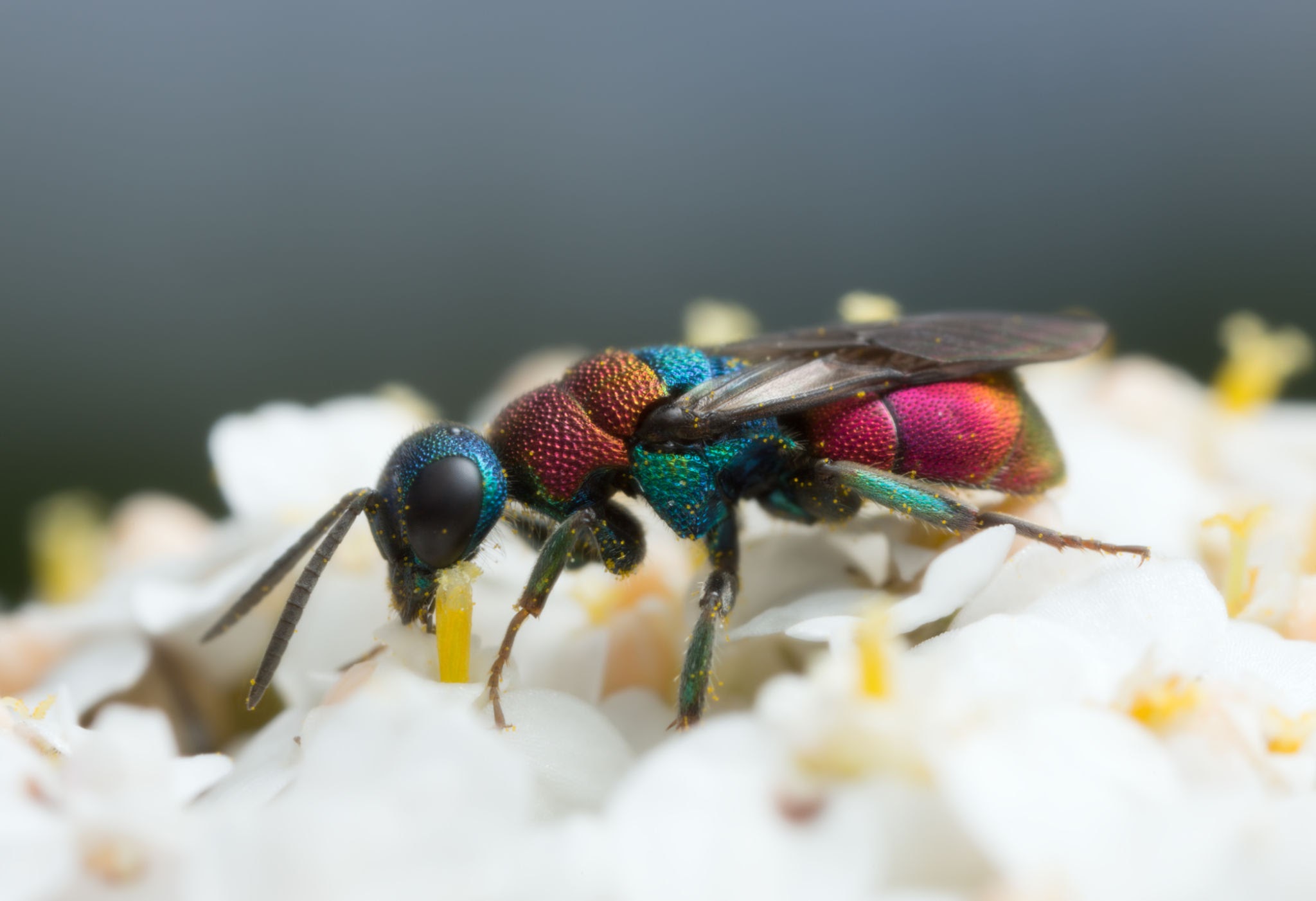
  • 1 Cuckoo wasps, which belong in the Chrysididae family
  • 2 Tiphiid wasps of the Tiphiidae family
  • 3 Scoliid wasps of the Scoliidae family
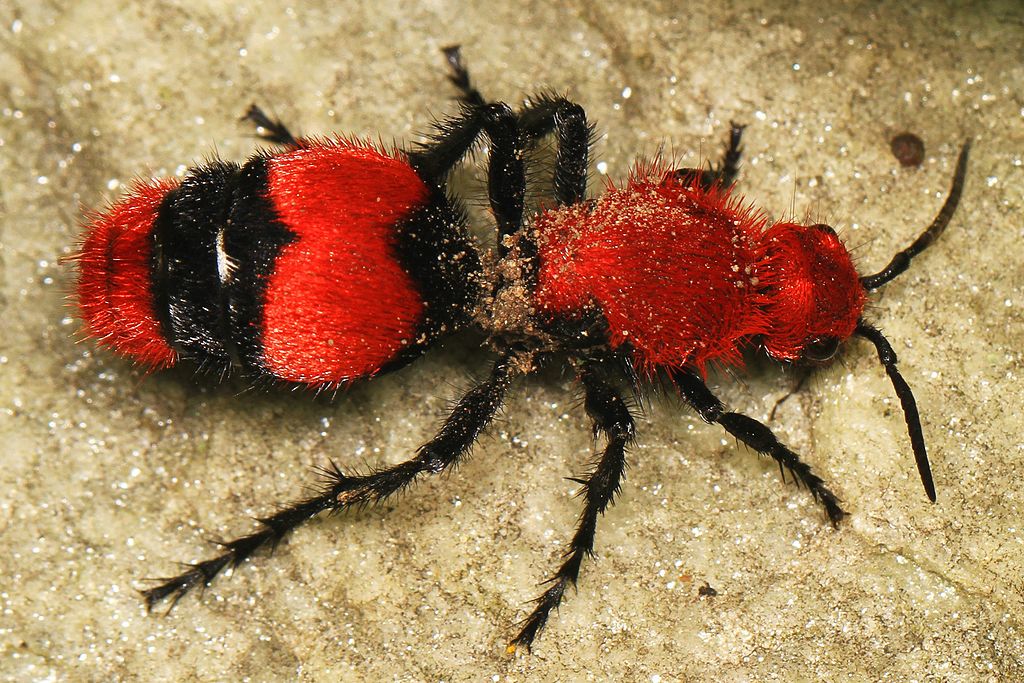
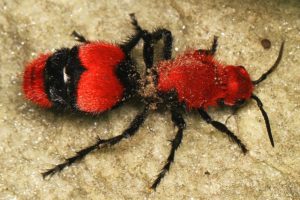
  • 4 Velvet wasps of the family Mutillidae
  • 5 Cicada-killer

Solitary wasps are generally parasitic and do not build colonies, unlike their more social relatives.
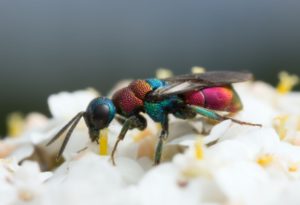
#1 Cockoo  Cockoo Wasp Digital photo of a female  #1

#2 Tiphiid Wasps 
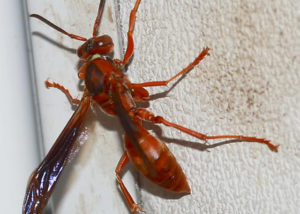
#3 Adult Scoliid Wasp of the Subfamily Campsomerinae

#4 Velvet Wasps Female Male
#5 Cicada Killer Wasp 

REMEMBER wasps have the ability to sting repeatedly.

Treat a wasp, hornet, or yellow jacket with care. If you get stung, leave the area and wash with soap and water as soon as you can. Applying a cold compress can help reduce swelling. Although if your symptoms worsen more than mild pain and swelling seek medical attention ASAP!

Tune into Part 2 tomorrow for learning about the BEES.


QUOTE FOR TUESDAY:

“Key Facts on Endometriosis:

  • Endometriosis is a disease where tissue similar to the lining of the uterus grows outside the uterus, causing pain and/or infertility (1).
  • Endometriosis affects roughly 10% (190 million) of reproductive age women and girls globally (2).
  • It is a chronic disease associated with severe, life-impacting pain during periods, sexual intercourse, bowel movements and/or urination, chronic pelvic pain, abdominal bloating, nausea, fatigue, and sometimes depression, anxiety, and infertility.
  • The variable and broad symptoms of endometriosis mean that healthcare workers do not easily diagnose it and many individuals suffering from it have limited awareness of the condition. This can cause a lengthy delay between onset of symptoms and diagnosis (3).
  • At present, there is no known cure for endometriosis, & treatment is usually aimed at controlling symptoms.”.

World Health Organization – WHO (https://www.who.int/news-room/fact-sheets/detail/endometriosis)

QUOTE FOR MONDAY:

“A woman’s uterus is lined with endometrial tissue. This lining is called the endometrium. Your body grows a new endometrium with each menstrual cycle to prepare for a fertilized egg. Endometriosis is a condition in which endometrial tissue grows outside the uterus.  Endometriosis affects up to 10% of women between the ages of 15 and 44. It most often occurs on or around reproductive organs in the pelvis or abdomen and grows outside the uterus. The buildup of abnormal tissue outside the uterus can lead to inflammation, scarring and painful cysts. It can also lead to buildup of fibrous tissues between reproductive organs that causes them to “stick” together.”

John Hopkins Medicine (https://www.hopkinsmedicine.org/health/conditions-and-diseases/endometriosis)

QUOTE FOR THE WEEKEND:

“Managing MS is an ongoing process, beginning with the very first symptoms and continuing throughout the disease course. It’s never too soon or too late to think about how to access high quality, comprehensive, interdisciplinary care. Knowing what to look for, where to find it, and how to work effectively with your doctor and other health professionals is essential to your health, wellness and quality of life.  Establishing and following a treatment plan with your healthcare provider is the best strategy for managing your MS. Medications are used in multiple sclerosis (MS) to modify the disease course, treat relapses — also called attacks or exacerbations — and manage symptoms. Along with the other essential components of comprehensive MS care, these medications help you manage your MS and enhance your quality of life.”.

National Multiple Sclerosis Society (https://www.nationalmssociety.org/Treating-MS/Medications)

QUOTE FOR FRIDAY:

“The symptoms of MS are often unpredictable. They may be mild or severe, short-term or long-lasting. They may appear in different combinations, depending on the area of the nervous system affected. About 50% of all people with MS have thinking (cognitive) problems linked to the disease. The effects of these problems may be mild. Your healthcare provider may only find them after much testing.”

John Hopkins Medicine (https://www.hopkinsmedicine.org/health/conditions-and-diseases/multiple-sclerosis-ms)

QUOTE FOR THURSDAY:

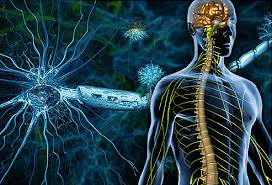
“Multiple sclerosis is a disease that impacts the brain, spinal cord and optic nerves, which make up the central nervous system and controls everything we do. The exact cause of MS is unknown, but we do know that something triggers the immune system to attack the CNS. The resulting damage to myelin, the protective layer insulating wire-like nerve fibers, disrupts signals to and from the brain. This interruption of communication signals causes unpredictable symptoms such as numbness, tingling, mood changes, memory problems, pain, fatigue, blindness and/or paralysis. Everyone’s experience with MS is different and these losses may be temporary or long lasting.”

National Multiple Sclerosis Society (https://www.nationalmssociety.org/What-is-MS)

Part I The Education and Month of Multiple Sclerosis – What this Dx is, the causes & how it is diagnosed?


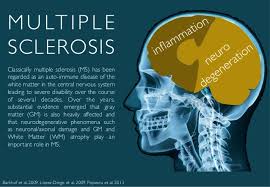
MS=Multiple Sclerosis is a long-lasting disease that can affect your brain, spinal cord, and the optic nerves in your eyes. It can cause problems with vision, balance, muscle control, and other basic body functions.

The effects are often different for everyone who has the disease. Some people have mild symptoms and don’t need treatment. Others will have trouble getting around and doing daily tasks.

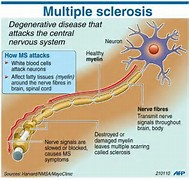
MS happens when your immune system attacks a fatty material called myelin, which wraps around your nerve fibers to protect them-an outer shell. Without this outer shell, your nerves become damaged. Scar tissue may form and transmission of signals from brain to the nerve endings with messages to do functions are obstructed in allowing the body to do functions.

Your nerves are the channels from the brain to the muscle it is going to.  Understand that when your a fetus the brain first grows, and than the spinal cord continues to grow from the brain.  They are both the same tissue.  In MS this damage means your brain can’t send signals through your body correctly. Your nerves also don’t work as they should to help you move and feel.  In multiple sclerosis (MS), the body’s immune system T cells attack the myelin sheath that protects the nerve fibers. The T cells either partially or completely strip the myelin off the fibers, leaving the nerves unprotected and uninsulated. Due to patches of the myelin sheath in your nerves unable to give messages so sensation and movement that the brain controls in the CNS is destroyed.  Ending line making the mobility of the patient destroyed.

Multiple sclerosis (MS) is an unpredictable, often disabling disease of the central nervous system that disrupts the flow of information within the brain, and between the brain and nerves throughout the body.

It can be a challenge for doctors to diagnose multiple sclerosis (MS). There’s no one test that can definitely show if someone has it. And there are many conditions with symptoms that can seem like MS.

But a neurologist who specializes in treating the disease should be able to look into how you’re feeling and help you figure out if your symptoms mean you have MS or another problem.

The causes of MS – Multiple Sclerosis:

Doctors don’t know for sure what causes MS, but there are many things that seem to make the disease more likely.

People with certain genes may have higher chances of getting it.

Smoking also may raise the risk.

Some people may get MS after they’ve had a viral infection — like the Epstein-Barr virus or the human herpesvirus 6 — that makes their immune system stop working normally. The infection may trigger the disease or cause relapses. Scientists are studying the link between viruses and MS, but they don’t have a clear answer yet.

Some studies even suggest that vitamin D, which you can get from sunlight, may strengthen your immune system and protect you from MS.

Some people with higher chances of getting the disease move to sunnier regions seem to lower their risk; like my cousin from the NJ to South Carolina.

There are no specific tests for MS. Instead, a diagnosis of multiple sclerosis often relies on ruling out other conditions that might produce similar signs and symptoms, known as a differential diagnosis.

Diagnostic Tooling done for ruling out multiple sclerosis is:

*Imaging tests, like an MRI– to take a closer look at your brain. Magnetic resonance imaging, nuclear magnetic resonance imaging, or magnetic resonance tomography is a medical imaging technique used in radiology to image the anatomy and the physiological processes of the body in both health and disease. MRI scanners use strong magnetic fields, radio waves, and field gradients to form images of the body.

MRIs can reveal areas of MS (lesions) on your brain and spinal cord. You may receive an intravenous injection of a contrast material to highlight lesions that indicate your disease is in an active phase.

*Spinal taps, also called lumbar punctures, to check the fluid that runs through your spinal column  When doctors do this test, they’re looking closely at the fluid in your spine, called cerebrospinal fluid, for higher levels of proteins and other substances that are signs of the disease. These can be helpful in diagnosing MS, but they’re not absolute proof of the condition. Your doctor can tell you if you need to have a spinal tap

*Electrical tests, called evoked potentials, to see if MS has affected your nerve pathways.   Electrical tests of your nerves, called evoked potentials, can help doctors confirm if the condition has affected the parts of your brain that help you see, hear, and feel. Your doctor will place wires on your scalp to test your brain’s response as you watch a pattern on a video screen, hear a series of clicks, or get electrical pulses on your arm or leg.

The MD record the electrical signals produced by your nervous system in response to stimuli. An evoked potential test may use visual stimuli or electrical stimuli, in which you watch a moving visual pattern, or short electrical impulses are applied to nerves in your legs or arms. Electrodes measure how quickly the information travels down your nerve pathways.

*Blood tests. Tests to check for specific biomarkers associated with MS are currently under development and may also aid in diagnosing the disease.

*Evoked potential tests.  Which record the electrical signals produced by your nervous system in response to stimuli. An evoked potential test may use visual stimuli or electrical stimuli. In these tests, you watch a moving visual pattern, or short electrical impulses are applied to nerves in your legs or arms. Electrodes measure how quickly the information travels down your nerve pathways.

Stayed tune to Part II tomorrow regarding signs/symptoms!


Updated 3/16/2023


QUOTE FOR WEDNESDAY:

“The United States is undergoing an epidemic of deaths caused by prescription drug overdoses. Every 19 minutes, someone in the United States dies from an unintentional prescription drug overdose. One major contributing factor to the rise in such deaths is the increased use of opioid analgesics.

Marijuana use, which is prevalent among youth, has been shown to interfere with short-term memory, learning, and psychomotor skills. Motivation and psychosexual/emotional development also may be affected. 

Early adolescent marijuana use increases the risk in late adolescence of not graduating from high school, delinquency, having multiple sexual partners, and not always using condoms.In addition, early adolescent marijuana use is related to later adolescent problems that limit the acquisition of skills necessary for employment and heighten the risks of contracting HIV and abusing legal and illegal substances. 

Any illicit drug use by adolescents can have immediate and long-term health and social consequences. Overall, mental health problems including depression, developmental lags, apathy, withdrawal, conduct problems, personality disorders, suicidal thoughts, attempted suicide, suicide, and other psychosocial dysfunctions are frequently linked to substance abuse among adolescents. Drug abuse has been shown to increase the likelihood of psychiatric disorders. 

Abuse of specific drugs exposes users to a range of serious consequences. Cocaine use is linked with health problems including eating disorders, disabilities, and death from heart attacks and strokes. Hallucinogens can affect brain chemistry and result in problems with learning new information and memory. Methamphetamine can cause rapid heart rate, increased blood pressure, and damage to the small blood vessels in the brain that can lead to stroke. Heroin use can result in slow and shallow breathing, convulsions, coma, and even death.”.

National Drug Intelligence Center (https://www.justice.gov/archive/ndic/pubs11/12430/index.htm#significant)

QUOTE FOR TUESDAY:

“The following facts on data by American Addiction Centers:

  • According to the National Survey on Drug Use and Health (NSDUH), 19.7 million American adults (aged 12 and older) battled a substance use disorder in 2017.1
  • Almost 74% of adults suffering from a substance use disorder in 2017 struggled with an alcohol use disorder.1
  • About 38% of adults in 2017 battled an illicit drug use disorder.1
  • That same year, 1 out of every 8 adults struggled with both alcohol and drug use disorders simultaneously.1
  • In 2017, 8.5 million American adults suffered from both a mental health disorder and a substance use disorder, or co-occurring disorders.1
  • Drug abuse and addiction cost American society more than $740 billion annually in lost workplace productivity, healthcare expenses, and crime-related costs.2

American Addiction Centers (https://americanaddictioncenters.org/rehab-guide/addiction-statistics)