What is MERS?


Middle East respiratory syndrome (MERS) is a viral respiratory illness caused by a coronavirus (Middle East respiratory syndrome coronavirus, or MERS‐CoV) that was first identified in Saudi Arabia in 2012.

Coronaviruses are a large family of viruses that can cause diseases in humans, ranging from the common cold to Severe Acute Respiratory Syndrome (SARS).

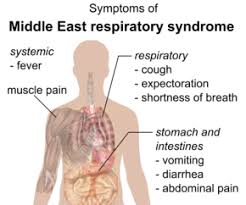
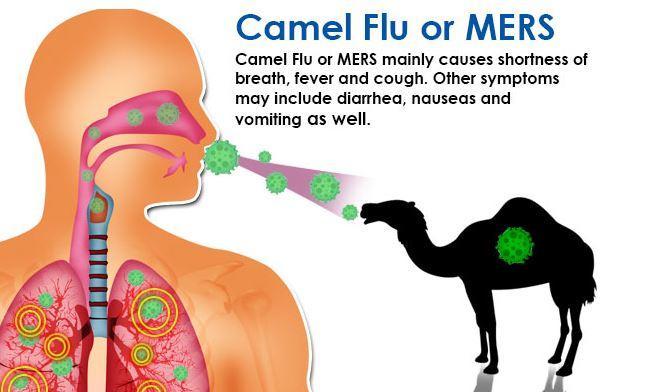
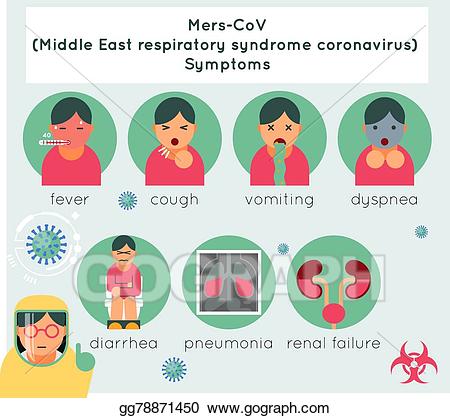
A typical case of MERS includes fever, cough, and/or shortness of breath. Pneumonia is common, however some people infected with the MERS virus have been reported to be asymptomatic. Gastrointestinal symptoms, including diarrhoea, have also been reported.

Severe cases of MERS can include respiratory failure that requires mechanical ventilation and support in an intensive-care unit.

Some patients have had organ failure, especially of the kidneys, or septic shock. The virus appears to cause more severe disease in people with weakened immune systems, older people, and people with chronic diseases as diabetes, cancer, and chronic lung disease.

The mortality rate for people with the MERS virus is approximately 35% – this may be an overestimate however, as mild cases may be missed by existing surveillance systems.

Infected people with no symptoms have been identified because they were tested for MERS-CoV during investigations among contacts of people known to be infected with MERS-CoV. The role of asymptomatic infected individuals in transmission is currently unknown and under investigation.

It is not always possible to identify people infected with the MERS virus because early symptoms of the disease are non-specific.

MERS has been reported in 27 countries since 2012, with approximately 80% of human cases reported by the Kingdom of Saudi Arabia.

Cases identified outside the Middle East are people who were infected in the Middle East and travelled to areas outside the Middle East. On rare occasions, small outbreaks have occurred in areas outside the Middle East.

The MERS virus is transmitted primarily from infected dromedary camels to people, but transmission from people to people is also possible.

From animals to people

MERS-CoV is a zoonotic virus, meaning it is transmitted between animals and people. Scientific evidence suggests that people are infected through unprotected direct or indirect contact with infected dromedary camels.

The MERS virus has been identified in dromedary camels in several countries, including Burkina Faso, Egypt, Ethiopia, Iran, Jordan, Kenya, Kingdom of Saudi Arabia, Kuwait, Mali, Morocco, Netherlands, Nigeria, Oman, Pakistan, Qatar, Spain (Canary Islands), Somalia, Sudan, Tunisia, and the United Arab Emirates.. There is further evidence suggesting the MERS-CoV is widespread in dromedary camels in the Middle East, Africa and South Asia.

The dromedary, also called the Arabian camel (Camelus dromedarius), is a large, even-toed ungulate with one hump on its back. It is the tallest of the three species of camel; adult males stand 1.8–2 m (5.9–6.6 ft) at the shoulder, while females are 1.7–1.9 m (5.6–6.2 ft) tall. Males typically weigh between 400 and 600 kg (880 and 1,320 lb), and females weigh between 300 and 540 kg (660 and 1,190 lb). The species’ distinctive features include its long, curved neck, narrow chest, a single hump (compared with two on the Bactrian camel and wild Bactrian camel), and long hairs on the throat, shoulders and hump. The coat is generally a shade of brown. The hump, 20 cm (7.9 in) tall or more, is made of fat bound together by fibrous tissue.

Dromedaries are mainly active during daylight hours. They form herds of about 20 individuals, which are led by a dominant male. This camel feeds on foliage and desert vegetation; several adaptations, such as the ability to tolerate losing more than 30% of its total water content, allow it to thrive in its desert habitat. Mating occurs annually and peaks in the rainy season; females bear a single calf after a gestation of 15 months.

The dromedary has not occurred naturally in the wild for nearly 2,000 years. It was probably first domesticated in Somalia or the Arabian Peninsula about 4,000 years ago. In the wild, the dromedary inhabited arid regions, including the Sahara Desert. The domesticated dromedary is generally found in the semi-arid to arid regions of the Old World, mainly in Africa, and a significant feral population occurs in Australia. Products of the dromedary, including its meat and milk, support several north Arabian tribes; it is also commonly used for riding and as a beast of burden (people riding the camel for work).

This is how this illness got the nick name “Camel Flu”, based on the geographical area it initially came from, being the Middle East.

It is possible that other animal reservoirs exist, however animals including goats, cows, sheep, water buffalo, swine, and wild birds have been tested for MERS-CoV and the virus has not been found.

Between people

The MERS virus does not pass easily between people unless there is close unprotected contact, such as the provision of clinical care to an infected patient without strict hygiene measures.

Transmission between people has been limited to-date, and has been identified among family members, patients, and health care workers. The majority of reported MERS cases to date have occurred in health care settings.

If you have had close contact with someone infected with MERS-CoV within the last 14 days without using the recommended infection control precautions, you should contact a healthcare provider for an evaluation.

As a general precaution, anyone visiting farms, markets, barns, or other places where animals are present should practice general hygiene measures. These include regular hand-washing before and after touching animals, and avoiding contact with sick animals.

The consumption of raw or undercooked animal products, including milk and meat, carries a high risk of infection from a variety of organisms. Animal products processed appropriately through cooking or pasteurization are safe for consumption, but should also be handled with care to avoid cross-contamination with uncooked foods. Camel meat and camel milk are nutritious products that can be consumed after pasteurization, cooking, or other heat treatments.

Until more is understood about MERS-CoV, people with diabetes, renal failure, chronic lung disease, and immunocompromised persons are considered to be at high risk of severe disease from MERS-CoV infection. Especially in the Middle East, this group of people should avoid contact with dromedary camels, consuming raw camel milk or camel urine, as well as eating meat that has not been properly cooked.

Health care workers are at risk for transmission of MERS-CoV, it has occurred in health care facilities in several countries, most notably in Saudi Arabia and the Republic of Korea.

Droplet precautions should be added to standard precautions when providing care to all patients with symptoms of acute respiratory infection. Contact precautions and eye protection should be added when caring for suspected or confirmed cases of MERS. Airborne precautions should be applied when performing aerosol‐generating procedures.

SARS is the other major concern if a patient is diagnosed with COVID-19.  Both MERS and/or SARS can lead to death especially in the elderly.


QUOTE FOR WEDNESDAY:

“In every cell in the human body there is a nucleus, where genetic material is stored in genes. Genes carry the codes responsible for all of our inherited traits and are grouped along rod-like structures called chromosomes. Typically, the nucleus of each cell contains 23 pairs of chromosomes, half of which are inherited from each parent. Down syndrome occurs when an individual has a full or partial extra copy of chromosome 21.  In recent history, advances in medicine and science have enabled researchers to investigate the characteristics of people with Down syndrome. In 1959, the French physician Jérôme Lejeune identified Down syndrome as a chromosomal condition. Instead of the usual 46 chromosomes present in each cell, Lejeune observed 47 in the cells of individuals with Down syndrome. It was later determined that an extra partial or whole copy of chromosome 21 results in the characteristics associated with Down syndrome. In the year 2000, an international team of scientists successfully identified and catalogued each of the approximately 329 genes on chromosome 21. This accomplishment opened the door to great advances in Down syndrome research.”

National Down Syndrome Society (https://ndss.org/about)

QUOTE FOR TUESDAY:

“National Domestic Violence Awareness Month is recognized each October through educational events, community gatherings, and support groups. In 2018, the Domestic Violence Awareness Project developed a unified theme: #1Thing. The purpose of this campaign is to remind everyone that ending domestic violence starts with just one small action, whether that is seeking help or sharing resources.  2010 ​Domestic violence victims total 10 million per year. According to a CDC survey, 20 Americans experience intimate partner physical violence every minute. That totals around 10 million victims per year.​”

National Today (https://nationaltoday.com/national-domestic-violence-awareness-month/)

QUOTE FOR MONDAY:

“Some of us are short, tall, overweight, underweight, gay, straight, transgender, have special needs … we’re all various races, we dress and look differently.

There are many different types of bullying. Some are obvious, while others are more subtle. Types of bullying to look out for in your school and community include: hazing, cyberbullying and teen dating violence.

Bullying and cyberbullying know no boundaries. Popular kids can be bullied as easily as others. Just look at some of the celebrities who’ve been targeted. We can STOMP Out Bullying™ by being tolerant, kind and respectful and STAND UP for each other. We all dance to a different drummer – but the reality is we are ALL the same because we are ALL people. No one deserves to bullied for any reason!! NO MATTER WHAT!

STOMP Out Bullying (https://www.stompoutbullying.org/about-bullying-and-cyberbullying)

QUOTE FOR THE WEEKEND:

“In 2020, the latest year for which incidence data are available, in the United States, 239,612 new cases of Female Breast cancer were reported among women, and 42,273 women died of this cancer. For every 100,000 women, 119 new Female Breast cancer cases were reported and 19 women died of this cancer.

Cancer is the second leading cause of death in the United States, exceeded only by heart disease. One of every five deaths in the United States is due to cancer.

The rates of cancer diagnoses and cancer deaths are impacted by changes in exposure to risk factors, screening test use, and improvements in treatments. Some cancer rates are going down, as you can see in the lines below and in the maps where the color is gradually getting lighter over time.

In some cases, even though the rate is going down, the number of new cases and deaths is going up. This happens because the size of our population is growing and aging each year.”

Center for Disease Control and Prevention – CDC (https://gis.cdc.gov/Cancer/USCS/#/AtAGlance/)


QUOTE FOR FRIDAY:

“While researchers are still working to fully understand breast cancer’s causes to ultimately prevent the disease entirely, they have identified several proven risk factors for breast cancer—including many that are potentially modifiable. According to a 2017 American Cancer Society (ACS) study, nearly 42 percent of cancer diagnoses and 45 percent of deaths in the US are linked to controllable risk factors for cancer. For breast cancer specifically, ACS estimates that about 30 percent of postmenopausal breast cancer diagnoses are linked to modifiable risk factors. When it comes to breast cancer, there are a number of ways you can protect yourself. While it’s important to note that several factors shaping your personal lifetime risk of breast cancer maybe controllable there are others completely out of your control—among them genetics, family history, race, ethnicity, breast density, being born female—BUT lifestyle choices can play a role. ”

Breast Cancer Research Foundation-BCRF

(https://www.bcrf.org/blog/breast-cancer-prevention-breast-cancer-risk-reduction/)


QUOTE FOR THURSDAY:

“After skin cancer, breast cancer is the most common cancer diagnosed in women in the United States.

Breast cancer most often begins with cells in the milk-producing ducts (invasive ductal carcinoma). Breast cancer may also begin in the glandular tissue called lobules (invasive lobular carcinoma) or in other cells or tissue within the breast.

Researchers have identified hormonal, lifestyle and environmental factors that may increase your risk of breast cancer. But it’s not clear why some people who have no risk factors develop cancer, yet other people with risk factors never do:”

QUOTE FOR WEDNESDAY:

“Breast cancer is a type of cancer that starts in the breast. It can start in one or both breasts.

Cancer starts when cancer cells begin to grow out of control.

Breast cancer occurs almost entirely in women, but men can get breast cancer, too.

It’s important to understand that most breast lumps are benign and not cancer (malignant). Non-cancer breast tumors are abnormal growths, but they do not spread outside of the breast. They are not life threatening, but some types of benign breast lumps can increase a woman’s risk of getting breast cancer. Any breast lump or change needs to be checked by a health care professional to find out if it is benign or malignant (cancer) and if it might affect your future cancer risk.

Breast cancers can start from different parts of the breast. The breast is an organ that sits on top of the upper ribs and chest muscles consisting of mainly glands, ducts, fatty tissues,”

American Cancer Society (https://www.cancer.org/cancer/types/breast-cancer/about/what-is-breast-cancer.html)


QUOTE FOR TUESDAY:

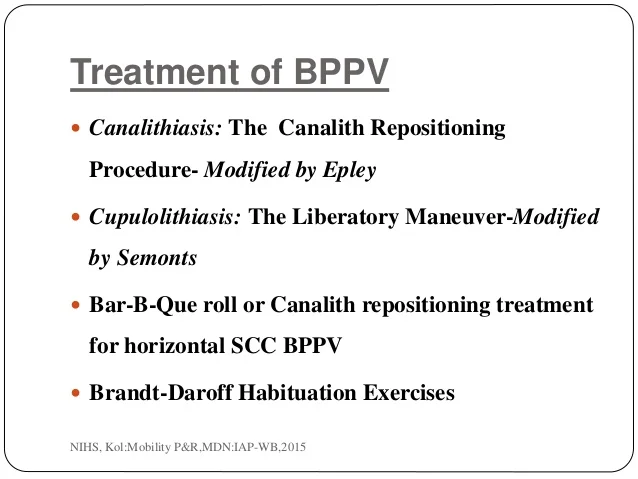
“BPPV with the most common variant (crystals in the posterior SCC) can be treated successfully — with no tests, pills, surgery or special equipment — by using the Epley maneuver.

This simple, effective approach to addressing BPPV involves sequentially turning the head in a way that helps remove the crystals and help them float out of the semicircular canal. Several repositioning maneuvers performed in the same visit may be necessary.

Surgery is seldom necessary to treat this condition. In rare cases, the doctor may recommend a surgical procedure to block the posterior semicircular canal to prevent stones from entering and moving within the canal. While the surgical plugging procedure cures the problem, it carries some risk, including hearing loss.”

John Hopkins Medicine (https://www.hopkinsmedicine.org/health/conditions-and-diseases/benign-paroxysmal-positional-vertigo-bppv)

Part 4 BPPV=Benign Paroxysmal Positional Vertigo – Surgery as a last resort treatment and knowing who to go to for this diagnosis in getting treated.


Treatments done before for BPPV, listed above.

Surgical Procedures for Vestibular Dysfunction When is surgery necessary?

When medical treatment isn’t effective in controlling vertigo and other symptoms caused by vestibular system dysfunction, surgery may be considered. The type of surgery performed depends upon each individual’s diagnosis and physical condition. Surgical procedures for peripheral vestibular disorders are either corrective or destructive. The goal of corrective surgery is to repair or stabilize inner ear function. The goal of destructive surgery is to stop the production of sensory information or prevent its transmission from the inner ear to the brain.  Here are some types of surgeries used:

Labyrinthectomy:

A labyrinthectomy is a destructive procedure used for Ménière’s disease. The balance end organs are removed so that the brain no longer receives signals from the parts of the inner ear that sense gravity and motion changes. The hearing organ (cochlea) is also sacrificed with this procedure.

Vestibular nerve section:

A vestibular nerve section is a destructive procedure used for Ménière’s disease. The vestibular branch of the vestibulo-cochlear nerve is cut in one ear to stop the flow of balance information from that ear to the brain.   The brain can then compensate for the loss by using only the opposite ear to maintain balance.

Chemical labyrinthectomy:

A chemical labyrinthectomy is also known as transtympanic or intratympanic treatment or gentamicin infusion. This is a destructive procedure used for Ménière’s disease. An antibiotic called gentamicin is introduced into the middle ear and absorbed via the round window. The drug destroys the vestibular hair cells so that they cannot send signals to the brain.

Endolymphatic sac decompression:

Endolymphatic sac decompression is a stabilizing procedure sometimes used for Ménière’s disease or secondary endolymphatic hydrops to relieve endolymphatic pressure in the cochlea and vestibular system. A variety of techniques exist. One method involves allowing the sac to decompress by removing the mastoid bone surrounding it. Other methods involve inserting a shunt (a tube or strip) into the endolymphatic sac so that, theoretically, excess fluid can drain out into the mastoid cavity or other location. The effectiveness of decompression techniques in controlling vertigo remains in doubt.

Oval or round window plugging:

If the exercises described above are ineffective in controlling symptoms, symptoms have persisted for a year or longer,  and the diagnosis is very clear, a surgical procedure called “posterior canal plugging” may be recommended. Canal plugging blocks most of the posterior canal’s function without affecting the functions of the other canals or parts of the ear. This procedure poses a substantial risk to hearing — ranging from 3-20%, but is effective in about 85-90% of individuals who have had no response to any other treatment (Shaia et al, 2006; Ahmed et al, 2012). The risk of the surgery to hearing derives from inadvertent breaking into the endolymphatic compartment while attempting to open the bony labyrinth with a drill. Sensibly, canal plugging for BPPV (note the first letter stands for “benign”) is rarely undertaken these days due to the risk to hearing.

Alternatives to plugging.

Singular nerve section is the main alternative. Dr Gacek (Syracuse, New York) has written extensively about singular nerve section (Gacek et al, 1995). Interestingly, Dr. Gacek is the only surgeon who has published any results with this procedure post 1993 (Leveque et al, 2007). Singular nerve section is very difficult because it can be hard to find the nerve.

Dr. Anthony (Houston, Texas), advocates laser assisted posterior canal plugging. It seems to us that these procedures, which require unusual amounts of surgical skill, have little advantage over a conventional canal plugging procedure.

Oval or round window plugging is a stabilizing procedure sometimes used for repair of perilymph fistulas. Openings in the oval and/or round windows are patched with tissue taken from the external ear or from behind the ear so that perilymph fluid does not leak through the fistulas.

Pneumatic equalization (PE) tubes:

Pneumatic equalization (PE) is a stabilizing procedure sometimes used for treating perilymph fistulas. A tube is inserted through the tympanic membrane (eardrum) with one end in the ear canal and the other in the middle ear, to equalize the air pressure on the two sides of the eardrum.

Canal partitioning (canal plugging)

Canal partitioning is a stabilizing procedure sometimes used for treating BPPV or superior semicircular canal dehiscence. The problematic semicircular canal is partitioned or plugged with small bone chips and human fibrinogen glue to stop the movement of endolymph and foreign particles within the canal so that it no longer sends false signals to the brain.

Microvascular decompression

Microvascular decompression is performed to relieve abnormal pressure of the vascular loop (blood vessel) on the vestibulo-cochlear nerve.

Stapedectomy:

Stapedectomy is a stabilizing procedure sometimes used for otosclerosis. It is accomplished by replacing the stapes bone with a prosthesis.

Acoustic neuroma (vestibular schwannoma): removal This procedure involves the removal of a noncancerous tumor that grows from the tissue of the vestibular branch of the vestibulo-cochlear nerve.

Cholesteatoma removal: This procedure involves the removal of a skin growth that starts in the middle ear and that can secrete enzymes that destroy bone and surrounding structures.

Ultrasound surgery: Ultrasound is applied to the ear to destroy the balance end organs so that the brain no longer receives signals from the parts of the ear that sense gravity and motion changes. Cochlear dialysis Cochlear dialysis is a stabilizing procedure sometimes used to promote movement of excess fluid out of the inner ear by filling the scala tympani with a chemical solution.

Thank to NYU Medical Hospital in Manhattan, NY you can Click here to download the “Surgery for Peripheral Vestibular Disorders” publication. – See more at: http://vestibular.org/understanding-vestibular-disorders/treatment/vestibular-surgery#sthash.GDeNWxjl.dpuf.

If you have this problem and need a great hospital than let us look at the ranking of hospitals:

Of all 180 hospitals in the New York, New York metropolitan area, the 53 listed are the top-ranking on US News and World Report. This metro area, also called NYC, includes Long Island, Westchester County, and northern New Jersey. I know if I had a problem that I could not get rid of immediately with a antibiotic or a simple cure I would next want to go to the best if my county’s hospital couldn’t remove the problem completely. So one recommendation to you is through “US News and World Report” via the internet they show information on the best hospitals in America. For NYC and Northern NJ Columbia Presbyterian and NYU are in the top for the NE.