Archive | October 2025

Part I Breast Cancer Awareness Month: Know the different types of this cancer!


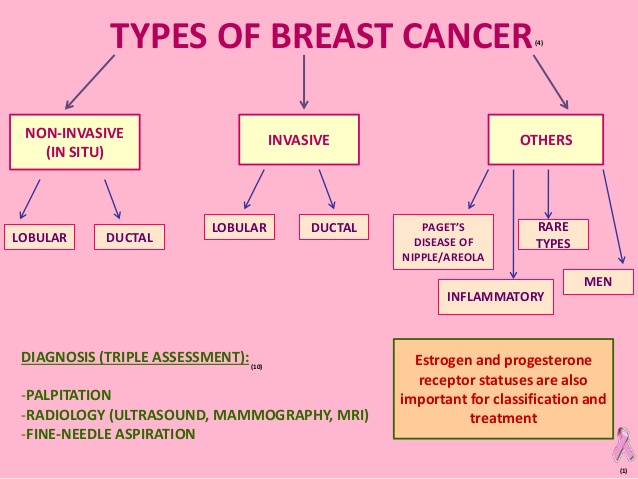
There are many types of breast cancer. The most common types are ductal carcinoma in situ, or invasive ductal carcinoma, and invasive lobular carcinoma.

When a biopsy is done to find out the specific type of breast cancer, the pathologist will also check if the cancer has spread into the surrounding tissues. The following terms are used to describe the extent of the cancer:

  • In situ breast cancers have not spread.
  • Invasive or infiltrating cancers have  spread (invaded) into the surrounding breast tissue.

The type of breast cancer is determined by the specific cells in the breast that are affected. Most breast cancers are carcinomas. Carcinomas are tumors that start in the epithelial cells that line organs and tissues throughout the body. Sometimes, an even more specific term is used. For example, most breast cancers are a type of carcinoma called adenocarcinoma, which starts in cells that make up glands (glandular tissue). Breast adenocarcinomas start in the ducts (the milk ducts) or the lobules (milk-producing glands).

There are other, less common, types of breast cancers, too, such as sarcomas, phyllodes, Paget disease, and angiosarcomas which start in the cells of the muscle, fat, or connective tissue.

Sometimes a single breast tumor can be a combination of different types. And in some very rare types of breast cancer, the cancer cells may not form a lump or tumor at all.

Common types of breast cancer

The most common kinds of breast cancer are carcinomas and are named based on where they form and how far they have spread.

These general kinds of breast cancer below can be further described with the terms outlined above.

In situ cancers

Ductal carcinoma in situ (DCIS; also known as intraductal carcinoma) is a non-invasive or pre-invasive breast cancer.

Lobular carcinoma in situ (LCIS) may also be called lobular neoplasia. This breast change is not a cancer, though the name can be confusing. In LCIS, cells that look like cancer cells are growing in the lobules of the milk-producing glands of the breast, but they don’t grow through the wall of the lobules.

Invasive (infiltrating) breast cancer

Breast cancers that have spread into surrounding breast tissue are known as invasive breast cancer. There are many different kinds of invasive breast cancer, but the most common are called invasive ductal carcinoma and invasive lobular carcinoma.

Less common types of breast cancer

Inflammatory breast cancer

This is an uncommon type of invasive breast cancer. It accounts for about 1% to 5% of all breast cancers.

Paget disease of the nipple

This starts in the breast ducts and spreads to the skin of the nipple and then to the areola(the dark circle around the nipple). It is rare, accounting for only about 1-3% of all cases of breast cancer.

Phyllodes tumor

Phyllodes tumors are rare breast tumors. They develop in the connective tissue (stroma) of the breast, in contrast to carcinomas, which develop in the ducts or lobules. Most are benign, but there are others that are malignant (cancer).

Angiosarcoma

Sarcomas of the breast are rare making up less than 1% of all breast cancers. Angiosarcoma starts in cells that line blood vessels or lymph vessels. It can involve the breast tissue or the skin of the breast. Some may be related to prior radiation therapy in that area.


QUOTE FOR WEDNESDAY:

“In 2025, the United States continues to navigate complex public health challenges. From mental health to chronic disease, these issues affect millions of lives across the country. Understanding these top health concerns—and more importantly, how to respond to them—can empower individuals to take control of their well-being.

The top health concerns in 2025 are complex, but not unbeatable. Mental health, obesity, respiratory illnesses, healthcare access, and addiction require a mix of personal responsibility, community support, and public policy.

Taking small, consistent actions—such as prioritizing physical activity, reaching out for help, monitoring your environment, and staying informed—can make a real difference in your health outcomes. Whether you’re looking to improve your own wellness or help others, understanding these trends is the first step toward a healthier, more resilient future.”

Human Body Calculator (https://humanbodycalculator.com/blogs/top-5-health-concerns-americans-face-in-2025-and-how-to-overcome-them/)

Top Health Risks in America:


1.CHRONIC DISEASES:

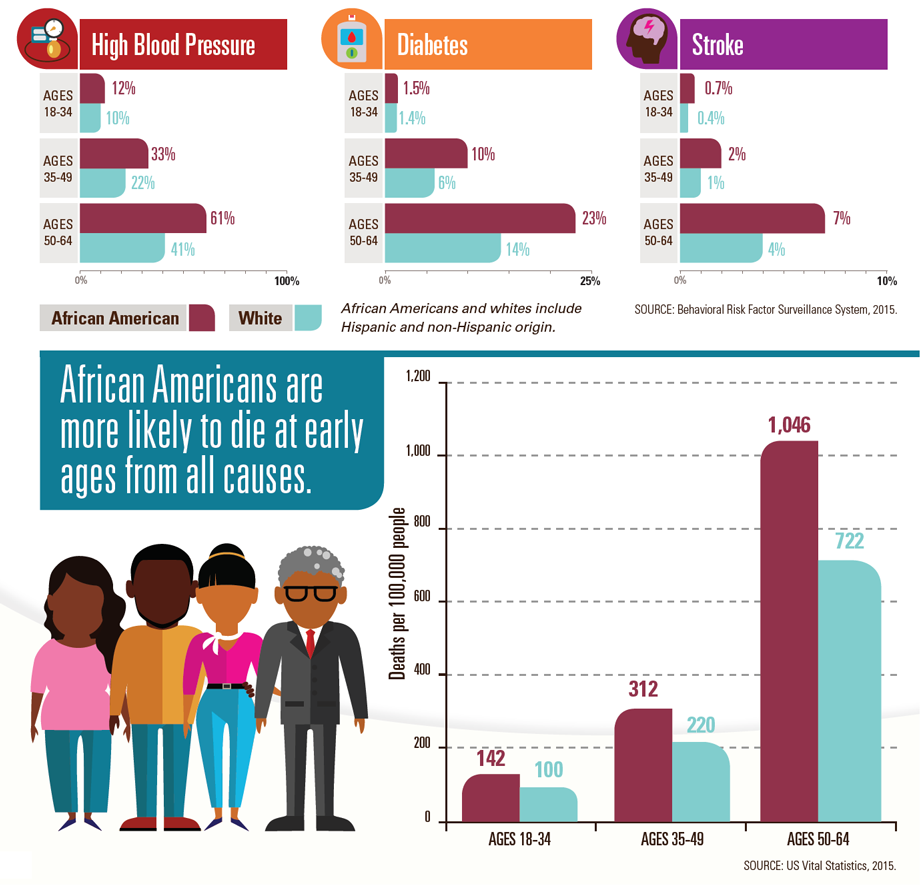
Without going into a book on this since I could and not just one; According to the Centers for Disease Control and Prevention (CDC) It’s estimated that 6 out of 10 Americans suffer from a chronic disease, and 4 of those 10 suffer from two or more. These diseases include: Diabetes, Alzheimer’s, Stroke, Heart Disease, Cancer, Chronic Kidney Disease and Chronic Lung Disease.

  KEEPING IN MIND:

The people listed above have risk factors Heredity non=preventable risk, & preventable risk factors (what they can change) is changing to healthy diet, increasing exercise & changing life style.  If these changes are done highly likely the disease will get better to become extinct.  Continue to live the life style you are living and expect to stay right where you are or get worse to death; its simple to reverse its just disciplining your self in changes and the desire to want to do it.  I have been there and gone backwards but haven’t yet developed any of these diagnosis’s staying fairly healthy!  It’s up to you!

2.ETOH Substance Addiction and Abuse:

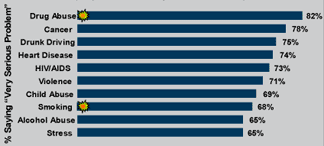
The opioid epidemic has claimed hundreds of thousands of lives in recent years. Both prescription drugs and illegal street drugs have contributed to these losses.

In addition to opioids, alcoholism continues to be a problem. According to a study by the National Epidemiological Survey on Alcohol and Related Conditions, 8 out of 10 Americans suffer from alcoholism. Genetic factors coupled with high stress levels and socio-economic challenges are believed to contribute to these high numbers.

There are several national and local programs in place to help those who are addicted to alcohol or drugs or even both, including some that are free of charge.

3. Mental Health Issues

The second leading cause of death for Americans between the ages of 10 and 34, suicide is on the rise and claims a life approximately every 12 minutes. The American Foundation for Suicide Prevention also reports that 25 million Americans currently suffer from depression. With that and other mood disorders, such as anxiety, on the rise, it’s never been more important to recognize the signs of poor mental health and seek diagnosis and treatment.

4-Lack of Vaccinations:

One of the reasons in general that certain diseases or illnesses could have been lower in counts including deaths if more vaccines were taken.  Many don’t take it because they just don’t get it.  The vaccine develops in all cases antibodies in the body against the antigen of the disease you are trying to prevent to get (Ex. Flu, etc…) and yes their is a slim chance of getting ill but in most all cases pt’s don’t get the disease or illness.  Wouldn’t it be better in a country and world where there is less disease and illness.

A recent report notes that 92% of HPV-caused cancers could have been prevented with a vaccine, yet just above half of the population of American teens have received it. In addition 2/3 of pregnant women have not received the two recommended vaccines for those expecting a baby. This causes unnecessary risk to both the mother and child.

Furthermore, in 2019, over 8,000 Americans died of influenza, which in most cases is preventable with an inexpensive (or even free), widely accessible flu shot.

History repeats itself obviously or we wouldn’t have statistics of HPV that is so high with how to prevent it just with a vaccine since 92% of HPV could have prevented cancers if the individual took the vaccine and than we have the flu that if most cases took the vaccine the 8000 deaths could have been lower.  Learn from this in taking COVID-19 vaccine since we still need an amount in the USA to take it and other areas as well.

5. Violence

Nearly 20,000 Americans lost their lives as a result of homicide in 2017, and those numbers are unfortunately not in rapid decline. Crime prevention, access to weapons, identifying real threats and addressing mental health issues can all help reduce these grim statistics of injury and death, in addition to building awareness surrounding safer lifestyle choices.  The CDC states in the United States, more than seven people per hour die a violent death. More than 18,800 people were victims of homicide and over 48,000 people died by suicide in 2018 alone.