Archive | May 2024

Part II Parkinson’s Disease Awareness Month-The signs&how its diagnosed.

                      Part II Parkinson's Disease2

                         Part II Parkinson's Disease

What are the signs and symptoms (s/s) of this disease?

The early signs and symptoms of Parkinson’s disease that are often overlooked by both patients and doctors because the symptoms are subtle and the progression of the disease is typically slow. S/S of parkinson’s disease are:

Parkinson’s disease does not affect everyone the same way. In some people the disease progresses quickly, in others it does not. Although some people become severely disabled, others experience only minor motor disruptions. Tremor is the major symptom for some patients, while for others tremor is only a minor complaint and different symptoms are more troublesome.

  • The tremors associated with Parkinson’s disease has a characteristic appearance. Typically, the tremor takes the form of a rhythmic back-and-forth motion of the thumb and forefinger at three beats per second. This is sometimes called “pill rolling.” Tremor usually begins in a hand, although sometimes a foot or the jaw is affected first. It is most obvious when the hand is at rest or when a person is under stress. In three out of four patients, the tremor may affect only one part or side of the body, especially during the early stages of the disease. Later it may become more general. Tremor is rarely disabling and it usually disappears during sleep or improves with intentional movement.                                
  • Rigidity, or a resistance to movement, affects most parkinsonian patients. A major principle of body movement is that all muscles have an opposing muscle. Movement is possible not just because one muscle becomes more active, but because the opposing muscle relaxes. In Parkinson’s disease, rigidity comes about when, in response to signals from the brain, the delicate balance of opposing muscles is disturbed. The muscles remain constantly tensed and contracted so that the person aches or feels stiff or weak. The rigidity becomes obvious when another person tries to move the patient’s arm, which will move only in ratchet-like or short, jerky movements known as “cogwheel” rigidity.
  • Bradykinesia, or the slowing down and loss of spontaneous and automatic movement, is particularly frustrating because it is unpredictable. One moment the patient can move easily. The next moment he or she may need help. This may well be the most disabling and distressing symptom of the disease because the patient cannot rapidly perform routine movements. Activities once performed quickly and easily — such as washing or dressing — may take several hours.
  • Postural instability, or impaired balance and coordination, causes patients to develop a forward or backward lean and to fall easily. When bumped from the front or when starting to walk, patients with a backward lean have a tendency to step backwards, which is known as retropulsion. Postural instability can cause patients to have a stooped posture in which the head is bowed and the shoulders are drooped.

As the disease progresses, walking may be affected. Patients may halt in mid-stride and “freeze” in place, possibly even toppling over. Or patients may walk with a series of quick, small steps as if hurrying forward to keep balance. This is known as festination.

A detailed overview of the Unified Parkinson’s Disease Rating Scale that is used by doctors to follow the course of disease progression and evaluate the extent of impairment and disability.

Abstract

The Movement Disorder Society Task Force for Rating Scales for Parkinson’s Disease prepared a critique of the Unified Parkinson’s Disease Rating Scale (UPDRS). Strengths of the UPDRS include its wide utilization, its application across the clinical spectrum of PD, its nearly comprehensive coverage of motor symptoms, and its clinimetric properties, including reliability and validity. Weaknesses include several ambiguities in the written text, inadequate instructions for raters, some metric flaws, and the absence of screening questions on several important non-motor aspects of PD. The Task Force recommends that the MDS sponsor the development of a new version of the UPDRS and encourage efforts to establish its clinimetric properties, especially addressing the need to define a Minimal Clinically Relevant Difference and a Minimal Clinically Relevant Incremental Difference, as well as testing its correlation with the current UPDRS. If developed, the new scale should be culturally unbiased and be tested in different racial, gender, and age-groups. Future goals should include the definition of UPDRS scores with confidence intervals that correlate with clinically pertinent designations, “minimal,” “mild,” “moderate,” and “severe” PD. Whereas the presence of non-motor components of PD can be identified with screening questions, a new version of the UPDRS should include an official appendix that includes other, more detailed, and optionally used scales to determine severity of these impairments.

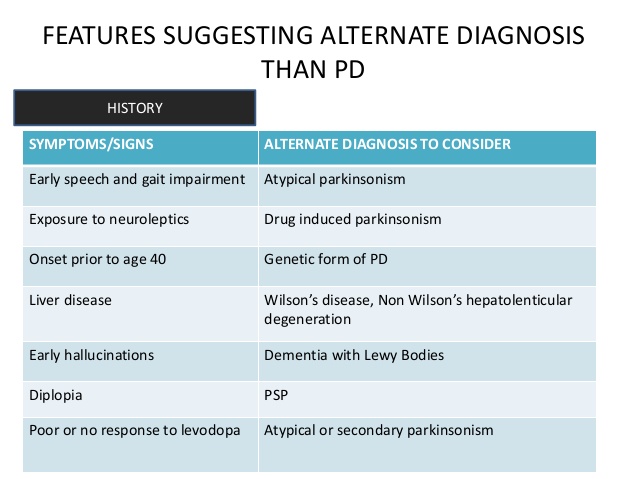
How Parkinson’s disease is diagnosed based on factors such as signs/symptoms, patient history, physical examination, and a thorough neurological evaluation.

Furthermore, making the diagnosis is even more difficult since there are currently no blood or lab tests available to diagnose the disease. Some tests, such as a CT Scan (computed tomography) or MRI (magnetic resonance imaging), may be used to rule out other disorders that cause similar symptoms. Given these circumstances, a doctor may need to observe the patient over time to recognize signs of tremor and rigidity, and pair them with other characteristic symptoms. The doctor will also compile a comprehensive history of the patient’s symptoms, activity, medications, other medical problems, and exposures to toxic chemicals. This will likely be followed up with a rigorous physical exam with concentration on the functions of the brain and nervous system. Tests are conducted on the patient’s reflexes, coordination, muscle strength, and mental function. Making a precise diagnosis is essential for prescribing the correct treatment regimen. The treatment decisions made early in the illness can have profound implications on the long-term success of treatment.

 Questions to Ask Your Doctor About Parkinson’s Disease

Since you’ve recently been diagnosed with Parkinson’s disease, ask your doctor these questions at your next visit.

1. What stage is my illness in now?

2. How quickly do you think my disease will progress?

3. How will Parkinson’s disease affect my work?

4. What physical changes can I expect? Will I be able to keep up the activities, hobbies, and sports I do now?

5. What treatments do you suggest now? Will that change as the disease progresses?

6. What are the side effects of medication?…

Because the diagnosis is based on the doctor’s exam of the patient, it is very important that the doctor be experienced in evaluating and diagnosing patients with Parkinson’s disease. If Parkinson’s disease is suspected, you should see a specialist, preferably a movement disorders trained neurologist.

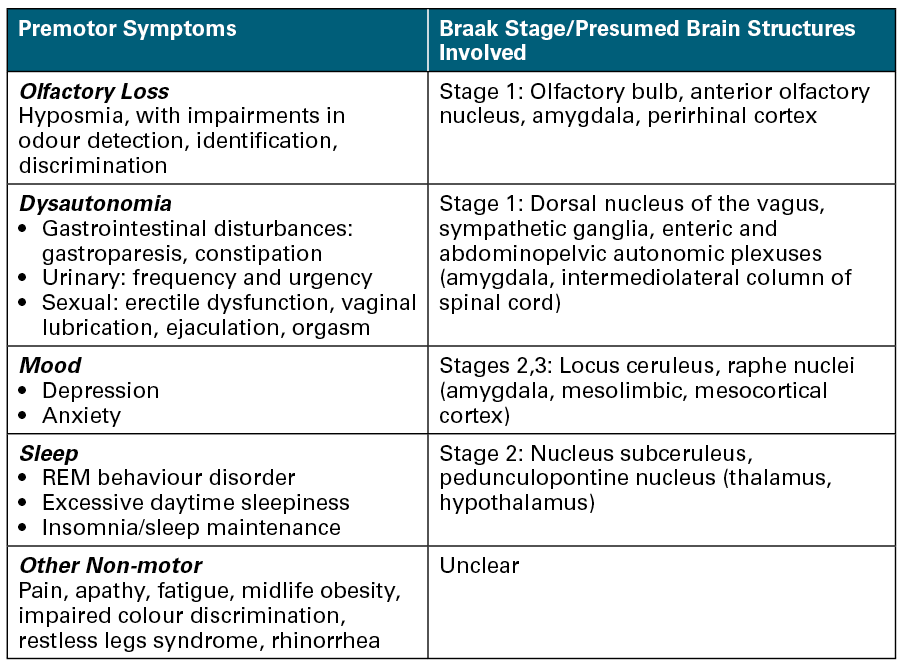
A comprehensive overview of the major non-motor complications that are often associated with Parkinson’s disease, including:
-Cognitive impairment –Dementia –Psychosis       -Fatique–Depression -Sleep disturbances -Constipation -Sexual dysfunction -Vision disturbances.

QUOTE FOR TUESDAY:

“VA uses the term “military sexual trauma” (MST) to refer to sexual assault or threatening sexual harassment experienced during military service. MST includes any sexual activity during military service in which you are involved against your will or when unable to say no. People of all genders, ages, sexual orientations, racial and ethnic backgrounds, and branches of service have experienced MST. Like other types of trauma, being PTSD.  MST can negatively affect a person’s mental and physical health, even many years later. Examples include:

  • Being pressured or coerced into sexual activities, such as with threats of negative treatment if you refuse to cooperate or with promises of better treatment
  • Sexual contact or activities without your consent, including when you were asleep or intoxicated
  • Being overpowered or physically forced to have sex
  • Being touched or grabbed in a sexual way that made you uncomfortable, including during “hazing” experiences
  • Comments about your body or sexual activities that you found threatening
  • Unwanted sexual advances that you found threatening”

U.S. Dept of Veteran’s Affair (https://www.mentalhealth.va.gov/msthome/index.asp)

Part I What is Parkinson Disease (PD)?

Parkinson's Disease1 

Parkinson Disease (PD) is a chronic and progressive movement disorder, meaning that symptoms continue and worsen over time. Nearly one million people in the US are living with Parkinson’s disease. The cause is unknown, and although there is presently no cure, there are treatment options such as medication and surgery to manage its symptoms.

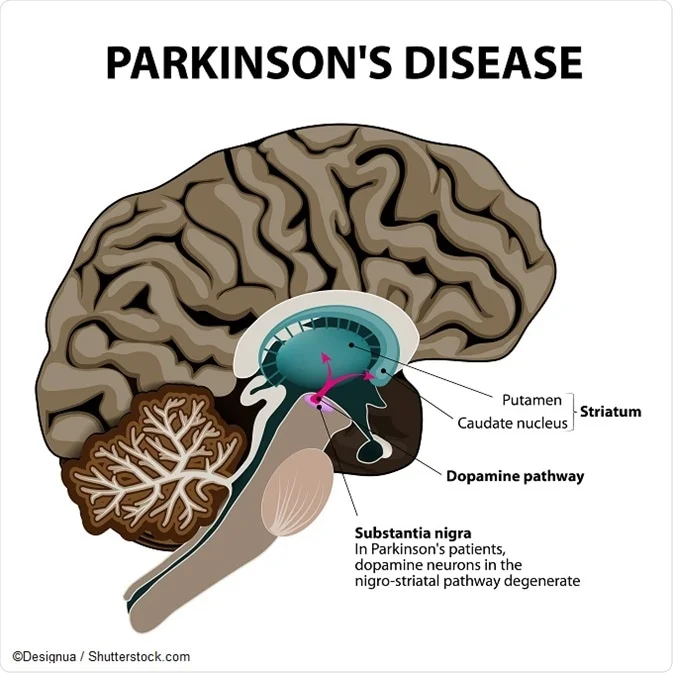
Parkinson’s involves the malfunction and death of vital nerve cells in the brain, called neurons. Parkinson’s primarily affects neurons in an area of the brain called the substantia nigra. Some of these dying neurons produce dopamine, a chemical that sends messages to the part of the brain that controls movement and coordination. As PD progresses, the amount of dopamine produced in the brain decreases, leaving a person unable to control movement normally.

There are three types of Parkinson’s disease and they are grouped by age of onset: 

1-Adult-Onset Parkinson’s Disease – This is the most common type of Parkinson’s disease. The average age of onset is approximately 60 years old. The incidence of adult onset PD rises noticeably as people advance in age into their 70’s and 80’s.

2-Young-Onset Parkinson’s Disease – The age of onset is between 21-40 years old. Though the incidence of Young-Onset Parkinson’s Disease is very high in Japan (approximately 40% of cases diagnosed with Parkinson’s disease), it is still relatively uncommon in the U.S., with estimates ranging from 5-10% of cases diagnosed.

3-Juvenile Parkinson’s Disease – The age of onset is before the age of 21. The incidence of Juvenile Parkinson’s Disease is very rare.

Impact of the disease:

Parkinson’s disease can significantly impair quality of life not only for the patients but for their families as well, and especially for the primary caregivers. It is therefore important for caregivers and family members to educate themselves and become familiar with the course of Parkinson’s disease and the progression of symptoms so that they can be actively involved in communication with health care providers and in understanding all decisions regarding treatment of the patient.


According to the American Parkinson’s Disease Association, there are approximately an estimated 1 million Americans living with Parkinson’s disease and more than 10 million people worldwide.  That number is expected to rise as the general population in the U.S. ages. Onset of Parkinson’s disease before the age of 40 is rare. All races and ethnic groups are affected.


Knowledge is Critical when Dealing with a Life-Altering Condition such as Parkinson’s Disease and being able to make the changes to last longer and at your optimal level of functioning! First step is accept you have it!

If you or a loved one has been diagnosed with Parkinson’s disease, it’s critical to learn everything you possibly can about this condition so that you can make informed decisions about your treatment. That’s why we created the Medifocus Guidebook on Parkinson’s Disease, a comprehensive 170 page patient Guidebook that contains vital information about Parkinson’s disease that you won’t find anywhere in a single source.

The Medifocus Guidebook on Parkinson’s Disease starts out with a detailed overview of the condition and quickly imparts fundamentally important information about Parkinson’s disease, including:

Possible factors that could impact someone in being diagnosed with this disorder:

1-Genetic Factors

In some patients, genetic factors could be the primary cause; but in others, there could be something in the environment that led to the disease. Scientists have noted that aging is a key risk factor. There is a 2-4% risk for developing the disease for people over 60. That is compared to 1-2% risk in the general population.

2-Environmental Factors

Some scientists believe that PD can result from overexposure to environmental toxins, or injury. Research by epidemiologists has identified several factors that may be linked to PD. Some of these include living in rural areas, drinking well water, pesticides and manganese.

Some studies have indicated that long term exposure to some chemicals could cause a higher risk of PD. These include the insecticides permethrin and beta-hexachlorocyclohexane (beta-HCH), the herbicides paraquat and 2,4-dichlorophenoxyacetic acid and the fungicide maneb. In 2009, the US Veterans Affairs Department stated that PD could be caused by exposure to Agent Orange.

We should remember that simple exposure to a single toxin in the environment is probably not enough to cause PD. Most people who are exposed to such toxins do not develop PD but could be a risk.

The Parkinson’s Disease Foundation notes that even after decades of intense study, the causes of Parkinson’s disease are not really understood. However,they agree in saying that many experts believe that the disease is caused by several genetic and environmental factors, which can vary in each person.

QUOTE FOR WEDNESDAY:

“Not everyone has a work schedule that resembles the traditional nine-to-five day. In fact, more than 22 million Americans work evening, rotating, or on-call shifts. You face many challenges when working non-traditional hours. It can be hard to keep up with family and friends. You may feel disconnected from the people you care about the most. You may have trouble organizing your time and activities. You may be frustrated to realize that most things are planned around the schedule of the typical day worker. It may seem like no one has your needs in mind.  Your physical health may also suffer from shift work. It can be very hard to get the sleep you need to stay well rested. This can make you more likely to get sick. It also makes you at potential that the job is hard for you to stay alert on the job.  Being tired increases the chance that you could suffer a work-related injury. Even driving home from work is a risk when you are sleepy.  Studies show that sleepiness can have a negative effect on any of the following:

1. Attention 2. Concentration 3. Reaction time 4. Memory  5. Mood.

A main challenge of shift work is that it forces you to sleep against the clock. You have an internal body clock in your brain that produces circadian rhythms.  If you work at night, you must fight your body’s natural rhythms to try and stay awake. Then you have to try to sleep during the day when your body expects to be alert.

It is a good idea to take a nap just before reporting for a night shift. This makes you more alert on the job. A nap of about 90 minutes seems to be best. Naps during work hours may also help you stay awake and alert. You may also want to take a nap during the night shift “lunch hour.” This can make you more productive and more satisfied”

UCLS Health (https://www.uclahealth.org/medical-services/sleep-disorders/patient-resources/patient-education/coping-with-shift-work)