Archive | November 2021

QUOTE FOR THURSDAY:

“Autumn is here, the coronavirus pandemic is dragging on and — if that wasn’t enough — peak season for yet another infectious disease looms just around the corner: influenza, a viral infection that attacks the nose, throat and lungs.”.

Cleveland Clinic (https://health.clevelandclinic.org/how-to-prepare-for-flu-season-in-the-time-of-covid-19)

QUOTE FOR WEDNESDAY:

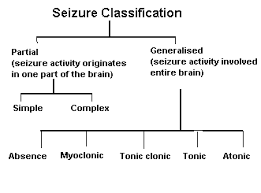
“Classifying the type of seizure a patient has helps the healthcare team choose the right therapy for that patient.  Seizure types are divided into two major groups that are called 1.) Generalized-Seizures produced by widespread abnormal electrical impulses present throughout the entire brain.  and 2.) Partial-Seizures produced by electrical impulses that generate from a relatively small or “localized” part of the brain (referred to as the focus).”.

Cleveland Clinic (https://my.clevelandclinic.org)

QUOTE FOR TUESDAY:

“The average incidence of epilepsy each year in the U. S is estimated at 150,000 or 48 for every 100,000 people. Another way of saying this- each year, 150,000 or 48 out of 100,000 people will develop epilepsy.  The incidence of epilepsy is higher in young children and older adults. This means that epilepsy starts more often in these age groups.”.

Epilepsy Foundation  (www.epilepsy.com)

QUOTE FOR MONDAY:

“When identifiable, the causes of epilepsy usually involve some form of injury to the brain. For most people, though, epilepsy’s causes aren’t known.  A seizure occurs when a burst of electrical impulses in the brain escape their normal limits. They spread to neighboring areas and create an uncontrolled storm of electrical activity. The electrical impulses can be transmitted to the muscles, causing twitches or convulsions.”

WebMD (Dr. Matthew Hoffman)

Part I National Epilepsy Month Awareness – What is this condition and causes for epilepsy!

types of epilepsy seizures

epilepsy

What is Epilepsy with a etiology; a neurological disorder with a metabolic or systemic cause.  As long as it is controlled like most other diseases you can live a normal life like anyone else.  A seizure is a physical manifestation of paroxysmal and abnormal electrical firing of neurons in the brain.  Think of it as numerous voltage (hyperexcitability of neurons) going throughout the brain meaning brain waves going in all directions with the brain saying its too much activity.  In simpler terms the brain is saying I don’t know what to do, too much brain wave excitability for the organ to register in what to do and freaks out causing the brain to go into a seizure.

Most people with epilepsy are otherwise healthy; as long seizure occurs there is a decrease in oxygen since the brain isn’t capable to send messages during the seizure.  If the seizure continues to repeat one right after another the person is in status epilepticus and if the seizures do not stop the person can lead to a neuronal death;  like John Travolta’s son who died of this for example.

The term seizure disorder may refer to any number of conditions that result  in such a paroxysmal electrical discharge.  These conditions could be metabolic or structural in nature.

For example, if the cause is metabolic this could be “Canavan disease” which is primarily a disease of demyelination.  Your myelin sheath that protects and insulates the nerves is being destroyed and can cause a seizure as one of the symptoms.

*Another example of epilepsy being caused by a metabolic reason is thought to be caused by brain acetate deficiency resulting from a defect of Nacetylaspartic acid (NAA) catabolism (meaning breakdown is occurring).  Accumulation of NAA, a compound thought to be responsible for maintaining cerebral fluid balance, can lead to cerebral edema and neurological injury, like a seizure as one symptoms of the disease.

*A structural condition to cause a seizure could be a tumor in the brain.  Than there is just idiopathic, unknown cause for the epilepsy which if starts in childhood can resolve by the child growing out it, like in petite mal seizures but it not it goes into motor/focal or grand mal that is permanent the individual needs Rx for life.

Remember, etiology (the cause) of Epilepsy can be generally a sign of underlying pathology involving the brain–knowing the cause.  To find this out diagnostic tooling be a neurologist who specializes in epilepsy is the best resource to go to.  The epilepsy may be the first sign of a nervous system disease (ex. Brain tumor), or it may be a sign of a systemic or metabolic derangement.  Where the treatment may be able to resolve the seizure symptom completely where this wasn’t a seizure disorder or epilepsy but just a symptom due to another disorder that may be 100% cured, like a operable tumor removed surgically from the brain.

Metabolic and Systemic Causes of Seizures:

a.) Electrolyte Imbalance=In the blood having acidosis, heavy metal poisoning, Hypocalcemia (low Ca+) , Hypocapnea (low carbon dioxide), Hypoglycemia (low glucose), Hypoxia (low oxygen), Sodium-Potassium imbalance, and than Systemic  diseases (liver, renal failure, etc…).  Then their is also toxemia of pregnancy, and water intoxication.

b.) Infections like meningitis, encephalitis, brain abcess.

c.) Withdrawal of sedative-hypnotic drugs=Alcohol, Antiepileptic drugs, Barbiturates, Benzodiazepines.

d.) Iatrogenic drug overdose=Theopylline, Penicillin.

Other causes of epilepsy can be Trauma, Heredity.

Structural causes of epilepsy:

Head trauma/Degenerative Disease like Alzheimer’s or Creutfeldz-Jacob or Huntington’s Chorea or Multiple Sclerosis or Pick’s Disease. There is also tumors or genetic disease or Stroke or Infections or Febrile seizures.

Come back tomorrow for Epilepsy  going further on etiology factors for the disease of occur.

QUOTE FOR THE WEEKEND:

“Alzheimer’s disease is a type of brain disease, just as coronary artery disease is a type of heart disease. It is also a progressive disease, meaning that it becomes worse with time. Alzheimer’s disease is thought to begin 20 years or more before symptoms arise.  It starts with changes in the brain that are unnoticeable to the person affected.

Only after years of brain changes do individuals experience noticeable symptoms such as memory loss and language problems.”

Alzheimer.org

QUOTE FOR FRIDAY:

“Chronic obstructive pulmonary disease (COPD) is a complex respiratory disorder characterised by chronic airflow limitation and an increased inflammatory response of the lung. COPD is associated with many comorbidities and can be one of multiple chronic or acute diseases and medical conditions present within one person. In particular, cardiovascular disease (CVD) and COPD share similar risk factors such as ageing, history of cigarette smoking (or other exposures) and a sedentary lifestyle, and frequently coexist.”

European Respiratory Journal/The Respiratory Professionals Update on Medicine, Science and Surgery


QUOTE FOR THURSDAY:

“Over time, exposure to irritants that damage your lungs and airways can cause chronic obstructive pulmonary disease (COPD), which includes chronic bronchitis and emphysema. The main cause of COPD is smoking, but nonsmokers can get COPD too.  Other risk factors for COPD include:  Exposure to air pollution, Breathing secondhand smoke, Working with chemicals, dust and fumes, A genetic condition called Alpha-1 deficiency and A history of childhood respiratory infection.”.

American Lung Association (www.lung.org)

QUOTE FOR WEDNESDAY:

 
“With early diagnosis and treatment, people with chronic obstructive pulmonary disease (COPD) can improve their quality of life and breathe better.”
 
National Heart, Lung and Blood Institute

QUOTE FOR TUESDAY:

“The underlying cause of diabetes varies by type. But, no matter what type of diabetes you have, it can lead to excess sugar in your blood. Too much sugar in your blood can lead to serious health problems.  Prediabetes occurs when your blood sugar levels are higher than normal, but not high enough to be classified as diabetes.”
MAYO CLINIC