Archive | July 2016

QUOTE FOR THURSDAY:

“We don’t have stems and we don’t flower, but our body parts, like those of plants, are controlled by circadian clocks,”. Clocks operate more or less the same way in all organisms, but some aspects of clock function are easier to study in plants.

Laurie Tompkins-NIH geneticist, (National Institute of General Medicine Sciences).


QUOTE FOR WEDNESDAY:

“Phytic acid is a natural plant antioxidant constituting 1–5% of most cereals, nuts, legumes, oil seeds, pollen and spores. By virtue of forming a unique iron chelate it suppresses iron-catalyzed oxidative reactions and may serve a potent antioxidant function in the preservation of seeds.”

Copyright © 2015 Elsevier B.V. or its licensors or contributors. ScienceDirect® is a registered trademark of Elsevier B.V.


QUOTE FOR TUESDAY:

“People who train to be cooperative extension Master Gardeners report that they stay with the program because it improves self-esteem, offers continued learning opportunities, the chance to help and feel a connection to other people, to feel a sense of purpose, and a way to develop skills for employment .”

Schrock, D.S., M. Meyer, P.Ascher-Reasons for becoming involved as a Master Gardener. HortTechnology.

!

Part I Believe it or not, PLANTS do enhance our lives both mentally and physically!

plants enhance our lives    plants

Plants by 20% can improve memory, attention span and concentration outside in wildlife.  Studies have even shown that tasks performed while under the calming influence of nature are bettered performed (from sitting with our pets to being outdoors with mother nature in pleasant weather to that individual’s mind—from rain to a pleasant sunny day with birds chirping or even by a rain fall dropping near the person).

Keeping ornamental plants in the home and in the workplace increases memory retention and concentration. The calming influence of natural environments is conducive to positive work environments by increasing a person’s ability to concentrate on the task at hand. Work performed under the natural influence of ornamental plants is normally of higher quality and completed with a much higher accuracy rate than work done in environments devoid of nature. Going outside or being under the influence of plants can increase memory retention up to twenty percent, a recent University of Michigan study showed (Sewach). The effect of nature in the home and in the workplace serves to stimulate both the senses and the mind, improving mental cognition and performance. (Bisco Werner 1996; Brethour 2007; Frank 2003; Pohmer 2008; Serwach 2008; Shibata, 2001, 2004; Yannick 2009).

Even take parks or places like botanical gardens that both often play as a host to educational programs and special events, which do contribute to the awareness of culture and education of the community, especially children.  The better the environment the better the effect.  Example take a highly criminal area as opposed to a lesser one. Installing a park or botanical garden in a community has many direct benefits to residents, but an auxiliary benefit of having such a naturalized landmark in the community is the special events and cultural opportunities it brings to people who might not otherwise be exposed. Botanical gardens and zoos often create educational programs for children in order to teach them how the value of being environmentally-conscious and conserving the environment. They can also impact adults in the community as well, creating a cultural awareness of the importance of natural environments. Parks and gardens foster an appreciation for nature that often instills in residents a sense of responsibility for the caring of and protection of the environment. (Appleseed, Inc. 2009, Dubey 2007, Nadel 2005, Phipps Botanical Gardens and Conservatory 2010)

Parks and urban green spaces impact people’s health by providing them with an inexpensive (often free) and convenient recreational service. There is a positive correlation between the presence of a park in a neighborhood and the level of physical activity of the residents; people are much more likely to exercise when there is a no-cost, aesthetically pleasing area or facility for them to use.  Many are more out to do simple (walking) or more intense (running) outside to even handball or basketball do just mental exercise (reading) all outdoors in nice parks as opposed to a high urban area of just warehouses and buildings with no park or in a work out place with all just nautilus and weights all over the public place that has high probability of picking up cold, flu, infections.  Why?  In high probability your exposed to much more germs and bacteria as opposed to a park or your own home in or outside.   Less host build up of germs and bacteria.  Public places are high percentage in where you pick up germs and bacteria.

Believe it or not is helps in the healing process.  Shrubs, trees, and flowers have a practical application in hospitals.  Whether the the presence of plants are in the patients hospital rooms or viewed outside the room seeing beautiful parks via their window greatly reduces the time necessary to heal. The soothing effects of ornamental flowers and plants are so great that simply having daily views of flowers and other ornamental plants in landscaped areas outside patient recovery room significantly speed up recovery time; now if unfortunately the patient is terminal it’s a much greater atmosphere to be around than just four walls.

Ornamental plants affect the levels of compassion that people feel for others. Studies have shown that people who spend more time around plants are much more likely to try and help others, and often have more advanced social relationships. People who care for nature are more likely to care for others, reaching out to their peers and forming shared bonds resulting from their common interests.

Spending time in nature gives people an increased feeling of vitality, increasing their energy levels and making them feel more animated. Their performance levels are, in turn, increased by this improved state of mind. Natural environments induce a positive outlook on life, making people feel more alive and active. When people experience increased vigor, they put more of themselves and their energy into their work. People who spend more time outside in nature have a significantly more positive outlook on life than people who spend a great deal of time indoors, based on the majority.

One of the more obvious benefits of plants and trees is that many of them have valuable medicinal properties. Cultivating plants helps humanity because it provides opportunities for additional scientific studies of the possible positive medicinal values of plants. Natural herbal remedies are simple and holistic methods for treating common illnesses and maladies.

Simply regarding STRESS, plants help people with dealing with it in a positive way. How you ask; by helping many people transform their stress into a more positive emotion, this can be done commonly done in America in a pent house, back yard to farming, gardening-it gives people an excellent coping mechanism for their daily frustrations. Plants to even nurturing them helps reduce stress levels and gives people a way to cope with their negative feelings, in letting them release rather than build up.   Gardening can have therapeutic effects on people who have undergone trauma, either mental or physical. The act of nurturing a plant can provide victims with a way to work through their issues and heal their wounds, whether they are on the surface of the skin or deeper. Cultivating plants also improves their mental states and helps to put them in a better place for recovering. Gardening is a therapeutic tool.

Beautifying traffic medians not only improves the aesthetics of the roadways, it also affects driver attitudes. Studies show that drivers are more at ease on roadways with natural landscaping, and are much more inclined to think positively about the community that they are driving through if the roadways are beautiful. Furthermore, adding trees to roadways creates a sort of natural obstruction which could reduce the likelihood of cars crossing medians into oncoming traffic lanes. This improves driver safety and makes the community a safer place for everyone to live in.

Believe it or not plants enhance our lives!


QUOTE FOR THE WEEKEND:

“A projection of the future health and economic burden of obesity in 2030 estimated that continuation of existing trends in obesity will lead to about 500,000 additional cases of cancer in the United States by 2030. This analysis also found that if every adult reduced their BMI by 1 percent, which would be equivalent to a weight loss of roughly 1 kg (or 2.2 lbs) for an adult of average weight, this would prevent the increase in the number of cancer cases and actually result in the avoidance of about 100,000 new cases of cancer.”

American Cancer Society

Part II How there is an obesity cancer link.

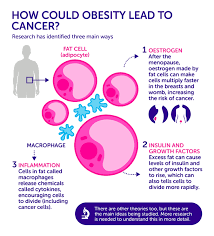
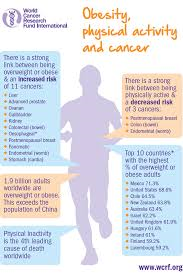
Obesity increases the risk of cancer3  Obesity increases the risk of cancer4

LOOKING AT ACTUAL STUDIES SUPPORTING OBESITY&CANCER LINK

Take for example through the American Cancer Society they stated in an article 2006 that a substantial evidence from clinical trials has established that obesity significantly increases the risk for heart disease and diabetes. More recently, suspicions that obesity is linked to prostate cancer have been supported by a number of investigations, but the relationship has remained unclear. Now through a pair of new studies provides scientists with some important insights that may have an impact on how physicians manage their patients with prostate cancer.

The pair of studies show 2 significant studies relating how obesity links with prostate cancer, which were:

The implication is that prostate cancer patients who are obese should probably be followed more closely than patients with similar cancer characteristics who are not obese. That could include regular digital rectal exams, more frequent prostate-specific antigen (PSA) testing, and perhaps setting a lower PSA cutoff point as an indication of recurrence, Kane explained.

The greater risk associated with obesity may be related to technical issues, Kane said. For example, it’s more difficult for surgeons to perform a radical prostatectomy in obese patients. However, surgical challenges offer only a partial explanation. In studies where surgeons verified that they had removed all cancer cells during radical prostatectomy, obese patients were still more likely to experience a recurrence of the disease.

The second study, a multi-center trial coordinated at the Duke University School of Medicine in Durham, NC, found that obese men under the age of 63 tend to have larger prostates, which makes finding tumors more difficult. As a result, there’s a real danger of delayed diagnosis, which decreases the chances of a cure and puts patients at greater risk for dying of the disease. The findings appear in the Journal of Urology.

“It’s harder to find cancer in larger prostate glands,” explained Stephen J. Freedland, MD, assistant professor of urology and member of the Duke Prostate Center at the Duke University School of Medicine. “Consequently, our data suggest that we may be underdiagnosing cancers in younger obese men. That also means that the tumors we do pick up are likely to be at a more advanced stage and perhaps more aggressive, and therefore more difficult to treat.”

Let’s look at this at a broader aspect, not just pertaining to prostate cancer. This would be, “It’s not just patients with prostate cancer that studies like this should be directed toward,” Dr. Kane said. “Patients who are clearly at risk for developing the disease should also take notice of our findings. The central message is yet again that obesity has been identified as an important risk factor for a potentially deadly disease. For all of us, controlling our weight through diet and exercise is important, and we shouldn’t have blinders on and just think of prostate cancer. The number one risk of death for American men is heart disease, so anything we can do to reduce that risk that also reduces the risk for prostate cancer is useful.” Including it reduces risk for other cancers as well that are impacted by disease, it makes sense.

Obesity links to an increased risk of ovarian cancer. Let’s look at this no: Atlanta 2009/01/05 -A new epidemiological study has found that among women who have never used menopausal hormone therapy, obese women are at an increased risk of developing ovarian cancer compared with women of normal weight. Published in the February 15, 2009 issue of CANCER, a peer-reviewed journal of the American Cancer Society, the research indicates that obesity may contribute to the development of ovarian cancer through a hormonal mechanism. Ovarian cancer is the most fatal of gynecologic malignancies, and has a 5-year survival rate of only 37 percent.

To investigate this issue, Dr. Michael F. Leitzmann of the National Cancer Institute and colleagues studied 94,525 U.S. women aged 50 to 71 years over a period of seven years. The researchers documented 303 ovarian cancer cases during this time and noted that among women who had never taken hormones after menopause, obesity was associated with an almost 80 percent higher risk of ovarian cancer. In contrast, no link between body weight and ovarian cancer was evident for women who had ever used menopausal hormone therapy.

According to Dr. Leitzmann, these findings support the hypothesis that obesity may enhance ovarian cancer risk in part through its hormonal effects. Excess body mass in postmenopausal women leads to an increased production of estrogen, which in turn may stimulate the growth of ovarian cells and play a role in the development of ovarian cancer.

In another study done 2003, American Cancer Society researchers analyzed data based on 900,000 American adults with obesity and cancer that they monitored for a total of 16 years. This is what they found in their landmark study: 1)The researchers found that the most obese women had a 62% increase in their risk of dying from cancer than women of normal weight; for obese men, the increase was 52%. The wide range of tumor types included colorectal, liver, gallbladder, pancreas, esophageal, kidney, prostate, breast, uterine, endometrial, and ovarian cancers. The researchers conclusion was that above-normal weight was associated with almost 20% of all cancer deaths in the United States. “There’s an incredibly powerful link between obesity and cancer,” says oncologist Joyce Slingerland of the University of Miami, Florida. “Everyone’s heard of obesity’s effect on heart disease and diabetes, and we’re now beginning to understand that the cancer risk is just as great,” she says.

Although researchers and epidemiologists had long suspected that diet and cancer were linked, efforts to explain why being fat makes cancer more deadly have only begun to deliver results in the past decade.

So it is up to the people in society of that country they live in to take on responsible actions to make their country a better for all, not just one. I say that is becoming as healthy as possible that an individual can reach and without America has the answers in knowing how to make this happen 100% in our country.

A new study from American Cancer Society researchers finds it’s not just how much physical activity you get, but how much time you spend sitting that can affect your risk of death.

My final study supporting how obesity links with cancer:

Just think if this was you or someone you know in the world and this happens to you or them; GOD FORBID, but you can help yourself through prevention with losing the weight or just staying slim and tone if you already are. This will just decrease your risk of getting the cancer.

The JCCC study, led by Dr. Guido Eibl, JCCC member and professor-in-residence in the department of surgery at David Geffen School of Medicine, revealed that mice made obese with high-calorie, high-fat diets developed abnormally high numbers of these lesions.

This is the first study to show a direct causal link in an animal model between obesity and risk of this deadly pancreatic cancer.

The JCCC study, led by Dr. Guido Eibl, JCCC member and professor-in-residence in the department of surgery at David Geffen School of Medicine, revealed that mice made obese with high-calorie, high-fat diets developed abnormally high numbers of these lesions. This is the first study to show a direct causal link in an animal model between obesity and risk of this deadly pancreatic cancer.

The mice eating the normal diet gained an average of approximately 7.2 g over 14 months. Mice on the high-fat, high-calorie diet more than doubled this with an average weight gain of 15.9 g.

Pathological tests showed that mice fed the normal diet had mostly normal pancreases with very few scattered PanIN lesions=intraepithelial neoplasias=precursors to pancreatic lesions. They are used as markers but can only be seen microscopically so a biopsy is needed. The mice fed high fat & cholesterol in their diet had significantly more PanIN lesions with less overall healthy pancreases.

The study showed that the mice fed a diet high in fats and calories gained significantly more weight, had abnormalities of their metabolism and increased insulin levels, and had marked pancreatic tissue inflammation with the development of PanIN lesions.

These observations suggest that such a diet like this which leads to weight gain, metabolism disturbances, pancreas inflammation and pancreas lesions that are precursors to cancer.

Obviously research is showing obesity has a link with cancer. We now know this information let’s make a move America and people elsewhere to become a healthier nation including world. For diversity is the US and other countries filled with all cultures, races and genders need to learn this knowledge to help make their country whether they were either born there and stayed or those born elsewhere moving to a new country, like America and we the people making up the country need to be responsible not just for yourselves but for your children and future generations in spreading good habits, good dieting, and good exercise to prevent high disease in the country for yourself and your children and the future generations by being a good role model in thinking=live healthy not unhealthy. In time this would play an impact on your countries economy and health care system in how its run. So come with me, like many others if you need to know the simple steps in how to go about losing weight safely but easy with learning better healthy habits and practicing some form of exercise which will benefit you in having a healthier body than join me at my website healthyusa.tsfl.com and become a member with getting guidance through Dr. Anderson on his healthy habits through his book and me as your health coach. Take a peek you might just like what you see. You make all the choices in what you want and going to the site costs nothing. There will come a point you get your routine down and don’t need our help with staying healthy for life with decreasing your chance of so many diseases, not just cancer, from occurring. Help me with so many others in tring to make a difference in America by becoming healthier. Slowly but surely I am and I know you can to at your pace.

References:

1 –American Institute for Cancer Research, Schernhammer ES et al. Circulating levels of insulin-like growth factors, their binding proteins, and breast cancer risk. Cancer Epidemiol Biomarkers Prev. 2005 Mar;14(3):699-704 ES et al. their binding proteins, and breast cancer risk— Cancer Epidemiol Biomarkers Prev. 2006 Mar;14(3):699-704/ AICR ScienceNow /Volume 16/Spring 2006

2 – Studies Help Clarify Link Between Obesity and Prostate Cancer Article date: March 2, 2006 Impact of Obesity on Prostate Cancer Recurrence After Radical Prostatectomy: Data from CaPSURE.” Published in the Nov., 2005 Urology (Vol. 66, No. 5: 1060-1065). First author: William W. Bassett, University of California, San Francisco.

“Obesity, Serum Prostate Specific Antigen and Prostate Size: Implications for Prostate Cancer Detection.” Published in the Feb. 2006 Journal of Urology (Vol. 175, No. 2: 500-504). First author: Stephen J. Freedland, MD, Duke University School of Medicine.

3 – Director, Medical & Scientific Communications American Cancer Society david.sampson@cancer.org Article: “Body mass index and risk of ovarian cancer.” Michael F. Leitzmann, Corinna Koebnick, Kim N. Danforth, Louise A. Brinton, Steven C. Moore, Albert R.

Hollenbeck, Arthur Schatzkin, and James V. Lacey, Jr. CANCER; Published Online: January 05, 2009 (DOI: 10.1002/cncr.24086); Print Issue Date: February 15, 2009.

4 – Medical News Today-“Direct Link to Obesity and Pancreatic Cancer” Author Belinda Weber

5 – Proceedings of the National Academy of Sciences of the United States of America –Article “Link between obesity and cancer” by Sarah C.P. Williams-Science Writer

6 – National Cancer Institute at the National Institute of health – Under their national cancer fact sheet regarding their article “Obesity and Cancer Risk”.




QUOTE FOR FRIDAY

“Excess body weight contributes to as many as 1 out of 5 of all cancer-related deaths. Being overweight or obese is clearly linked with an increased risk of many cancers, including cancers of the: Breast (in women past menopause) Colon and rectum.Feb 5, 2016.”

American Cancer Society

QUOTE FOR THURSDAY:

“Although bone-weakening osteoporosis is quite common among older people, it isn’t an inevitable part of aging. There’s a lot you can do to shield your bones from this disease. Calcium and Vitamin D are 2 keys to help strong bones.”
Harvard Health Medical School

Part II Amyloidosis –How its diagnosed and what is being done for treatment.

Amyloidosis5  amyloidosis4

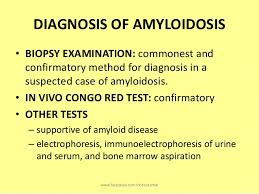
Diagnostic Tests for Amyloidosis:

*1. First your doctor would do a thorough medical exam with blood/urine tests searching for clues of high protein where it shouldn’t belong or certain liver or thyroid abnormal findings. The MD will follow with further diagnostic tooling especially if these findings show up in blood/urine tests. Common blood exams used are BNP (basic natriuretic peptide). BNP is a substance secreted from the ventricles or lower chambers of the heart in response to stress and changes in pressure that occur when to heart failure develops and worsens. The level of BNP in the blood increases when heart failure symptoms worsen, and decreases when heart failure condition is stable. It is not so much elevated over the norm but more with this disease patients the MD will see where the BNP level was at last visit & compare.

Another blood test is troponin and this gets released into the bloodstream when your heart is affected by amyloids.

*2. Second your MD may want to further diagnose for this disease through getting a tissue biopsy where the MD’s intent is to check for signs indicating this is highly possible for amyloidosis. The biopsy could be taken from your abdominal fat, bone marrow, or an organ such as your liver or kidney. Tissue analysis can help determine the type of amyloid deposit.

*3. Imaging Tests. Images taken of the organs that are affected by amloidosis can help the MD establish the intensity or stage your disease is at. There are 2 most commonly imaging tests used and can diagnose the disease early. There is the echocardiogram test, sound wave imaging of the heart, that will be used to assess the size and functioning capability level of the heart. Another test is a MRI of the heart (magnetic residence imaging). Other imaging tests can evaluate the extent of amyloidosis in the liver or spleen.

When the heart chambers become filled with amyloids it thickens the walls of those chambers especially the lower chambers which can be picked up by the echocardiogram through the different angles of sound waves that go via the heart during this exam. Another thing that can be measured through the echocardiogram is your diagnostic function; that represents a measure of how stiff your heart is and how well is your heart actually functioning.

Another technique that can be used is strain imaging. This is also done through echocardiogram. This tells the doctor in more detail how much the muscle fibers in the heart are actually shortening and contracting. It measures certain parts of the heart in actually contracting and function. This is actually better in help diagnosing compared to just looking at ejection fraction, which is the amount of blood pumped out of the left ventricle chamber upon contraction of the heart (When he hear lub dub of the heart with a stethoscope that is the heart actually contracting. First the upper chamber on lub is contracting and on dub is the lower chambers contracting). This test is a specializing test and is not widely used but it is available in certain hospitals.

Ending line amyloidosis is a group of diseases in which one or more organ systems in the body accumulate abnormal proteins known as amyloid. The name amyloidosis was first used more than 150 years ago, but cases were described over 300 years ago. However, only in the past ¼ of a century have MD’s understood the specific make up and structure of amyloid proteins. Although amyloidosis is not a cancer but it is a serious condition. It is disabling  and gets to life threatening situations. However, growing awareness of the condition seems to be leading to substantial new research and Rx alternatives.

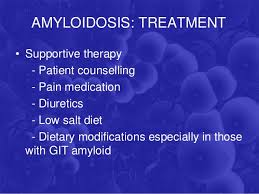
There’s no cure unfortunately for amyloidosis. But treatments can help you manage your symptoms and limit the production of amyloid protein.

Treatment is usually aimed at eliminating the source of the abnormal precursor protein.

Primary amyloidosis (AL, amyloid light chain) is associated with a clonal plasma cell disease and the immunoglobulin light chains made by the abnormal plasma cells. AL also occurs in amyloidosis associated with multiple myeloma. Treatment involves chemotherapy or stem cell transplantation to eliminate the plasma cells (the source of the abnormal light chains).

Familial amyloidosis (AF) is associated with a genetic abnormality that can be inherited. AF causes the liver to make an abnormal form of a protein called transthyretin. The treatment for AF is liver transplantation.

Secondary amyloidosis (AA) is associated with inflammation and elevated levels of serum amyloid A caused by inflammation. Treatment involves elimination of the source of inflammation.

Through “The Amyloidosis Foundation” they provide over the world medical facilities/hospitals that major in this disease at http://www.amyloidosis.org/PatientPrograms/physiciansusa.html.

Hope this article has helped you or some one in your life significant like your family or friends to better understand this disease, how its detected and what is done in treatment depending on what type of amyloidosis the individual has and what part of the body tissue is affected.