Archives

QUOTE FOR FRIDAY:

“Cervical cancer is a growth of cells that starts in the cervix. The cervix is the lower part of the uterus that connects to the vagina.

Various strains of the human papillomavirus, also called HPV, play a role in causing most cervical cancers. HPV is a common infection that’s passed through sexual contact. When exposed to HPV, the body’s immune system typically prevents the virus from doing harm. In a small percentage of people, however, the virus survives for years. This contributes to the process that causes some cervical cells to become cancer cells.

You can reduce your risk of developing cervical cancer by having screening tests and receiving a vaccine that protects against HPV infection.”

MAYO CLINIC (Cervical cancer – Symptoms and causes – Mayo Clinic)

QUOTE FOR THURSDAY:

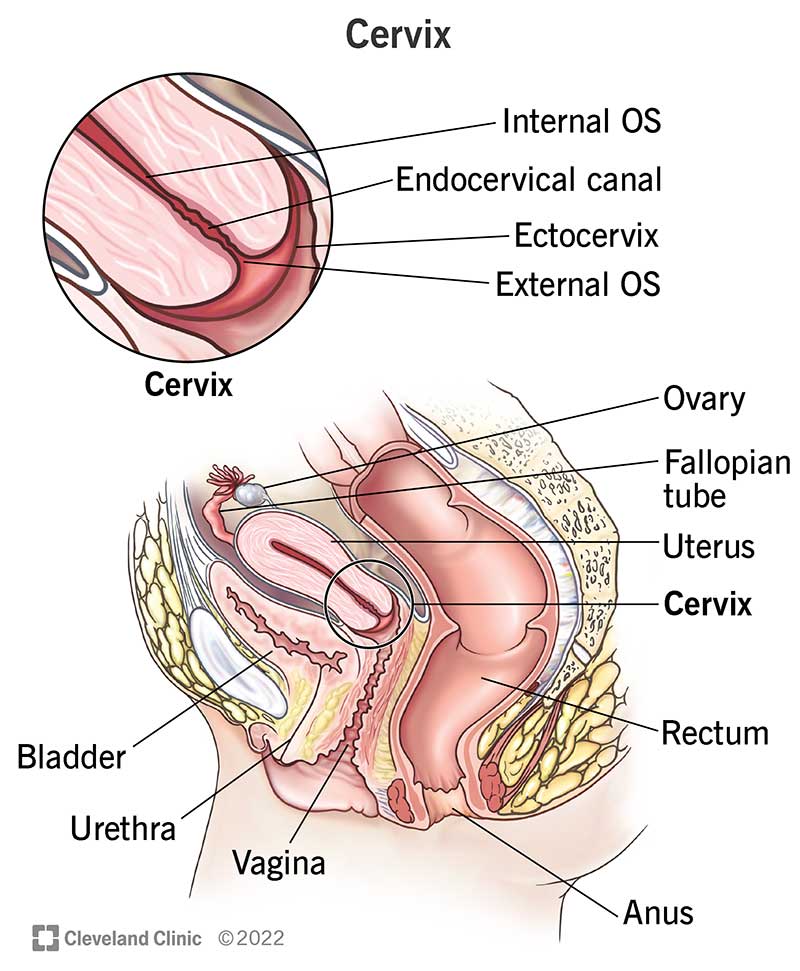
“The cervix is the lower, narrow end of the uterus that connects the uterus to the vagina. It is made up of the internal OS (the opening between the cervix and the upper part of the uterus), the endocervix (the inner part of the cervix that forms the endocervical canal), the ectocervix (the outer part of the cervix that opens into the vagina) and the external OS (the opening between the cervix and vagina).”

National Cancer Institute – NIH (Definition of cervix – NCI Dictionary of Cancer Terms – NCI)

Know what the cervix is and why this month!

Where is your cervix located?

Your cervix is an important part of your reproductive anatomy. Your cervix is located inside your pelvic cavity, anywhere from 3 to 6 inches inside your vaginal canal. It begins at the base of your uterus and extends downward onto the top part of your vagina. This place where your cervix bulges onto the uppermost part of your vagina is called your ectocervix.

Your vagina, cervix and uterus are located behind your bladder and urethra (organs that allow you to pee) and in front of your rectum and anus (organs that allow you to poop).

What does your cervix look like?

The word “cervix” comes from the Latin word meaning “neck.” Like a neck, your cervix is shaped roughly like a cylinder or tube and connects important body parts. While your neck connects your head to the rest of your body, your cervix connects your uterus to your vagina. Your cervix is wider in the middle and narrows at both ends, where it opens into your uterus (top) and vagina (bottom).

Your cervix consists of the following parts:

  • Internal OS: The opening that leads to your uterus. Your provider may refer to your internal OS during pregnancy.
  • Endocervical canal: A tunnel that extends from your Internal OS to your ectocervix.
  • Ectocervix: The part of your cervix that bulges onto the top of your vagina.
  • External OS: The opening that leads to your vagina.

Your cervix is a muscular, tunnel-like organ. It’s the lower part of your uterus, and it connects your uterus and vagina. Sometimes called the “neck of the uterus,” your cervix plays an important role in allowing fluids to pass between your uterus and vagina. It enables a baby to leave your uterus so that it can travel through your vagina (birth canal) during childbirth. The cervix is also a common site for cell changes that may indicate cancer.

Getting regular Pap smears allows your provider to screen for irregularities that may be signs of disease.

Who has a cervix?

People who are designated female at birth (DFAB) have a cervix. DFAB people include cisgender women — people who are DFAB and identify as women — and some transgender men and nonbinary individuals. Some intersex individuals have cervixes, too.

What is the functions of your cervix?

Your cervix is a passage that allows fluids to flow inside and out of your uterus. It’s also a powerful gatekeeper that can open and close in ways that make pregnancy and childbirth possible.

Your cervix plays important roles in the following:

  • Menstruation: The period blood you shed each month as part of your menstrual cycle has to pass from your uterus and through your cervix before exiting your vagina.
  • Pregnancy: During penis-in-vagina sex, or intercourse, your partner may ejaculate (release) sperm into your vagina. The sperm has to travel through your cervix to reach your uterus and fallopian tubes to fertilize an egg.
  • Fertility: Your cervical mucus plays a role in how easily you can become pregnant. Around ovulation (when your body releases an egg), your cervix secretes mucus that’s thinner and less acidic than usual, making it easy for sperm to pass through to your uterus. As a result, sperm can reach your egg and fertilize it more easily.
  • Vaginal delivery: Your cervix controls when a baby exits your uterus during childbirth. During pregnancy, your cervix secretes a mucus plug that seals entry to your uterus. Once it’s time for the baby to be born, the mucus plug dissolves, and your cervix becomes softer and thinner. Your cervix widens (dilates) so that the baby can exit your uterus. Your provider can estimate how long it will take for your baby to be born based on how much your cervix has dilated.
  • Protecting your uterus: Your cervix prevents objects inserted into your vagina, such as tampons or diaphragms, from slipping inside your uterus.

The place where the endocervical canal overlaps with the ectocervix is called the transformation zone (TZ). The TZ is the part of your cervix where cell changes happen most. It’s the most common site for abnormal cells to grow in your cervix, indicating conditions like cervical dysplasia or cervical cancer.

How big is your cervix?

Your cervix is about an inch long. Cervical sizes vary, though. Generally, your cervix is larger if you’ve given birth. The cervix is larger among people in their reproductive years than those who’ve gone through menopause. Your cervix gets significantly shorter during childbirth to allow a baby to easily exit your uterus and enter your vagina.

Can you touch your cervix?

Yes, depending on the timing of your menstrual cycle. If you insert your longest finger into your vaginal canal, you should eventually reach a barrier preventing your finger from sliding in further. This barrier is your cervix. It may feel firm and tight, or it may feel soft and spongy. The location and texture of your cervix change depending on whether or not you’re ovulating. It’s the softest and hardest to reach during ovulation.

Take care that you only attempt to touch your cervix when you’ve washed your hands thoroughly with mild soap and warm water. Otherwise, you could expose your cervix to bacteria and cause infection.

What is your cervix made of?

Your cervix consists of strong fibromuscular tissue. Two main types of cells line your cervix:

  • Glandular cells: These cells line the endocervical canal, the innermost part of your cervix.
  • Squamous cells: These cells cover the ectocervix, the outermost part of your cervix, and your vagina.

These different cell types meet at the TZ, where cell changes frequently take place. This area is of particular interest to your provider during screenings for cervical cancer.

QUOTE FOR MONDAY:

“Don’t know how to celebrate here are some things to avoid in doing to stay healthy:

What to avoid during New Year’s Eve party?

In order to understand how to celebrate the New Year in a healthy way, make sure to stay away from these things:

  • Excess alcohol consumption: “Drinking too much can cause dehydration, impaired judgment, and hangovers,” says general physician Dr Simon Grant. Always stay within safe limits. That means don’t drink more than one or two glasses of alcohol.
  • Overindulging in unhealthy foods: Avoid high-sugar and high-fat foods that can cause blood sugar spikes, digestive issues, and lethargy.
  • Lack of hydration: Ensure you drink plenty of water, especially if you are consuming salty snacks or alcohol.
  • Smoking and secondhand smoke: Avoid environments where smoking is prevalent. Both active and passive smoking can harm your respiratory health.
  • Skipping meals before the party: Don’t starve yourself to indulge during the New Year’s Eve party. This can lead to overeating as well as stomach discomfort.”

Health Shots (www.healthshots.com How to celebrate the New Year in a healthy way? Know 12 tips | HealthShots)


QUOTE FOR THE WEEKEND:

“New Years Eve is a great chance to celebrate the year gone by and the coming of a new one. However, these celebrations also come with great dangers and responsibilities. Here are a few tips to keep in mind as you make your New Years plans!

If you are celebrating New Years Eve away from your home or will be traveling at all, here are some ideas to keep you safe.

  • Plan your travel options ahead of time, arranging for a designated driver, a hotel stay, shuttle/limo service, public transportation and extra “Plan B” options before your night out.

Host / Hostess providing a great party atmosphere, consider these tips to keep your guests safe.

  • Make sure smoke alarms are working and have fresh batteries.
  • Research numbers for local hospitals and authorities and have them ready in the case of an accident.
  • Contact a local cab company to provide rides for your guests, or have a trusted designated driver ready to take guests home if necessary.
  • Offer non-alcoholic drink options and have plenty of water available.
  • Use differently colored cups for alcoholic and non-alcoholic beverages. Dump unattended cups so kids and pets do not consume them.
  • Stop serving alcohol several hours before the party ends (and stick to it!).”

American Safety Council (» New Years Eve Safety Tips)

QUOTE FOR FRIDAY:

“Betty White once said, “I may be a senior, but so what? I’m still hot.” While the witty one-liner brings laughs, the famous nonagenarian, made it over 99 years old before dying, perfectly sums up an attitude being adopted by more and more women approaching the once dreaded “senior citizen” stage of life.

Healthier living through more active lifestyles, better nutrition and a more in-depth understanding of how our bodies work and age has extended the average lifespan, bringing a new definition to what it means to be “senior.” Working in concert with this new definition, is a more open dialogue about health in later years – and not just in terms of cholesterol, heart disease and diabetes, but also sexuality.”

Penn Medicine (www.PennMedicine.org/The New Midlife: Why 60 is the New 40 – Penn Medicine)

QUOTE FOR THURSDAY:

“Healthy holiday eating is a battle on two fronts, with indulgent food options at home and at parties. From sugar cookies and eggnog to buffets and multi-course meals, the time between Halloween and New Year’s Eve is a minefield for eating well.

Even before the first invitation arrives, it’s helpful to set some realistic expectations. The holiday season is almost inevitably caloric and indulgent. In order to enjoy what friends, family and office parties have to offer, as well as lower some diet-related stress, focus on maintaining your weight rather than losing weight. Allow yourself more flexibility this time of year. There will be temptations in every direction, and with a little planning, you can indulge in your favorite foods while still eating well. If you’re currently on a weight loss plan, talk to your nutritionist or primary care physician about how to best approach — and enjoy — eating during the holiday season.

Increasing, or at least prioritizing, exercise can be beneficial during this period. Parking a little further away, walking when possible — even in the cold weather — can not only help you de-stress, but it can also help you keep your weight stable. But time during the holidays can be as scarce as sugar is plentiful. If you’re finding it hard to fit in fitness, break up your exercise into shorter 10‐ to 15-minute segments.

At the Holiday Party

No matter if they are sit-down family dinners or buffet-style office parties, social gatherings during the holiday season are full of indulgent foods that challenge healthy eating habits.”.

North Western Medicine (Healthy Eating Habits for the Holidays | Northwestern Medicine)

QUOTE FOR MONDAY:

“While there’s a lot that goes into hosting loved ones, it is possible to host an easy holiday party—one that doesn’t make you feel overwhelmed and out of control (two details that aren’t compatible with the spirit of the season). To do so, it’s important to give yourself enough time in advance of the celebration to plan out as many details as you can, so you don’t feel overworked on the day of, says Mindy Weiss, a celebrity event planner based in Los Angeles and New York City.

While there’s a lot that goes into hosting loved ones, it is possible to host an easy holiday party—one that doesn’t make you feel overwhelmed and out of control (two details that aren’t compatible with the spirit of the season). To do so, it’s important to give yourself enough time in advance of the celebration to plan out as many details as you can, so you don’t feel overworked on the day of, says Mindy Weiss.

Before you spend hundreds on groceries and party supplies, take a look at what you might already have in your pantry, cabinets, and storage spaces. “Whether it’s the fancy plates you received from your wedding or the stack of holiday cards on the table, make it easier on yourself and use what you have on hand for décor,” says Weiss. If you do have to purchase new décor, don’t go overboard. Weiss recommends taking advantage of empty wall space and displaying garlands on the wall using removable clips.

The last thing you need to worry about in the midst of entertaining is running out of food or drinks, leaving your guests hungry and thirsty. Sure, you may wind up with a heaping pile of leftovers, but Weiss suggests sending your guests home with them in take-out boxes or donating remaining meals to the nearest shelter (that’s certainly one way to give back this season).

Be mindful of where you place your food setup itself, notes Katie Benson, owner of #TableSettingIsMyLife. “Just as wild animals gather at the watering hole, your guests will always gather around food,” she says.

Put your food stations where you want your guests to socialize. “If you put the food in the kitchen, people will stay in the kitchen,” says Benson. “For the best flow, place appetizers in different locations, forcing people to move around and mingle.

Make cleaning up that much easier by strategically placing small waste cans throughout the party area—one by the buffet, one by the bar, and one in the restroom, suggests Moller. “Place extra liners in the bottom of the waste cans before you secure the liner to be used over them so you can easily remove the top bag, take one of the extras from the bottom, put it in place, and move on,” he says. “A clean party space is important and easy to manage with this system.”

Martha Stewart  (https://www.marthastewart.com/856462/how-host-easy-holiday-party)