Archives

QUOTE FOR MONDAY:

“Of all the causes of death in the US, the leading top 10 causes account for nearly 75% of all deaths and the top 3 causes account for over 50% of all deaths in the country, with the main culprits remaining relatively consistent for at least the last five years.”

CDC Center for Disease and Prevention

QUOTE FOR THE WEEKEND:

“According to the Center for Disease Control (CDC )the 2014 Ebola epidemic is the largest in history, affecting in West Africa.”

CDC Centers for Disease Prevention and Control

EBOLA is back! It was found with incidences in Africa this past week which could spread to other countries.

What is Ebola and how does it spread?

According to the Center for Disease Control (CDC )the 2014 Ebola epidemic is the largest in history, affecting in West Africa. One imported case from Liberia and associated locally acquired cases in healthcare workers have been documented. CDC and partners are taking precautions to prevent the further spread of Ebola within the United States.  We should have taken action with making limitations a long time ago but again our government seems to worry about other countries more than our own or else we would not have this potential epidemic.  Look at what is finally being doing in airports at least in New York regarding visitors coming from Africa, they are being checked for disease in someway, that should have started years ago with the increase or population into our country from people unfortunately in other countries with more disease due to less protection or action due to their economy and what they can afford.  Yet, in the end our government needs to protect us the US citizens and have a regulation much more tighter than it was if US citizens for whatever the reason is leaving this country to other countries for business (EX. News Report Employees.) or vacation is allowed; which it has been going on for ages.  The key factor like to almost any disease or infection in or out of hospitals is:  Prevention!

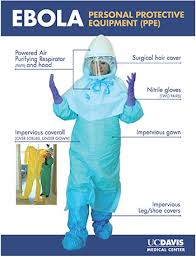
MSF (Médecins Sans Frontières) health staff in protective clothing constructing perimeter for isolation ward.

***Background of the disease Ebola

***The Ebola virus causes an acute, serious illness which is often fatal if untreated. Ebola virus disease (EVD) first appeared in 1976 in 2 simultaneous outbreaks, one in Nzara, Sudan, and the other in Yambuku, Democratic Republic of Congo. The latter occurred in a village near the Ebola River, from which the disease takes its name.

The outbreak in West Africa, (first cases notified in March 2014), is the largest and most complex Ebola outbreak since the Ebola virus was first discovered in 1976.  Well its back again There have been more cases and deaths in this outbreak than all others combined. It has also spread between countries starting in Guinea then spreading across land borders to Sierra Leone and Liberia, by air (1 traveller only) to Nigeria, and by land (1 traveller) to Senegal.  God willing we do something fast enough with all the medical technology we have in America and fine a way to control it in our own country; we came through in controlling the flu and so many other epidemics.

The most severely affected countries, Guinea, Sierra Leone and Liberia have very weak health systems, lacking human and infrastructural resources, having only recently emerged from long periods of conflict and instability.   On August 8, the WHO Director-General declared this outbreak a Public Health Emergency of International Concern.  Well the US better do something fast to prevent both me and many others in this home land to keep us safe.  By the way I am RN 26 years and this topic Ebola concerns me terribly.

 A few years back when Ebola hit America according to the CDC this is this episode, “there were about 8,900 cases of Ebola infection worldwide with almost 4,500 deaths as of this week. And, the World Health Organization that we may see 10,000 new cases per week by the end of that year.

Transmissiono of Ebola

It is thought that fruit bats of the Pteropodidae family are natural Ebola virus hosts. Ebola is introduced into the human population through close contact with the blood, secretions, organs or other bodily fluids of infected animals such as chimpanzees, gorillas, fruit bats, monkeys, forest antelope and porcupines found ill or dead or in the rainforest that picked up this virus.

Ebola then spreads through human-to-human transmission via direct contact (through broken skin or mucous membranes) with the blood, secretions, organs or other bodily fluids of infected people, and with surfaces and materials (e.g. bedding, clothing) contaminated with these fluids.

Health-care workers have frequently been infected while treating patients with suspected or confirmed EVD. This has occurred through close contact with patients when infection control precautions are not strictly practiced or taught to the medical workers through detailed and concise information with written instructions,  proper demonstration, with most important follow up by health care worker superiors like managers to nursing education depts.

For further information on this go to my reference http://www.who.int/mediacentre/factsheets/fs103/en/The World Health Organization. ***

There is no FDA-approved vaccine available for Ebola, unfortunately but like most after damage occurs in enough quantities (which is the case) in time most diseases come up with one regarding the many over the few diseases we haven’t seem to have invented yet.  So the key for this disease right now is PREVENTION of it.


Keep in mind through the CDC we are in the U.S. working on a treatment. Let us take a look.

“Experimental vaccines and treatments for Ebola are under development, but they have not yet been fully tested for safety or effectiveness.

Recovery from Ebola depends on good supportive care and the patient’s immune response. People who recover from Ebola infection develop antibodies that last for at least 10 years, possibly longer. It isn’t known if people who recover are immune for life or if they can become infected with a different species of Ebola. Some people who have recovered from Ebola have developed long-term complications, such as joint and vision problems.”

Here are some tips given by the CDC (Center for Disease Control):

If you travel to or are in an area affected by an Ebola outbreak, make sure to do the following:

  • Practice careful hygiene. For example, wash your hands with soap and water or an alcohol-based hand sanitizer and avoid contact with blood and body fluids.
  • Do not handle items that may have come in contact with an infected person’s blood or body fluids (such as clothes, bedding, needles, and medical equipment). In a hospital patients with contaminating diseases through blood, secretions or fluids of the body is when contact isolation is used to prevent the spread of diseases (EX. MRSA, VRE)that can be spread through contact with open wounds, urine, blood, simple secretions of the body (even tears or fluids coming from the eye).  Health care workers making contact with a patient on contact isolation are required to wear gloves, a gown, even a mask if one wants (which I without question do for any contact isolation a pt is on for their contaminating disease to prevent spread on me or others).  With Ebola it may even go into further restrictions with disease to PREVENT further contamination which is only watching the safety of all citizens and visitors in this country or hopefully this will be carried out in Africa and anywhere else at this point.
  • Avoid funeral or burial rituals that require handling the body of someone who has died from Ebola.
  • Avoid contact with bats and nonhuman primates or blood, fluids, and raw meat prepared from these animals.
  • Avoid hospitals in West Africa where Ebola patients are being treated, if .not needed. The U.S. embassy or consulate is often able to provide advice on facilities.

How bad is it elsewhere? In West Africa, pretty bad. Lack of resources and a slow global response has let the virus run wild. Over at Nature, they used WHO data to illustrate just how terrifying it’s getting. For an on-the-ground perspective, see what Karin Huster, a healthcare worker who just got back from treating Ebola in Liberia’s clinics, told R29. We’re also beginning to feel the first economic effects of the crisis.

What is the CDC doing to stop the spread of Ebola? Well, the first thing to remember is that the U.S. is not in the middle of the same kind of outbreak those in Guinea, Sierra Leone, and Liberia have been dealing with for months now. Ebola has not spread to the general American population, and those who have contracted the virus here have been in close contact with someone who was already severely infected. Complicating matters, the nurses who cared for Duncan report that they were forced to do so without proper training or equipment. And, Vinson says that she called the CDC before getting on her flight with a low-grade fever, but was told her temperature did not surpass the dangerous threshold (100.4 degrees Fahrenheit). However, the CDC has learned from its slow response to Dallas and has vowed to dispatch an Ebola response team to any hospital in the country with a confirmed case of the

How contagious is Ebola? Compared to other diseases you are more likely to get (such as enterovirus D68, the measles, and the flu), Ebola is not very contagious. It has a long incubation period (21 days) during which an infected person may begin to show symptoms. But, as far as we know, that person is not contagious until he or she is symptomatic. Ebola can only be spread by: direct contact with the bodily fluids of someone who is contagious (e.g., blood, urine, vomit); objects that have been contaminated with those fluids; or infected mammals, such as bats.

What are the symptoms of Ebola? Fever, headache, muscle pain, severe vomiting, and bloody diarrhea, among other unpleasant things. These symptoms hit hard and and they hit fast. They also get worse the longer you’re infected. So, if you feel kind of icky but are still dragging yourself to work, you’re probably Ebola-free.

Can we treat it? Not in every case. We have several experimental options, such as ZMapp, that have worked for some human cases or in animals. But, American scientists are still working on a cure that can save as many people as possible — and get approved by the FDA, too. Chinese and Russian scientists are on the case too, reportedly working on a cure and vaccine, respectively. But, Ebola is not necessarily a death sentence. About half of the people who have contracted it worldwide have lived to tell the tale. The CDC says whether or not you survive depends on your immune system and the quality of care you’re getting. And, when a person recovers from the virus, he or she will have antibodies that will protect against Ebola infection for at least 10 years.

Can we protect against it? Yes — with proper hand hygiene, basic public health tactics, a vaccine on the way, and a ramped-up CDC response.

Finally,  I reinforce that unless you have had direct contact with the bodily fluids of someone with Ebola when that person was contagious (or if you’ve eaten some bushmeat recently), then your risk for Ebola are low and you don’t need to worry about getting it.  Really, even Fox News says so. Instead, you should probably just get yourself a flu shot with how much higher you are at risk of getting the flu as opposed to the disease Ebola but our country should take strict action in preventing a disease epidemic in travelers coming back or from Africa to the US or any other country that has this disease in their country, safety for the people in America.


previous


QUOTE FOR FRIDAY:

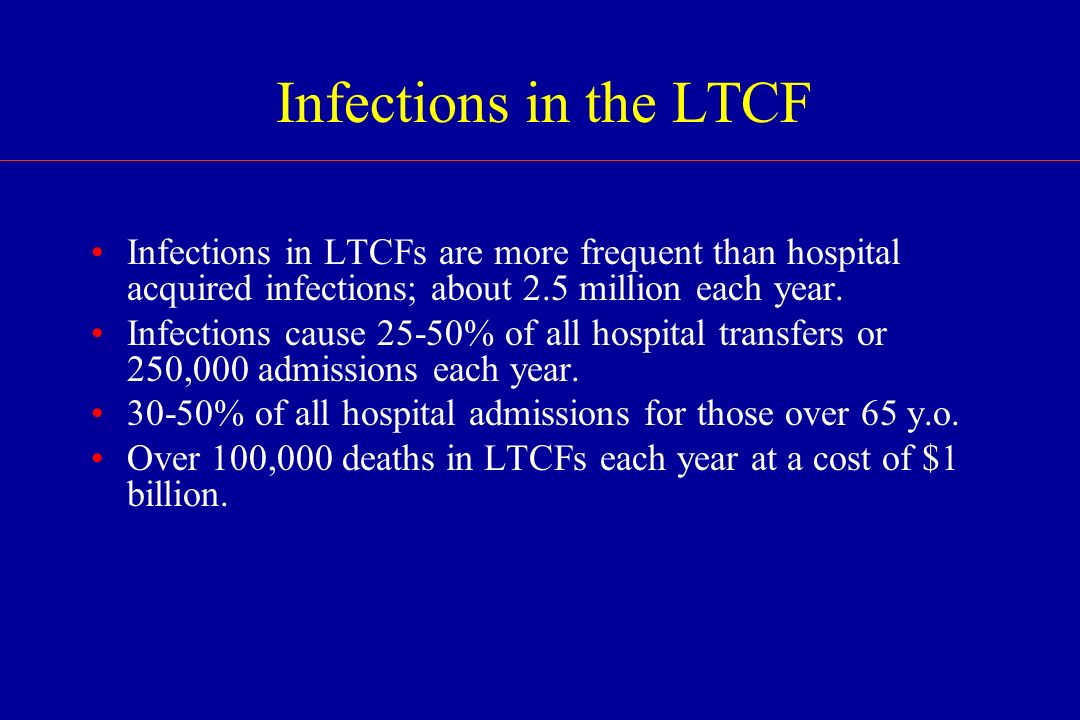
“Skilled nursing facilities and assisted living facilities, (collectively known as long-term care facilities, LTCFs)- Data about infections in LTCFs are limited, but it has estimated 1 to 3 million serious infections occur every year in these facilities.  Infections are a major cause for hospitalization (acute nursing) and death.
As many as 380,000 people die of the infections in LTCFs every year.”
 
CDC Centers for Disease Control and Prevention

Part V Other barriers in prevention of Infections in hospitals & long care facilities!


Personal Protective Equipment

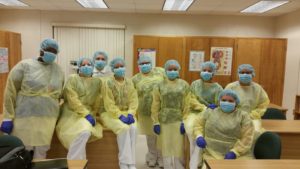
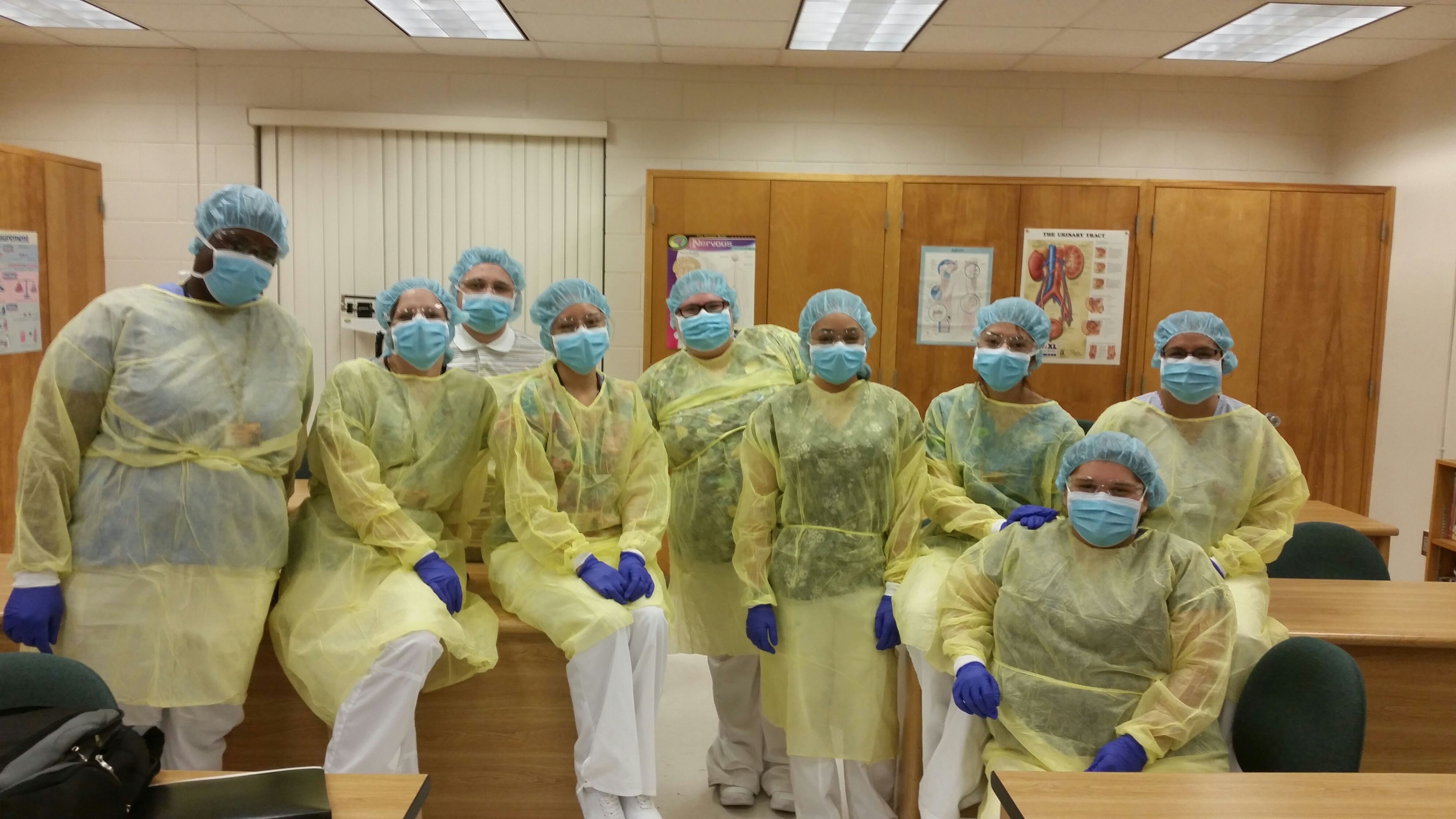
Healthcare professionals are both barriers to and carriers of infection. To avoid distributing infection among patients, healthcare professionals must remain diligent in the use of personal protective equipment, or PPE. Gloves, gowns, shoe covers, caps, masks, respirators, hair covers, face protection, and eye protection are all vital in preventing the spread of infection. Nurses who use PPE effectively help prevent the spread of infection through the touch of a hand, through contact with their uniform, and through air and droplets from their respiratory tract. In turn, they are personally protected against any organisms the patient may carry.

Gloves are the most frequently worn item of PPE. Gloves reduce the opportunity for microbes on healthcare workers’ hands to be spread to patients during care or invasive procedures. Removing gloves between patients prevents the transmission of bacteria from patient to patient. It is important for healthcare professionals to understand that gloves should not be used in place of handwashing. After removing gloves, healthcare professionals should always follow handwashing guidelines.

Gowns and masks also help prevent HAIs. Gowns worn in patient rooms and in operating rooms prevent infectious microbes from being carried from patient to patient on healthcare workers’ clothing. Masks are used to prevent microbes from being transmitted via the respiratory tract. In 2011, the Food and Drug Administration (FDA) approved a new type of N95 respirator for single-use that kills methicillin-resistant Staphlococcus aureus (MRSA), Streptococcus pyogenes, and Haemophillus influenzae. This specialty mask incorporates an antimicrobial agent into the fiber of the mask. The mask eliminates 99.99% of bacteria on its surface within 1 hour and traps and kills additional microbes in the mask’s middle filtration layers.

Transmission-Based Precautions

The topic of PPE is not complete without a review of contact, droplet, and airborne precautions. Most nurses are familiar with the types of precautions used to prevent infection transmission. Even so, nurses, as well as other healthcare professionals, can become lax in their use of precautions, increasing the incidence of HAI.

Contact precautions are designed to reduce the risk of transmission of infectious organisms by direct or indirect contact with the patient or the patient’s environment. Transmission can occur through direct skin-to-skin contact from an infected person or host or through indirect contact of a susceptible host with a contaminated intermediate object or fomite in the environment. To comply with contact precautions, healthcare professionals should follow these guidelines:

  • Wear gowns and gloves for all patient contact or contact with potentially contaminated areas of the patient’s environment (e.g., bedrails, furniture, medical equipment).
  • Put on PPE before entering the patient’s room and remove it before leaving the room to contain any potential microbes.
  • Whenever possible, patients on contact precautions should be admitted to private rooms. Infection control personnel should be consulted before cohorting patients if a private room is not available.
  • Transport patients only when necessary for diagnosis or treatment and weigh the risk of infection against the need for transport. When transporting a patient, place the patient in a clean gown and cover the patient with linen per facility policy.

Transmission of microbes by droplet involves contact of conjunctivae of the mucous membranes of the nose or mouth of a susceptible person with large particle droplets. Droplets are generated from the source patient primarily during coughing, sneezing, or talking or during certain procedures, such as suctioning and bronchoscopy. Transmission of infection by large particle droplets requires close contact between the source patient and the susceptible host. Droplets do not remain suspended in the air and generally travel only short distances–up to 3 feet. For this reason, special ventilation systems and air handling are not required for droplet precautions. To properly follow droplet precautions, healthcare professionals should follow these guidelines:

  • Wear a surgical mask for close contact (within 3 feet) with patients on droplet precautions; respirators are not necessary.
  • Admit the patient to a private room, if possible. Infection control personnel should be consulted before cohorting patients if a private room is not available.
  • When transporting patients on droplet precautions, place a mask on them and instruct them in proper cough etiquette.

Airborne precautions are designed to prevent transmission of infectious organisms that remain infectious over long distances if they become suspended in the air. Airborne transmission occurs when there is dissemination of either airborne droplet nuclei (small particle residue of evaporated droplets) or dust particles containing the infectious agent. Airborne organisms are transmitted by air currents and may be inhaled or deposited on a susceptible host within the same room as a source patient or even a long distance away from the source patient. To prevent airborne transmission, healthcare professionals should follow proper airborne precautions:

  • Admit the patient to a room with special air handling and ventilation systems. These airborne infection isolation rooms (AIIRs) use negative airflow relative to hallways or surrounding areas to prevent air from escaping the room. The rooms complete 12 air exchanges per hour in buildings with new construction and renovation or 6 air exchanges per hour in existing facilities. Air exhausted from AIIRs must be directly exhausted to the outside or put through a HEPA filtration system before returning to the building.
  • Don the proper PPE when entering an isolation room, including an N95 mask–a mask approved to filter 95% of airborne particles. Healthcare professionals must not confuse N95 respirators with surgical masks. They are not the same. Surgical masks cannot filter small particles and do not prevent leakage around the edges when the user inhales. To identify an N95 mask, look for the manufacturer’s name, part number (P/N), the protection provided by the filter, and the letters NIOSH or the NIOSH logo written on either the outside front, the exhalation valve, or the straps of the mask.
  • Be sure to be fit-tested for an N95 mask before you care for anyone requiring airborne precautions. Facilities that have AIIRS must have a facility-wide respiratory protection program that includes education of workers on respirator use with appropriate fit testing and user seal checks.
  • Limit patient transport to medically necessary procedures only. If the patient must be transported, skin lesions must be covered and the patient must wear a surgical mask and observe respiratory hygiene/cough etiquette.

Environmental Decontamination

Some bacteria do not need a living host to survive. Microbes such as MRSA, vancomycin-resistant enterococci (VRE), and C. difficile can survive for long periods on environmental surfaces, such as bedrails and phones. After being contaminated, these environmental surfaces become the source of infection. A clean healthcare environment is essential for prevention of infection from these organisms.

Cleaning and disinfection of the patient environment includes high touch surfaces, such as bedrails, carts, toilets, and doorknobs, as well as general housekeeping surfaces, such as floors, walls, and blinds. Proper disinfection and sterilization of medical and surgical instruments and devices are also vital in the prevention of HAIs.

Agents used by facilities that are designated by the Environmental Protection Agency (EPA) as hospital-grade detergents/disinfectants must be able to inactivate specific organisms, such as staphylococci and streptococci. These agents must be chosen carefully to determine if they are effective in killing pathogens.

Nurse Staffing and Burnout and HAI

A recent study in the American Journal of Infection Control showed a correlation between nurse staffing ratios, nurse burnout, and HAIs. According to the researchers, the higher the nurse-patient ratio, the higher the likelihood of occurrence of a HAI due to increased demands on nurses and resulting burnout. The study showed that increasing a nurse’s patient load by one patient increased the incidence of urinary tract infections and SSIs. The authors of this study suggest that healthcare facilities decrease nurse burnout to decrease the incidence of HAIs.

Surveillance of HAIs

Infection surveillance helps experts identify infectious disease, spot trends in infections, and create treatment and eradication goals. The federal government provides resources to estimate and track HAIs affecting patients and healthcare personnel. The National Healthcare Safety Network (NHSN), the largest HAI reporting system in the United States collects data from participating institutions, including acute care hospitals, long-term acute care hospitals, psychiatric hospitals, rehabilitation hospitals, outpatient dialysis centers, ambulatory surgery centers, and long-term care facilities. Currently, more than 9,000 institutions participate in the NHSN to share infectious disease data in a timely manner. As the scope of HAI reporting is extended, it is the goal of the NHSN to target prevention, improve patient outcomes, and reduce healthcare costs, with the ultimate goal being elimination of all HAIs.

Another national resource, the Emerging Infections Programs (EIP), consists of a network of state health departments and their academic medical center partners. These agencies collaborate to answer questions regarding emerging HAI threats, advanced infection-tracking methods, and antibiotic resistance in the United States.

Conclusion

The medical profession has come a long way in its progress toward elimination of HAIs, but there is still a long way to go. Understanding common pathogens, knowing risk factors of HAIs, and implementing preventative measures are key ways healthcare staff can help keep patients safe. Diligence and attention to proper hand hygiene, environmental disinfection, use of proper transmission-based precautions, and the correct use of PPE will help prevent the spread of these infections. With perseverance, healthcare workers can be instrumental in reaching the ultimate goal of zero HAIs.

Resources for Part I throught V.

For more information on isolation precautions including standard and transmission-based precautions, refer to the NCCE course titled Science of Infection Control Principles available at www.nursece.com.

For general information on common HAIs, visit the CDC’s website at www.cdc.gov.

For more information on prevention strategies for VAP, refer to the publication Strategies to Prevent Ventilator-Associated Pneumonia in Acute Care Hospitals, available at http://www.jstor.org/stable/10.1086/591062.

For more information on isolation precautions, see Guidelines for Isolation Precautions: Preventing Transmission of Infectious Agents in Healthcare Settings 2007, available at www.cdc.gov.

For more information on infection control in the LTCF, see the SHEA/APIC Guideline: Infection Control in the Long-Term Care Facility, available at http://www.jstor.org/stable/10.1086/592416.

For more information on developing strategies for measurement of hand hygiene, refer to the Joint Commission’s monograph titled Measuring Hand Hygiene Adherence: Overcoming the Challenges, available at www.jointcomission.org.

For more information on the selection and proper use of disinfection and sterilization materials, see the Guideline for Disinfection and Sterilization in Healthcare Facilities, 2008, available on the CDC website at www.cdc.gov.

Top recommendations and detailed tool kits for preventing healthcare–associated infections, including urinary tract, surgical-site, Clostridium difficile, and central line–associated bloodstream infections outside the ICU are available at http://www.cdc.gov/hicpac/pdf/guidelines/bsi-guidelines-2011.pdf.
QUOTE FOR THURSDAY:

“Proper Handwashing is the single most effective way to prevent the transmission of infection. To understand the effects of handwashing, it is important to consider the environment on human skin. Microorganisms found on the skin are classified as either resident flora, colonizing flora (normal flora), or transient flora.

CDC Centers for Disease Control and Prevention

Part IV Acquired Hospital/Healthcare Infections-Long Term Healthcare Facilities

Long-Term Care Facilities

Long-term care facilities (LTCFs), including rehabilitation centers, psychiatric hospitals, and residences for the disabled, differ from acute care hospitals in many ways. They are essentially a home for their residents, but many residents are often transferred between the LTCF and acute treatment hospitals as health needs arise. Because of their nature, LTCFs pose some unique risks for HAIs.

Nursing homes and skilled nursing facilities for the care of the elderly are the most common type of LTCF. In the United States, about 1.5 million people reside in 16,100 nursing homes. It is estimated that 765,000 to 2.8 million of these residents suffer from infections each year. Risk factors for infection are specific in this vulnerable population and include advanced age, incontinence, immobility, lower immunity, dysphagia, age-related skin changes, frequent hospitalizations, malnutrition, and underlying chronic illness.

Because of the compromised nature of these patients, they suffer from a number of HAIs. Urinary tract infections are the most common type of infection reported in LTCFs and can arise due to patient illness or incontinence. Pneumonia, influenza, and lower respiratory tract infections account for significant morbidity and mortality in residents of LTCFs. C. difficile infection is of particular importance in this population as it is the primary cause of diarrhea in nursing homes. Skin, soft tissue, and wound infections are the third most common type of infection in LTCF residents and include infected pressure ulcers and cellulitis, often with group A Streptococci and MRSA. Other infections include viral hepatitis, tuberculosis (TB), and conjunctivitis.

LTCFs face a variety of challenges associated with HAIs. Compared to acute care facilities, nursing homes frequently lack properly trained infection control personnel, and many of these staff members work only part-time on infection control regardless of the size of the facility. Few have a certification in infection control. LTCFs may also have a limited staff, a high staff turnover, problems with funding, and limited information technology (IT) resources, including a computer system that is integrated with diagnostic labs and radiology centers. Nurses in LTCFs must be particularly vigilant in protecting their patients from HAIs.

Enlisting the Help of the Patient and Family

Don’t underestimate the importance of patients and their family members and visitors. With a little education, they can help facilities decrease the spread of infection.

  • Educate patients and families on the type of infection diagnosed in the patient, proper hand hygiene, and appropriate precautions, such as contact, droplet, or airborne.
  • Keep materials for precautions readily available to visitors, such as gowns, gloves, and masks.
  • Encourage all visitors to wash their hands properly before and after visiting with the patient.
  • Post instructions on proper handwashing where visitors can see them.
  • Keep adequate supplies of hand sanitizer in hallways, near doors, and by elevators and encourage visitors to use them.


Prevention Is The Key=

The Joint Commission includes infection prevention as one of its National Patient Safety Goals in hospitals, behavioral care facilities, and ambulatory care facilities, as well as home health care. Specifically, the Joint Commission emphasizes handwashing as key to infection prevention. Although hand hygiene and transmission precautions are routine in healthcare facilities, a review of evidence-based practice can remind healthcare professionals of the process of and rationale for these procedures.

Proper Hand Hygiene

Handwashing is the single most effective way to prevent the transmission of infection. To understand the effects of handwashing, it is important to consider the environment on human skin. Microorganisms found on the skin are classified as either resident flora, colonizing flora (normal flora), or transient flora. Colonization is the presence of microorganisms in or on a host with growth and multiplication. A person who carries an organism with no clinical signs or symptoms of disease is said to be colonized with that organism. Resident organisms rarely cause infections unless they are introduced into deep tissues through invasive procedures or if the patient is severely immunocompromised. These organisms are usually aerobic, gram positive, and not easily removed by handwashing. Examples include Staphlococcus epidermidis and Corynebacterium spp.

Transient flora are organisms that are recent contaminants that survive only a short time, generally fewer than 24 hours on the skin. They readily cause infection and are most frequently associated with HAIs. These organisms are usually anaerobic, gram negative, and easily removed by handwashing. Examples include streptococci, E. coli, Candida spp., and Klebsiella pneumonia.

An overwhelming amount of literature cites inadequate handwashing in the transfer of organisms such as Staphylococcus, Enterobacteriaceae, Pseudomonas, and Klebsiella in healthcare facilities. Inadequate handwashing also places healthcare workers at risk for viral diseases, such as hepatitis and HIV, and multiple bacterial infections, such as those caused by staphylococci and streptococci.

Various organizations are at work to promote consistent and effective hand hygiene in the healthcare workplace. One agency, the World Health Organization (WHO), created the Five Moments for Hand Hygiene to simplify the timing of handwashing. This handwashing protocol dictates times for hand hygiene within the sequence of patient care to yield the maximum opportunity for patient safety. According to the WHO, the healthcare workers should wash their hands at the following “moments”:

  • Before touching a patient
  • Before a clean or aseptic procedure is begun
  • After exposure to a body fluid
  • After touching a patient
  • After touching patient surroundings

The theory behind this approach is that if handwashing occurs at the precise time it is needed, transmission of microbes will be halted and patient harm will be prevented. Proponents of the WHO approach hope that the methods taught will stick with healthcare workers and handwashing compliance will increase enough to become an unconscious habit.

The CDC recommends appropriate timing and effective materials for handwashing in the following guidelines for hand hygiene during the delivery of healthcare:

  • Hands should be washed with either a nonmicrobial soap and water or, in the following situations, with an antimicrobial soap and water:
    1. When hands are visibly dirty
    2. When hands are contaminated with blood or body fluids
    3. When hands are contaminated with protein-based substances
    4. When there has been contact with spore-forming bacteria, such as Clostridium difficile (The physical action of handwashing using friction and running water is more likely to remove the spores. Alcohols, chlorhexidine, and other antimicrobial agents used in antiseptic hand rubs have virtually no activity against spores. It should also be noted that alcohol-based hand sanitizers have virtually no effect on reducing the number of genomic copies of Norovirus spp. Hands should be vigorously washed with soap and water when outbreaks of infectious diarrhea or gastrointestinal illness have occurred and Norovirus is the known or suspected agent.)
  • When hands are not visibly soiled, or after soil is removed with soap and water, the preferred method of handwashing, or more specifically hand decontamination, is with an alcohol-based hand rub. Hand decontamination with antimicrobial agents (hand asepsis) is indicated for removing or destroying transient organisms. Antibacterial soap and water can also be used. Hands should be decontaminated at the following times:
    1. Before direct contact with all patients and before donning gloves and performing invasive procedures
    2. After contact with blood, body fluids, excretions, mucous membranes, nonintact skin, or wound dressings
    3. After contact with patient intact skin (e.g., when taking blood pressure)
    4. During patient care, if hands are moving from a contaminated body site to a clean body site
    5. After contact with inanimate objects and medical equipment near the patient (e.g., bedrails, IV pumps, computer keyboards)
    6. After removing gloves and other personal protective equipment (PPE)
    7. Before preparing or eating food
    8. After contact with one’s own body fluids (e.g., nose blowing, sneezing, using the bathroom)

The use of antiseptic hand rub has brought into question the effectiveness of soap and water. Studies show that when hands of healthcare workers are heavily contaminated with pathogens, alcohol-based antiseptic hand rub prevents transmission of the pathogen much more effectively than plain soap and water handwashing. In a study of the transfer of gram-negative bacilli from the hands of nurses to a piece of catheter material, transfer of the bacilli occurred 2 out of 12 times (17%) when an alcohol-based hand rub was used for hand hygiene, compared to 11 out of 12 times (92%) when plain soap and water were used for hand hygiene. For standard handwashing or hand asepsis, the CDC recommends healthcare workers use alcohol-based products over plain soap or antimicrobial soap, except in the cases listed in the guidelines outlined earlier.

How you wash your hands also matters. Proper handwashing technique must be used to decrease the transmission of infection-causing organisms. Simply rinsing one’s hands with cool water and briefly wiping them dry will not reduce the rate of transmission. To reduce the number of transient organisms, hands must be washed with a sufficient amount of product, with the correct technique, and for a sufficient length of time. The following steps should be taken to ensure proper handwashing:

  • When using soap and water:
    1. Wet hands and apply a sufficient amount of soap (3 ml).
    2. Rub hands vigorously to create a lather, scrubbing all surfaces of both hands, including backs of hands, wrists, between fingers, and, especially, thumbs and under fingernails. Continue for at least 20 to 30 seconds.
    3. Rinse hands well under running water.
    4. Dry hands with a paper towel, and if possible use the paper towel to turn off the faucet on sinks that do not have foot controls or automatic shut-off sensors.
  • When using an alcohol-based hand rub:
    1. Apply the rub to the palm of one hand.
    2. Rub hands together, wetting all surfaces and focusing on fingernails and fingertips.
    3. Continue until hands are dry. Drying time should take a minimum of 15–20 seconds if a sufficient amount of rub was applied. If hands are dry in less than 15 seconds, an insufficient amount of product was used.

In addition to maintaining, monitoring, and promoting correct hand hygiene, it is also important for healthcare facilities to perform self-assessments on hand hygiene. The Joint Commission (the accrediting agency for more than 19,000 healthcare organizations) in collaboration with the CDC and other organizations outlined the rationale for self-assessment of handwashing in healthcare facilities:

  • To assess the performance of staff members and educate them in real time
  • To assess an institution’s level and quality of practice for regulatory or accreditation purposes
  • To measure an institution’s performance within high-risk patient populations or units
  • To assess the impact of a quality improvement program that increases adherence to hand hygiene guidelines
  • To compare the performance of an institution to that of other healthcare facilities
  • To investigate an outbreak of infection
  • To conduct a research project
  • To improve patient and family perception of quality of care

Facilities that assess their effectiveness at prevention can analyze their strengths and weaknesses in prevention efforts and revise their practice to reduce infection rates and thus keep patients safe.

QUOTE FOR WEDNESDAY:

“A nosocomial infection is contracted because of an infection or toxin that exists in a certain location, such as a hospital. People now use nosocomial infections interchangeably with the terms health-care associated infections (HAIs) and hospital-acquired infections. For a HAI, the infection must not be present before someone has been under medical care.”

Healthline.com

QUOTE FOR TUESDAY:

“Each year in the United States, about a half million people get sick from C. difficile, and in recent years, C. difficile infections have become more frequent, severe and difficult to treat. People who are on breathing machines (ventilators), often used in intensive care units, are at higher risk of this type of pneumonia.”

Mayo Clinic

Part II Continuation of Types of Hospital Acquired Infections (HAIs)

Ventilator Acquired Pneumonia

C-Diff


Ventilator-Associated Pneumonia

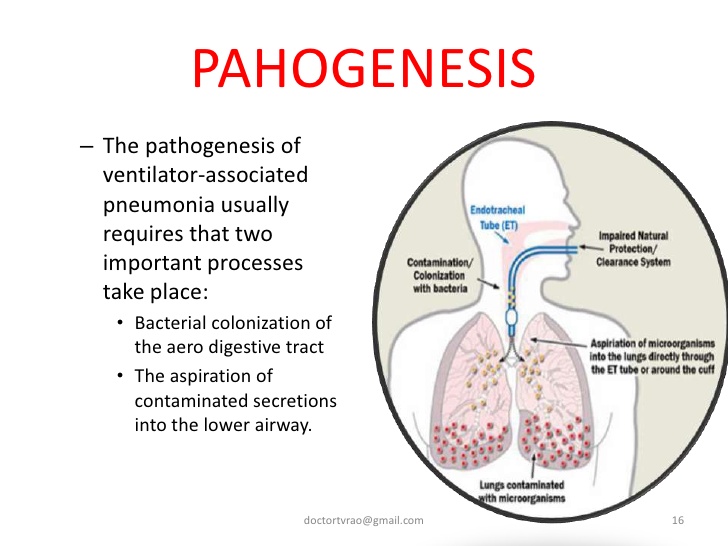
Ventilator-associated pneumonia (VAP) is an infection of the lungs that develops after a person has been on a ventilator for longer than 48 hours. The most common type of HAI contracted in the ICU, VAP occurs in as many as 28% of patients who have had mechanical ventilation. Infection occurs because the endotracheal or tracheostomy tube allows passage of microbes into the lungs. These organisms may originate from the patient’s aspirate, from the oropharynx and digestive tract, or from external sources, such as contaminated equipment and medications.

Although any microbe can be the causative agent, certain microbes are most often implicated due to increasing drug resistance. Pseudomonas aeruginosa is the most common multidrug-resistant organism responsible for VAP. Other microbes that cause VAP include Staphlococcus aureus, Klebsiella spp., Escherichia coli, Enterobacter spp., Actinobacter spp., MRSA, and Serratia marcescens. Pneumonia is considered early in onset if it occurs within the first 4 days after hospital admission. Multidrug resistant organisms are more likely to be the cause of late-onset pneumonia, defined as 5 or more days postadmission.

In addition to recent ventilation, other risk factors increase a patient’s chance of acquiring VAP, such as hospitalization or antibiotic use within the past 90 days, hospital stay greater than 5 days, hemodialysis within the past 30 days, and known circulation of multidrug-resistant organisms in the facility. Immunocompromised residents and those who reside in a nursing home or long-term care facility are also at greater risk for VAP.

Symptoms of VAP include fever, a decline in oxygenation, leukocytosis, and purulent sputum. Diagnosis of VAP is made based on comprehensive medical history, presence of infiltrates on x-ray, and positive culture of lower respiratory tract secretions (colonization of the trachea is common; thus a positive culture may not distinguish a pathogen from a colonizing organism). Symptoms of ventilator associated tracheobronchitis (VAT) with purulent secretions can mimic symptoms of VAP. VAT is a condition midway between colonization and VAP and requires antibiotic treatment.

Treatment should not be delayed while diagnostic tests are pending. Empiric treatment is vital in patients with suspected VAP and can be based on patient risk factors for multidrug-resistant organisms, known local prevalence of resistant organisms, severity of infection, and total number of days the patient was hospitalized before the onset of pneumonia. Criteria for empiric treatment include a new or progressive infiltrate on x-ray and at least two of the following conditions: fever greater than 38°C, leukocytosis or leukopenia, and purulent respiratory secretions.

If the patient has received recent doses of antibiotics, a different class of antibiotics should be used for treatment. Therapy should later be adjusted based on culture results. Unless diagnostic testing shows otherwise, initial empiric therapy should not be changed in the first 48 to 72 hours because clinical response to antibiotic therapy is not likely during this time frame. Patients should be treated with antibiotic therapy for at least 72 hours after a clinical response is attained. (For specific antibiotics and dosages, see the Infectious Disease Society of America practice guidelines for patient care at www.idsociety.org.)

To prevent VAP, the CDC recommends the following strategies:

Strategies to Prevent Aspiration

  • Maintain patients in a semirecumbent position.
  • Avoid gastric overdistention.
  • Avoid unplanned extubation and reintubation.
  • Use a cuffed endotracheal tube with inline or subglottic suctioning.
  • Maintain an endotracheal cuff pressure of at least 20 cm water.

Strategies to Reduce Colonization of the Aerodigestive Tract

  • When possible, use orotracheal intubation rather than nasotracheal intubation.
  • Avoid histamine receptor 2 (H2)–blocking agents and proton pump inhibitors for patients who are not at high risk for developing a stress ulcer or stress gastritis.
  • Perform regular oral care with an antiseptic solution.

Strategies to Minimize Contamination of Equipment

  • Use sterile water to rinse reusable respiratory equipment.
  • Remove condensate from ventilatory circuits, keeping the ventilatory circuit closed while you do so.
  • Change the ventilatory circuit only when visibly soiled or malfunctioning.
  • Store and disinfect respiratory therapy equipment properly.

In addition to these strategies, healthcare professionals should perform daily assessments of readiness to wean to minimize the duration of ventilation. Whenever possible, use noninvasive ventilation methods.

Clostridium difficile Infection

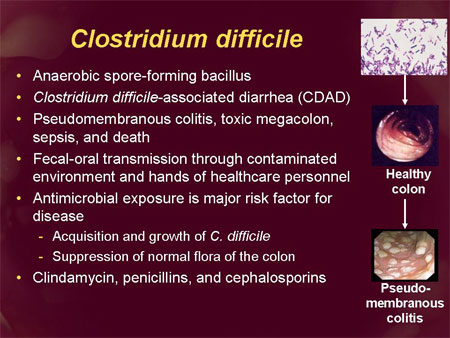
Clostridium difficile infection (CDI), or Clostridium difficile–associated disease (CDAD), is an infection of the intestines caused by the anaerobic, spore-forming, gram-positive bacillus C. difficile. (Figure 2)This microbe was first identified in 1935 when it was isolated from the stools of neonates. C. difficile produces heat-resistant spores that can remain viable on fomites in the environment for years, becoming a source of outbreaks in healthcare facilities. This bacillus also produces two types of toxins: Toxin A (an enterotoxin) and Toxin B (a cytotoxin). These toxins are responsible for the inflammatory responses of the colon, which results in loss of epithelial integrity and the production of watery diarrhea. C. difficile is the most common cause of antibiotic-associated diarrhea and pseudomembranous colitis and has proved extremely difficult to control due to new, more resistant strains.

C.difficile taken from a stool sample culture.

Source: CDC Public Health Image Library PHIL #9999, photo credit Janice Haney Carr, CDC.

  1. difficile is found in the intestinal tract of up to 70% of healthy infants, 1–3% of healthy adults, and in higher rates (up to 20%) in persons on antibiotic therapy. Prevalence, severity, colectomy rates, and mortality rates due to C. difficile have all risen in the past two decades, proving that this microbe has become an extremely virulent superbug that is both persistent and difficult to treat. Surveillance data from the CDC show that between 2000 and 2007 mortality from C. difficile increased by 400% due to a more virulent strain of this organism.

Studies of hospital-acquired CDI have shown that the infection is independently associated with increased risk of in-hospital death: For every 10 hospital patients who acquire a CDI, 1 patient died. Data from the CDC show that C. difficile is responsible for 337,000 infections and 14,000 deaths in the United States each year.

The greatest risk factor for CDI is the use of antibiotics, such as cephlasporins, clindamycin, or the penicillins, because these antibiotics kill the normal flora of the colon, causing overgrowth of C. difficile. Risk is increased for those taking multiple antimicrobials and those who take antimicrobials for longer time periods. Other risk factors for CDI include advanced age. Although almost half of the infections occur in persons younger than 65, most CDI-related deaths occur in the elderly. People with HIV infection, compromised immune systems, and compromised physical status are also at increased risk for CDI. Hospital admission increases one’s chance of acquiring CDI, as does gastrointestinal surgery.

Transmission of CDI occurs by the fecal-oral route.

The time between exposure to C. difficile and infection is 2 to 3 days.

Symptoms of CDI vary greatly, ranging from asymptomatic to mild (fever, malaise, and gastrointestinal symptoms, including abdominal pain and cramps, and mild to moderate foul-smelling diarrhea that is rarely bloody) to extremely severe toxic megacolon, septic shock, and even death. Complications of C. difficile include pseudomembranous colitis or fulminant colitis.

Diagnosis is based on clinical history (antibiotic use in the previous 2 months, diarrhea after 72 or more hours of hospitalization), and presence of C. difficile in the stool. Stool culture is the most sensitive test and is often used for diagnosis in the hospital setting. Colonoscopy revealing histopathology with pseudomembranous colitis is also diagnostic but not necessary in most cases.

Treatment for CDI begins with discontinuation of the antibiotic causing the infection. In many cases, this step is the only necessary treatment since normal flora can reestablish in the colon. If mild to moderate diarrhea persists, patients can be treated with either metronidazole or vancomycin. In cases of severe diarrhea, vancomycin is the drug of choice for treatment due to its history of rapid symptom resolution and overall fewer treatment failures. Although antibiotic treatment will clear the infection, it will not kill the bacterial spores. In 27% of cases, relapse occurs within 3 weeks of antibiotic termination. In extreme cases, colectomy with end ileostomy may be necessary. Treatment for asymptomatic cases is not recommended.

An innovative CDI treatment may be on the horizon. Researchers have shown that C. difficile infection arises as the result of the disruption of natural flora in the intestines, a condition known as dysbiosis. New research in the treatment of CDI involves isolating specific gut bacteria in the fecal matter of healthy individuals and incorporating it into the gut of a person with CDI to restore normal flora and cure the infection.

CDI can be catastrophic to patients and indeed to entire healthcare facilities if an outbreak occurs. To prevent CDI, follow these guidelines from the CDC:

  • Immediately isolate patients with confirmed C. difficile infection and use contact precautions for the duration of diarrhea. Consider extending precautions beyond the duration of diarrhea and using presumptive contact precautions for patients with diarrhea pending confirmed C. difficile diagnosis.
  • Educate healthcare personnel, patients, their families, and any visitors about C. difficile and help them maintain contact precautions.
  • Follow proper handwashing techniques. Hand hygiene for C. difficile must include vigorous washing of hands with soap and water to mechanically remove spores. Alcohol-based hand rubs are not effective against C. difficile.
  • Because C. difficile spores can survive on objects for long periods of time be sure to thoroughly clean and disinfect equipment and objects in the environment. Consider use of sodium hypochlorite (bleach)–containing agents or EPA-registered disinfectants with sporicidal claim for environmental cleaning.
  • Enact a laboratory-based alert system for immediate notification of positive test results.