Archives

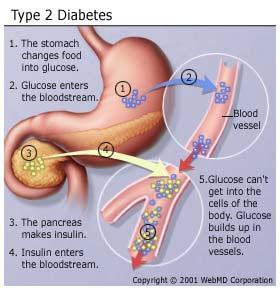
Types of Diabetes, The risks of getting it, and how to prevent it!

2 TYPES OF DM:

a.)Diabetes I  & b.) Diabetes ll.

We have risk factors that can cause disease/illness; there are unmodified and modified risk factors.

With unmodified risk factors we have no control in them, which are 4 and these are:

1-Heredity 2-Sex 3-Age 4-Race.

Now modified risk factors are factors we can control, 3 of them that you can control: They are 1.)your weight 2.)diet 3.)health habits (which play a big role in why many people get diabetes II).

Look at what the Mayo Clinic (www.mayoclinic.com /health/diabetes)says about risk factors:

RISK FACTOR FOR TYPE  DIABETES ONE:

Although the exact cause of type 1 diabetes is unknown, genetic factors can play a role. Your risk of developing type 1 diabetes increases if you have a parent or sibling who has type 1 diabetes. Based on research, we also know that genes account for less than half the risk of developing type1 disease. These findings suggest that there are other factors besides genes that influence the development of diabetes. We don’t know what these factors are, but a number of different theories exist.  Environmental factors, such as exposure to a viral illness, also likely play some role in type 1 diabetes. Other factors that may increase your risk include:

The presence of damaging immune system cells that make autoantibodies. Sometimes family members of people with type 1 diabetes are tested for the presence of diabetes autoantibodies. If you have these autoantibodies, you have an increased risk of developing type 1 diabetes. But, not everyone who has these autoantibodies develops type 1.

Dietary factors. A number of dietary factors have been linked to an increased risk of type 1 diabetes, such as low vitamin D consumption; early exposure to cow’s milk or cow’s milk formula; or exposure to cereals before 4 months of age.

Race. Type 1 diabetes is more common in whites than in other races.

Geography. Certain countries, such as Finland and Sweden, have higher rates of type 1 diabetes.

RISK FACTORS FOR DIABETES TYPE 2 AND PREDIABETES Researchers don’t fully understand why some people develop prediabetes and type 2 diabetes and others don’t. It’s clear that certain factors increase the risk, however, including:

Weight. The more fatty tissue you have, the more resistant your cells become to insulin.

Inactivity. The less active you are, the greater your risk. Physical activity helps you control your weight, uses up glucose as energy and makes your cells more sensitive to insulin. Exercising less than three times a week may increase your risk of type 2 diabetes.

Family history. Your risk increases if a parent or sibling has type 2 diabetes.

Race. Although it’s unclear why, people of certain races — including blacks, Hispanics, American Indians and Asians — are at higher risk.

Age. Your risk increases as you get older. This may be because you tend to exercise less, lose muscle mass and gain weight as you age. But type 2 diabetes is also increasing dramatically among children, adolescents and younger adults.

Gestational diabetes. If you developed gestational diabetes when you were pregnant, your risk of developing prediabetes and type 2 diabetes later increases. If you gave birth to a baby weighing more than 9 pounds (4 kilograms), you’re also at risk of type 2 diabetes.

Polycystic ovary syndrome. For women, having polycystic ovary syndrome — a common condition characterized by irregular menstrual periods, excess hair growth and obesity — increases the risk of diabetes.

High blood pressure. Having blood pressure over 140/90mm Hg is linked to an increased risk of type 2 diabetes.

Abnormal cholesterol levels. If you have low levels of high-density lipoprotein (HDL), or “good,” cholesterol, your risk of type 2 diabetes is higher. Low levels of HDL are defined as below 35 mg/dL.

High levels of triglycerides. Triglycerides are a fat carried in the blood. If your triglyceride levels are above 250 mg/dL, your risk of diabetes increases.

RISK FACTORS FOR GESTATIONAL DIABETES Any pregnant woman can develop gestational diabetes, but some women are at greater risk than are others. Risk factors for gestational diabetes include:

Age. Women older than age 25 are at increased risk.

Family or personal history. Your risk increases if you have prediabetes — a precursor to type 2 diabetes — or if a close family member, such as a parent or sibling, has type 2 diabetes. You’re also at greater risk if you had gestational diabetes during a previous pregnancy, if you delivered a very large baby or if you had an unexplained stillbirth.

Weight. Being overweight before pregnancy increases your risk.

Race. For reasons that aren’t clear, women who are black, Hispanic, American Indian or Asian are more likely to develop gestational diabetes.

The key not to get diabetes is taking Prevention Measures (especially regarding type II) but even diagnosed with diabetes there are measures you can take in helping to control the glucose and decreasing the chances of increasing the side effects of what it can cause to the human body organs overtime especially cardiac disease, kidney disease, neuropathy, retinopathy to blind from having hyperglycemia frequently over years; in time it thickens the blood making circulation difficulty effecting tissues furthest from the heart= feet/lower extremities where skin ulcers occur for not getting enough oxygen to the tissues in the feet or lower extremities that can lead to necrosis causing amputation of toes to foot to below knee amputation to even above knee amputation.  It also increases chance of heart attack and stroke.  PREVENTION first and CONTROL second when diagnosed with DM, is so vitally important.

So help control your diabetes through diet (eating a low glucose or sugar diet=1800 to 2000 calories a day as your m.d. prescribes for you), weight (get in therapeutic weight range), and practice healthy habits.  In knowing how to prevent diabetes that would be to lose weight if obese by eating 6 low glycemic meals a day which allows low fat, low carbohydrates, low sugar keeping your baseline glucose at a steady level and low sugar level more on a regular basis with still treating yourself to occasional high glycemic meals when you’re in ideal weight.

This would definitely benefit you in prevention but if not or if diagnosed with diabetes always check with your doctor regarding diet, activity, and new health habits you may start, especially through any diet change and making alterations you need to do as your m.d. recommends. 

Your doctor can guide you in what is the safest method for you especially if diagnosed with diseases.
QUOTE FOR MONDAY:

“About 54 million Americans have osteoporosis and low bone mass, placing them at increased risk for osteoporosis. Studies suggest that approximately one in two women and up to one in four men age 50 and older will break a bone due to osteoporosis.”

National Osteoporosis Foundation


QUOTE FOR THE WEEKEND:

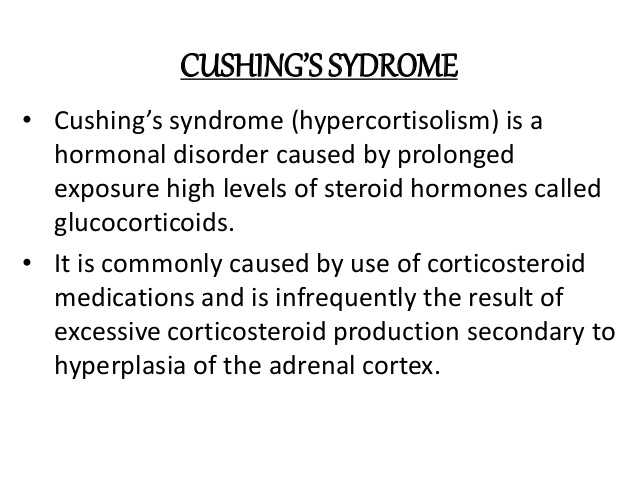
“Treatments for Cushing’s is designed to lower the high level of cortisol in your body. The best treatment for you depends on the cause of the syndrome which determines if it is the disease versus the syndrome.”

MAYO CLINIC

Part II How Cushing’s is treated!


CUSHING’sDISEASE.


What you can expect is your doctor will do a physical examine your entire body to look for specific physical signs of Cushing’s disease and may do tests to better understand your symptoms, what we call diagnostic tooling.

Confirm hypercortisolism
Medical tests will be performed to measure the level of cortisol in the body. These tests should only be done when a form of Cushing’s syndrome(including Cushing’s disease) is highly suspected.

-24 hour urinary free cortisol (UFC) –

Measures the level of cortisol in your urine over a 24-hour period. If the levels are too high, then you may have Cushing’s disease or Cushing’s syndrome. This test is often used because it only measures the type of cortisol that causes Cushing’s disease, called “circulating cortisol,” and may be more accurate than other tests that measure cortisol levels

Because of the difficulty in obtaining 24-hour urine collections in many outpatients, some physicians use a l-mg overnight dexamethasone suppression test. For this test, the patient takes l mg of dexamethasone orally at 11 p.m., and the plasma cortisol level is measured at 8 a.m. the following day (normal value: 5 μg per dL or less [140 nmol per L]). The reported sensitivity of this test is 98 percent; the reported specificity is 80 percent.

Obesity, chronic illness, chronic alcoholism and depression can cause false-positive results (pseudo-Cushing’s syndrome) on the 1-mg dexamethasone suppression test and mildly elevated free cortisol values on the 24-hour urine collection.

If the result of the dexamethasone suppression test is abnormal or the 24-hour urinary free cortisol level is mildly elevated, a confirmatory test for Cushing’s syndrome is needed. The 24-hour urine collection for urinary free cortisol excretion can be used to confirm the result of the l-mg dexamethasone suppression test. Normal findings on both tests provide strong evidence against the presence of Cushing’s syndrome.   However, when Cushing’s syndrome is still strongly suspected based on the clinical findings, negative tests should be repeated; the tests should also be performed again in three to six months.

Determine if Cushing’s disease is the cause of hypercortisolism

-Adrenocorticotropic Hormone (ACTH) test-

Measures if the amount of ACTH in your blood is higher than normal.

If your ACTH levels are high or normal, then you may have a tumor that is producing ACTH.

ACTH-producing tumors are most often found on the pituitary (Cushing’s disease).

ACTH-producing tumors may be in other areas of the body (called ectopic Cushing’s syndrome) If your ACTH levels are low, you may have Cushing’s syndrome due to a different cause or another condition. Additional tests will be done to confirm whether or not you have Cushing’s syndrome

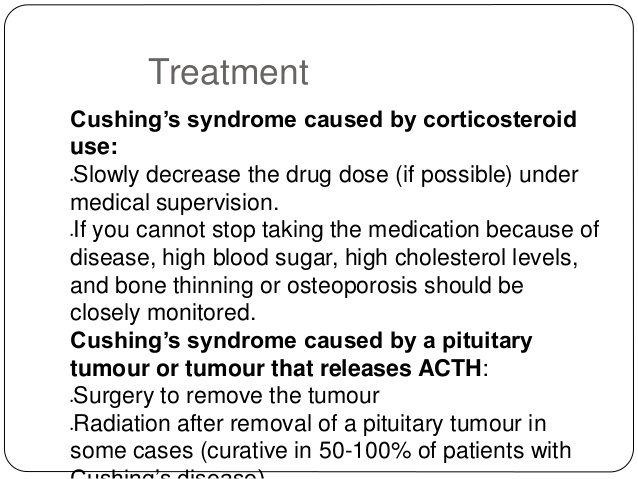
Treatment of cushings syndrome is by castigation of the underlying cause.

Treatments for Cushing’s syndrome are contrived to pass your body’s cortisol production to normal. By indurate, or even distinctly lowering cortisol levels, you’ll feel evident improvements in your signs and symptoms. Left untreated, however, Cushing’s syndrome can finally induce to death. The treatment choice depend on the cause. For example:

-If a tumour in an adrenal gland is the reason, an operation to withdraw it will cure the condition.

– For adrenal hyperplasia, both adrenal glands may require to be withdraw. You will then require to take lifelong replacement therapy of several adrenal hormones.

-Other tumours in the body that produce ‘ectopic’ ACTH may be able to be removed, depending on the kind of tumour, where it is, etc.

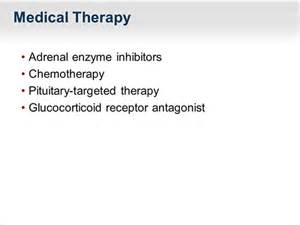
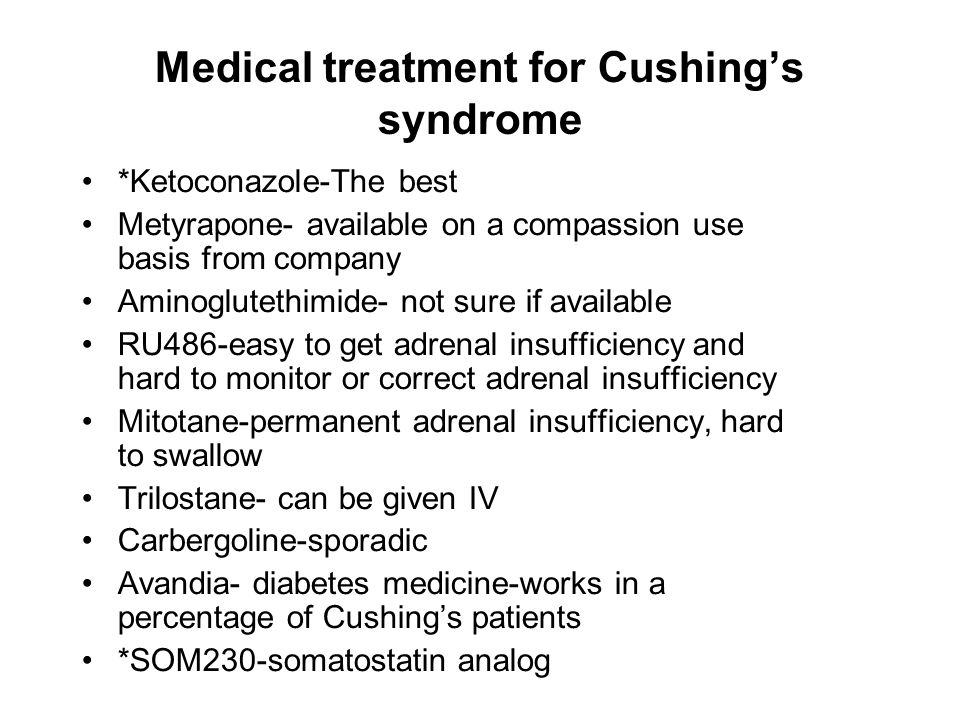
-Medication to block the production or consequence of cortisol may be an choice.

QUOTE FOR FRIDAY:

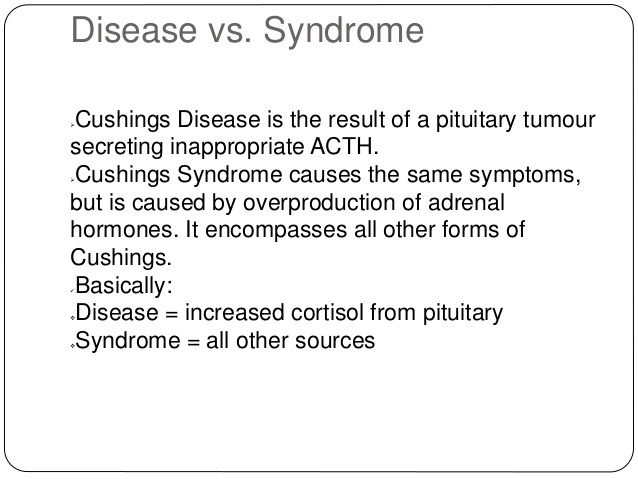
“When too much cortisol is present in the body, it is called Cushing’s syndrome, regardless of the cause.  it is called Cushing’s syndrome, regardless of the cause. Cortisol is made by the adrenal glands which are stimulated by ACTH, which is produced in pituitary gland. When the cause of the excess cortisol is excess ACTH made by a pituitary tumor, the condition is called “Cushing’s disease. “

Harvard Medical School

QUOTE FOR THURSDAY:

“The best course of action for occasional sinusitis is to use self-care steps to ease symptoms while the body clears the infection.  Everybody sort of thinks of antibiotics as the magic cure-all, but the vast majority of people will get better without ever having to consider an antibiotic.”

Dr. Jeffrey Linder, a PCP & associate professor of medicine at Harvard-affiliated Brigham & Women’s Hospital.

QUOTE FOR WEDNESDAY:

“Cardiac arrest may be caused by almost any known heart condition. Most cardiac arrests occur when the diseased heart’s electrical system malfunction; one common cause is due to potassium levels.”

American Heart Association

Know how Potassium works in the human body – an important electrolyte of the body!

Potassium is a mineral that your body needs to work properly. It is a type of electrolyte. It helps your nerves to function and muscles to contract. It helps your engine of the body to operate properly , being the heart.  Potassium kept within the normal blood range helps keep the heartbeat stay regular. It also helps move nutrients into cells and waste products out of cells.  A diet rich in potassium helps to offset some of sodium’s harmful effects on blood pressure.   Knowing sodium’s impact on your blood pressure, a boost in your daily potassium intake can help you to maintain a healthy blood pressure or lower it to healthy levels.

Electrolytes are substances that help conduct electricity in your body. Potassium is one of the most important electrolytes in the human body, with others including chloride, calcium, phosphorus, magnesium and sodium. As an electrolyte, potassium is vital to the healthy functioning of all of your body’s cells, tissues and organs. It also helps to control the amount of water in your body and maintain a healthy blood pH level. As you lose electrolytes in your sweat, you should always obtain a source of these important minerals during or after a intense physical activity.

Potassium is particularly important for the ability of your skeletal and smooth muscles to contract. Because of this, an adequate intake of potassium is important for regular digestive and muscular functioning. Potassium is also vital to the health of your heart, as a normal heart rhythm arises from optimal muscular functioning. This is especially apparent if you have excessively high or low potassium levels, both of which can cause an irregular heartbeat. As heart arrhythmias are potentially life-threatening, you should always maintain an adequate daily intake of potassium.

When a M.D. or in the hospital the doctor orders electrolytes or drug levels to be done it is measuring the level outside the cell in our bloodstream.  Potassium (K+) is the most abundant cation (action) in the body. About 90% of total body potassium is intracellular and 10% is in extracellular fluid, of which less than 1% is composed of plasma. The ratio of intracellular to extracellular potassium determines neuromuscular and cardiovascular excitability, which is why serum potassium is normally regulated within a narrow range of 3.5 to 5.0 mmol/L since the abundance of the potassium is in the red blood cell and its impossible to measure blood levels of anything inside a cell since it would destroy the cell.

Ingested K+ is absorbed rapidly and enters the portal circulation, where it stimulates insulin secretion. Insulin increases Na+,K+-ATPase activity and facilitates potassium entry into cells, thereby averting hyperkalemia. β2-Adrenergic stimulation also promotes entry of K+ into cells through increased cyclic adenosine monophosphate (cAMP) activation of Na+,K+-ATPase.  Remember a person with diabetes has very little or no insulin at all which will effect potassium being sent into the cell unless the patient takes their insulin as ordered by the M.D.

Hypokalemia is serum potassium concentration < 3.5 mEq/L caused by a deficit in total body potassium stores or abnormal movement of potassium into cells. The most common causes are excess losses from the kidneys or GI tract. Clinical features include muscle weakness and polyuria; cardiac hyperexcitability may occur with severe hypokalemia. Diagnosis is by serum measurement. Treatment is giving potassium and managing the cause.

Low potassium (hypokalemia) has many causes. The most common cause is excessive potassium loss in urine due to prescription water or fluid pills (diuretics). Vomiting or diarrhea or both can result in excessive potassium loss from the digestive tract. Only rarely is low potassium caused by not getting enough potassium in your diet.

Hyperkalemia

If you have hyperkalemia, you have too much potassium in your blood. The body needs a delicate balance of potassium to help the heart and other muscles work properly. But too much potassium in your blood can lead to dangerous, and possibly deadly, changes in heart rhythm.

Hyperkalemia is a common diagnosis. Fortunately, most patients who are diagnosed have mild hyperkalemia (which is usually well tolerated). However, any condition causing even mild hyperkalemia should be treated to prevent progression into more severe hyperkalemia. Extremely high levels of potassium in the blood (severe hyperkalemia) can lead to cardiac arrest and death. When not recognized and treated properly, severe hyperkalemia results in a high mortality rate.

Technically, hyperkalemia means an abnormally elevated level of potassium in the blood. The normal potassium level in the blood is 3.5-5.0 milliequivalents per liter (mEq/L). Potassium levels between 5.1 mEq/L to 6.0 mEq/L reflect mild hyperkalemia. Potassium levels of 6.1 mEq/L to 7.0 mEq/L are moderate hyperkalemia, and levels above 7 mEq/L are severe hyperkalemia.

Potassium is critical for the normal functioning of the muscles, heart, and nerves. It plays an important role in controlling activity of smooth muscle (such as the muscle found in the digestive tract) and skeletal muscle (muscles of the extremities and torso), as well as the muscles of the heart. It is also important for normal transmission of electrical signals throughout the nervous system within the body.

Normal blood levels of potassium are critical for maintaining normal heart electrical rhythm. Both low blood potassium levels (hypokalemia) and high blood potassium levels (hyperkalemia) can lead to abnormal heart rhythms.

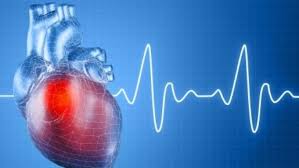
The most important clinical effect of hyperkalemia is related to electrical rhythm of the heart. While mild hyperkalemia probably has a limited effect on the heart, moderate hyperkalemia can produce EKG changes (EKG is a reading of the electrical activity of the heart muscles), and severe hyperkalemia can cause suppression of electrical activity of the heart and can cause the heart to stop beating.

QUOTE FOR TUESDAY:

“A loved one’s suicide can be emotionally devastating. Use healthy coping strategies — such as seeking support — to begin the journey to healing and acceptance.

MAYO CLINIC


QUOTE FOR MONDAY:

“Excluding skin cancers, colorectal cancer is the third most common cancer diagnosed in both men and women in the United States. It’s estimated for the number of colorectal cancer cases in the United States for 2017 are: 95,520 new cases of colon cancer and 39,910 new cases of rectal cancer.  Colorectal cancer is the third leading cause of cancer-related deaths in women in the United States  and the second leading cause in men.”

American Cancer Society