
Archives

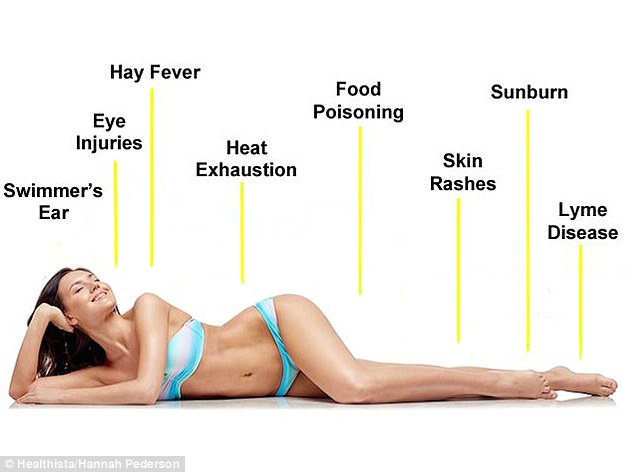
Summer ailment flare-ups due to hot weather.


Hot weather has its hazards, from rip tides to shark scares to sunburn and close encounters with poisonous plants. Simply step outside on a hot summer evening and you’re bound to become instant mosquito bait.

There are less well-known summer health hazards you should keep in mind. Hazards that affect your body from within. Here are some summer health ailments that get worse as the temperatures rise.

1. Kidney Stones

Climate change is affecting not only our planet, it’s taking a toll on our health. Case in point: A University of Texas study has found that the incidence of kidney stones will increase in step with rising record temperatures. Researchers predict a huge increase in kidney stones by 2050. To help prevent kidney stones, which are made up of mineral and acid salts, the Mayo Clinic advises staying well-hydrated (which also will help protect you from heat stroke) when the weather’s sultry. It’s important to keep levels of protein, sugar and sodium (especially) in your diet low. Note that if you live in a warm part of the country or tend to sweat a lot, you may be at higher risk of kidney stones.

2. Migraine headaches

As the temperature rises, so does the risk of migraine for someone who’s prone to them. A study of more than 7,000 emergency room patients who came in for migraine symptoms during a seven-and-a-half-year period revealed that for every 9 degree F bump in temperature, migraine cases increased. To head off migraines in summer, the Cleveland Clinic advises staying hydrated (rely on water and other non-caffeinated beverages) with eating regular meals no matter how busy you are (your bike partner can wait) and steering clear of common migraine triggers if they affect you. Some you’re likely to encounter in summer are like hot dogs, pickles, beer and certain cheeses.

3. Rosacea

Sun exposure, elevated temperatures and wind — hallmarks of summer weather — can bring rosacea flare-ups. If you have rosacea, a skin condition that causes redness, bumps, eye irritation and thickening of skin around the face and other parts of the body, fend off flare-ups!

Tips from the National Rosacea Society:

  • Apply sunscreen at least 30 minutes before heading out and reapply every couple of hours.
  • If you can, stay out of the sun when it’s at its strongest (between 10 a.m. – 4 p.m.)Head outside early in the morning or late in the afternoon to stay cool and avoid the heat that may trigger a flare-up
  • Add a wide-brimmed hat and a good pair of shades protect your face and eyes from UV rays.

4. Heart attack

Winter may be peak season for heart attacks, but summer heat also can take a toll on people with cardiovascular disease or who are at risk for it, according to the American Association of Heart Failure Nurses (AAHFN). That’s because high temperatures increase heart rate and lower blood pressure. Folks with weak hearts may not be able to pump enough blood to cool their bodies and can quickly become overheated. If you have heart problems, the AAHFN recommends you stay inside on blistering days, make sure you drink enough fluids (and back off of caffeine and alcohol) to keep you hydrated and have someone on speed dial who can get to you quickly if you need help.

5. Asthma

Summer whims can spell trouble for people with asthma. When air temperatures change suddenly — as when the thermometer plummets just before a thunderstorm — it can bring on asthma symptoms, according to the American Lung Association. Asthma sufferers also may have trouble breathing in outdoor air pollution as well as when ozone levels are high, which occurs more often in the summer. If you have asthma, your best protection is prevention: Keep a check on daily air quality and, if you live in a city, heed the smog warnings that often occur on steamy days. If the weather outside seems frightful, stay indoors as much as possible.

6.  Summer Ozone Dangers

As the weather heats up during the summer months, ground-level ozone pollution increases as pollutants react to heat and sunlight. So if going on vacation from non ozone levels to danger ozone areas be careful.  Ozone levels often increase with summer wildfires, further worsening the air quality and ozone-related breathing issues.  Areas consider high in danger ozone areas are Bishop, CA, Great Basin Air District, CA, Bishop Paiute Tribe, CA, Southern Ute Indian Reservation, CO, Tallahassee, FL

Bishop, CA
183
Great Basin Air District, CA
183
Bishop Paiute Tribe, CA
170
Southern Ute Indian Reservation, CO
124
Tallahassee, FL

Go to www.airnow.gov

Exposure to ground-level ozone can exacerbate chronic respiratory symptoms, reduce lung capacity and be a trigger for asthma attacks. Other conditions affected by high ozone levels in the summertime include COPD, heart disease and diabetes.

7. Eczema Flare Ups

Yes those of us suffering from eczema understand very well that winter months can be the toughest time of year – dry air, cold temperature, low humidity making skin susceptible to eczema breakouts and flares.  Remember that also here’s a plenty of sunshine, high humidity and warm temperature. All weather conditions that is ideal for eczema. 

Hot weather makes everyone sweat more. Sweating is our natural defense mechanism to control the body’s temperature. Sweat consists of mostly water. As water evaporates from the skin surface, it provides a natural cooling sensation and also lowers the body temperature.  In addition to water, there are trace amounts of sodium, potassium, calcium, magnesium, lactic acid, urea, copper, zinc, nickel, iron, chromium and lead in the sweat. Many of these chemicals, if presented at a high enough concentration, may be irritating to the skin.

Hot weather worsens the itch, blockage of sweat glands, and other bad summer exposures are chlorine it can wreak havoc on your skin and hair. For one thing, chlorinated water can definitely dry out your skin.  Also, to prevent skin cancer, premature aging, and sunburn, it is a good idea to use sunscreens.

Titan Medical (https://titanmedicalaesthetics.com/blog/how-summer-heat-affects-your-skin)
 

QUOTE FOR THURSDAY:

“A bioterrorist attack could be caused by virtually any pathogenic microorganism. The agents of greatest concern are anthrax (a bacterium) and smallpox (a virus).”

CDC Center for Disease Control and Prevention

QUOTE FOR WEDNESDAY:

“A further 33 diseases have featured in the World Health Organization’s Disease Outbreak News since its inception in 1996. Of the “big eight”now, six are known zoonotic diseases (diseases from animals) – and the remaining two hepatitis C and Chikungunya are assumed to be so, although the animal reservoir remains undiscovered.”

U.S. News


QUOTE FOR TUESDAY:

“Every year, there are an estimated 20 MILLION new STD infections in the U.S.  There are steps you can take to prevent them!”

Columbia Presbyterian (wwwcolumbiadoctors.org)

QUOTE FOR MONDAY:

“Myasthenia gravis (my-us-THEE-nee-uh GRAY-vis) is characterized by weakness and rapid fatigue of any of the muscles under your voluntary control. Myasthenia gravis is caused by a breakdown in the normal communication between nerves and muscles.”

MAYO CLINIC

QUOTE FOR THE WEEKEND:

“Prostate cancer is the most common cancer among men, excluding skin cancer.  African-American men are at the greatest risk to develop prostate cancer. ”

John Hopkins Hospital

Benign Prostate Hypertrophy or Hyperplasia.

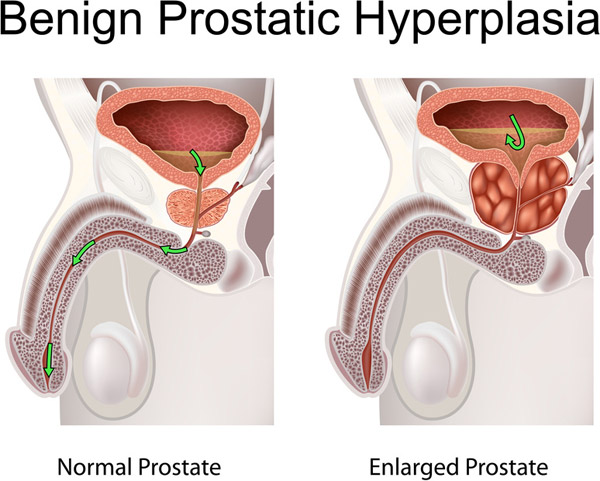
Normal Prostate vs. Benign Prostatic Hyperplasia

Normal Prostate                            vs.   Benign Prostatic Hyperplasia

BPH 1  BPH

The prostate is a walnut-shaped gland that is part of the male reproductive system. The main function of the prostate is to make a fluid that goes into semen. Prostate fluid is essential for a man’s fertility. The gland surrounds the urethra at the neck of the bladder. The bladder neck is the area where the urethra joins the bladder. The bladder and urethra are parts of the lower urinary tract. The prostate has two or more lobes, or sections, enclosed by an outer layer of tissue, and it is in front of the rectum, just below the bladder. The urethra is the tube that carries urine from the bladder to the outside of the body. In men, the urethra also carries semen out through the penis.

What is benign prostatic hyperplasia?

Benign prostatic hyperplasia––also called BPH––is a condition in men in which the prostate gland is enlarged and not cancerous. Benign prostatic hyperplasia is also called benign prostatic hypertrophy or benign prostatic obstruction.

The prostate goes through two main growth periods as a man ages. The first occurs early in puberty, when the prostate doubles in size. The second phase of growth begins around age 25 and continues during most of a man’s life. Benign prostatic hyperplasia often occurs with the second growth phase.

As the prostate enlarges, the gland presses against and pinches the urethra. The bladder wall becomes thicker. Eventually, the bladder may weaken and lose the ability to empty completely, leaving some urine in the bladder. The narrowing of the urethra and urinary retention––the inability to empty the bladder completely––cause many of the problems associated with benign prostatic hyperplasia.

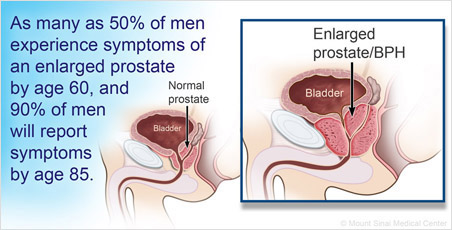
Ending line the prostate enlarges pushes up to the superior both front and back aspects of the penis (just below the urinary bladder) narrowing the urethra in the penis shaft (on both sides of the urethra) causing urination difficulty and frequently urinating.  (See figure below  the picture shows in the top part the urinary bladder and the prostate below it Left normal Right BPH).

What causes benign prostatic hyperplasia?

The cause of benign prostatic hyperplasia is not well understood; however, it occurs mainly in older men. Benign prostatic hyperplasia does not develop in men whose testicles were removed before puberty. For this reason, some researchers believe factors related to aging and the testicles may cause benign prostatic hyperplasia.

Throughout their lives, men produce testosterone, a male hormone, and small amounts of estrogen, a female hormone. As men age, the amount of active testosterone in their blood decreases, which leaves a higher proportion of estrogen. Scientific studies have suggested that benign prostatic hyperplasia may occur because the higher proportion of estrogen within the prostate increases the activity of substances that promote prostate cell growth.

Another theory focuses on dihydrotestosterone (DHT), a male hormone that plays a role in prostate development and growth. Some research has indicated that even with a drop in blood testosterone levels, older men continue to produce and accumulate high levels of DHT in the prostate. This accumulation of DHT may encourage prostate cells to continue to grow. Scientists have noted that men who do not produce DHT do not develop benign prostatic hyperplasia.

How common is BPH?

Benign prostatic hyperplasia is the most common prostate problem for men older than age 50. In 2010, as many as 14 million men in the United States had lower urinary tract symptoms suggestive of benign prostatic hyperplasia. Although benign prostatic hyperplasia rarely causes symptoms before age 40, the occurrence and symptoms increase with age. Benign prostatic hyperplasia affects about 50 percent of men between the ages of 51 and 60 and up to 90 percent of men older than 80.

Signs and Symptoms

BPH, the prostate gland grows in size. It may compress the urethra which courses through the center of the prostate. This can impede the flow of urine from the bladder through the urethra to the outside. It can cause urine to back up in the bladder (retention) leading to the need to urinate frequently during the day and night. Other common symptoms include a slow flow of urine, the need to urinate urgently and difficulty starting the urinary stream. More serious problems include urinary tract infections=pain in pelvic region and complete blockage of the urethra, which would be a medical emergency and can lead injury to the kidneys.

Treatment:


Is BPH always treated?


No. Treatment of BPH is usually reserved for men with significant symptoms. Watchful waiting with medical monitoring once a year is appropriate for most men with BPH.

How is BPH treated?

There are several different ways to treat BPH:

Men should carefully weigh the risks and benefits of each of these options. Prostate surgery has traditionally been seen as offering the most benefits for BPH but unfortunately carries the most risks.

  • Watchful waiting is often chosen by men who are not bothered by symptoms of BPH. They have no treatment but get regular checkups and wait to see whether or not the condition gets worse.

Medical Treatment through drugs is used by some men rangaing from alpha blockers relax the smooth muscles of the prostate, and the bladder neck.  An example of these meds are  tamzulosin (Flomax),  alfusozin, (Uroxatral), and older medications such as  terazosin (Hytrin), slidosin (Rapaflo) or doxazosin (Cardura).  

Also 5-alpha reductase inhibitors block the conversion of the male hormone testosterone into its active form in the prostate.  Examples of 5-alpha reductase inhibitors include Finasteride (Proscar) and dutasteride (Avodart). Side effects of finasteride may include declining interest in sex, problems getting an erection, and problems with ejaculation.

Surgery or office procedures may also be used to treat BPH, most commonly in men who have not responded satisfactorily to medication or those who have more severe problems, such as a complete inability to urinate.

  • Transurethral resection of the prostate (TURP) has been used for the longest period of time. After the patient is given anesthesia, the doctor inserts a special instrument into the urethra through the penis. With the instrument, the doctor then shaves away part of the inner prostate to relieve the outflow of urine from the bladder.
  • Laser procedures: A number of laser procedures are available, some of which can be performed in the doctor’s office with minimal anesthesia. These procedures also involve the removal of obstructing prostate tissue. They are generally associated with less bleeding and quicker recovery than TURP.
  • Microwave therapy: This procedure is generally performed in the office and involves the use of microwave energy delivered to the prostate to kill some of the cells leading eventually to shrinkage of the prostate.

QUOTE FOR FRIDAY:

“Hardships often prepare ordinary people for an extraordinary destiny.”
 
Clive Staples Lewis (29 November 1898 – 22 November 1963) was a British novelist, poet, academic, medievalist, literary critic, essayist, lay theologian, broadcaster, lecture.

QUOTE FOR THURSDAY:

“Lewy body dementia (LBD) is a disease associated with abnormal deposits of a protein called alpha-synuclein in the brain. These deposits, called Lewy bodies, affect chemicals in the brain whose changes, in turn, can lead to problems with thinking, movement, behavior, and mood.”

NIH National Institute of Aging

QUOTE FOR WEDNESDAY:

“Dementia with Lewy bodies (DLB) is a type of progressive dementia that leads to a decline in thinking, reasoning and independent function because of abnormal microscopic deposits that damage brain cells over time.

Alzheimer’s Association (alz.org)