“Early to bed, early to rise, keeps a you healthy, wealthy and wise. Write yourself a prescription for 8 hours of sleep a night.”
The Better Sleep Council (https://bettersleep.org/better-sleep/)
“Early to bed, early to rise, keeps a you healthy, wealthy and wise. Write yourself a prescription for 8 hours of sleep a night.”
The Better Sleep Council (https://bettersleep.org/better-sleep/)
“ALS was first found in 1869 by French neurologist Jean-Martin Charcot, but it wasn’t until 1939 that Lou Gehrig brought national and international attention to the disease. Ending the career of one of the most beloved baseball players of all time, the disease is still most closely associated with his name. Amyotrophic lateral sclerosis (ALS) is a progressive neurodegenerative disease that affects nerve cells in the brain and the spinal cord.”
ALS Association
“The nervous system is a complex collection of nerves and specialized cells known as neurons that transmit signals between different parts of the body. It is essentially the body’s electrical wiring.”
NIH Eunice Kennedy Striver National Institute of Child Health and Human Development.
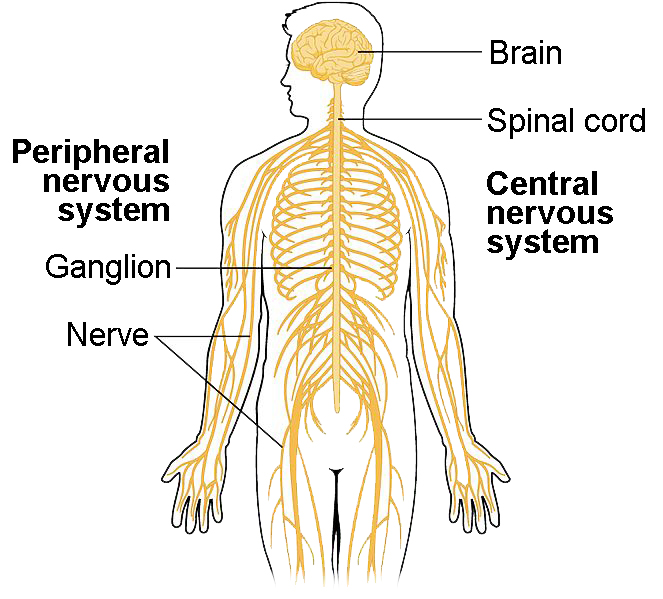
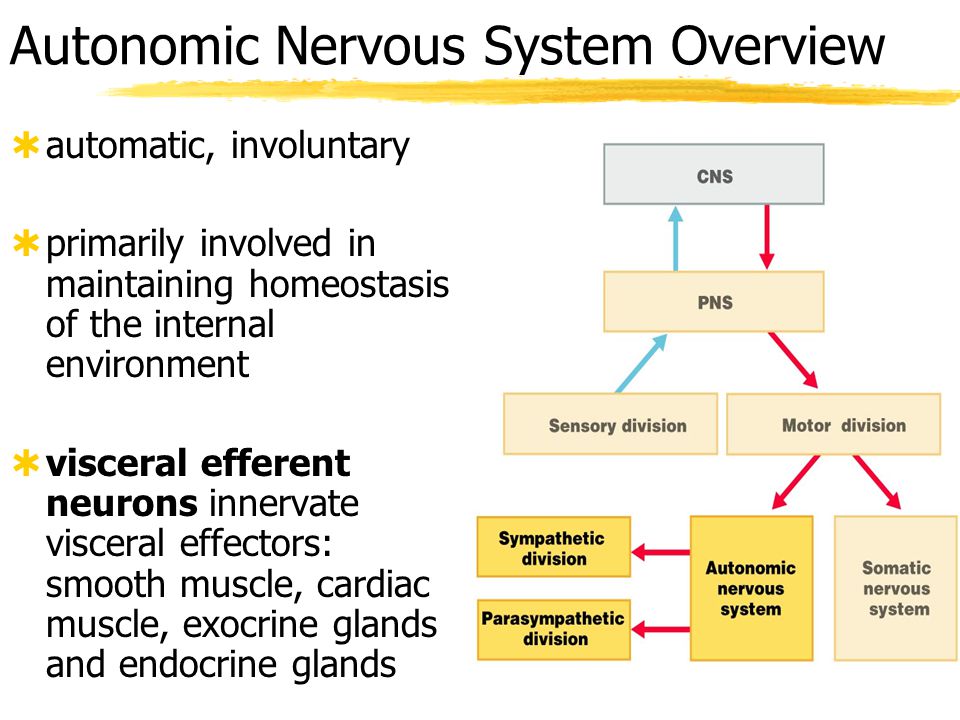
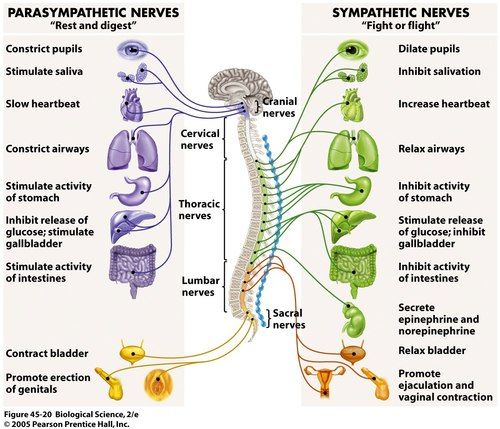
The nervous system is a complex, sophisticated system that regulates and coordinates body activities. It is made up of two major divisions, including the following:
| |
|
The Nervous System (Click to Enlarge)
|
In addition to the brain and spinal cord, principal organs of the nervous system include the following:
The nervous system is vulnerable to various disorders. It can be damaged by the following:
Disorders of the nervous system may involve the following:
The following are the most common general signs and symptoms of a nervous system disorder. However, each individual may experience symptoms differently. Symptoms may include:
The symptoms of a nervous system disorder may resemble other medical conditions or problems. Always consult your healthcare provider for a diagnosis.
Healthcare providers who treat nervous system disorders may have to spend a lot of time working with the patient before making a probable diagnosis of the specific condition. Many times, this involves performing numerous tests to eliminate other conditions, so that the probable diagnosis can be made.
Neurology. The branch of medicine that manages nervous system disorders is called neurology. The medical healthcare providers who treat nervous system disorders are called neurologists.
Neurological surgery. The branch of medicine that provides surgical intervention for nervous system disorders is called neurosurgery, or neurological surgery. Surgeons who operate as a treatment team for nervous system disorders are called neurological surgeons or neurosurgeons.
Rehabilitation for neurological disorders. The branch of medicine that provides rehabilitative care for patients with nervous system disorders is called physical medicine and rehabilitation. Healthcare providers who work with patients in the rehabilitation process are called physiatrists.
“High blood pressure is the biggest contributor to the risk of stroke in both men and women. Monitoring blood pressure and, if it is elevated, treating it, is probably the biggest difference women can make to their vascular health.”
Dr. Rost – Harvard Medical School
“If someone shows any of these symptoms, immediately call 9-1-1 or emergency medical services. the sooner the addressed the better results for many patients”
American Stoke Association
“Stroke is the leading cause of serious, long-term disability in the United States. Each year, approximately 795,000 people suffer a stroke.”
American Heart Association
“Heart failure, sometimes known as congestive heart failure, occurs when your heart muscle doesn’t pump blood as well as it should. Certain conditions, such as narrowed arteries in your heart (coronary artery disease) or high blood pressure, gradually leave your heart too weak or stiff to fill and pump efficiently.”
MAYO CLINIC
“Parry-Romberg syndrome is a rare disorder characterized by slowly progressive deterioration (atrophy) of the skin and soft tissues of half of the face (hemifacial atrophy), usually the left side. It is more common in females than in males.”
NIH National Institute of Neurological Disorders and Stroke