Archives

QUOTE FOR TUESDAY:

Erectile dysfunction (ED) is the inability to get or keep an erection firm enough to have sexual intercourse. It’s sometimes referred to as impotence, although this term is now used less often. Occasional ED isn’t uncommon. Many men experience it during times of stress.”

Healthline.com

QUOTE FOR MONDAY:

“Condomology is an ASHA program to ensure that the facts about condoms are available and understood by all so consumers can make informed choices about their sexual health.”

American Sexual Health Association (ashasexualhealth.org)

QUOTE FOR THE WEEKEND:

“Nearly 21 million Americans in the United States have diabetes, a disease that makes the body less able to convert sugar to energy. More than 6 million of these people don’t even know they have it. Most people with diabetes have Type 2, which is linked to lack of exercise and being overweight. Over time, this can damage organs, including the brain. Scientists are finding more evidence that could link Type 2 diabetes with Alzheimer’s disease, the most common form of dementia and the seventh leading cause of death in the United States.”

Alzheimer’s Association (alz.org)

QUOTE FOR FRIDAY:

“Irritable bowel syndrome (IBS) is a group of symptoms that occur together, including repeated pain in your abdomen and changes in your bowel movements, which may be diarrhea, constipation, or both. With IBS, you have these symptoms without any visible signs of damage or disease in your digestive tract.  IBS is a functional gastrointestinal (GI) disorder.”

NIH National Institute of Diabetes and Digestive and Kidney Diseases

Irritable Bowel Syndrome

Irritable bowel syndrome (IBS) is a common disorder that affects the large intestine (colon). Irritable bowel syndrome commonly causes cramping, abdominal pain, bloating, gas, diarrhea and constipation. IBS is a chronic condition that you will need to manage long term.

Even though signs and symptoms are uncomfortable, IBS — unlike ulcerative colitis and Crohn’s disease, which are forms of inflammatory bowel disease — doesn’t cause changes in bowel tissue or increase your risk of colorectal cancer.

Only a small number of people with irritable bowel syndrome have severe signs and symptoms. Some people can control their symptoms by managing diet, lifestyle and stress. Others will need medication and counseling.

The signs and symptoms of irritable bowel syndrome can vary widely from person to person and often resemble those of other diseases. Among the most common are:

  • Abdominal pain or cramping
  • A bloated feeling
  • Gas
  • Diarrhea or constipation — sometimes alternating bouts of constipation and diarrhea
  • Mucus in the stool
  • For most people, IBS is a chronic condition, although there will likely be times when the signs and symptoms are worse and times when they improve or even disappear completely.

When to see a doctor:

Although as many as 1 in 5 American adults has signs and symptoms of irritable bowel syndrome, fewer than 1 in 5 who have symptoms seek medical help. Yet it’s important to see your doctor if you have a persistent change in bowel habits or if you have any other signs or symptoms of IBS because these may indicate a more serious condition, such as colon cancer.

Symptoms that may indicate a more serious condition or tell your MD stat; even call 911:

  • Rectal bleeding
  • Abdominal pain that progresses or occurs at night
  • Weight loss

Causes of IBS:

The exact cause  of irritable bowel syndrome (IBS) has not been determined, although there are several theories. One theory is that IBS may be an immune disorder, or one in which the intestines of the affected person are highly sensitive in responding to stress and bacteria. Certain foods are thought to trigger IBS flare-ups, including dairy products and gluten, which is present in wheat, barley and rye.

The epithelial layer, or lining, of the large intestine controls the amount of fluid in the bowel. In IBS, there appears to be a disruption in the function of fluid absorption. This can result in excessive fluid in the colon, which causes diarrhea and watery stools. Or, if the lining of the colon absorbs too much fluid from the colon contents, the stool may become dry, leading to constipation.

QUOTE FOR THURSDAY:

“Benign prostatic hyperplasia (BPH) — also called prostate gland enlargement — is a common condition as men get older. An enlarged prostate gland can cause uncomfortable urinary symptoms, such as blocking the flow of urine out of the bladder. It can also cause bladder, urinary tract or kidney problems.”

MAYO CLINIC

QUOTE FOR WEDNESDAY:

“-BETWEEN 4 AND 10 OUT OF 1,000: Number of people on earth who live with active seizures at any one time.

-150,000: Number of new cases of epilepsy in the United States each year

=ONE-THIRD: Number of people with epilepsy who live with uncontrollable seizures because no available treatment works for them.

-6 OUT OF 10: Number of people with epilepsy where the cause is unknown.”

Epilepsy Foundation

Part II Epilepsy

Types of seizures

I-Partial seizures (seizures beginning local)

1-simple partial seizures-(the person is conscious and not impaired).  With motor symptoms, autonomic symptoms and even psychic symptoms.

2.)-Complex partial seizures-(the person is with impairment of consciousness)

II-Generalized seizures-(bilaterally symmetrical and without local onset).

3.) Tonic clonic seizures – Grand Mal

Diagnosis

The history of the person is the most valuable component of the workup of that individual with possible epilepsy.

The routine diagnostic tooling to see if someone has this disease is a EEG which is the major diagnostic test.  EEG takes short samples of brain wave activity with 26 wires to the scalp recording amplified brain waves from the superficial regions of the brain by means of scalp electrodes.

Laboratory studies are done to rule out various causes for seizures.  Routine blood and urine studies are often done for baseline information.  Electrolytes and blood chemistries will be evaluated to identify possible metabolic causes for seizures.

Neuropsychological testing may be done in the evaluation of persons presenting with seizures.  The purpose of neuropsychological testing is to determine if there is brain dysfunction and to determine if the pattern of change in brain function is indicative of a destructive lesion.  Neuropsychological testing involves evaluation of cognitive functions and personality and emotional traits.

Medical Management

The major medical treatment for epilepsy is antiepileptic medications.  Epileptic seizures can be controlled in 50 to 95% of cases with this form of treatment depending on seizure type and compliance of the individual taking their medications.

Those taking medications for epilepsy know if a single first line  drug is not effective a second first lin drug is added but the noneffective drug is tapered off while the second first line drug is given.  Know during this time frame there is a risk for seizure activity so practice safety (ex. do not drive).

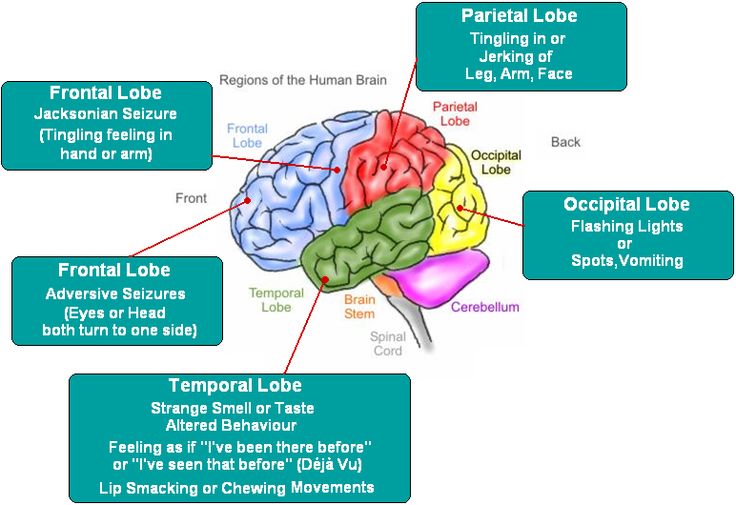
In some cases there is surgery:  those with intractable seizures is the epileptic focus may be possible.  In some cases partial complex seizures are the common seizure treated by surgery.  The focus of this seizure type has often been found in the anterior temporal and inferior frontal regions of the brain cortex.

There are other treatments as well.

Care during a Seizure

The care of a person in a seizure should focus primarily on maintaining a safe environment.  The seizure that has greatest risk for causing injury and even fatality is the generalized tonic/clonic (grand mal), although there is a potential for injury with any seizure that involves alteration of consciousness.

The 2 major goals for care during a seizure are protection from injury and prevention of aspiration.  The person’s head should be cradled if on the floor to prevent banging of the head.  At no time should the person be restraint when having a seizure.  The person should be turned to their side to allow the tongue to fall away from the airway and allow drainage of the excessive saliva that accumulates to drain out of the mouth during the seizure.  You should stay with the person till the seizure stops and note the behavior mentally and physically the person exhibits while having the seizure and how long it lasts.  Immediately call 911 (especially if this is the first seizure the person ever had) or call the neurologist of the individual to have the him or her be evaluated ASAP.
QUOTE FOR TUESDAY:

“-65 MILLION: Number of people around the world who have epilepsy.

-3.4 MILLION: Number of people in the United States who have epilepsy.

-1 IN 26 people in the United States will develop epilepsy at some point in their lifetime.”

Epilepsy Foundation


Part I Epilepsy


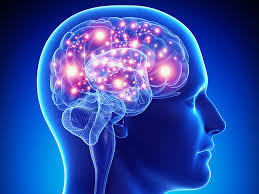
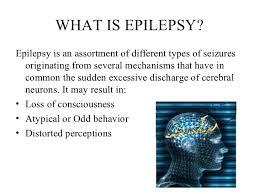
Most people with epilepsy are otherwise healthy; as long as it is controlled like most other diseases.  A seizure is a physical manifestation of paroxysmal and abnormal electrical firing of neurons in the brain.  Think of it as numerous voltage (hyperexcitability of neurons) going throughout the brain meaning brain waves going in all directions with the brain saying its too much activity causing the brain to go into a seizure.

When the seizure occurs there is a decrease in oxygen since the brain isn’t capable to send messages during the seizure.  If the seizure continues to repeat one right after another the person is in status epilepticus and if the seizures doesn’t stop the person can lead to a neuronal death;  like John Travolta’s son who died of this.

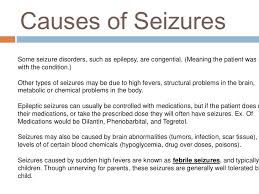
The term seizure disorder may refer to any number of conditions that result in such a paroxysmal electrical discharge.  These conditons could be metabolic or structural in nature.   Epilepsy is the term for those who have a second seizure that occurs spontaneously and without preceding metabolic or structural cause for the occurrence.  Epilepsy is a chronic disorder that requires antiepileptic drug therapy; usually thorough out life.

Etiology of Epilepsy is generally a sign of underlying pathology involving the brain.  It may be the first sign of nervous system disease (ex. Brain tumor), or it may be a sign of a systemic or metabolic derangement.

Metabolic and Systemic Causes of Seizures:

a.) Electrolyte Imbalance=Acidosis, heavy metal poisoning, Hypocalcemia, Hypocapnea, Hypoglycemia, Hypoxia, Sodium-Potassium imbalance, Systemic  diseases (liver, renal failure, etc…) Toxemia of pregnancy, and water intoxication.

b.) Infections like meningitis, encephalitis, brain abcess.

c.) Withdrawal of sedative-hypnotic drugs=Alcohol, Antiepileptic drugs, Barbiturates, Benzodiazepines.

d.) Iatrogenic drug overdose=Theopylline, Penicillin.

Other causes of epilepsy can be Trauma, Heredity.