Archives

QUOTE FOR FRIDAY:

  1. Keep Valuables Secure 
  2. Monitor Alcohol Consumption 
  3. Protect Your Property 
  4. Manage Guest List Effectively 
  5. Have a Plan for Handling Disruptions 

A Few Tips for dueing your holiday parties this holiday season by CPI.

CPI (https://cpisecurity.com/blog/cpis-guide-to-hosting-holiday-parties-without-compromising-safety/)

QUOTE FOR THURSDAY:

“You might be alone on Christmas for different reasons, such as the death of a loved one, living far from relatives, or because of social isolation. If you have social anxiety disorder (SAD) and don’t have close relationships with family or friends, loneliness at Christmas could be particularly hard.

In general, there are three ways to cope with being alone at Christmas. First, you can address your mental state and how it is contributing to your loneliness. Second, you can find things to do at Christmas that make you feel less alone. And third, you can plan ahead so that you are not alone this time next year if you don’t want to be.

Christmas is the perfect day to take the time to appreciate what you have in life, be it good health, a place to live, or food on the table. Having gratitude will also help you to move past anxiety, as you learn to live in the present moment and be mindful of your surroundings. One way to practice gratitude is to write down three things you are grateful for on this day.

What if you’re plagued by negative thoughts? If you feel like you don’t know how to cope with being alone, ask yourself, “What would I do if I did know how to cope?” You have more power over your thoughts and how they make you feel than you think.

You can choose to feel lonely because you are alone, or you can choose to feel grateful for the positive things in your life. Reframing your negative thoughts is the basis of cognitive behavioral therapy (CBT), an effective treatment for social anxiety disorder.

One way to cope with being alone on Christmas is to actually go out and do something productive. Rather than spend the day at home alone, find something that you can do that fits with your mindset and mental state for the day. “

Very Well mind (https://www.verywellmind.com/how-to-cope-when-you-are-alone-at-christmas-3024301)


QUOTE FOR WEDNESDAY:

“Brighten the holidays by making your health and safety a priority. Take steps to keep you and your loved ones safe and healthy—and ready to enjoy the holidays. Here are some tips:

1-Wash hands often to help prevent the spread of germs. It’s flu season. Wash your hands with soap and clean running water for at least 20 seconds.
2-Bundle up to stay dry and warm. Wear appropriate outdoor clothing: light, warm layers, gloves, hats, scarves, and waterproof boots.
3-Manage stress. Give yourself a break if you feel stressed out, overwhelmed, and out of control. Some of the best ways to manage stress are to find support, connect socially, and get plenty of sleep.
4-Don’t drink and drive or let others drink and drive. Whenever anyone drives drunk, they put everyone on the road in danger. Choose not to drink and drive and help others do the same.
5-Be smoke-free. Avoid smoking and secondhand smoke. Smokers have greater health risks because of their tobacco use, but nonsmokers also are at risk when exposed to tobacco smoke.
6-Fasten seat belts while driving or riding in a motor vehicle. Always buckle your children in the car using a child safety seat, booster seat, or seat belt according to their height, weight, and age. Buckle up every time, no matter how short the trip and encourage passengers to do the same.”

Centers for Disease Control and Prevention – CDC (https://www.cdc.gov/healthequity/features/holidayseason/index.html)

QUOTE FOR TUESDAY:

‘‘Tis the season for family, festivity, and food—lots of food. Temptations are everywhere, and parties and travel disrupt daily routines. What’s more, it all goes on for weeks.

You may not be able to control what food you’re served, and you’re going to see other people eating tempting treats. Meet the challenges armed with a plan:

-Eat close to your usual times to keep your blood sugar steady. If your meal is served later than normal, eat a small snack at your usual mealtime and eat a little less when dinner is served.
– Invited to a party? Offer to bring a healthy dish along.
-If you have a sweet treat, cut back on other carbs (like potatoes and bread) during the meal.
-Don’t skip meals to save up for a feast. It will be harder to manage your blood sugar, and you’ll be really hungry and more likely to overeat.
-If you slip up, get back to healthy eating with your next meal.”

Centers for Disease Control and Prevention – CDC
(https://www.cdc.gov/diabetes/library/features/holidays-healthy-eating.html)

QUOTE FOR MONDAY:

“Take your veggies and dip to the next level with this colorful crudité wreath. This vegetable appetizer is a stunner with white cauliflower, red tomatoes and green broccoli, green beans, snap peas, kale and Brussels sprouts. It’s also a delicious way to start your celebration with veggies (which there are rarely enough of at parties and holidays). The homemade ranch dip, which uses nonfat Greek yogurt in place of sour cream, takes just a few minutes to make, or you can use a healthy store-bought dip.”

EatingWell.com (https://www.eatingwell.com/christmas-recipes-to-make-forever-8411600)


QUOTE FOR THE WEEKEND:

“Going shopping this weekend  or week for children or already have, well consider this:

Inspect all toys before purchasing. Avoid those that shoot or include parts that fly off. The toy should have no sharp edges or points and should be sturdy enough to withstand impact without breaking. Choose toys that may appeal to different senses such as sound, movement, and texture; consider interactive toys to allow the child to play with others; and think about the size of the toy and the position a child would need to be in to play with it. Check them for age, skill level, and developmental level. Know ATSM label means the toy has met the American Society for Testing and Materials standards. Gifts of sports equipment should always be accompanied by protective gear (give a helmet with the skateboard). Keep kids safe from lead in toys. Do NOT give toys with small parts (including magnets and “button” batteries which can cause serious injury or death if ingested) to young children as they tend to put things in their mouths, increasing the risk of choking. If the piece can fit inside a toilet paper roll, it is not appropriate for kids under age three.”.

American Public Health Organization-APHA

(https://www.apha.org/Events-and-Meetings/APHA-Calendar/2021/2021-Safe-Toys-and-Gifts-Month)


QUOTE FOR FRIDAY:

“Prevent Blindness America has declared December as Safe Toys and Gifts Awareness Month. The group encourages everyone to consider if the toys they wish to give suits the age and individual skills and abilities of the individual child who will receive it, especially for infants and children under age three.   Inspect all toys before purchasing. Avoid those that shoot or include parts that fly off. The toy should have no sharp edges or points and should be sturdy enough to withstand impact without breaking, being crushed, or being pulled apart easily.  Look for labels that assure you the toys have passed a safety inspection – “ATSM” means the toy has met the American Society for Testing and Materials standards.  Do NOT give crayons and markers unless they are labeled “nontoxic”.  Do NOT give toys with ropes and cords or heating elements.”

American Public Health Association-ALPHA (https://www.apha.org/events-and-meetings/apha-calendar/2019/safe-toys-and-gifts-month-2019)


QUOTE FOR THURSDAY:

“Weekends and holidays can be dangerous times on our roadways. Two of the most celebrated days of the year, Christmas Eve and New Year’s Eve, also are among the most deadly. That’s why December has been recognized as National Impaired Driving Prevention Month. Taking personal responsibility for a safe ride saves lives.

Before taking that first drink, have a plan that includes a designated driver, a taxi or ride share, or an overnight stay at a friend’s home. Just a single drink can cause a decline in visual function, mental judgment and motor skills, resulting in driver impairment.

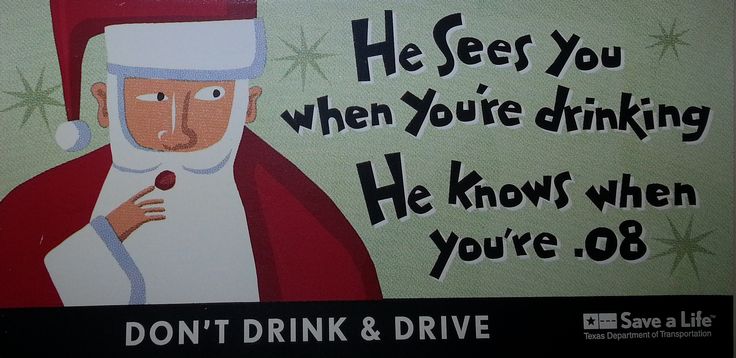
In the 1980s, the United States saw a significant reduction in alcohol-involved crashes due to lowering the legal driving limit to 0.08 blood alcohol concentration, increasing the minimum legal drinking age to 21 and instituting educational campaigns about the dangers of drinking and driving.

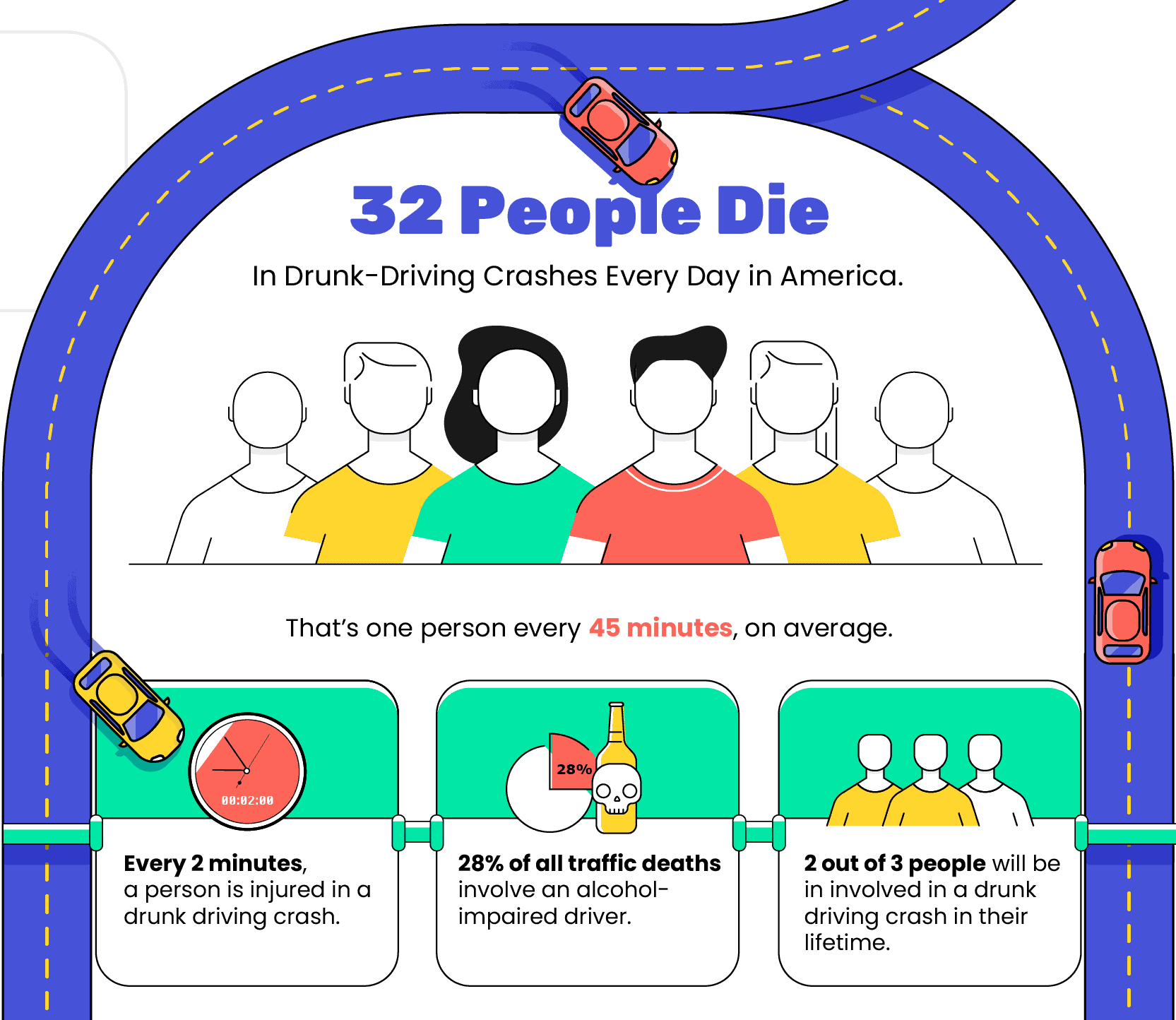
However, in the decades since, drivers with alcohol concentrations at or above 0.08 have remained involved in about one-third of all traffic fatalities in the U.S. That’s about 10,000 lives lost every year.

To reduce this toll, the National Safety Council supports:

● A national campaign educating Americans on impairment beginning with the first drink
● Efforts by states to lower the legal limit for blood alcohol concentration in drivers

The legal alcohol concentration limit in all states is 0.08. Research shows that for the majority of drivers, driving performance deteriorates significantly at this level.

However, the current U.S. culture regarding driving and alcohol is not supportive of lowering driving limits for all adult drivers. And despite drivers’ views of drinking and driving as a very serious threat, more than one in eight drivers admit to driving in the past year when they thought they were close to or over the legal limit.

NSC knows more must be done to educate our fellow citizens about alcohol impairment, and we believe change can happen as people know more. A strategy grounded in human behavior theory is needed to change those beliefs and ultimately influence widespread change.

Read the NSC Low Alcohol Concentration National Culture Change policy statement. It includes data, scientific evidence of impairment at low levels and background.”

National Safety Council – NCS (https://www.nsc.org/road/safety-topics/impaired-driving)
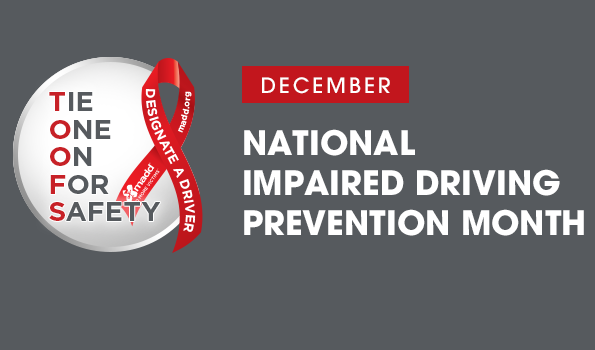
National Impaired Driving Prevention Month!


Two of the most celebrated dates in December – Christmas Eve and New Year’s Eve – are also among the most dangerous. In 2018, drunk driving crashes claimed 108 lives in those two days alone, accounting for nearly half of total traffic deaths.

That is why organizations are teaming up with law enforcement agencies across the country throughout the month of December, which has been recognized as National Impaired Driving Prevention Month.

During December 2018, 839 people died in alcohol-related crashes, according to the National Highway Traffic Safety Administration. While drunk driving deaths typically represent around a third of all traffic fatalities, that increased to nearly 50 percent on Dec. 24 and Dec. 31.

On Dec. 25, 2018, 35 people died in drunk driving crashes in 2018.

This is staggering.

The pain caused by one person’s choice to drive impaired is often permanent. Every single death left a permanent empty seat at the table and turned a time of celebration into tragedy.

And every single death was 100 percent preventable.

We’re asking everyone to take personal responsibility this holiday season by making a plan for a safe ride home before your celebrations begins. Designate a non-drinking, unimpaired driver. Take a taxi, a bus, or a train. Use a rideshare app like Uber. If you’re a host, provide an alternative to your guests, such as festive, non-alcoholic drinks offered by our partner Mocktail Beverages.

You can also show your commitment to drive sober by following this plan with a designated driver not drinking that night.

Drunk driving crashes increase throughout the month of December as more people travel and attend events where alcohol is served. That is why every U.S. President since Ronald Reagan has proclaimed December National Impaired Driving Prevention Month. President Donald Trump continued in that tradition in his term, reaffirming his administration’s commitment to prevent tragedies by making the decision to drive sober.

The proclamation also remembers victims of impaired driving, offers prayers for grieving families impacted by these tragedies and honors law enforcement who are on the front lines of the violent, preventable crime of impaired driving to many organizations involved in trying to help enforce this prevention or disaster car crashes due to a drunk driver .

Visit online to many other organizations to learn more on how you or loved ones in your life can get involved or just learn how to making your holidays at the end of the year a happy ones to have happy memories in your lifetime.


QUOTE FOR WEDNESDAY:

“Colds spread easily, especially within homes, classrooms and workplaces. A cold is a contagious upper respiratory infection that affects your nose, throat, sinuses and windpipe (trachea). More than 200 different viruses can cause colds. There’s no cure but there are prevention tips for a common cold, but it usually goes away within a week to 10 days. If you don’t feel better in 10 days, see a healthcare provider.  Now take Flu season — when cases of the flu go up dramatically — in the Northern Hemisphere (which includes the U.S.) is October through May. The highest number of cases (peak) usually happen between December and February.  Every flu season, about 20 to 40 million people in the U.S. catch the flu.  Symptoms can be similar.  How to tell the difference?  Your provider diagnoses the flu by listening to your symptoms and testing a sample of mucus from your nose. They’ll put a long stick with a soft tip (swab) in your nose to test for influenza. Results may take a few minutes or your provider may send the sample to a lab, where you’ll get results in a day or two.”

Cleveland Clinic (https://my.clevelandclinic.org/health/diseases/4335-influenza-flu)