Archives

Part I March Awareness of Endometriosis.

What is Endometriosis?

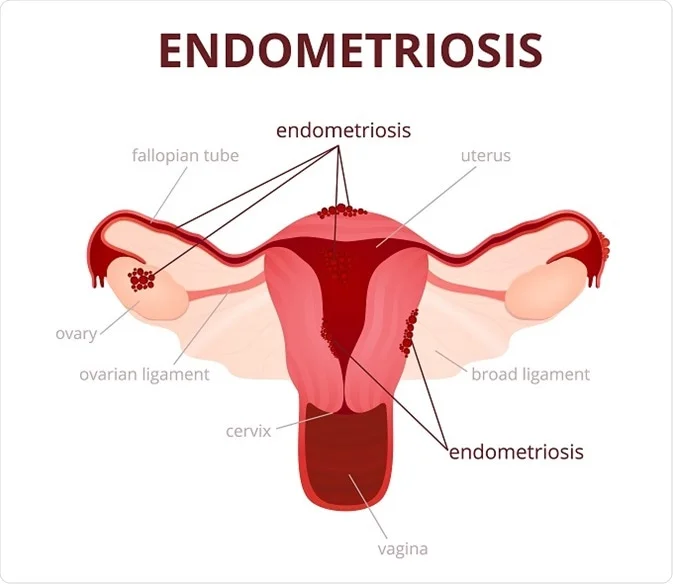
The uterus is a female reproductive organ located between the bladder and the rectum, in the pelvic area. The uterus has three layers: the inner lining (endometrium); the middle muscular layer (myometrium); and the outer layer (perimetrium). The uterus is connected to the fallopian tubes, the cervix and (via the cervix) the vagina.

Endometriosis is a painful, chronic disease that affects at least 6.3 million women and girls in the U.S., 1 million in Canada, and millions more worldwide. It occurs when tissue like that which lines the uterus (tissue called the endometrium) is found outside the uterus.  The symptoms occur during menses and the endometrial tissue outside the uterus will be painful like the uterus cramps due to the period.

What Causes Endometriosis?

The cause of endometriosis is unknown. The retrograde menstruation theory (transtubal migration theory) suggests that during menstruation some of the menstrual tissue backs up through the fallopian tubes, implants in the abdomen, and grows.  Some experts believe that all women experience some menstrual tissue backup and that an immune system problem or a hormonal problem allows this tissue to grow in the women who develop endometriosis.

Another theory suggests that endometrial tissue is distributed from the uterus to other parts of the body through the lymph system or through the blood system. A genetic theory suggests that it may be carried in the genes in certain families or that some families may have predisposing factors to endometriosis.

Surgical transplantation has also been cited in many cases where endometriosis is found in abdominal scars, although it has also been found in such scars when accidental implantation seems unlikely.

Another theory suggests that remnants of tissue from when the woman was an embryo may later develop into endometriosis, or that some adult tissues retain the ability they had in the embryo stage to transform reproductive tissue in certain circumstances.

Research by the Endometriosis Association revealed a startling link between dioxin (TCCD) exposure and the development of endometriosis. Dioxin is a toxic chemical byproduct of pesticide manufacturing, bleached pulp and paper products, and medical and municipal waste incineration. The EA discovered a colony of rhesus monkeys that had developed endometriosis after exposure to dioxin. 79% of the monkeys exposed to dioxin developed endometriosis, and, in addition, the more dioxin exposure, the more severe the endometriosis.

Endometriosis tissus found outside of the uterus:

  • Outside and back of your uterus.
  • Fallopian tubes.
  • Ovaries.
  • Vagina.
  • Peritoneum (the lining of your abdomen and pelvis).
  • Bladder and ureters.
  • Intestines.
  • Rectum.
  • Diaphragm (a muscle near the bottom of your chest that plays an important role in breathing).
  • Less commonly they are found in the lung, arm, thigh, and other locations.

This misplaced tissue develops into growths or lesions which respond to the menstrual cycle in the same way that the tissue of the uterine lining does: each month the tissue builds up, breaks down, and sheds. Menstrual blood flows from the uterus and out of the body through the vagina, but the blood and tissue shed from endometrial growths has no way of leaving the body. This results in internal bleeding, breakdown of the blood and tissue from the lesions, and inflammation — and can cause pain, infertility, scar tissue formation, adhesions, and bowel problems.

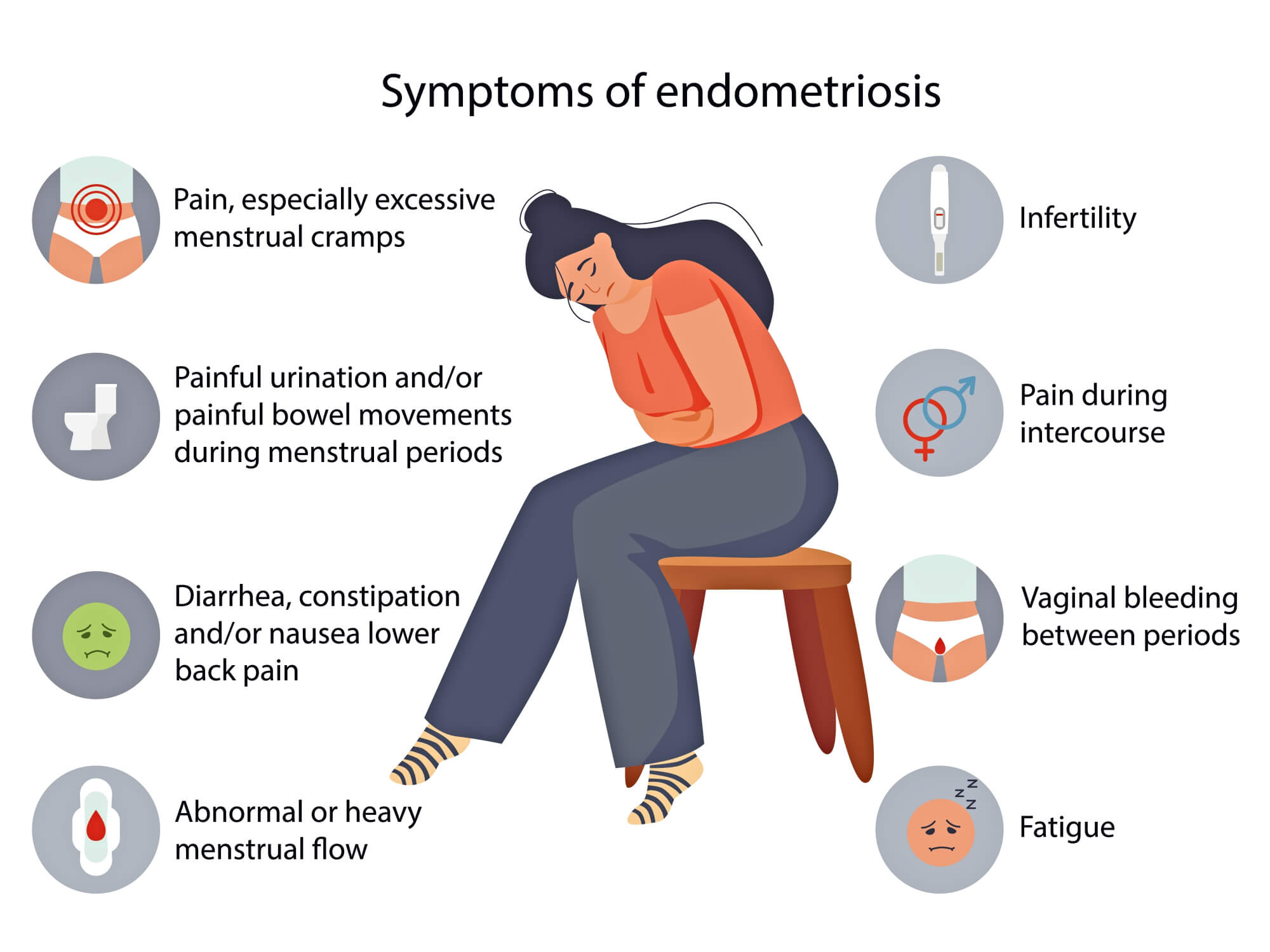
Pain before and during period: Pain with sex, Infertility, Fatigue, Painful urination during periods, Painful bowel movements during periods and Other Gastrointestinal upsets such as diarrhea, constipation, nausea.

In addition, many women with endometriosis suffer from:

  • Allergies
  • Chemical sensitivities
  • Frequent yeast infections

Diagnosis:

Diagnosis is considered uncertain until proven by laparoscopy, a minor surgical procedure done under anesthesia. A laparoscopy usually shows the location, size, and extent of the growths. This helps the doctor and patient make better treatment choices.

 

QUOTE FOR MONDAY:

“U.S. adult women age 18 and older (33%) are more likely than men (27%) to wake up every night and more likely to stay up late every night (31% vs. 20%).

More than half of women ages 25-44 with children get less than 7 hours of sleep per night, compared to 38% of men in this group.

Men in this group also get 30 minutes more sleep per night than the women.

Within this group, twice as many women are woken every night to care for others compared to men.

Nearly a quarter of women ages 18-24 lose sleep due to premenstrual syndrome (PMS), while more than half of women ages 45-54 lose sleep due to perimenopause or menopause.

Women (51%) are more likely than men (42%) to attribute their sleep issues to anxiety and depression.”

SleepFoundation.org

(https://www.sleepfoundation.org/sleep-news/the-sleep-gender-gap-nighttime-disparities-between-women-and-men)

How good are you sleeping?


How well do you sleep? 

When you go to bed do you wake up to the slightest noise (car going by the house, a dog barking outside, the heat going on or the cat fight outside)?  I know I do and have for years; unfortunately the slightest noise wakes me up, even a pin dropping to the floor. I probably live on 5 to 6 hours of sleep a day.  Some people even feel when they are scrambling to meet the countless demands of their day, cutting back on sleep might seem like the only answer. Who can afford to spend so much time sleeping, anyway? The truth is you can’t afford not to. Even minimal sleep loss takes a toll on your mood, energy, and ability to handle stress. By understanding your nightly sleep needs and what you can do to bounce back from chronic sleep loss, you can finally get on a healthy sleep schedule or pattern.

Sleep deprivation

Many of us try to sleep as little as possible. There are so many things that seem more interesting or important than getting a few more hours of sleep, but just as exercise and nutrition are essential for optimal health and happiness, so is sleep. The quality of your sleep directly affects the quality of your waking life, including your mental sharpness, productivity, emotional balance, creativity, physical vitality, and even your weight. No other activity delivers so many benefits with so little effort!

According to the National Institutes of Health, the average adult sleeps less than seven hours per night. In today’s fast-paced society, six or seven hours of sleep may sound pretty good. In reality, though, it’s a recipe for chronic sleep deprivation.

Remember sleep deprivation can affect you like a drunk.  This could be many symptoms like fatigue, lethargy, lack of motivation, moodiness and irritability, reduced creativity and problem-solving skills, inability to cope with stress, reduced immunity; frequent colds and infections, concentration and memory problems, weight gain, impaired motor skills, increased risk of accidents, difficulty making decisions to even increased risk of diabetes, heart disease, and other health problems.

 On your average sleep schedule there is a big difference between the amount of sleep you allow yourself to get so you can make it through each day compared to the amount you need to function optimally. Just because you’re able to operate on seven hours of sleep doesn’t mean you wouldn’t feel a lot better and get more done if you spent an extra hour or two in bed.

While sleep requirements vary slightly from person to person, most healthy adults need between seven and a half to nine hours of sleep per night to function at their best. Children and teens need even more. And despite the notion that our sleep needs decrease with age, older people still need at least seven and a half to eight hours of sleep. Since older adults often have trouble sleeping this long at night, daytime naps can help fill in the gap.

The best way to figure out if you’re meeting your sleep needs is to evaluate how you feel as you go about your day. If you’re logging enough hours, you’ll feel energetic and alert all day long, from the moment you wake up until your regular bedtime.

Consistency doing the following measures is the key to prevent sleep deprivation: Settle short-term sleep debt with an extra hour or two per night, Keep a sleep diary, Take a sleep vacation to pay off a long-term sleep debt, finally you must make sleep a priority.

Understanding sleep

Sleep isn’t exactly a time when your body and brain shut off. While you rest, your brain stays busy, overseeing a wide variety of biological maintenance that keeps your body running in top condition, preparing you for the day ahead. Without enough hours of restorative sleep, you won’t be able to work, learn, create, and communicate at a level even close to your true potential. Regularly skimp on “service” and you’re headed for a major mental and physical breakdown.

The good news is that you don’t have to choose between health and productivity. As you start getting the sleep you need, your energy and efficiency will go up. In fact, you’re likely to find that you actually get more done during the day than when you were skimping on shuteye.

It’s not just the number of hours in bed that’s important—it’s the quality of those hours of sleep. If you’re giving yourself plenty of time for sleep, but you’re still having trouble waking up in the morning or staying alert all day, you may not be spending enough time in the different stages of sleep.

Each stage of sleep in the sleep cycle offers benefits to the sleeper. However, deep sleep (Stage N3) and REM sleep are particularly important.  Learn more about the stages of sleep tomorrow and maybe it will help you strive for better health!

QUOTE FOR FRIDAY:

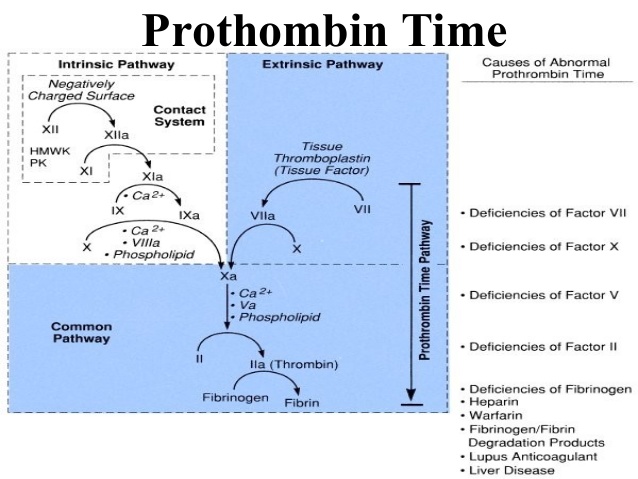
“Prothrombin deficiency is a disorder caused by a lack of a protein in the blood called prothrombin. It leads to problems with blood clotting (coagulation). Prothrombin is also known as factor II (factor two).

When you bleed, a series of reactions take place in the body that helps blood clots form. This process is called the coagulation cascade. It involves special proteins called coagulation, or clotting, factors. You may have a higher chance of excess bleeding if one or more of these factors are missing or are not functioning like they should.

Prothrombin, or factor II, is one such coagulation factor. Prothrombin deficiency runs in families (inherited) and is very rare. Both parents must have the gene to pass the disorder on to their children. A family history of a bleeding disorder can be a risk factor.

Prothrombin deficiency can also be due to another condition or use of certain medicines. This is called acquired prothrombin deficiency.”

Mount Sinai  (https://www.mountsinai.org/health-library/diseases-conditions/factor-ii-deficiency)


Bleeding Disorder Month – Prothrombin Deficiency

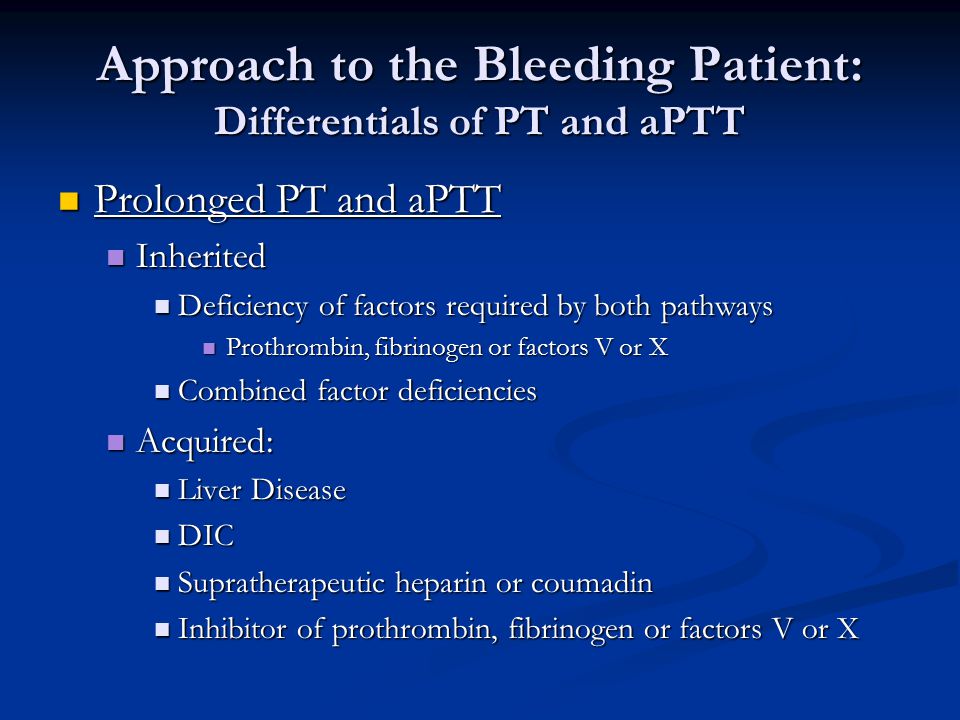
Prolonged PT and aPTT. Inherited. Deficiency of factors required by both pathways. Prothrombin, fibrinogen or factors V or X. Combined factor deficiencies. Acquired: Liver Disease. DIC. Supratherapeutic heparin or coumadin. Inhibitor of prothrombin, fibrinogen or factors V or X.


Prothrombin deficiency is a bleeding disorder that slows the blood clotting process. People with this condition often experience prolonged bleeding following an injury, surgery, or having a tooth pulled. … Women with prothrombin deficiency can have prolonged and sometimes abnormally heavy menstrual bleeding.  This blood clotting factor II deficiency.  Remember we have blood clotting factors that have to be present for the blood clotting factor but if one is lacking then bleeding can occur.

Practice Essentials

Clotting factor II, or prothrombin, is a vitamin K–dependent proenzyme that functions in the blood coagulation cascade. Factor II deficiency is a rare, inherited or acquired bleeding disorder disorder with an estimated incidence of one case per 2 million population. [1]

Inherited factor II deficiency is an autosomal recessive disorder that can manifest as hypoprothrombinemia, a decrease in the overall synthesis of prothrombin; or as dysprothrombinemia, the synthesis of dysfunctional prothrombin. [2, 3, 4] Homozygous individuals are generally asymptomatic and have functional prothrombin levels of 2-25%. However, symptomatic individuals may experience one or more of the following [1] :

  • Easy bruising
  • Epistaxis
  • Soft-tissue hemorrhage
  • Excessive postoperative bleeding
  • Menorrhagia
  • Muscle hematomas
  • Hemarthrosis
  • Intracranial bleeding

In true hypoprothrombinemia, immunologic assays correlate well with functional assays in that both reveal low prothrombin values. Heterozygous patients are generally asymptomatic and have prothrombin levels of 50% or greater on both immunologic and functional assays.

In dysprothrombinemia, only the functional assay for prothrombin returns significantly reduced values, whereas the immunologic assay reveals normal values. Acquired factor II deficiency can be caused by severe liver disease, vitamin K deficiency, anticoagulant drugs (eg, warfarin), or the presence of an antibody directed against the protein. [5]

Aside from the prothrombin deficiencies, another disorder of prothrombin is the prothrombin 20210a mutation. First reported in 1996 as a familial cause of venous thromboembolism, the prothrombin 20210a mutation results in increased levels of plasma prothrombin and a concurrent increased risk for the development of thrombosis. [6]

Prothrombin 20210a has an estimated prevalence of 2% in whites. [7, 8] The mutation is more prevalent in those of southern European descent than in those of northern European descent, and it is rarely seen in Asians or Africans. [7] A study of patients in Turkey revealed the presence of the prothrombin 20210a mutation in 0.7% of subjects. [9]

Individuals carrying the prothrombin 20210a mutation have a 2- to 3-fold increased risk for developing thrombosis. [6, 10] One case-control study found evidence of an increased risk of developing an ischemic cerebrovascular event in men aged younger than 60 years with the prothrombin 20210a mutation. [11] A study of cancer patients in the Netherlands found that the presence of the prothrombin 20210a mutation in these patients may increase the risk of venous thrombosis to a level greater than that attributable to the malignancy alone. [12]

The prothrombin 20210a mutation can be identified without DNA analysis and should be considered in any patient experiencing a thrombotic event without other risk factors. Treatment with oral anticoagulants is useful in preventing recurrence in patients with the mutation who have already experienced a thrombotic event. Additionally, women who are known to carry the mutation may want to avoid oral contraceptives because of the additional risk of thrombosis.

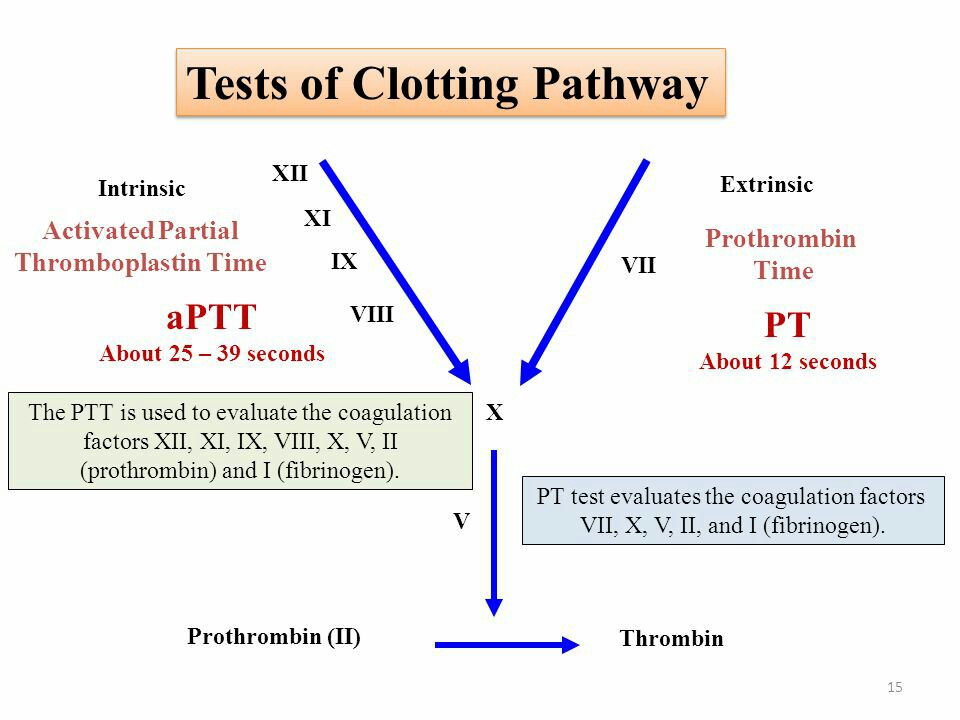
Laboratory studies for factor II deficiency include coagulation studies and clotting factor assays (see Workup). Coagulation study results are as follows:

  • Prothrombin time (PT) is prolonged
  • Activated partial thromboplastin time (aPTT) is prolonged
  • Bleeding time is within reference range

Treatment of factor II deficiency is aimed at restoring circulating factor II to levels sufficient for hemostasis. Levels greater than 30% of normal are usually adequate. Treatment measures include fresh frozen plasma (FFP), prothrombin complex concentrates (PCCs), and vitamin K. Additionally, in patients with acquired factor II deficiency, the underlying cause should be found and treated.

Frequency

Both congenital and acquired factor II deficiencies are rare. The prevalence of congenital factor II deficiency is approximately 1 per 1 to 2 million population. [41]

Mortality/Morbidity

Congenital factor II deficiency is a lifelong bleeding disorder. Death can result because of massive hemorrhage from relatively minor accidents or trauma. Hemorrhage can also occur as a result of surgery if precautions are not taken. Intracranial bleeding is another serious sequela of this disorder. Rarely, hemarthroses can occur. [2]

Myocardial infarction is a rare complication in young people, with coronary thrombosis due to hypercoagulable states being one cause. A heterozygote prothrombin gene mutation (G-20210-A) and protein S deficiency were described in a 19-year-old with a myocardial infarction with normal coronary arteries. [42]

Race- sex-, and age-related demographics

Factor II deficiency has no known racial or ethnic predilection. Males and females are affected equally. Patients with severe congenital factor II deficiency present early in life, whereas those with less severe forms can present at any age. Acquired forms can be observed in all age groups.


QUOTE FOR WEDNESDAY:

“Your kidneys, each just the size of a computer mouse, filter all the blood in your body every 30 minutes. They work hard to remove wastes, toxins, and excess fluid. They also help control blood pressure, stimulate production of red blood cells, keep your bones healthy, and regulate blood chemicals that are essential to life.

Kidneys that function properly are critical for maintaining good health, however, more than one in seven American adults are estimated to have chronic kidney disease (CKD).”

Centers for Disease Control and Prevention – CDC

(https://www.cdc.gov/kidneydisease/basics.html#:~:text=disease (CKD).-,About Chronic Kidney Disease,as heart disease and stroke.)

QUOTE FOR TUESDAY:

Acute kidney injury (AKI) is where your kidneys suddenly stop working properly. It can range from minor loss of kidney function to complete kidney failure.

AKI normally happens as a complication of another serious illness. It’s not the result of a physical blow to the kidneys, as the name might suggest.

This type of kidney damage is usually seen in older people who are unwell with other conditions and the kidneys are also affected.

It’s essential that AKI is detected early and treated promptly.

National Health Services-NHS (https://www.nhs.uk/conditions/acute-kidney-injury/)

QUOTE FOR MONDAY:

“The body takes nutrients from food and converts them to energy. After the body has taken the food components that it needs, waste products are left behind in the bowel and in the blood.

The kidney and urinary systems help the body to eliminate liquid waste called urea, and to keep chemicals, such as potassium and sodium, and water in balance. Urea is produced when foods containing protein, such as meat, poultry, and certain vegetables, are broken down in the body. Urea is carried in the bloodstream to the kidneys, where it is removed along with water and other wastes in the form of urine.”

John Hopkins Medicine (https://www.hopkinsmedicine.org/health/wellness-and-prevention/anatomy-of-the-urinary-system)

QUOTE FOR THE WEEKEND:

“Anemia is a problem of not having enough healthy red blood cells or hemoglobin to carry oxygen to the body’s tissues. Hemoglobin is a protein found in red cells that carries oxygen from the lungs to all other organs in the body. Having anemia can cause tiredness, weakness and shortness of breath.

There are many forms of anemia. Each has its own cause. Anemia can be short term or long term. It can range from mild to severe. Anemia can be a warning sign of serious illness.”

MAYO Clinic (https://www.mayoclinic.org/diseases-conditions/anemia/symptoms-causes/syc-20351360)