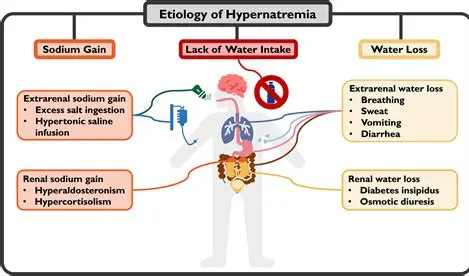
Hypernatremia is when there’s too much sodium and not enough water in your blood. Sodium is one of the electrolytes in your body, found mostly in your blood. It’s important for many body functions. However, when there’s too much, the imbalance can cause serious problems. Your body can’t function without sodium, but too much of it can cause problems.
Doctors define hypernatremia as a sodium level of over 145 milliequivalents per liter of blood — a normal level is between 136 and 145 milliequivalents per liter.
It’s most likely to happen in babies or people who are older. Certain health conditions can make hypernatremia more likely. But it’s often a symptom of dehydration — if you don’t have enough water, your blood sodium levels can get too high.
It’s also possible, but less likely, to get hypernatremia from taking in too much salt or having salt poisoning. But if you’re otherwise healthy, you don’t need to worry about getting hypernatremia from your diet, says Amanda Beaver, a registered dietitian nutritionist at Houston Methodist in Houston.
“If we just eat a bunch of sodium from food, it’s not going to necessarily cause us to develop hypernatremia, because our body tries to closely regulate the amount of sodium that’s in our blood,” Beaver says.
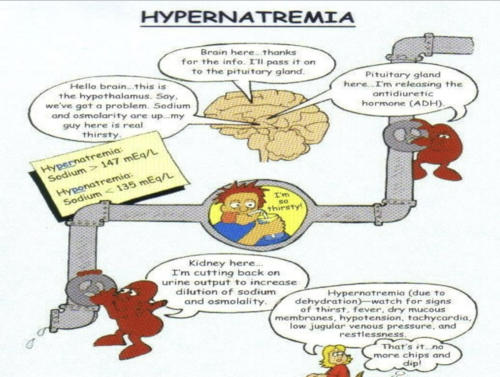
Here’s how it works: When there’s a change in the balance of sodium and water, your body senses it and gets rid of more or less sodium in your pee to get back to a normal level. If the amount of sodium in your blood is getting too high, it’ll trigger you to feel thirsty and drink more. Dehydration and hypernatremia can be more likely when you’re older because, in part, your sense of feeling thirsty can diminish with age.
Your body will also release hormones called aldosterone and antidiuretic hormone (ADH). These cause your kidneys to hold onto more water. So, you’ll see your pee look darker and more concentrated if you aren’t drinking enough. Your body naturally will get rid of more sodium and less water to keep your levels in a normal range.
Even if you do get hypernatremia, most cases are mild and can be treated by taking in more fluids. If you start to get dehydrated and feel thirsty, you’re sensing a mild case of hypernatremia. You can treat it by drinking water or a sports drink that contains electrolytes. Moderate or severe cases need medical care.
Hypernatremia Risk Factors
Any condition or circumstance that causes you to lose water without losing sodium can raise your risk for hypernatremia. These include:
- Gastroenteritis
- Vomiting
- Long-term drainage from a tube in the nose (nasogastric drainage)
- Burns
- Sweating too much from exercise, fever, or heat
- Kidney problems
- Hyperglycemia
- Reduced thirst response
- Formula with too much salt
- Ingesting sodium bicarbonate
- Salt tablet poisoning
- Hyperaldosteronism (too much of a hormone called aldosterone)
- Drinking or drowning in seawater
Diagnosis of Hypernatremia
A doctor can diagnose hypernatremia through a blood test. Sometimes, urine tests can be used as well.
Treatment of Hypernatremia:
The treatment aims to restore the normal balance of fluid and sodium in your body. Your hypernatremia treatment will depend on what’s causing your high salt levels. It’s usually best to restore sodium balance by drinking fluids. If your hypernatremia is more than mild, your doctor may replace the fluids in your body using an IV. This will supply fluids directly into your bloodstream, balancing the amount of sodium that’s in your blood.
In most cases, hypernatremia can be fixed. But it’s important not to lower sodium levels too fast. However, your doctor will want to find out why you got hypernatremia to make sure there aren’t other problems that need to be treated to keep it from happening again.
Complications of Hypernatremia
One of the most severe complications of hypernatremia is a ruptured blood vessel in your brain. Called a subarachnoid or subdural hemorrhage, this kind of bleeding in your brain can cause permanent brain damage or death.
If doctors are able to detect and begin treating hypernatremia before it gets too severe, they can restore the balance of sodium and fluids in your body, preventing serious complications.
How to Prevent Hypernatremia
The easiest way to prevent hypernatremia is to drink enough water and take in a reasonable amount of salt. But you normally won’t get hypernatremia just from eating too many salty snacks or other high-sodium foods.
Takeaways:
Hypernatremia happens when you have too much sodium in your bloodstream. It’s more likely if you have certain health conditions or you’re dehydrated. It’s a good idea to limit the amount of salt in your diet. But you probably won’t get hypernatremia from eating too much salty food, as your body naturally balances your amount of water and sodium.