“Give yourself a break if you feel stressed out, overwhelmed, and out of control. Some of the best ways to manage stress are to find support, connect socially, and get plenty of sleep this holiday season.”
Centers for disease control and prevention
“Give yourself a break if you feel stressed out, overwhelmed, and out of control. Some of the best ways to manage stress are to find support, connect socially, and get plenty of sleep this holiday season.”
Centers for disease control and prevention
“Stress and depression can ruin your holidays and hurt your health. Being realistic, planning ahead and seeking support can help ward off stress and depression.”
MAYO CLINIC
Holiday season–cardiac patients enjoy but don’t indulge everyday in junk holiday food it may come back at you biting you in the heart with another or first heart attack that usually is never expected to come on.
American Heart Association
It is a major cause of stroke, especially in the elderly. Although the causes are diverse, hypertension is common.
AHA (American Heart Association)
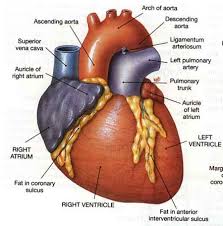
The anatomy of the heart, our bodies oxygen is the food to our tissues in keeping them alive through our red blood cells (RBC’s) that carry the O2 to the tissues through a heart and lungs working properly. The heart in pumping and the lungs in inspiration/expiration (one organ cannot live without the other).
There has to be a systemic way we allow this to work and this is through the heart, lungs, and RBC’s (3 systems that connect with each other). The heart = right side deals with more C02 blood than 02 blood which is blood returning to the heart to get more 02 going first via the Rt. side of the heart to the pulmonary artery, each of which carries blood to the lungs for 02 and C02 exchange to occur. This is for getting more 02 in our RBC’s with allowing them to release C02 at the lungs bases and then return to the left side of the heart. On the left side of the heart this is blood to be sent through both Lt. chambers (Lt. atria first and then the Lt. ventricle) of the heart to our blood stream to utilize the new 02 in our RBC’s that they intially obtained at our lungs going now to our body tissues. This is a 24hr/7days a week job for our red blood cells, lungs and heart in functioning to keep the human body alive.
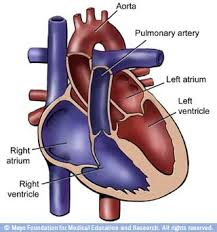
In simpler terms this is how it works: The blood that needs to be refreshed with more 02 always which takes place by the blood in our body entering the right (Rt.) atrium coming from a vessel that brings back mainly carbon dioxide in the blood from the toes and the brain that was previously oxygenated blood that mainly was used up by the tissues and those RBC’s returning on the right side of the heart need to be reoxygenated with higher levels of oxygen. For the RBC’s to deliver 02 again to tissues in redoing this process all over again it goes through a pathway=our circulatory system. When the red blood cells need more oxygen it first goes to the Rt. atrium & fills up to its max level in that chamber to going to the Rt Ventricle than through the pulmonary artery to the lungs to get more 02. Simultaneously while the Right side of the heart does this the left (Lt.) atrium is filling up to its max level than goes to the Lt. Ventricle and out the Aorta to the arteries throughout the body to carry 02 to our tissues through the RBC’s carrying the 02. Ending line when the Rt. atrium is ready to drop its blood max level into the Rt. ventricle the Lt side does the same thing. The difference is the 02 and C02 content in Rt and Lt side of the heart (Right side is more C02 in the RBC’S whereas the Left side has more 02 content in theRBCs/blood.
For the blood to get to the atriums to the ventricles they have valves; they open between the chambers simultaneously (the tricuspid valve on the right side and mitral valve on the left side) dropping the blood to the lower chambers of the heart happens simultaneously but only the Rt. side ends up going to the lungs through a pulmonary artery to get more oxygen to send the highly oxygenated blood to the L (left) side of the heart. The job the Rt. side of the heart does this, it just goes from the Rt. side of the heart to our lungs and back to the heart on the Lt. side through the pulmonary veins to the L atrium than the Lt Ventricle going to the aorta this blood gets sent throughout the body; so the path or distance for the Rt. side of the heart to do its function is a short distance = it gets your used up oxygen in the red blood cells (that are high in carbon dioxide) to get more oxygen by going through the Rt. side of the heart sending them to the lungs where they get more O2 and then they are sent back to the Lt. side of the heart. This is the Rt. side of the heart’s function and explains why the heart muscle on that side of the heart is smaller than the Lt. side. Now let us look at what the Lt. side of the heart, in what blood it delivers to our tissues with our red blood cells (RBC’s). The RBC’s reoxygenated that leave the lungs and are sent via the pulmonary vein to the Lt. side of the heart, reaching the Lt. atrium, thus carries a high 02 level in the RBC’s (this blood just came directly from the lungs where O2 and CO2 exchange for the RBC’s took place). Next the RBC’s go to the Lt. ventricle to our Aorta that sends this high oxygen level of RBC’s out to all our tissues as food to prevent starvation of the tissues. Again, when the valves open between the chambers of the heart and allowing this blood to fill up in the lower chambers called the Rt. and Lt. ventricles it is simultaneously done. Also including the valves that open and close in the heart the pulmonary artery and the aorta or the tricuspid valve and mitral valve are simultaneous as well. The ventricle sending RBC’s out to our circulatory system high in O2 to be utilized by our body tissues is the Lt. Ventrilcle. To do this job takes more effort as opposed to the Rt. side of the heart and that is why the Lt side of the heart has a bigger muscle mass (more of a work out for that side of the heart).
So the way it works with both sides of the heart is the Rt. side sends blood of highly carbon dioxide blood (RBC’s) to the lungs to get re-oxygenated through 2 vessels from the Rt. side of the heart to the lungs that sends this re-oxygenated blood in the RBC’s through 2 vessels. On the Rt side of the heart you have the Superior Vena Cava which enters the C02 blood into the right atrium and the 2 pulmonary arteries that send that blood from the Rt Ventricle to the lungs to get the 0xygen from them. Than this blood goes to the Lt. side of the heart sends this highly oxygenated blood now throughout the top and bottom of the Lt. side of the heart through 2 vessels which are the pulmonary veins dumping the blood in the Lt atrium down into the Lt ventricle and out the aorta that sends this blood throughout our body tissues. When this oxygen is used all up from the RBC’s dispensing it out to tissues the C02 is taken back from the tissues by RBC’s that replace it with O2 through breathing; this process starts all over again with these RBC’s returning to the right side of the heart reaching the lungs to get more oxygen to be sent out by the left side of the heart to go out to all our tissues. Ending line the right side of the heart is for higher levels of carbon dioxide in the blood (used up oxygenated blood) to get more oxygen through our RBC’s whereas the left side of the heart sends higher levels of O2 throughout the body all the way to the toes through the RBC’s (a harder job on the left side of the heart=muscle mass of the left side of the heart works out more than the right making the left side of the heart a bigger muscle vs the right side).
Now knowing the anatomy and physiology of the heart let’s now understand more about a cardiac disease RVR=Rapid Ventricular Rate and Atrial Fibrillation and more regarding how they develop and in how it effects the engine of the body, being the heart, and the lungs=the transmission of the body. Like a car if the engine is affected in time the transmission gets affected and if not repaired by the mechanic the car engine will die with the transmission. Same effect with the human engine=the heart. If the heart is affected in time it will effect the lungs and if not repaired the heart will die and so will the lungs with the rest of the body.
“C is for cookie, it’s good enough for me; oh cookie cookie cookie starts with C.”
Cookie Monster, Sesame Street
Seasonal snow is an important part of Earth’s climate system. Snow cover helps regulate the temperature of the Earth’s surface, and once that snow melts, the water helps fill rivers and reservoirs in many regions of the world, especially the western United States.
NSIDC-National Snow and Ice Data Center
“They said I was a valued customer, now they send me hate mail.”
― Sophie Kinsella, Confessions of a Shopaholic (a British author and The first two novels in her best-selling Shopaholic series, The Secret Dreamworld of a Shopaholic and Shopaholic Abroad were adapted into the film Confessions of a Shopaholic starring Isla Fisher.


Shopping addiction actually has a technical term that is called Omniomania. This means compulsive shopping and is perhaps the most socially reinforced of the behavioral addictions. Shopping addiction is characterized by the widespread desire to shop and purchase items despite a need for such items or despite a necessary ability to afford such items. Consumerism is one of the biggest measures of social elite in America and this makes shopping addiction an even more widespread problem for many.
Shopaholics, also known as compulsive shoppers or shopping addicts, may actually be suffering from a psychiatric disorder known as compulsive buying disorder.
Compulsive buying disorder (CBD) sufferers have a sense of excitement before a purchase, an inability to resist the urge to shop and a rush or sense of reward while spending, despite any negative consequences of their actions. CBD is considered an impulse-control disorder. Just as with other impulse-control disorders such as drug and alcohol addiction and pathological gambling, for many compulsive shoppers the “high”of the spending spree is followed by a low, where the powerful euphoric feelings are replaced with those of distress, shame and guilt.
Shopping addiction is not a newfound disorder. It has affected millions of people for many years and dates back to as early as the 19th century. Friends and family members go out and shop together, people shop socially, people shop for something to do and people shop to fulfill negative emotions. An addiction to shopping leads to compulsive shopping that can result in many negative feelings. According to the US National Library of Medicine, over 5% of Americans are affected by compulsive buying disorder.
While some of us may enjoy the thrill of an occasional splurge or scoring a good deal, spending more than you bargained for during an annual holiday shopping spree doesn’t automatically make you a shopaholic. But that thrill, what some shopaholics describe as a high, helps drive compulsive shoppers to want more — excessive shopping, uncontrolled spending sprees and impulse buys are the defining characteristics of compulsive buying disorder.
People who suffer from compulsive buying disorder may also have feelings of anxiety or tension while they try to resist the urge to shop. And unlike those who compulsively shop without regret during the manic periods of bipolar disorder, CBD sufferers often feel depressed or distressed for having given in to the urge and guilty over their growing debts after they’ve gone on a spree. But it can be those very feelings of distress, shame and depression that ignite the shopping addict to again seek the “high” that comes along with shopping, despite any negative consequences of their actions.
The average American has about three credit cards and knows how to use them — on average, a cardholder owes almost $16,000 on their plastic [source: Woolsey]. Compulsive shoppers have, on average, the same number of cards as the rest of us but the difference is that they’re more likely to maintain balances between $100 to $500 shy of each card’s maximum limit [source: Koran]. They shop excessively and impulsively, typically making their purchases on credit.
What’s excessive? Treating yourself to that pair of luxurious new boots you’ve had your eye on may feel excessive and unnecessary, especially if you’re on a tight budget, but compulsive shoppers might buy five, 10 or even 20 pairs of those boots without hesitation. Some shopaholics shop for the thrill of the purchase no matter what the item is. Others may have specific shopping preferences — consider the 2,000 to 3,000 pairs of shoes former first lady of the Philippines Imelda Marcos had collected, for example.
Any debt you can’t (or don’t) pay off quickly is too much debt. While the amount of debt you carry is ultimately going to be a personal decision, there’s a quick way to know for sure how your monthly financial obligations stack up against your monthly income. Add up your monthly debt obligations — that’s your rent or mortgage, your credit card, car loan, student loan and any other loan payments (this does not include what you pay for food, clothing, utilities or your discretionary spending). Add up your monthly income — that’s your gross salary plus any other income such as a bonus or alimony. If less than 30 percent of your income is used to pay your debts, you’re in pretty good shape at the moment. When the ratio begins to creep towards 40 percent or greater, though, it’s time for a financial intervention.
Do you think about shopping every day? Do you shop for yourself every day or every week? Do you understand why you shop – what drives it, what triggers it, and what consequences it has (could you write those things down or cogently describe them to someone else)? Do you ever feel bad (guilty, ashamed, fearful) after a shopping trip? Do you ever feel weirdly ‘up’ after a shopping trip (triumphant, exultant, complete)? Does shopping fill a lot of your time, thoughts and creative energy? Does shopping take a large portion of your disposable income? Is your relationship to shopping one of your most important? Do you have significant credit card debt, racked up on clothing, shoes and accessories purchases? Are you on a first name basis with the sales people of your favourite stores, you shop there so much? Do you have the phone numbers of your favourite stores on speed dial? Is the thought of not going shopping for any period of time (a month, 6 months, a year) cause you to feel light-headed, heavy-hearted or short-of-breath with the sheer mortification of it? Who’s the boss – shopping or you?
If you say yes to a lot of these questions or just know shopping is the boss than you have a shopping problem and it’s up to you only to make the choice in making this shopaholic habits be put to rest and allow you to control your own life not shopping control you. Good luck if you have or now know you have a problem.
How do you resolve it control it yourself or go to a doctor or psychologist or psychiatrist or even a specialist who majors in counseling people with this problem.