Archives

QUOTE FOR THURSDAY:

“Though sodium is necessary for health, consuming too much sodium through high-salt foods can significantly harm health and increase disease risk.

For example, high-salt diets are known to increase the risk of high blood pressure, heart disease, stroke, kidney stones, osteoporosis, and kidney disease. Consuming high amounts of sodium leads to elevated sodium levels in the body, which causes the body to retain water. This increases blood pressure and puts extra stress on the kidneys. Excess sodium also harms bone health by increasing urinary calcium excretion, weakening the bones.”

Health (https://www.health.com/sodium-8637548)

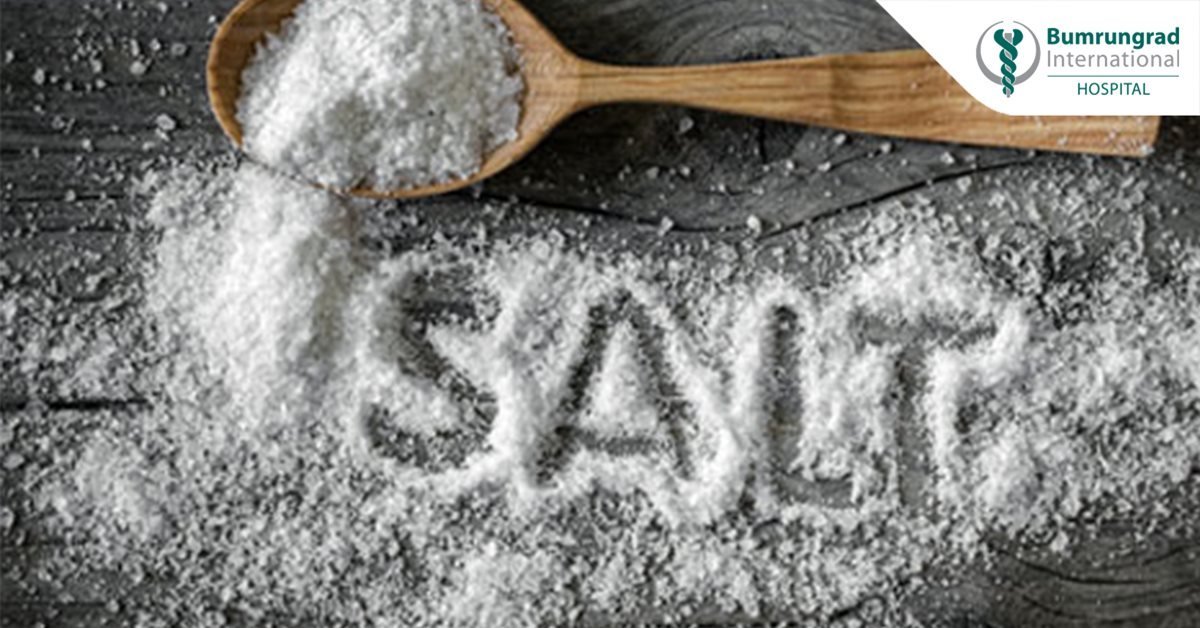
Part 2 Why the body needs SALT?


Now, let us get in the specifics of the electrolyte sodium chloride and health.

Table salt is made up of the elements sodium and chloride – the technical name for salt is sodium chloride. Your body needs some sodium=Na+ to work properly. Na+ in our body plays important roles and works with potassium. It helps with the function of nerves and muscles. It also helps to keep the right balance of fluids in your body. When Na+ gets high concentrated (in blood=hypernatremia) our body reacts by allowing more water in that compartment (ex. Plasma) to balance out the electrolyte and fluids in that compartment to prevent complications.

Your kidneys control how much sodium is in your body. If you have too much and your kidneys can’t get rid of it, sodium builds up in your blood (hypernatremia). This can lead to health problems. In healthy individuals, the kidneys respond to excess sodium by flushing it out in the urine. Unfortunately, this also removes potassium. If potassium levels are low, the body tries to hoard it, which also means hanging onto sodium. Water follows sodium, leading to an increase in the amount of water in the body and the volume of blood in circulation.

Excess sodium blunts the ability of blood vessels to relax and contract with ease causing your vessels to vasoconstrict which increases pressure in your vessels=high blood pressure (B/P)and may also overstimulate the growth of heart tissue.

Blood pressure climbs, and the heart must work harder=stress to the heart. When we stress the heart out=overworked, lack of oxygen to the heart tissue happens=pain (we call it Angina that can be reversed) and if it continues can lead to a heart attack (scarring to the heart=damage done to the heart that’s not reversible). Also with constant high B/P with constriction of vessels in the brain this can cause the same stress=headache which if not resolved can lead to a stroke (scarring to the brain, again not reversible).   All of these responses are made worse by low potassium intake.

In some people, especially those already diagnosed with high blood pressure, heart failure, or impaired kidney functioning, the kidneys hang onto sodium no matter what, further complicating the disease they have and worsening their health.

One way to flush sodium out of the body is by getting more potassium. An interesting report from the Trials of Hypertension Prevention suggests that changing the balance between these two minerals can help the heart and arteries.

High blood pressure can lead to other health problems, especially uncontrolled.

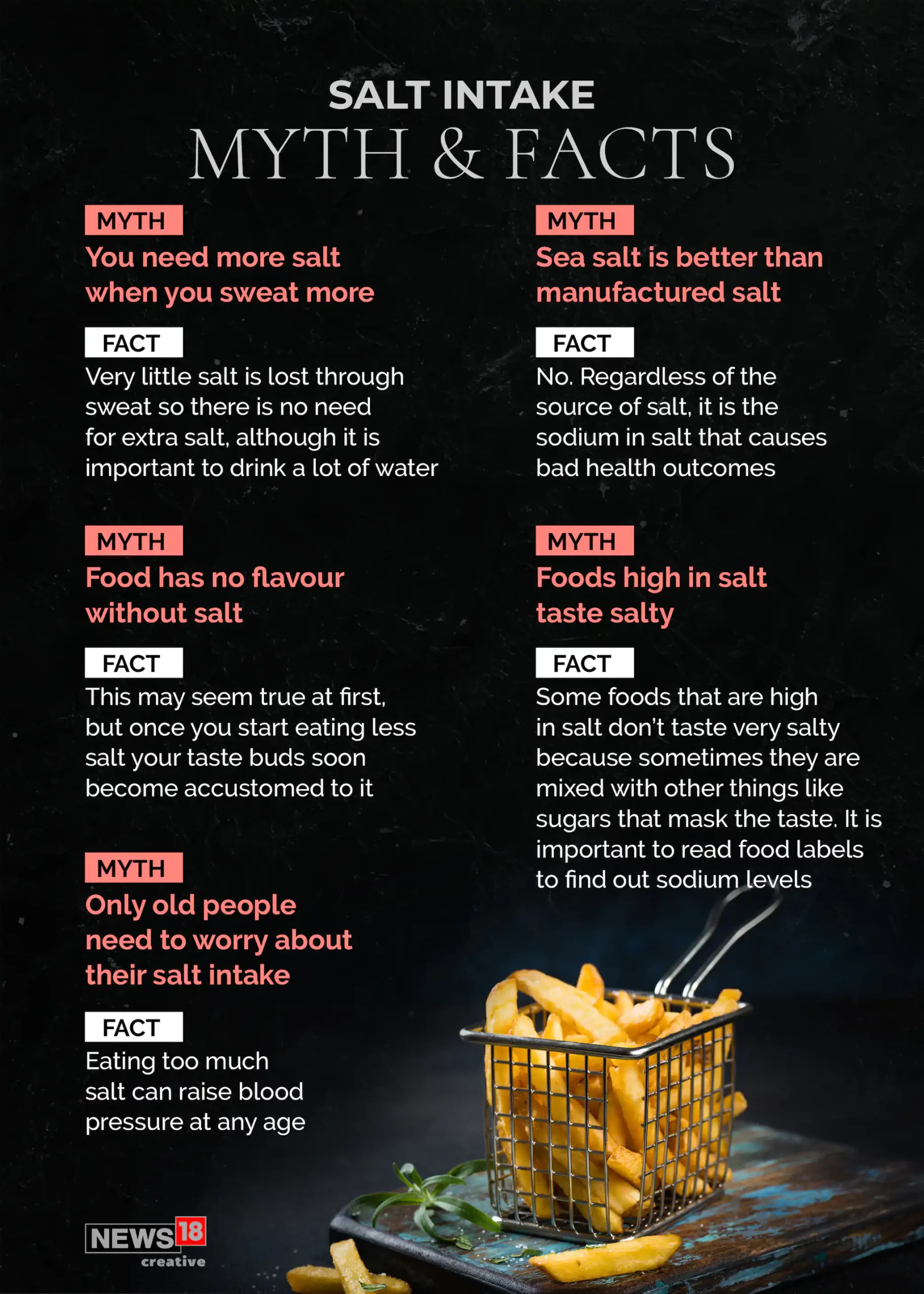
Most people in the U.S. get more sodium in their diets than they need. A key to healthy eating is choosing foods low in salt and sodium. Doctors recommend you eat less than 2.4 grams per day. That equals about 1 teaspoon of table salt a day. Reading food labels can help you immensely in seeing accurately how much sodium is in prepared foods of your meals you eat.

Most of the focus on sodium and potassium centers on their effects on the kidneys, blood vessels, and heart.  But these minerals affect every part of the body, including the relentless breakdown and buildup of bone.  A diet high in sodium increases the amount of calcium excreted in the urine. This loss is especially prominent when calcium intake is low, as it is for so many Americans. Loss of calcium can contribute to osteoporosis, the age-related weakening of bones=easier fractures and brakes in bones.

One way to combat the problem is by taking in more calcium from food or supplements. Getting more potassium, in the range of the recommended 4,700 mg a day, can also help.

To be sure, there is more to bone health than sodium and potassium. Heredity, lack of exercise, hormone levels (low testosterone in men, low estrogen in women), and a deficiency of both of vitamin D and vitamin K can also weaken bones=osteoporosis.  So keep both in your diet!

One way to prevent or fight high blood pressure and keep the heart healthy is to boost the amount of potassium you get while at the same time reducing your sodium intake. (Note: Check with your doctor before boosting your intake of potassium. Although it’s a good strategy for many, it can be harmful to people with kidney disease or heart failure, or those who are taking certain kinds of diuretics, or “water pills.”) Recommended if with any disease get clearance from your m.d. before making changes in your diet, activity, and any health habits (especially if a cardiac, renal, diabetes diagnosis)

The best way to get more potassium and less sodium is by eating more fresh fruits and vegetables, beans, fish, homemade foods, and low-salt versions of prepared foods. You can top the 4,700-milligram mark for potassium and stay under 800 mg of sodium by having regular oatmeal, orange juice, and coffee for breakfast; a peanut butter and jelly sandwich and milk for lunch; baked halibut, a baked potato with the skin, and a spinach salad with half an avocado for dinner; and some peanuts, raisins, a banana, and low-sodium V8 in between. The potassium-to-sodium ratio of this menu is 14 to 1. Best way to figure out the amount of sodium or potassium in your diet is count what the label of the food your eating states is in a serving and document it up in 24hrs and add it up. Add in some exercise and, though you aren’t living like people in the Stone Age, you might have arteries as healthy as they had.

To know what primary (prevention) or secondary management of diseases or illnesses caused by or effected by sodium blood levels in the body with learning how to control and take proper sodium intake as best as possible this can be accomplished by eating a healthy diet (low sodium), practice healthy habits, and even lose weight if necessary. Doing this will let you reach your optimal level of health. Having the knowledge in how to eat sodium healthy, how to lose weight by living healthy habits and eating healthy not just 3 mths or a year but for life with being able to treat yourself to treats and foods occasionally is the way to go but remember always consult your primary doctor especially those with high b/p or cardiac disease before making changes in activity or diet.

QUOTE FOR WEDNESDAY:

“The CDC states:

  • Your body needs a small amount of sodium to work properly, but too much sodium is bad for your health.
  • While sodium has many forms, most sodium we consume is from salt.
  • Most Americans consume too much sodium.
  • Most sodium comes from processed and restaurant foods.

Your body needs a small amount of sodium to work properly, but too much sodium is bad for your health. Americans consume more than 3,300 milligrams (mg) of sodium per day, on average. This is well above the federal recommendation of less than 2,300 mg of sodium daily for teens and adults as part of a healthy eating pattern.”

Centers for Disease Control and Prevention (About Sodium and Health | Salt | CDC)


Part 1 WHY THE BODY NEEDS SALT

SALT4

First we’ll cover how water, electrolytes, proteins work in the body to understand how sodium (being a electrolyte) is so important with our health. Then we will cover how to use sodium therapeutically in our diet with knowing how it impacts how your future health and how it prevents with even help you in managing certain diseases or illnesses you already have.

Let us first understand the basics of the human body: a large percentage of body weight is composed of water that is containing dissolved particles of organic and inorganic substances vital to life. A young adult male is about 60% water whereas a female is 50%. Than the percentage of the body weight, that is WATER, declines with age. Since fat contains little water, the more obese a person gets the smaller the percentage of water weight is in that person.   Salt is what we call sodium (NA) + chloride (Cl)=Sodium chloride =NaCl, which are both an electrolytes. Water is distributed throughout the body, but in compartments that are inside our cells, outside of our cells (being plasma), and in our tissues. In these compartments with the water are electrolytes but in varying amounts. The largest percentage of water in our body is inside the cells. The body fluid in us is constantly being lost and replaced for normal body processes to occur.   If we eat daily food and fluids the body easily maintains the compartments in balancing the water and electrolytes in our body (remember the compartments are in the cells, outside of cells, and in the tissues).   We know the body receives water to these different compartments through our diet in what we eat (foods & liquids) and through the metabolism (break down) of the those foods & liquids=nutrition that we eat and through the body tissues. There are ending products from the metabolism (break down) of tissues in our body and our foods and fluids through digestion causing our body to have an ending result of toxins in the body but are body gets rid of them if functioning within normal limits.

Two vital processes that do this which demand continual expenditure of water in removal of toxins is:

1.) removal of body heat by vaporization of water via the lungs and the skin(perspiration).                        

2.)excretion of urea and other metabolic wastes by the kidneys dumping them in our urinary bladder; the stool also in our GI tract plays a role in this removal of metabolic wastes in evacuation.                                                                                                                                                     

Solid foods such as meats and vegetables contain 60 to 90% water . Note the normal daily replacement of water roughly equals the normal daily loss with an entire body functioning properly. The volume of water used in these processes varies greatly with external influences such as temperature and humidity.

All body fluids contain chemical compounds. Chemical compounds in solution may be classified as electrolytes or nonelectrolytes based on their ability to conduct an electric current in the solution. Electrolytes are either positive, which is a charged particle called an cation (electric current=Na+); or negative which is not a charged particle called an anion (no electric current=Cl-). This is why you’ll see an electrolyte banner or board up in the front of chemistry class or just in your chemistry book (a positive or negative sign after every abbreviation of each element). It’s letting you know if it is + or -. Proteins are special types of charged molecules. They both have a charge that is dependent on the pH of the body fluids. A normal pH in our plasma is 7.35 to 7.45 and at this level your proteins exist with a net negative charge. In our bodies compartments, when imbalances happen regarding fluids, electrolytes or proteins problems occur; acidity and alkalinity distribution in the body becomes effected.

What does this all mean?                                         

There are 3 main mechanisms for fluid and electrolyte movement in the body to help in maintenance of acid and base balances throughout the human body which are diffusion, osmosis, and filtration. Through these mechanisms transfer of water and electrolytes take place dispensing them in the body where they are needed.                                        

Electrolytes account for most of the osmotic pressure of the body fluids (this pressure is the concentration of solids in a compartment—example inside your cells is a compartment). Electrolytes are VITALLY important in the maintenance of acid and base (alkaline) balancing in all cells to all the plasma (outside the cell) to every tissue region of the body. These 3 mechanisms of delivery that balance the fluids and electrolytes in our body you need to have working correctly; but when the body ends up getting imbalances of electrolytes or fluids over a long period of time certain illnesses or diseases can arise.

If a system fails in our body, this can put the electrolyte and fluid balance off causing health problems in our body; take for example. kidneys that play a major role in removing toxins from our bloodstream by pulling them out of the blood vessels that filter through the kidneys and allows the organ to dump the toxins into our urinary bladder where we excrete them.   When we void, the more yellow the urine means the higher the amount or concentration of toxins is in the urine and that was dumped in the urinary bladder by proper kidney function.  

So if disease like renal (kidneys )failure occurs than this messes up the entire process of balancing the acid and base fluids in the body by allowing the toxics to stay in our body which causes them to be dumped elsewhere, like in our tissues=the body is trying to compensate. This will cause yellowing to the sclera, skin, etc… which we call jaundice and if not repaired you will die sooner in life.  

Stay tune for part II tomorrow!


QUOTE FOR TUESDAY:

“The way we eat is undergoing a remarkable transformation, driven by groundbreaking innovations, environmental awareness, and a growing understanding of nutrition’s profound impact on our well-being. As we stand at the crossroads of dietary evolution, the future of healthy eating promises exciting possibilities—from lab-grown proteins to AI-powered nutrition plans. Recent studies by the World Health Organization highlight how dietary choices directly influence chronic disease prevention.”

Human Healthy Life (http://humanhealthylife.com/future-of-healthy-eating)

Future of Healthy Eating – Human Healthy Life

Our future generations using healthier food habits. Learn what foods to avoid with what to replace them with!

folicacid2 Plants 7

Today our topic is future generations using healthier habits in their lifestyles with eating foods healthier overall for their bodies but still being able to treat yourself to foods not necessarily the best to be eating on a regular basis (Ex. Fast Foods.  Even though their trying to be healthier their still not an item to be eating every day).   I’m a female close to retirement and am close within my body mass index and still with some muscle tone which ending line is doing good but if you think I have natural high metabolism your dreaming.

If you live on eating not 3 but 6 small meals a day with a limited about of calories, carbohydrates, and low fat you will allow your metabolism to stay at a steady level and it’s not for a few days, weeks or months but your regular way of living with treating yourself to foods now & than but know when you do that you cause your regular diet to go back 4 days and slow down the metabolism.  If you’re in your regular body mass index at that point great and watch what you eat the next few days with going back on your regular healthy foods but if not in the therapeutic Body Mass Index (BMI) and you want to lose weight than no treats yet.  We will get to the proper and improper foods to eat in one second.  Eating healthy foods in your regular life will help you not only with keeping your weight at a nice weight but as you  grow older you decrease a lot of diseases caused by eating foods high in fat, cholesterol=in time blockages in the arteries can happen causing cardiac problems.  Eating foods high in carbohydrates, calories, and sugars will just put high probability that you will become overweight especially if you’re not doing  any work-out or activity other than work and regular daily activities.  Becoming overweight or just eating foods that are unhealthy or even just one of these topics just mentioned describes an aspect or your life this can cause many problems as you get older  (Obesity, Diabetes II,  Hypertension, blockages in the arteries=Coronary Artery Disease and more).  The younger you are  the easier it is to change but even being older you can change (its putting your mind to it, called discipline!).

So for both age groups it just takes being a strong person and discipline but also knowing when you mess up in your diet and activity to restart the regular dieting/exercise that you do with making less mess ups in the healthy diet you normally would follow.   You need to know when you do a mess up you probably put yourself back 3 to 4 days in your diet.

So lets cover foods to avoid:

Cereals: So-called “healthy” cereals are the worst foods you can possibly eat at the start of the day.

They are usually loaded with sugar and refined carbs, which are some of the most fattening ingredients in existence.

Starting your day off with a processed cereal will spike your blood sugar and insulin levels. When your blood sugar crashes a few hours later, your body will call for another snack high in refined carbs.

This is the blood sugar roller coaster that is familiar to people on high-carb diets.

Seriously… READ the label. Most breakfast cereals, even those with health claims like “low-fat” or “whole grain” on the package, are usually loaded with sugar.

If you’re hungry in the morning, eat breakfast… but choose something unprocessed and that has protein in it (like eggs and veggies).

If you really must eat cereal for breakfast, find one that doesn’t include sugar or highly refined grains.

Bottom Line: Most commercial breakfast cereals are high in sugar and refined carbs, which are highly fattening and extremely unhealthy.  Agave nectar (or Agave syrup) is often marketed as a natural alternative to sugar and high fructose corn syrup.

The problem with Agave, is that it is not healthy at all. If anything, it is even worse than sugar.

One of the main reasons sugar is so unhealthy, is that it contains excessive amounts of the simple sugar fructose.

Whereas sugar contains 50% fructose, Agave contains as much as 70-90%!

Of course, small amounts of fructose from fruit are fine, but consuming excessive amounts from added sugars can have devastating effects on metabolic health.

High amounts of fructose can cause insulin resistance and chronically elevated levels of the fat storing hormone insulin.

It can also cause high triglycerides, elevated blood sugars, harmful effects on your cholesterol, abdominal obesity and a ton of other metabolic problems.

If you think you’re doing your body a favor by replacing sugar with Agave, think again. You’re actually making things worse.

Whole Wheat Bread

Whole wheat is often recommended as a healthy alternative to refined wheat.

Instead, use a natural sweetener that is low in fructose.

Well… it’s true. Whole wheat is, at the very least, “less bad” than refined wheat.

But one of the main problem with most whole grain foods, is that they aren’t made from actual whole grains. It is a marketing ploy.

Almost without exception, the grains have been pulverized into very fine flour that is just as easily digestible and spikes blood sugar just as fast as the refined grains.

In fact, whole wheat bread has a glycemic index (a measure of how quickly foods spike blood sugar) that is just as high as regular white bread.

Whole wheat bread might contain a little more fiber and some more nutrients, but there really isn’t much difference when it hits your system.

Plus, there really is NO nutrient in wheat (whole or refined) that you can’t get in even greater amounts from other foods.

There are some grains out there that seem to be healthy for people who can tolerate them, but wheat definitely does NOT belong in that category.

Many studies show that wheat (even “heart-healthy” whole wheat) can lead to health problems, especially in people who are sensitive to gluten.

Bottom Line: Whole wheat bread is usually not made with actual whole grains. It spikes blood sugar just as fast as white bread and can contribute to various health problems.

Bottom Line: Agave is even higher in fructose than sugar and high fructose corn syrup. Excessive fructose consumption is strongly associated with obesity and all sorts of metabolic diseases.

=Granola: If granola is made with real ingredients, it certainly can be healthy.

But it suffers from the same problem as most other “health foods.”

-Low Fat Yogurt:

Low Fat Yogurt: This food yogurt is often considered to be a healthy food… and it is.

But the problem is that most yogurt found in stores is low-fat yogurt… which is highly processed garbage.

When food manufacturers remove the fat from foods, they taste terrible. That’s why they add a whole bunch of other stuff to compensate for the lack of fat.

In the case of yogurt, they usually add sugar, high fructose corn syrup or some kind of artificial sweetener.

But new studies are showing that saturated fat is actually harmless… so low-fat yogurt has had the good stuff removed, only to be replaced with something that is much, much worse.

There is also no evidence that dairy fat contributes to obesity. In fact, one study showed that people who ate the most high-fat dairy products were the least likely to become obese!

When the food manufacturers start mass producing them, they alter them in a way that they aren’t healthy anymore.

Granola contains some healthy ingredients like oats and nuts, but when you add sugar and oil to it and combine it in a package that encourages overconsumption, then it isn’t healthy anymore.

This list of foods NOT to eat has been sorted into food group categories also. You should avoid these unhealthy foods as much as possible.

  • Refined Sugar: Besides staying away from table sugar and candy, watch for added sugar hidden everywhere. Learn the many different sugar names and check all packaged, canned and processed foods, such as cereals, prepared meats, bakery goods, jams, etc.
  • Grain Products: Avoid refined grain foods. These include most breads, crackers, pasta and breakfast cereals. Also eliminate cakes, pies, doughnuts, cookies, croissants, muffins and all pastries and snack foods such as chips, most snack mixes and buttered popcorn.
  • Fats and Oils: Limit saturated fats and refined vegetables oils. Eliminate food with trans fats and other bad fat. This includes margarine, lard or partially hydrogenated oils found in cookies, cakes, pastries, doughnuts, chips, fried foods, candy and most chocolate.
  • Meats, Poultry and Fish: – Eliminate red meats high in saturated fats and other fatty cuts of meat – ribs, bacon, sausage, hot dogs, pepperoni, salami, bologna and other packaged meats, plus most hamburgers. Also avoid fried fish, meats and poultry, as well as poultry skin.
  • Dairy and Eggs: Cut out cream and any cream products, such as full-fat cream cheese, sour cream, cream sauces, whipped cream and ice cream. Limit the use of butter, eggs and full-fat cheeses and eliminate whole milk, 2% reduced fat milk and fat free milk.
  • Beans, Nuts and Seeds: Stay away from any bean soups or chili that contain sausage, bacon, ham or other high fat meats. Also avoid all salted nuts and seeds, as well as those roasted in oils.
  • Fruits and Vegetables: Eliminate fried vegetables and fruits, vegetables with butter, cheese or cream sauces and fruits with cream or whipped cream. Also avoid fruit drinks and fruit juices. One cup of fruit juice has no fiber and up to 10 teaspoons of high glycemic
  • Excess Salt: Average salt consumption in the U.S. is 10-15 grams a day. The National Academy of Sciences recommends 3-8 grams. To cut your salt intake in half, limit table salt and avoid chips, salted nuts and popcorn and most prepared, canned and packaged foods.
  • Liquids: Avoid all sodas, milk shakes, fruit juice and fruit drinks and greatly limit or totally eliminate caffeine and alcoholic beverages.

Your body’s an amazing machine with an extraordinary network of systems operating inside you right now. Healthy food provides the nutritional fuel necessary to keep you running smoothly and prevent breakdowns.

As you learn what unhealthy food to avoid, start today replacing the foods NOT to eat with the very best foods to eat for great health in meeting a longer life!

Last Edited was 9/27/2026
QUOTE FOR MONDAY:

“Coronaviruses are a large family of viruses that usually cause mild to moderate upper-respiratory tract illnesses in humans. However, three coronaviruses have caused more serious and fatal disease in people: SARS coronavirus (SARS-CoV), which emerged in November 2002 and causes severe acute respiratory syndrome (SARS); MERS coronavirus (MERS-CoV), which emerged in 2012 and causes Middle East respiratory syndrome (MERS); and SARS-CoV-2, which emerged in 2019 and causes coronavirus disease 2019 (COVID-19).

Building on previous research on SARS and MERS, NIAID scientists and NIAID-supported researchers mobilized quickly to develop COVID-19 therapeutics, vaccines and diagnostics. Researchers continue to conduct basic research to understand how coronaviruses infect cells and causes disease, and what interventions can detect, prevent and stop the spread of disease.”

National Institute of Allergy and Infectious Diseases – NIH

(Coronaviruses | NIAID: National Institute of Allergy and Infectious Diseases)

How are SARS,MERS, COVID 19 closely related, comparison of fatality rates & why so many vaccine changes with Covid-19? Their is logic scientifically behind it.

SARS, MERS, and Corona Viruses  are all caused by some CORONA VIRUS!

Through the National Library of Medicine they state:

“In the 21st century, we have seen a total of three outbreaks by members of the coronavirus family. Although the first two outbreaks did not result in a pandemic, the third and the latest outbreak of Severe Acute Respiratory Syndrome Coronavirus 2 (SARS-CoV-2) culminated in a pandemic. This pandemic has been extremely significant on a social and international level. As these viruses belong to the same family, they are closely related. Despite their numerous similarities, they have slight distinctions that render them distinct from one another!”

Both COVID-19 and SARS are caused by coronaviruses. The virus that causes SARS is known as SARS-CoV, while the virus that causes COVID-19 is known as SARS-CoV-2.  So what does this mean?  A severe respiratory illness that is caused by a coronavirus (Severe acute respiratory syndrome-related virus of the genus Betacoronavirus) 

SARS is caused by Betacoronavirus that is one of four genera of coronaviruses. Member viruses are enveloped, positive-strand RNA viruses that infect mammals, including humans.  The first generation of covid.

COVID-19, which is caused by the 2019 coronavirus, has been dominate news starting 2019. However, you may have first become familiar with the term coronavirus during the severe acute respiratory syndrome (SARS) outbreak in 2003.

Both COVID-19 and SARS are caused by coronaviruses. The virus that causes SARS is known as SARS-CoV, while the virus that causes COVID-19 is known as SARS-CoV-2. There are also other types of human coronaviruses.

Despite similar names, there are several differences between the coronaviruses that cause COVID-19 and SARS.

“Abstract

Background: Middle East Respiratory Syndrome (MERS) is a viral respiratory illness that can spread from camels to people through direct physical .  The MERS virus causes flu-like symptoms, with most patients developing pneumonia as a secondary infection. MERS is caused by a virus in the coronavirus family, and the syndrome is also called MERS-Coronavirus (MERS-CoV). MERS is passed primarily to people from infected camels.

Aims: To provide a review of the differences in pathogenesis, epidemiology and clinical features of COVID-19, SARS and MERS.

Sources: The most recent literature in the English language regarding COVID-19 has been reviewed, and extracted data have been compared with the current scientific evidence about SARS and MERS epidemics.

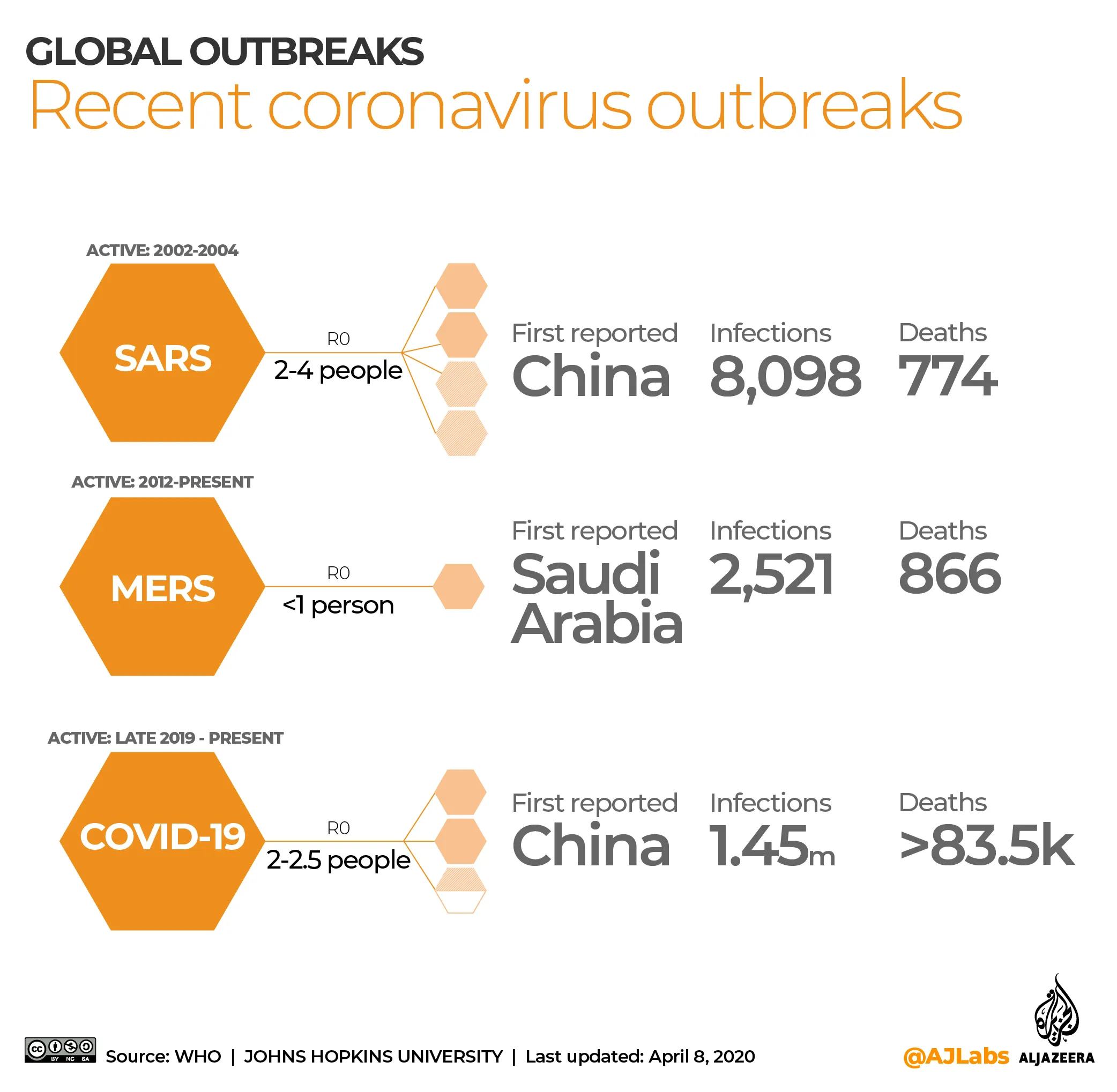
Content: COVID-19 seems not to be very different from SARS regarding its clinical features. The pathogenesis of human coronaviruses is mostly determined by viral particle binding to specific receptors rather than viremia.  However, it has a fatality rate of 2.3%, lower than that of SARS (9.5%) and much lower than that of MERS (34.4%). The possibility cannot be excluded that because of the less severe clinical picture of COVID-19 it can spread in the community more easily than MERS and SARS. The actual basic reproductive number (R0) of COVID-19 (2.0-2.5) is still controversial. It is probably slightly higher than the R0 of SARS (1.7-1.9) and higher than that of MERS (<1). A gastrointestinal route of transmission for SARS-CoV-2, which has been assumed for SARS-CoV and MERS-CoV, cannot be ruled out and needs further investigation.

Implications: There is still much more to know about COVID-19, especially as concerns mortality and its capacity to spread on a pandemic level. Nonetheless, all of the lessons we learned in the past from the SARS and MERS epidemics are the best cultural weapons with which to face this new global threat since 2019 in China and 2020 in the USA.

Keywords: COVID-19; Coronavirus; Emerging infections; MERS; SARS.

Their references:

Affiliations

Free PMC article

Middle East Respiratory Syndrome-MERS:

The MERS virus causes flu-like symptoms, with most patients developing pneumonia as a secondary infection. MERS is caused by a virus in the coronavirus family, and the syndrome is also called MERS-Coronavirus (MERS-CoV). MERS is passed primarily to people from infected camels.  The first generation of Covid.

Key facts:

  • Middle East respiratory syndrome (MERS) is a viral respiratory disease caused by Middle East respiratory syndrome coronavirus (MERS‐CoV) that was first identified in Saudi Arabia in 2012.
  • Coronaviruses are a large family of viruses that can cause diseases ranging from the common cold to Severe acute respiratory syndrome (SARS), MERS and Coronavirus disease-2019 (COVID-19).
  • Typical MERS symptoms include fever, cough and shortness of breath. Pneumonia is common, but MERS patients may not always develop this condition. Gastrointestinal symptoms, including diarrhoea, have also been reported among MERS patients.
  • Approximately 35% of MERS cases reported to WHO have died.
  • MERS-CoV is a zoonotic virus, meaning it is transmitted between animals and people. MERS-CoV has been identified and linked to human infections in dromedary camels in several Member States in the Middle East, Africa and South Asia.
  • Human-to-human transmission is possible and has occurred predominantly among close contacts and in health care settings. Outside the health care setting, there has been limited human-to-human transmission.

Covid-19=Corona Virus Disease

This is the third serious Coronavirus outbreak that in less than 22 years, following SARS in 2002–2003 and MERS in 2012. While human strains of Coronavirus are associated with about 15% of cases of the common cold, the SARS-CoV-2 may present with varying degrees of severity, from flu-like symptoms to death. It is currently believed that this deadly Coronavirus strain originated from wild animals at the Huanan market in Wuhan, a city in Hubei province. Bats, snakes and pangolins have been cited as potential carriers based on the sequence homology of CoV isolated from these animals and the viral nucleic acids of the virus isolated from SARS-CoV-2 infected patients.

Extreme quarantine measures, including sealing off large cities, closing borders and confining people to their homes, were instituted in January 2020 to prevent spread of the virus, but by that time much of the damage had been done, as human-human transmission became evident.

The purpose for these measures are there are three primary ways to transmit the virus, including close person-to-person contact (droplet transmission), aerosol transmission, and transmission by touch=Purpose for mask, and if close to the patient with Covid-19 present gowns, gloves at least with the mask.

While these quarantine measures are necessary and have prevented a historical disaster along the lines of the Spanish flu, earlier recognition and earlier implementation of quarantine measures may have been even more effective. Lessons learned from SARS resulted in faster determination of the nucleic acid sequence and a more robust quarantine strategy. However, it is clear that finding an effective antiviral and developing a vaccine are still significant challenges.”

What’s the concern about COVID-19 variants? Are they more contagious?

Concern over variants, sometimes called strains, of the virus that causes COVID-19 is based on how the virus might change. A virus could get better at infecting people, spread faster or cause people to get sicker.

As a virus infects a group of people, the virus copies itself. During this process the genetic code can randomly change in each copy. These changes are called mutations.

Some mutations don’t have any effect on the virus.

But other mutations can:

  • Make the virus better at infecting a person’s cells, causing serious illness.
  • Make the virus better at avoiding the immune system.
  • Cause tests for the virus to be less accurate.
  • Cause vaccines to not work as well.
  • Make medicine used to prevent or treat COVID-19 stop working or not work as well.

If a mutation changes how a virus acts in a group of people, it’s called a variant. Scientists across the world track the changes in the virus variants that cause COVID-19.

Omicron

The main variant in the United States is omicron. This variant spreads more easily than the original virus that causes COVID-19 and the delta variant. But omicron seems to cause less severe disease.

Omicron has a few major offshoots, also called sublineages. Together the omicron variants make up nearly all COVID-19 infections in the United States.

The Omicron variant, which emerged in November 2021, has many lineages. New lineages continue to emerge and spread in the United States and globally. We have the tools to fight variants. Take steps to protect yourself and others.

WHY SO MANY VACCINES FOR COVID-19?

First introduced in December 2020, the original COVID mRNA vaccines from both Pfizer and Moderna protected against the original SARS-CoV-2 virus.

Than with continuing to study COVID – 19 with people infected with it we came across the Omicron variant/strain.

The vaccines were replaced in September 2022 by “bivalent” vaccines, which targeted both the original virus and Omicron variants BA.4 and BA.5 to control the spread of COVID-19 to prevent another epidemic.

This is why so many vaccines; which many people are resistive to get to their reason in not understanding why the vaccines were pushed with not knowing about the logic behind the different variants needing a new vaccine to kill it!


QUOTE FOR THE WEEKEND:

“Hemochromatosis (iron overload) is a condition in which your body has too much iron. Your body absorbs too much iron and your organs store the excess over time; the extra iron can build up in organs like your liver, heart and pancreas and cause serious damage. Treatment can lower your iron levels and help prevent complications. which damages them over time. It can be especially damaging to your heart, liver and pancreas.

Your body needs iron. But too much becomes toxic. Your body doesn’t have a built-in way to get rid of excess iron. So, it stashes it away in your tissues. As iron builds up, you may start to see it in your skin. You could also feel it in your joints.  Without treatment, iron overload can be life-threatening.

Your body needs iron to function, but too much can become harmful.”

Cleveland Clinic (Hemochromatosis: What It Is, Symptoms & Treatment)


Part II Hemochromatosis – How its Diagnosed & Rx.

Diagnosis

It can be tricky for your doctor to diagnose hemochromatosis, because other conditions have the same symptoms. He might want you to get tested if:

  • You’re having symptoms.
  • You have one of the problems listed above.
  • A family member has the disorder.

There are some other ways your doctor can figure out if you have it:

Checking your history. He’ll ask about your family and if anyone has hemochromatosis or signs of it. He might also ask about things like arthritis and liver disease, which might mean you or someone in your family has hemochromatosis but doesn’t know it.

Physical exam. Your doctor will examine your body. This involves using a stethoscope to listen to what’s going on inside. He might also tap on different parts of your body.

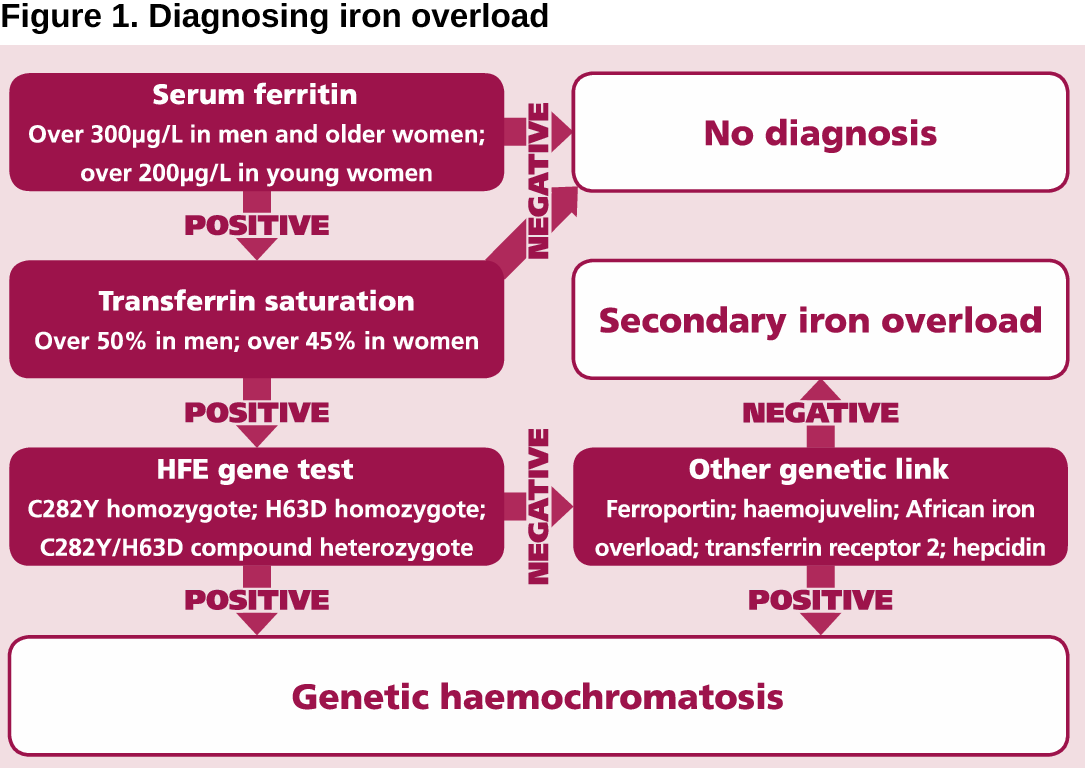
Blood tests. Two tests can give your doctor a clue about hemochromatosis:

  • Transferrin saturation. This shows how much iron is stuck to transferrin, a protein that carries iron in your blood.
  • Serum ferritin. This test measures the amount of ferritin, a protein that stores iron, in your blood. – If either of these show you have more iron than you should, your doctor might order a third test to see if you have a gene that causes hemochromatosis.
  • Liver biopsy. Your doctor will take a small piece of your liver. He’ll look at it under a microscope to see if there’s any liver damage.
  • MRI. This is a scan that uses magnets and radio waves to take a picture of your organs.

    Treatment

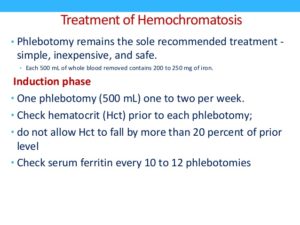
    If you have primary hemochromatosis, doctors treat it by removing blood from your body on a regular basis. It’s alot like donating blood. Your doctor will insert a needle into a vein in your arm or leg. The blood flows through the needle and into a tube that’s attached to a bag.

    • Initial treatment schedule. In the beginning, you may have a pint (about 470 milliliters) of blood taken once or twice a week — usually in a hospital or your provider’s office. While you lean back in a chair, a needle is inserted into a vein in your arm. The blood flows from the needle into a tube that’s attached to a blood bag. The process of removing blood is referred to as therapeutic blood removal.  In the Initial treatment. You’ll visit your doctor’s office or a hospital once or twice a week to have your blood drawn. You may have up to a pint taken at a time.
    • Maintenance treatment schedule. Once your iron levels go down, blood can be removed less often, typically every 2 to 3 months. Some people may maintain typical iron levels without having any blood taken. Some may need to have blood removed monthly. The schedule depends on how quickly iron builds up in your body.  So Maintenance treatment starts when once your blood iron levels have gone back to normal, you’ll still have to have to have blood taken, but not as often. It’ll be based on how fast iron builds back up in your body.

    The goal is to remove some of your blood so that your iron levels return to normal. This could take up to a year or more. Blood removal is divided into two parts: initial treatment and maintenance treatment.